
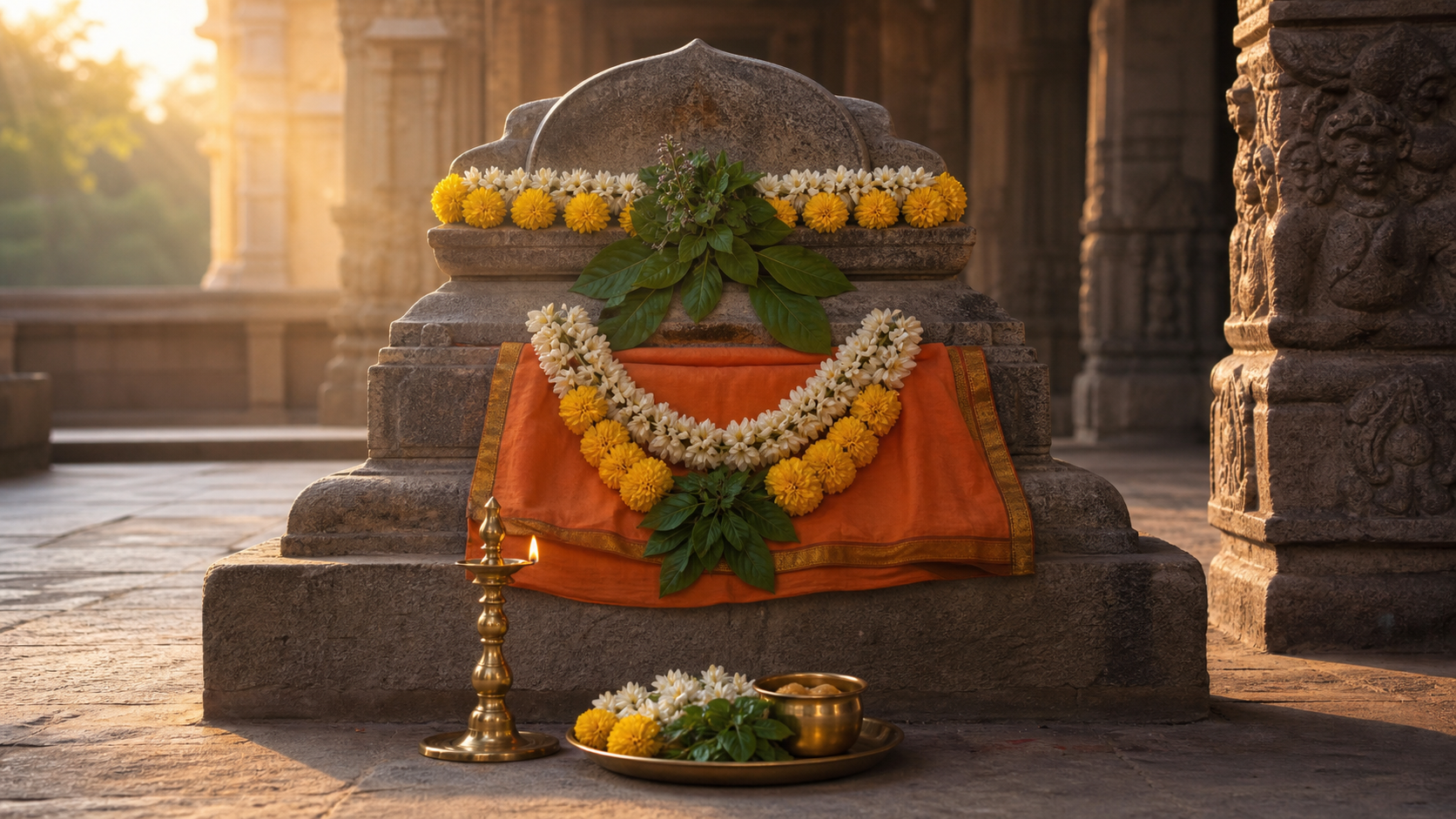
If you are trying to settle the correct date, decide what to do at home, or plan a Mantralayam visit, begin with the calendar distinction that matters: Raghavendra Jayanthi follows a lunar tithi, not merely a recurring civil date. In 2026, the observance is kept on February 23, corresponding to Falguna Shukla Saptami in the Kannada and Telugu calendar traditions.
You do not need an elaborate ceremony to honour Sri Guru Raghavendra Swamy well. You need the correct tithi for your locality, a focused devotional practice, and an act that carries the Guru’s teachings into your conduct.
Key takeaways for the 2026 observance
- Keep February 23, 2026 as the widely accepted date for Raghavendra Jayanthi.
- Record the tithi as Falguna Shukla Saptami, the seventh lunar day of the bright fortnight of Falguna.
- Check your regional Panchang before making a sankalpa because local tithi boundaries can vary with place and almanac convention.
- At home, centre the observance on puja, the Raghavendra Stotra, japa, dhyana, flowers, tulasi and a lamp.
- Complete the worship through seva, especially annadanam or another form of charitable giving suited to your circumstances.
- For Mantralayam, confirm the temple programme and guidelines before fixing travel and accommodation.
Settle the tithi before arranging the ritual
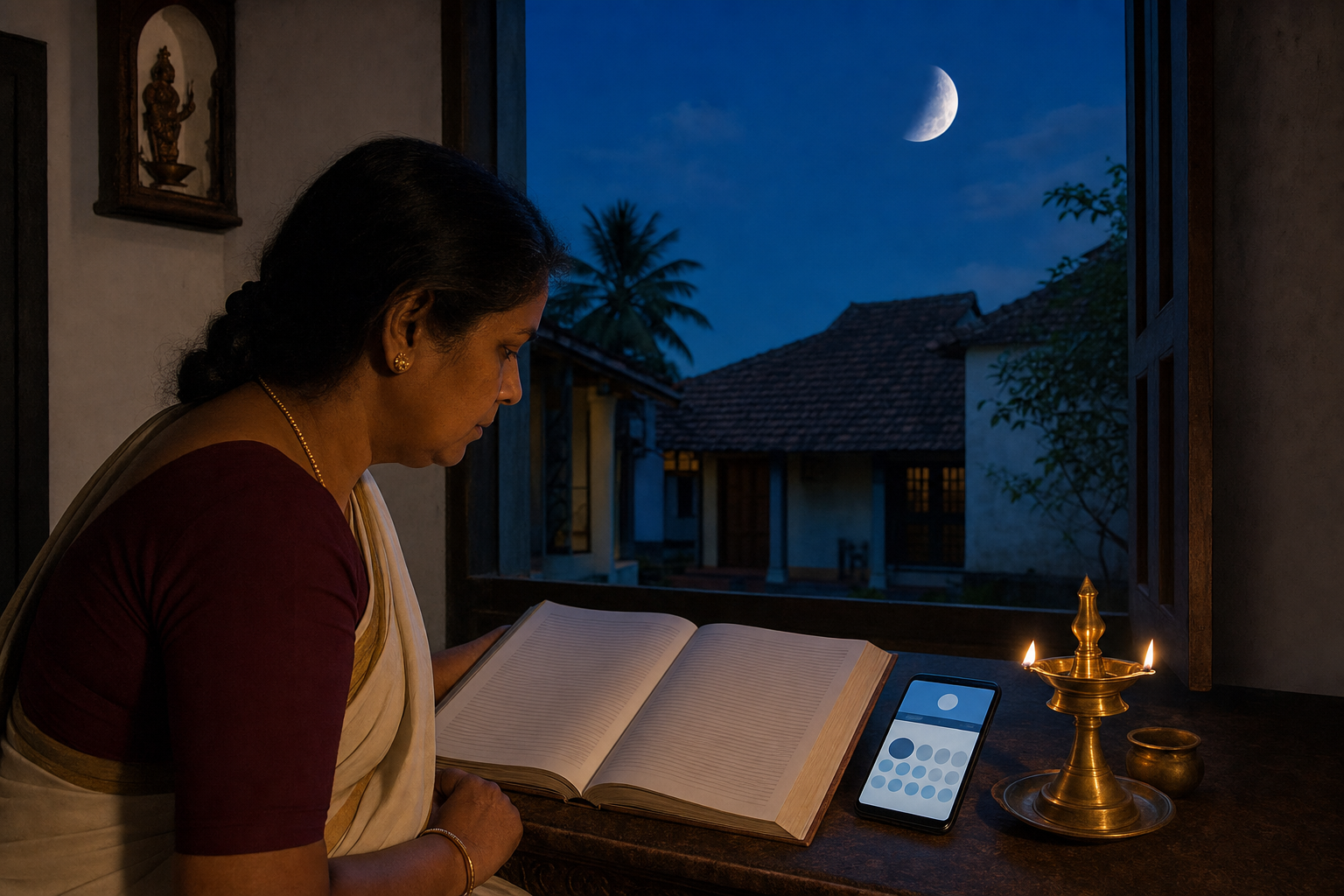
Sri Guru Raghavendra Jayanthi commemorates the birth anniversary of the revered 17th-century saint and teacher of the Dvaita Vedanta tradition. Its calendrical basis is Falguna Shukla Saptami. Unlike a civil date, a tithi does not necessarily begin and end at midnight. Its local observance can therefore be affected by the timings used in a regional Panchang.
This is why two calendars can show slightly different supporting timings without implying two different festivals. February 23 remains the broadly accepted 2026 date, but your local Panchang should govern location-specific details and the wording of your sankalpa.
- Write both entries in your family calendar: February 23, 2026 and Falguna Shukla Saptami.
- Consult the Panchang normally followed by your family, matha or local temple.
- If you will attend a temple, use its announced programme rather than combining timings from unrelated online calendars.
- If your family tradition uses a formal sankalpa, confirm its calendrical wording with the priest or tradition you follow.
Do not let uncertainty over an exact clock time derail the entire observance. First establish the accepted day. Then let the appropriate local authority settle the finer ritual timing.
A focused home puja you can actually complete
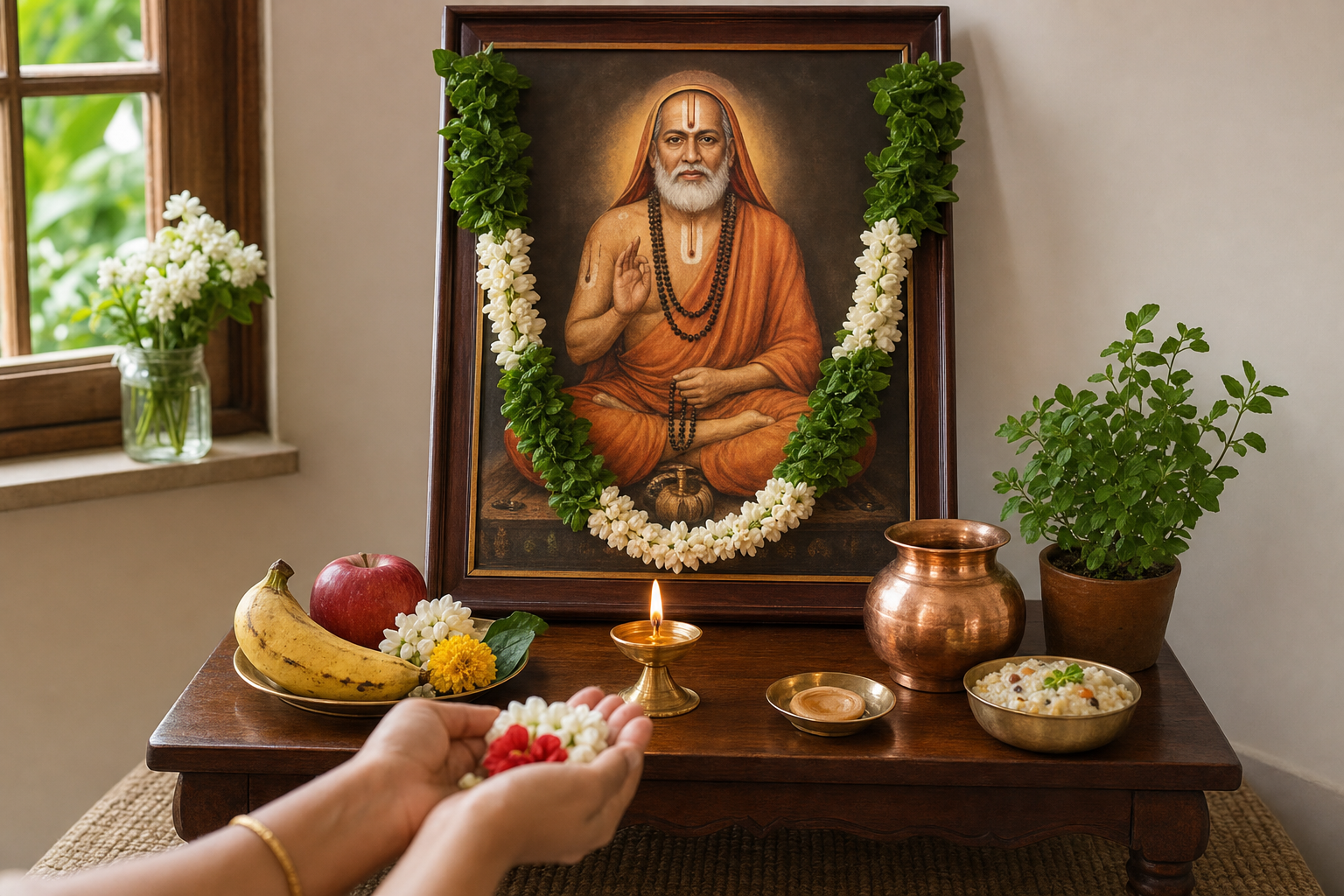
A home observance can be simple without becoming casual. The aim is to give uninterrupted attention to the Guru and then translate that attention into dharmic conduct. Use the practices already familiar to your household rather than assembling an impressive but unmanageable ceremony.
- Prepare the place of worship. Arrange an image of Sri Raghavendra Swamy or the representation of the Brindavana used in your home shrine. Keep the space clean and quiet.
- Make the traditional offerings. Light a lamp and offer flowers and tulasi according to your family practice.
- State the intention. Make a simple sankalpa to observe Sri Guru Raghavendra Jayanthi on Falguna Shukla Saptami. Use locally confirmed wording if your tradition requires full calendrical details.
- Recite and remember. Recite the Raghavendra Stotra, undertake japa, and sit for dhyana. Use the form and duration you can sustain with attention.
- Reflect on one teaching. Bring to mind bhakti, dharma or seva and identify where that value is presently needed in your life.
- Complete the observance through giving. Support annadanam or another suitable charitable act. If a larger contribution is not possible, choose a modest act you can perform sincerely and responsibly.
A vrata should support devotion, not become a contest of physical severity. If fasting or another discipline is not appropriate for your health, age or circumstances, follow a simpler vrata consistent with your tradition. The central discipline is steadiness of mind and conduct.
It also helps to decide the practical details before the day begins: who will prepare the shrine, which stotra will be recited, and how the family will perform seva. That small amount of preparation prevents the ritual from being reduced to a hurried lamp-lighting between other obligations.
Let Guru-bhakti change one piece of conduct
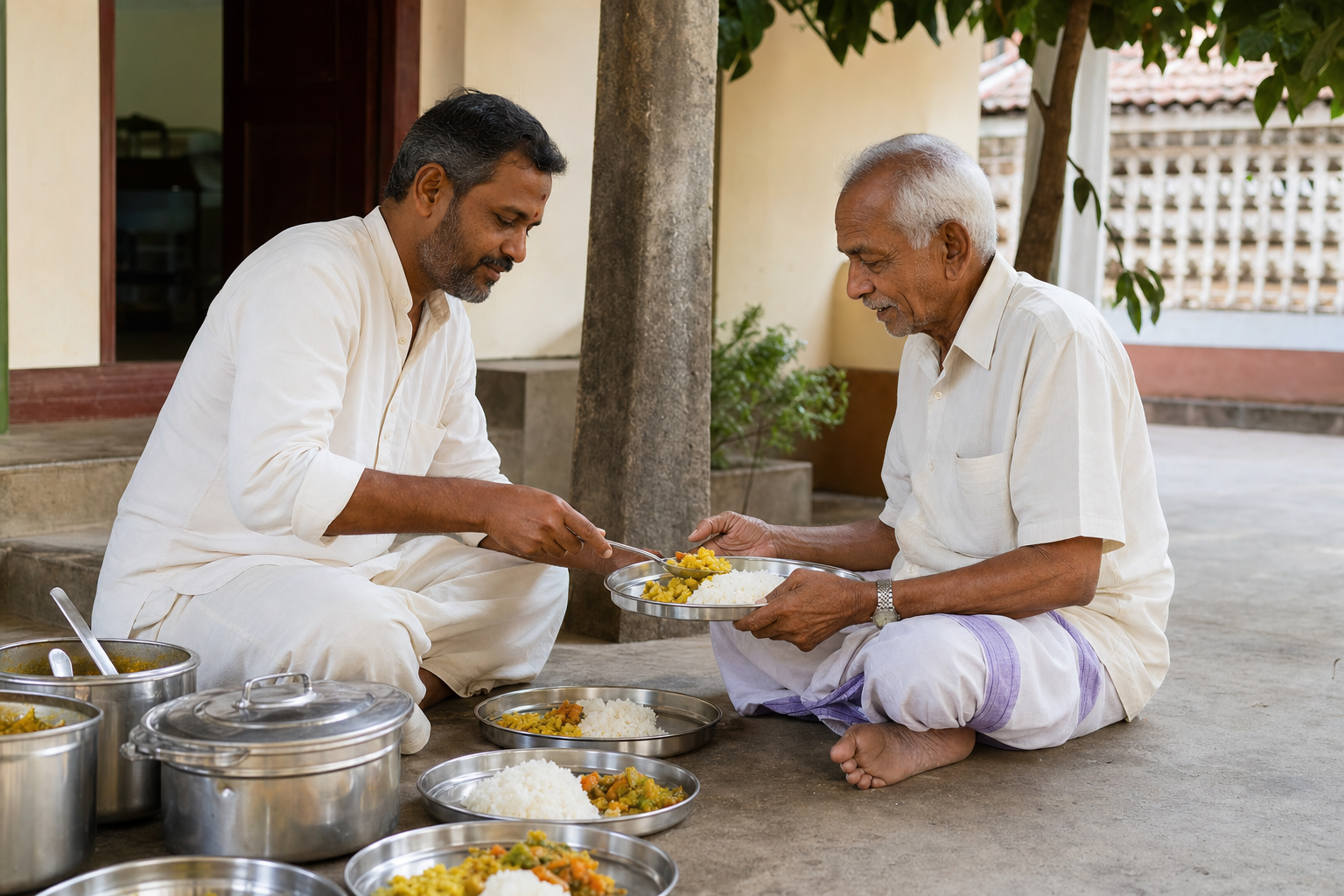
Sri Raghavendra Swamy’s Jayanti is not only an occasion to request blessings. It is a day to examine whether devotion is shaping the way you live. The Guru-Shishya tradition asks for receptivity, humility and disciplined application, not admiration from a distance.
Make that examination concrete. If you choose bhakti, protect a regular period for prayer instead of waiting for a crisis. If you choose dharma, identify one neglected responsibility and discharge it properly. If you choose seva, decide whom you will serve and what you can provide. A specific commitment gives the puja a life beyond the shrine.
The day can also help a family discuss the shared ethical ground of the wider dharmic world. Hindu, Buddhist, Jain and Sikh traditions retain their own doctrines and lineages; they should not be flattened into a single system. Yet reverence for teachers, compassion, truthfulness and self-cultivation offer a meaningful basis for mutual respect. You can affirm that kinship without erasing real distinctions.
Plan a Mantralayam visit around the confirmed programme
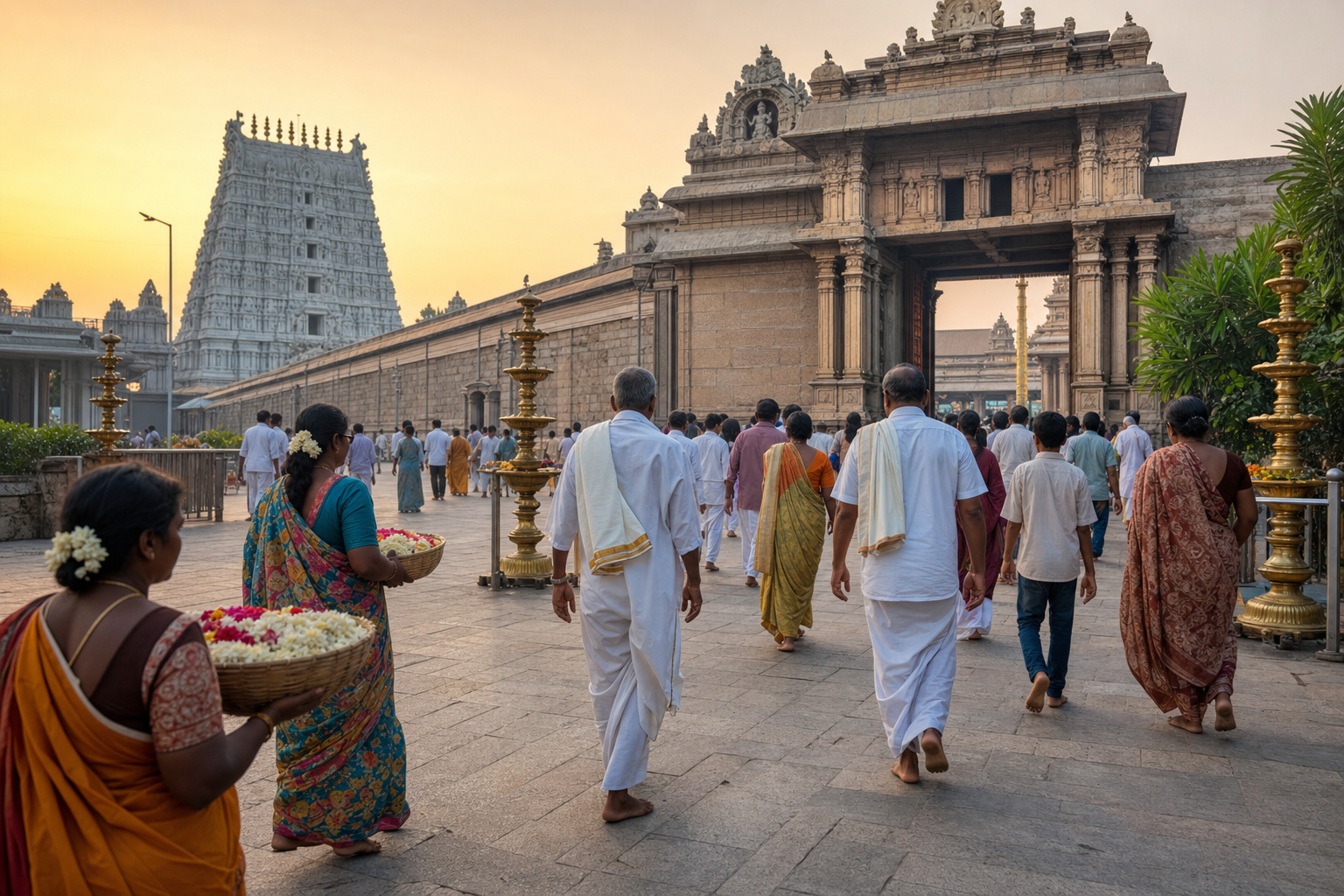
At the Sri Guru Raghavendra Swamy Temple in Mantralayam, the Guru Jayanthi Utsavalu include special pujas, abhisheka, alankara, pravachanas and devotional music. Teertha and prasada are distributed to pilgrims. The collective worship can be deeply meaningful, but it calls for more planning than a normal temple visit.
- Confirm the day’s programme. Ask the temple authorities for the current schedule before organising your arrival around a particular puja, discourse or musical offering.
- Arrange travel and accommodation early. Do not assume that ordinary-day availability will apply during the Utsavalu.
- Choose your priority. Decide whether your main purpose is a particular ritual, pravachana, devotional programme or darshan, and build the visit around the confirmed event.
- Ask about quieter darshan periods. If your schedule is flexible, coordinate the visit to avoid peak hours rather than arriving without a plan.
- Follow temple instructions. Check the applicable queue, offering and conduct guidelines so that uncertainty at the entrance does not consume the time reserved for worship.
If Mantralayam is not practical, do not treat distance as spiritual failure. A local temple observance or a disciplined home puja can preserve the day’s essential movement: remembrance of the Guru, reflection on dharma, and service to others.
Make the observance simple enough to leave a trace
Choose one setting – home, a local temple or Mantralayam – and prepare for that setting properly. Keep February 23 and Falguna Shukla Saptami together in the calendar, settle local details through the Panchang you trust, and attach one concrete act of seva to the worship. That is how Raghavendra Jayanthi becomes more than a date remembered: it becomes a discipline carried forward.
References
