

If a municipal slaughterhouse is proposed in your town, your first impulse may be to condemn it. But indignation alone gives an authority little it can place on a file, answer in a meeting, or use to reconsider a project. If your goal is cow protection, you need to turn moral clarity into a precise civic case.
That means identifying the actual decision, documenting your concerns, using lawful channels, involving the responsible elected representatives, and proposing humane alternatives. The aim is not merely to stop a building. It is to make ahimsa visible in how public institutions plan, spend, consult, regulate, and care for the consequences of their decisions.
Start with the decision the municipality is actually making

Before mobilising supporters, obtain the clearest available description of the proposal. A preliminary concept, a budget allocation, a land or siting decision, a tender, and an operating approval are different decisions. An objection aimed at the wrong stage can be morally sincere and administratively ineffective.
Your first fact sheet should answer, or explicitly ask, the following questions:
- What is the project’s official name, proposed location, stated purpose, budget, and present status?
- Which municipal body, department, committee, contractor, or other entity would own, build, operate, inspect, and regulate it?
- Has money merely been proposed, or has it already been approved, tendered, or committed?
- What public consultation, impact review, or administrative approval is expected before work proceeds?
- How does the plan address animal welfare, waste, sanitation, traffic, neighbourhood effects, and public complaints?
- What exact action do you want now: disclosure, consultation, a pause, a formal review, relocation, withdrawal, or reconsideration of public expenditure?
Keep confirmed facts separate from unanswered questions. If you do not know whether an approval exists, write, “Please disclose whether this approval has been issued and provide its present status.” Do not turn a missing document into an allegation. Accuracy makes it harder for an authority to dismiss the rest of your representation.
A proposed ₹32-crore municipal slaughterhouse in Gujarat was rolled back after sustained civic representations and the intervention of a BJP MLA. The useful lesson is limited but important: a documented public record, maintained long enough to reach the responsible political level, can cause an administrative choice to be reviewed. It does not guarantee the same outcome in every municipality.
Build a civic record that an authority must answer

A strong campaign gives officials a clear request, supporting material, and a visible constituency. It also creates a record showing that residents tried to resolve the issue through legitimate institutions.
- Prepare a concise issue note. State the decision under consideration, what is known, what remains undisclosed, the grounds for concern, and the action requested. Do not bury the request beneath slogans.
- Organise concerns by category. Separate cow protection and animal welfare from siting, waste management, public health, municipal expenditure, livelihoods, and consultation. Officials may have different responsibilities for each category.
- Attach verifiable material. Use official notices, meeting records, maps, project documents, dated photographs of the proposed site, and correspondence obtained through lawful means. Label every attachment so the reader can connect it to a claim.
- Collect responsible public support. Record signatories’ local connection and consent to be represented. Protect personal information and avoid publishing contact details merely to demonstrate the size of a campaign.
- Send the same core representation through accepted channels. Address the municipal authority and the elected representatives whose responsibilities touch the decision. Ask for acknowledgement, the responsible officer’s name, and a written response.
- Maintain a correspondence log. Record what was submitted, to whom, through which channel, and what response was received. This prevents contradictory follow-ups and allows another volunteer to continue the work.
Do not claim that a proposal is illegal unless the applicable provision and facts have been checked. Municipal powers, land-use controls, environmental approvals, animal-welfare obligations, and available remedies can differ by jurisdiction. A qualified local lawyer should review any contemplated litigation, request for urgent judicial relief, or formal allegation of unlawful conduct. The safer civic approach is to ask the authority to identify the applicable requirements and disclose whether each has been satisfied.
Cow protection also loses its ethical and practical force when pursued through threats, harassment, trespass, obstruction, or violence. Do not target workers, communities, officials, or private individuals. Record suspected violations without putting yourself or others at risk, preserve the relevant information, and report it through lawful channels. Ahimsa cannot be defended by conduct that abandons ahimsa.
Make the requested remedy more durable than a cancellation
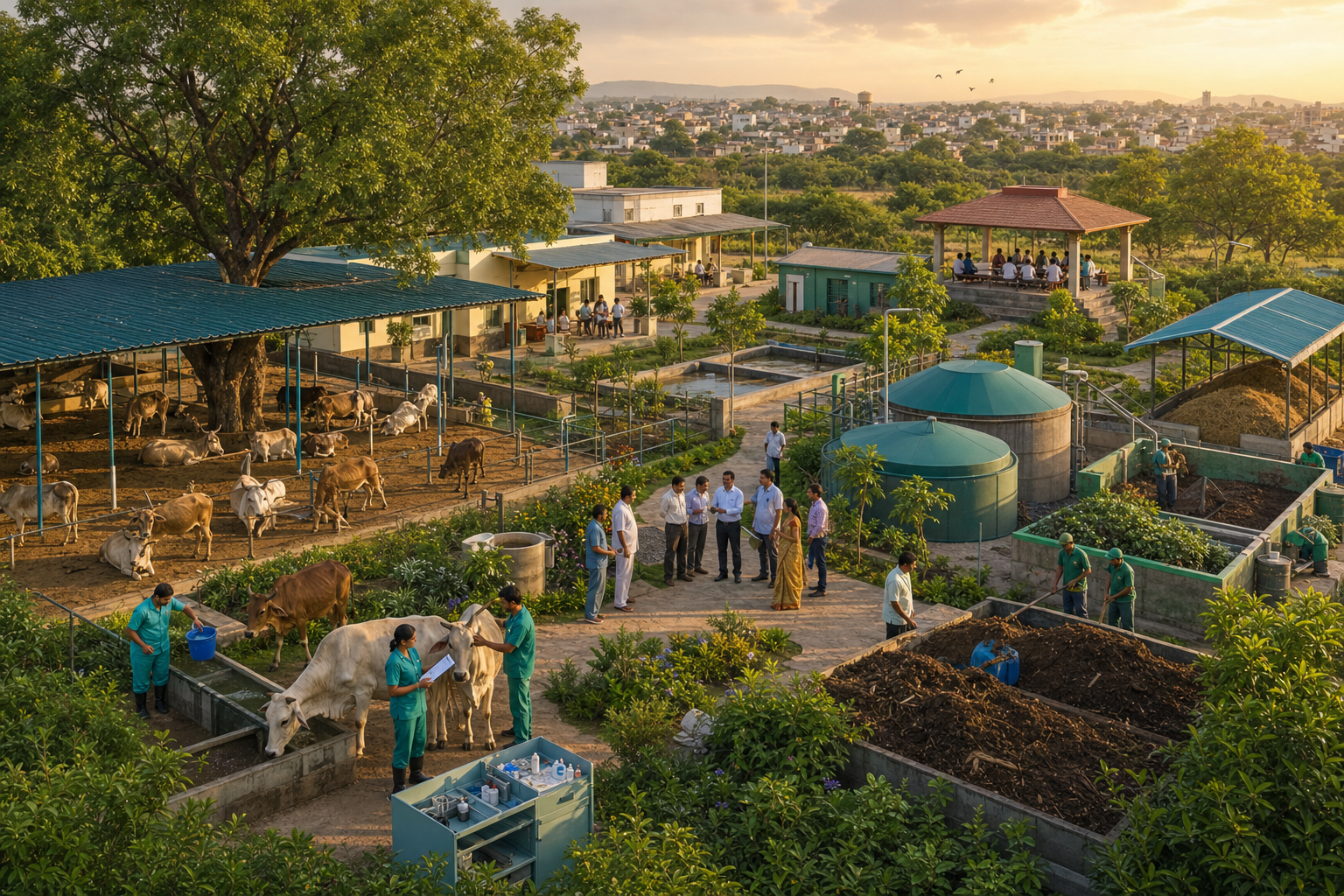
Withdrawal of a project can be a meaningful victory, but it answers only the immediate proposal. By itself, it does not create animal-care capacity, improve enforcement, manage waste, or help people whose income is affected by a policy change. Activity can also move beyond public view if authorities cancel infrastructure without planning for what follows.
Ask the municipality to treat reconsideration as a governance package. Depending on its powers and the local situation, that package can include:
- a named public authority responsible for animal-welfare complaints and follow-up;
- a workable response for cattle or other animals that are abandoned, injured, transported improperly, or taken into official custody;
- transparent standards for sanitation, waste handling, inspections, corrective action, and complaint resolution wherever regulated activity continues;
- humane supply-chain requirements that can be monitored rather than merely announced;
- support for lawful livelihood transitions when a public decision directly affects workers or small traders;
- earlier community consultation before a comparable site, budget, or project reaches an advanced stage; and
- publication of the final decision, the reasons for it, and the department responsible for implementation.
This is not a concession on the principle of cow protection. It is what prevents a symbolic win from becoming an unmanaged problem elsewhere. Compassion has to account for animals, neighbours, workers, and the integrity of public institutions at the same time.
If an existing facility continues to operate
Opposing slaughter does not require pretending that an existing operation is outside governance. Ask the competent authority for the facility’s ownership and operating status, the approvals it considers applicable, the agency responsible for inspection, the complaint process, and the record of corrective action that may lawfully be disclosed. Precise oversight can reduce suffering and public harm while a broader policy dispute continues.
Do not conduct your own raid, inspection, or confrontation. Citizens can request records, submit observations, document conditions visible from lawful public locations, and ask authorised bodies to investigate. Enforcement powers belong to the institutions that hold them.
Build dharmic unity without erasing real differences
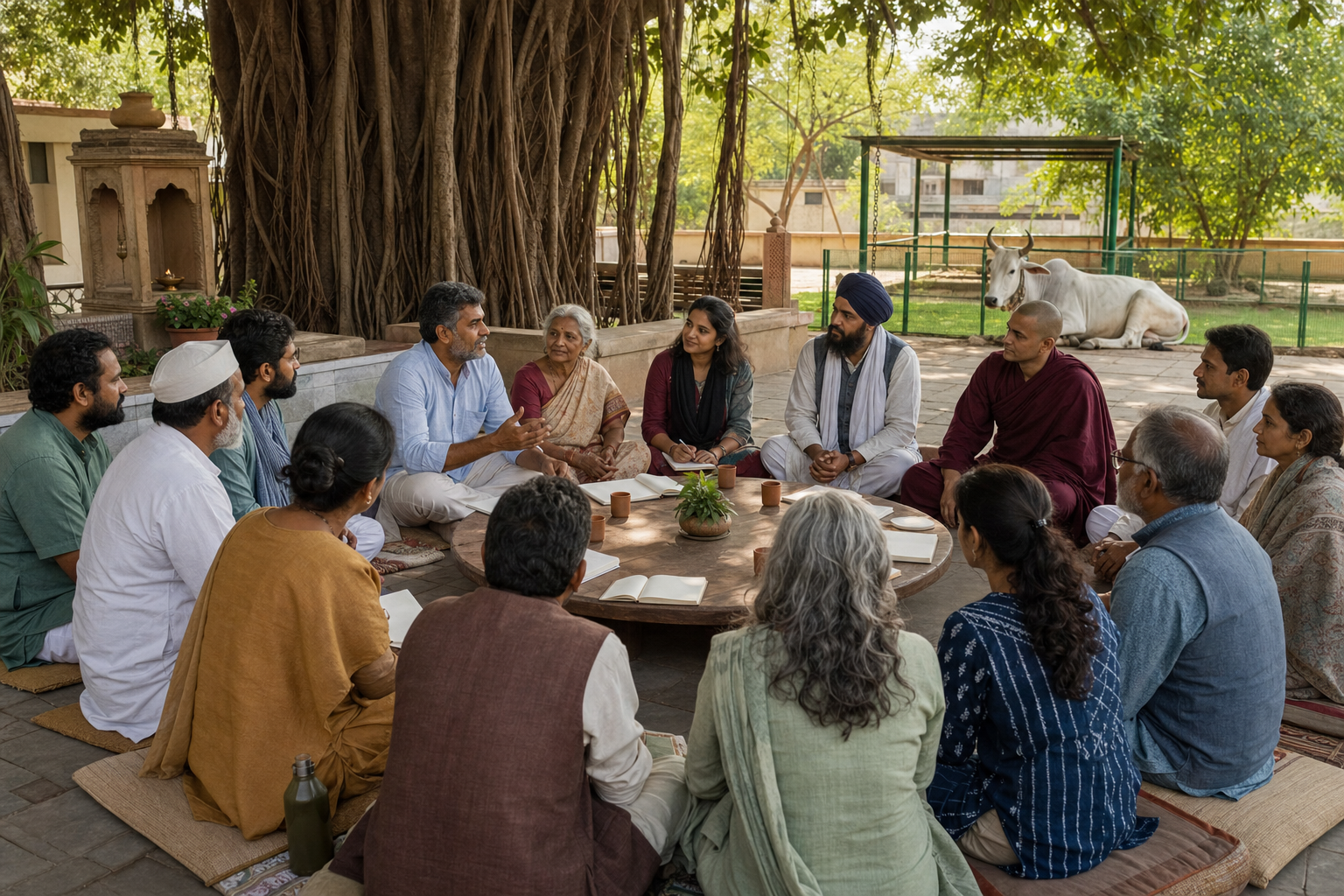
For Hindus, the cow carries a distinctive devotional, cultural, agricultural, and civilisational significance. Buddhism, Jainism, and Sikhism should not be flattened into identical doctrines about the cow. A coalition does not need doctrinal uniformity, however. Daya, ahimsa, restraint, and responsible care for living beings provide enough shared ethical ground for practical cooperation.
Public language works best when it preserves both conviction and common purpose. State honestly why cow protection matters to Hindu participants. Then state the civic demands that neighbours from other traditions can evaluate on their merits: transparent planning, meaningful consultation, humane treatment, responsible waste management, accountable expenditure, non-violence, and lawful administration.
Swami Avimukteshwarananda described the Gujarat legislator’s stand as “Asli Hindu”. Read constructively, the phrase recognises action aligned with compassion and stewardship. It need not become a test used to exclude people who reach the same humane demand through another dharmic path or through civic concern.
A disciplined coalition should agree on its requested decision, authorised spokespersons, standards for evidence, and rejection of abusive language before appearing in public. If participants disagree about a secondary issue, record the disagreement instead of allowing it to fracture the primary demand. Unity becomes credible when it is reflected in conduct, not merely invoked from a platform.
Key takeaways
- Identify the exact municipal decision and its current stage before choosing a tactic.
- Separate confirmed facts, unanswered questions, ethical objections, and administrative concerns.
- Give officials a specific requested action supported by a clear, verifiable civic record.
- Use accepted institutional channels, involve responsible elected representatives, and retain every acknowledgement and response.
- Reject vigilantism, intimidation, and unverified allegations; they violate ahimsa and weaken the case.
- Pair opposition to a slaughterhouse with animal-welfare oversight, waste governance, public accountability, and viable livelihood transitions.
- Build dharmic cooperation around compassion without pretending that every tradition holds the same theology of the cow.
Your next move is practical: write down the proposal’s official name, location, present stage, decision-making authority, unresolved questions, and the action you want. Wherever a field remains blank, turn it into a written request for disclosure. That simple discipline moves cow protection from reaction to responsible civic power.
References
