
You may already bow before Gomatha, offer fodder when the opportunity arises, or donate to a gaushala. Yet a practical question remains: when does that devotion become ecological dharma rather than an occasional gesture?
If you are deciding how to serve, use a demanding but workable rule: the act should care for the animal, respect the limits of land and resources, and strengthen human responsibility. Gau Seva becomes durable when all of these remain visible.
Kamadhenu changes what abundance means
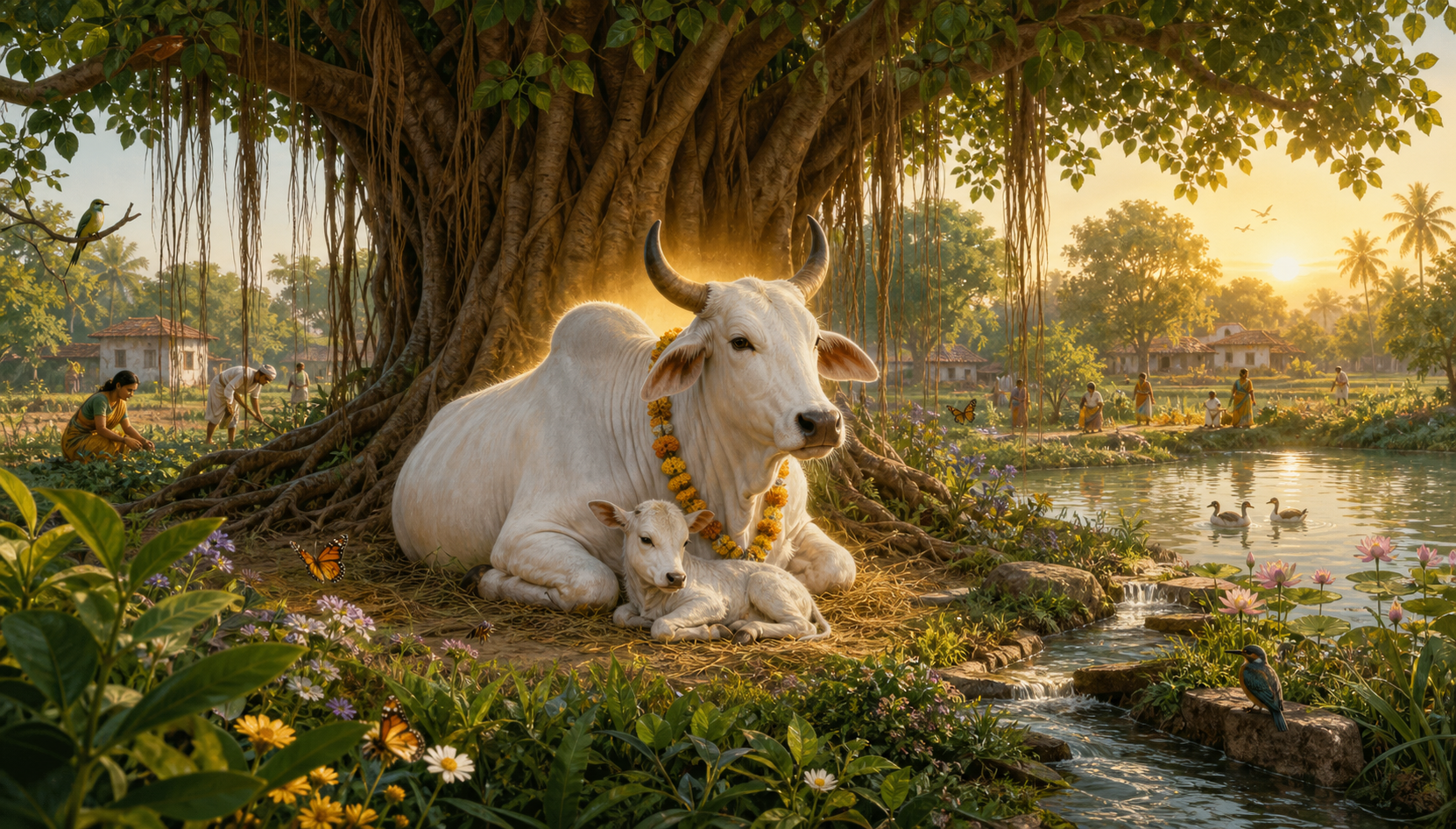
Kamadhenu, also called Surabhi and revered as Gomatha, embodies abundance, nurturing care, auspiciousness, and the generative power of the earth. Her familiar description as the wish-fulfilling cow can be misunderstood if we hear only the word “wishes.” She is not a sacred justification for unlimited demand. Her maternal symbolism places receiving inside a relationship of gratitude and responsibility.
That distinction matters for ecological dharma. Extraction asks, “How much can this being or landscape give us?” Dharma adds harder questions:
- What living being, worker, soil, water, or community makes this abundance possible?
- What care must be returned so that the relationship can continue without cruelty or depletion?
- What desire should be restrained when satisfying it would transfer the cost to another being?
The final question is the ecological edge of Kamadhenu’s teaching. Gratitude without restraint can remain decorative. A household may perform Gau Puja and still treat food, water, animals, or labor as disposable. The ritual is not false, but it has not yet completed its movement into conduct.
Prosperity, viewed through Gomatha, is therefore more than possession. It is sufficiency that can be sustained, well-being that does not depend on concealed injury, and nourishment that reaches beyond the strongest consumer. This is why the symbolism can guide a modern household even when no cow is physically nearby.
Gau Seva begins where sentiment becomes responsibility
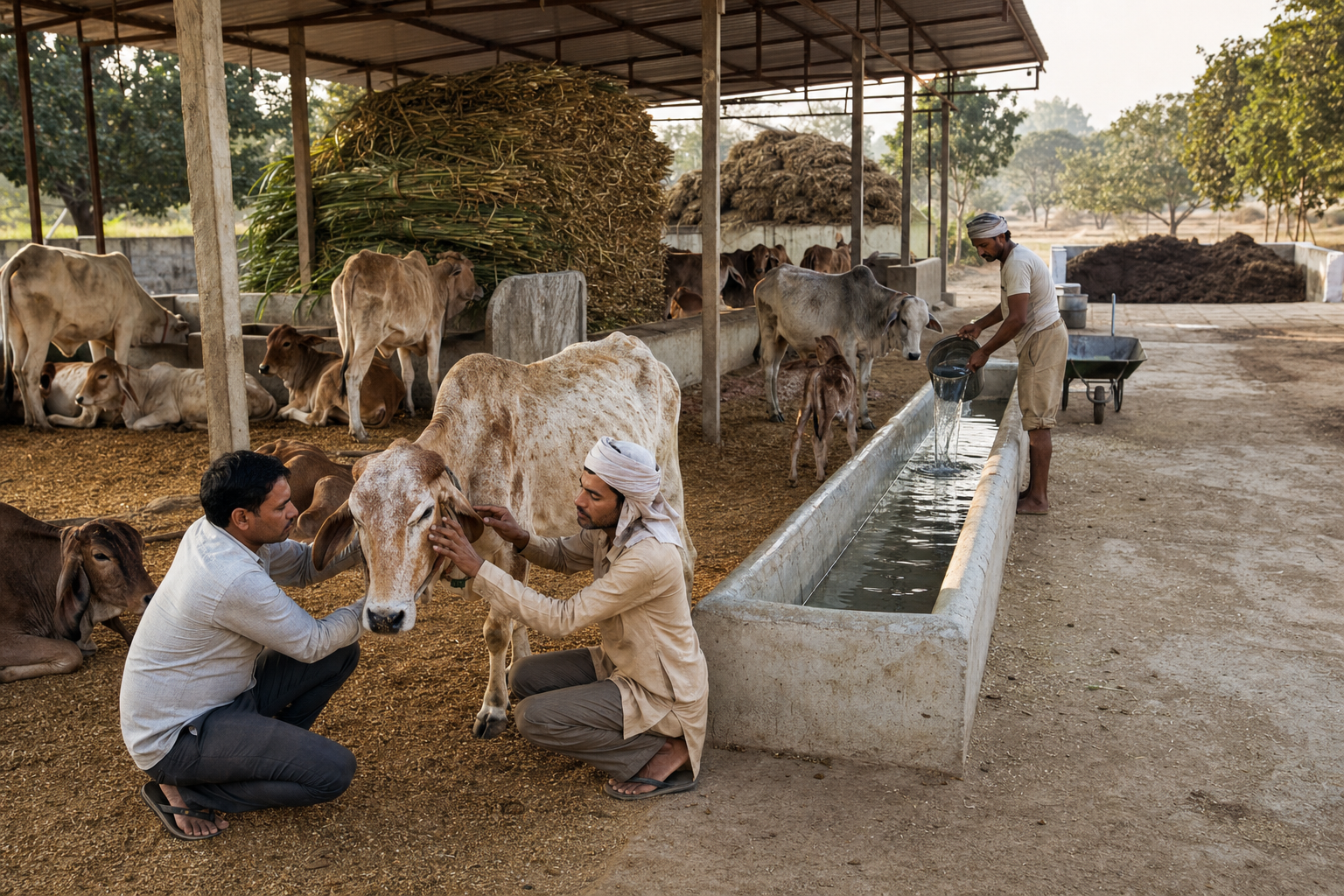
Feeding a cow can be a sincere act of devotion, but feeding alone does not tell you whether the animal is well cared for. If the cow belongs to a temple, shelter, farmer, or neighborhood caretaker, ask what fodder is appropriate before offering anything. Do not assume that household leftovers suit the animal. Give through the person responsible for its care, and do not create a feeding spot where the cow or people must stand in traffic.
A gaushala deserves the same thoughtful attention. A devotional atmosphere, an attractive Gau Puja area, or a moving appeal may express genuine reverence, but none substitutes for daily care. Before making a recurring contribution, look for clear answers to these questions:
- Does care continue throughout the animal’s life? Ask how the institution serves old, injured, disabled, and non-lactating cows as well as calves and bulls. A system interested only in productive animals does not embody the maternal ethic associated with Gomatha.
- Does the shelter operate within its capacity? Ask whether available fodder, drinking water, resting space, staff, and veterinary access are adequate for the animals already present.
- Can you see the ordinary care? Notice water access, the condition of resting areas, protection from weather, cleanliness, and how caretakers respond to an animal that appears unwell.
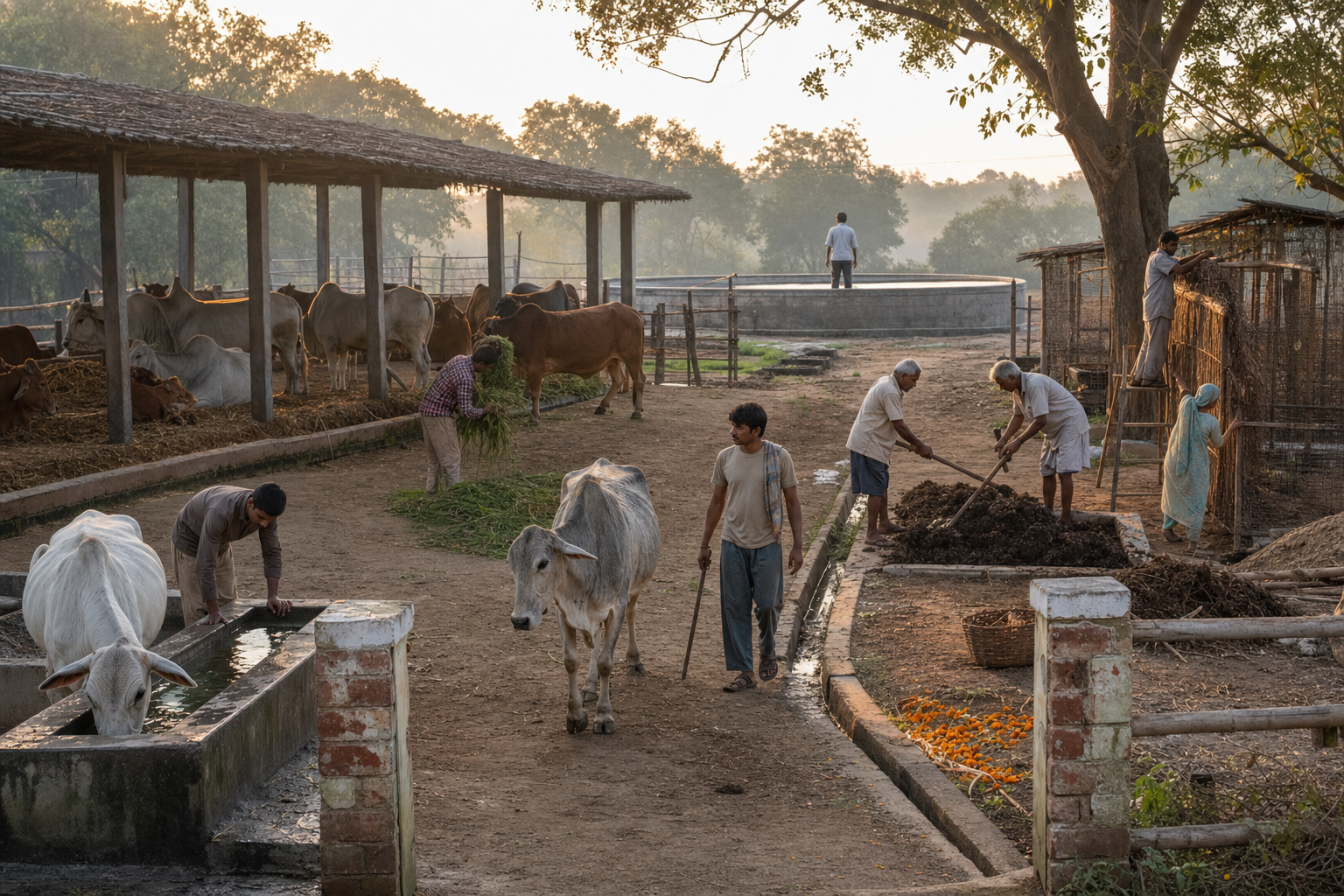
- How are manure, urine, bedding, and runoff handled? These materials should not simply shift the burden from the shelter to neighboring land or water. Ask about the actual routine rather than assuming that every by-product is automatically useful.
- Are the people doing the work treated with dignity? Gau Seva depends on feeding, cleaning, observation, transport, record-keeping, and skilled animal care. Reverence for the cow should not make the caretaker’s labor invisible.
- Is the use of donations understandable? Look for current needs, basic accounts, regular updates, and candor about constraints. Transparency allows devotion to become dependable support.
If those answers are incomplete, begin modestly. Support a clearly stated need, observe whether communication remains consistent, and make a recurring commitment only when you understand how the institution works. The objective is not to catch a gaushala failing an examination. It is to direct limited resources toward care that can actually be maintained.
You can also serve without donating money. A shelter may need reliable volunteers, help maintaining records, professional advice, transport coordination, repairs, or connections to qualified animal-care personnel. Ask for the current bottleneck before arriving with a solution. Seva responds to the real need of the recipient; it is not a stage for the preferences of the giver.
Test every project across animal, land, and community
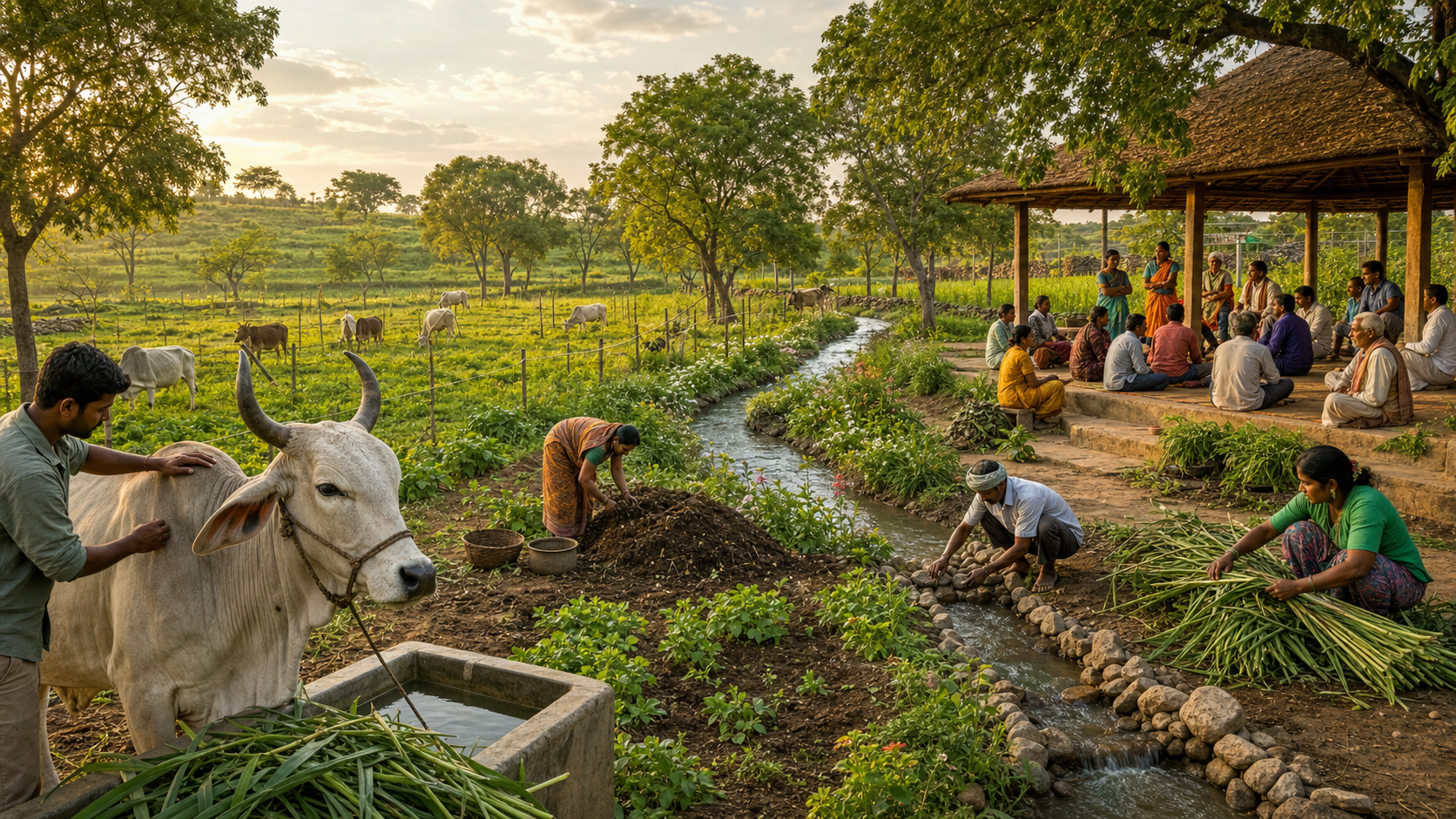
Ecological dharma treats Gau Seva as a living system. The cow cannot be separated from fodder, water, land, waste management, caregivers, neighbors, and the people financing the work. An improvement in one part that creates an unmanaged burden elsewhere is incomplete.
| Area to examine | Signs of alignment | Warning signs |
|---|---|---|
| Animal | Care continues beyond productive years; daily needs and treatment are planned | Attention peaks around rituals while ordinary care remains uncertain |
| Land and resources | Animal numbers fit available fodder, water, space, labor, and waste-handling capacity | More animals are accepted without the resources needed to care for them |
| Community | Caretakers are respected, spending is understandable, and neighboring people are not handed hidden costs | Labor is invisible, decisions are opaque, or burdens are moved outside the compound |
This test prevents two common mistakes. The first is reducing ecology to a cow-related product or slogan. No substance becomes beneficial merely because it came from a sacred animal; handling, local conditions, competence, and consequences still matter. The second is equating expansion with success. A gaushala may have compassionate intentions and still become overextended if it accepts animals faster than it can secure care.
Protecting indigenous breeds and supporting gaushalas can express ecological mindfulness, but breed protection should remain joined to the welfare of individual animals and the limits of the local environment. A revered label cannot compensate for hunger, crowding, untreated illness, exhausted workers, or unmanaged waste.
Your purchasing habits belong inside this test as well. If your household uses milk, ghee, or other cow-derived goods, ask what happens to animals when they are no longer productive and whether the stated care model is credible. You may not receive a complete answer immediately. The act of asking still changes the standard from price and purity alone to lifetime responsibility.
If you live far from a cow or gaushala, do not manufacture a symbolic encounter. Support a trustworthy institution remotely, offer a useful professional skill, or reduce waste in a part of your own household. Ecological dharma is not measured by proximity to a photograph. It is measured by whether reverence changes how you receive, use, and return resources.
Build a practice that survives beyond a festival day
Prayer before Gomatha’s image, offering fodder, Gau Puja, and observances such as Gopashtami keep devotion present in households and communities. Their ecological value deepens when they anchor a repeatable discipline rather than a brief burst of generosity.
A household rule of receiving, returning, and restraining
You can adapt the following rhythm to your circumstances:
- Receive consciously. During morning prayer or before a meal, name something that reached you through the work of animals, people, soil, or water. Gratitude becomes clearer when its object is concrete.
- Return something useful. Offer suitable fodder through a responsible caretaker, contribute to verified care, volunteer a needed skill, or support shared nourishment in your community.
- Restrain a connected habit. Choose a place where convenience is producing avoidable waste or shifting a cost to another being. Change that habit instead of adding another ceremonial object.
- Review continuity. On Gopashtami or another chosen observance, ask whether your support continued, whether the recipient remained trustworthy, and whether your own consumption changed.
This practice also works in a home where an image of Surabhi is the only visible form of Gau devotion. The image is not a lesser substitute for direct contact. It is a reminder. What makes the remembrance consequential is the decision attached to it.
Cooperate across Dharmic traditions without flattening them
Kamadhenu is a distinctly Hindu sacred figure. Dharmic cooperation does not require pretending that every tradition worships Gomatha in the same way. It can begin from related ethical commitments: ahimsa and compassion are cherished in Hindu, Buddhist, and Jain life, while Sikh practice gives powerful expression to seva and shared nourishment through langar.
A community project can therefore unite people around compassionate animal care, responsible resource use, dignified labor, or shared food while allowing each tradition to explain its motivation in its own language. Do not erase the Hindu meaning of Gomatha to make cooperation easier, and do not assign cow worship to participants whose traditions frame the duty differently. Unity becomes stronger when it does not demand sameness.
This approach also keeps Gau Seva from becoming merely an identity marker. Public reverence carries weight when it produces patient care, accountable institutions, restrained consumption, and generosity toward living beings. Those are standards a community can practice together and examine honestly.
Key takeaways
- Kamadhenu represents abundance held inside a relationship of gratitude, care, and restraint, not permission for limitless consumption.
- Before feeding a cow, ask the responsible caretaker what is suitable and where it should be offered.
- Evaluate a gaushala by lifetime animal care, operating capacity, land and waste practices, treatment of workers, and financial clarity.
- Test every Gau Seva project across animal welfare, ecological limits, and community responsibility. Neglecting any part weakens the whole.
- You can practice ecological dharma without direct access to a cow through reliable support, useful service, careful purchasing questions, and household restraint.
- Shared Dharmic action should honor common values such as ahimsa and seva without erasing the distinct Hindu meaning of Gomatha.
Before your next offering or observance, choose a practical lane. Ask a caretaker or gaushala about lifetime care, fodder and water, operating capacity, and its most pressing need. Then pair any outward gift with a restraint in your own household.
That pairing is the work: serve what is before you, and reduce the demand you place elsewhere. It is how Kamadhenu moves from sacred image to ecological discipline.
References
