
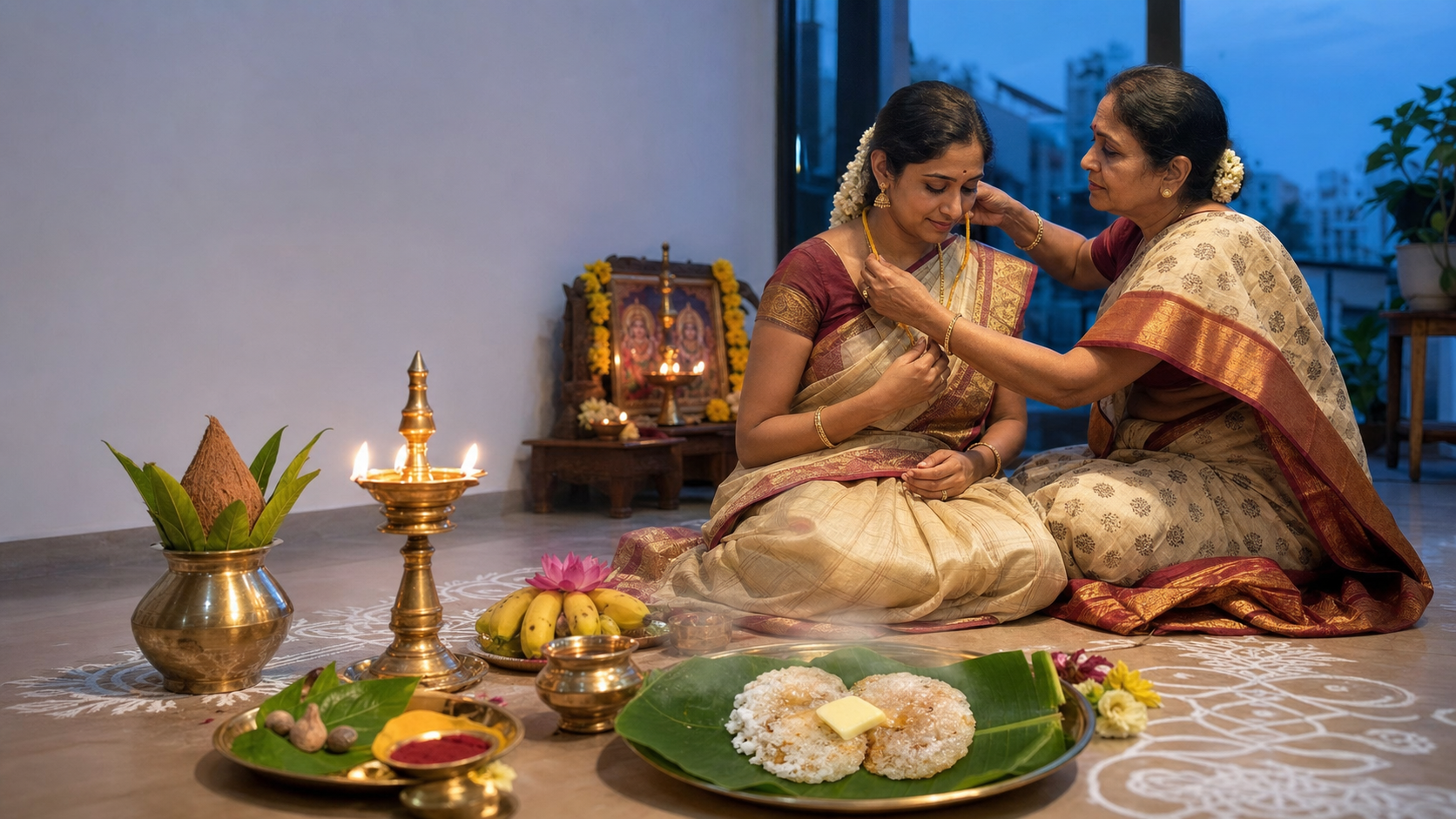
If you know Karadaiyan Nombu falls in March but aren’t sure when to tie the nombu saradu, what to prepare, or when the fast ends, organize the observance around one clear sequence: prepare first, perform the vrata during the locally confirmed muhurat, tie the sacred thread, and only then take the offering.
For households in India, the working date is 14 March 2026, with 7:30 PM to 8:30 PM IST given as the preferred window for wearing the thread and concluding the fast. Because regional panchangams can vary slightly around the Maasi-Panguni transition, confirm the local timing before fixing your household schedule.
Karadaiyan Nombu 2026 at a glance
- Date: 14 March 2026.
- Reference muhurat for India: 7:30 PM to 8:30 PM IST.
- Principal deity: Goddess Shakti, worshipped especially as Kamakshi.
- Central observances: sankalpa, deepam, naivedyam, prayer, and tying the yellow nombu saradu.
- Traditional offering: karadai adai, in sweet and savory forms, with fresh butter.
- When the fast ends: after the sacred thread has been worn, beginning with a small portion of adai and butter.
Treat 7:30 PM to 8:30 PM as the India reference window, not as a universal clock time for every location. Your regional panchangam or the practice followed by your temple and family should settle any local difference. If you live outside India, use a panchangam calculated for your location instead of simply reading the IST hour as local time.
Prepare everything before the muhurat begins
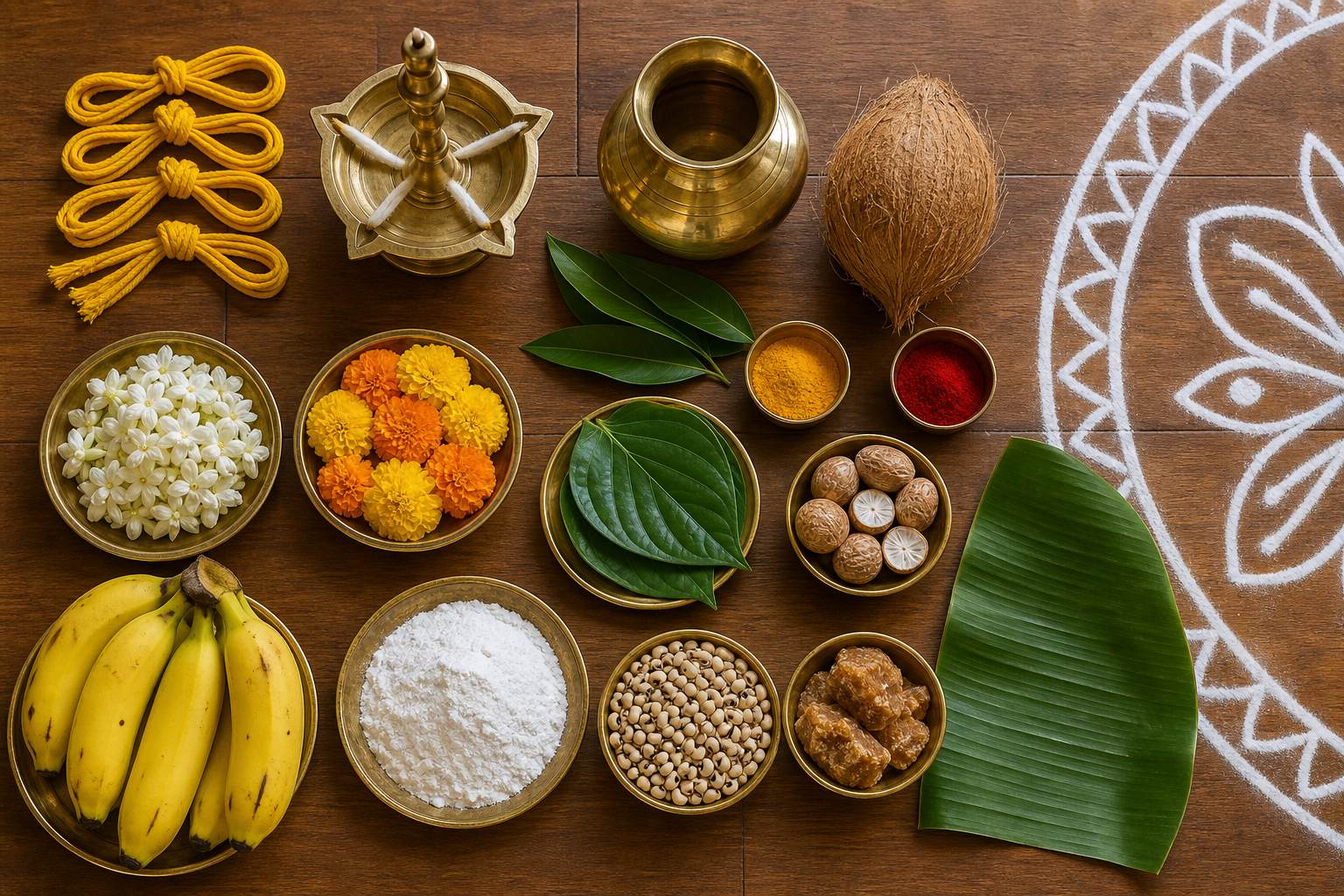
The most avoidable difficulty is leaving cooking, thread preparation, or altar arrangement until the one-hour window has begun. The muhurat is for the sankalpa and worship, not for searching for turmeric or waiting for the final batch of adai to cook. Complete the practical work earlier so the family can enter the observance without haste.
Set aside the following items, adapting the arrangement to your inherited household tradition:
- A clean altar or puja space for Goddess Shakti or Kamakshi.
- A deepam, fuel, and everything needed to light it safely.
- A kalasha if it forms part of your family’s observance.
- Fresh flowers, turmeric, and betel leaves.
- A yellow nombu saradu for each participant, with a spare if practical.
- Karadai adai prepared according to your household custom.
- Fresh butter for the naivedyam and for concluding the fast.
- Clean plates or vessels for the offering and later distribution of prasadam.
- The regional panchangam timing, checked in advance rather than during the puja.
Both sweet and savory adai are customary, but the observance shouldn’t become a contest in the number of dishes made. Follow the form your family knows. If you are learning the vrata for the first time, prepare the version you can make carefully and keep the attention on the offering, prayer, and sacred thread.
Invite children into the preparation where that is practical. They can help shape the adai, arrange flowers, or place the threads near the altar. This gives them a real role and makes the transmission of the vrata more tangible than simply asking them to watch.
Follow this puja order during the confirmed window
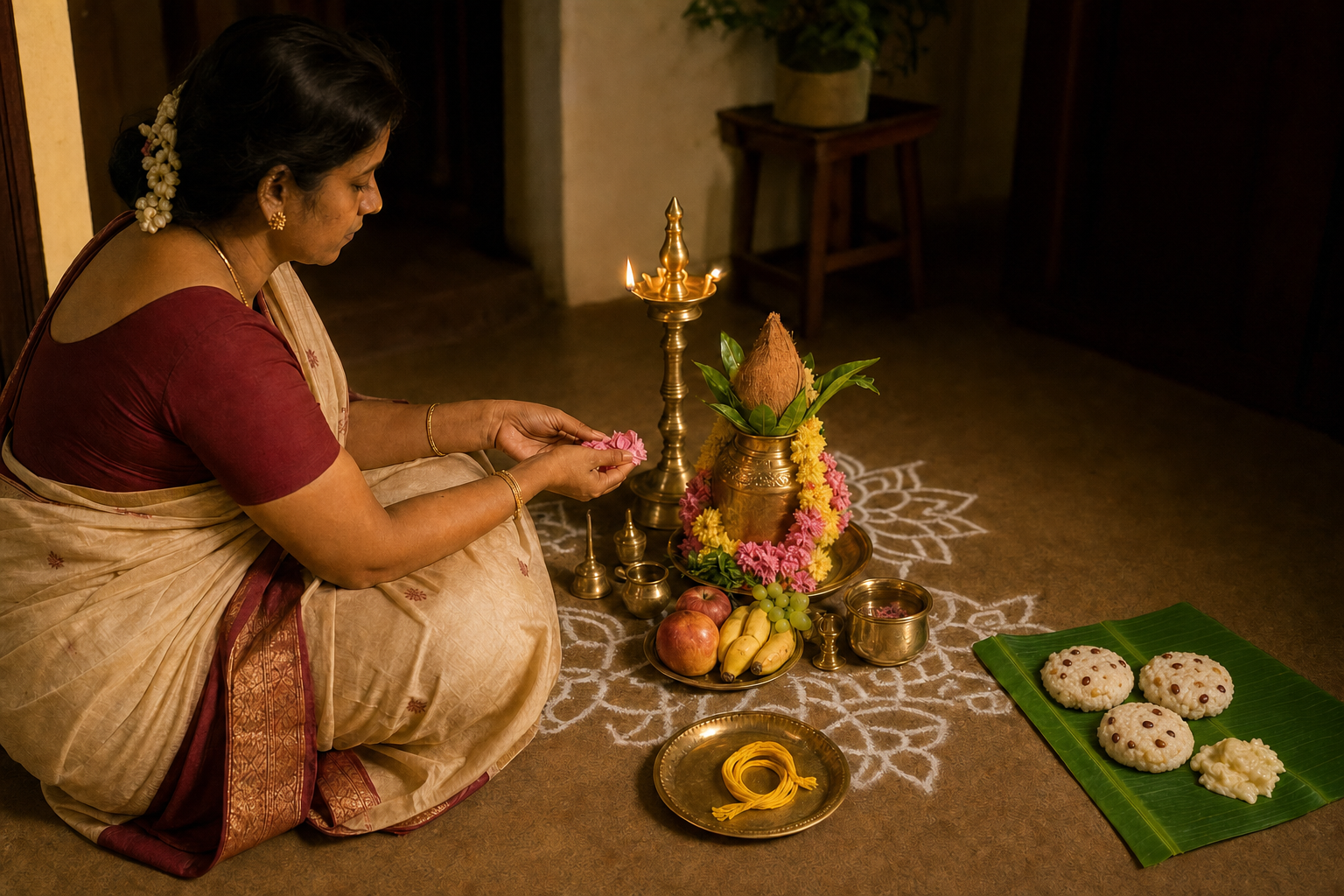
Household procedures differ, so retain any instructions received from your elders, temple, or family priest. Within that tradition, the essential order for 2026 is straightforward:
- Gather at the prepared altar. Make sure the adai, butter, nombu saradu, flowers, and other puja items are already in place.
- Light the deepam. Let this mark the movement from household preparation into worship.
- Make the sankalpa. Undertake the vrata prayerfully during the locally accepted muhurat.
- Worship Goddess Shakti as Kamakshi. Offer flowers and the other customary items used in your home.
- Offer the naivedyam. Place the karadai adai and butter before the deity before anyone eats them.
- Recall Savitri’s steadfastness. The Savitri-Satyavan narrative gives the vrata its ethical center: devotion joined to courage and resolve.
- Tie or receive the yellow nombu saradu. Follow your family custom for who ties it, praying for health, longevity, harmony, and the welfare of the household.
- Conclude the fast. After the thread is worn, take a small portion of adai and butter, then share the prasadam with the family.
Do not reverse the final two actions merely because the food is ready. The sacred thread is worn before the fast is broken. That order joins the physical discipline of fasting to the sankalpa rather than treating the offering as an ordinary evening meal.
If your family has a traditional Tamil prayer or recitation for the vrata, use the wording you were taught. If you do not know one, don’t improvise a supposedly ancient mantra from memory. A simple, reverent prayer to Kamakshi for the family’s well-being preserves the intention while you seek reliable instruction for future observances.
Keep the fast and food rules proportionate to the vrata
Karadaiyan Nombu includes fasting and a sattvic orientation, but the precise food restrictions can be governed by family and regional practice. Confirm those rules before the day itself, especially if this is your first observance. The point is disciplined attention, not a last-minute argument over a rule no one checked.
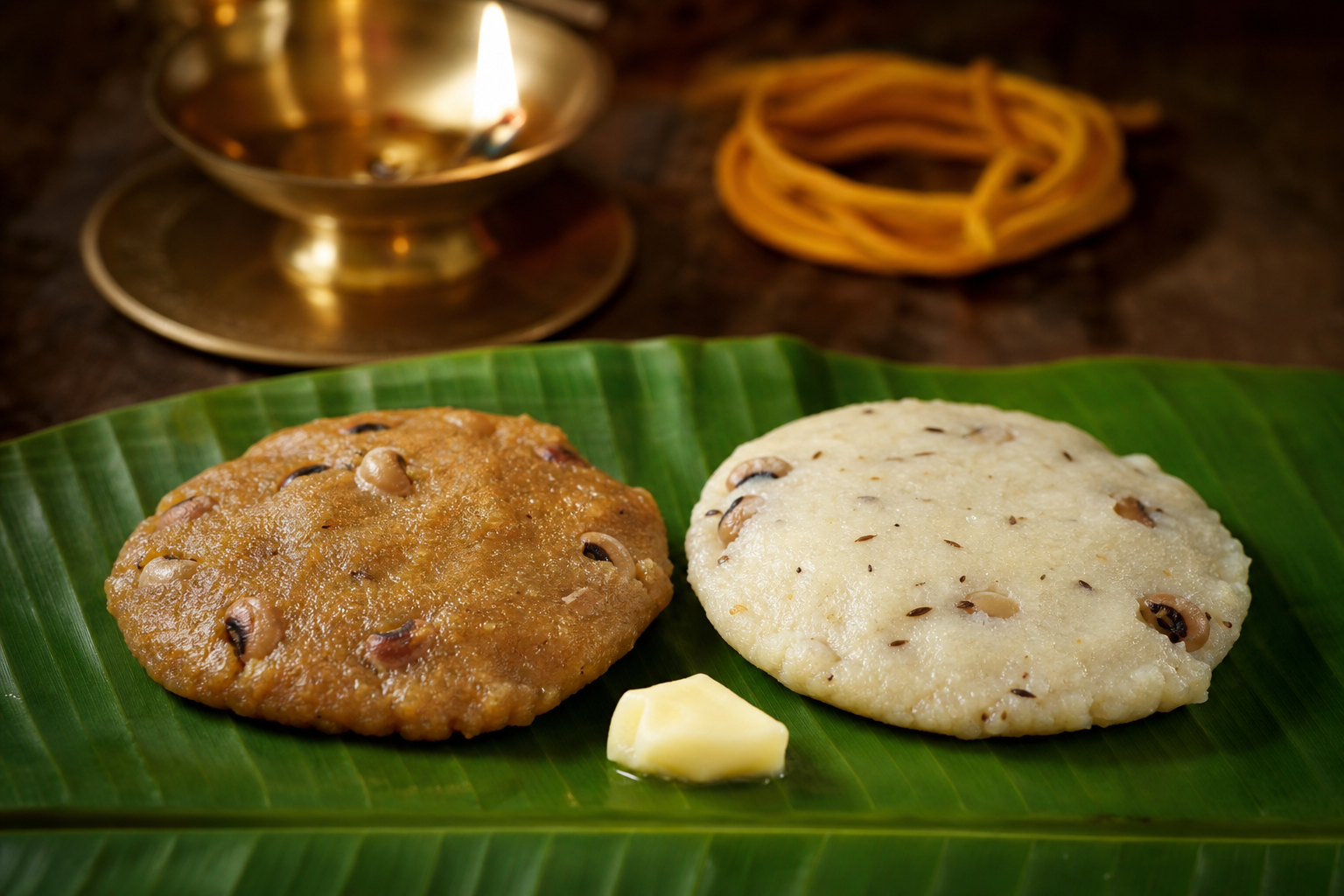
The completion sequence is more definite: offer the adai and butter, wear the nombu saradu, and then break the fast with a small portion of the prasadam. A full family meal can follow according to household custom. Keeping the first portion measured preserves the vrata’s mindful character and leaves room for prasadam to be shared.
Fasting should not be used to ignore medical needs. Anyone for whom fasting conflicts with prescribed medication, pregnancy-related nutrition, illness, or a clinician’s advice should seek appropriate medical guidance and discuss a safe form of participation with a trusted family or spiritual elder. The devotional purpose can still be honored through prayer, sankalpa, seva, and participation in the puja; the vrata is not a substitute for medical care.
Let Savitri’s resolve shape the household, not just the hour
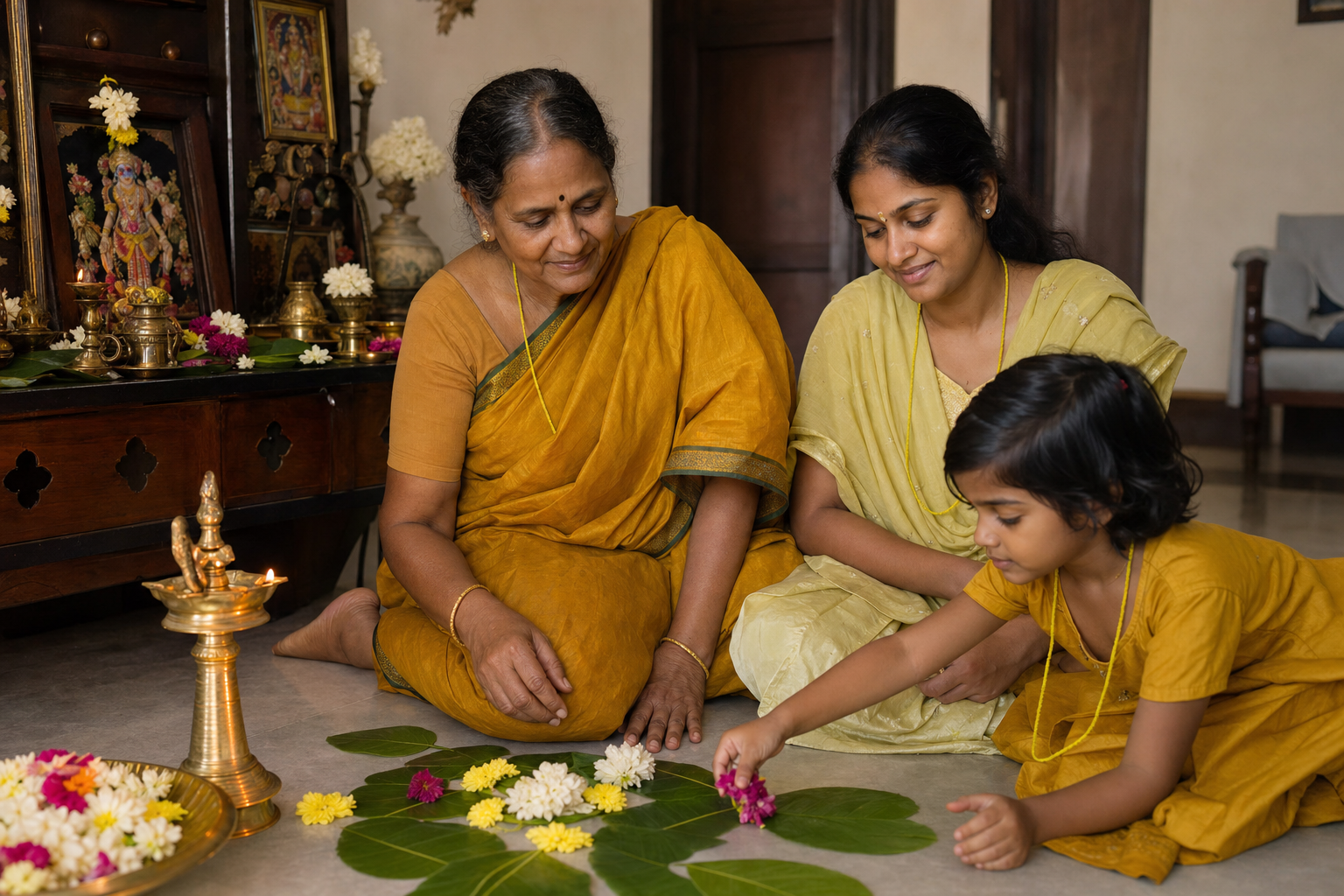
Karadaiyan Nombu is commonly undertaken by married women and young girls, but its meaning reaches the whole family. The Savitri-Satyavan narrative places steadfast devotion beside moral courage. The prayers for health and longevity therefore belong within a larger discipline of responsibility, gratitude, and active care for one another.
This is why the family setting matters. An elder can recount Savitri’s story while younger participants prepare the offering. Someone who isn’t fasting can clean the puja space, obtain the flowers, or help serve prasadam. Such acts turn the evening from an observance performed by one woman into a household expression of mutual care without taking away its distinctive feminine and Tamil inheritance.
The vrata is specifically Tamil and Hindu, centered on Shakti in the form of Kamakshi. Its particularity need not be diluted to recognize a wider Dharmic resonance. Self-discipline, compassionate responsibility, seva, and reflection are also honored across Hindu, Buddhist, Jain, and Sikh paths. The more useful form of unity respects the distinct ritual while recognizing the ethical kinship.
Before 14 March arrives, make three decisions: which local panchangam your household will follow, who will lead the sankalpa, and when the cooking and altar preparation will be finished. Once those are settled, the hour between 7:30 PM and 8:30 PM IST can remain what it is meant to be for households using the India reference timing: a composed act of devotion rather than a race against the clock.
References
