
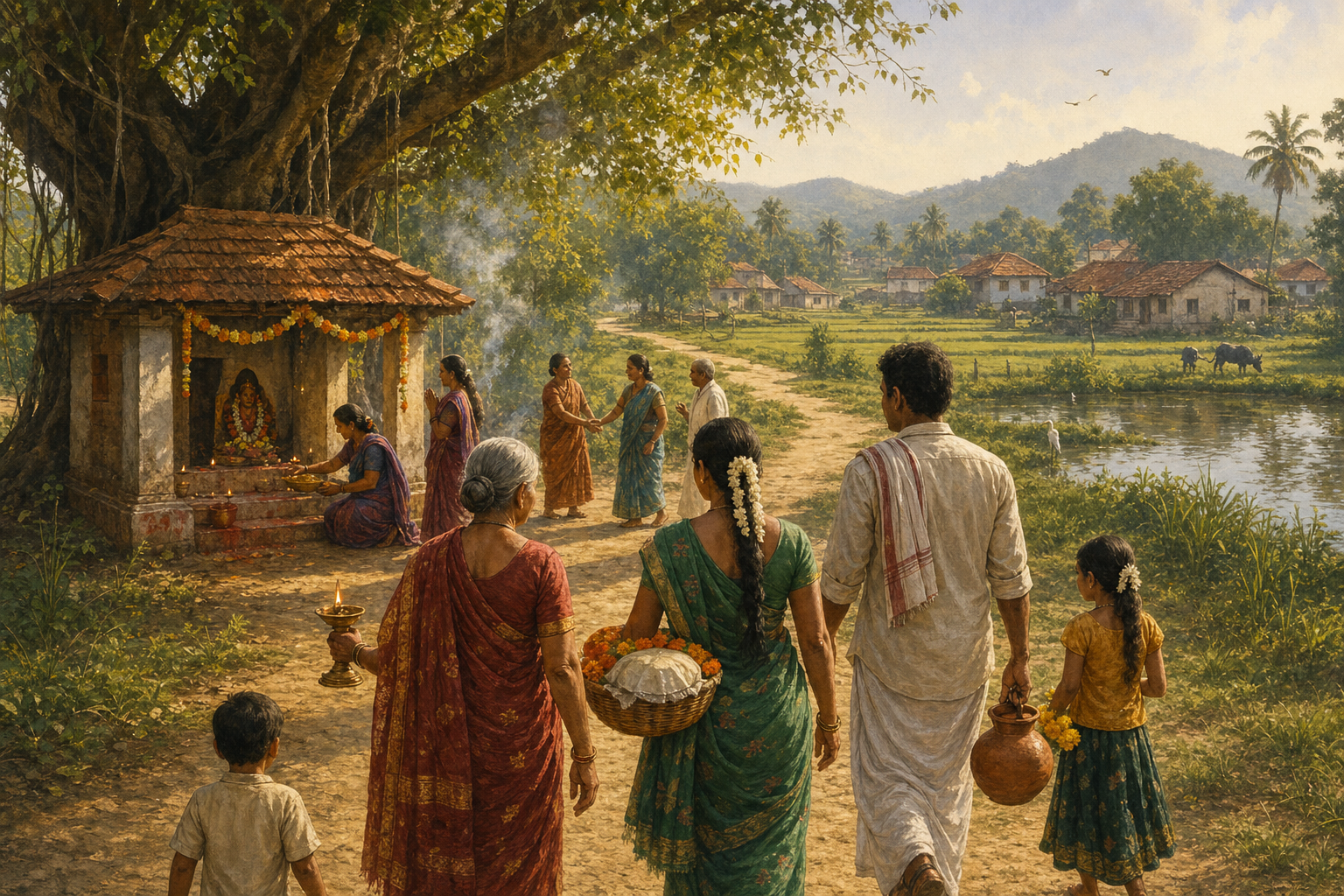
You may know the name of your family’s Devi but little else. Or perhaps you join Navratri, Durga Puja, a village mela or a temple pilgrimage and wonder what connects the public celebration to the quieter obligations carried by families. The answer is rarely contained in an image or origin story alone. A goddess tradition lives through a relationship among deity, people, place, calendar and conduct.
If you want to understand or recover such a tradition, begin with that relationship. Do not reduce a regional Devi to folklore, and do not make her interchangeable with every other form of Shakti. Her local name, shrine, vehicle, vows and festivals show how universal sacred power becomes present in a particular community. Learning to read those elements will help you participate with greater accuracy and pass the practice on without turning it into either a museum exhibit or an invented family custom.
First identify the relationship, not merely the goddess
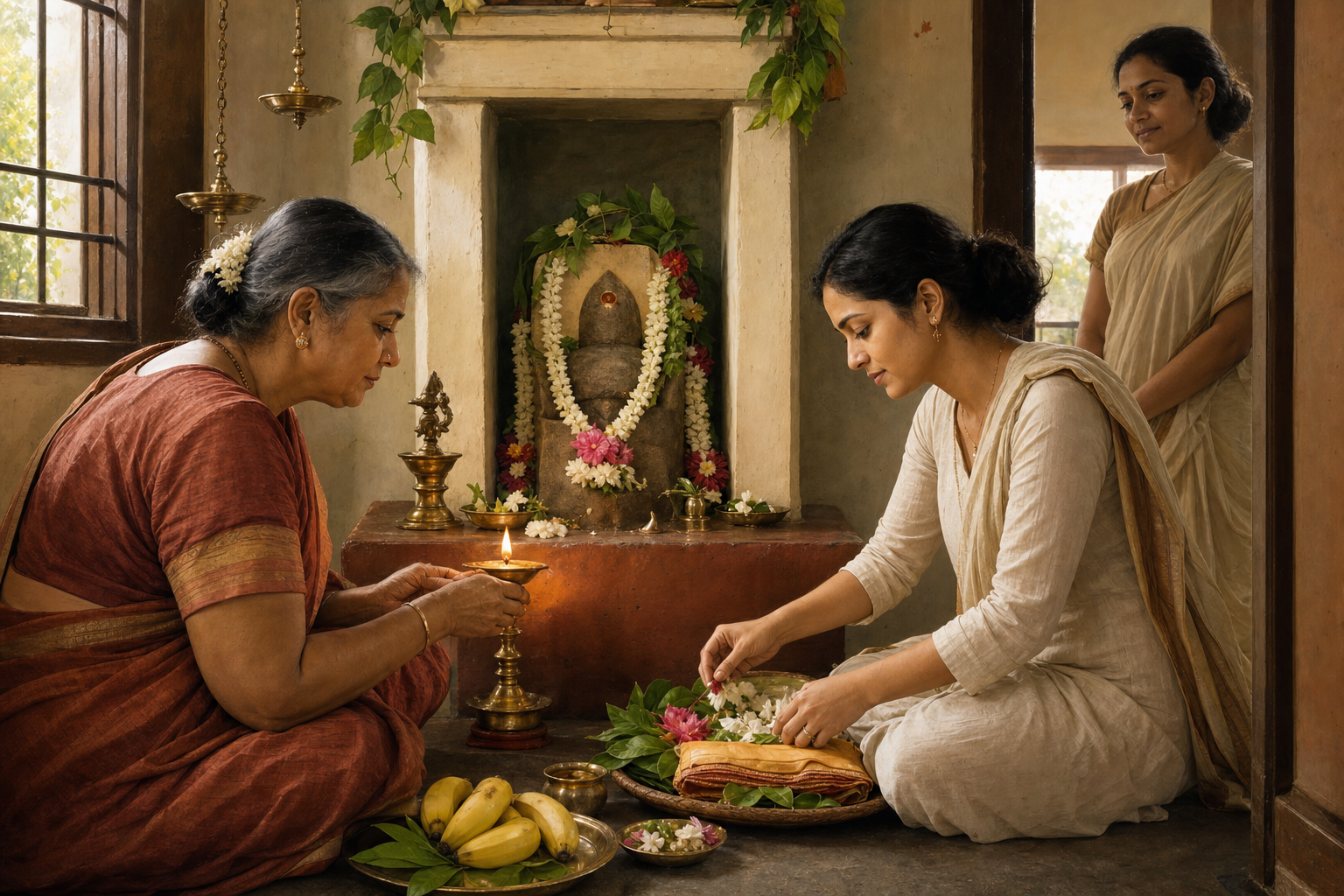
The most useful first question is not simply, Who is this goddess? Ask instead, How is this household or community related to her?
A gramadevata protects a locality, while a kuladevi is honored through a lineage. A single family may also worship a widely revered Puranic form, attend the annual festival of a regional Devi and seek protection from a goddess associated with its occupation. These relationships can overlap, but they are not synonyms.
- Kuladevi: Ask which lineage remembers her, which life-cycle events invoke her blessing, whether the family carries an old vow, and where the ancestral shrine or principal temple is located.
- Gramadevata: Ask which settlement or territory falls under her protection, when the community approaches her together, and which local concerns appear in the ritual calendar.
- Occupational protector: Ask whether sailors, traders, pastoralists, farmers, artisans or another working community seeks her protection before a hazardous or uncertain undertaking.
- Pilgrimage or regional deity: Ask how a major shrine gathers people from different lineages and occupations into a shared sacred geography.
- Festival form: Ask what the annual celebration reveals that ordinary household worship does not: public storytelling, collective movement, seasonal renewal or a return to the parental home.
This distinction prevents a common mistake. Discovering that your grandmother prayed to a particular Devi does not, by itself, establish that she was the family’s kuladevi. The prayer may have arisen from a personal vow, proximity to a temple, an occupational association or participation in a regional festival. Before making a lineage claim, look for repeated family memory: pilgrimages across generations, blessings sought at marriages or other samskaras, inherited observances, or the Devi’s name appearing when elders recount migration and family obligations.
The distinction also protects local forms from being ranked beneath supposedly more universal ones. The classical language of Shakti already accommodates multiplicity. The Saptamatrikas—Brahmani, Maheshvari, Kaumari, Vaishnavi, Varahi, Indrani and Chamunda—and broader Yogini traditions show sacred power appearing through differentiated forms. Regional worship does not need to choose between metaphysical depth and local intimacy. A village or lineage goddess can be understood as Shakti while retaining the name, imagery and ritual expectations through which her devotees actually know her.
Use a simple relationship record when speaking with relatives or temple custodians. Write down five things separately: the name used by devotees, the people for whom she has a special role, the principal place associated with her, the customary time of worship, and the vow or responsibility attached to that worship. Keeping these fields separate is more reliable than forcing every memory into a single grand narrative.
Read the region through landscape, livelihood and symbols
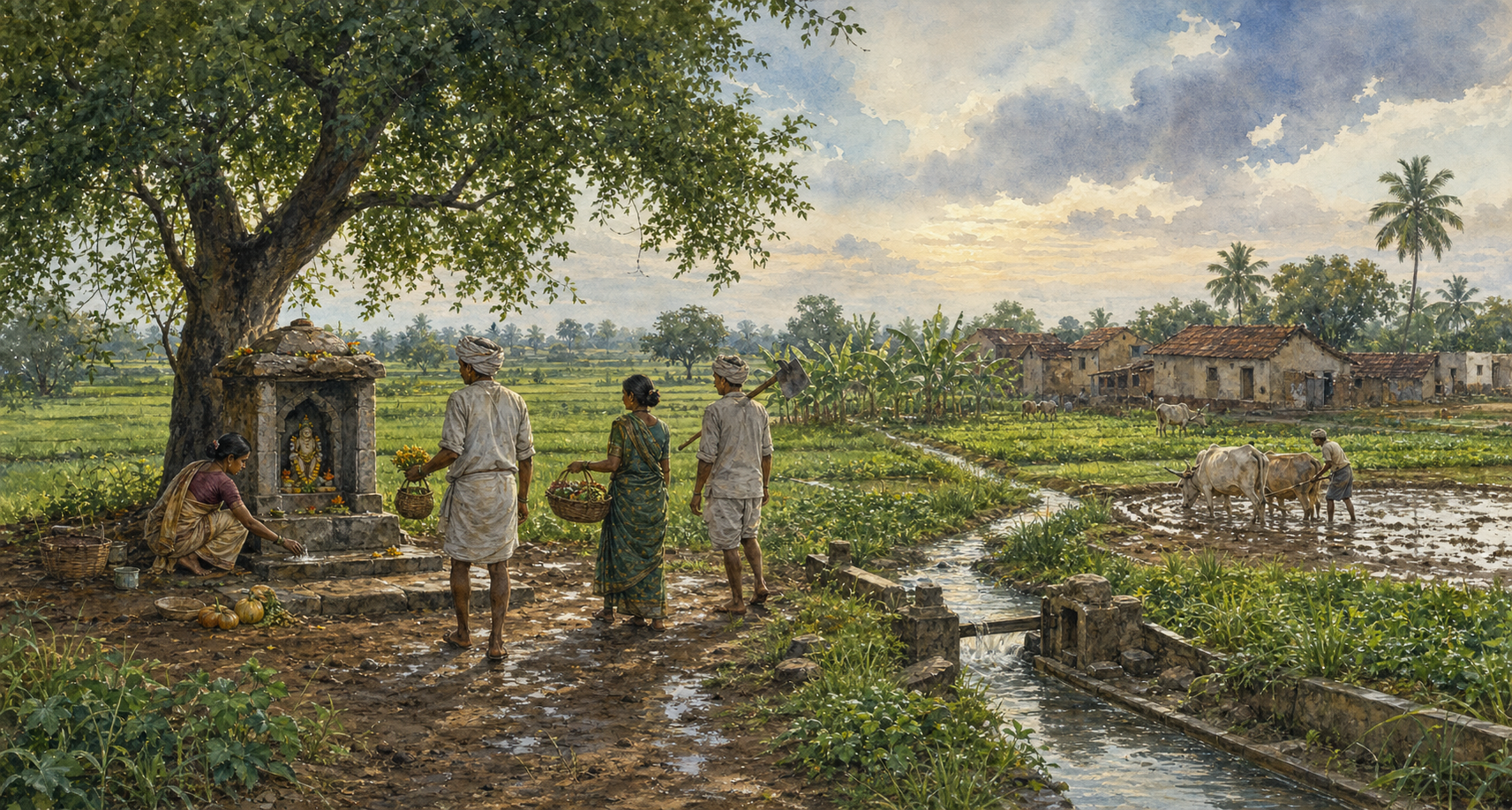
A regional goddess is not regional merely because her temple stands within a state boundary. Region becomes religiously meaningful when terrain, work, danger, kinship and memory enter the form of worship. Gujarat makes this especially visible because its goddess traditions speak through hills, coasts, deserts, farms, trade routes and lineage networks.
Begin with the shrine itself. Arasuri Ambaji near the Aravalli foothills centers worship on a Sri Yantra rather than an anthropomorphic murti. That distinction matters. It presents the Devi through sacred geometry even as offerings, vows, fairs and pilgrimage keep the temple embedded in ordinary social life. The movement toward nearby Gabbar Hill connects devotion with an ascent through the physical landscape.
Kalika Mata at Pavagadh communicates another regional grammar. A hill marked by fortifications, shrines and successive political periods makes altitude and endurance part of the encounter. The temple gathers agrarian communities, urban guilds and other devotees into a common ritual calendar. In both cases, sacred geography does more than provide scenery. The journey trains memory into the body: the route taken, the climb completed and the place revisited become part of how belonging is renewed.
Next, examine the risks and livelihoods surrounding the Devi. Ashapura Mata at Mata no Madh has been approached by ruling houses, merchants, pastoralists and artisans, especially around transitions such as marriage, migration and new ventures. Harsiddhi Mata on the Saurashtra coast is bound to the dangers faced by seafaring communities: offerings before departure and thanksgiving after a safe return turn maritime uncertainty into a rhythm of prudence, dependence and gratitude.
Vahanvati Mata and Shikotar Mata likewise protect vehicles and voyages. Votive flags, miniature boats and thanksgiving rites make an important point visible: ritual does not eliminate risk. It places risk inside an ethical relationship. Safe return calls for gratitude; profit calls for generosity; protection calls for responsible conduct. Coastal worship has therefore linked departures, auspicious timing, first earnings, temple kitchens and repairs. Devotion follows the voyage into the use of its proceeds.
Then look closely at iconography. Khodiyar Mata’s crocodile is not an ornamental oddity. It places guardianship in the world of water crossings, uncertain conditions and solemn promises. Bahuchara Mata’s rooster, Chamunda’s lions and jackals, and the boats and flags offered to maritime goddesses work as memorable signs. They allow ecological danger and moral expectation to be seen together.
- Animal or vehicle: What feature of the local environment, danger or virtue does it make memorable?
- Location: Is the shrine on a hill, near water, beside fields, on a trade route or within a settlement?
- Offering: Does it represent first earnings, safe return, fulfilled vows, seasonal produce or another form of reciprocity?
- Festival timing: What is happening in family life, agriculture, travel or the season when the community gathers?
- Public obligation: Does devotion support food, education, healthcare, repair work, philanthropy or another form of seva?
This method also reveals how a tradition grows without ceasing to be devotional. Temples and trusts associated with Umiya Mata have supported education, healthcare, matrimony networks and cohesion among dispersed Patidar communities. Khodiyar devotion has similarly accompanied temple building and philanthropy. The institution is not separate from the sacred relationship when prosperity is understood to create responsibility.
Bahuchara Mata shows another kind of social depth. Alongside associations with chastity, traders and travelers, she is venerated by gender-nonconforming communities seeking dignity and grace. This layered field of devotion should not be squeezed into one modern slogan or one narrow social function. It is better read through the Dharmic duties it can call forth: restraint, protection, compassion, non-harm and service.
When you encounter such variety, resist the urge to find one symbol that explains everything. A regional tradition can hold several communities and meanings because it has accumulated relationships over time. Accuracy requires you to say which community, shrine or ritual context you mean.
Notice how calendars join public identity to household care
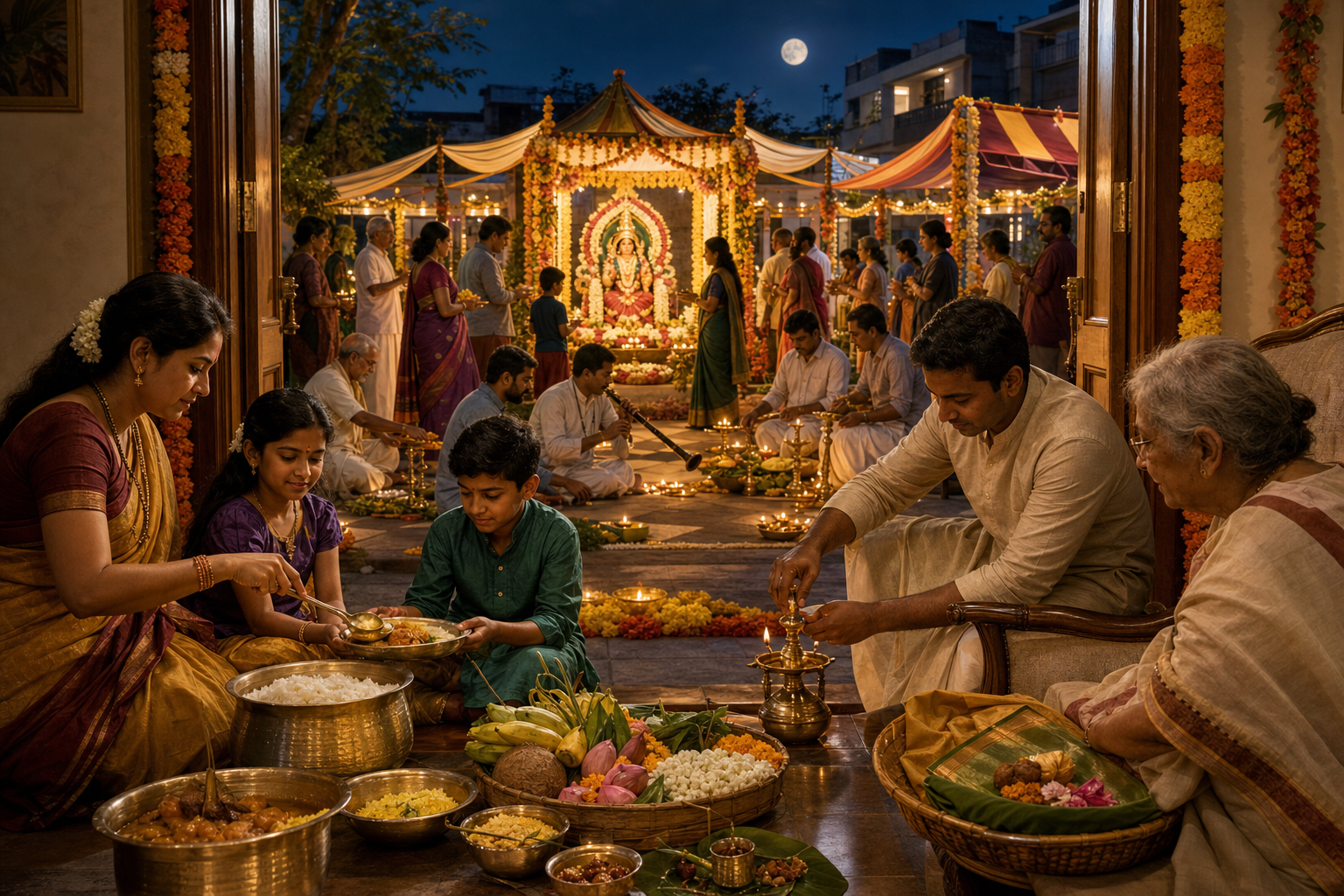
Place gives a goddess tradition its geography; repetition gives it continuity. A ritual becomes living memory when people know not only where to go but when to stop ordinary activity, what to offer, which story to remember and what duty follows.
Navratri in Gujarat demonstrates the public side of that process. Garba circles form around the garbha-deepa, the lamp at the center. The circle can be read as a vernacular theology: many moving participants orient themselves around one source of light. Song, disciplined movement, appropriate conduct and collective joy make the festival more than entertainment. The body learns an order—attention to the center, awareness of others and participation without possession of the whole.
That is why preserving the lamp, devotional poetry and norms of participation matters even when musical form, venue or scale changes. Garba in Gujarat and in diaspora communities across North America, the United Kingdom and Africa carries regional identity because the practice remains recognizable as an act oriented toward the Devi. Clothing or choreography alone cannot bear that weight. If the sacred center disappears, a cultural performance may remain, but an important part of the ritual grammar has been lost.
Bengal’s Sashti observance shows the household side of the same principle. Goddess Sashti is approached for the protection of children and family well-being on Shukla Paksha Sashti, the sixth lunar day of the waxing fortnight, with special resonance during Durga Puja. In Ashwin, Durga’s arrival is experienced through the intimate image of Parvati returning to her parental home with Ganesha and Kartik. Cosmic divinity enters the emotional world of daughter, mother and grandchildren.
A devotional remembrance places Menaka’s first Sashti fast within her concern for Ganesha and Kartik. The rite joins an elder’s affection to disciplined care for the next generation. Dawn bathing, a lamp, fruit, flowers, clean water, prayer and the hearing or recounting of the Sashti brata katha give that concern a repeatable form. The practice does not leave love as a feeling; it gives love a time, gesture and obligation.
The most useful way to study either Navratri or Sashti is to identify its ritual grammar:
<!– wp:list {