
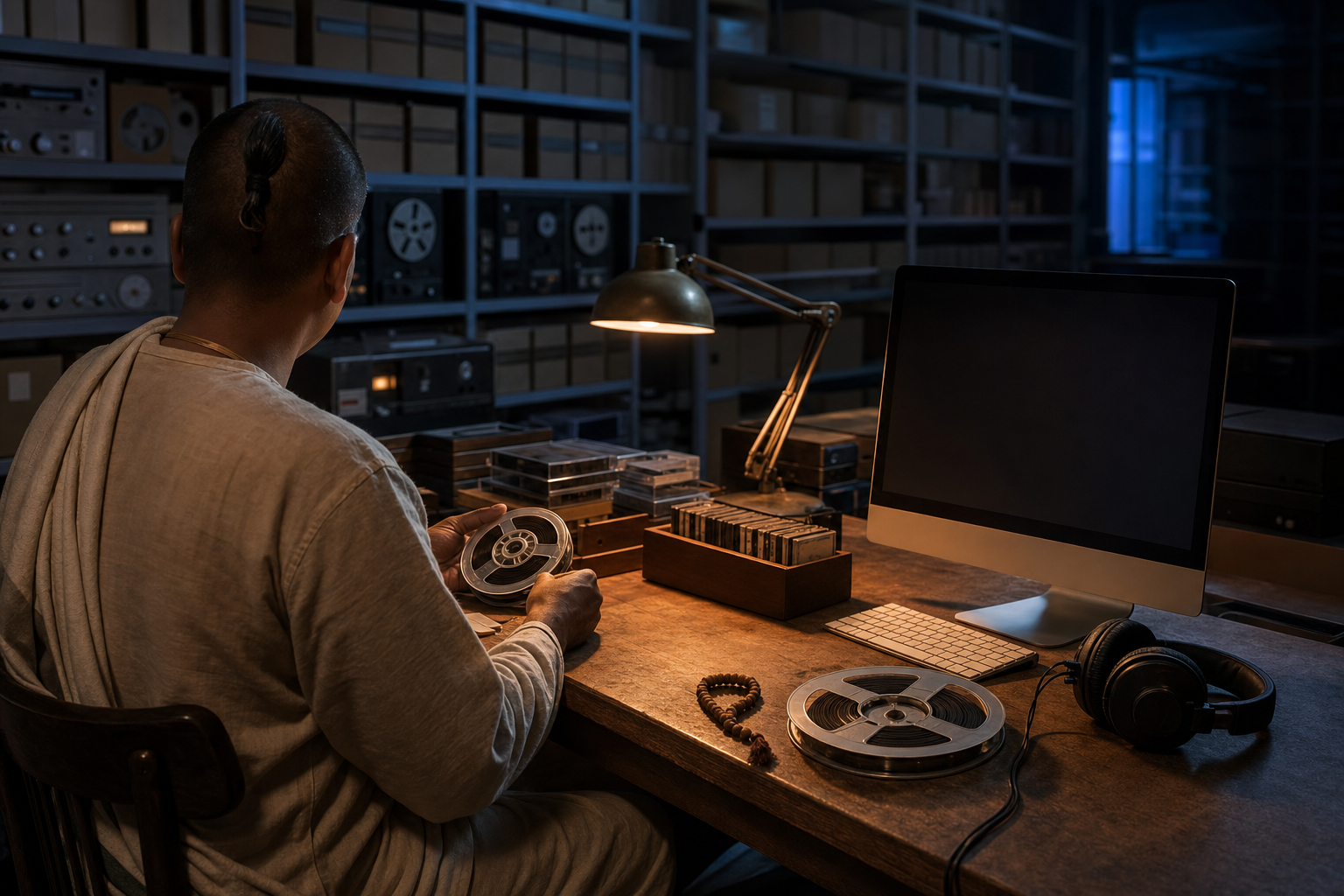
If you have used the Bhaktivedanta Vedabase to prepare a class, verify a passage, or return to Srila Prabhupada’s words, the search box may have made the encounter feel effortless. It was not. Every trustworthy result depends on a chain of decisions about what was preserved, how it was described, and what was deliberately left unchanged.
HG Ekanatha Prabhu devoted his service to that chain. Remembering him should therefore do more than acquaint you with a respected devotee’s name. It should change how you read, cite, share, and perhaps help preserve the sacred record placed in your hands.
A servant whose work became spiritual infrastructure
Ekanatha Prabhu departed on Vijay Ekadasi in Sandy Ridge, North Carolina, following sudden heart failure. Ekadasi gives the remembrance a devotional contour: simplicity, introspection, and renewed attention to the essence of Dharma. Yet the most fitting tribute is not vague praise. It is an honest understanding of the precise work he performed.
The suffix ACBSP signifies that he was initiated by A. C. Bhaktivedanta Swami Prabhupada. That relationship shaped the standard of his service: loyalty to guru expressed through accuracy, patient documentation, and care for what Srila Prabhupada actually said and wrote. He became widely known as a guardian of the Bhaktivedanta Archives and a steward of the Vedabase, working largely behind the interface familiar to devotees and scholars.
The materials under that care include books, audio recordings, photographs, and correspondence. These are not interchangeable containers for the same information. A published book preserves an authorized textual presentation. A recording carries voice, cadence, emphasis, and pauses. A letter may reveal the recipient and practical circumstances of an instruction. A photograph preserves visual evidence that a caption can clarify or distort.
This distinction matters whenever you use the archive. The Vedabase is an access point to records, not a substitute for identifying them. If you quote a search result, ask what kind of record produced it. Note the work, passage, date, recipient, or recording identity supplied with the entry. The words may be correct while an incomplete citation still leaves your reader unable to verify their setting.
Why putting an old recording on a computer is not enough
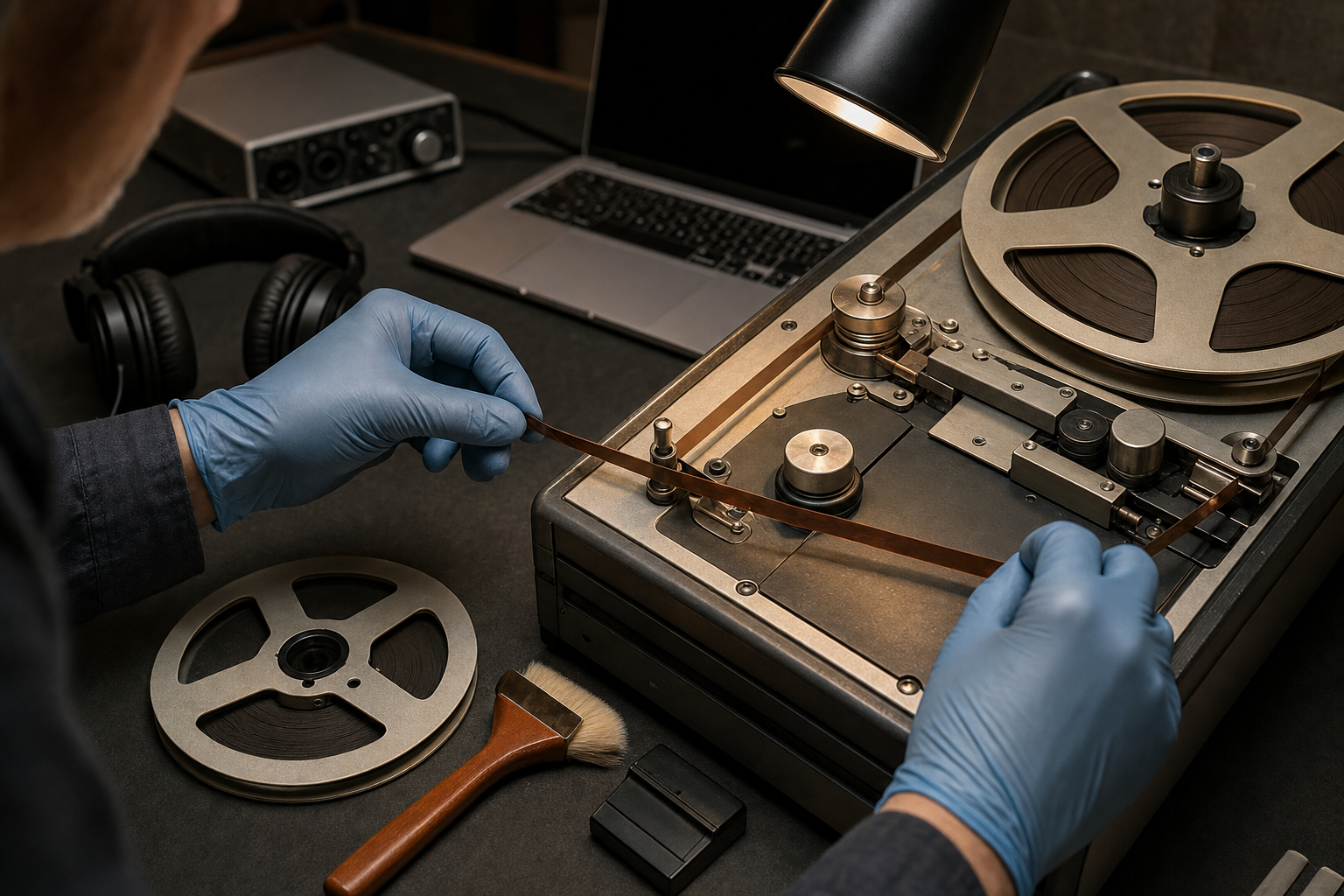
Digital preservation has at least three practical aims. The content must remain authentic, recoverable, and intelligible. A file can satisfy one aim while failing the others: an unexplained transcript may be readable but impossible to authenticate, while a perfect digital image without metadata may survive yet become detached from its identity.
Audio requires conservation before conversion
Magnetic tape can deteriorate through binder hydrolysis, commonly called sticky-shed syndrome. For affected material, a trained workflow may require controlled, time-limited thermal treatment before playback. The tape must then be played on properly aligned and demagnetized equipment. An improvised transfer on an unsuitable consumer deck can compound damage or permanently capture faults introduced by the playback system.
Archival audio workflows commonly target 24-bit depth and a 96 kHz sample rate, with lossless WAV files retained as preservation masters and FLAC files used where distribution calls for smaller lossless copies. Those numbers are not a license to process the recording aggressively. A high-resolution file can still misrepresent the original if noise reduction removes quiet speech, equalization changes the voice, or edits conceal defects without documentation.
If an old cassette or reel has come into your family’s or temple’s possession, do not make curiosity the first handling step. Record what is written on the container, who held it, and how it reached you. Keep the carrier and its accompanying notes together. Avoid cleaning or repeatedly playing it, and seek someone competent in archival audio before attempting a transfer.
Images need more than a sharp-looking scan
Reflective photographs and printed materials are often scanned at 600 to 1200 dpi, while film may require higher resolution. Resolution alone does not establish fidelity. Calibrated color management, ICC profiles, controlled lighting, and careful handling help prevent a vivid but inaccurate scan from replacing the visual evidence of the original.
Faint inscriptions can be as important as the main image. In suitable cases, multispectral imaging can recover hard-to-see annotations without invasive treatment. Before cropping a photograph for publication, therefore, preserve a complete master that includes borders, reverse-side notes, labels, and any envelope or mount carrying provenance. Make the attractive crop an access copy, not the only surviving version.
Text survives through structure, proofreading, and metadata
A searchable transcription can spread an error faster than an image of a page because readers naturally treat selectable text as authoritative. Sanskrit and vernacular material therefore requires proofreading against the primary edition, consistent transliteration, and clear marking of editorial additions. IAST diacritics are not decorative refinements when exact Sanskrit matters; they preserve distinctions that simplified Roman spelling can erase.
Cataloguing frameworks such as Dublin Core and, for audiovisual records, PBCore give repositories consistent places for names, dates, formats, rights, and descriptions. Authority control prevents one teacher, work, or place from becoming scattered across several spellings. Persistent identifiers help a citation continue pointing to the same intellectual object even when an interface changes.
Long-term preservation also happens below the level a reader can see. Cryptographic hashes allow a repository to detect bit-level changes. Version control records editorial revisions. Redundant offsite backups reduce the chance that a single failure will erase the collection. The OAIS reference model provides a framework for keeping digital material understandable over time, not merely storing files until their formats or context become obscure.
How to use the Vedabase without flattening the record

A devotional reader may need only a passage for morning study. A teacher, editor, or scholar may need a citation that another person can retrace. The following workflow serves both. It adds only a few moments to a search, but it prevents a quotation from becoming detached from its origin.
- Identify the kind of record. Determine whether you are reading a published book, letter, conversation transcript, lecture transcript, recording description, or later editorial note. Do not present one category as another.
- Capture the identity supplied with the entry. Record the title and any available date, recipient, location, chapter, verse, collection identifier, or recording information. Preserve the spelling used by the repository while noting a recognized alternative if it aids discovery.
- Record the version you actually used. If an edition or revision is identified, include it. If no version is displayed, retain the exact entry heading and the date on which you accessed it. This gives a future reader a practical route back to your evidence.
- Read around the search hit. A keyword result isolates a phrase because that is what search tools are designed to do. Read the preceding and following material before deciding what the passage means or whether it answers the question in front of you.
- Check the closest available primary form when wording is consequential. If both audio and transcript are available, listen when a disputed word, pause, or tone carries the argument. If a transcription and page image differ, record the discrepancy rather than quietly choosing the convenient reading.
- Keep your own editorial work visible. Use brackets, notes, or an explicit paraphrase when you shorten, expand, modernize spelling, or supply context. Never let your clarification appear to be part of the original utterance.
This method also protects you from a common mistake: treating searchability as proof of completeness. A database can retrieve only what has been collected, described, transcribed, and indexed. An absent result may mean that a phrase does not occur in the searchable corpus, but it does not by itself prove that no relevant recording, letter, variant spelling, or unindexed item exists.
Devotion and critical accuracy belong together
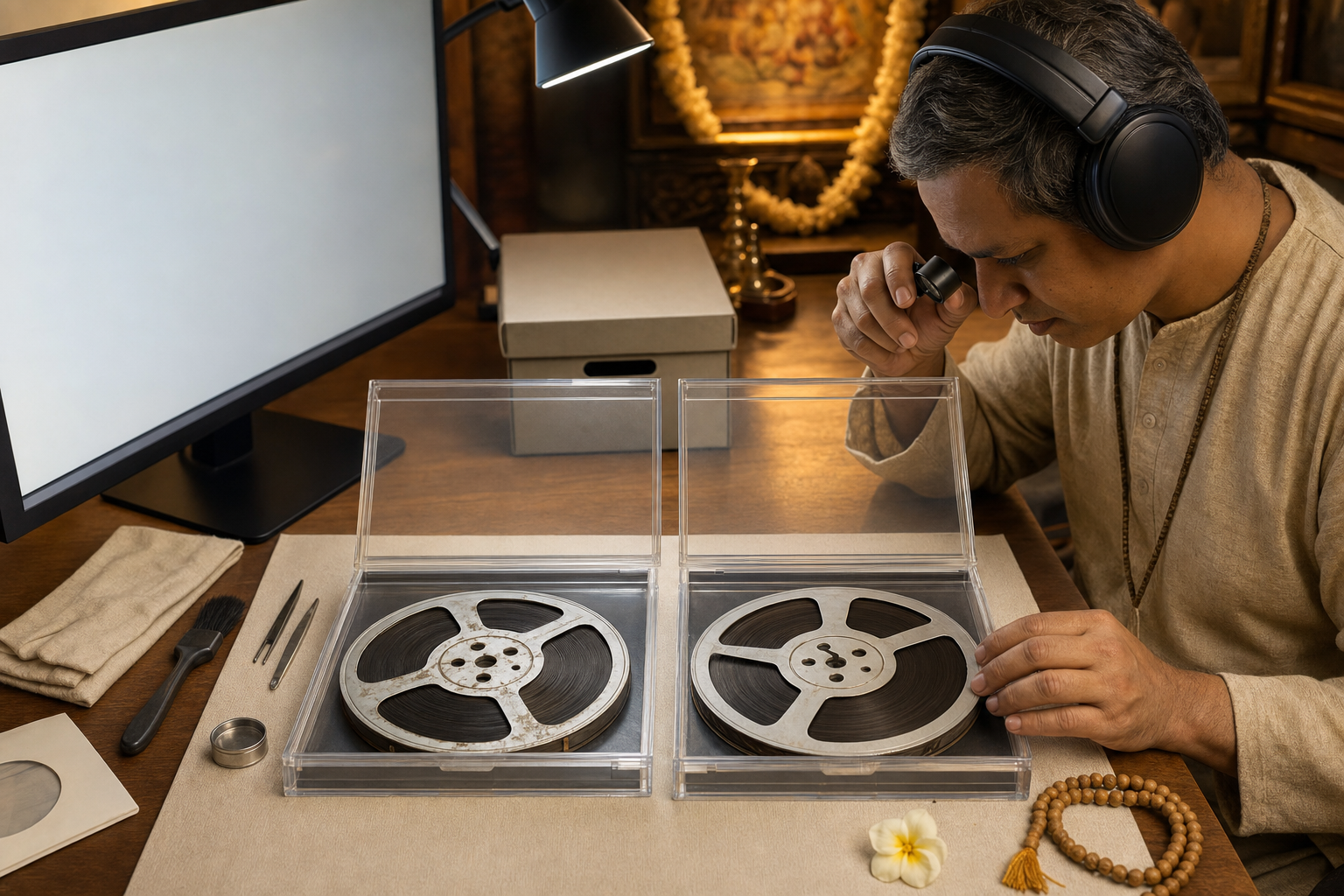
Devotional reverence and critical care are sometimes treated as rival attitudes. An archive exposes the weakness of that division. Fidelity to a teacher requires enough discipline to distinguish the teacher’s words from a transcriber’s uncertainty, a later heading, an editor’s correction, or a devotee’s remembered paraphrase.
Ethical curation makes those boundaries visible. Provenance tells you where an item came from. Transparent notes tell you what was changed. Version history tells you when a correction entered the record. A responsible repository can acknowledge uncertainty without surrendering authority because trust comes from showing the chain of evidence, not pretending that every surviving detail is equally certain.
You can apply the same ethic outside the archive. When an unattributed quotation appears in a social post or presentation, treat it as an invitation to verify, not as proof that it is either authentic or false. Search a distinctive phrase, locate the full entry, identify the record type, and add enough context for the next person to repeat your check. If you cannot verify it, label it as unverified rather than laundering repetition into certainty.
This discipline strengthens conversation across Dharmic traditions as well. Hindu, Buddhist, Jain, and Sikh teachings need not be blurred into generic spirituality in order to illuminate shared civilizational concerns. Carefully preserved primary voices let us compare genuine doctrines, practices, and ethical vocabularies. Respectful dialogue becomes stronger when each lineage is encountered in its own terms.
Key takeaways
- Ekanatha Prabhu’s service joined fidelity to Srila Prabhupada with the technical discipline needed to keep books, recordings, photographs, and letters trustworthy.
- The Vedabase is an access layer. A responsible quotation still identifies the underlying work, recording, letter, edition, or transcript.
- A preservation master should remain faithful to the captured original; cleaning, cropping, and compression belong in documented derivative copies.
- Fragile tapes and photographs should be inventoried and assessed before enthusiastic playback, cleaning, or scanning creates irreversible damage.
- Hashes, version histories, metadata, controlled names, and offsite backups are not clerical extras. They make digital knowledge verifiable and recoverable.
- For a devotee, accurate attribution is not merely academic etiquette. It is part of refusing to place our own words in the mouth of the guru.
Carry the service forward through one exact habit
You do not need to manage a major repository to participate in this work. Choose the action that matches what is already in front of you:
- If you regularly quote the Vedabase, upgrade one citation today. Add the record type, title, date or passage information, and enough surrounding context to make it verifiable.
- If your temple holds old media, begin with an inventory. Photograph containers, transcribe labels, note physical condition, and record who supplied each item before separating or attempting to digitize anything.
- If your family possesses photographs, letters, or recordings connected to the early movement, write down their provenance while living witnesses can still identify people, places, occasions, and custody.
- If you teach, show students one primary record beside its transcript or catalogue entry. Teach them to distinguish original content from metadata and editorial explanation.
- If you have technical skills, ask an established archive what help is actually needed. Metadata cleanup, careful proofreading, storage verification, or documented access copies may be more valuable than independently modifying a master file.
Ekanatha Prabhu’s legacy rests on quiet precision and sustained responsibility. The next time you open the Vedabase, pause long enough to identify the record beneath the result. Cite it so another person can find it. That small habit turns convenient access into faithful transmission.
References
