
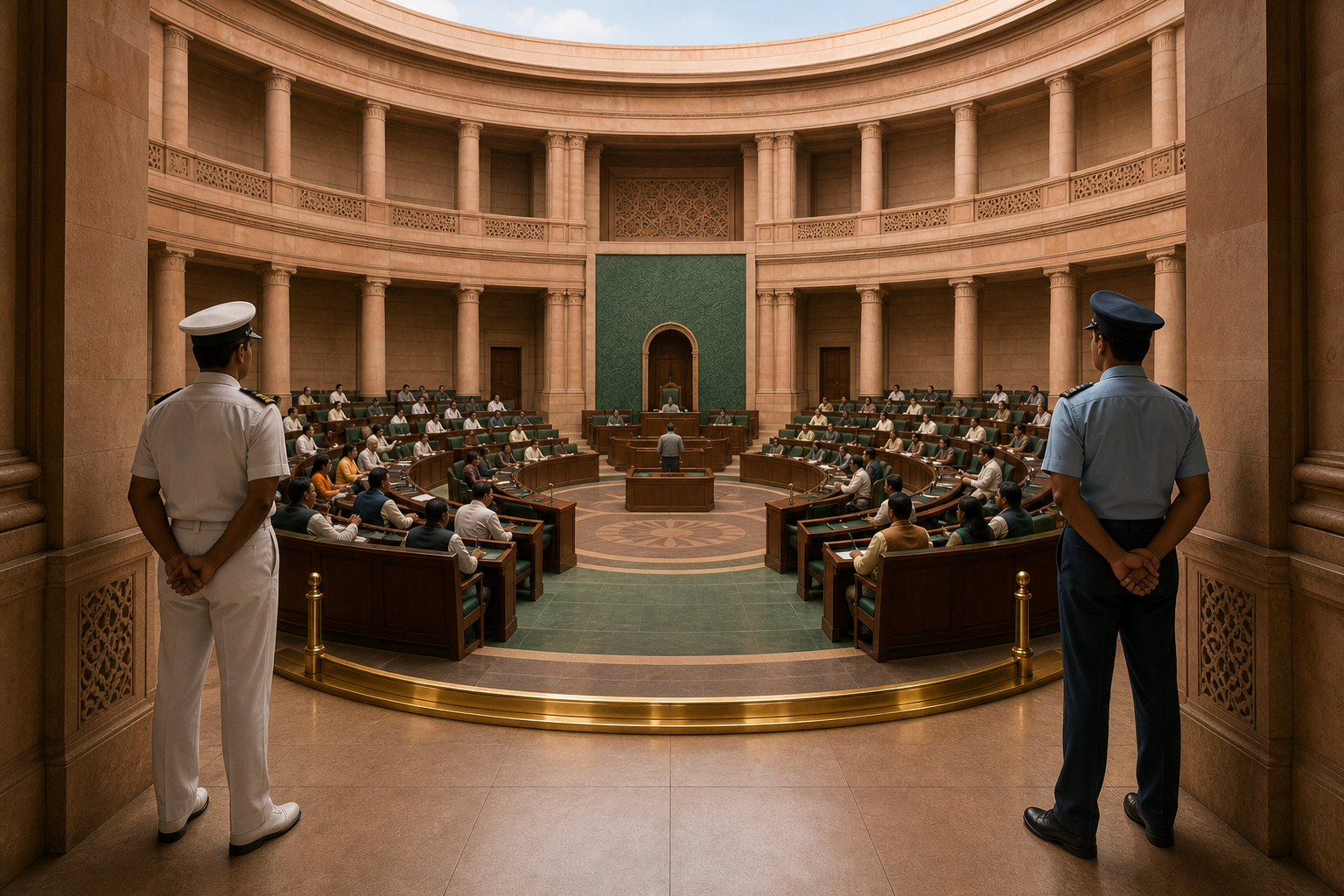
When a parliamentary confrontation reaches you as a short video, an explosive quotation, or a leaked page, you face a harder question than whether you support the speaker. You need to decide whether you are watching legitimate scrutiny, partisan theatre, or conduct that places an important democratic guardrail under strain.
The distinction matters because Parliament must do two things at once. It must let the opposition question the government without fear, and it must keep the armed forces, sensitive information, community identities, and physical security from becoming instruments of factional pressure. Here is a practical way to judge whether that balance is being maintained.
Key takeaways
- Questioning a government’s national-security decisions is legitimate; using military prestige as a substitute for verifiable evidence is not.
- An unpublished draft, leaked extract, or unattributed quotation should be labelled for what it is. Authenticity, completeness, and meaning are separate questions.
- A protest near a protected bench can raise a valid security concern without proving violent intent. Conduct, rule compliance, and threat assessment must be evaluated separately.
- Any code governing references to the armed forces or sensitive material must bind the government and opposition equally.
- Before rewarding a dramatic intervention, ask what institutional result it seeks: authenticated disclosure, committee scrutiny, a policy correction, or merely a memorable clip.
Keep military authority out of the party contest
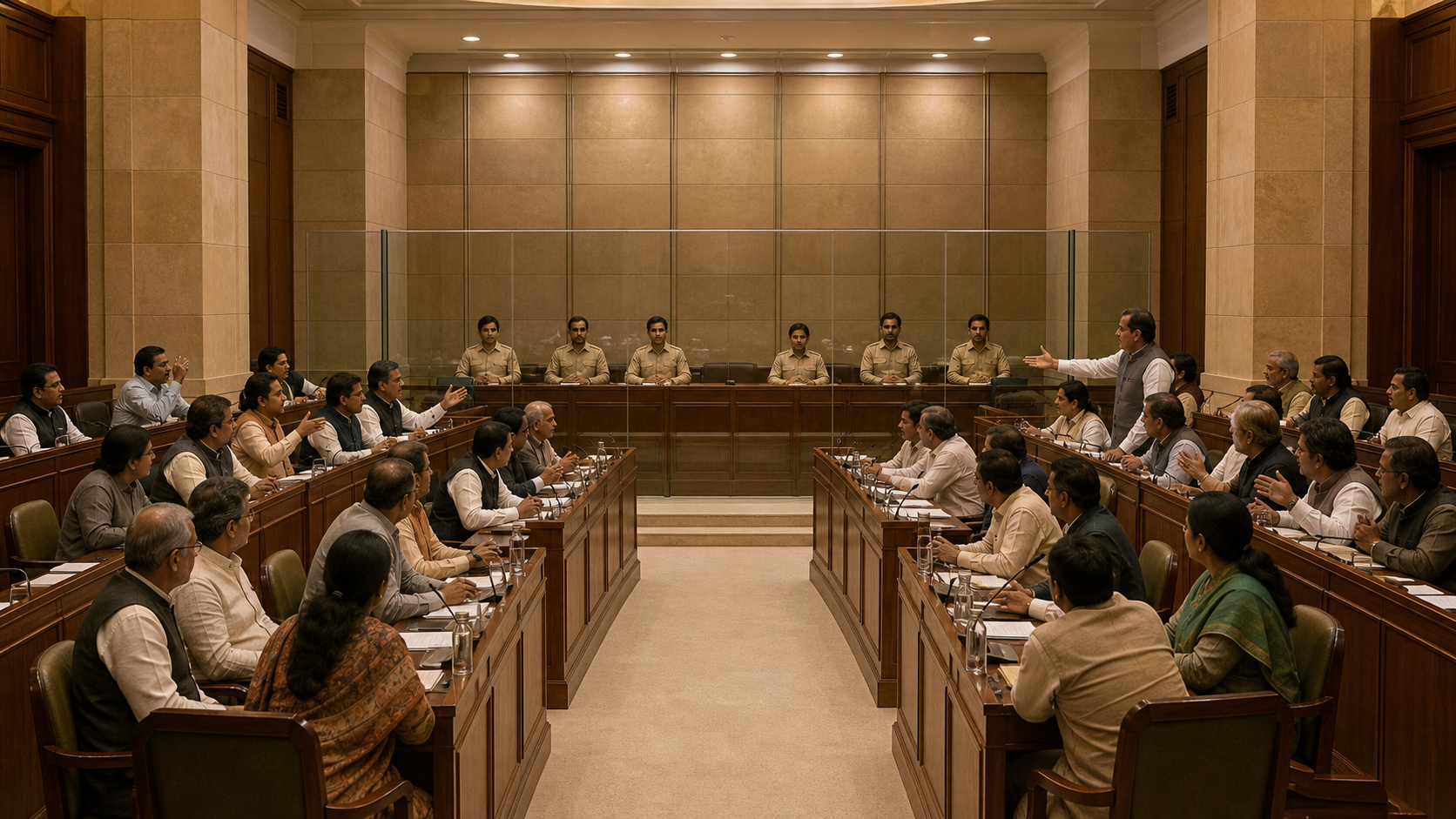
India’s civil-military compact rests on two linked responsibilities. Elected civilians decide policy and bear political accountability. Professional military leadership advises and executes without becoming a party constituency. The first rule prevents the government from hiding behind the uniform; the second prevents politicians from borrowing the uniform’s authority for partisan advantage.
This means an MP must be free to question preparedness, political instructions, crisis management, capability gaps, or the government’s account of an event. National security cannot become a phrase that ends scrutiny. But the question must be directed toward the civilian decision-maker and supported by evidence that other members can inspect. A serving or retired commander’s supposed view cannot be treated as a verdict that settles the political dispute.
A retired officer’s personal account may contribute to public understanding, but it does not automatically represent the armed forces as an institution. Nor does a commander’s description of events necessarily prove the political conclusion attached to it. Facts, professional assessments, and partisan inferences must remain visibly separate.
The same restraint must apply to those in power. A government should defend its decisions on their merits, not imply that criticism of ministers is criticism of soldiers. Military success is national service, not party property. Conversely, the opposition should not imply that an officer’s real or alleged words place the services on its side. Both tactics pull military credibility into an arena where the armed forces cannot respond as an ordinary political participant.
You can spot this boundary by changing the subject of the sentence. If the claim is, “The government made the wrong decision,” Parliament can test the decision, record, consequences, and ministerial answer. If the claim becomes, “The Army proves our party is right,” the speaker is recruiting institutional prestige instead of completing the argument.
A workable cross-party rule would therefore prohibit three practices: attributing a partisan position to the armed forces, presenting an officer as the arbiter of party responsibility, and quoting sensitive or unpublished material without disclosing its evidentiary status. Such a rule would not suppress national-security debate. It would force that debate back onto decisions, evidence, and civilian accountability.
Put sensitive claims through an authenticity ladder
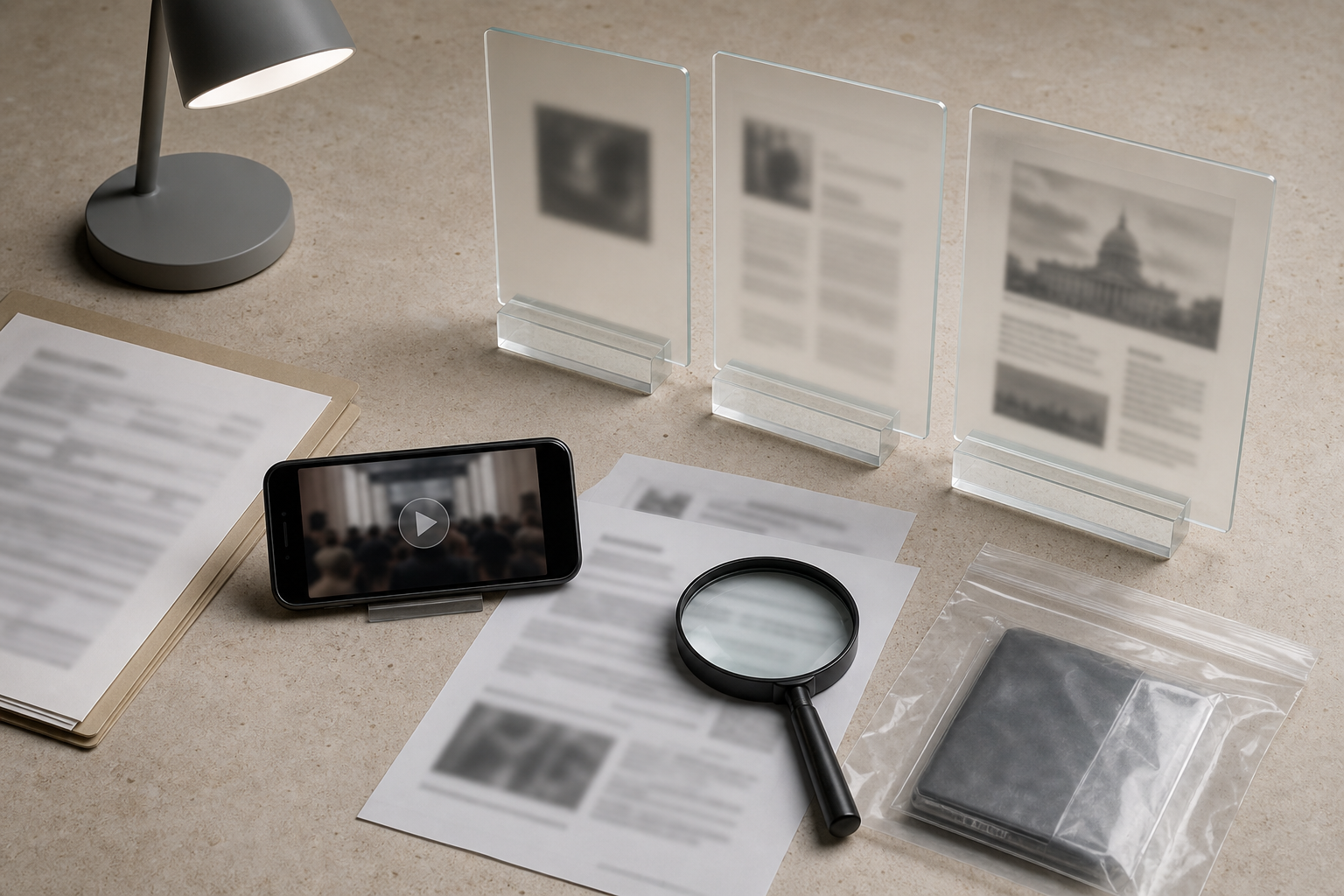
A document can be genuine and still fail to prove the claim made from it. A page may be authentic but incomplete. A quotation may be accurate but stripped of context. A draft may contain language that the author later revises. An anonymous extract may not be authenticated at all. Treating these conditions as equivalent is how a suggestive fragment becomes a supposedly settled fact.
The parliamentary controversy involving Rahul Gandhi and material described as an unpublished memoir associated with General M. M. Naravane illustrates the problem. Public clarifications attributed to the former Army chief and the publisher made the status, context, and intended meaning of the material part of the dispute. Once those foundational questions are contested, the strongest political conclusion cannot honestly be presented as though the underlying text were an authenticated, final public record.
Before a sensitive allegation enters parliamentary debate, the member relying on it should be able to answer five questions:
- Origin: Who created the material, and how was it obtained?
- Version: Is it a final publication, an approved manuscript, a draft, an extract, or an unattributed reproduction?
- Completeness: Can other members inspect the surrounding passage rather than only the selected words?
- Meaning: Which part is a direct statement, and which part is the speaker’s interpretation?
- Relevance: What precise governmental decision does the material establish or place in doubt?
If those questions cannot be answered, the material may justify further inquiry, but not a categorical accusation. That distinction lets Parliament investigate a serious possibility without pretending uncertainty has disappeared.
Tabling the authenticated text is an important guardrail because it gives the other side, the presiding authority, and the public a common object to examine. Merely displaying a page or reading a passage does not provide that scrutiny. Where public disclosure could expose genuinely sensitive operational information, the safer alternative is an appropriate confidential institutional process. The choice is not theatrical disclosure or permanent silence.
Corrections also need a procedure. If an author, publisher, or relevant institution disputes the version or context used in the House, the correction should enter the parliamentary record with a clear explanation of what changed. The member who relied on the material should then reaffirm, narrow, or withdraw the claim. A correction whispered after an allegation has travelled widely does little to restore the informational balance.
This evidence standard should apply even when a claim confirms your existing view. In fact, that is when it matters most. Selective material spreads quickly because it feels plausible to the people most inclined to share it. Pause at the version question before moving to the political conclusion.
Protect protest and the security perimeter together
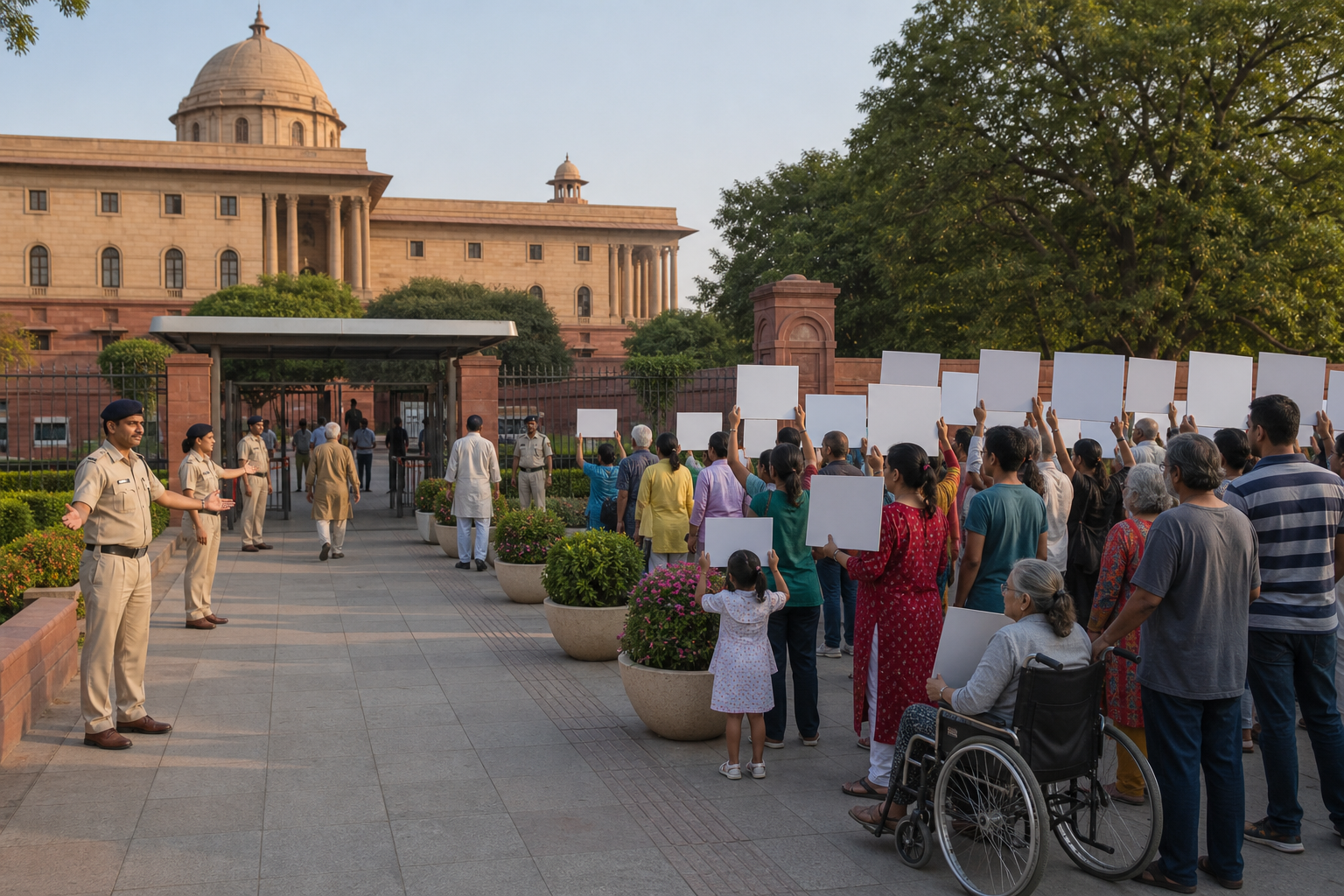
Parliamentary dissent is sometimes loud, visual, and disruptive. That does not make every breach of decorum a security threat. At the same time, elected representatives cannot decide for themselves that proximity to a protected constitutional functionary is harmless because their own intentions are peaceful. Security protocols exist precisely because protective personnel cannot depend on an individual’s private intention during a tense and fast-moving confrontation.
Widely circulated footage shared by Union Minister Kiren Rijiju showed opposition MPs moving close to the Prime Minister’s bench during protest in the Lok Sabha. The images raised legitimate questions about parliamentary space and protective perimeters. They did not, by themselves, establish every claim subsequently made about motive, danger, or intent.
Three judgments must therefore remain separate:
- Political judgment: Was the protest connected to a legitimate demand for debate or accountability?
- Procedural judgment: Did members enter a restricted area, disregard the Chair, obstruct proceedings, or refuse a marshal’s direction?
- Security judgment: Did the movement create a risk that required protective action, regardless of whether harm was intended?
Collapsing these judgments produces two opposite errors. One side may describe every forceful protest as an attack. The other may treat every security concern as a pretext for silencing dissent. A credible account states what the footage establishes, what House authorities recorded, and what remains an inference.
The practical guardrail is a visible, content-neutral perimeter. House authorities should specify where members may assemble, which approaches must remain clear, and how marshals will direct members away from protected areas. Party whips should brief their MPs before a sitting expected to become contentious. If a marshal orders a member to step back, the member should comply immediately and challenge the instruction through procedure afterward. Security cannot be litigated in the middle of a moving crowd.
After a disputed incident, Parliament should issue a short factual account: where members moved, what direction was given, whether it was obeyed, whether proceedings were interrupted, and what rule was engaged. It should avoid speculating about mental state unless evidence supports that conclusion. A neutral record deprives every party of the vacuum in which an ambiguous clip becomes a complete political narrative.
Consistency is essential. The perimeter must not expand for opponents and disappear for allies. The same conduct should receive the same procedural response regardless of the slogan being raised. That symmetry turns security from a partisan allegation into an institutional rule.
Use a citizen’s audit before rewarding the spectacle
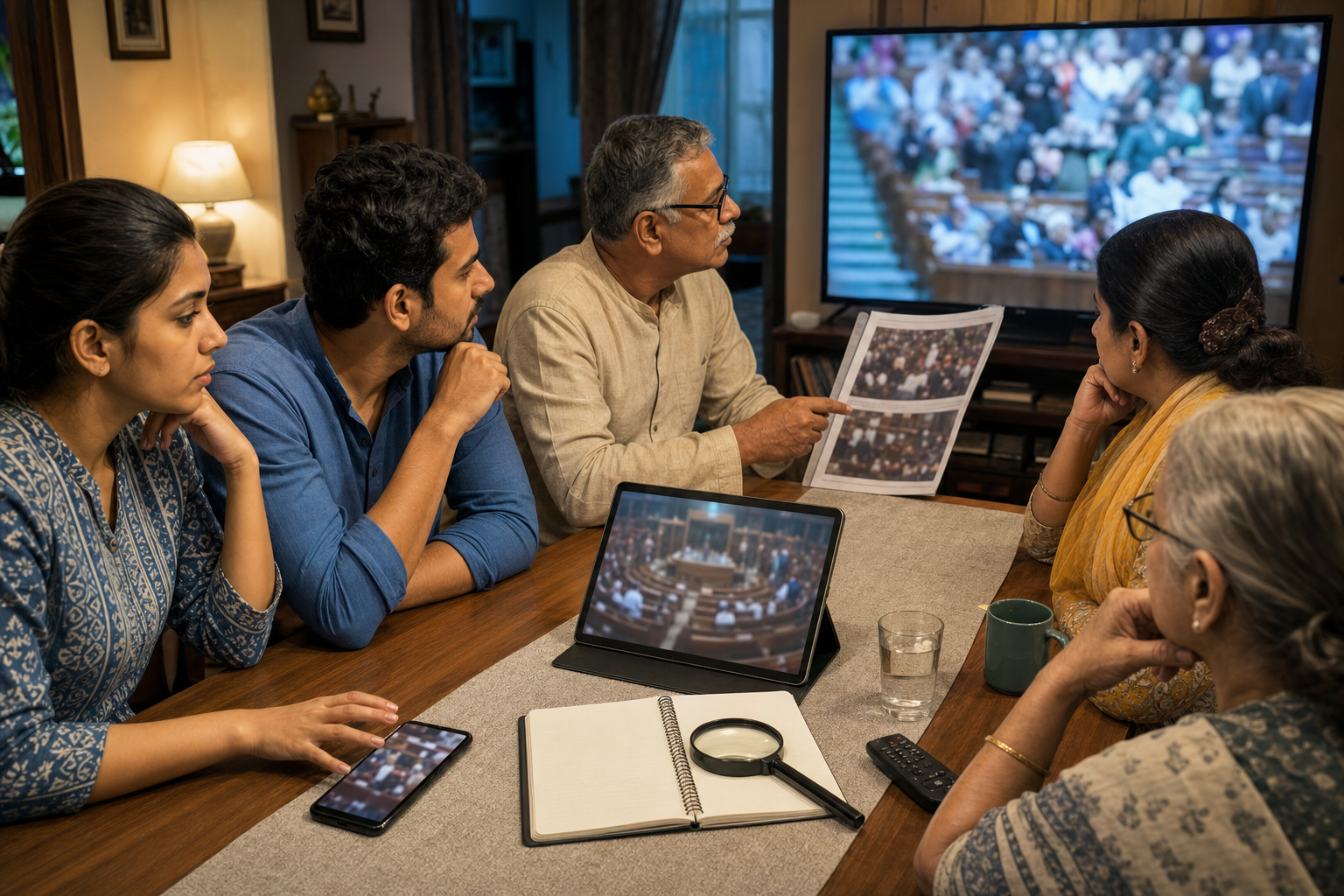
Most citizens cannot authenticate a leaked manuscript or reconstruct every movement inside the Lok Sabha. You can still judge the quality of a parliamentary intervention. Run this audit before sharing the clip or accepting a party’s interpretation:
- Write the allegation in one sentence. If you cannot identify the specific decision, actor, and claimed wrongdoing, the rhetoric may be doing more work than the evidence.
- Label the evidence. Is it a final public record, authenticated but partial material, a draft, a media report, an anonymous claim, or the speaker’s inference?
- Ask who is accountable. Does the intervention question an elected decision-maker, or does it use a commander’s prestige to bypass the need for a political case?
- Separate what you saw from what you were told to see. A video may establish movement or proximity. It may not establish intention, instructions given outside the frame, or the level of risk assessed by security personnel.
- Look for the requested remedy. Did the member seek authenticated disclosure, a ministerial answer, committee examination, a policy change, or a concrete legislative action?
- Check whether identity was relevant. Invoking a colleague’s Sikh, Hindu, Buddhist, or Jain identity without a necessary connection to the issue can turn an institutional dispute into communal suspicion.
- Follow the correction. If the document’s author, publisher, or another relevant party challenges the claim, update your judgment rather than preserving the first dramatic impression.
The fifth question is especially revealing. Parliamentary opposition is not measured only by the sharpness of an accusation. Its value also lies in what happens after the speech: an answer placed on record, evidence authenticated, a proposal examined, a committee engaged, or policy improved. A viral intervention that produces no verifiable claim and no institutional next step may be politically effective while remaining parliamentarily weak.
A dharmic standard makes this audit more demanding, not less political. Satya requires the claim to remain within the evidence. Ahimsa requires restraint from tactics that manufacture coercion, communal suspicion, or avoidable physical risk. Respect for human dignity requires an opponent to remain a constitutional colleague rather than an enemy whose identity can be used against him.
None of these principles asks the opposition to become timid. Truthful criticism can be severe. Nor do they permit the government to invoke unity while avoiding accountability. They require the means of political struggle to remain consistent with the democratic order every side claims to defend.
The next time a leaked passage or dramatic scene from the House reaches your screen, delay your verdict long enough to run the audit. Demand an authenticated record, a clearly bounded protest, civilian accountability, and a concrete remedy. Parties learn from what citizens reward; reward the intervention that leaves Parliament stronger after the noise has passed.
References
