
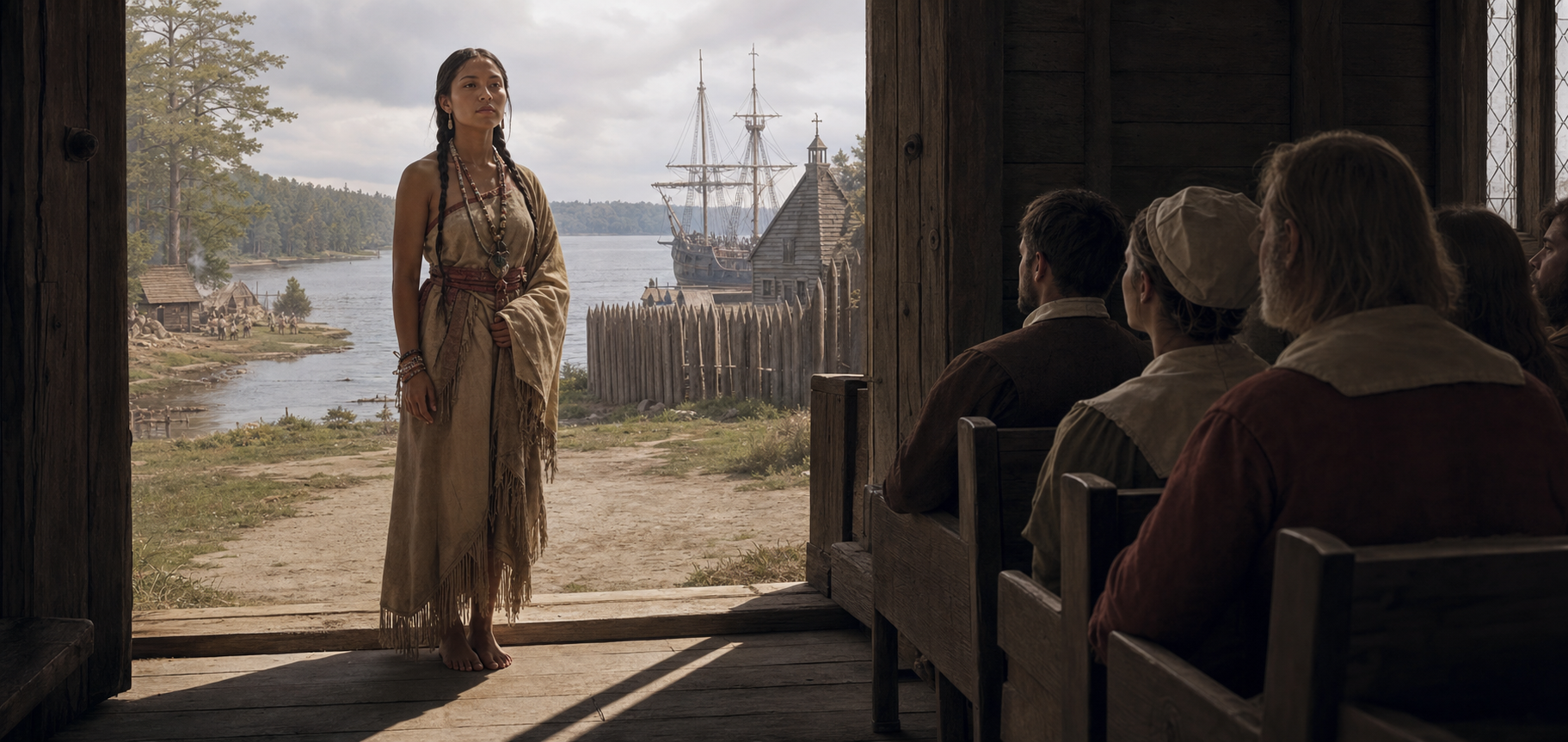
If you know Pocahontas mainly through romance, reconciliation, or film, the decisive question is not whether kindness ever crossed the colonial divide. It is who controlled the conditions under which encounter, conversion, and reconciliation became possible.
Read the story in the right order – charter, colonial power, conversion, publicity – and its political meaning changes. You can respect the unknowable interior life of an individual while still recognizing how a Christian conversion served an expanding empire.
Begin with the institution that needed the conversion story
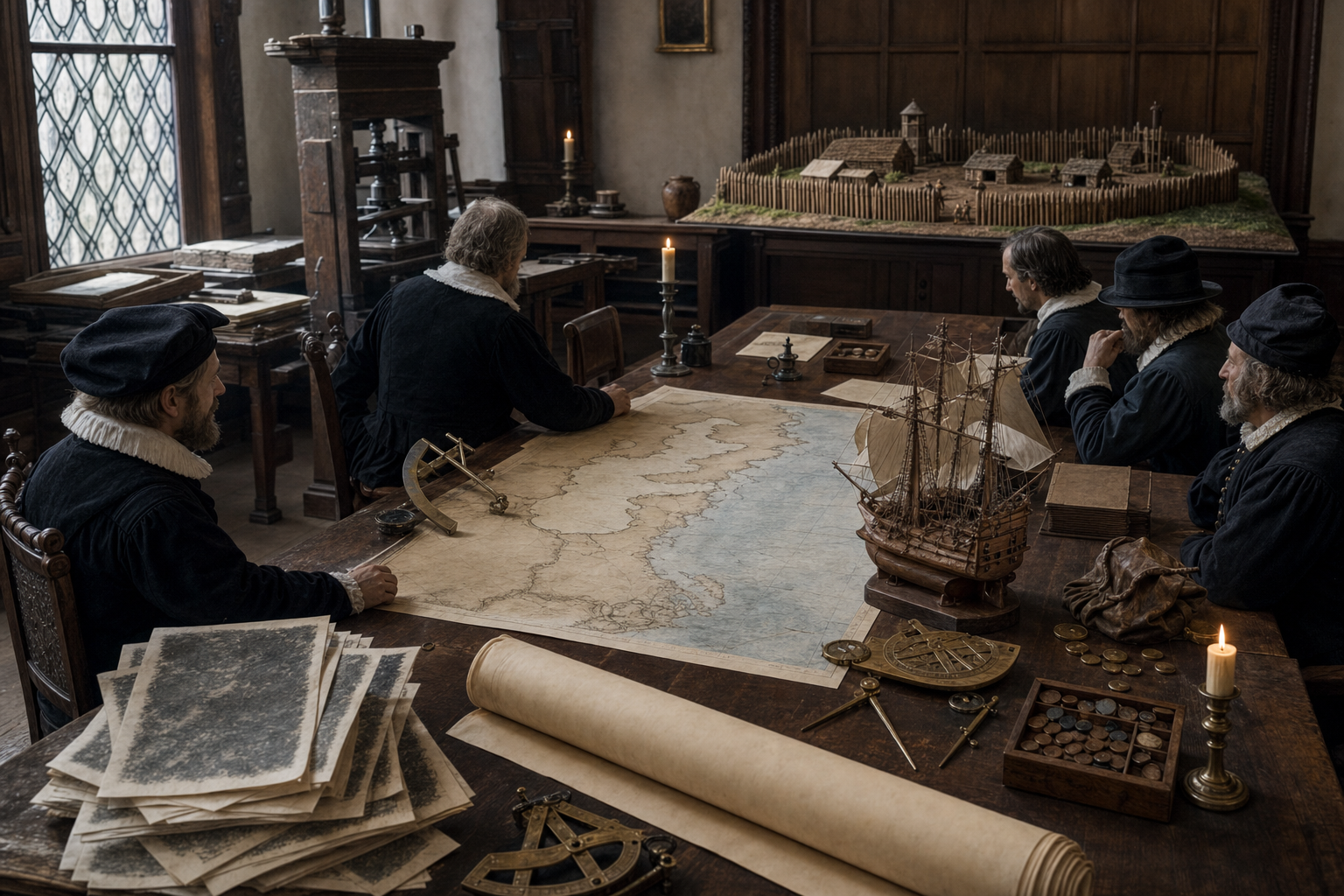
Pocahontas is often placed at the beginning of the story because a human life is easier to remember than a corporate charter. Historically, however, you should begin with the Virginia Company. James I chartered the company in 1606, giving English settlement a framework in which commerce, government, and Christian expansion could support one another.
The religious purpose was not an incidental hope added by a few missionaries after colonization had begun. The First Charter of Virginia placed it inside the declared justification for the enterprise. Indigenous religious life was described as ignorance, English Christianity as truth, and English political order as civility.
propagating of Christian Religion … and may in time bring the Infidels and Savages … to human Civility
The First Charter of Virginia, April 10, 1606
That sentence does more than insult people who already possessed communities, laws, loyalties, and sacred traditions. It constructs a ladder of human worth. Christianity occupies the top, English government becomes its political companion, and the colonized population is defined by what English authorities claim it lacks.
This is the first practical rule for reading a colonial conversion narrative: identify the institution before evaluating the convert. Write down three things separately.
- The promised good: salvation, knowledge, civility, peace, or improvement.
- The power being claimed: settlement, government, control of territory, or authority over another community.
- The material benefit: land, resources, trade, labor, or political advantage.
If all three appear in the same enterprise, do not treat religion as a private layer floating above politics. The moral promise may be doing political work, even when particular believers are sincere.
Conversion under captivity is not a simple yes-or-no question
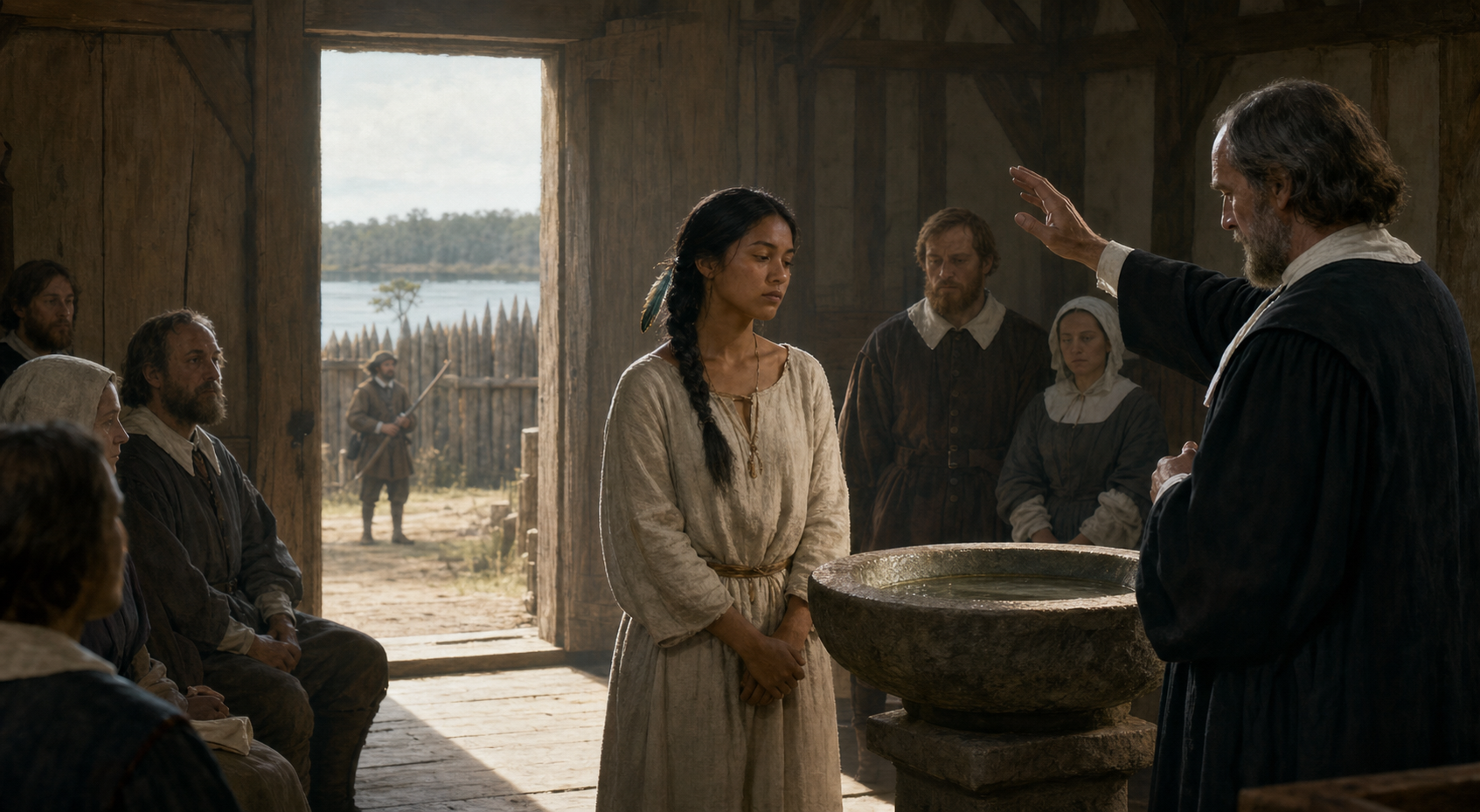
Pocahontas did not encounter Christianity in a setting of equal power. Her conversion unfolded during English captivity, inside a colonial relationship that constrained her choices and gave English authorities control over the setting in which those choices were interpreted.
That does not give us permission to declare with certainty what she privately believed. It does make the easy description of a wholly free religious choice inadequate. Two shortcuts should therefore be avoided.
- Conversion proves consent: baptism does not establish approval of the political order surrounding it.
- Constraint eliminates all agency: a person can make meaningful decisions under domination, but those decisions do not make the domination just.
Coercion is not limited to an explicit command backed by immediate violence. Captivity, dependency, restricted movement, control of instruction, and uncertainty about the cost of refusal can narrow a person’s options without producing a neat written record of force. If you ask only whether anyone physically compelled the ritual, you are using too small a definition of freedom.
A more disciplined inquiry asks five questions:
<!– wp:list {