
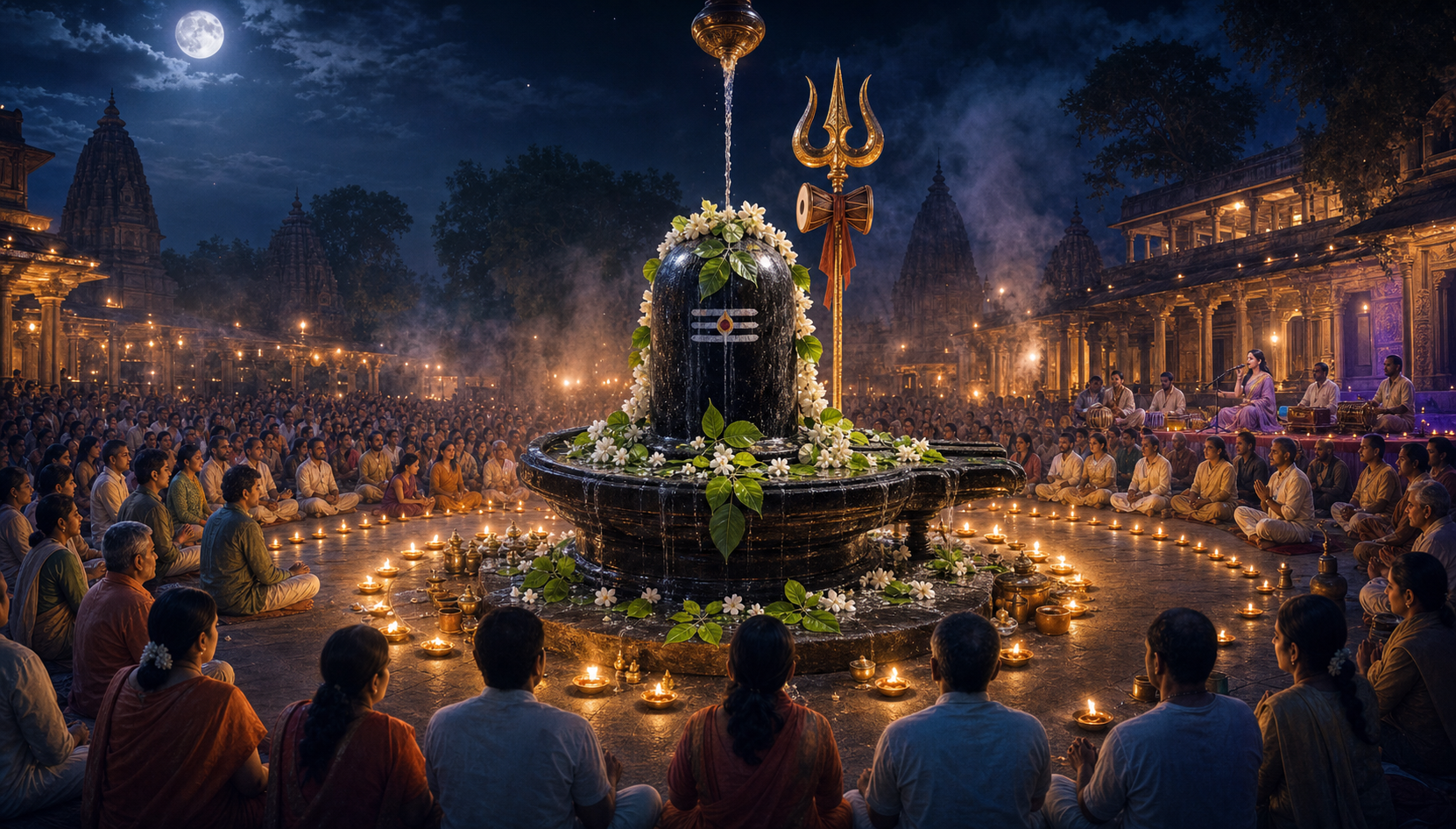
You see a viral clip of an American pop star leading a Mahashivratri crowd, and two reactions arrive almost at once: pride that Hindu culture is visible, and concern that a sacred night is becoming celebrity content. You do not have to choose between uncritical celebration and automatic suspicion. Ask a more useful question: does the attention lead people toward Shiva, sadhana, and community, or does it end with the famous face?
That question became concrete when Grammy Award-winning singer SZA appeared with her mother at the Isha Yoga Centre in Coimbatore, wore a saree, greeted the gathering with “Namaskaram, Happy Mahashivratri,” and invited the crowd to chant “Shiv Shambhu”. The scene showed how global performance culture can enter a dharmic setting respectfully. It also gave Hindu families, artists, and community organizers a useful case for deciding what respectful participation actually requires.
The celebrity is the doorway, not the sacred center
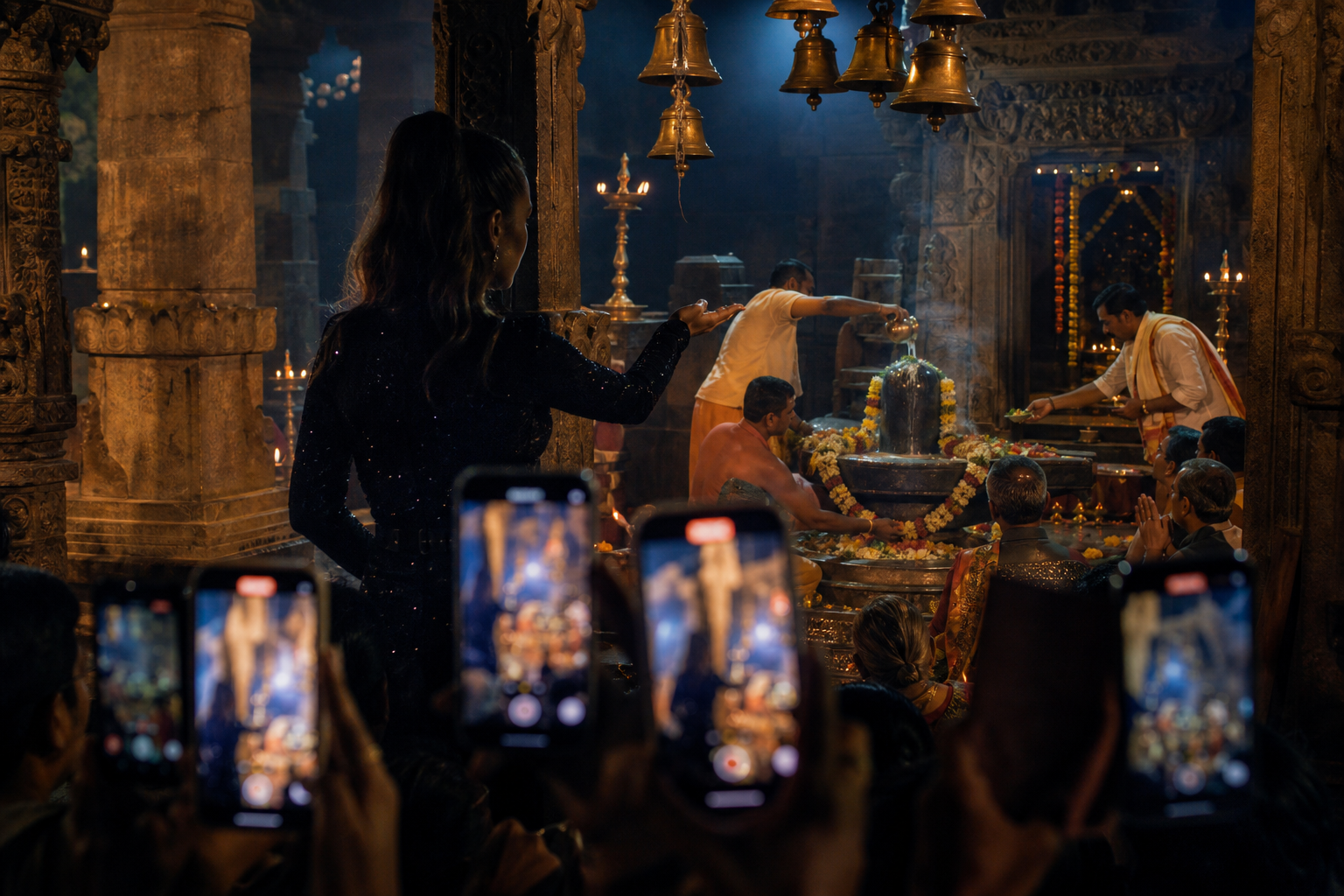
Mahashivratri is not an Indian-themed concert or a generic celebration of wellness. It is an all-night observance in honor of Shiva, expressed through vigil, meditation, chanting, music, and dance. Bhakti gives the night its devotional direction. Tapas gives it discipline. Dhyana turns attention inward. Public performances may support those purposes, but they do not define them.
This gives you a quick test whenever Mahashivratri appears in entertainment coverage: mentally remove the celebrity. Would the event still be recognizably oriented toward Shiva? Would the participants still have a reason to remain, chant, meditate, or keep vigil? If the answer is yes, the celebrity is entering something larger than celebrity culture. If the answer is no, the sacred occasion may have been reduced to a theme.
SZA’s presence did not make Mahashivratri important. Hindu practice does not borrow sanctity from Grammy recognition, social reach, or Western approval. What her presence could do was open a familiar door. People who understand a concert’s call-and-response structure could participate in a refrain addressed to Shiva, even if they had never encountered Mahashivratri before. The accessible form invited attention; the devotional setting told that attention where to go.
That hierarchy matters when you describe the moment. “SZA joins a Mahashivratri celebration and chants Shiv Shambhu” keeps the festival and its sacred referent visible. “SZA performs in India” makes India a backdrop and removes the reason the gathering existed. A caption may look trivial, but it often supplies the only context a viewer receives.
Global visibility is most valuable when it reveals a confident living tradition rather than pleading for recognition. Hindu communities can welcome a guest warmly while retaining the authority to explain what the occasion means. Hospitality and self-definition belong together.
Use four tests to distinguish appreciation from appropriation
A saree, a Sanskrit phrase, or a devotional chant can be used respectfully, superficially, or commercially. No single visual cue settles the matter. Appreciation is better judged through observable conduct: context, relationship, form, and effect.
- Check the center. Is Shiva actually named, and is Mahashivratri identified as a sacred observance? A symbol without its sacred referent can become decoration. A symbol placed within worship retains a clear direction.
- Check the relationship. Does the guest enter a setting maintained by practitioners, follow its idiom, and acknowledge the occasion? Respectful exchange involves receiving context from people within the tradition. Appropriation acts as if the extracted image, sound, or garment has no custodians.
- Check the form. Is the Hindu element allowed to remain devotional, or is it renamed and sold as an exotic innovation? Adaptation can change presentation without concealing origin or purpose. Rebranding severs that relationship.
- Check the effect. Does the appearance make it easier for viewers to learn what Mahashivratri is, or does every clip, caption, and headline point back only to the celebrity? Attention is not automatically cultural understanding. The surrounding explanation determines whether a viral moment becomes an invitation or a dead end.
SZA’s on-stage conduct meets the first three tests strongly. She named the festival, used the gathering’s greeting, invoked Shiv Shambhu, and participated within an established Mahashivratri celebration beneath Adiyogi. She did not present the chant as her invention or remove Shiva from the frame. The saree supported that posture, but the greeting and chant carried more interpretive weight than the clothing.
The fourth test remains partly in the hands of everyone who circulates the footage. A respectful encounter can be stripped of context during reposting. If an account crops out Adiyogi, omits Mahashivratri, and treats the crowd as scenery for a celebrity reaction, the new presentation no longer communicates what the original setting did. The appearance and its digital afterlife should therefore be judged separately.
You also do not need to claim knowledge of a performer’s private spiritual commitments. Public respect can be evaluated without declaring what is in someone’s heart. That keeps the discussion fair and precise: acknowledge conduct that honors the setting, criticize decontextualization when it occurs, and avoid turning cultural analysis into speculation about personal belief.
The same standard should apply consistently. Familiarity with Hindu vocabulary does not excuse a commercial campaign that removes sacred context, while unfamiliarity does not disqualify a guest who listens, acknowledges the tradition, and participates humbly. The issue is not ethnicity. It is the relationship between the borrowed form and the sacred meaning that gave the form life.
Pop performance can carry bhakti when the hierarchy stays clear
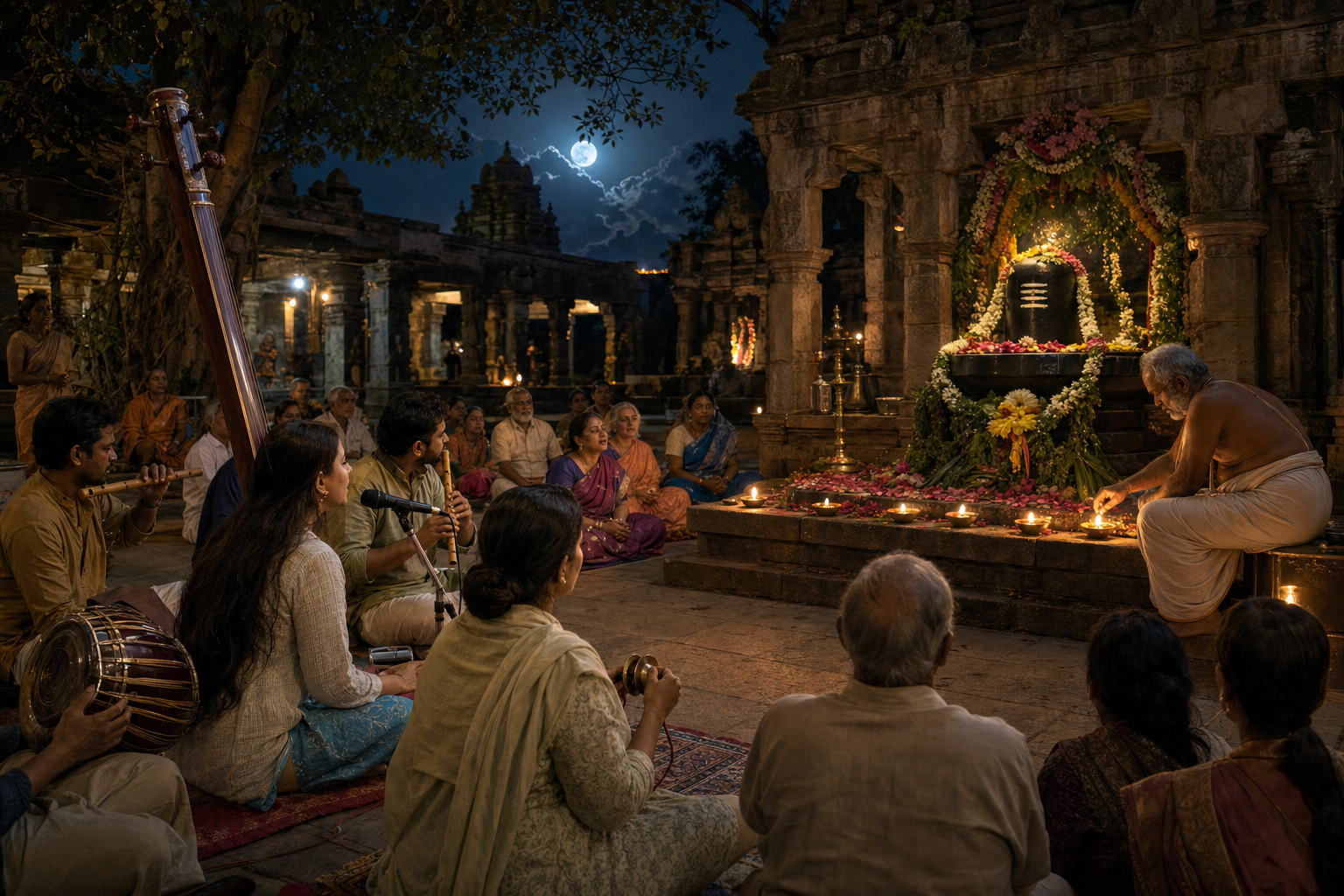
Popular music and devotional gathering already share several human forms: rhythm, repetition, collective movement, and call-and-response. Those similarities make a bridge possible. At Isha, SZA used a performance grammar familiar to global audiences when she called for “Shiv Shambhu” and invited the gathering to move. Yet the words did not point to an album, a brand, or the singer herself. They pointed to Shiva.
Think of the distinction as carrier and content. Concert-style call-and-response was the carrier. The name of Shiva and the purpose of Mahashivratri were the content. A global form can carry a local sacred meaning without erasing it, provided that the carrier remains subordinate to what it carries.
This is where cultural adaptation succeeds or fails. Successful adaptation gives a newcomer a recognizable way to enter while preserving the tradition’s direction. Failed adaptation keeps the surface that photographs well and discards the discipline that asks something of the participant. A chant becomes a hook, a saree becomes costume, Adiyogi becomes stage scenery, and Mahashivratri becomes a marketable mood.
The remedy is not to drive music or creativity out of the festival. Dance, sound, contemplation, and devotion can belong to one integrated observance. The body moves, the breath carries mantra, and the mind can become more focused. The practical safeguard is to ensure that performance opens into practice rather than replacing it.
If you organize a public celebration, every promotional asset should answer a few basic questions without requiring prior knowledge: What is being observed? Who is Shiva in the context of this gathering? Why are people remaining through the night? Where can a newcomer participate in chanting, meditation, or another practice under trustworthy guidance? A celebrity announcement that cannot answer those questions may generate reach while leaving the festival unintelligible.
Artists entering the space have a corresponding responsibility. Learn the name and purpose of the occasion. Let practitioners establish the context. Do not claim authorship over sacred vocabulary. Keep the deity and the observance visible in captions and interviews. These are modest requirements, but they separate exchange from extraction.
Viewers have agency too. Before sharing a striking clip, look for enough surrounding footage or explanation to identify the place, occasion, and devotional action. Add that information to your caption. If the only available version removes all context, you do not have to reward it with more distribution.
Turn viral recognition into durable dharmic confidence
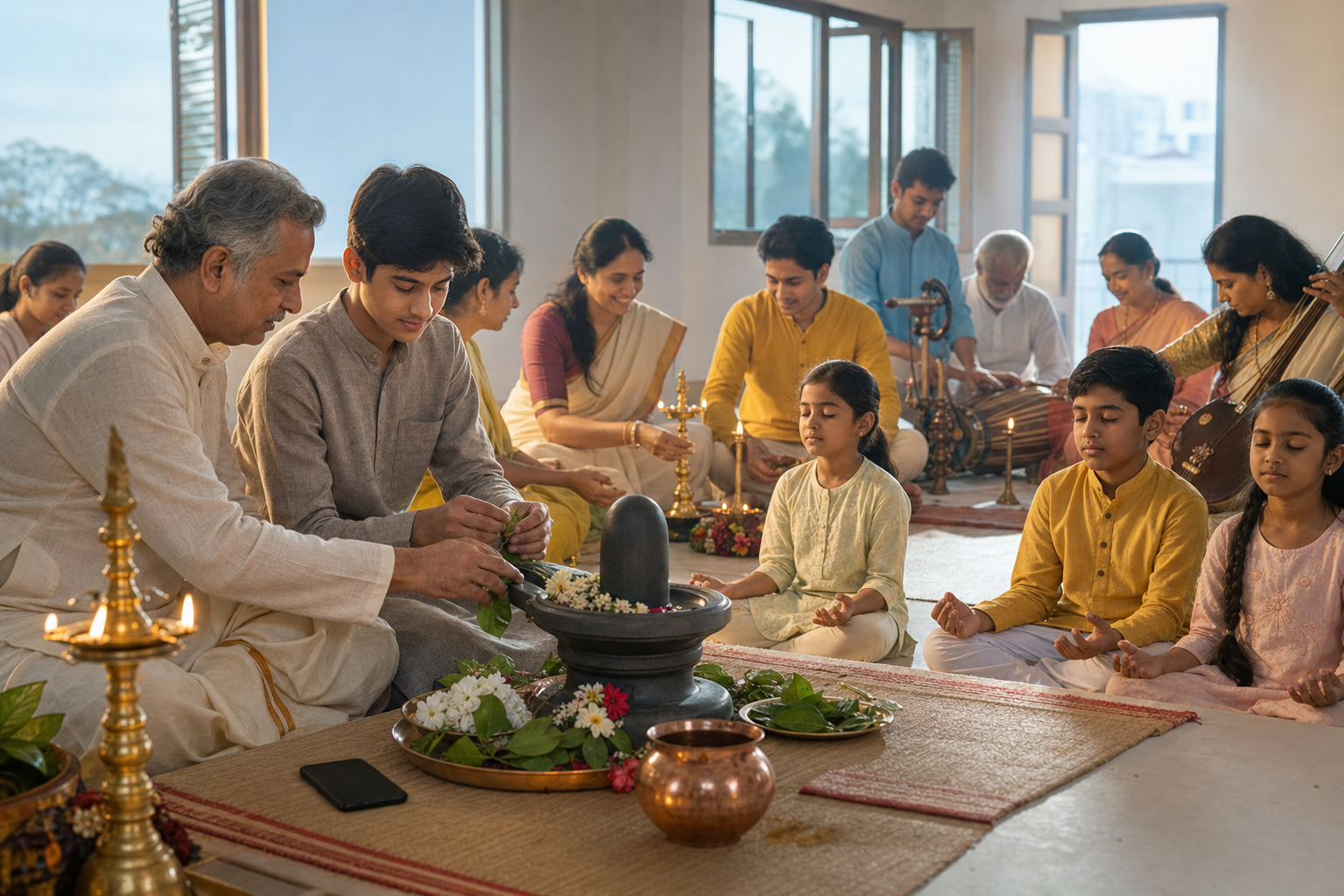
For younger members of the Indian diaspora, seeing a globally recognized artist say “Namaskaram” and chant a name of Shiva can provide positive cultural mirroring. A practice that may have felt confined to home or misunderstood among peers appears in a confident public setting. That recognition can reduce embarrassment and open conversation. It should not, however, become a certificate declaring that Hindu culture is valuable because a famous American noticed it.
The most useful family conversation begins after the clip ends. Start by supplying the missing context in one sentence: this is a guest participating in Mahashivratri, an all-night observance honoring Shiva. Then ask what the artist adapted to. The saree, greeting, chant, Adiyogi setting, and gathered devotees make the answer visible: the guest entered the festival’s language rather than asking the festival to hide its Hindu identity.
Next, ask what respectful participation would look like without a camera. That question moves attention away from representation and toward practice. A family might join a trusted community’s vigil, chant together, meditate, listen to an explanation of the observance, or use music and story to help children understand why the night matters. Choose what is rooted in your lineage or community rather than inventing a generic version for social media.
Community leaders can use the same moment as a teaching prompt. Show the clip, identify what was done respectfully, and let young people examine how editing and captions can change meaning. Ask them to create a caption that keeps Shiva and Mahashivratri at the center. This small exercise teaches cultural literacy more effectively than asking them simply to approve or condemn a celebrity.
Mahashivratri can also speak within a wider dharmic conversation without losing its Hindu specificity. Buddhists, Jains, and Sikhs may recognize resonances in disciplined practice, contemplation, devotion, compassion, courage, or service. Those affinities can support mutual respect, but they do not make every festival interchangeable. The honest bridge begins by naming whose observance it is and what it honors.
This is also how cultural soft power becomes more than publicity. Attraction can bring an unfamiliar person to the threshold. Beauty, music, hospitality, and a joyful crowd may create curiosity before any formal explanation begins. What happens at the threshold determines the value of that attraction. If newcomers encounter context, practice, and confident practitioners, curiosity can deepen into respect. If they encounter only branded spectacle, the attention disappears with the trend.
Key takeaways
- Mahashivratri’s meaning comes from its orientation toward Shiva, vigil, devotion, discipline, and contemplation, not from the fame of a guest.
- Judge cultural appreciation through context, relationship, form, and effect rather than clothing or celebrity identity alone.
- Call-and-response, rhythm, and movement can carry bhakti across cultures when the devotional content remains in command.
- A respectful appearance can still be decontextualized by later clips, headlines, and captions, so sharing is part of cultural stewardship.
- For families and communities, the best response to viral recognition is to connect representation with explanation and lived practice.
The next time Mahashivratri enters your feed through a celebrity, do not ask whether the celebrity has made Hinduism fashionable. Ask where the clip directs your attention. If it points clearly toward Shiva, names the observance, and invites people into respectful practice, share it with the context intact. If sacred elements have become anonymous decoration, name the loss precisely and withhold your amplification. That habit turns passing visibility into cultural confidence without surrendering the sacred center.
References
