
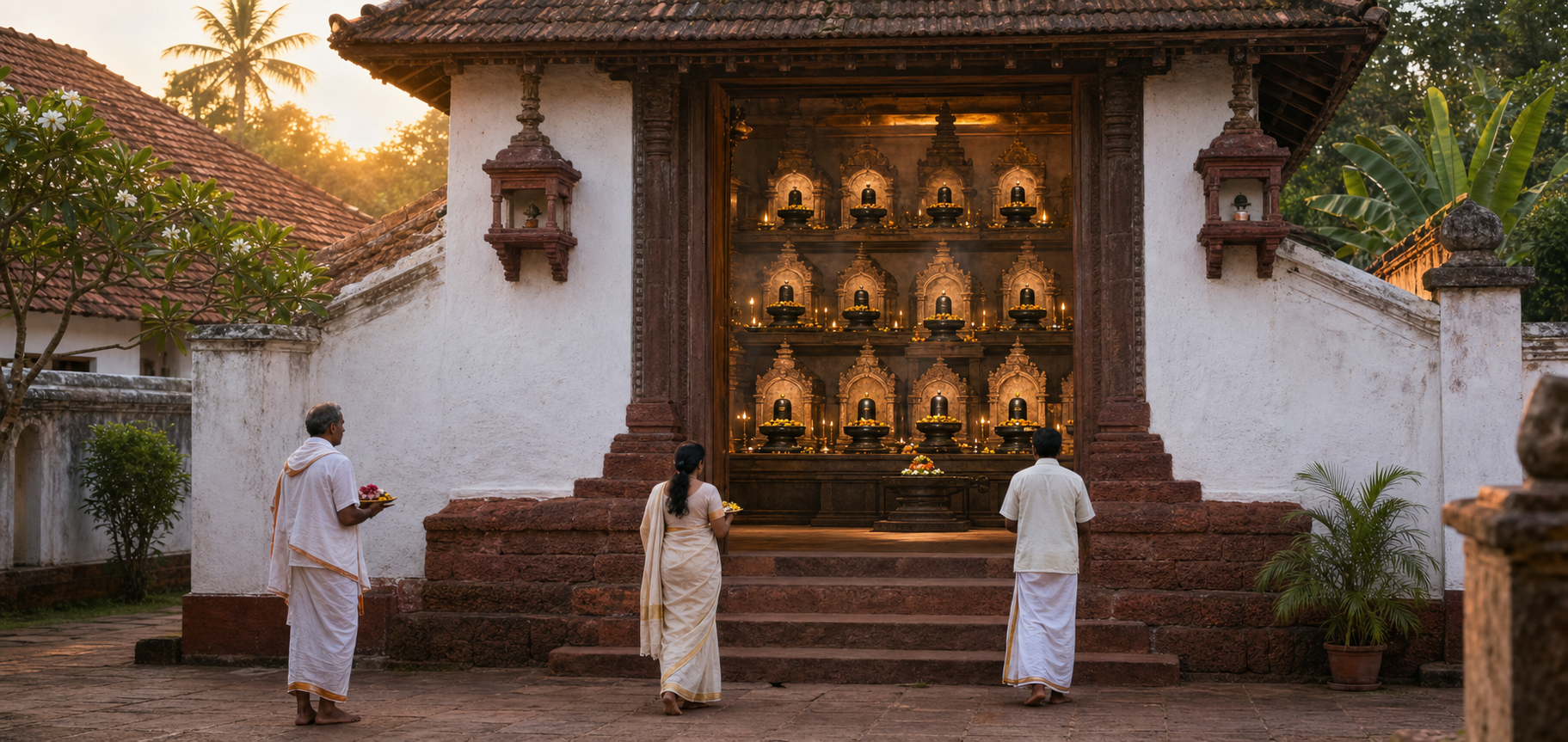
If you are deciding whether to add Shri Goveshwar Devasthan to a Goa pilgrimage, one distinction should shape your visit: Old Goa now has twelve ritually consecrated representations of the Jyotirlingas within one sacred precinct. The twelve historic tirthas have not been relocated, and their geographical identities have not been erased.
You should therefore approach the complex neither as a shortcut that makes the wider pilgrimage unnecessary nor as a display of twelve religious objects. It is a living place of worship where the pan-Indian Jyotirlinga tradition has been gathered into an accessible devotional form.
Key takeaways before you go
- The consecration took place at Shri Goveshwar Devasthan, also identified as the Mahashiv Temple, in Old Goa.
- The installed lingas are pratirupas: sacred representations corresponding to the twelve pre-eminent Jyotirlinga tirthas.
- Pran Pratishtha means that these forms were ritually installed for continuing worship. They are not decorative replicas or museum pieces.
- A visit gives you an integrated encounter with the twelvefold tradition, but it should not automatically be treated as fulfilment of a vow to visit one or more original tirthas.
- Confirm current hours, ritual permissions, festival arrangements, accessibility and photography rules directly with the Devasthan before travelling.
Twelve sacred forms in one precinct
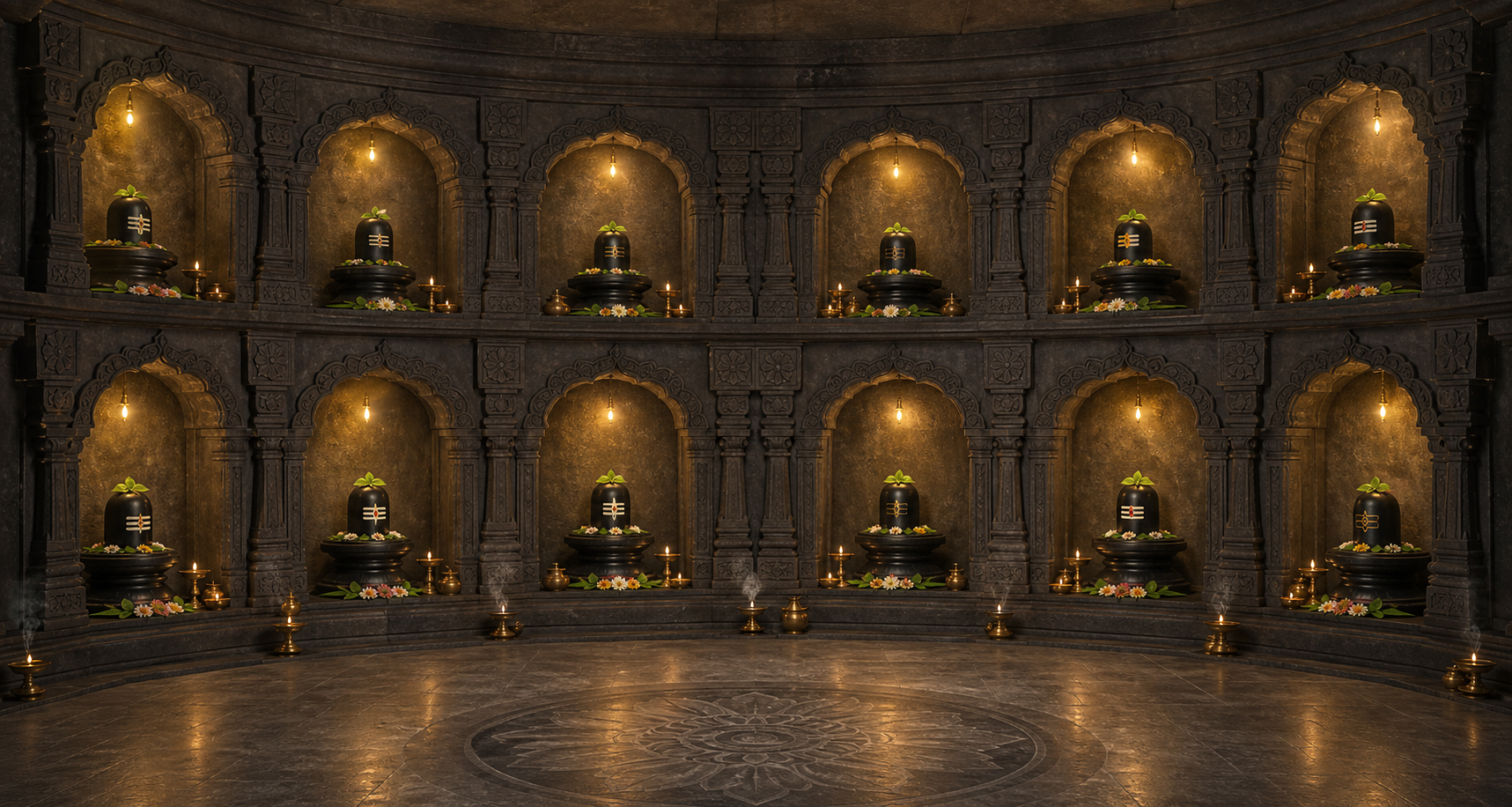
The Jyotirlinga tradition celebrated in the Shiva Purana recognises twelve pre-eminent tirthas of Shiva across Bharatavarsha. The forms represented at Shri Goveshwar Devasthan correspond to:
- Somnath
- Mallikarjuna
- Mahakaleshvara
- Omkareshvara
- Kedaranatha
- Bhimashankara
- Kashi Vishvanatha
- Tryambakeshvara
- Vaidyanatha, also called Baidyanath
- Nageshvara
- Rameshvara
- Grishneshvara
The word representation needs careful handling here. A consecrated pratirupa is not merely a visual copy. Its religious significance arises through mantra, ritual installation and continuing puja. At the same time, consecration in Old Goa does not turn Old Goa into Kashi, Kedarnath, Somnath or Rameshvaram. A tirtha carries a relationship among deity, place, sacred memory and pilgrimage that cannot be reduced to the physical form of its linga.
This distinction matters most when you have made a specific sankalpa. If your vow names a particular Jyotirlinga or place, do not assume that darshana of its Old Goa representation discharges that vow. Ask the guru, priest or sampradaya authority who guides your practice. The answer can depend on the wording and intention of the sankalpa rather than on a general claim about equivalence.
If your purpose is broader devotion, contemplation or learning, the value is more straightforward. You can encounter all twelve names within a single ritual environment, learn their place in the Shaiva sacred map and develop the aspiration to study or visit the individual tirthas when circumstances allow. This is especially meaningful for devotees whose health, mobility, time or resources make a subcontinental circuit difficult.
Why Pran Pratishtha changes the meaning of the installation
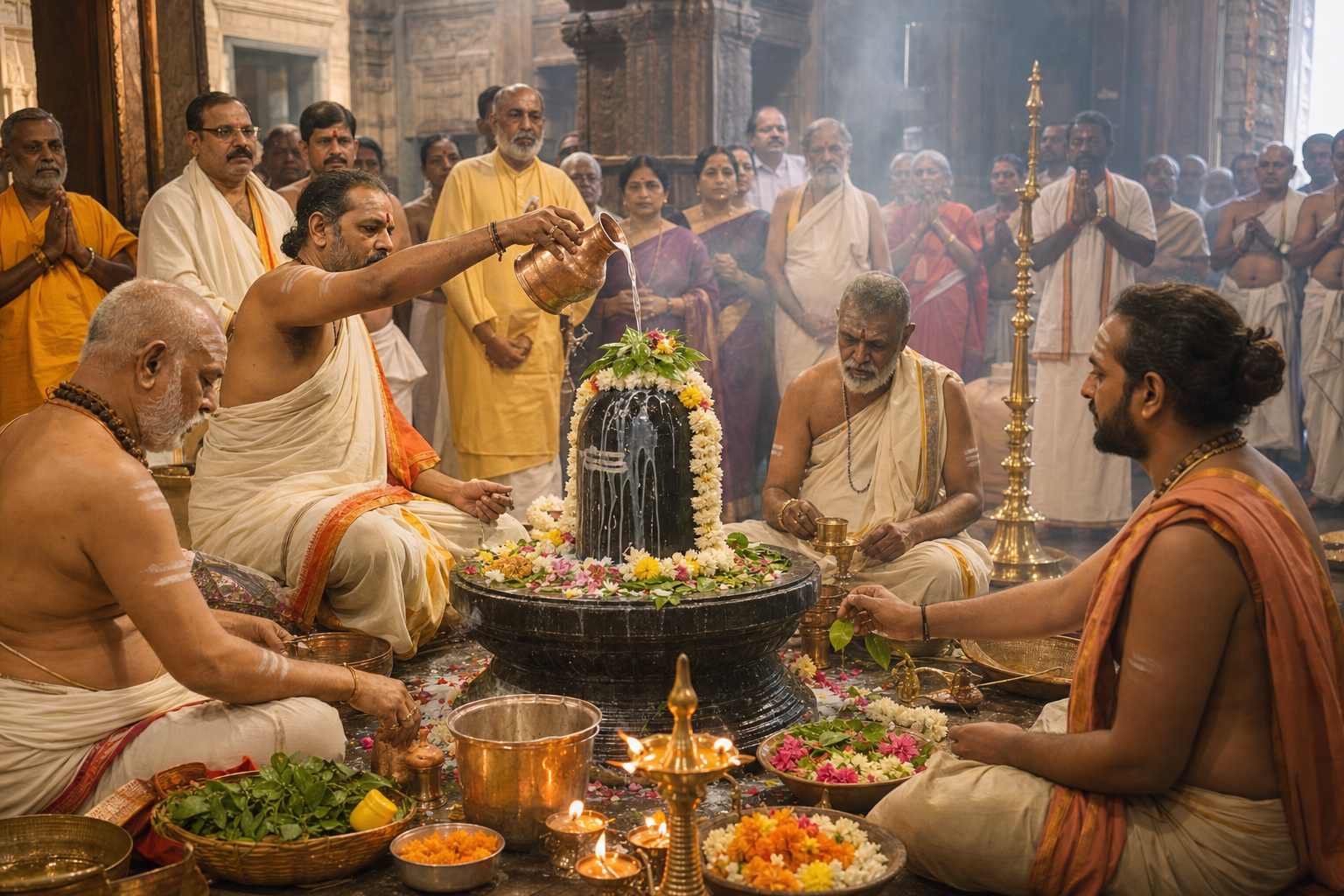
Pran Pratishtha explains why you should encounter these lingas as presences in worship rather than as exhibits. In the Agamic understanding, the rite installs prana in a consecrated form and establishes it as an arca, a locus through which the deity may be worshipped. This is not a claim that stone becomes biologically alive. It is a liturgical and metaphysical transformation joining the form, the site, the mantras, the officiating priests and the devotees’ sankalpa.
Procedures vary among sampradayas, but a Pran Pratishtha commonly brings together several connected acts:
- Sankalpa: a formal declaration of the rite’s intention.
- Site and vastu purification: preparation of the ritual environment.
- Kalasha-sthapana and adhivasa: establishment of sanctified vessels and preparatory sanctification of the forms.
- Nyasa: mantric installation through which sacred powers are ritually located in the form.
- Netronmilanam: the ceremonial opening of the eyes.
- Prana-adhisthana: invocation and establishment of the divine presence.
- Maha-mangala-arati: the culminating offering of light.
For a Shivalinga installation, ashtabandhana joins practical workmanship to ritual integrity. The herbal-lime compound affixes the linga securely to the yoni-pitha. It stabilises the installation physically while completing an important part of its sacred preparation.
You do not need to memorise this sequence before seeking darshana. You should, however, resist judging a ceremony against a generic checklist. Agamic practice is transmitted through particular lineages, and its procedural details can differ. The more useful question is whether the installation is sustained by disciplined worship after the ceremonial gathering has ended.
That continuing cadence may include nitya-puja, Rudrabhisheka, bilva-archana and deepa-aradhana, with recitation of Sri Rudram-Chamakam carrying Vedic resonance into the temple’s daily life. Maha Shivaratri adds vrata, japa and night-long darshana to the annual cycle. Pran Pratishtha is therefore a beginning: it creates an enduring obligation of worship, care and community support.
How to make your visit devotional rather than hurried
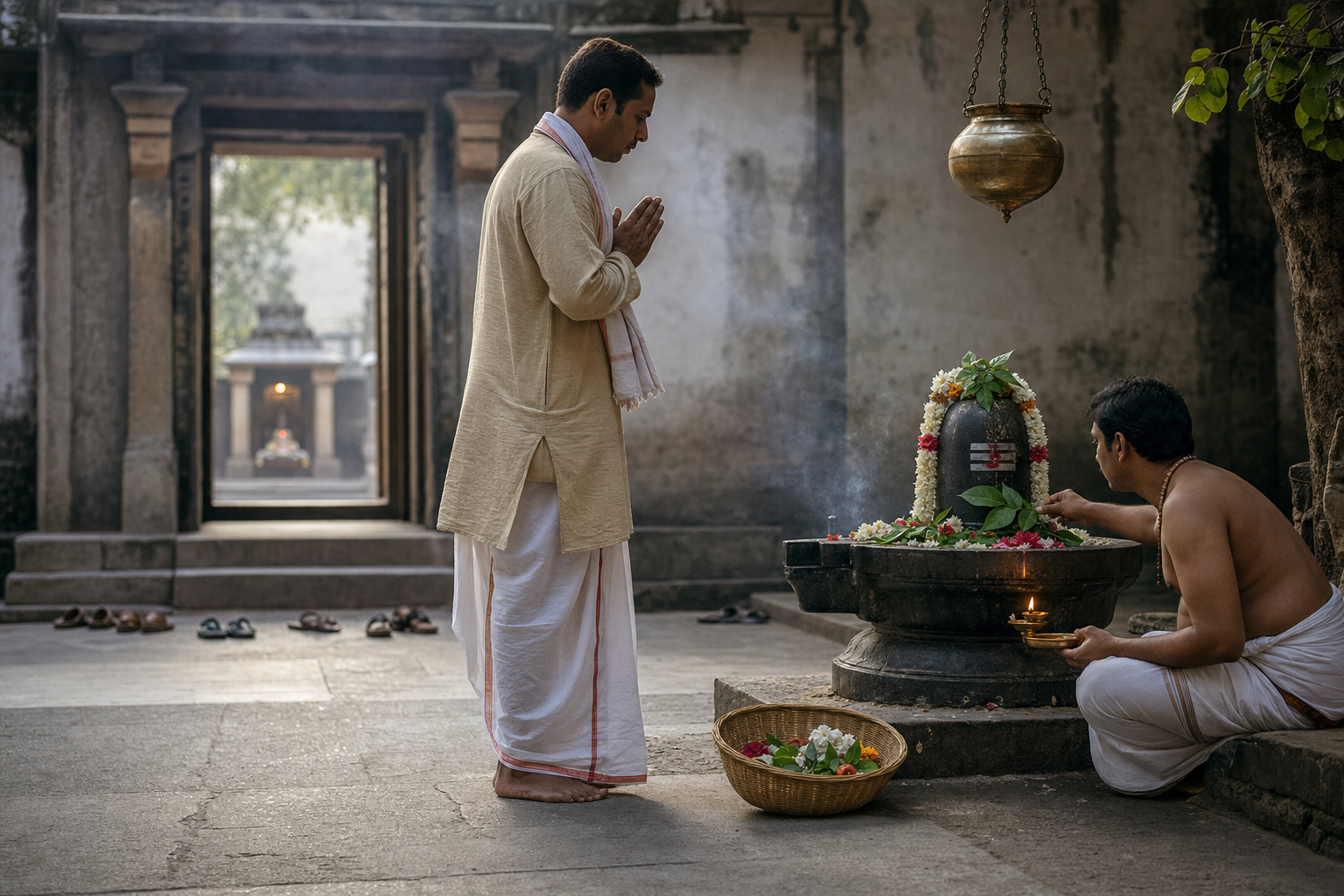
The presence of twelve forms can tempt a visitor to rush from one to the next, treating darshana as a completed checklist. A better visit begins before you arrive. Decide whether you are seeking quiet japa, a family darshana, instruction about the Jyotirlinga tradition or participation in a festival. That choice determines when you should go and what you should ask the temple.
- Confirm the practical details. Temple hours, access to particular sanctums, puja bookings and visitor rules may change. Check them directly rather than relying on an old travel listing. If anyone in your group has limited mobility, ask specifically about steps, seating, queues and available assistance.
- Choose quiet or community immersion deliberately. Early morning and evening darshana generally offer a more contemplative atmosphere. Maha Shivaratri offers a communal experience centred on vrata, japa and extended darshana. Confirm the actual schedule before setting out, especially during a festival.
- Ask whether there is a prescribed circuit. Do not invent an order merely because there are twelve forms. A priest or temple steward can tell you whether devotees are expected to follow a particular route, recite particular names or pause at designated points.
- Clarify ritual participation. Darshana does not necessarily include permission to touch a linga, enter a restricted area or perform your own abhisheka. Ask before acting. If you want an archana or Rudrabhisheka, find out whether it must be arranged through the temple.
- Keep offerings simple and approved. Bilva leaves belong to established Shiva worship, but the Devasthan should decide what may be offered and where. Prefer local, biodegradable materials, avoid unnecessary plastic and do not pour water, milk or other substances except through an authorised ritual.
- Give the names time to settle. If your own practice permits, a quiet repetition of Om Namah Shivaya can hold the circuit together. One attentive act of japa is more fitting than racing through twelve photographs. Keep your phone silent and photograph only where permission is explicit.
Modest attire, patient queuing and silence near the sanctum are not decorative etiquette. They protect another devotee’s concentration and acknowledge that worship is already in progress. A knowledgeable steward can also help you distinguish what belongs specifically to the Jyotirlinga tradition from what belongs to the local temple’s own liturgical life.
What the new sacred precinct now asks of the community
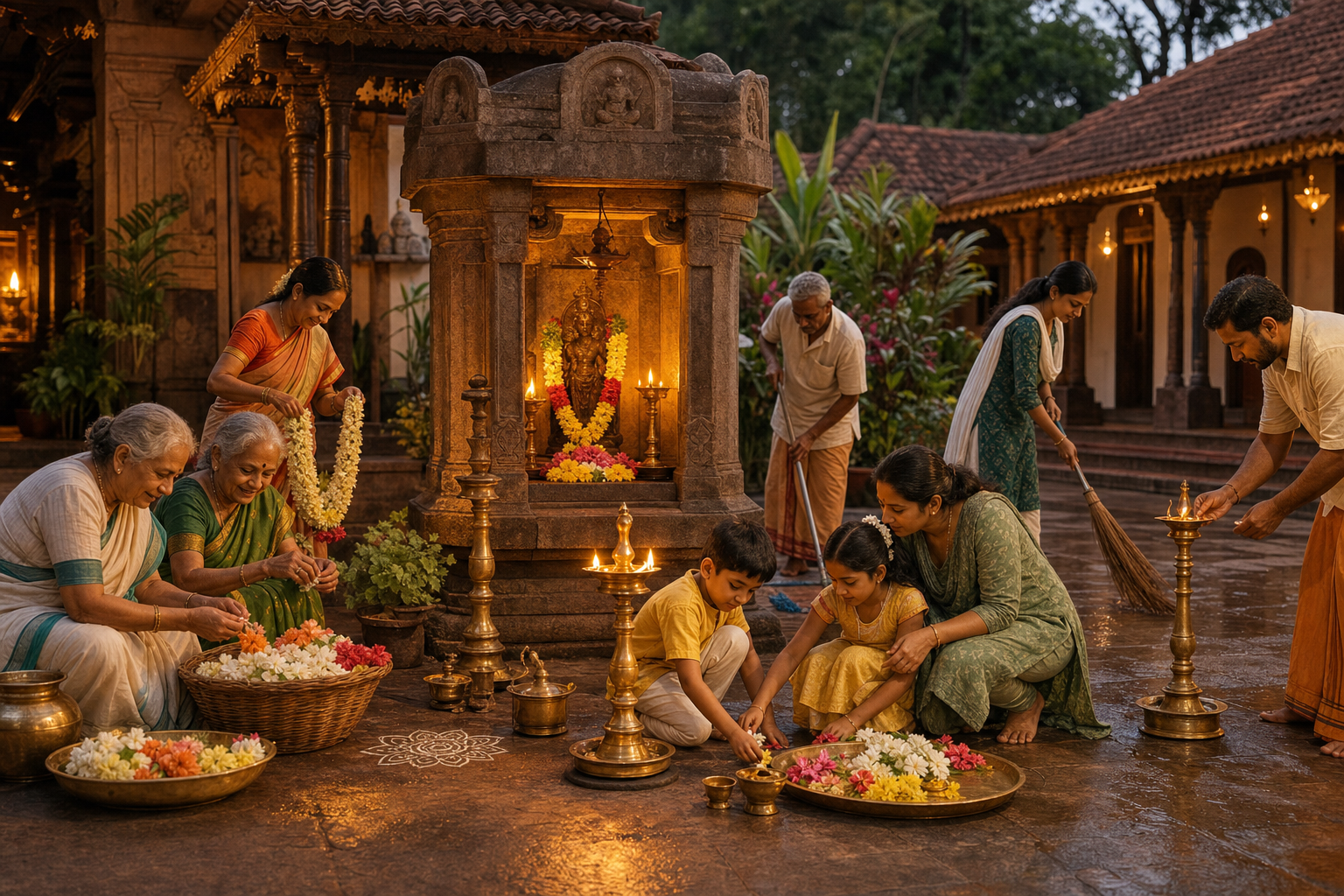
Old Goa’s sacred geography has been shaped by coastal exchange, temple networks and colonial history. Establishing twelve Jyotirlinga representations there gives indigenous Hindu worship a visible and living place within that layered landscape. Its durability, however, will depend less on the scale of the consecration ceremony than on what devotees, priests, artisans and volunteers sustain afterward.
The most important work is often unglamorous: regular puja, orderly pilgrim hospitality, clean approaches, restrained water use and careful handling of offerings. Ecologically sensitive abhisheka matters because devotion should not leave the temple managing avoidable plastic, excess liquid or inappropriate waste. When you bring only approved offerings and follow the designated disposal system, you participate in seva rather than transferring a burden to temple workers.
Coastal conditions also create a material responsibility. Humidity and salt-laden air can stress stone, metal, plaster and the joints of an installation. Appropriate conservation may involve durable stone such as granite or amphibolite where suitable, breathable lime plaster, periodic inspection of ashtabandhana and careful management of the sanctum’s microclimate. These decisions belong to qualified temple and conservation teams, not to well-meaning visitors applying household cleaning methods or touching surfaces to test their condition.
If you want to support the Devasthan beyond a single visit, ask where help is actually needed. Useful forms of seva can include pilgrim assistance, cleanliness work, responsible festival management, multilingual interpretation and the documentation of icons, inscriptions, chants and oral histories. Recording should always occur with permission; a living liturgy is not raw content for a visitor’s social-media feed.
You can also learn to notice the architectural grammar of a Shiva temple. The garbhagriha holds the concentrated sanctum; an antarala may mediate between it and the mandapa; Nandi commonly faces Shiva along the temple’s principal axis; and a dhvaja-stambha or bali-pitha may mark the approach. Not every temple expresses the same arrangement identically, so observe what is present instead of forcing the complex into a diagram.
Behind the visible forms stand bodies of knowledge: stone working, ashtabandhana preparation, metal casting in panchaloha where applicable, wood carving, gilding, mantra transmission and liturgical music. Respectful interpretation can help younger visitors see that a temple is not a solitary monument. It is an ecosystem in which ritual specialists, craftspeople, householders, donors and volunteers carry different parts of the same responsibility.
Before you travel, write down the purpose of your visit in one sentence: darshana, learning, festival participation or fulfilment of a vow. Then confirm the temple’s arrangements and let that purpose determine your pace. Old Goa offers a rare concentration of Shaiva worship; you will receive more from it when you meet it as a living Devasthan rather than label it a substitute for twelve journeys.
References
