

If your family has chosen May 2026 for Tirumala, the difficult part is not simply reaching Tirupati. It is securing darshan, finding suitable accommodation, matching every booking to the correct identity document, and arranging transport around reservations that may open at different times.
Treat the pilgrimage as a chain of dependent decisions. Fix your acceptable dates and darshan priority first, but do not make expensive or inflexible travel arrangements until the reservation that anchors your journey is confirmed in your TTD account.
Secure the scarce part of your pilgrimage first
There is no single May package containing darshan, seva, and a room. TTD generally releases different services in phases, and the exact sequence, dates, and opening times remain subject to official notification. Special Entry Darshan, Arjitha Seva opportunities, and accommodation may therefore require separate booking sessions. Do not infer the May timetable from a previous month or an old social-media message; each service can have its own release window.
Before a quota opens, decide what actually makes the journey viable for your group. A family with elderly parents may need a confirmed room in Tirumala and a predictable darshan arrangement. A younger pilgrim travelling alone may accept free darshan and stay in Tirupati. A devotee seeking a particular Arjitha Seva needs flexibility because those places are especially limited.
Write a one-page decision sheet containing:
- The full names, ages, gender entries, and chosen identity documents of every pilgrim.
- Your acceptable May dates in order of preference, including at least one alternative if your schedule permits.
- Your primary darshan choice and the fallback you are genuinely prepared to use.
- Whether you need accommodation in Tirumala or can stay in Tirupati.
- Any mobility, age, disability, caregiving, or child-related condition that affects the plan.
- The person responsible for making the booking and retaining every confirmation.
Choose the darshan route deliberately. Special Entry Darshan provides a prescribed time slot for the fee displayed by TTD during booking. Sarva Darshan is free, but the experience depends on crowd controls and waiting conditions. Slotted Sarva Darshan can offer a time band when it is operational, but you should not build a journey around it until TTD confirms its availability for your date.
Arjitha Seva is a separate devotional category, not an upgrade that can be added casually to another ticket. Opportunities for Suprabhata Seva, Thomala Seva, Archana, Kalyanotsavam, Unjal Seva, and other sevas may be allocated through an electronic lucky dip, a first-come-first-served opening, or a combination announced for that month. Decide in advance whether receiving the seva is essential to the trip or a welcome possibility. If it is only a preference, do not let an unsuccessful seva application prevent you from securing an acceptable darshan date.
Accommodation requires the same clarity. TTD rooms in Tirumala and Tirupati vary by tariff, location, amenities, occupancy rules, and check-in conditions. A darshan confirmation does not imply that a room has been reserved. Keep the two statuses separate on your planning sheet.
Run booking day as a controlled process

Booking speed matters, but clean data matters more. A reservation made quickly with the wrong name or document details can become unusable because scarce darshan and seva bookings are generally non-transferable. Your preparation should remove every decision that can be made before the quota opens.
Complete these tasks before release day:
- Create and verify the TTD account you intend to use.
- Update stored pilgrim profiles using names and details exactly as they appear on the selected government-issued photo IDs.
- Check spelling, order of names, age, gender entry, and document selection for every person.
- Keep the chosen IDs beside you so that you are not copying details from memory.
- Use a reliable internet connection and a stable, updated browser session.
- Confirm that your payment method works and that you can complete any authentication it requires.
- Choose preferred dates, time slots, and room categories before logging in.
- Create a folder for tickets, receipts, transaction references, and screenshots of any error that affects payment or confirmation.
For international devotees, the passport will usually be the primary identity document. Families should not assume that rules remembered from an earlier visit still apply to children. Ticketing thresholds and identity requirements for children can change, so check the current eligibility instructions before adding or excluding a child from the booking.
When the quota opens, follow one sequence:
- Type or use a previously verified official TTD address rather than following a link from an unsolicited message.
- Sign in to the verified account and select the correct service category.
- Choose the date and slot from your prepared preference order.
- Add only the pilgrims who will actually use that reservation.
- Compare every displayed detail with the selected identity documents before proceeding.
- Review the tariff, inclusions, reporting instructions, and cancellation conditions shown on the current booking screen.
- Complete payment and retain the transaction reference.
- Return to the account dashboard and confirm that the booking itself is marked successful.
- Download the e-ticket or accommodation receipt and preserve the related email or SMS confirmation.
A bank debit is not the same as a confirmed reservation. If payment appears to fail or the browser stalls, record the transaction reference and check the dashboard before making repeated attempts. The account status and issued ticket determine whether you hold the reservation. Follow the resolution instructions available through official TTD channels for any unresolved debit.
High-demand releases also attract phishing pages and people claiming privileged access. Never share your password or one-time password, and do not pay through an unfamiliar link sent by a supposed agent. The safe test is simple: can you see the completed reservation inside your own verified TTD account and download its receipt?
Let the confirmed reservation anchor your travel
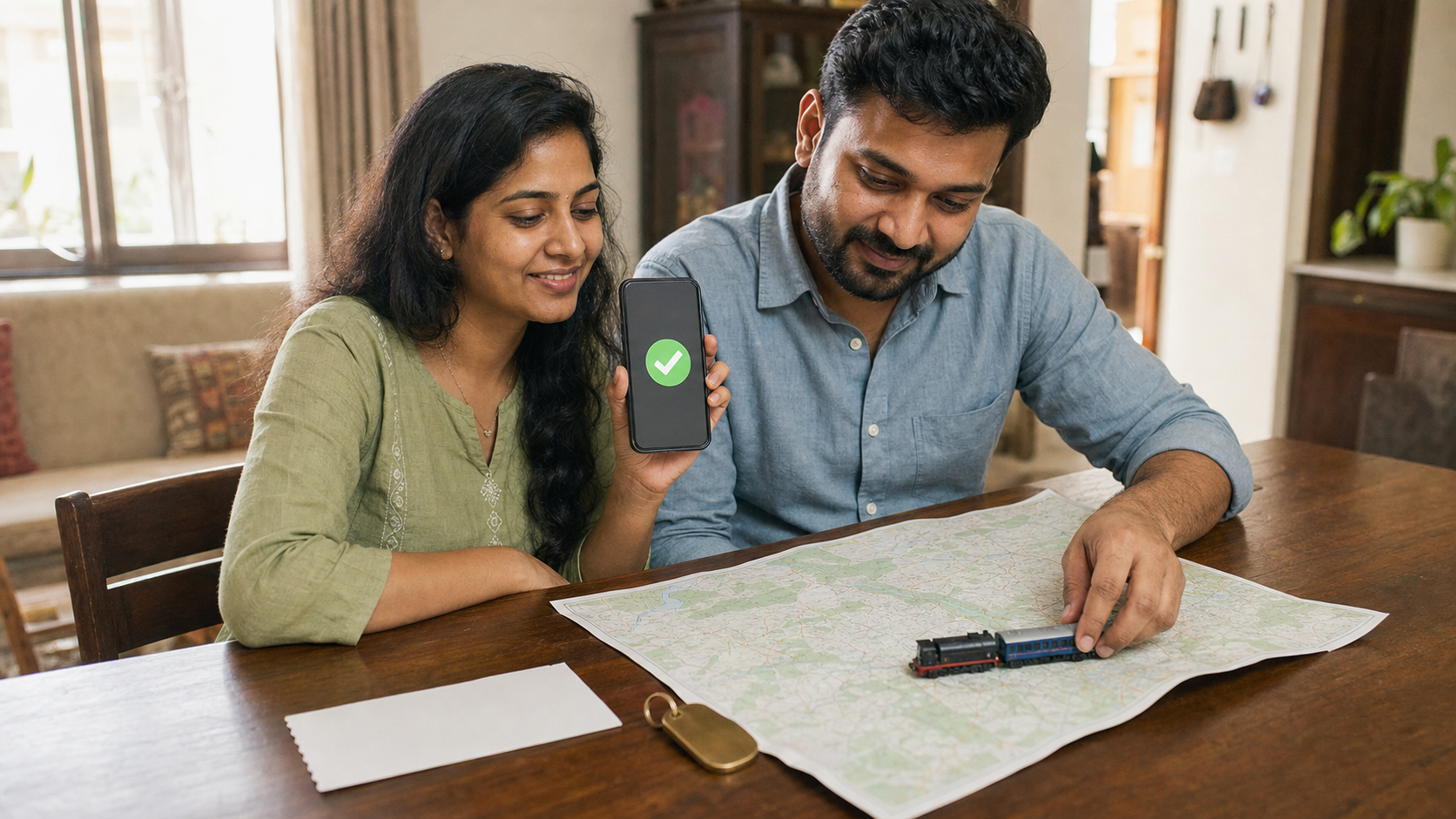
Your darshan ticket, room, train, and flight do not have equal flexibility. A scarce darshan or seva place may be non-transferable and non-refundable, while accommodation can have a different cancellation or partial-refund policy. Transport may carry its own change costs. Build outward from the least flexible confirmed reservation instead of buying everything at once.
A sensible booking order is:
- Secure the darshan or seva arrangement that determines the pilgrimage date.
- Book TTD accommodation when its relevant quota opens.
- If no suitable TTD room is available, make a legitimate alternative lodging plan in Tirupati rather than assuming an on-ground allotment will appear.
- Choose transport that works with the reporting time and the room’s stated check-in window.
- Review the complete itinerary for gaps, especially an early arrival before check-in or a late departure after check-out.
Do not schedule a train or flight on the assumption that a guest house will permit early check-in, a late check-out, or an extension. Those requests depend on availability and the rules in force at the time. The check-in window printed on the accommodation confirmation should govern your arrival plan.
At check-in, carry the booking receipt and the same identity documents used for the reservation. Respect the stated occupancy limit. Adding unlisted guests, trying to transfer the room, or assuming that two small families can combine under one booking can lead to refusal because occupancy and transfer restrictions exist to prevent misuse.
Avoid duplicate or conflicting reservations made merely as insurance. They can create account problems, waste scarce capacity, and leave you dependent on cancellation terms that may not be generous. If different members of a large family receive separate tickets or time slots, decide before travelling whether the group is willing to split. Record a meeting point and make sure each subgroup carries its own tickets and IDs.
Prepare each pilgrim for the physical journey and temple entry
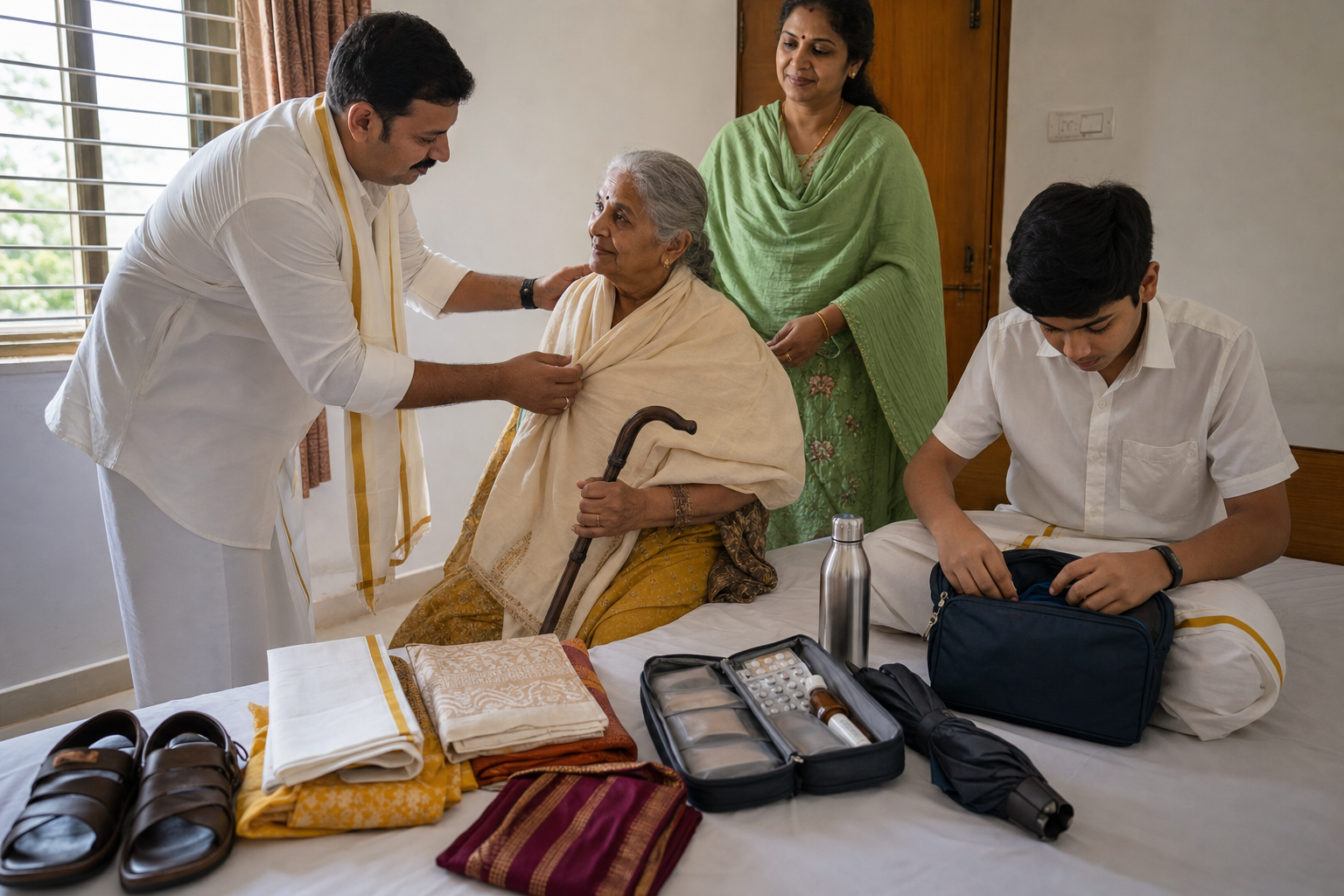
A technically valid booking does not remove the physical demands of a summer pilgrimage. Plan for the oldest, youngest, or least mobile member of your party, not for the strongest person. A schedule that works for a healthy adult may be unsuitable for a senior citizen, a person with a disability, or a child.
When separate provisions for senior citizens and persons with disabilities are operational, their timing, eligibility, documentation, and companion rules can be adjusted. Verify the current advisory close to departure and bring whatever medical or eligibility evidence is required. Do not promise a shorter or separate route to a family member until the applicable provision has been confirmed for that date. If mobility assistance is necessary, identify the designated assistance point after arrival rather than relying on an informal offer.
If you intend to climb by the Alipiri or Srivari Mettu footpath, treat the walk as both a vow and a real exertion. Confirm that your chosen route is operating, begin early, carry sufficient water, obey posted instructions, and allow the pace to be set by the slowest member of the group. Tokens or special arrangements for pilgrims arriving on foot depend on current operating conditions and capacity controls. The climb itself must not be treated as proof that a particular darshan token will be available.
For the day of darshan, make a small document packet for each subgroup:
- The downloaded or printed e-ticket showing the correct date, slot, reporting place, and pilgrim names.
- The original government-issued photo ID selected during booking for each person who requires one.
- The passport used for an international devotee’s reservation.
- Any current eligibility or medical documentation required for an applicable special provision.
- The accommodation receipt if the subgroup will also handle check-in.
- The payment and booking references stored offline in case mobile connectivity is unreliable.
Dress in traditional or otherwise modest clothing appropriate to the sanctity of the temple. Reach the designated reporting gate before the time printed on the ticket, but follow the current entry instructions rather than relying on an old route description. Deposit prohibited belongings only at authorized facilities, cooperate with baggage screening, and follow the directions of security personnel and volunteers.
Keep the ticket until every included or separately purchased prasadam entitlement has been handled. Laddu redemption arrangements are identified through the e-ticket and on-site signs. Do not hand a receipt or identity document to an unauthorized intermediary offering to bypass a queue.
The administrative system exists to serve a sacred encounter shared by an immense number of devotees. Arriving at the correct place with the correct documents is part of respecting that collective discipline. So are patience in the queue, consideration for older pilgrims, cleanliness, and refusal to participate in touting or unauthorized shortcuts.
Key takeaways for your May 2026 plan
- Do not wait for one combined release: darshan, Arjitha Seva, and accommodation can open in separate phases.
- Choose acceptable dates, darshan priorities, and fallbacks before the booking window begins.
- Copy every pilgrim detail exactly from the identity document that person will carry.
- Treat a reservation as successful only when it appears as confirmed in your TTD dashboard and produces a downloadable ticket or receipt.
- Never share passwords or one-time passwords, and avoid unverified booking links or people promising privileged access.
- Anchor transport to the confirmed darshan reporting time and accommodation check-in window.
- Verify child, senior-citizen, disability, companion, and footpath provisions close to travel because operational rules can change.
- Carry tickets and original IDs offline, observe the dress and security requirements, and arrive before the printed reporting time.
Your next step is concrete: prepare the pilgrim-detail sheet, verify the TTD account, and agree on the dates and fallbacks your entire group will accept. When the relevant TTD notification appears, you can then book from a settled plan instead of making irreversible choices under pressure.
References
