
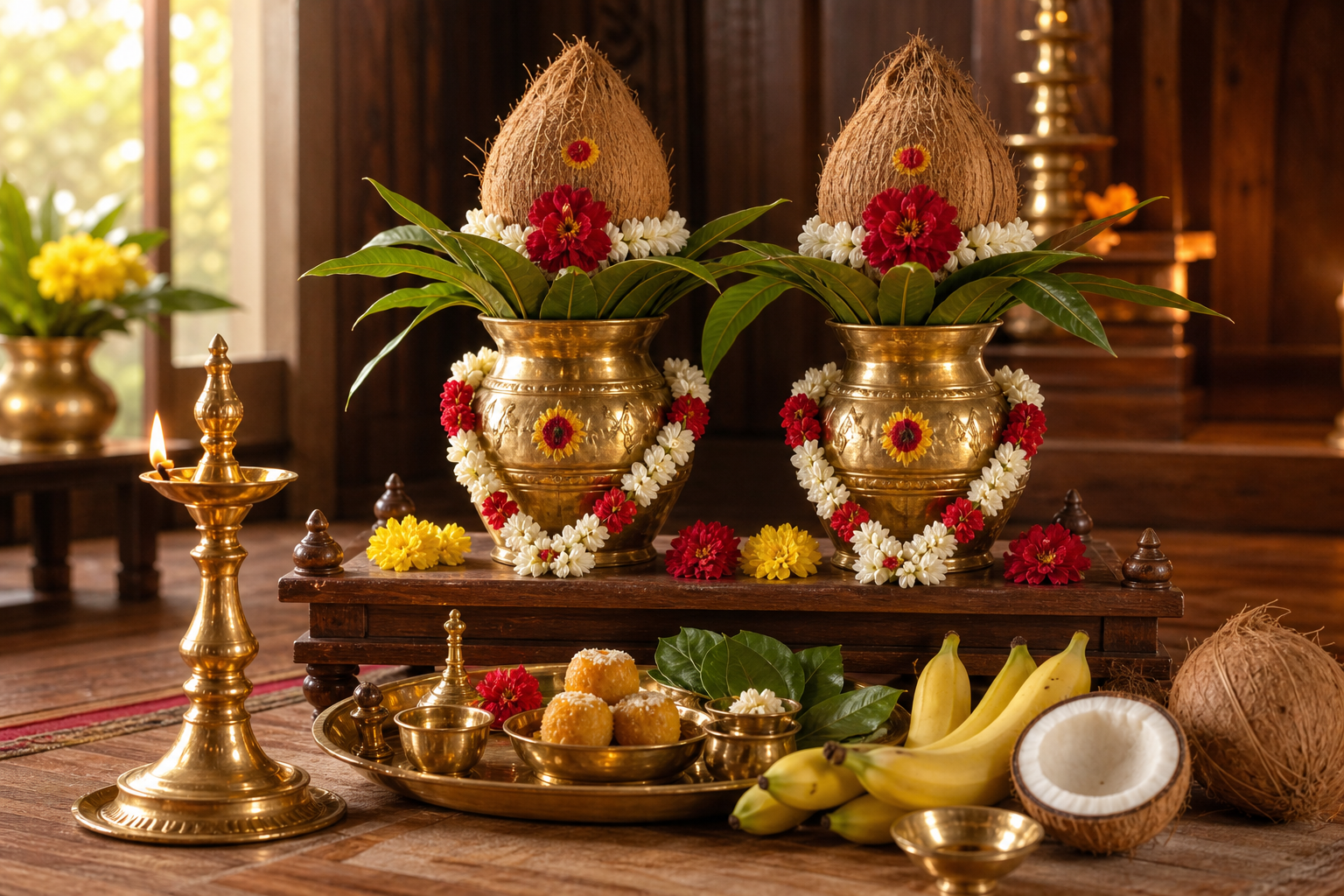
If you are planning Sampada Gowri Vratham in 2026, mark Friday, May 1 as the working date. Then make one essential check before inviting anyone, beginning a fast, or fixing the puja hour: confirm when Purnima tithi prevails in your own location.
This observance, also called Sampath Gauri Vrata, brings Sri Lakshmi and Gauri together in worship. You are seeking more than financial gain. The sankalpa is for prosperity governed by dharma: sufficient resources, steadiness in difficulty, gratitude, right livelihood and harmony within the household.
Confirm May 1 against your local Purnima tithi
Vaishakh Purnima falls on Friday, May 1, 2026. The exact beginning and ending of Purnima can fall between late April 30 and May 1, depending on the regional panchanga and time zone. That distinction matters because a vrata follows the lunar tithi prevailing where you perform it, not merely the date printed on an overseas calendar.
Use a reputable panchanga calculated for your city. Do not copy an Indian puja time if you live in another country. You should also check whether your family follows an amanta or purnimanta calendar and whether an elder or purohit applies a particular rule when the tithi crosses two civil dates.
Many households perform the main puja after sunrise and before moonrise while Purnima is present. Some lineages prefer evening worship during pradosha, especially for a Lakshmi-related vrata. Neither custom should be promoted as a universal clock time. If your inherited parampara gives a clear rule, follow it; otherwise, choose a convenient period within the locally valid Purnima tithi.
Key takeaways for 2026
- The working civil date is Friday, May 1, 2026.
- Check the Purnima start and end times for the city where the puja will occur.
- Morning worship after sunrise is common, while some families use pradosha in the evening.
- The Friday coincidence strengthens the devotional association with Lakshmi, but it does not override local tithi or family custom.
- If you are also performing Satyanarayana Puja, the two observances may be conducted sequentially, with Gauri-Lakshmi worship first.
Once the time is settled, write down your sankalpa. An English statement is sufficient for planning even if you will use a lineage-specific Sanskrit formula during the rite: On this Vaishakh Purnima, I undertake Sampada Gowri Vratham in worship of Sri Lakshmi and Gauri, seeking dharmic well-being, gratitude and harmony for this household. Let an elder or purohit supply the formal wording if your tradition requires names, place and calendrical details.
Prepare a vrata you can keep safely and sincerely
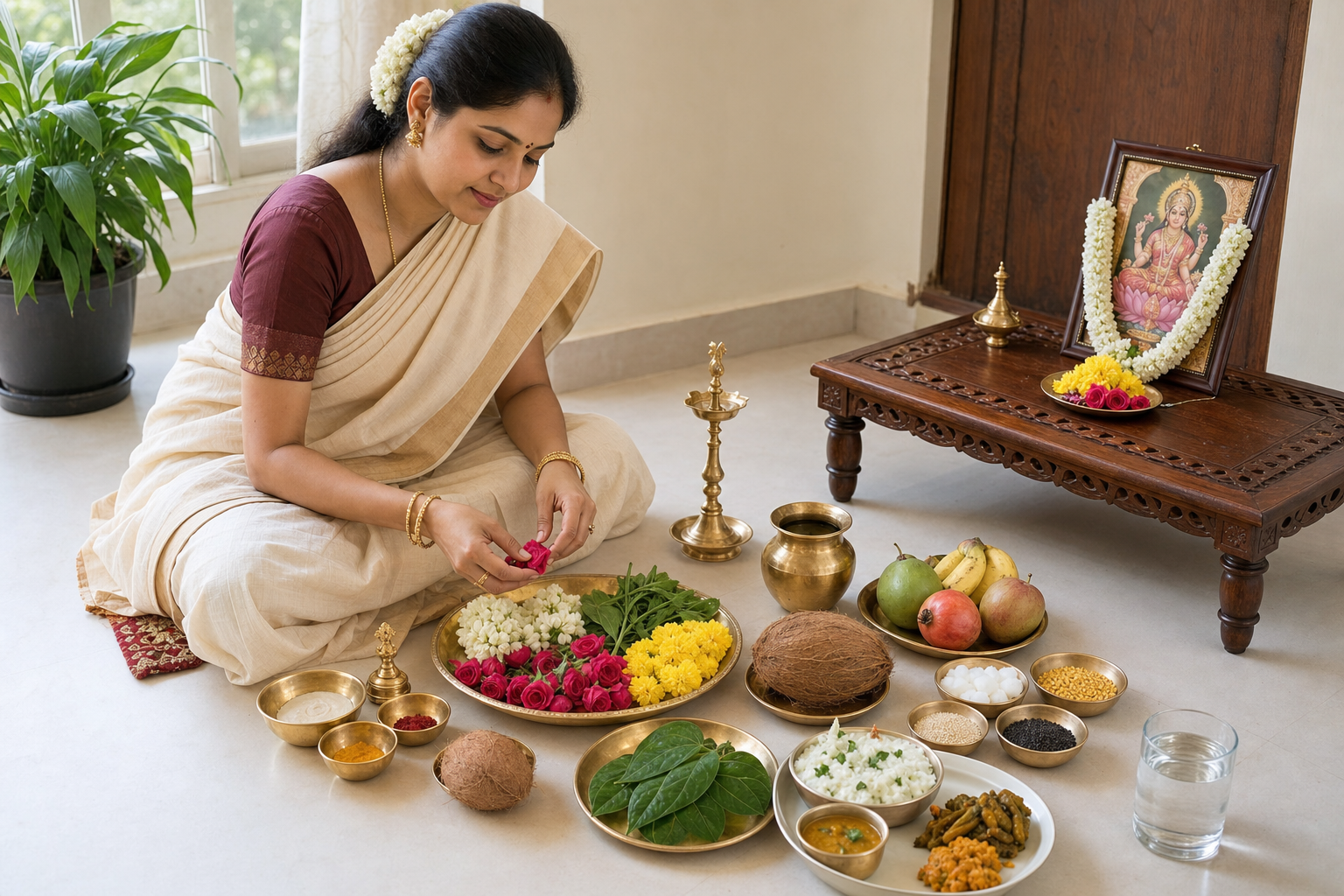
The vrata is not limited to one age, profession or household role. Householders often lead it, but students, professionals and elders may also participate. Decide in advance who will make the sankalpa, who will assist with offerings, what fasting discipline is realistic, and what form of dana will accompany the worship. These decisions prevent the day from becoming a hurried negotiation about food and ritual responsibilities.
Choose the fasting discipline before the vrata begins
Practices differ. Some devotees maintain a strict fast, some take phalahara such as fruit and milk, and others eat one sattvika meal after the puja. Choose the form observed in your family and appropriate to your health. A demanding fast is not a test of devotion when it interferes with medication, hydration, blood-glucose management, pregnancy or an existing medical condition. In those circumstances, adapt the food discipline and obtain qualified medical guidance rather than risking harm.
If several family members are participating, they do not all need to follow the same dietary restriction. One person may keep the formal fast while children, elders or anyone with a health constraint joins the puja without fasting. The shared discipline can be expressed through sattvika food, restraint, prayer, seva and mindful speech.
Assemble a practical home altar
A customary home arrangement uses the following items. Treat the list as a preparation aid, not as permission to discard the forms received from your family:
- A clean chowki or low seat covered with a red or yellow cloth.
- A kalasha filled with water, placed on rice or wheat grains, with mango leaves and a coconut at its mouth.
- An image of Gauri or a small haridra Gauri murti fashioned from turmeric, together with an image of Lakshmi.
- Turmeric, kumkum, sandal paste, akshata and fresh flowers for archana.
- A reusable lamp with ghee or oil, incense, a bell and camphor where safely used.
- Milk-based payasa or kheer, a jaggery preparation, coconut, bananas or other seasonal fruits for naivedya.
- Betel leaves, areca nut, fruit or another customary tambula set for distribution.
Place the kalasha securely on the grain base. Arrange Gauri and Lakshmi so that neither image is hidden behind the vessel or offerings. A rangoli or kolam, a simple torana and a steady lamp can make the space contemplative, but decoration is secondary. A small, clean altar that lets you sit attentively is better than an elaborate arrangement that consumes the entire puja in maintenance.
Prepare naivedya, flowers and dana before the stated puja time. Keep lamp flames away from cloth, flowers, children and crowded offering plates. If a traditional item is unavailable where you live, ask someone who knows your parampara before declaring an improvised substitute to be ritually equivalent.
Follow the home puja in a clear sequence
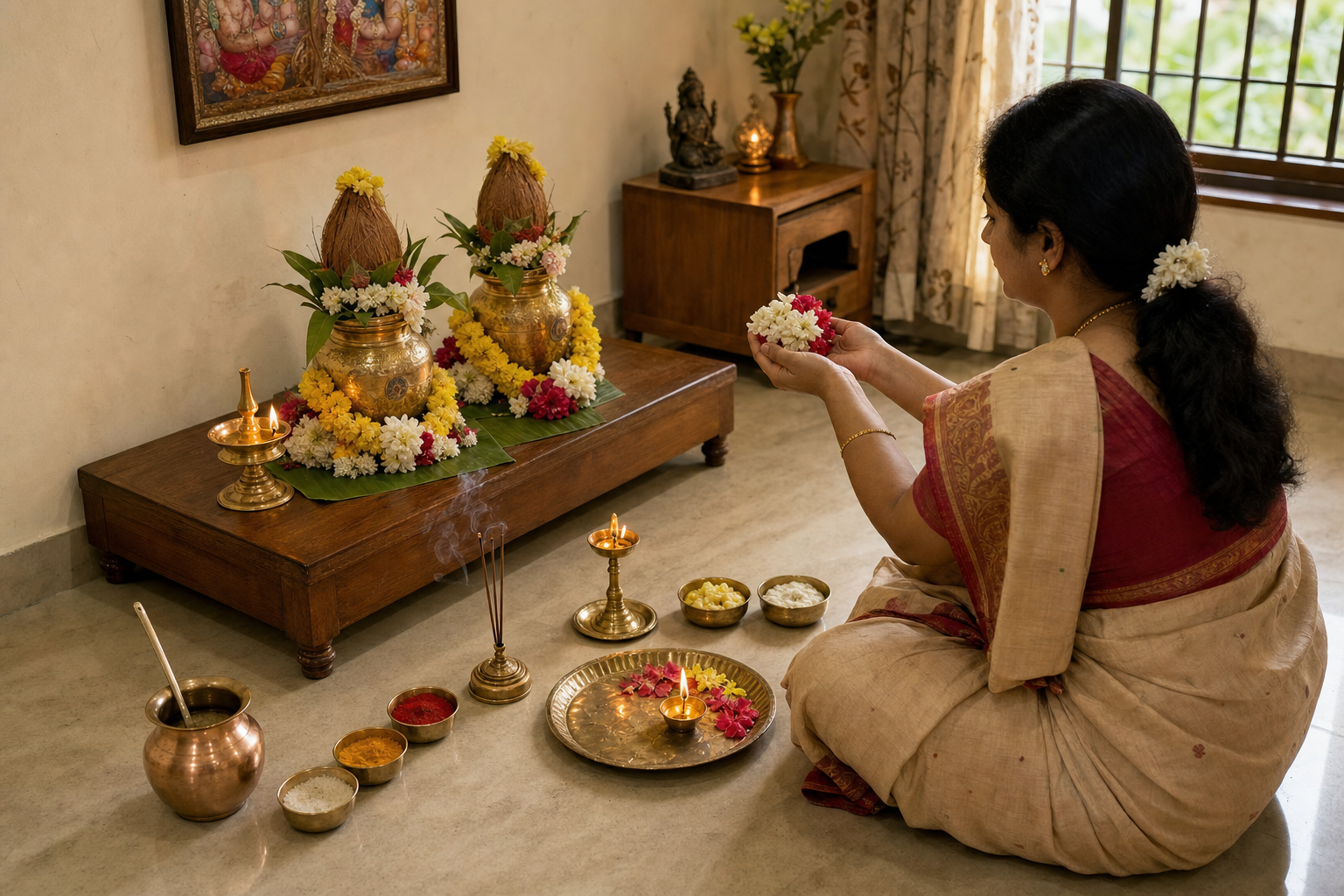
The sequence below gives you a coherent home observance. It does not replace a family paddhati or instructions from a qualified purohit. Where your tradition prescribes a different order, mantra or offering, that inherited method takes precedence.
- Purify the home and yourself. Clean the shrine area, bathe, wear clean clothing and place all required items within reach. Household purification should reduce distraction, not produce exhaustion before worship begins.
- Prepare the chowki and kalasha. Spread the clean cloth, place rice or wheat as the base, position the water-filled kalasha, and arrange the mango leaves and coconut. Install the Gauri and Lakshmi images beside or above it according to your custom.
- Light the deepa. Begin with a stable ghee or oil lamp. Let it remain a focus of attention rather than merely another decorative object.
- Perform achamana and pranayama. Use the procedure and mantras taught in your tradition. These preliminary acts settle the body, speech and mind before the formal intention.
- State the sankalpa. Name Sampada Gowri Vratham and Vaishakh Purnima explicitly. Hold the purpose as dharmic well-being, not an unrestricted demand for wealth.
- Invoke Gauri and Lakshmi. Perform avahana and offer asana, padya, arghya and achamaniya in the manner you know. A full shodashopachara, or sixteen-fold worship, may be followed when it belongs to your household practice.
- Offer the principal upacharas. Apply sandal paste, turmeric and kumkum where appropriate, then offer akshata, flowers, incense and the lighted lamp. Keep the actions deliberate enough that the words and offerings remain connected.
- Conduct archana. Offer flowers, kumkum, turmeric or akshata while reciting the 108 names of Lakshmi and Gauri. The two namavalis may be recited consecutively or interleaved if that is the established method you follow.
- Chant the central mantras. Suitable invocations include ॐ श्रीं महालक्ष्म्यै नमः for Mahalakshmi and ॐ गौरीदेव्यै नमः for Gauri. Repeat them with steady attention rather than racing toward a large count you cannot sustain.
- Recite the stotra portion. Sri Sukta may be offered for Lakshmi, together with verses honoring Gauri or Parvati. Some families add Kanakadhara Stotram or selected passages from Devi Mahatmya when time and familiarity permit.
- Offer naivedya and water. Present the prepared payasa, jaggery sweet, coconut and fruit before anyone tastes or distributes them. Follow your family rules concerning which leaves, vessels and accompaniments are appropriate for Devi worship.
- Narrate the vrata-katha and perform arati. If your family preserves a Sampada Gowri story, narrate that received version. Its practical emphasis is steadfast worship, gratitude, restraint and restoration of household harmony. Complete the worship with karpura-arati, pranama and the sharing of prasada.
If you cannot perform every element, do not rush through unfamiliar Sanskrit simply to make the ritual appear complete. Preserve the coherent core: purification, sankalpa, invocation, respectful offerings, mantra or stotra, naivedya, arati and dana. Ask an elder or purohit about any element your family treats as indispensable.
The sensory details have a purpose. The steady deepa, bell, flowers, incense and measured cadence of recitation gather a scattered mind. Build brief periods of silence into the archana. Without attention, an extensive list of offerings can become busyness; with attention, even a modest home puja can express the vrata’s central discipline.
Make sampada visible through naivedya, dana and restraint
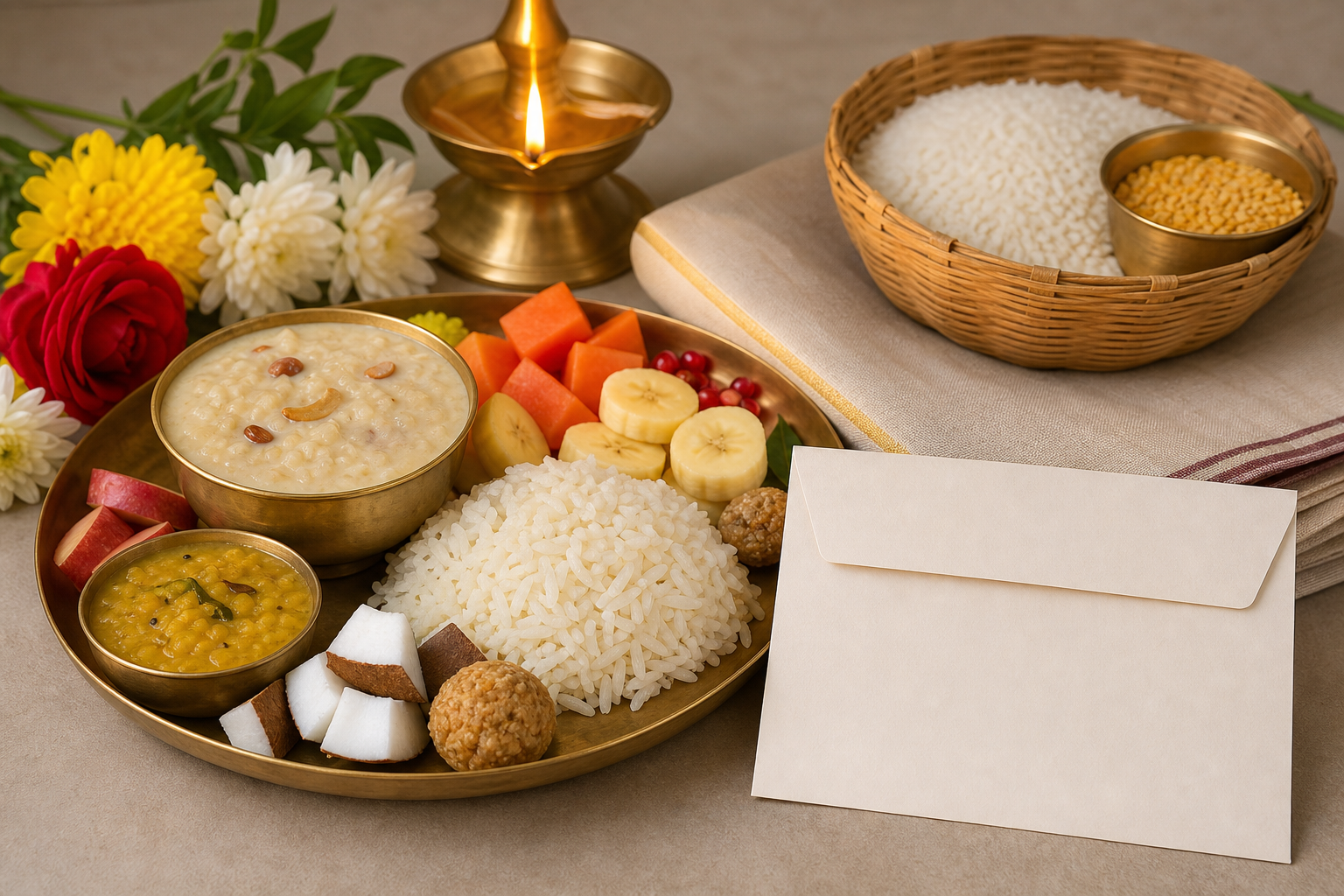
Sampada means abundance and well-being, while Gauri represents purity, benevolence and steadfast strength. Worshipping Gauri and Lakshmi together therefore asks a demanding question: will prosperity remain connected to dharma? The answer should be visible in what you share, how you obtain it and how little waste the observance creates.
Choose your act of dana before beginning the puja and set it aside with the other materials. Waiting until the end often turns charity into whatever happens to be left. Appropriate forms include:
- Grains, cooking oil or useful clothing for people who need them.
- Anna-dana or support for an established food service.
- Assistance for women’s health or education initiatives.
- Gau-seva through a responsible local institution where animal welfare and local conditions are properly considered.
- Tambula, fruit, prasada or modest customary gifts shared with relatives, neighbors and invited devotees.
Give according to capacity. Borrowing money for display contradicts the steadiness the vrata is meant to cultivate. A small useful gift, offered respectfully and without humiliating its recipient, carries the intention more honestly than an ornate distribution designed to impress guests.
The same principle applies to environmental choices. Use a reusable metal or clay lamp, natural colors for rangoli, biodegradable serving ware where disposable plates are necessary, and locally available flowers. Plan realistic quantities of prasada. Reverence for Bhoomidevi is difficult to reconcile with avoidable plastic, wasted food and heaps of single-use decoration.
Vaishakh Purnima also belongs to a wider Dharmic civilizational rhythm. Many Buddhist communities observe the full moon as Vesak, Jain households may undertake austerity and scriptural study, and Sikh families may mark Puranmashi through remembrance and devotion. These are not interchangeable ceremonies, and they should not be collapsed into one generic festival. Their concurrence can instead remind you that purity, compassion, disciplined conduct and service cross sectarian boundaries without erasing distinct traditions.
Plan weekly Fridays and Udyapana as one commitment
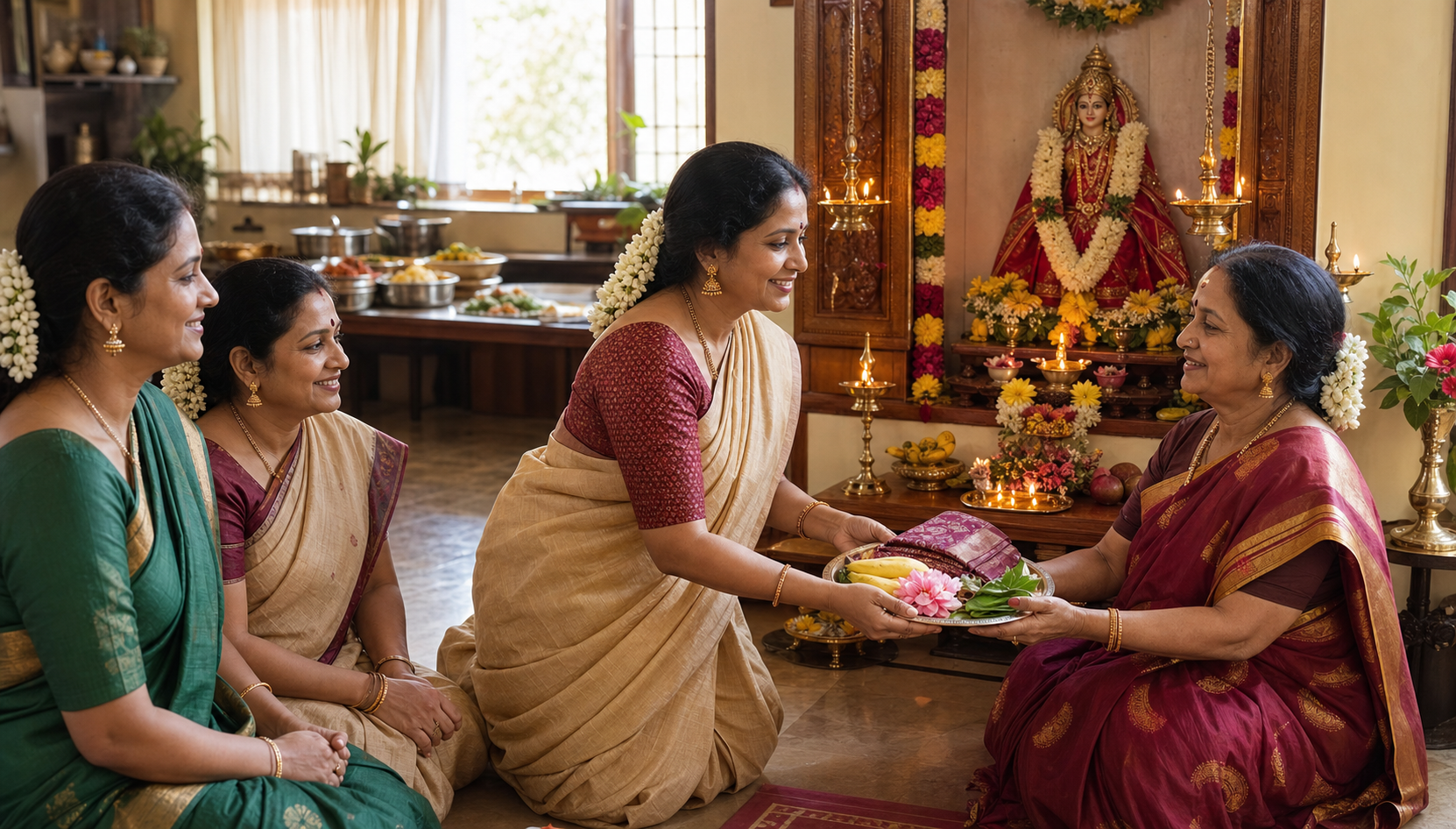
For some families, May 1 is a principal annual observance. Others begin or continue a Friday Lakshmi-Gauri vrata over a sustained period, commonly a year. Decide which vow you are making before the first sankalpa. Write down the starting date, intended duration, weekly discipline and expected Udyapana so that the conclusion is not forgotten once the initial enthusiasm passes.
A simplified Friday observance can consist of lighting the lamp, invoking Lakshmi and Gauri, repeating the two principal mantras, reciting Sri Sukta or a shorter familiar stotra, offering a small naivedya such as jaggery with ghee, and closing with arati. Its value comes from regularity. Week by week, the household returns to gratitude, restraint and right livelihood instead of treating prosperity as acquisition alone.
If work, illness or travel disrupts a Friday, do not invent a penalty or silently change the promised duration. Ask the elder or purohit who knows the form under which you took the vow. Different lineages may handle interruption differently, so a universal rule copied from an unrelated vrata can create more confusion than clarity.
What the Udyapana should accomplish
Udyapana is the formal completion of the intended vrata period. It is not a fee paid for divine favor and it need not become a lavish social event. Its purpose is to complete the worship properly, express gratitude and share the fruit of the discipline with others.
- Confirm the completion date and local tithi or Friday observance with the tradition under which you made the sankalpa.
- Perform the fuller Gauri-Lakshmi puja with kalasha, archana, stotra, naivedya and arati.
- Invite family members, well-wishers or other devotees according to the scale your home can manage calmly.
- Distribute prasada and tambula with respect.
- Where customary, conduct suvasini-puja and offer modest items such as kumkum or bangles.
- Make vastra-dana, anna-dana or another useful charitable gift, with dakshina according to your means.
- Close by acknowledging the completed vow and offering its merit for collective well-being.
Keep regional names distinct while planning. Sampath Gauri observances and allied Gauri upasanas are found especially in Karnataka and parts of Andhra Pradesh and Telangana. Gujarat’s Gauri Vrat before the monsoon and Maharashtra’s Jyeshtha Gauri Pujan near Ganesh Chaturthi are related expressions of devotion to the Divine Feminine, but they are not automatically the same vrata on the same calendar date. Follow the practice your family actually inherited rather than combining attractive fragments from several regions.
Make a one-page plan now: record your local Purnima window, chosen fasting discipline, puja sequence, naivedya, dana recipient and whether the vow ends that day or continues on Fridays. When May 1 arrives, that preparation will let you enter the worship with attention instead of spending the sacred hours solving preventable logistical problems.
References
