
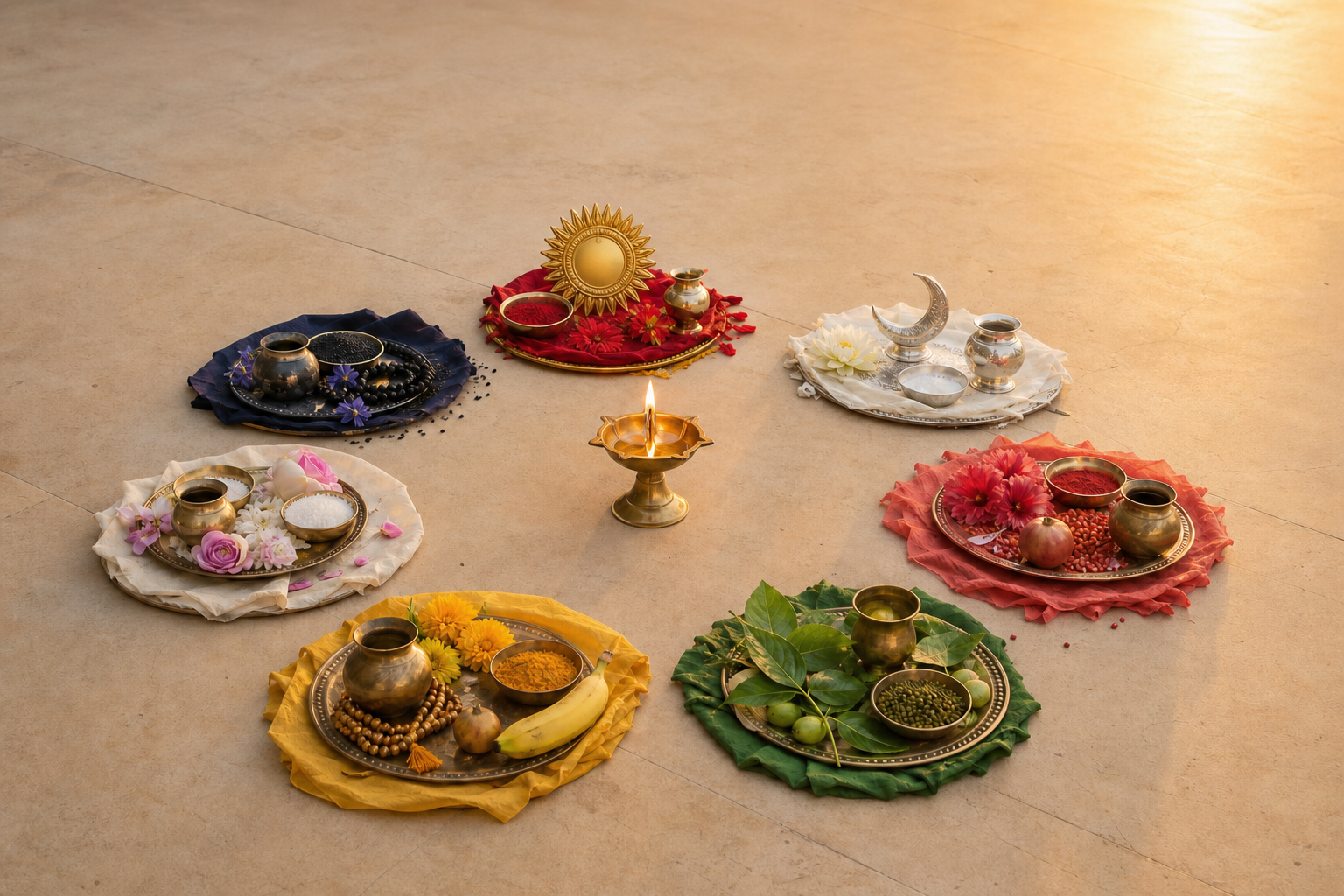
You want to observe a weekday vrata, but the choices can become confusing very quickly. Is Monday for Chandra or Shiva? If Tuesday belongs to Mangala, why do many devotees worship Hanuman? Does a vrata require complete fasting, and must you follow every rule found in a calendar or family message?
The simplest answer is to keep three things distinct: the graha associated with the weekday, the deity worshipped through your tradition, and the personal discipline you undertake as your vow. Once those layers are clear, you can choose a vrata that is devotional, sustainable, and free from unnecessary fear.
The seven weekdays, their grahas, and their deities
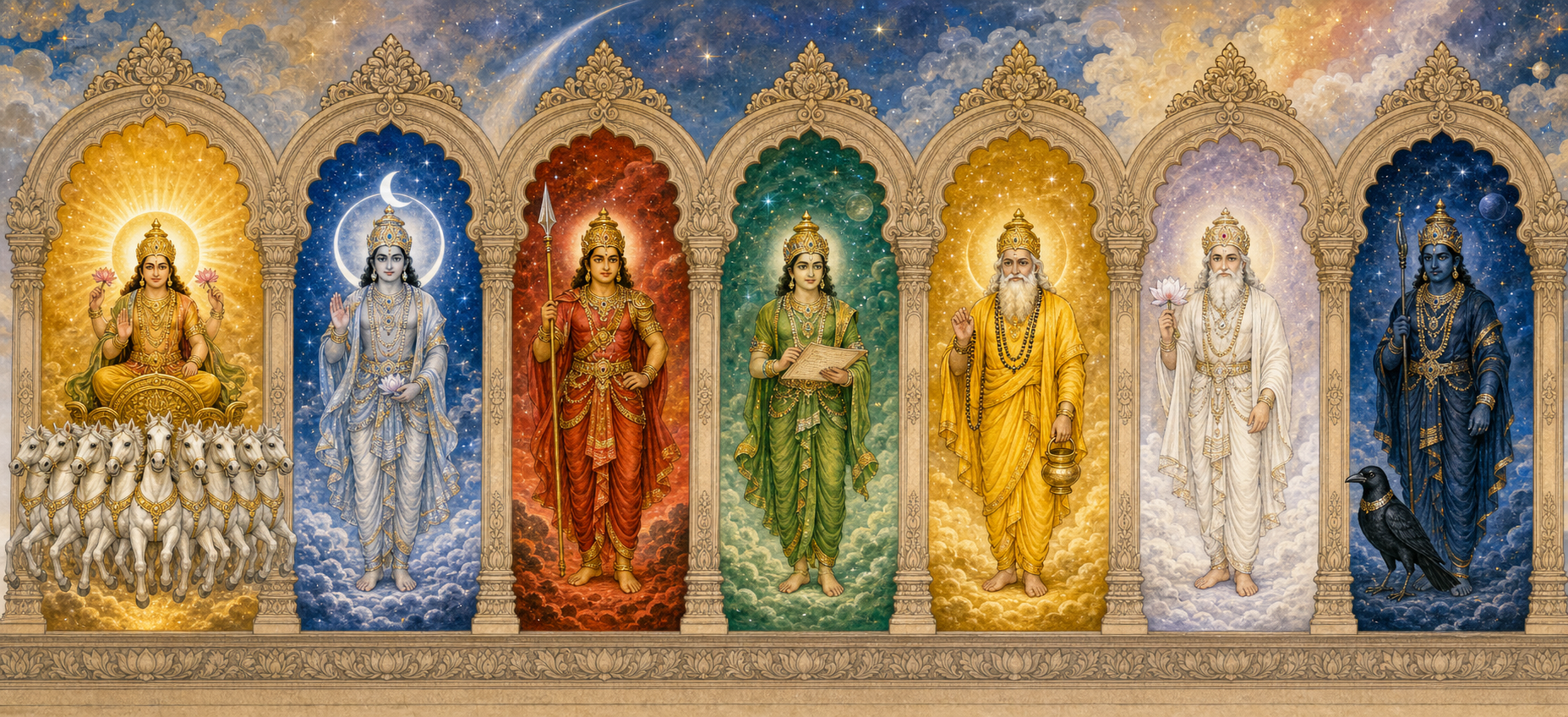
Within Hindu devotional and astrological practice, each weekday is associated with a graha, and a vrata may be undertaken on that day to seek divine grace or address a difficult planetary influence. The English word planet is convenient here, but graha is the more accurate ritual term.
| Weekday | Associated graha | Common devotional focus | A useful inner discipline |
|---|---|---|---|
| Sunday, Ravivara | Surya or Ravi | Surya | Clarity, regularity, responsible leadership, and freedom from lethargy |
| Monday, Somavara | Chandra or Soma | Shiva; in some traditions, Shiva with Parvati | Calmness, emotional steadiness, devotion, and restraint of reactive speech |
| Tuesday, Mangalavara | Mangala | Hanuman, Skanda, or a form of Devi, depending on family and regional tradition | Courage governed by self-control rather than anger |
| Wednesday, Budhavara | Budha | Vishnu or Krishna | Clear judgement, careful speech, attentive study, and honest dealing |
| Thursday, Guruvara or Brihaspativara | Brihaspati or Guru | Brihaspati, Vishnu, or the devotee’s guru tradition | Learning, gratitude toward teachers, sound counsel, and fidelity to dharma |
| Friday, Shukravara | Shukra | Lakshmi or another form of Devi | Gratitude, harmony, cleanliness, generosity, and a wise relationship with prosperity |
| Saturday, Shanivara | Shani | Shani; Hanuman is also widely worshipped | Patience, humility, duty, service, and endurance without resentment |
This table is a map, not a demand that every household worship identically. A weekday’s graha and the deity commonly worshipped on that day are not always the same being. Chandra governs Monday, for example, while Somavara vrata is commonly centred on Shiva. Mangala is connected with Tuesday, while many Tuesday observances are offered to Hanuman. The relationship is traditional and devotional; it does not require the graha and the chosen deity to be interchangeable.
That distinction resolves many apparent contradictions. Your family may call an observance a Monday vrata because of its day, a Shiva vrata because of its deity, or a Chandra-related observance because of its astrological intention. All three descriptions can refer to different layers of the same practice.
Choose one vrata by dharma and intention, not by anxiety
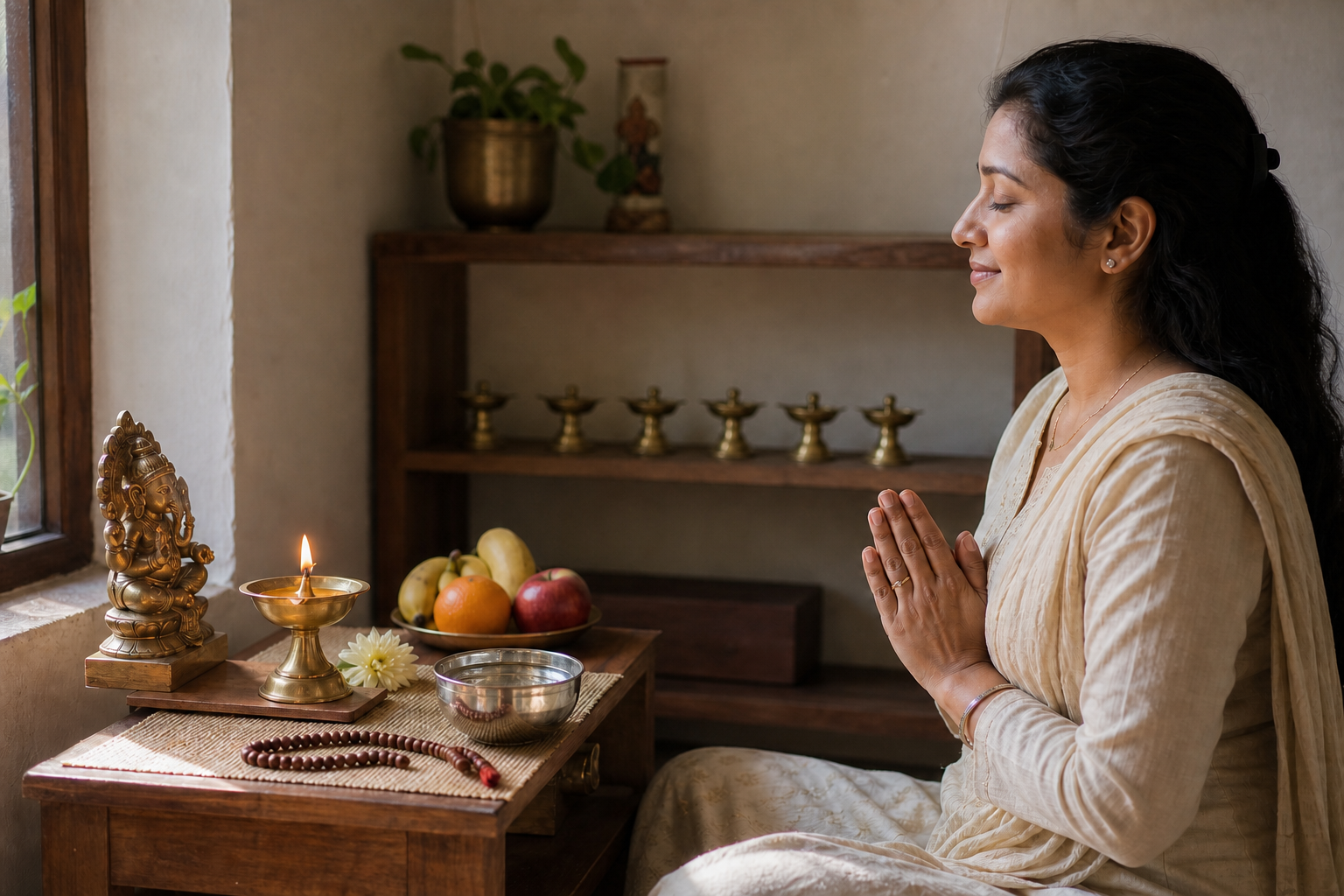
A vrata is a voluntarily accepted sacred discipline. Food restriction may be part of it, but hunger by itself is not the vrata. The vow gains its shape from sankalpa, worship, self-restraint, remembrance of the deity, and conduct consistent with the prayer being made.
Use the following order when deciding which weekday to observe:
- Begin with an inherited practice. If your family, sampradaya, temple, or guru already has a weekday vrata, learn that method first. A living tradition gives context to details that a generic list cannot supply.
- Name the spiritual purpose. Decide whether you are cultivating devotion, correcting a habit, praying through a difficult period, honouring a deity, or following Jyotisha guidance. A vague wish to improve everything usually produces an unfocused observance.
- Select the deity through your actual relationship. If Shiva is your chosen deity, a Monday vrata may be more coherent than selecting a day merely because somebody called its planet powerful. If you already worship Hanuman, Tuesday or Saturday may fit naturally.
- Clarify any astrological recommendation. If a Jyotisha practitioner recommends a weekday vrata, ask which graha is involved, why that day was selected, what conduct is required, and how long the observance is intended to continue. Avoid anyone who uses fear to sell an ever-growing chain of remedies.
- Choose a discipline you can keep honestly. A modest vow observed with attention is better than an extreme fast abandoned in frustration or concealed behind excuses.
You do not need to undertake all seven vratas. Doing so can turn a sacred rhythm into a burdensome weekly food schedule, especially when the rules come from unrelated regional traditions. Start with one day. Let the observance develop depth before adding another.
It is also wise to reject mechanical promises. A weekday vrata can orient your prayer, discipline, and response to suffering, but it should not be marketed as a guaranteed cancellation of karma or an assured way to obtain wealth, marriage, employment, or victory. The proper question is not merely what you want the graha to give you. Ask what quality of character the vrata requires you to develop.
Build the vrata around five elements you can actually keep
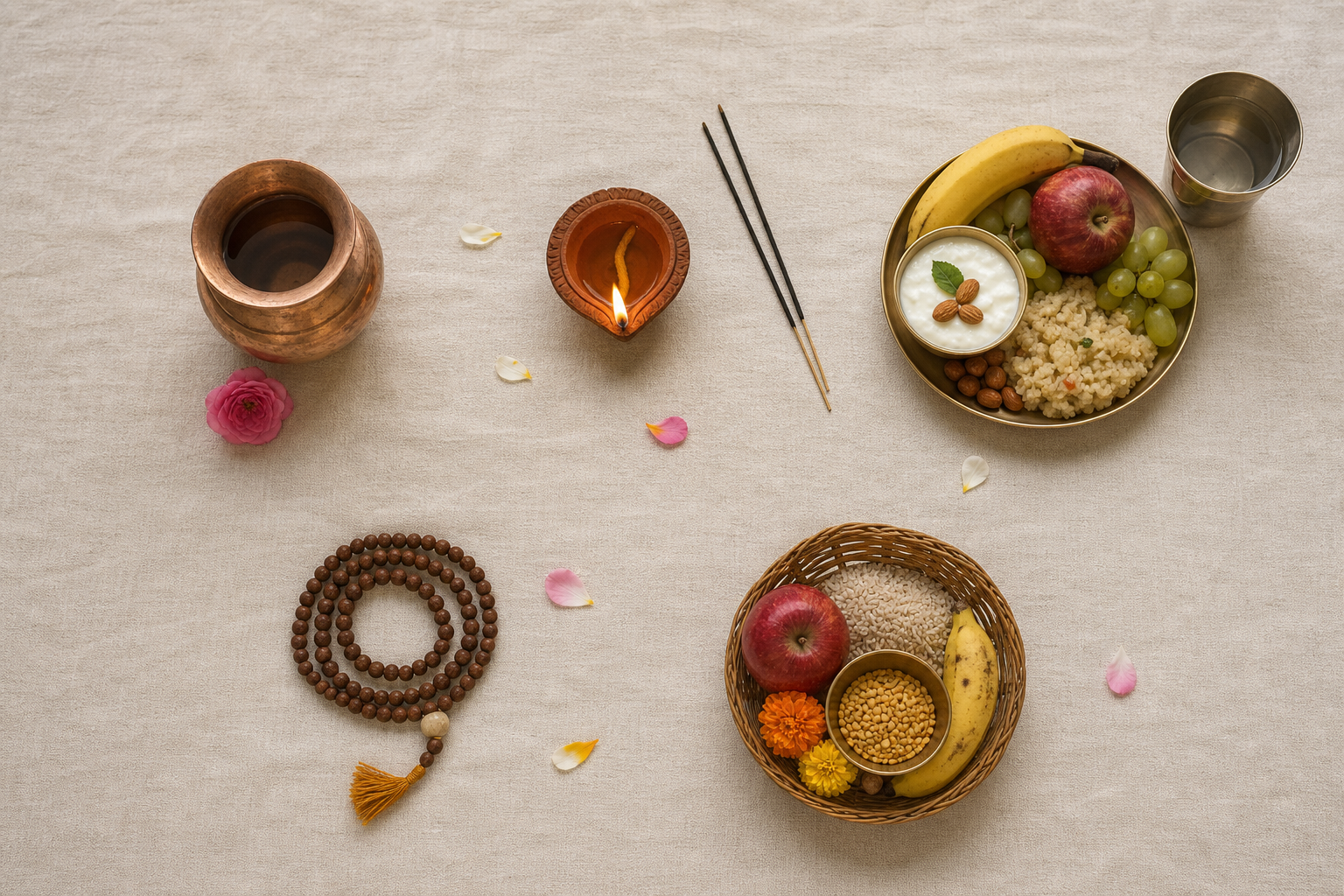
Details differ across regions and sects. Some devotees take one meal, some avoid selected foods, some eat fruit, and some undertake no food restriction at all. Treat such rules as tradition-specific unless your own lineage or teacher presents them as binding.
- Write a clear sankalpa. State the weekday, the deity, the discipline, and the intention. A plain formulation is enough: On Mondays, for this defined period, I will worship Shiva and restrain angry speech while praying for steadiness and the welfare of all. Do not promise more than you can responsibly perform.
- Keep the worship recognisable and focused. Clean the place of worship, bathe or wash as your circumstances permit, light a lamp if it is safe, make the customary offering available to you, and recite the prayer or name used in your tradition. More objects do not necessarily mean more devotion.
- Give the vrata an ethical rule. Match the discipline to the day’s purpose. On Tuesday, govern anger before asking for courage. On Wednesday, avoid careless or deceptive speech before asking for discernment. On Saturday, complete an avoided duty or serve someone who is easily overlooked before asking for relief from hardship.
- Add dana or seva where appropriate. Give without humiliating the recipient or turning charity into a public display. If money is limited, offer time, attention, practical help, or care for a shared sacred space.
- Close the observance consciously. Offer gratitude, complete the food discipline according to your custom, and note whether the vow changed your conduct. If the ritual was completed but the chosen vice remained untouched, refine the discipline rather than merely adding more ritual items.
Prepare before the weekday arrives. Decide the food rule, obtain only the necessary offerings, choose the prayer, and write the sankalpa in advance. Last-minute improvisation is where devotees often collect contradictory instructions and turn a simple vrata into an anxious test.
Food restriction must remain compatible with health. If fasting conflicts with medication, pregnancy, childhood, frailty, a medical condition, or physically demanding work, retain adequate food and choose a non-food discipline. You can give up gossip, anger, entertainment, unnecessary spending, or another habitual indulgence for the day. A religious observance should not override clinical instructions or become a substitute for medical care.
Avoid the mistakes that turn vrata into superstition
The first mistake is treating a graha as an enemy to be bribed. Hindu vrata practice is more coherent when the difficult influence becomes an occasion for humility, prayer, ethical correction, and steadier action. Fear may start the search, but it should not govern the practice.
The second is mixing every available rule. A colour prescribed in one local custom, a food restriction from another, and a deity list from a third do not automatically form a stronger vrata. When instructions conflict, use this priority: guru or sampradaya, established family custom, temple practice, and then a simple general observance.
The third is measuring success only by an external result. A prayer for employment may not produce an immediate offer. A prayer concerning family conflict may not change another person. You can still examine what lies within your responsibility: punctuality, skill, truthful speech, patience, restitution, and service. Vrata should sharpen action, not replace it.
The fourth is performing the dietary rule while neglecting behaviour. There is little spiritual coherence in refusing a particular food while speaking cruelly, deceiving someone, avoiding duty, or mistreating the person preparing the fasting meal. Let the ethical restraint be at least as demanding as the menu.
The fifth is assuming that a missed observance has invited punishment. If illness, travel, caregiving, or unavoidable work interrupts the vow, respond honestly within your tradition: acknowledge the interruption, seek guidance if a formal commitment was made, and resume appropriately. Panic is not repentance, and secrecy does not restore discipline.
Key takeaways before you begin
- Keep the weekday’s graha, your chosen deity, and your personal vow conceptually distinct.
- Follow your guru, sampradaya, family, or temple custom when it provides a clear method.
- Start with one weekday rather than combining seven unrelated sets of rules.
- Make sankalpa, worship, ethical restraint, and service central; treat food restriction as one possible component.
- Do not let fasting endanger health or interfere with necessary medication and medical care.
- Judge the practice partly by the conduct it changes, not only by the external result you hope to receive.
For your next chosen weekday, prepare one sentence of sankalpa and one concrete rule of conduct. Keep the first observance simple enough that your attention remains on the deity rather than on managing instructions. When the day ends, ask one practical question: did this vow make your next action more truthful, restrained, generous, or devoted? That is where a calendar observance begins to become sadhana.
References
