
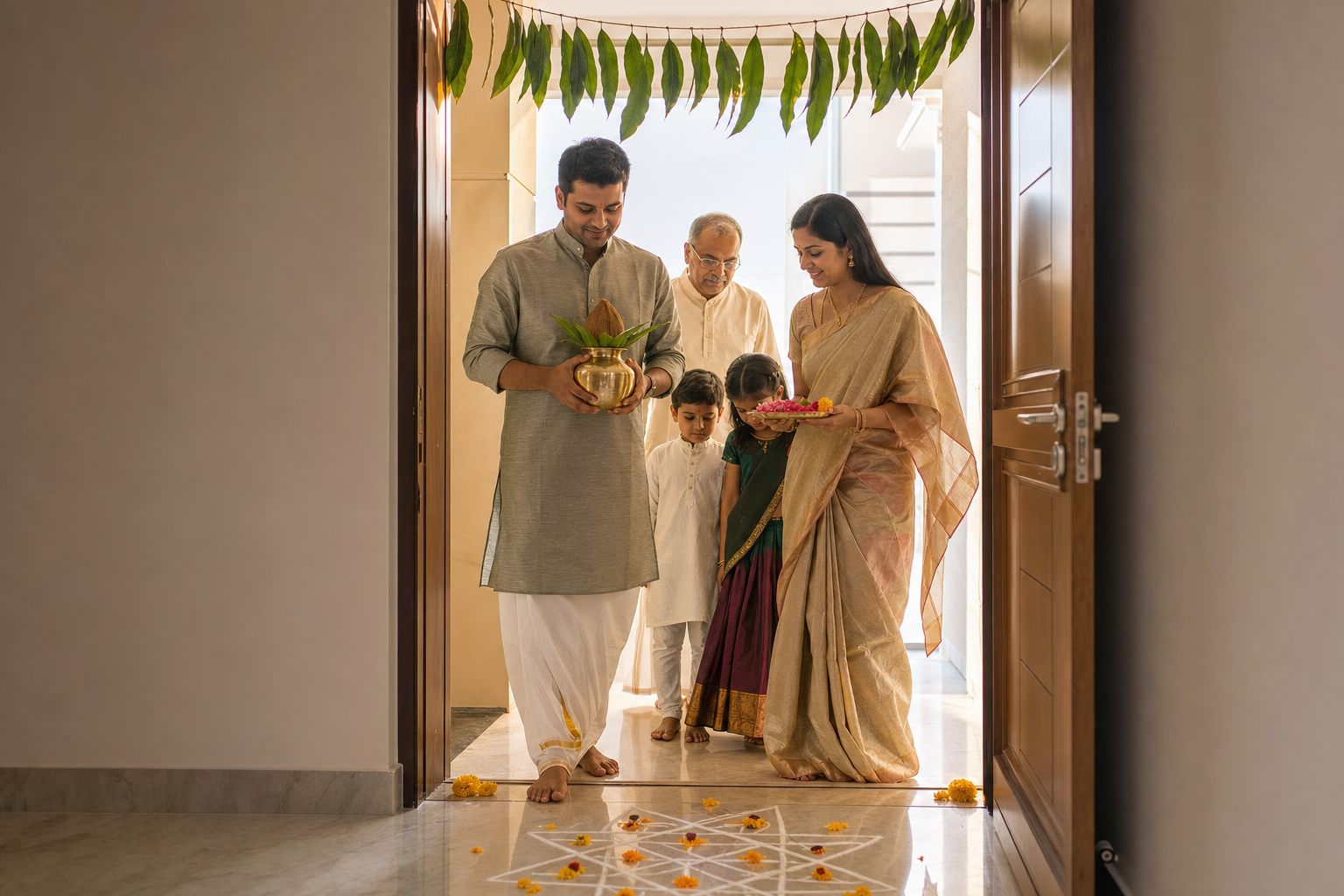
You have the keys, but the first entry into the home still has to be planned. The priest needs a date, the apartment may restrict fire rituals, relatives want an invitation, and work or loan obligations are already pressing on the same day.
Handle those decisions in the right order and Graha Pravesh remains what it is meant to be: a deliberate act of sanctifying the new home, not a rushed housewarming performed between a handover appointment and an office meeting.
Begin with the purpose, not the size of the event
Graha Pravesh marks a family’s ritual entry into a new residence. Its central purpose is to consecrate the dwelling through worship, puja and, where appropriate, homa. It may be performed for a newly built house or a purchased flat; in some cases, the ceremony is held before every part of a new construction is finished.
That last possibility needs a practical boundary. Ritual readiness is not the same as construction readiness. If work remains unfinished, use only an area that is structurally safe, accessible and cleared of tools, exposed wiring, dust and other hazards. Keep children and elderly guests away from active work zones. Do not treat the ceremony as permission to occupy a building that is unsafe or lacks whatever approvals your locality requires.
The sacred claim should also be understood on its own terms. Graha Pravesh belongs to a ritual and devotional framework in which the home is prepared for auspicious family life. References to positive energy express that religious understanding; they are not a substitute for ventilation, electrical checks, fire precautions or sound construction. You do not diminish the tradition by keeping those categories clear.
This perspective also settles an anxious question: a modest ceremony in a flat is not spiritually inferior to a large function in an ancestral or independent house. The guest count, decoration budget and size of the property are secondary. What matters is that you arrange the prescribed worship carefully and give it your attention.
Fix the muhurta before booking movers or inviting guests
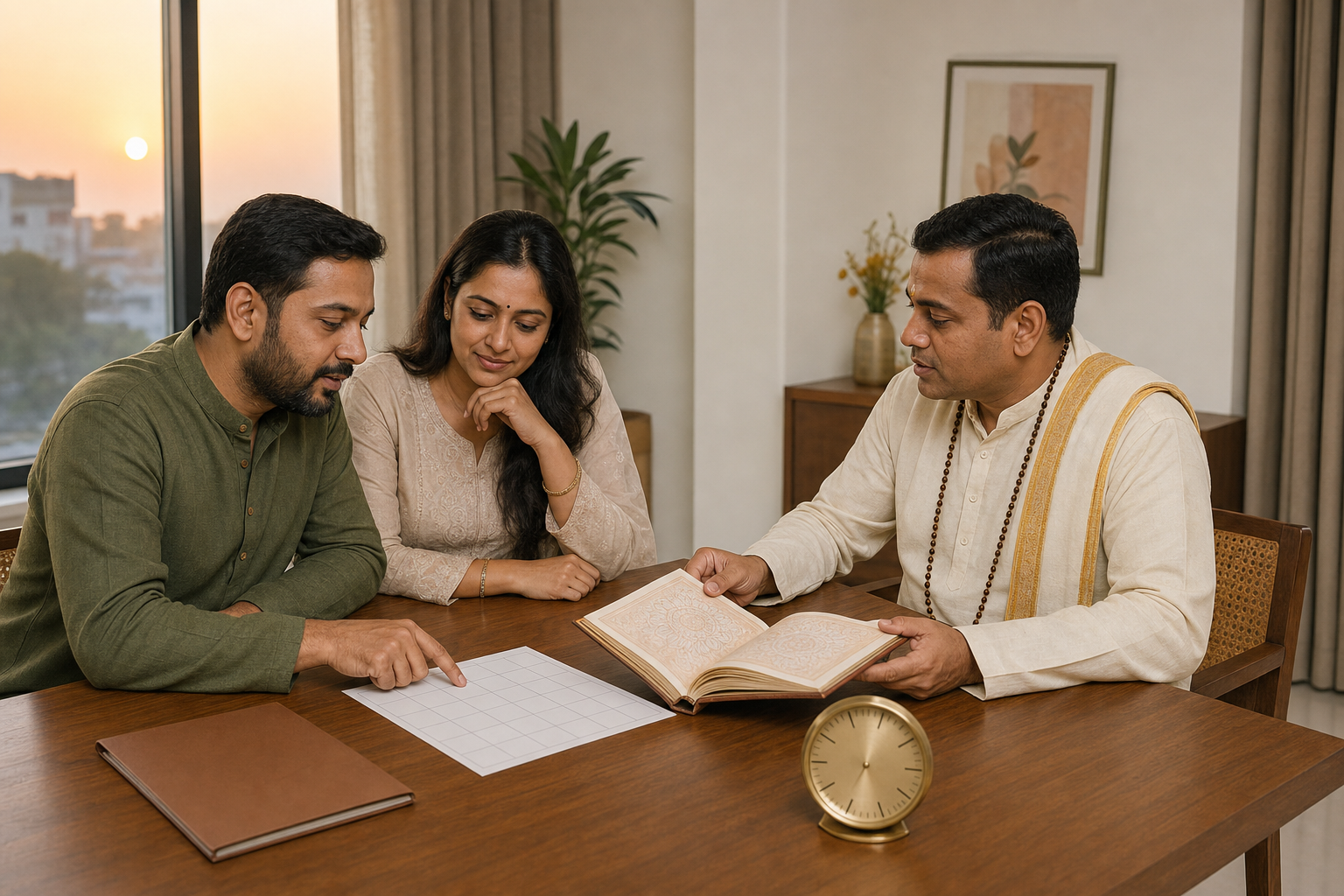
Do not choose the ceremony date from a generic festival calendar or a convenient weekend and then ask a priest to approve it. A learned Hindu priest or astrologer traditionally determines a suitable date. Consult someone who understands your family’s sampradaya, regional calendar and customary practice.
An early-morning ceremony is commonly preferred, while Tuesdays and other inauspicious days are avoided in the customary pattern described for this observance. Thai and Avani, associated there with January and August, are also identified as frequent periods for Graha Pravesh. These points are useful orientation, not a universal do-it-yourself formula. Regional calendars and lineages can apply their rules differently, and a favorable month by itself does not establish a muhurta.
Ask the officiant for the date and time in writing. Confirm whether the stated time is when the family should arrive, when the first worship begins or when a particular ritual action must occur. That distinction prevents a common planning failure: guests are told the puja time, the family arrives at that exact minute, and basic preparation pushes the prescribed act outside its intended window.
- Choose the priest or astrologer whose tradition you intend to follow.
- Ask what family and property information is needed to calculate or select the muhurta.
- Obtain the exact date, arrival time and ritual start time.
- Check access to the property and any building restrictions for that window.
- Only then confirm relatives, food, movers, decorators or other service providers.
If the first suggested time is impossible because possession has not been transferred, the building will be inaccessible or essential family members cannot attend, return to the officiant for another suitable option. Quietly shifting the ritual to a more convenient hour defeats the reason for consulting on the muhurta in the first place.
Agree on the essential rites before buying materials
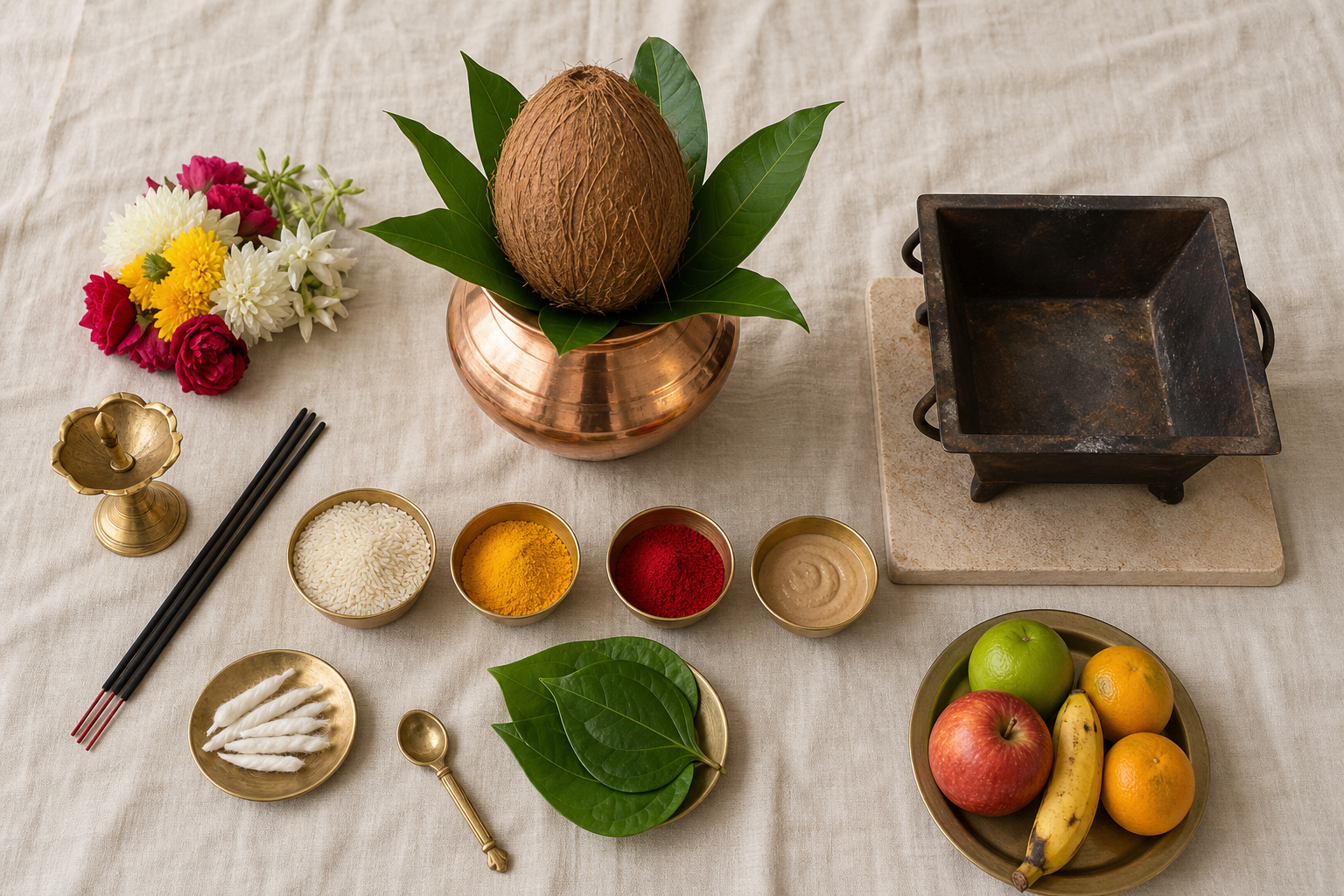
There is no benefit in collecting a long list of ceremonies from relatives, videos and invitation cards and treating every item as compulsory. Establish the ritual structure with the officiant first. The appropriate combination depends on the family’s devotional tradition, the available time and whether a homa can safely and lawfully be conducted at the property.
The customary elements described for Graha Pravesh include:
- Opening worship: Bhagwan Ganapathy is worshipped before the ceremony, along with Surya Bhagavan through Surya Namaskar. This places the beginning under divine remembrance before the household proceeds to the other rites.
- Vastu Puja: This worship is offered to Vastu Bhagavan. Within the traditional devotional understanding, it seeks to sanctify the residence, propitiate the presiding deity of the dwelling and ward off harmful influences.
- Additional pujas and homas: Satyanarayana Puja, Ganapathy Homa, Dhanvantri Homa and Lakshmi Narasimha Homa may be included. Their presence in the wider tradition does not mean every household must perform all of them at one event.
- Guru devotion: Families whose devotional life includes Shirdi Sai Baba or Guru Raghavendra Swamigal may worship the guru before Graha Pravesh. Treat this as a sincere expression of the household’s existing devotion, not as an item added merely to lengthen the programme.
Ask the priest to divide the proposed programme into three groups: rites essential in your tradition, rites that are recommended for your circumstances, and rites that are optional. Then request a final materials list based on the version you have actually chosen. This prevents duplicate purchases, missing offerings and last-minute additions urged by well-meaning relatives.
You should also confirm who performs each action, who needs to be present from the beginning, what must be prepared before the priest arrives, and whether water, electricity or kitchen access is required. If instructions will be given in a language that some family members do not understand, arrange for a relative to explain the sequence quietly. Participation is easier when people know what they are doing and why they are doing it.
Prepare the home so logistics do not consume the worship
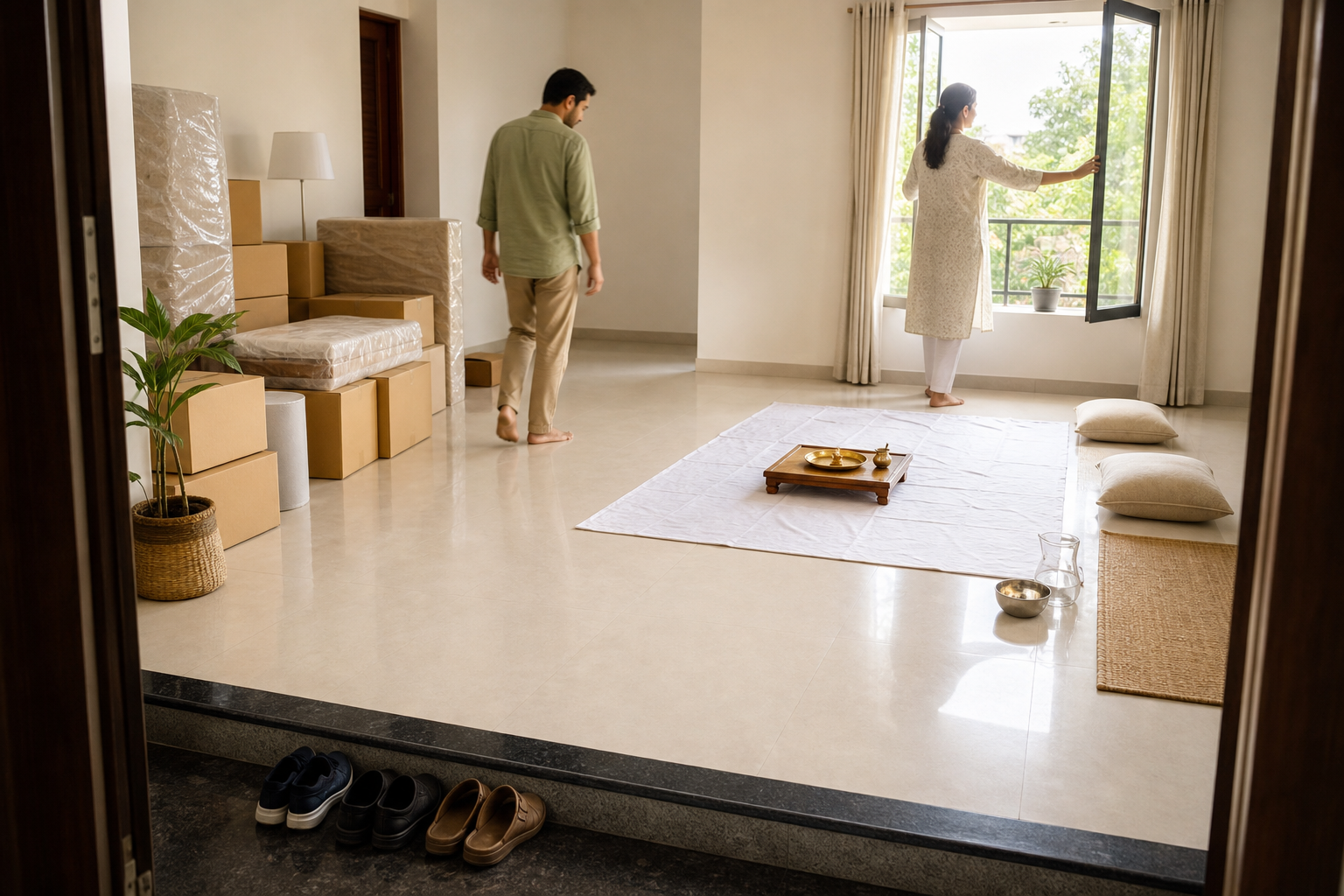
Make the ritual space safe and usable
For an independent house, clear the route from the entrance to the worship area and separate the ceremony from any unfinished work. For a flat, speak to the building manager before confirming a homa. Ask specifically about open flames, smoke alarms, ventilation, guest access, parking, lift use and the movement of ritual materials through common areas.
Never cover or disable a smoke detector to make a fire ritual possible. If the building does not permit a homa, tell the priest early and ask what compliant alternative your tradition allows. The officiant and building management should both know the final arrangement; a surprise flame in a shared residential building creates an avoidable safety problem and can interrupt the ceremony altogether.
Keep the puja area clean, stable and away from curtains, packaging and construction debris. Store materials together and label unfamiliar items so the family member assisting the priest can find them without repeatedly leaving the worship. Provide a clear place for footwear, drinking water and seating for anyone who cannot remain on the floor.
Design a schedule that a working family can actually keep
Many contemporary families enter a purchased flat while managing a home loan, two work schedules and a smaller circle of attending relatives. That reality calls for better planning, not guilt. The ceremony becomes hurried when the family protects every other commitment and expects the worship to fit into whatever time remains.
Block the ceremony and a generous period afterward on the calendars of the principal family members. Do not schedule an office call immediately after the expected finish. Ceremonies can take longer than the bare ritual sequence once preparation, guests and a shared meal are included. Ask the priest about the likely duration of your chosen programme rather than borrowing an estimate from another household’s function.
Assign practical responsibilities before the morning. One person can assist the priest, another can coordinate with building staff, and another can receive guests or manage food. The family members undertaking the principal worship should not also be answering every telephone call and directing every delivery.
Keep hospitality and spending proportionate
Choose a guest list the home can hold without crowding the ritual area or violating building rules. Offer a simple meal or prasada that can be served without pulling the household away from the puja. If work commitments make a large gathering impossible, invite the people whose presence matters most and meet the wider circle separately.
Set the event budget after accounting for the costs of moving and establishing the home. Give priority to the officiant, required samagri, a safe ritual setup and straightforward hospitality. Borrowed grandeur does not deepen consecration. A family already carrying a housing loan need not add financial strain merely to imitate the scale of somebody else’s celebration.
The aim is not to create a flawless performance. It is to make enough room in an otherwise demanding transition for the family to enter prayerfully, receive blessings and begin household life with attention rather than exhaustion.
Key takeaways
- Consult your chosen priest or astrologer before fixing the date; a convenient month or weekend is not a muhurta by itself.
- Confirm the precise arrival and ritual start times before booking movers, food or other services.
- Ask which rites are essential, recommended and optional instead of assuming every named puja and homa must be performed.
- For a flat, settle fire, smoke-alarm, ventilation and guest-access rules with building management before planning a homa.
- Protect the ceremony from work calls, delivery decisions and avoidable financial display by assigning responsibilities and keeping hospitality manageable.
- If construction is incomplete, separate ritual entry from physical occupancy and use only a safe, approved part of the property.
Your next move is simple: ask the officiant for a suitable muhurta and a divided list of essential and optional rites. Then take that plan to the building manager or contractor and resolve the practical constraints. Once those answers are fixed, the invitation, meal and decoration can serve the ceremony instead of controlling it.
References
