

If you are trying to decide whether the Vishalgad Urus should be banned, allowed unchanged, or regulated, start with the question that public arguments often skip: what arrangement will leave the fort intact while permitting only those religious acts that can be conducted lawfully and safely?
That standard produces a firm but balanced answer. Vishalgad’s conservation is non-negotiable. Peaceful religious observance should not be prohibited merely because of the community practising it. The practical task is to identify the ritual core, move the burdensome event machinery away from fragile structures, and make every permission conditional on measured risk.
Begin with what cannot be replaced: the fort
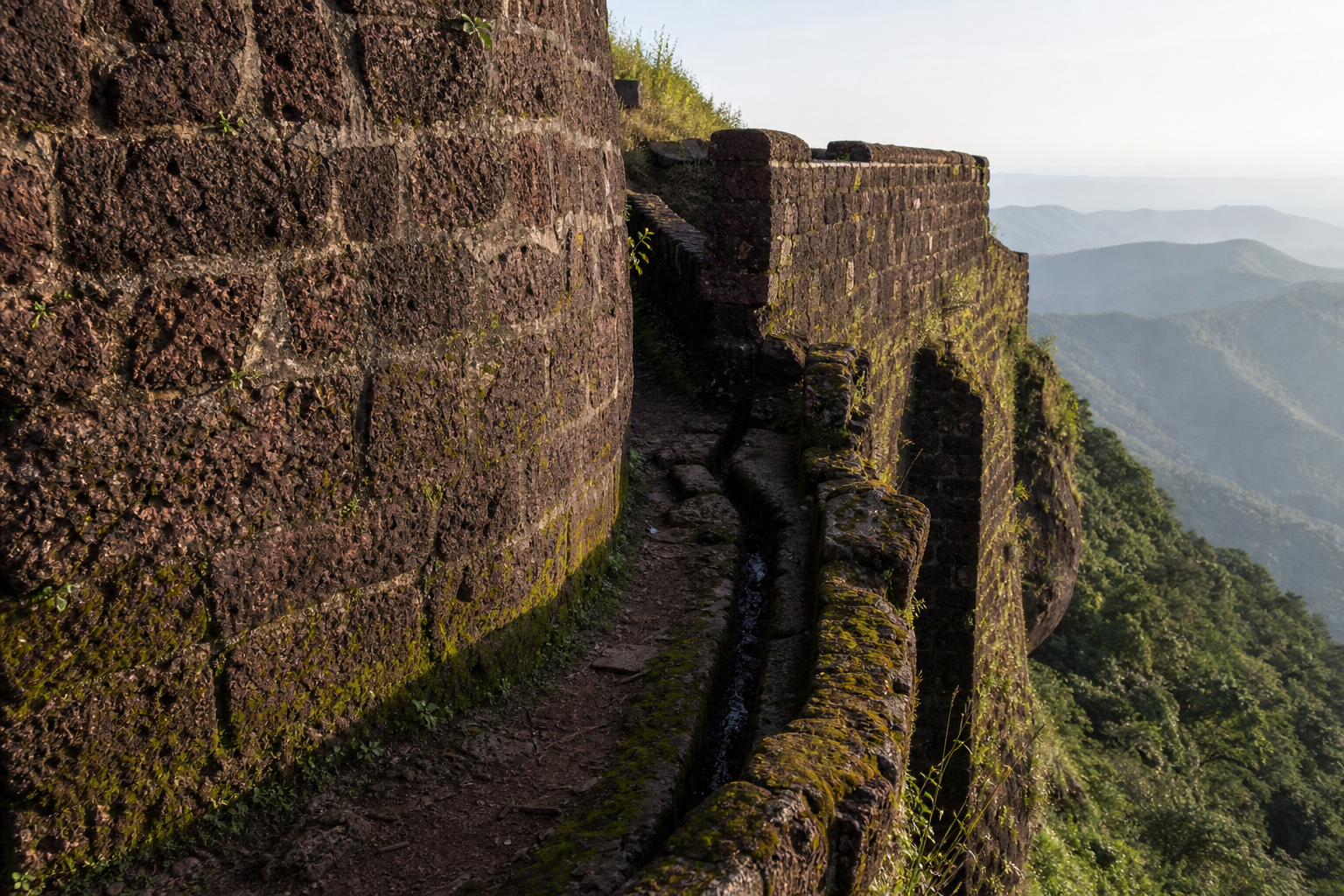
Vishalgad, historically known as Khelna, is closely associated with Chhatrapati Shivaji Maharaj and the Maratha hill-fort tradition. It is not interchangeable with an ordinary event ground. Its masonry, approaches, parapets, gateways, water systems, and surviving defensive features form one historical landscape. Once original fabric is fractured or displaced, repairing the appearance cannot fully restore its authenticity.
This is why a conservation-first position must be more exact than saying, “Protect the whole fort.” Different sectors may have different capacities. A stable open area, a weathered parapet, a narrow sloped approach, and an old load-bearing span cannot all be assigned the same crowd limit. The administration needs a sector-by-sector condition map before it decides where people may walk, wait, assemble, serve food, or install equipment.
Vishalgad also has a layered sacred geography in which shrines and commemorative places from different traditions exist around the defensive landscape. Acknowledging those layers does not diminish the fort’s primary Maratha identity. Nor does it automatically settle ownership, jurisdiction, protected status, or the permissible use of every structure. Those questions must be documented rather than assumed.
Before supporting either a ban or unrestricted access, insist on a public map that distinguishes:
- The legally protected monument and any adjoining or regulated precincts.
- Religious structures, customary gathering points, entrances, exits, and processional routes.
- High-risk masonry, narrow approaches, unstable edges, and sectors temporarily closed for conservation.
- Lower-risk buffer areas where food service, queues, stages, sound equipment, sanitation, and medical posts could be placed.
- Routes available to emergency responders without forcing them through the densest congregation.
The phrase “at Vishalgad” is too vague for a defensible decision. A proposal must name the exact structure, route, activity, time window, and expected physical effect. Without that precision, heritage language becomes a slogan rather than a conservation plan.
Separate the religious core from the event machinery
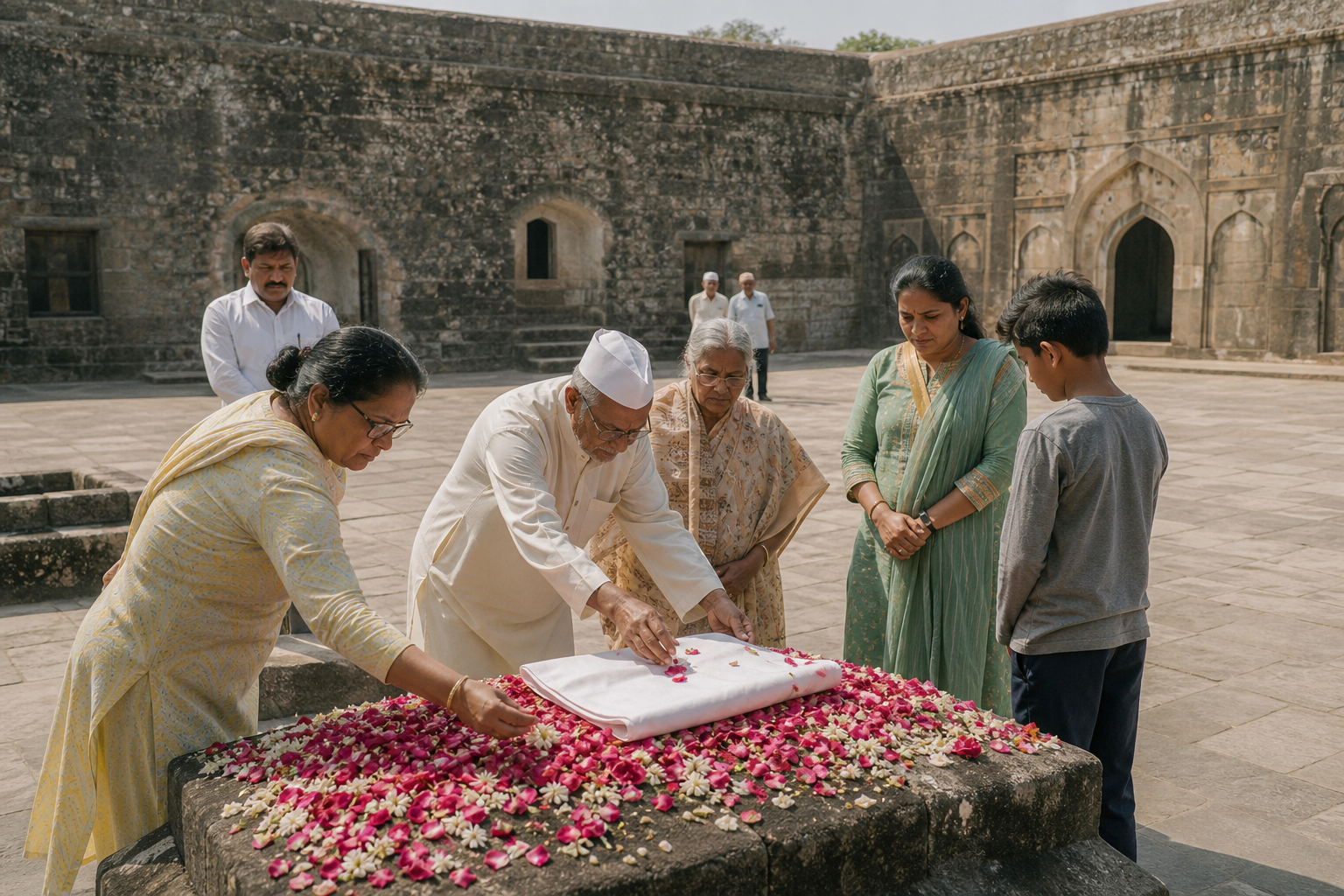
An Urus, also written Urs, commemorates a Sufi saint’s death anniversary as a spiritual union with the Divine. Such observances can include prayer, recitation, devotional music, processional activity, and charitable food distribution. These practices should not be treated as identical to every logistical feature that has accumulated around a large gathering.
The distinction matters because ritual adaptation is often possible without extinguishing an observance. Community representatives should identify which acts they consider essential, where those acts have customarily occurred, and what minimum access they require. Heritage and safety officials should then test each act against the site’s documented capacity. Neither side should decide the other’s field by assertion alone.
- Ritual acts: Prayer, recitation, access to the relevant sacred place, and any claimed essential procession require focused discussion about timing, route, and numbers.
- Supporting religious activity: Charitable food distribution and devotional music may carry genuine spiritual importance, but their scale, equipment, serving location, and waste burden can still be regulated.
- Event infrastructure: Heavy stages, generators, large speaker systems, commercial stalls, storage, and vehicular access should be presumed relocatable outside sensitive fort fabric unless a conservation assessment demonstrates otherwise.
Essentiality does not create a right to use a structurally unsafe route. At the same time, administrative convenience does not justify suppressing a peaceful ritual when a safer route or smaller format is available. A sound settlement asks whether the religious purpose can survive a change in logistics, not whether every familiar arrangement must be reproduced.
Articles 25 and 26 of the Constitution protect religious belief, practice, and the management of religious affairs, subject to limits that include public order, morality, and health. Monument-protection law separately restricts activities that threaten archaeological or structural integrity. The first legal step is therefore to confirm which central, state, local, waqf, or other administrative provisions actually govern each part of Vishalgad. Officials should publish that determination instead of invoking an unspecified “heritage law” or an unlimited “religious right.”
A permanent prohibition should carry a high evidentiary burden: the authority should show why mapped routes, timed access, smaller numbers, relocated infrastructure, or another less restrictive arrangement cannot control the demonstrated risk. Unrestricted permission also requires evidence that the proposed activities fit the site’s capacity. Custom may support continuity, but it cannot establish how much load weathered masonry can bear.
The Dharmic principle needed here is mutual restraint. The custodian protects a Maratha inheritance without humiliating worshippers because of their identity. The worshipper preserves the sacred purpose of the Urus without treating the fort, its approaches, or its archaeological fabric as expendable. Samvada, or dialogue, works when it produces clear boundaries and reciprocal duties.
Put every proposal through a six-part evidence test
The recurring dispute will not be settled by counting slogans on either side. It needs a record that allows citizens, courts, conservation professionals, devotees, and future administrators to see why a restriction was imposed. Use these six questions to judge any official plan.
- Who controls the exact place? The order should identify the monument boundary, adjoining precincts, relevant religious property, competent authority, and statutory basis for each condition. A boundary dispute cannot be solved by a crowd-management order that quietly assumes the answer.
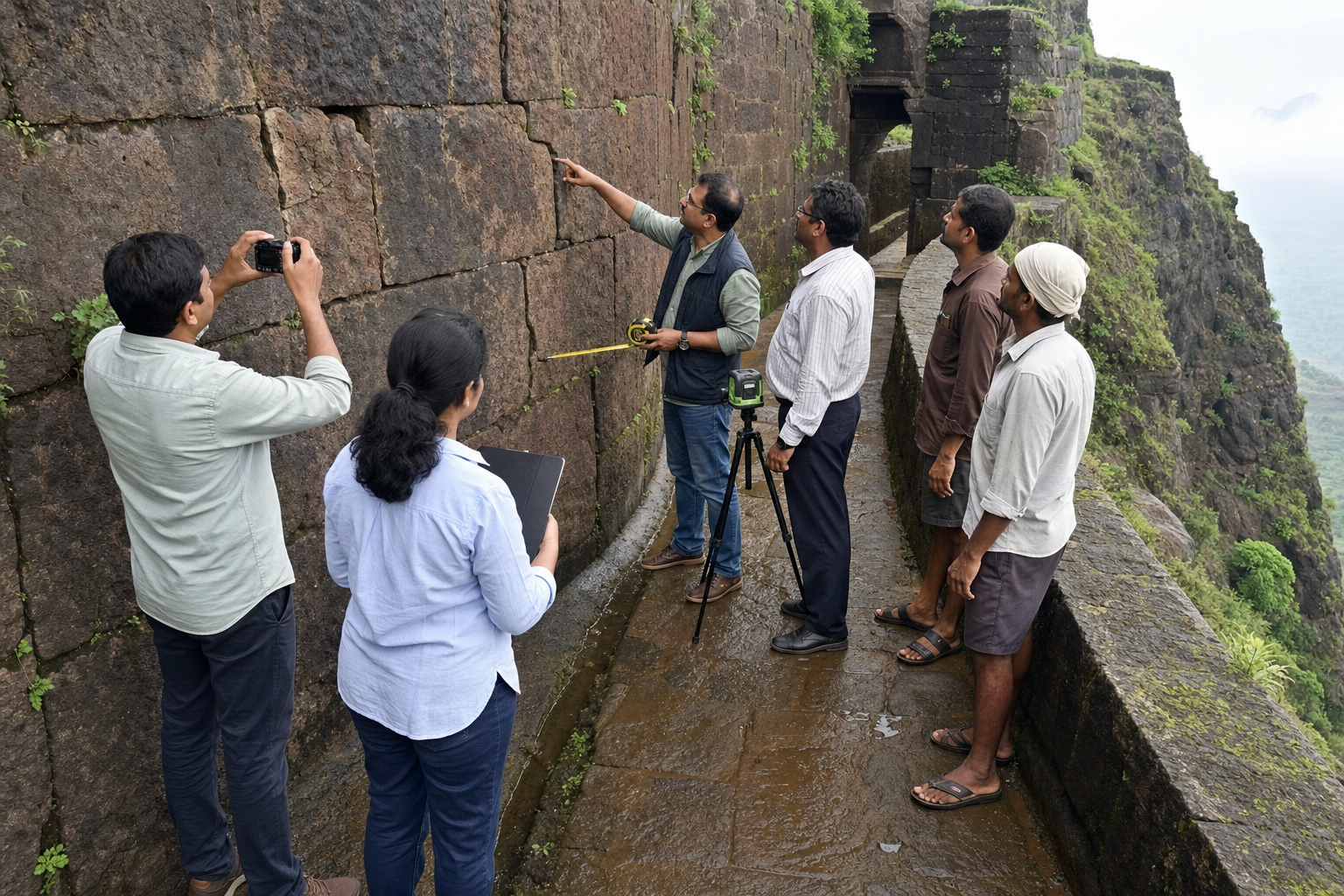
- What is the baseline condition? An independent structural and conservation audit should photograph and map cracks, loose stones, weathered parapets, drainage problems, vulnerable spans, and restricted approaches. It should assign risk and carrying capacity by sector rather than produce one unexplained number for the entire fort.
- What will the gathering physically do? An Event Impact Assessment should model entry and exit flows, queues, peak congregation points, emergency egress, medical access, equipment loads, vibration, sanitation, greywater, and waste. If an activity cannot be described, it cannot be responsibly permitted or prohibited.
- Can the same religious purpose be achieved with less impact? Test a shorter route, staggered entry, timed slots, decentralized gathering points, protective decking approved by conservation specialists, and relocation of heavy equipment to buffer areas. Record why each option was accepted or rejected.
- Who will enforce the conditions? The permit should name the officials, police units, event stewards, community liaisons, first-aid teams, and independent monitors responsible for each task. A rule without a named operator is only an aspiration.
- What will be measured afterward? Publish attendance and sector counts, incidents, emergency interventions, waste performance, rule violations, and pre- and post-event conservation observations. The next decision should respond to recorded effects, not partisan accounts of what supposedly happened.
Several common claims fail this test. Calling the gathering “dangerous” proves nothing unless the threatened structure and mechanism of harm are identified. Calling a practice “traditional” does not show that every modern stage, vehicle, generator, or speaker arrangement is part of that tradition. A peaceful event may still overload a narrow approach; a heritage designation does not establish that every prayer causes damage. Each claim must connect an activity to a documented consequence.
Large congregations, concentrated loads, heavy staging, and vehicular ingress can place avoidable pressure on weathered masonry and sloped fort approaches. The safe response is not to invent a fort-wide attendance cap. It is to derive capacities from the audit, monitor entries into each controlled sector, and stop access before local limits are exceeded.
Use a 30-60-90 day path from dispute to enforceable plan
A predictable schedule prevents the administration from improvising restrictions days before the observance. The following sequence turns a political confrontation into a conservation and event-management process.
- First 30 days: establish the facts. Complete the structural audit, walk every proposed route, map the monument and religious-use zones, identify the competent authorities, and collect written descriptions of the claimed customary practices. Include state archaeology officials, the district administration, police, local community elders, relevant temple committees, waqf representatives where applicable, and qualified conservation personnel. Publish the scope of work and stakeholder list.
- By 60 days: design and expose the rules. Finish the Event Impact Assessment and draft the route, sector capacities, entry method, infrastructure locations, sanitation arrangements, emergency plan, and enforcement chain. Co-author a code of conduct covering non-violence, respect for the fort, prohibited attachments to historic fabric, waste responsibilities, and compliance with safety instructions. Make the draft and meeting minutes public so objections concern actual conditions rather than rumours.
- By 90 days: issue the order and prepare operations. Publish the final zone map, permit conditions, reasons for rejected alternatives, review date, and a simple method for reporting violations. Train volunteers, test communications, confirm first-aid and emergency access, install multilingual signs in Marathi, Hindi, and English, and open a public footfall and incident record. The final permission must match the physical plan used on the ground.
What the event-day permit should contain
A generic permission letter is not enough. The enforceable document should contain all of the following:
- A marked entrance, exit, ritual route, congregation area, buffer area, and no-entry conservation zone.
- Sector-specific capacity limits, timed access where needed, and a reliable way to count both entries and exits.
- A prohibition on vehicles, heavy stages, generators, and large sound equipment inside sensitive zones, with approved alternatives outside the fort walls or in lower-risk areas.
- Conservation-approved temporary protection wherever people must cross a vulnerable surface, with no drilling, anchoring, or attachment to historic masonry.
- Enforceable noise and vibration conditions based on the equipment and site assessment, not an arbitrary verbal promise to “keep it low.”
- Temporary sanitation, drinking-water, waste-separation, food-service, and greywater arrangements that prevent litter or moisture from accumulating against the fort fabric.
- Gender-sensitive amenities, first-aid posts, trained crowd stewards, an emergency communication chain, and unobstructed responder access.
- Independent compliance observations and a public post-event report comparing the site’s condition before and after the gathering.
If the audit and operating plan cannot be completed before the next observance, the safe interim option is a reduced format confined to assessed lower-risk or buffer areas. Last-minute unrestricted access would gamble with the monument; a sudden identity-based prohibition would deepen conflict without answering whether controlled observance was possible.
The plan should expire into review rather than harden automatically into a permanent arrangement. If monitoring shows damage, congestion, or repeated violations, tighten the relevant condition. If a control proves unnecessary while compliance remains strong, revise it transparently. Annual review gives both conservation and customary practice a path to adapt.
Key takeaways: what you should ask for now
- Vishalgad’s Maratha identity and surviving historic fabric must be the starting point for every decision, not one interest among many.
- Recognising a layered sacred landscape does not erase that identity or grant unrestricted use of every part of the fort.
- The religious core of an Urus must be distinguished from stages, generators, vehicles, commercial activity, and other relocatable event infrastructure.
- Neither a permanent ban nor unchanged permission is self-justifying. Each requires a written link between the proposed activity, the applicable law, the site’s measured capacity, and the available alternatives.
- Restrictions should be sector-specific, time-bound, enforceable, and reviewed against post-event evidence.
- Public minutes, maps, audits, permit conditions, footfall records, and conservation observations are the best defence against both administrative arbitrariness and rumour-driven mobilisation.
If you are sending a representation to the Kolhapur district administration or another responsible authority, keep it to one page and ask for six documents: the notification or record defining the protected area and competent authority; the latest structural audit; the vulnerability and route map; the Event Impact Assessment; the stakeholder minutes and final regulatory order; and the post-event compliance report. Request publication dates, not merely an assurance that the matter is “under consideration.”
Make your own claim equally precise. Instead of alleging that an entire community threatens Vishalgad, identify the activity and fort sector requiring assessment. Instead of dismissing every restriction as prejudice, ask whether the same conservation rule applies to all gatherings and whether a less restrictive route was evaluated. Precision makes bad-faith arguments easier to expose and legitimate concerns harder to ignore.
You do not have to choose between fidelity to Chhatrapati Shivaji Maharaj’s inheritance and equal treatment under law. Ask for a fort-first plan, a narrowly protected ritual core, relocated event machinery, and a public record of results. That is how Vishalgad can remain a living place of memory without becoming either a damaged event ground or a recurring communal flashpoint.
References
