
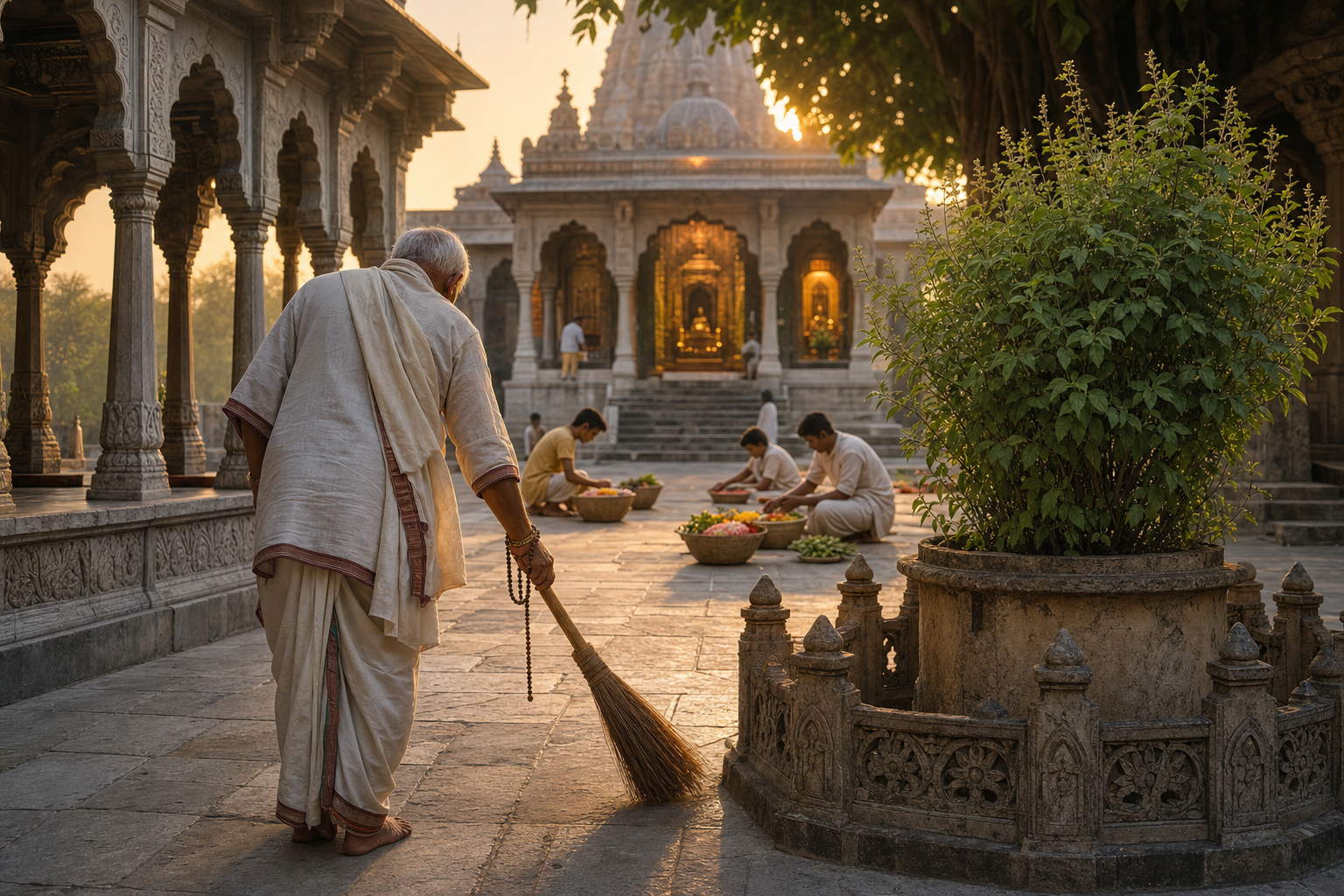
If you came here because you heard that HG Kratu Prabhu is seriously ill, begin with the part of his life that you can act upon: more than five decades serving Srila Prabhupada’s mission within ISKCON. The fitting response is not louder sentiment. It is steadier practice, careful speech, and responsible preservation of memory.
That turns remembrance into a practical question. What can you continue, protect, or transmit because this devotee spent a lifetime doing the same? Answering that question reveals why Kratu Prabhu’s legacy matters beyond a single tribute.
Read the legacy through the practices that sustained it
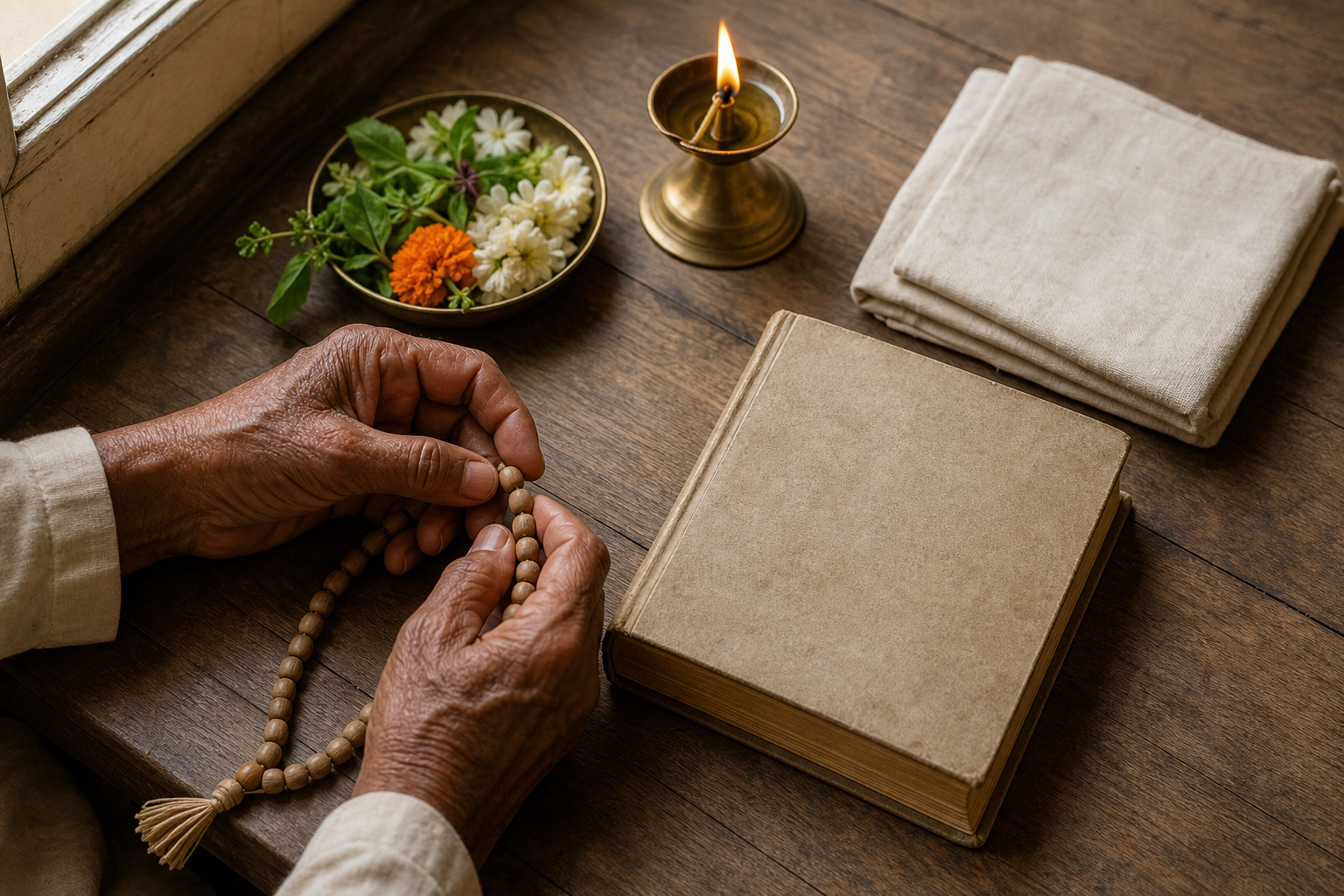
Five decades is not simply a length-of-service distinction. In a bhakti tradition, duration matters because repeated devotional choices gradually form a stable culture. A class continues each week. Devotees learn to depend on one another. Instructions received from the spiritual preceptor become responsibilities carried into changing circumstances.
Three connected practices provide a useful way to understand Kratu Prabhu’s service:
- Śravaṇa-kīrtana: hearing and chanting Krishna’s names and teachings. This keeps community life centered on spiritual practice rather than personality, administration, or nostalgia.
- Sādhu-saṅga: sustained association among devotees. Healthy association gives a sādhaka encouragement, correction, service opportunities, and people with whom spiritual commitments can mature.
- Guru-sevā: service to the spiritual preceptor and the mission received through guru-paramparā. For Kratu Prabhu, that means the long commitment to Srila Prabhupada’s mission that gives his years of service their direction.
Each practice supports the others. Hearing and chanting give substance to association. Association makes regular service possible. Service creates further occasions for people to hear, chant, and take responsibility. That cycle, repeated for years, is how a devotional ecosystem becomes stronger than any one event or individual.
You can use this three-part test when deciding whether an activity genuinely carries the legacy forward. Does it deepen hearing and chanting? Does it strengthen trustworthy association? Does it serve the instruction of guru rather than merely advertise the organizer? If an activity creates attention but does none of these, it may commemorate a devotee without transmitting what shaped him.
Honor a long life of service without manufacturing a legend
The concern expressed by godbrothers, disciples, and well-wishers tells us that Kratu Prabhu’s influence has been relational as well as institutional. Such regard is rarely produced by a single speech or position. It usually grows through availability, continuity, instruction, and the accumulation of ordinary acts of responsibility.
Yet reverence is not permission to fill gaps in a biography. What can be said responsibly is already significant: Kratu Prabhu gave more than five decades of faithful service to Srila Prabhupada’s mission and became deeply valued within the Vaishnava community. Offices, travels, private instructions, extraordinary incidents, and exact dates should be added only when they can be verified.
A sound tribute distinguishes three kinds of material:
- Verified fact: a role, place, date, lecture, letter, photograph, or event supported by an identifiable record.
- Attributed memory: what a named person recalls, with that person’s relationship to Kratu Prabhu and the approximate setting made clear.
- Devotional assessment: a conclusion about qualities such as humility, steadiness, compassion, or fidelity, preferably grounded in repeated conduct rather than a ceremonial compliment.
This distinction does not diminish devotion. It protects it. Future generations should be able to tell what happened, who witnessed it, and what spiritual meaning the community drew from it.
When collecting memories, look for effects rather than praise alone. Did a satsanga continue because he cultivated dependable people? Did someone learn to serve without seeking status? Did his teaching direct attention back to Srila Prabhupada, Bhagavad-gita, and Srimad-Bhagavatam? Did association with him produce responsibility as well as inspiration? Those details reveal transmission. General adjectives do not.
Respond to grave illness with prayer, restraint, and useful service
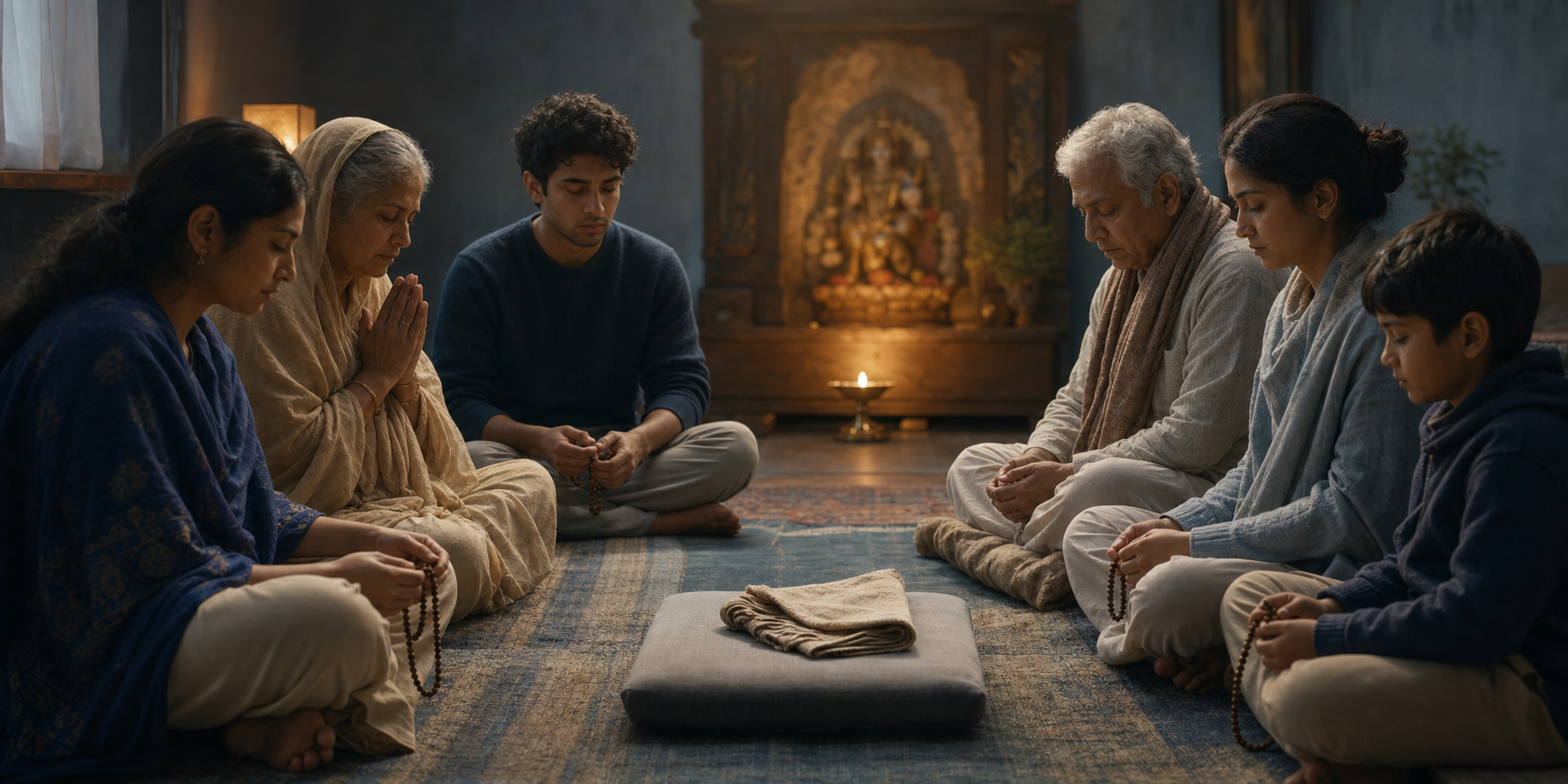
With Kratu Prabhu’s health described as critical, devotees naturally want to pray, share updates, and express gratitude. The desire is wholesome; the method still matters. Health information changes quickly, while an undated screenshot or embellished retelling can circulate long after it is accurate.
A responsible community response has a clear discipline:
- Share health updates only when their origin and date are clear. Repeat the wording actually provided; do not infer a prognosis, treatment decision, or spiritual meaning.
- Protect private clinical and family details unless those responsible for his care have deliberately made them public. Concern does not create an entitlement to intimate information.
- Turn anxiety into a defined practice: focused japa, congregational kīrtana, śāstra study, or a practical service that keeps the devotional community functioning.
- Offer prayers for his highest spiritual welfare without presuming that devotion entitles anyone to demand a particular bodily outcome.
- Correct an inaccurate message quietly and promptly. Do not spread it again merely to explain that it was wrong.
A clean prayer notice needs very little: his name, the exact authorized description of the situation, the devotional practice being requested, and the date of the update. Speculation adds noise, not care.
Practical seva also prevents collective concern from becoming passive. If regular classes, congregational care, communications, or other responsibilities need support, take one defined task and complete it reliably. The most appropriate offering to a lifelong servant is not a burst of activity that disappears after a few days. It is responsibility that another devotee no longer has to chase.
Build an archive that future devotees can actually trust
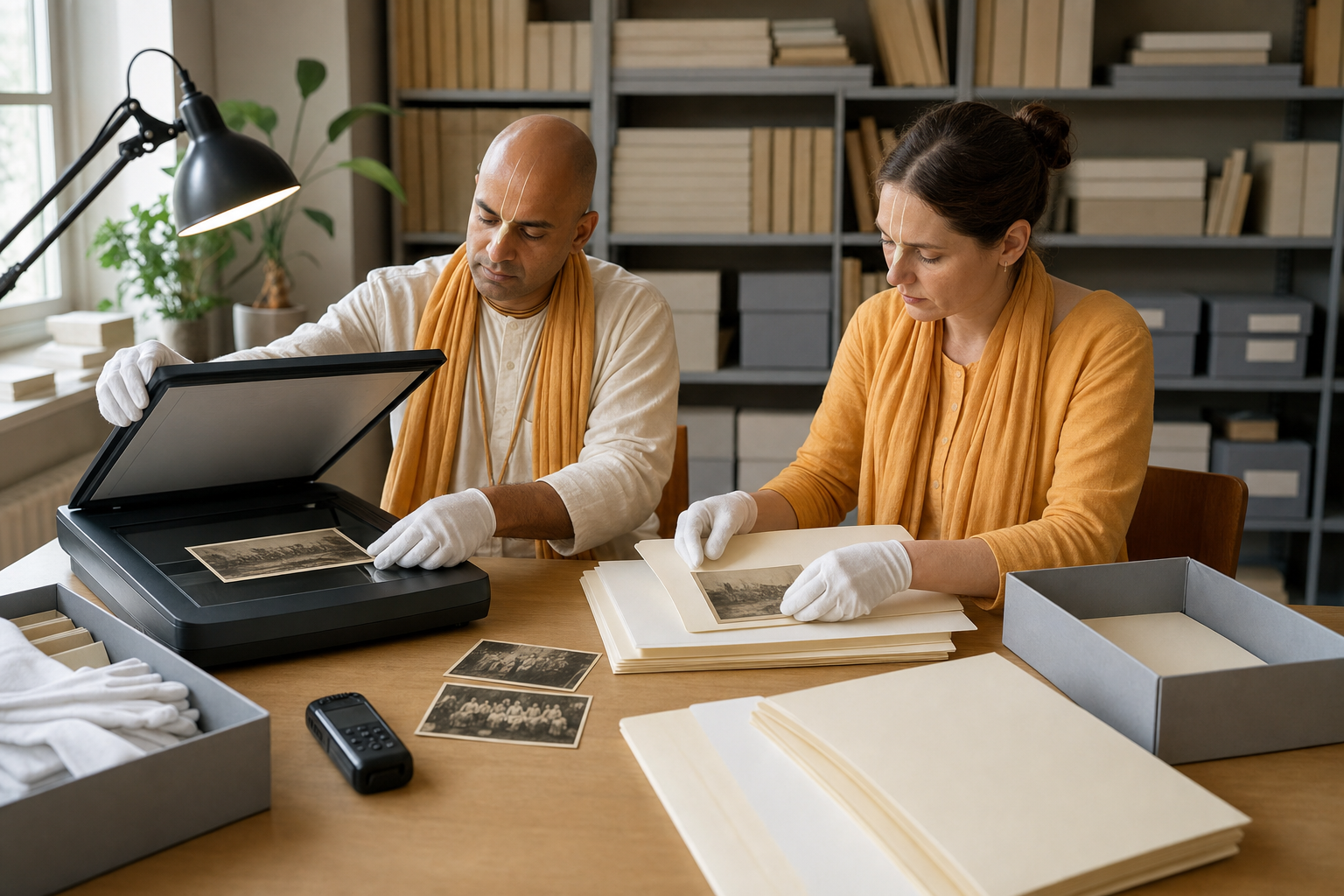
Serious illness often prompts a rush to gather photographs and recollections. Speed can rescue vulnerable material, but it can also strip away dates, ownership, context, and consent. Begin with preservation rather than a polished life story.
- Define the scope. List the kinds of material that may exist: lectures, correspondence, photographs, service records, event notices, interviews, and personal recollections. An inventory is not a claim that every item exists.
- Keep originals intact. Preserve the unedited recording, scan, photograph, or written file. A cleaned audio track, cropped image, transcription, or translation should remain linked to the original rather than replace it.
- Attach basic context immediately. Record who created or supplied the item, what it depicts, where it came from, when it was created, and whether the date is exact or approximate. A file named with a person’s name alone will soon become ambiguous.
- Interview for observation before interpretation. Ask what the speaker directly saw or heard, where it occurred, who else was present, and which words are remembered exactly. Record devotional interpretation too, but label it as interpretation.
- Obtain permission and set access limits. Separate material suitable for public release from private correspondence, health details, family information, and confidential spiritual guidance. Preservation does not require immediate publication.
- Create an index and redundant storage. Organize items by date, location, service, and theme, and keep preservation copies in more than one controlled location. An archive no one can search is only a pile of files.
Every published recollection should let a reader answer five questions: Who is speaking? How did that person know Kratu Prabhu? When and where did the incident occur? Was it directly witnessed? Which details remain uncertain? These small pieces of metadata make the difference between usable history and devotional folklore.
Archive transmission, not only admiration. If the material exists, identify the scriptural themes he returned to, the services he encouraged, the way he explained Srila Prabhupada’s instructions, and the responsibilities his students carried forward. Future devotees need to know not merely that Kratu Prabhu was loved, but what they can learn and continue because he served.
Keep the Vaishnava center while recognizing shared dharma
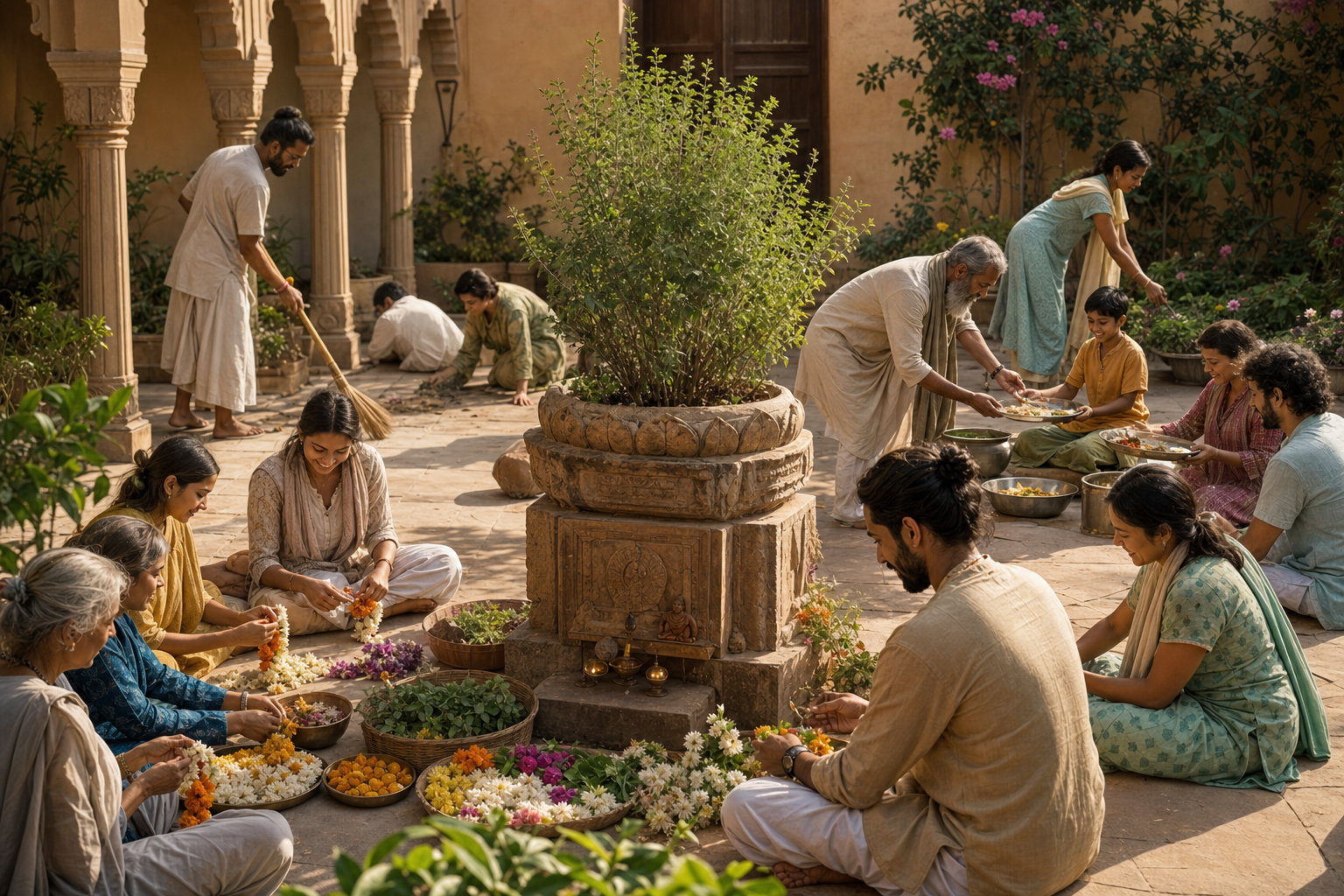
Kratu Prabhu’s legacy is distinctly Gaudiya Vaishnava. Honoring that identity does not prevent wider dharmic fellowship. It makes fellowship honest, because respect begins by allowing a tradition to speak in its own theological language.
Several ethical resonances across the dharmic family help others understand why sustained seva commands respect:
- Hindu traditions recognize seva and dayā: service and compassion.
- Buddhist traditions cultivate karuṇā and upekkhā: compassion and equanimity.
- Jain traditions emphasize ahiṃsā and aparigraha: nonviolence and non-possessiveness.
- Sikh tradition joins sewa with sarbat da bhala: service oriented toward the welfare of all.
These parallels support cooperation; they do not make the traditions interchangeable. A dharmic commemoration should therefore name Kratu Prabhu’s service to Krishna and Srila Prabhupada plainly, invite others to describe service through their own traditions, and unite participants around a concrete act of community care or preservation. There is no need to manufacture doctrinal sameness to practice mutual respect.
Key takeaways
- Kratu Prabhu’s central legacy is sustained service: more than five decades devoted to Srila Prabhupada’s ISKCON mission.
- Measure continuity through śravaṇa-kīrtana, sādhu-saṅga, and guru-sevā rather than titles or ceremonial praise.
- During grave illness, use dated updates, protect privacy, avoid prognostic speculation, and convert concern into devotional practice and reliable service.
- Preserve memories with attribution, context, original files, consent, and clear labels for uncertainty.
- Recognize shared dharmic ethics without dissolving Kratu Prabhu’s particular Gaudiya Vaishnava commitments.
If you want to honor Kratu Prabhu now, choose one transmissible act: strengthen a regular satsanga, preserve one properly attributed memory, or accept responsibility for one neglected service. Make it modest enough to continue. A life of steady seva is honored most truthfully by seva that becomes steady.
References
