
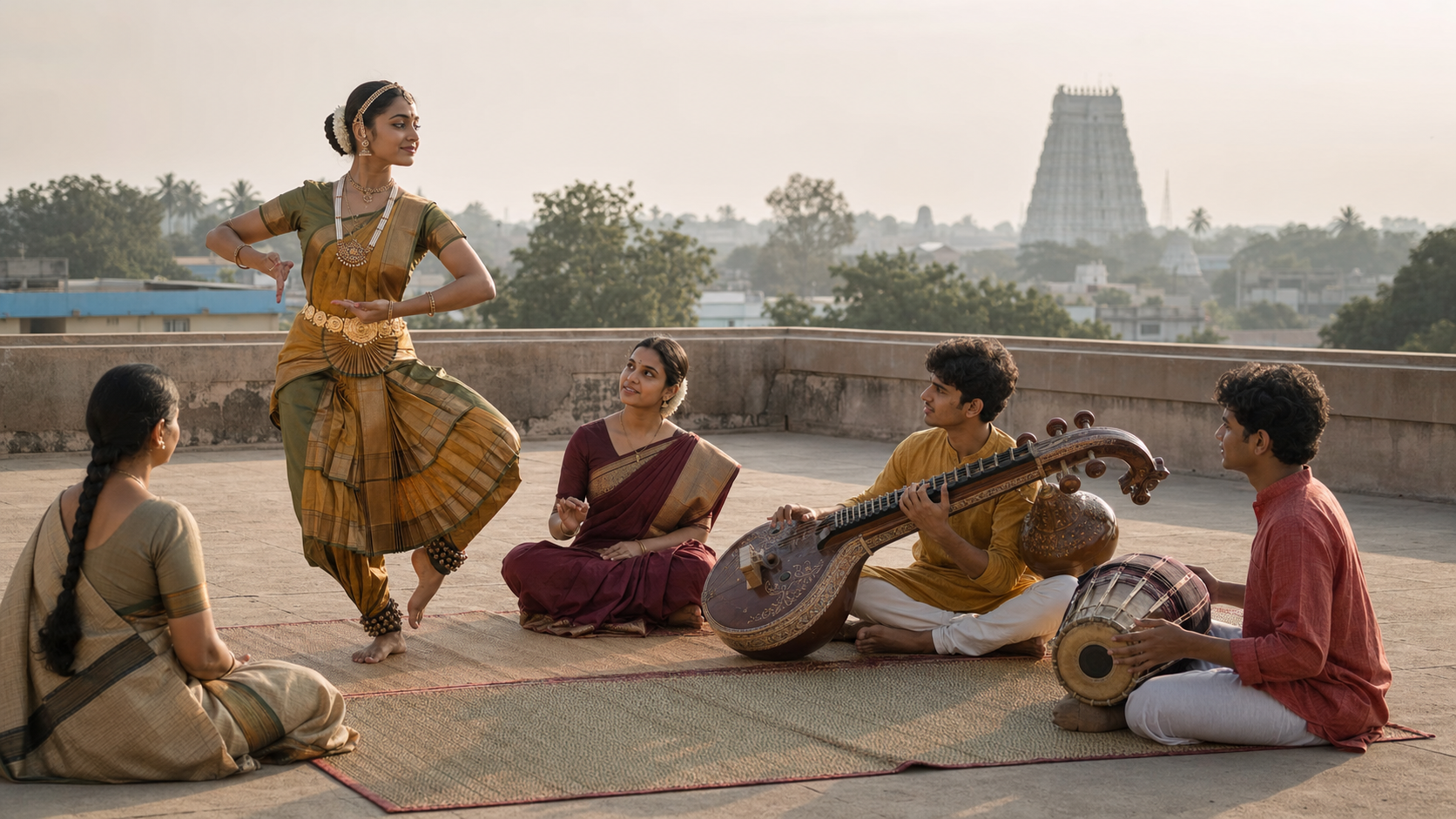
If you are considering a TTD music or dance course, the real question is larger than which application form to submit. You need to know whether you want to become a capable performer, a teacher, an accompanist, or an artist prepared for the discipline of temple service.
Tirupati gives you an unusual setting in which to answer that question. TTD manages both formal arts institutions and temples with carefully ordered ritual calendars. The connection is meaningful, but it must be understood correctly: relevant training and proximity to temple life do not automatically confer a performing role in the sanctum.
Choose the artistic role before you choose the course
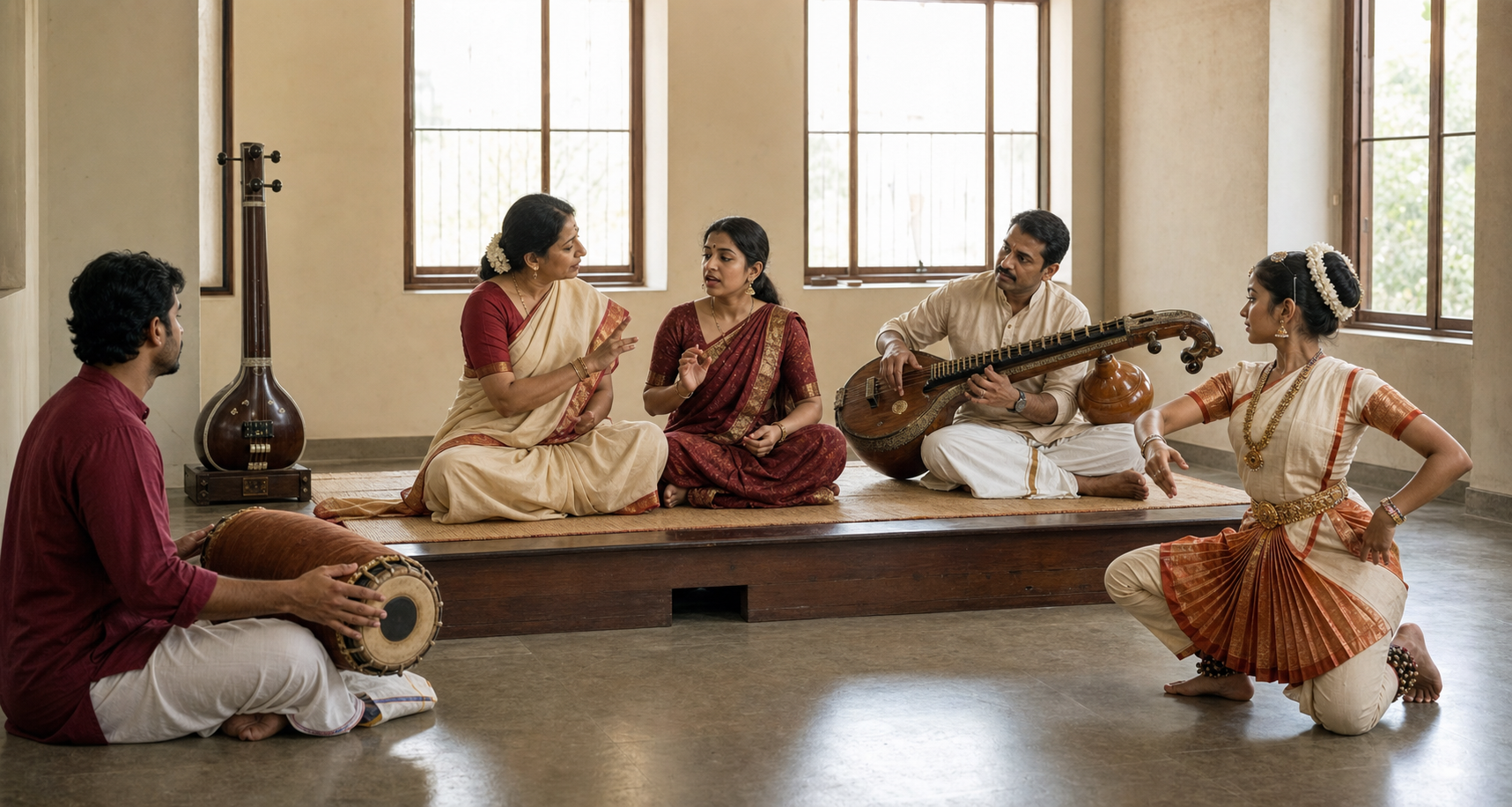
The 2026-27 admission call covers regular and part-time study at Sri Venkateswara Music and Dance College and SV Nadaswaram & Dolu School. The available pathways include Carnatic vocal and instrumental music, Bharatanatyam, Kuchipudi, Nadaswaram, and Dolu. They belong to one cultural ecosystem, but they prepare you for different kinds of work.
Match the stream to the setting in which you hope to serve
| Pathway | Central training emphasis | Best question to ask yourself |
|---|---|---|
| Carnatic vocal or instrumental music | Sruti, swara, raga-tala structure, repertoire, improvisation, accompaniment, and concert craft | Do I want a broad route into performance, accompaniment, teaching, or further musical study? |
| Bharatanatyam or Kuchipudi | Adavus, laya, nritta-nritya-natya progression, abhinaya, repertoire, and stage discipline | Am I prepared to develop movement, expression, rhythm, theory, and physical consistency together? |
| Nadaswaram or Dolu | Ceremonial repertoire, ensemble coordination, projection, stamina, and the demands of festivals and processions | Do I specifically want an art whose technique is closely tied to auspicious and temple settings? |
Nadaswaram and Dolu deserve particular attention because they are not simply alternative instrument choices. The Nadaswaram requires breath control, a stable embouchure, tonal clarity, raga precision, and enough projection for outdoor or processional use. Dolu training joins tone production and tala architecture to stamina and dynamic balance within an ensemble. If temple festivals are your intended field of service, these are occupational requirements, not decorative additions to the syllabus.
The broader college streams offer a different kind of flexibility. Carnatic students can build toward solo performance, accompaniment, teaching, or community arts work. Dance students must unite technique with abhinaya, rhythmic alignment, repertoire design, and presentation. A dancer attracted only to expressive items, or a vocalist interested only in memorizing kritis, should notice the gap: formal training expects theory and disciplined fundamentals alongside repertoire.
Choose regular or part-time study by practice capacity
A regular course suits you only if you can organize your day around sustained instruction, supervised drills, theory, ensemble work, and personal practice. A part-time course may fit a school or college student, working professional, or lifelong learner, but it is not a lighter artistic standard. It shifts more responsibility for continuity onto you.
- Choose regular study if you can protect daytime hours and want an immersive learning rhythm.
- Choose part-time study if your other obligations are fixed but you can still reserve dependable practice periods between classes.
- Do not choose by prestige. Choose the format in which you can maintain abhyasa without repeated interruptions.
- If your present guru-led training is strong but informal, ask whether the course level gives you useful theory and certification without forcing you to abandon sound fundamentals.
Before applying, write one sentence beginning, “I want this training so that I can…” If the sentence ends only with “receive a certificate,” your decision is not ready. Name the artistic role, the setting, and the practice commitment you can actually sustain.
Read a ritual calendar as a map of responsibilities
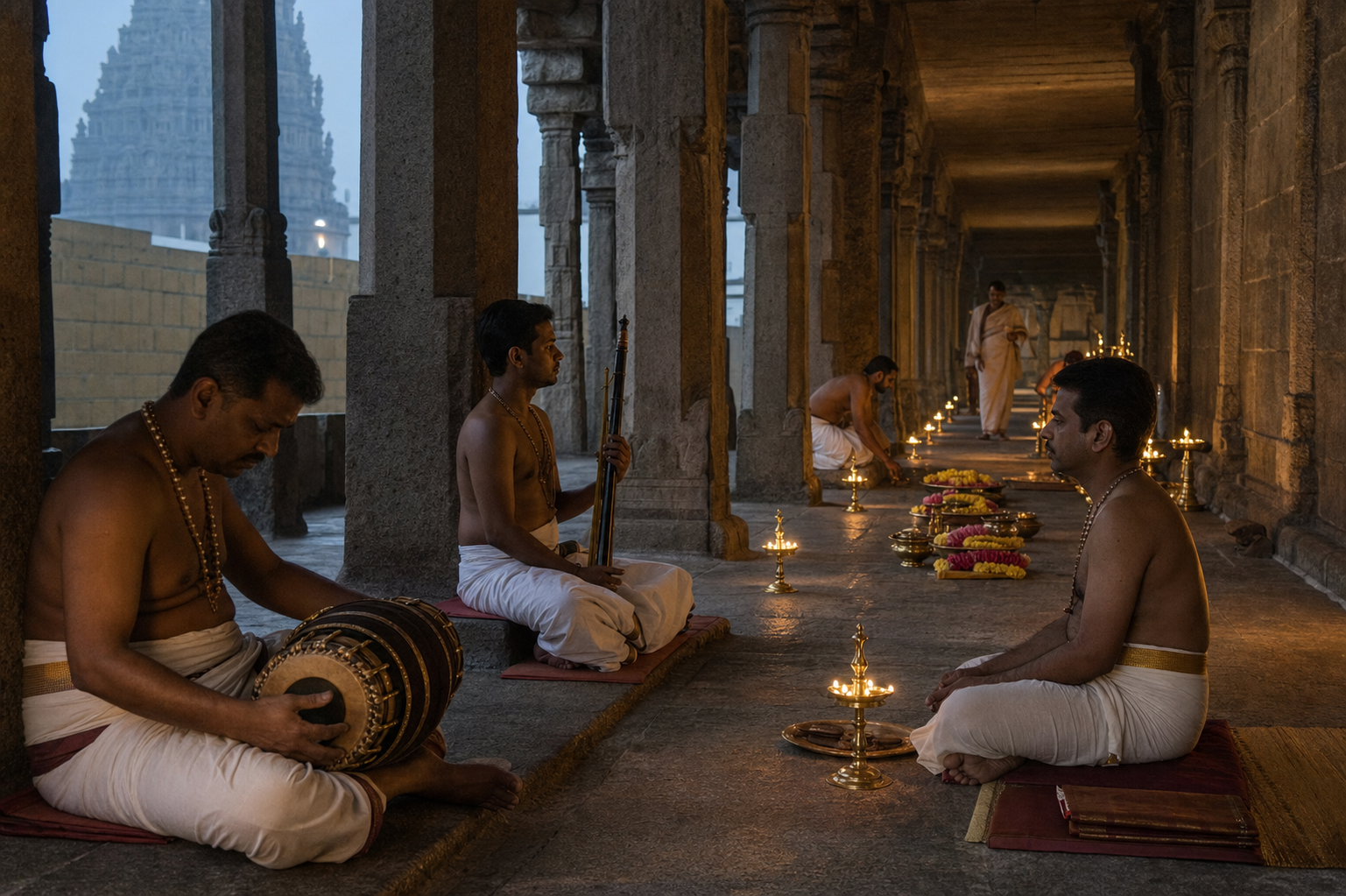
In a temple context, “programming” does not mean assembling entertainment around a religious venue. It means ordering worship through dates, deities, icons, sevas, recitations, offerings, adornment, public access, and Agamic procedure. An artist who hopes to serve that environment must learn the difference.
The June 2026 schedule at Sri Kodandarama Swamy Temple offers a concrete example. TTD arranged Special Abhishekams to Sri Sita Rama Lakshmana Moolavarlu on four Saturdays: June 6, 13, 20, and 27. The repeating Saturday pattern gave devotees a dependable rhythm, but the repetition did not turn the observance into four interchangeable stage programs. The deity, icon, ritual purpose, prescribed sequence, and conduct of the congregation remained primary.
The word moolavarlu matters. It identifies the immovable principal icons, as distinct from the utsava murthis used for processional occasions. That distinction affects how you read the event. A procession may create an obvious role for powerful outdoor instruments, while an Abhishekam to the principal icons follows the requirements of worship within the sanctum. You should never infer an artistic slot merely because a temple event appears on the calendar.
Abhishekam itself follows a ritual grammar. It commonly moves from purification and sankalpa through the measured offering of sacred liquids, mantra recitation, alankara, naivedyam, and mangala harati. Panchamrita and other sanctified substances may be used, while Vedic passages such as the Purusha Sukta and Sri Suktam may accompany the rite. The exact local procedure belongs to the authorized priests and the applicable Agamic discipline.
Use a three-pass observation method
- Before the visit, identify the ritual. Note the deity, whether the observance concerns the moolavar or an utsava murthi, and whether it is an Abhishekam, procession, festival, or another seva. These details tell you more than the date alone.
- During the ritual, watch the sequence. Notice how mantra, movement, offering, silence, adornment, and harati establish the pace. Do not evaluate the occasion as if it were a concert. Observe how every element serves worship.
- Afterward, translate observation into practice. A vocalist can reflect on breath, diction, tonal steadiness, and restraint. A percussionist can study timing and dynamic proportion. A dancer can consider how abhinaya changes when devotion, rather than display, is the governing intention. A Nadaswaram or Dolu student can distinguish a processional requirement from a sanctum-centered rite.
This method prevents a common misunderstanding. Temple exposure is not valuable merely because it supplies a prestigious venue. It teaches context: when to project, when to support, when to wait, and when artistic self-expression must yield to liturgical order. The sanctum is not a stage with different lighting.
Prepare for admission as both an artist and a student
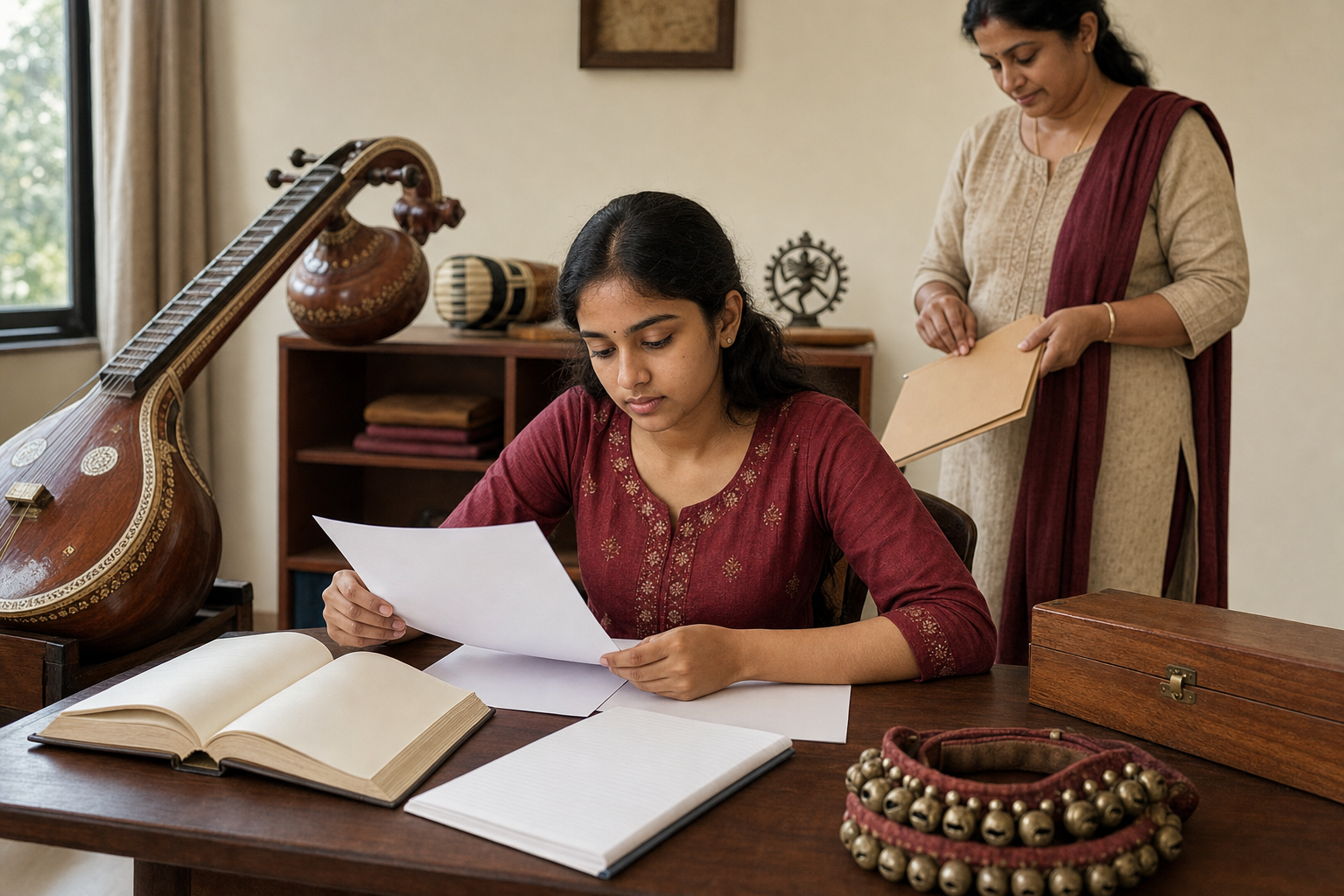
Course names can distract applicants from the practical selection standard. Depending on the program and level, the customary process may include application screening, a practical audition, a theory assessment, or an interview. The official prospectus controls the final criteria, weightages, eligibility rules, and intake. Prepare for all four possibilities until the notification tells you otherwise.
Your audition material should reveal control, not merely ambition. Prepare two or three representative items that show range and readiness. Select pieces you can render securely under scrutiny. A difficult item that collapses when a panel asks you to restart, change speed, explain the tala, or identify the raga will not demonstrate maturity.
- For vocal or instrumental music: check sruti stability, swara accuracy, tala control, raga lakshana, repertoire memory, and whatever degree of alapana, neraval, or kalpana swara is appropriate to your present level.
- For dance: clean the adavus before polishing the showcase item. Rehearse laya alignment, transitions, posture, abhinaya fundamentals, and the ability to explain what you are presenting.
- For Nadaswaram: work on breath cycles, embouchure consistency, tonal clarity, raga precision, and ceremonial patterns rather than relying on volume alone.
- For Dolu: demonstrate clear tone, stable tala, stamina, sollukattu understanding, and the ability to balance rather than overpower an ensemble.
- For every stream: maintain a written repertoire list and revise foundational theory. Panels need to see what you understand, not only what you have memorized.
Run at least one mock audition with a guru or senior practitioner who will interrupt you, ask basic questions, and test recovery. The aim is not to imitate a particular panel. It is to expose the point at which nervousness breaks your sruti, tala, memory, breath, or composure.
Administrative readiness matters as well. Assemble recent photographs, identity and address proof, educational certificates and mark sheets where applicable, and records of previous training or performance. Keep community or disability documentation ready if you intend to rely on the corresponding statutory provisions. Submit recordings or a portfolio only when the official procedure permits them.
Do not assume that the 2026-27 application remains open merely because an admission announcement is still online. Dates, submission channels, audition schedules, and contact points must be checked against the governing TTD notification. The same applies to fees, attendance, reservations, progression between course levels, and hostel or facility information.
Use temple proximity without mistaking it for a guarantee
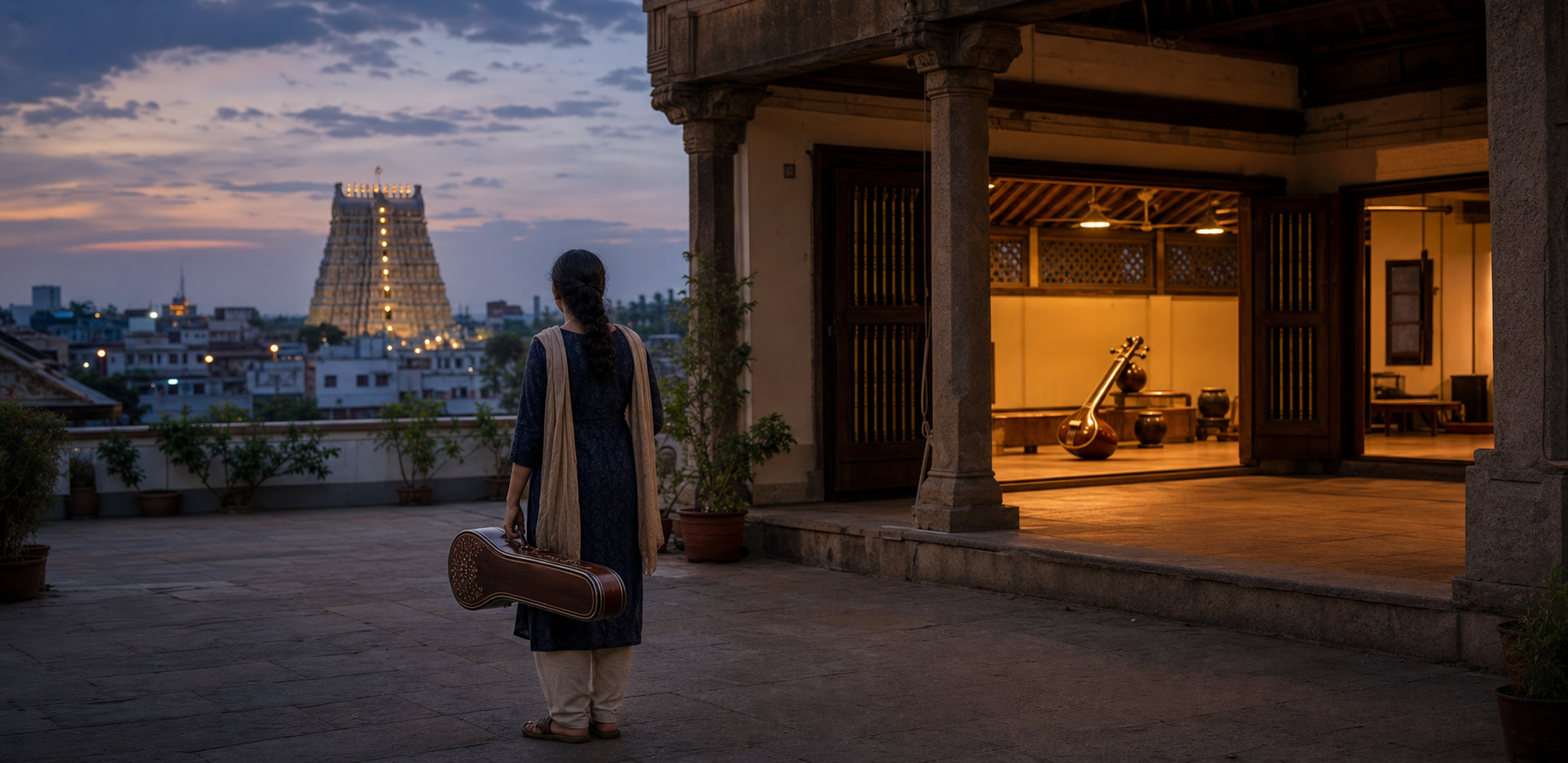
Studying in Tirupati can place you near temple festivals, cultural initiatives, ceremonial traditions, and practitioners whose work joins technique to seva. That environment can sharpen artistic judgment. Participation opportunities, however, can vary by year and course. Admission does not by itself guarantee a temple assignment, a performance platform, or employment.
Ask the institution questions that reveal the actual learning structure:
- How much supervised individual, group, and ensemble practice belongs to this course?
- How are stage labs, juried performances, practical reviews, and viva voce assessments used?
- Does the course include formal orientation to temple decorum or ceremonial repertoire?
- What temple or festival exposure occurred for students in the most recent completed academic cycle?
- If such exposure is observational rather than performative, what learning record are students expected to keep?
- For Nadaswaram and Dolu, how are instrument care, outdoor projection, stamina, and ensemble balance taught?
- For dance, when do nattuvangam, repertoire design, and abhinaya study enter the progression?
The answers will help you distinguish institutional possibility from a promise. They will also show whether your own goal fits the curriculum. Someone seeking a broad concert career may value temple literacy without specializing in ceremonial performance. Someone committed to temple arts needs more than generic musicianship: ceremonial repertoire, endurance, collaborative discipline, and respect for Agamic boundaries are central to the role.
This is where TTD’s arts education has its deepest dharmic importance. Technique is preserved alongside an understanding of why, where, and for whom an art is offered. Discipline, reverence for knowledge, restraint, and seva cease to be slogans when they shape daily practice and conduct.
Key takeaways for applicants and families
- Choose a course by the role and performance setting you seek, not by the name of the institution alone.
- Treat regular versus part-time study as a decision about sustainable practice time, not status.
- Understand ritual programming as a liturgical order of deity, icon, seva, sequence, and access; it is not an entertainment calendar.
- Distinguish moolavar worship from processional use of utsava murthis before assuming where an art form belongs.
- Prepare two or three secure audition items, revise theory, and test your ability to recover when interrupted.
- Verify every governing detail in the official TTD notification, especially dates, eligibility, fees, attendance, and selection rules.
- Value temple exposure as education in context and responsibility. Do not treat it as a guaranteed performance opportunity.
Your next step is simple: write down the role you hope to perform, compare it with the training emphasis of one primary stream, and take that statement to a trusted guru. Then read the official prospectus with that purpose in view. A clear vocation will help you choose more wisely than either prestige or proximity to the temple.
References
- Hindu Pad – TTD invites 2026-27 admissions: Sri Venkateswara Music & Dance College, SV Nadaswaram & Dolu School
- Hindu Pad – Experience Divine Grace in Tirupati: June 2026 Abhishekam Saturdays at Kodandarama Swamy Temple
