
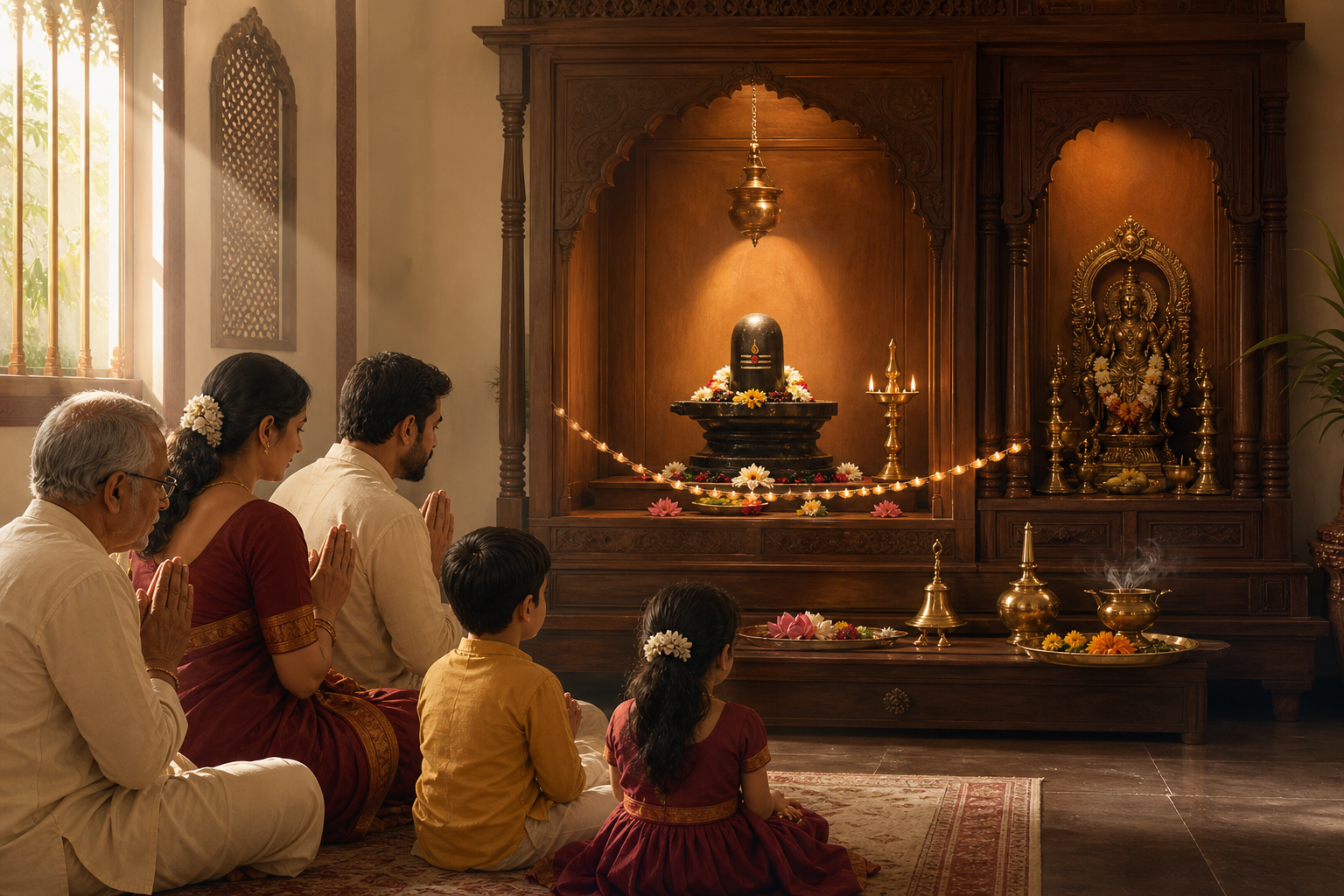
You have a deity your family calls its own, yet your daily worship may be centered on Shiva, Vishnu, Devi, Ganesha, Surya, or another beloved form. Then someone tells you that the family deity must come first. Are you neglecting your lineage if your heart and spiritual discipline lead elsewhere?
Usually, the conflict comes from asking one deity to fill several different roles. Kuladevata, Paradevata, Ishta Devata, and Gramadevata describe relationships, not contestants. Once you identify which relationship each name represents, you can honor inherited duties without weakening your path toward the Supreme.
First separate the four relationships
Your Kuladevata is the deity associated with your kula: the lineage or extended family through which a sacred relationship has been transmitted. This is not merely the deity most relatives happen to like. The relationship may appear in family samskaras, ancestral observances, vows, festivals, crisis rites, and journeys to an ancestral temple. Its defining feature is continuity.
Your Paradevata is the deity recognized as Supreme within a theological and initiatory path. A Sri Vaishnava may recognize Sriman Narayana in this role; a Shaiva, Parameshvara; a Shakta, Parashakti; a Ganapatya, Mahaganapati; and a Saura, Surya. The designation therefore belongs inside a sampradaya’s understanding of reality, worship, and moksha. It is not a universal ranking produced by comparing every Hindu deity on one scale.
Your Ishta Devata is the divine form toward whom you have a particular personal affinity. Ishta and Paradevata often coincide, especially when personal devotion matures within a sampradaya or through diksha. They are still not synonyms. Affection answers the question of where your heart turns most readily; Paradevata answers the question of whom your tradition understands and worships as Supreme.
A Gramadevata belongs to another layer: the protection and sacred life of a village, settlement, or region. Community festivals, processions, and seasonal offerings may center this deity even when individual families have different Kuladevatas. That local relationship should not automatically be relabeled as a lineage relationship.
| Term | The question it answers | How the relationship is established | Common place in practice |
|---|---|---|---|
| Kuladevata | Which deity is bound to my family lineage? | Intergenerational family transmission | Samskaras, ancestral remembrance, family vows, periodic offerings, and pilgrimage |
| Paradevata | Whom does my sampradaya uphold as Supreme? | Theology, guru-parampara, study, and sometimes diksha | Primary daily sadhana and the path directed toward moksha |
| Ishta Devata | Which divine form draws my devotion most naturally? | Personal affinity, sometimes confirmed or shaped by initiation | Intimate prayer, remembrance, mantra, and devotional worship |
| Gramadevata | Which sacred presence protects this locality? | Place and community tradition | Seasonal observances, processions, local vows, and communal worship |
This map is diagnostic, not a command to override living custom. The same deity may occupy more than one role. If Vishnu is both your inherited Kuladevata and the Supreme of your Vaishnava sampradaya, the divine name is the same while the lineage and theological relationships remain conceptually distinct. You do not need to manufacture separate rivalries, images, or identities to prove the distinction.
Regional names also matter. Shanta Durga and Mangeshi are associated with family traditions in Goa and the Konkan; Khandoba serves numerous lineages in Maharashtra; Amman and other guardian forms anchor families in parts of southern Bharat. A familiar pan-Indian name should not erase the local form, temple, observance, or family memory through which the relationship was actually received.
Build the home practice around relationship and purpose
A coherent altar does not require every sacred relationship to receive identical ritual time. It requires each one to be acknowledged for the right reason. The Kuladevata preserves lineage gratitude and responsibility. The Paradevata gives the main spiritual discipline its direction. Ishta devotion brings personal intimacy. The Gramadevata connects the household to the sacred life of its place.
Use the following process before adding more images, vows, mantras, or festival commitments:
- Make a relationship inventory. Write four headings: lineage, sampradaya, personal affinity, and locality. Place each deity under the heading supported by family memory, initiation, established practice, or community custom. If you do not know where a name belongs, mark it unresolved rather than guessing.
- Record what was actually received. For the Kuladevata, ask which temple the family visited, which occasions required remembrance, and whether a vrata or recurring offering was observed. For the Paradevata, record the sampradaya, guru-parampara, diksha, and daily discipline that establish the relationship. A framed image by itself does not answer either question.
- Choose a stable order. One widely used household sequence begins with Ganesha and guru remembrance, acknowledges the Kuladevata, and then gives the fuller worship to the Paradevata. Treat this as a workable pattern, not a universal rule. A received family paddhati or instructions connected to diksha should govern the actual details.
- Give each layer an appropriate rhythm. Kuladevata remembrance can be brief in daily worship and fuller on the family’s established tithi, festival, or pilgrimage. Paradevata-centered sadhana ordinarily supplies the daily focus. Ekadashi, pradosha, or amavasya disciplines should be followed where they belong to your sampradaya or household tradition, not accumulated merely because they are available.
- Keep authority in its proper lane. Family elders and hereditary temple priests are usually the first people to consult about lineage practice. A qualified guru or sampradaya teacher is the proper guide for initiated mantra and doctrine. Local temple authorities can explain the customs of a particular kshetra. One kind of authority should not casually rewrite another kind of relationship.
A concise sankalpa may remember gotra, ancestral rishis, and Kuladevata before turning to the principal worship of the Paradevata. Use the form received in your family or sampradaya. If no form was transmitted, ask for guidance instead of composing elaborate Sanskrit that you cannot verify. The purpose is truthful remembrance, not ritual display.
The calendar can prevent both neglect and overload. Place the known Kuladevata tithi, family festival, or pilgrimage period on the household calendar first. Then mark the regular observances attached to your main sadhana. This creates a visible distinction between inherited family commitments and the recurring discipline of your spiritual path.
Smarta Panchayatana worship offers one established way to hold Shiva, Vishnu, Devi, Surya, and Ganesha within a plural sacred order. It can accommodate lineage remembrance and focused devotion without treating plurality as confusion. It is not, however, a supposedly neutral replacement for every sectarian paddhati. A committed Vaishnava, Shaiva, or Shakta household can preserve respectful plurality while allowing its own sampradaya to define the Supreme.
If the Kuladevata is unknown, investigate without inventing one
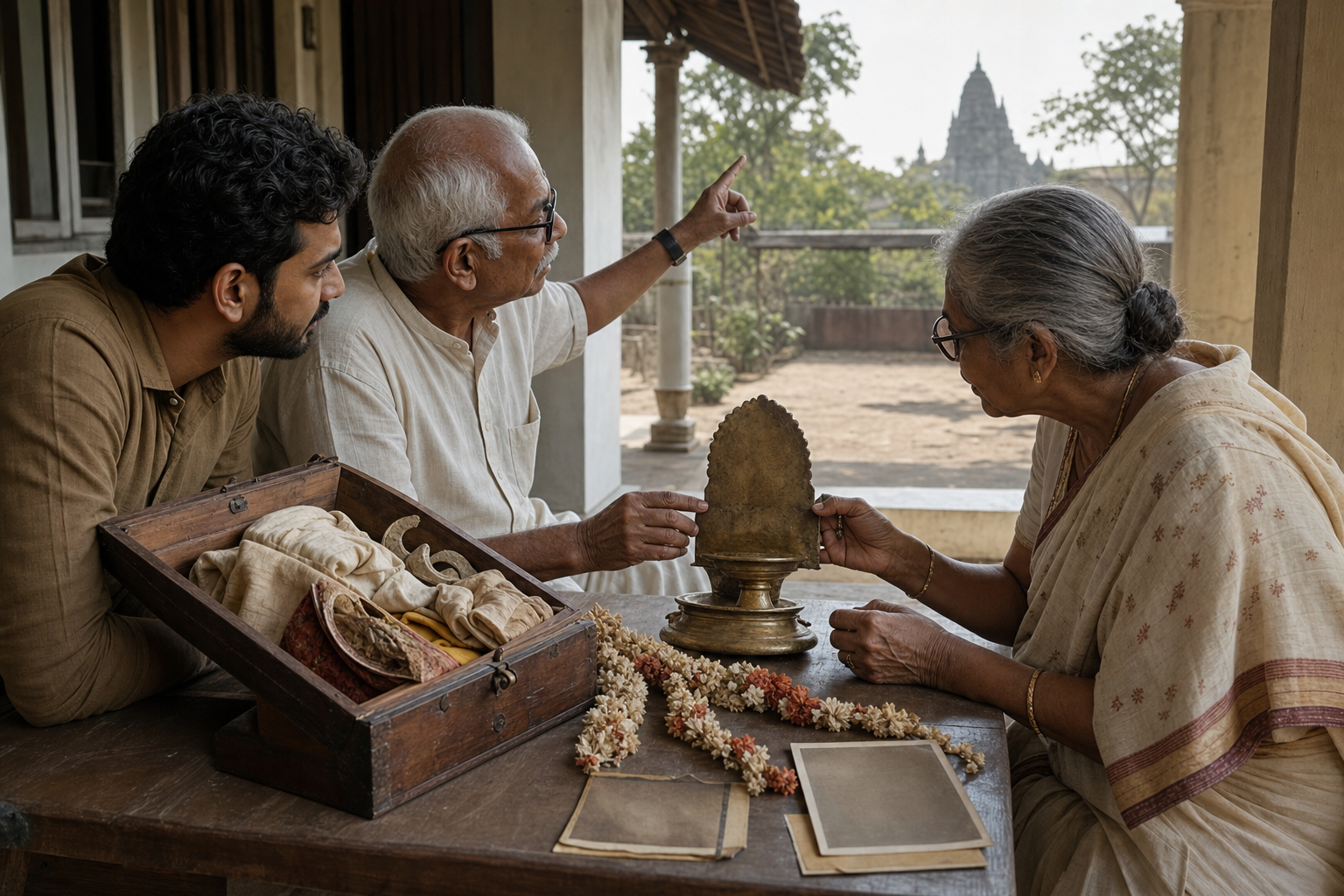
Displacement, migration, family division, language loss, and generations of interrupted practice can leave you with fragments rather than a clear name. The answer is not to declare the deity you currently prefer to be the ancestral deity. Personal affinity may reveal an Ishta Devata, but it does not by itself establish intergenerational transmission.
Treat the inquiry like the recovery of a family obligation:
- Begin with the oldest available relatives. Ask separately which deity was invoked before weddings and other samskaras, where the family went on pilgrimage, which shrine was called its own, and what observance appeared during a crisis. Separate interviews are useful because one person’s confident answer can otherwise shape everyone else’s memory.
- Trace the ancestral place. Record the village, district, family branches, gotra if known, temple names, and variant pronunciations of the deity’s name. Gotra can assist the search, but it is not itself the name of the Kuladevata.
- Contact collateral family branches. A branch that remained near the ancestral region may have retained a temple connection that another branch lost. Ask for old invitations, puja records, pilgrimage photographs, or the name of a priest rather than relying only on present-day preference.
- Consult people who preserve lineage records. Community genealogists and hereditary temple priests may be able to connect a family name or ancestral place with a shrine. Pandas at centers such as Haridwar or Kashi sometimes preserve genealogical records, although the availability and completeness of such records vary.
- Keep competing possibilities open. A village guardian, frequently visited temple, household Ishta, and Kuladevata can all appear in the same family memory. Do not collapse them into one category simply to finish the search quickly.
- Use an explicitly provisional practice. While the inquiry remains unresolved, remember known ancestors and offer simple reverence to a chosen protective deity. Call the practice provisional. This preserves devotion without making a lineage claim that the evidence does not yet support.
A Kuladevata is ordinarily continued, not replaced according to changing taste. Correcting a mistaken identification after careful inquiry is not the same as changing the deity. If credible family memory later restores the connection, let that recovered tradition guide the household’s next step.
Do not let uncertainty stop all worship. Your established Paradevata or Ishta practice can continue while the family question is investigated. The honest sentence is simple: you know your present devotional center, but your ancestral deity remains unknown. Precision is better than a confident fiction.
Marriage, mixed sampradayas, and diaspora need explicit agreements
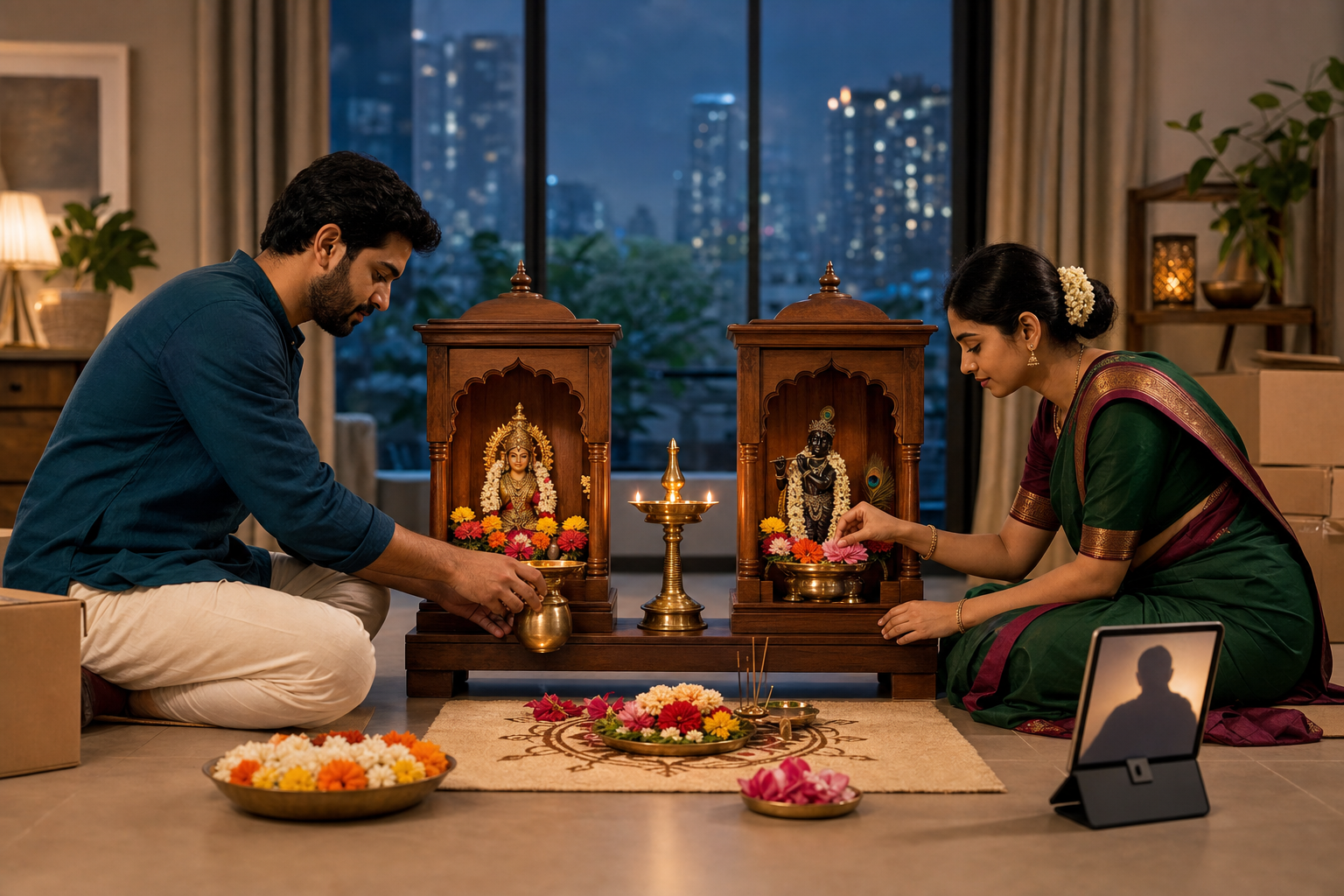
After marriage, distinguish the shared household from the natal lineage
There is no single transmission rule followed by every Hindu community. Many families transmit the Kuladevata through the paternal line and organize the married household around that deity. Other communities preserve maternal connections or give them comparable importance. The right starting point is the custom actually followed by the two families, not a universal claim copied from a different region.
A practical arrangement is to participate in the Kuladevata observances of the shared household while retaining reverence for the natal family’s deity. Adoption of a household practice does not require the deletion of natal memory. Before the first major samskara or family pilgrimage after marriage, settle four questions: which Kuladevata is invoked in the shared sankalpa, which annual observance belongs on the household calendar, how the natal deity will be remembered, and which elder or priest can confirm the inherited procedure.
If the two families give conflicting instructions, pause before creating a permanent new rule. Establish what each side regards as lineage duty, what is only customary preference, and what belongs to an initiated sampradaya. That separation often reveals that the supposed contradiction involves different layers of practice.
In a mixed-sampradaya home, unity does not require theological vagueness
One spouse may follow a Vaishnava path and another a Shaiva or Shakta path. The household can honor both without pretending that every sampradaya makes identical theological claims. Paradevata is defined within a framework of doctrine, guru-parampara, and sometimes initiation; respectful coexistence should not require either person to misstate that framework.
Create a small household protocol. Identify the shared observances, the inherited Kuladevata duties, and the disciplines that each practitioner follows through a particular sampradaya. Keep initiated practices under the guidance through which they were received. Shared worship should provide family coherence, while individual sadhana retains enough integrity to remain meaningful.
Altar placement should serve this agreement rather than become a silent argument about status. The principal focus of one person’s daily puja need not imply contempt for another sacred form. When a decision has doctrinal weight, ask the relevant sampradaya teacher; when it concerns a family vow, ask the family and its traditional priest.
Distance from the ancestral temple does not end the relationship
A diasporic household can preserve the connection through periodic remembrance, coordination with relatives who still visit the kshetra, and offerings arranged through the established family network. A visit can be made when feasible, but physical distance need not turn into ritual amnesia.
Keep the temple name, location, family tithi, priestly contact, and current family coordinator in a record accessible to the next generation. Teach children why the household remembers this deity instead of handing them an unexplained name. Continuity is easier to preserve when the relationship, occasion, and place are transmitted together.
If the ancestral temple cannot yet be reached, do not quietly substitute the nearest temple and call the replacement the same lineage tradition. Worship there with respect, maintain remembrance of the known Kuladevata, and leave the historical identification intact.
Key takeaways
- Kuladevata identifies an inherited lineage relationship; it is not simply your favorite deity.
- Paradevata identifies the Supreme within a sampradaya or initiatory framework; Ishta Devata identifies personal devotional affinity.
- The same deity can fill more than one role, so identical names do not erase the conceptual distinctions.
- A stable home practice can acknowledge the Kuladevata briefly and give fuller daily attention to the Paradevata, subject to received family and guru instructions.
- If the Kuladevata is unknown, investigate elders, ancestral places, family branches, genealogists, and hereditary priests before making a claim.
- Marriage and mixed-sampradaya households work best when lineage duties, shared observances, and individual initiated practices are stated separately.
Before your next puja, write down three lines: the deity your family inherited, the deity your sampradaya recognizes as Supreme, and the deity toward whom your heart turns most naturally. Mark any answer you cannot verify. Honor what is known, investigate what is missing, and let each sacred relationship occupy its proper place.
References
