
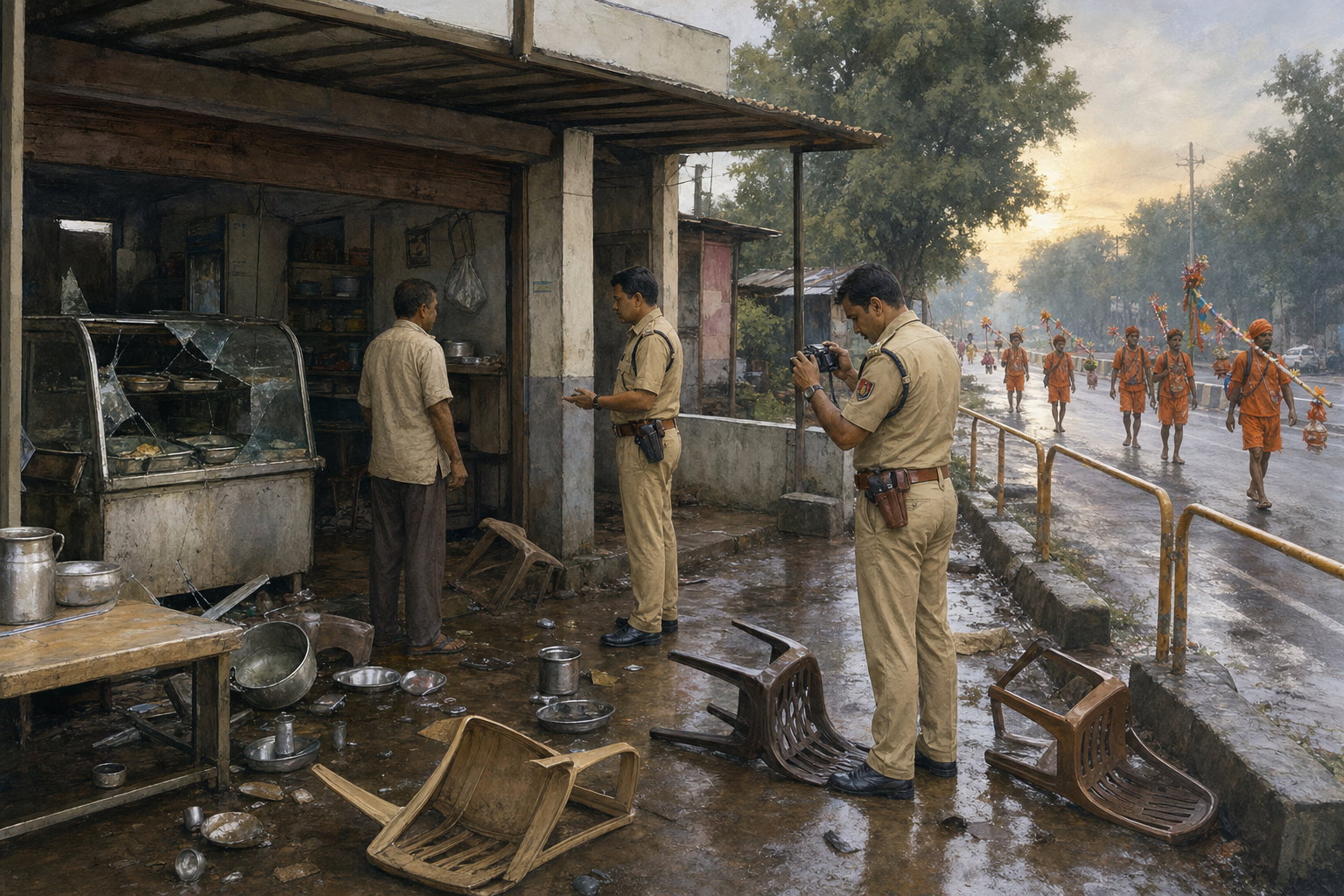
If a short clip of the Muzaffarnagar eatery attack has reached you with a demand to choose a side, resist that framing. Your first duty is to separate a legitimate grievance from an unproven allegation, and both from any unlawful response that followed.
That distinction does not require Hindu society to ignore deceptive labelling, unwanted halal products, non-vegetarian trade near a pilgrimage route, or irregular business records. It requires us to pursue each concern with evidence and through an authority capable of establishing the facts. Vandalism cannot verify a licence, correct a label, protect a Kanwariya, or strengthen the standing of the Kanwar Yatra.
Begin with the facts that can actually be established
The incident can presently be described only with caution: a non-vegetarian eatery in Muzaffarnagar was reportedly vandalised; people associated with Hindutva activism were alleged to have participated; and friction involving the Kanwar Yatra, halal, and the shop’s public-facing identity was reported around the episode. That is not yet a complete, officially verified timeline.
Do not let a video collapse four different questions into one accusation:
- What happened? Establish the location, time, sequence, damage, threats, and participants. A clip beginning after an argument started cannot establish how it began.
- What was alleged? Write the claim precisely. Was the complaint about serving non-vegetarian food, halal certification, an inaccurate menu, the signboard, the licensed operator, sanitation, odour, or a temporary administrative direction?
- What has been verified? Look for a police statement, FIR, food-safety inspection, municipal notice, licensing record, CCTV sequence, or written order. An FIR records allegations; it does not by itself prove every allegation in it.
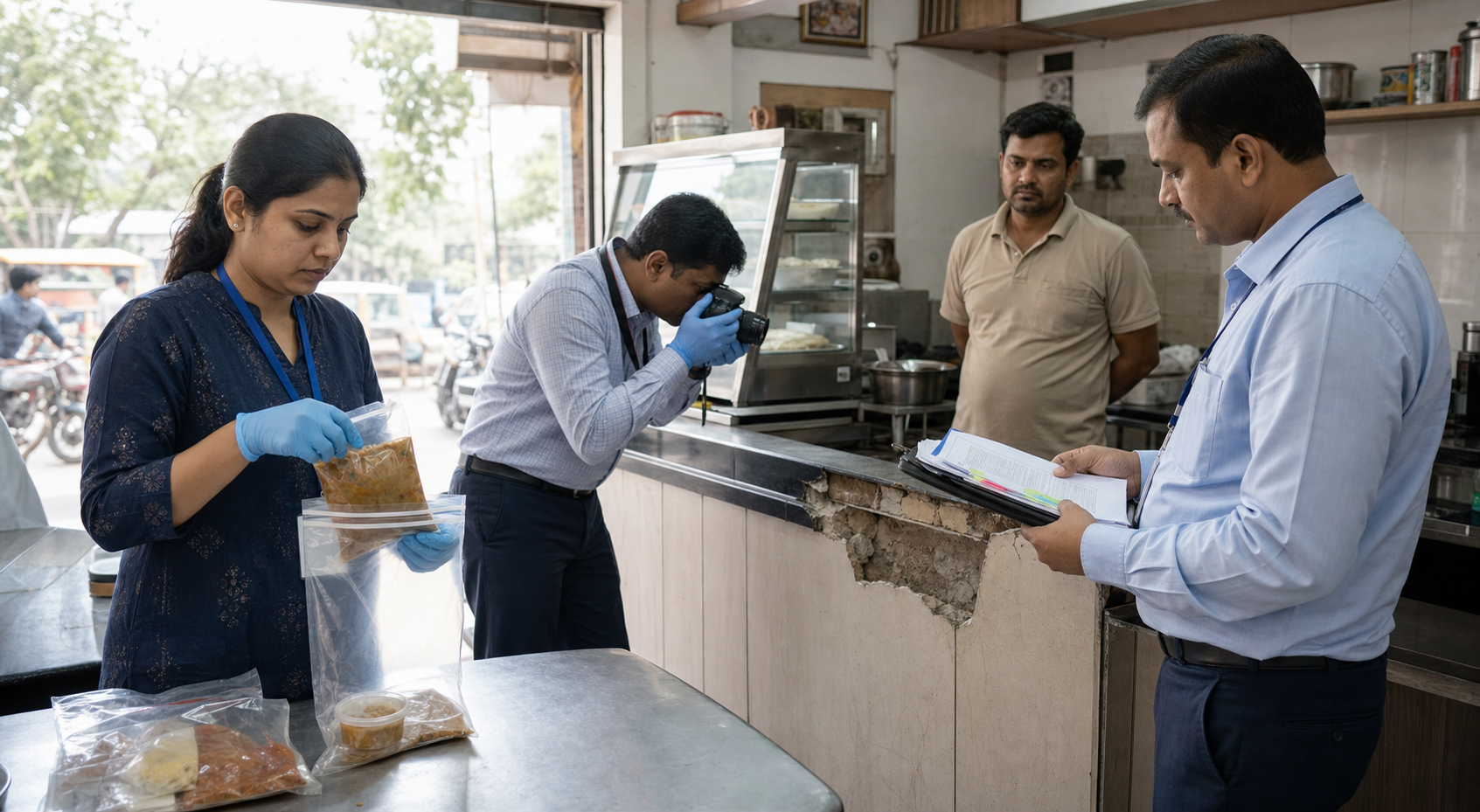
- Who can decide the issue lawfully? Food-safety officers examine food licensing and labelling. Municipal and shop-establishment authorities handle applicable trade and signboard requirements. Police investigate intimidation, assault, unlawful assembly, and property damage.
If you do not have the relevant record, use the word alleged. That single discipline prevents a question about one shop from becoming an accusation against an entire religious community or an entire pilgrimage.
Three grievances require three different tests
The reported controversy combined issues that are emotionally connected but legally and practically distinct. Treating them as one grievance makes each harder to resolve.
Festival-time accommodation must come from known rules
Kanwar Yatra is one of North India’s major annual Shaivite pilgrimages, and western Uttar Pradesh carries a substantial share of its movement. Traffic diversions, sanitation work, delivery adjustments, route management, and crowd-control arrangements are therefore reasonable administrative measures. Dense crowds, sacred symbolism, and rapidly circulating social-media claims also make small disputes more combustible than they would be on an ordinary day.
Religious sensitivity, however, is not a roving permission for private groups to invent or enforce rules. Before claiming that an eatery violated a Yatra restriction, ask to see the applicable advisory or order. Check its geographic boundary, the activity it covers, the authority that issued it, and the period for which it applies. A preference expressed by local activists is not automatically a government direction.
If no restriction exists, campaign peacefully for a clear future policy. If one does exist, document the apparent breach and ask the administration to enforce it. In neither case does a crowd acquire the authority to damage property or threaten workers.
Halal preference is not the same as statutory food approval
Halal ordinarily functions as an additional, voluntary declaration directed at consumers who seek a particular slaughter or processing method. FSSAI licensing, hygiene, and statutory labelling remain the regulatory baseline for food businesses regardless of the proprietor’s religion. On packaged food, the prescribed vegetarian and non-vegetarian symbols answer a different question from halal or jhatka declarations.
You are entitled to reject halal food, seek jhatka, ask a seller what is being served, or take your custom elsewhere. A business is not entitled to make a declaration it cannot substantiate. But dislike of halal does not, by itself, prove that food is illegal, unsafe, or fraudulently sold. Conversely, asking for an accurate answer about slaughter method should not automatically be dismissed as communal hostility.
The practical test is simple: identify the exact representation made by the seller, preserve the menu, label, receipt, or advertisement, and compare it with the product supplied. If the seller made no halal or jhatka claim, do not invent one. If a false claim appears to have been made, send the evidence to the competent food-safety and consumer authorities.
A Hindu trade name does not prove a proprietor’s religion
A trade name and a person’s religious identity are not the same thing. A shop bearing a Hindu-associated name is not automatically representing that its owner, tenant, cooks, or workers are Hindu. The legally relevant questions concern the licensed business identity, the responsible operator, the food being sold, and any specific statement made to consumers.
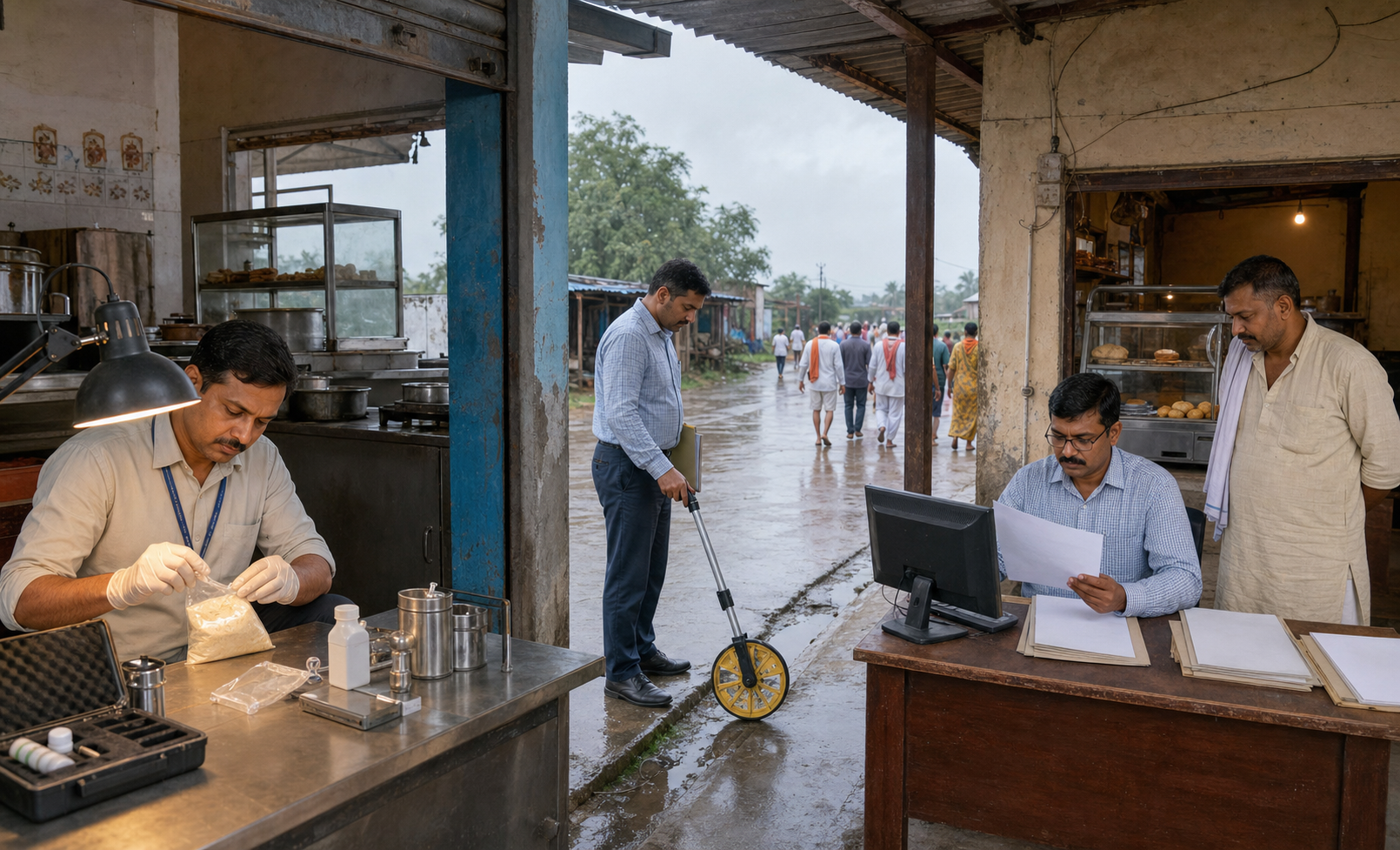
If the allegation is that the business concealed its operator or traded under inconsistent records, compare the shopfront name with the FSSAI certificate and number, invoice name, GST details where applicable, municipal records, and rental or operating documents. A discrepancy is grounds for an inspection and an explanation. It is not permission for punishment by bystanders.
This distinction protects Hindu consumers more effectively than religious profiling. An auditable licence can expose a false business claim; guessing someone’s faith from a name cannot.
Key takeaways
- The reported attack, the food sold, halal status, Yatra-period restrictions, and the shop’s licensed identity are separate factual questions.
- A consumer may choose vegetarian food, halal, jhatka, or neither. The seller’s duty is accuracy; the consumer’s remedy is inquiry, complaint, peaceful advocacy, or refusal to buy.
- A trade name should match the applicable business records, but it does not have to disclose the proprietor’s religion.
- Only written directions and competent authorities can establish and enforce festival-time restrictions.
- Property damage and intimidation remain wrong even when the underlying complaint later proves valid.
- Protecting Kanwar Yatra includes preventing rumour, coercion, and opportunistic violence from being attached to its name.
What you should do before forwarding, protesting, or complaining
Use a verification sequence, not a reaction
- Move away from immediate danger. If a crowd is gathering or violence is occurring, contact police and do not place yourself between participants. Capturing better footage is not worth an injury.
- Preserve the original material. Keep the original link, account name, time received, unedited file, and accompanying claim. Reposted clips often lose the information needed to verify them.
- Confirm the place and sequence. Look for shop signage, road markers, recognisable landmarks, continuity in the footage, and material showing what occurred before and after the circulated segment.
- Check for an official response. A police statement can confirm whether an incident occurred. A food-safety inspection can address licensing or labelling. A municipal notice can establish whether a local rule applied. Do not use one type of record to answer a different question.
- Send a factual complaint to the correct office. Include the shop name and address, time, exact alleged breach, relevant images, and the record you want verified. Report threats, violence, or damage to police; food and labelling concerns to food-safety authorities; and trade-name or municipal issues to the relevant civic authority.
- Ask for an acknowledgement. Keep the complaint or diary number and any written reply. A documented trail lets you follow up without repeatedly mobilising people around an unverified allegation.
- Correct the record publicly. If you shared a claim that later proves false or incomplete, post the correction where you posted the allegation. Quietly deleting a message does not repair the suspicion it created.
Do not publish the eatery’s address as a call for others to assemble there. Do not identify workers who have not been accused by authorities. If you personally face a threat, arrest, closure direction, or serious legal allegation, preserve the records and consult a local lawyer rather than relying on social-media interpretations.
Know what a transparent food business should show
If you are evaluating a shop near a pilgrimage route, look for records and practices rather than the owner’s perceived identity:
- The FSSAI licence or registration number is visible and corresponds with the operating business.
- The trade name used on the signboard, certificate, and invoice is consistent or any legitimate difference can be documented.
- Vegetarian and non-vegetarian offerings are described plainly, without suggestive names that obscure what the customer will receive.
- Any halal or jhatka representation is explicit and accurate; neither should be inferred merely from the proprietor’s name.
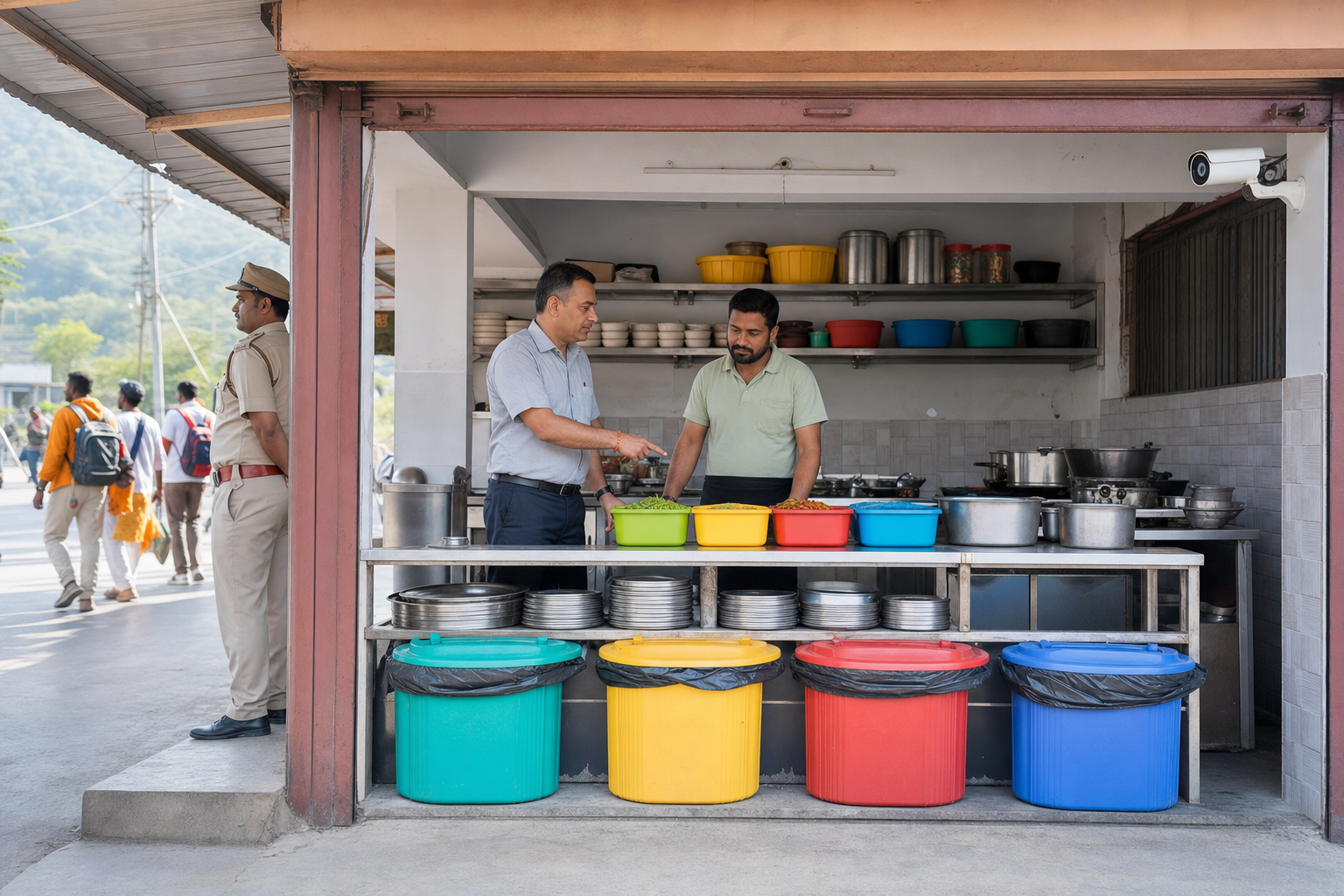
- Vegetarian and non-vegetarian preparation is separated clearly where both are offered, with utensils and work areas managed to prevent misleading service.
- Waste, sanitation, smoke, and odour are controlled, especially when crowd density and devotional movement are high.
- Receipts and relevant records are retained. CCTV is a prudent protective measure during a sensitive period, although its presence alone does not prove regulatory compliance.
- One responsible person is available to communicate with police, market representatives, and food-safety officials.
A missing or inconsistent item should produce a question and, where warranted, an inspection request. It should not produce a verdict delivered on the pavement.
Demand preparation from authorities and Yatra organisers
Residents should not have to choose between administrative silence and crowd enforcement. Before peak Yatra movement, a district administration should publish route and traffic information, explain any special commercial directions in plain language, and give traders a designated channel for rapid clarification. Food-safety staff should be available to inspect specific complaints, while police should issue time-bound corrections when a viral claim threatens public order.
Market associations and pilgrim committees should appoint named liaison contacts and communicate delivery windows, route changes, sanitation expectations, and complaint procedures before a dispute occurs. They can also make a joint commitment that suspected mislabelling will be documented and referred, while threats and property damage will not be tolerated.
Ask your district and market representatives for concrete mechanisms: a written advisory, a verification contact, an on-call inspection team, a rumour-control bulletin, and anonymised information about complaints received and resolved. These measures reduce the dangerous interval in which a claim is circulating but no trusted answer is available.
The dharmic line is firm because it protects everyone
Ahimsa does not require indifference to deception. Satya does not permit us to describe suspicion as proof. Karuna does not cancel accountability, and seva is not weakness. Together, these principles tell us how strength should be exercised: establish the truth, protect people from immediate harm, insist on lawful correction, and refuse cruelty as entertainment.
Jain emphasis on ahimsa, Buddhist karuna, Sikh seva, and the Hindu ethic of accommodating different paths offer practical disciplines for a tense street. A water counter for Kanwariyas, a gurdwara’s langar, clear route information, sanitation assistance, and a trader helping officials verify a complaint all reduce risk without asking anyone to abandon conviction.
A pro-Hindu position can criticise halal certification, advocate truthful jhatka availability, demand respect for a Shaivite pilgrimage, support a peaceful boycott, and scrutinise administrative failures. It loses moral and civic force when a demand becomes intimidation or a grievance becomes collective punishment. Once property is attacked or workers are threatened, the issue is no longer merely consumer advocacy or religious expression.
Apply the same standard in both directions. Do not treat the alleged conduct of particular activists as the character of every Kanwariya, Hindu, or Hindutva supporter. Do not treat one proprietor as a representative of every Muslim trader. Individual responsibility is not softness; it is the only basis on which evidence and justice can operate.
When the next provocative clip arrives, pause before forwarding it. Write down the exact claim, seek the record capable of proving it, and send a documented complaint to the authority that can act. If you want to defend the dignity of Kanwar Yatra, add seva, clarity, and restraint to the route. Those acts protect the pilgrimage more durably than a crowd ever can.

References
