

If you are trying to organise June worship around work, school and temple schedules, the difficult part is not remembering a civil date. It is knowing which tithi prevails at sunrise, when that tithi changes and which details must be recalculated for your location.
For June 2026, reserve 14 June for Sarva Amavasya and ancestor remembrance, then watch the Panchami-to-Sashti transition on 19 June. These two anchors let you prepare the people, materials and intentions in advance. Your city-based Panchang should make the final decision about the hour.
Put these two June dates on your calendar
| Date | Panchang position | Primary observance | What you must verify locally |
|---|---|---|---|
| Sunday, 14 June 2026 | Sarva Amavasya; Adhika Jyeshtha Amavasya in the lunisolar reckoning | Pitru Tharpana, ancestor remembrance, dana and quiet prayer | Your family’s preferred morning or aparahna period, Rahu Kaal and the temple or priest’s instructions |
| Friday, 19 June 2026 | Shukla Panchami until about 9:59 p.m. in most Indian regions; Shukla Sashti afterward | Study and completion during Panchami; Skanda, Kartikeya, Subrahmanya or Murugan worship during Sashti | The exact tithi transition, Nakshatra, Yoga, Karana and daily avoidable periods for your city |
The first distinction to preserve is between a shared date and a shared clock time. The designation Sarva Amavasya on 14 June reflects Amavasya prevailing at local sunrise across India. That makes the civil date unusually convenient for families in different regions. It does not make Rahu Kaal, solar noon or every ritual window identical from one city to another.
The second distinction concerns the name of the month. An Adhika Maas enters the Hindu lunisolar calendar when a lunar month passes without a solar sankranti. In 2026, that intercalation produces Adhika Jyeshtha. Amanta or Amavasyant communities treat Amavasya as the lunar month’s ending, while purnimanta and regional calendars can label the surrounding period differently.
That is why the same 14 June observance is Adhika Jyeshtha Amavasya in one reckoning, Vaigasi Masa Amavasai in the Tamil Panchangam, Edava Maasa Karthu Vavu in the Malayalam calendar and Jyeshto Mash Amabashya in the Bengali calendar. Do not try to make every label agree. Use the calendar convention followed by your family or temple, especially when stating the month in a sankalpa.
Observe Sarva Amavasya on 14 June with simplicity
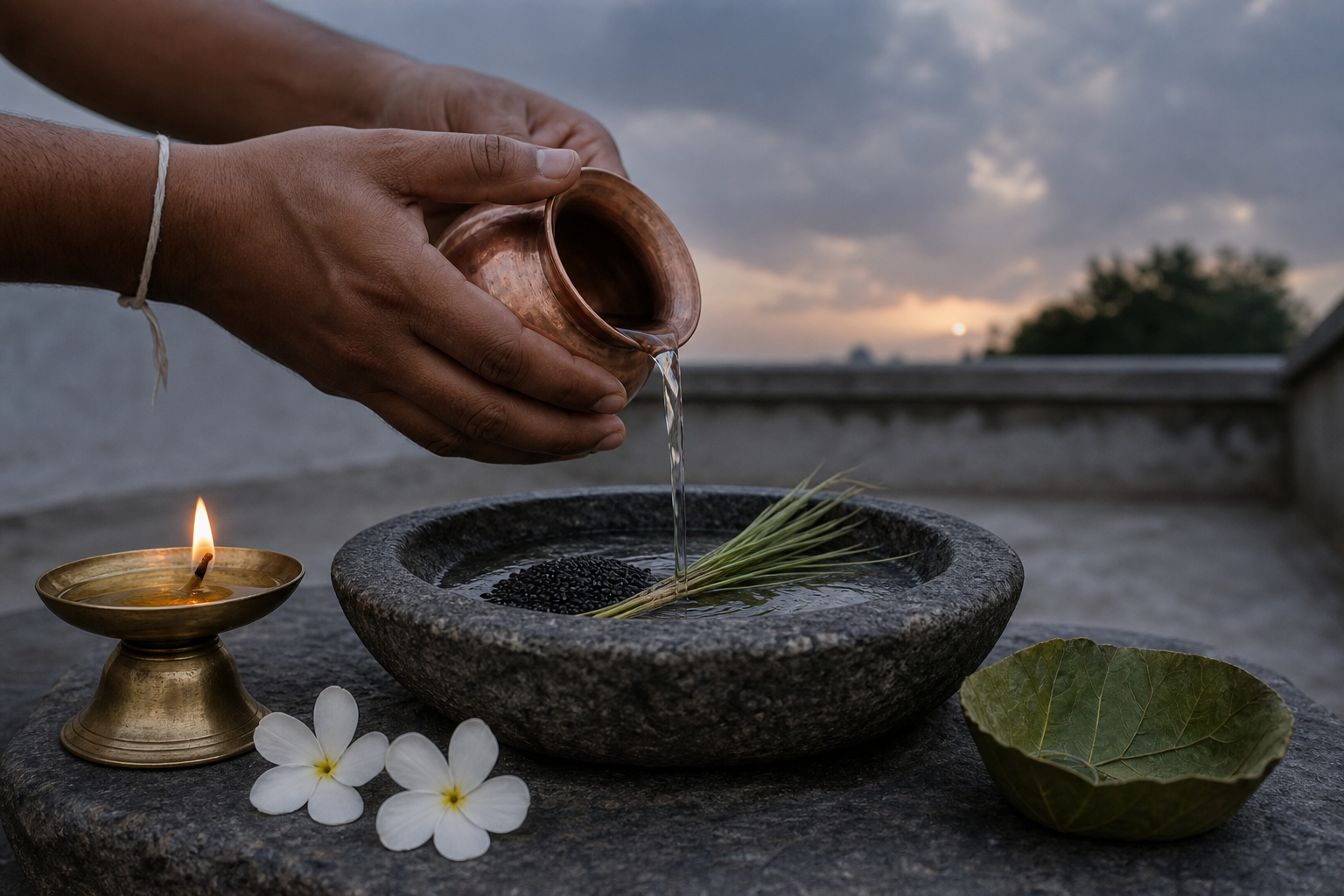
Amavasya remembrance is not a performance of grief. It is an act of gratitude toward the people whose lives, labour, decisions and sacrifices made your own life possible. A careful home observance can therefore be brief without becoming casual. Accuracy of intention matters more than attempting an elaborate procedure you do not know.
Settle the timing and materials first
A commonly preferred window for Pitru Tharpana is after snana in a calm morning period and up to midday. Some family and regional traditions favour aparahna for pitri-karmas. Ask which convention your household follows before choosing between them, and then check the local avoidable periods. Do not assume that a generic Indian timetable applies to Toronto, London, Singapore or another diaspora location.
- Check a location-based Panchang or the published schedule of the temple you actually attend. Confirm Amavasya at local sunrise and note Rahu Kaal for 14 June.
- Ask whether your parampara uses a morning period, an aparahna period or a priest-directed time. Preserve that inherited convention where possible.
- Prepare clean water, black sesame seeds, a copper or other clean vessel, a spoon, a dedicated bowl or plate for the offered water, darbha if used in your tradition, a clean mat and a simple lamp.
- Choose a clean place where you can face south and pour without sending the offering into a household drain. A dedicated bowl is useful when an outdoor earthen surface is not available during the rite.
- Write the names and gotras you genuinely know. Leave unknown details unknown; a sincere offering to known and unknown ancestors is preferable to guessing.
Keep the physical arrangement modest. A crowded altar and a long shopping list do not improve the offering. What helps is having everything within reach so that the rite is not interrupted after the sankalpa.
A concise home sequence
The following is a simple, widely used pattern. Hand positions, the use of darbha, the wearing of the sacred thread and the detailed order can differ by sampradaya. If you have received a family, guru or priest-guided vidhi, that procedure takes precedence.
- Bathe, wear clean clothing and sit quietly for a few breaths. Face south for the ancestor offering, using darbha or a clean mat according to your custom.
- Begin with the invocations familiar to your household. A concise opening is: śrī-gaṇeśāya namaḥ; śrī-gurubhyo namaḥ; śrī-govinda govinda govinda.
- State the sankalpa clearly. The short form avoids errors in place, season and calendrical naming: mama upāta-samasta-durita-kṣaya-dvāra śrī-parameśvara-prītyarthaṃ amāvāsyāyāṃ pitṛ-tarpaṇaṃ kariṣye.
- Offer the simple sequence for the devas, rishis and pitrs. Recite each line three times while making the prescribed water offering: om devatābhyo namaḥ tarpayāmi; om ṛṣibhyo namaḥ tarpayāmi; om pitṛbhyo svadhā namaḥ tarpayāmi.
- Remember the paternal and maternal lines separately if that is your family practice. Use names and gotras only where they are known. Otherwise include all ancestors, known and unknown, in your intention.
- Close with silent prayer, namaskara and an act that carries remembrance into conduct, such as annadana, assistance to someone in need or caring for a plant.
In the simplified pattern, the water and sesame are offered mindfully from the right hand through the fingertips while facing south. Do not rush merely to complete a count. Each pour should carry an actual remembrance, even if it is only the recognition that much of your lineage is unknown to you.
If Sanskrit is unfamiliar, state the intention plainly: on this Amavasya, with gratitude and humility, you offer water and sesame for the peace and upliftment of your known and unknown ancestors, and for compassion and clarity within the lineage. The purpose is not defeated by simple language.
An extended Vaidika sankalpa is appropriate when you know how to insert the correct place, ayana, season, month, paksha, tithi and weekday. It is also the form most easily spoiled by copying a formula written for another location. Use your regional month name consistently, and ask a family priest or temple for the complete local wording rather than improvising its astronomical details.
Dispose of the offering respectfully
Collect the offered water in a dedicated bowl if it cannot fall directly on clean earth. It can then be returned respectfully to earth or a garden. Avoid pouring tilodaka into a drain. If you perform the rite near a natural water body, minimise disturbance and leave no sesame packets, plastic, flowers or other refuse behind.
A shared Dharmic household need not force everyone into one liturgical form. One family member may perform the Vedic tarpanam while others join through meditation, sutra recitation, ardas, dana or silent remembrance. Women and men both observe Amavasya remembrance in many regions; where local custom differs, settle participation through respectful family consultation rather than turning an ancestor rite into a household dispute.
Use the Panchami-Sashti transition on 19 June deliberately
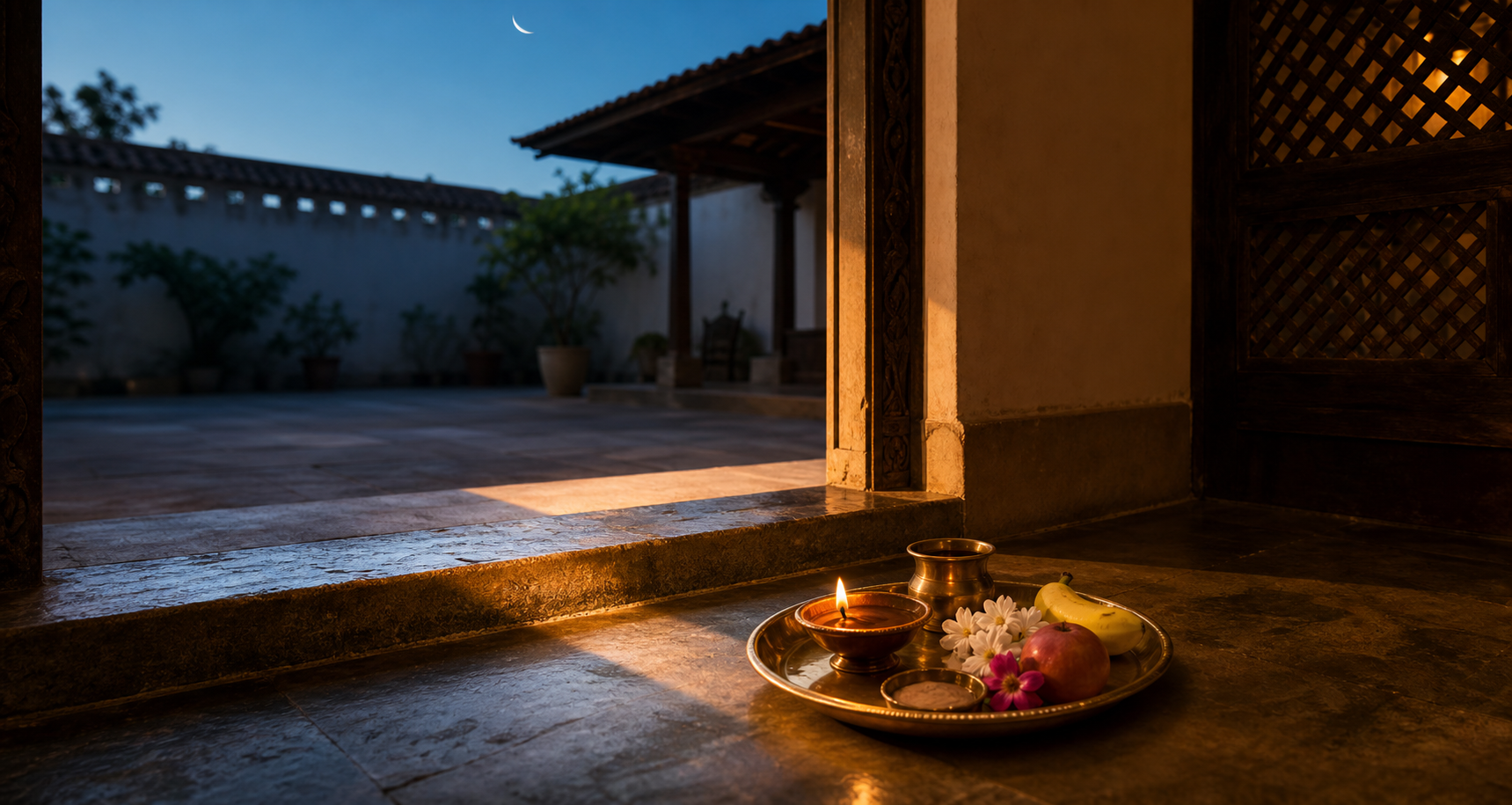
On Friday, 19 June 2026, Shukla Panchami continues until about 9:59 p.m. in the Indian timing applicable to most regions, after which Shukla Sashti prevails for the rest of the night. This is not merely a change of label. The two tithis support different kinds of attention.
A tithi is determined by the angular separation of the Moon and Sun, not by the midnight-to-midnight civil day. Panchami occupies the interval after 48 degrees of separation and through 60 degrees. Sashti begins when that separation moves beyond 60 degrees. This is why a civil Friday can contain most of one tithi and the opening portion of the next.
Panchami belongs to the Poorna or fulfilling class of tithis. Use its earlier and longer part of 19 June for work that benefits from completion, consolidation or disciplined learning. The practical expression can be very ordinary: finish an unfinished scripture section, commit to a realistic study schedule, organise the texts at your home shrine, archive family manuscripts or settle documentation that has been waiting for focused attention.
Sashti belongs to the Nanda class and is the monthly tithi associated with Skanda, Kartikeya, Subrahmanya or Murugan. Once your local Panchang confirms that Sashti has begun, the later period is suited to lighting a lamp, offering simple naivedya, performing japa, reciting a Skanda stotra or Skanda Sashti Kavacham, or attending a temple’s scheduled darshan. If you keep a Sashti fast, follow your parampara concerning its completion after puja.
Friday adds Shukra’s traditional association with music, beauty, harmony and matters of value. That makes devotional music or a calm effort to restore household harmony a natural accompaniment. It does not mean every Friday hour is automatically auspicious. The weekday, tithi and local dosha periods still have to be read together.
- Before the local Panchami ending: favour study, consolidation, record-keeping and tasks that complete or stabilise something already underway.
- After the local Sashti beginning: favour Subrahmanya worship, mantra, stotra, lamp offering, naivedya and temple darshan.
- If the exact boundary falls at an impractical hour where you live: follow the locally published temple observance instead of forcing an Indian clock time onto another time zone.
- If your family’s vrata rules depend on sunrise or another condition beyond the tithi’s first moment: obtain the date and procedure from the local temple or your sampradaya’s Panchang.
Build a local schedule instead of copying clock times
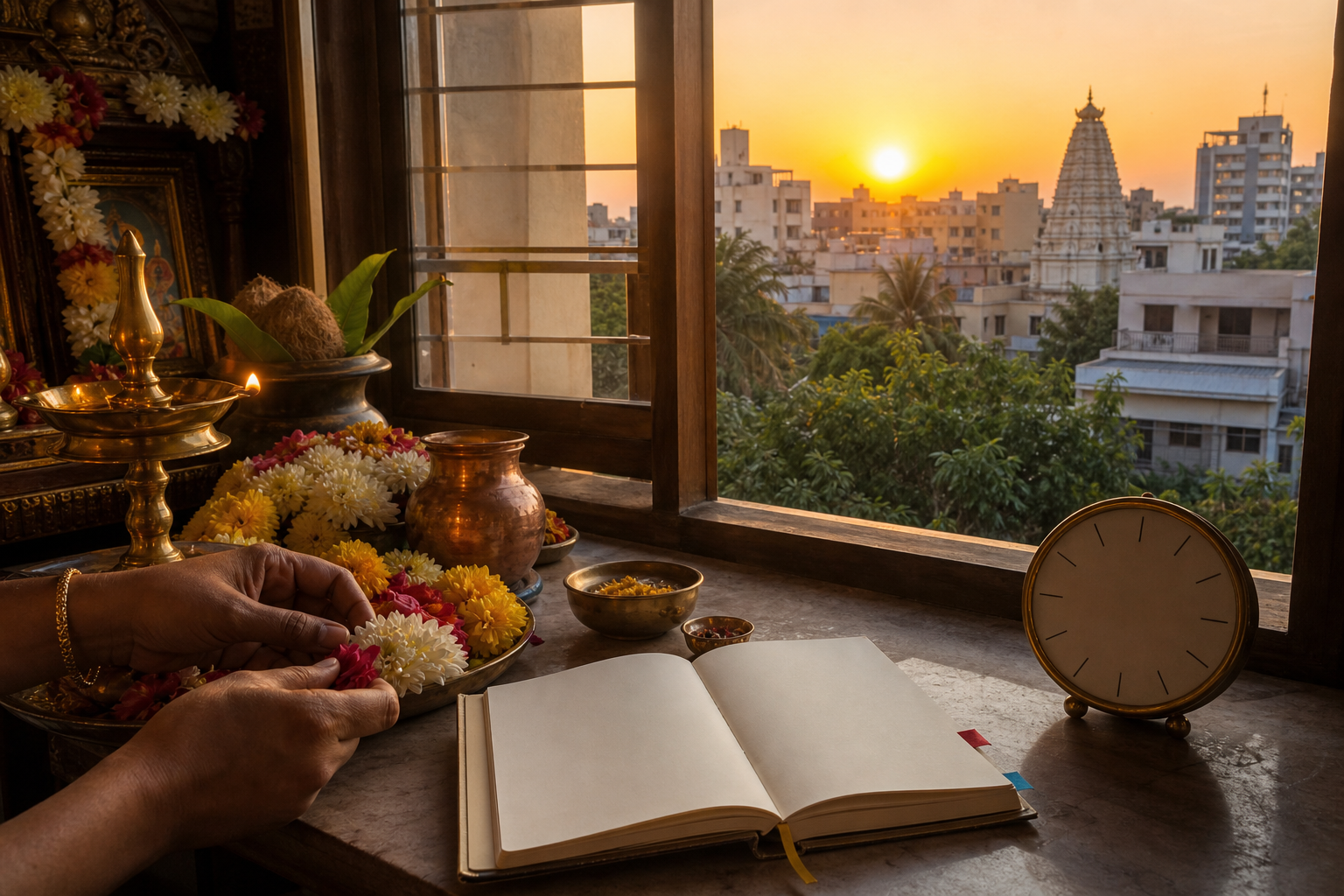
A useful Panchang has five limbs: Tithi, Vara, Nakshatra, Yoga and Karana. A date and tithi alone can identify the broad observance, but they cannot settle every muhurta. Nakshatra can change during the date, the Moon can enter another rashi, and Yoga or Karana can alter the suitability of a particular hour.
- Set the exact city and time zone. A country-level result is not enough for sunrise-based calculations in a large country or for diaspora use.
- Record local sunrise and sunset. Then note the tithi prevailing at sunrise as well as its exact ending time.
- Check Nakshatra, Yoga and Karana at the hour you intend to act, not merely in the Panchang’s daily headline. Vishti or Bhadra Karana is generally avoided for compassionate or public-facing beginnings.
- Mark Rahu Kaal, Yamaganda and Gulika if your tradition avoids them for new undertakings. Do not paste generic weekday times into the calendar.
- Locate Abhijit Muhurat around true local solar noon. Clock noon and solar noon are not necessarily the same, especially across wide time zones or during seasonal clock changes.
- If you also use Choghadiya, look for Amrit, Shubh or Labh and avoid Kal, Rog or Udveg for an initiation. Treat Choghadiya as one layer, not as a replacement for tithi and the daily doshas.
- Compare your calculation with the local temple schedule. For a temple puja, the temple’s own location-adjusted Panchang is the operative one.
Friday’s commonly repeated Rahu Kaal of about 10:30 a.m. to noon assumes an artificial day with sunrise at 6:00 a.m. and sunset at 6:00 p.m. Under that same assumption, Gulika is about 7:30 to 9:00 a.m. and Yamaganda about 3:00 to 4:30 p.m. These are examples of the daylight-division method, not ready-made times for 19 June in your city. Recalculate them from actual sunrise and sunset.
Do not assume that one favourable indicator cancels every caution. If Abhijit overlaps a period your family avoids, the cleanest practical choice is a supportive, non-overlapping window. When no such window exists, ask which rule your sampradaya gives priority rather than combining rules from unrelated almanac traditions.
The same discipline helps when relatives follow different regional calendars. Agree first on the astronomical event and local place. Then let each branch of the family state the month in its inherited way. Unity in observance does not require erasing Vaigasi, Edava, Jyeshto or Adhika Jyeshtha terminology.
Key takeaways for your June practice
- Reserve Sunday, 14 June, for Sarva Amavasya. Decide early whether you will perform a simple home remembrance or follow a priest-guided family vidhi.
- Use your own regional month name in the sankalpa. The different Adhika Jyeshtha, Vaigasi, Edava and Jyeshto labels do not change the shared Amavasya date.
- Prepare water, black sesame, a clean vessel, a collection bowl, a mat and any customary darbha before the morning of the rite.
- On Friday, 19 June, use Panchami for learning and completion, then turn to Skanda devotion only after Sashti begins according to your local Panchang.
- Calculate Rahu Kaal and Abhijit from local sunrise, sunset and solar noon. Generic weekday tables are teaching aids, not final muhurtas.
- When travelling or living outside Bharat, follow the Panchang of the city where you will physically perform the observance, or the schedule published by the local temple.
Your next step is small and concrete: save both dates, identify the city-based Panchang or temple calendar you will trust, ask which tarpanam convention your family follows, and assemble the 14 June materials the previous evening. That preparation leaves the sacred day for remembrance rather than last-minute searching.
References
- DharmaRenaissance Blog — Honor Ancestors on Sarva Amavasya (14 June 2026): Authoritative Tharpana Sankalpa & Vidhi
- DharmaRenaissance Blog — June 19, 2026 Panchang: Shukla Panchami to Sashti, Good Times, Nakshatra and Rashi
