
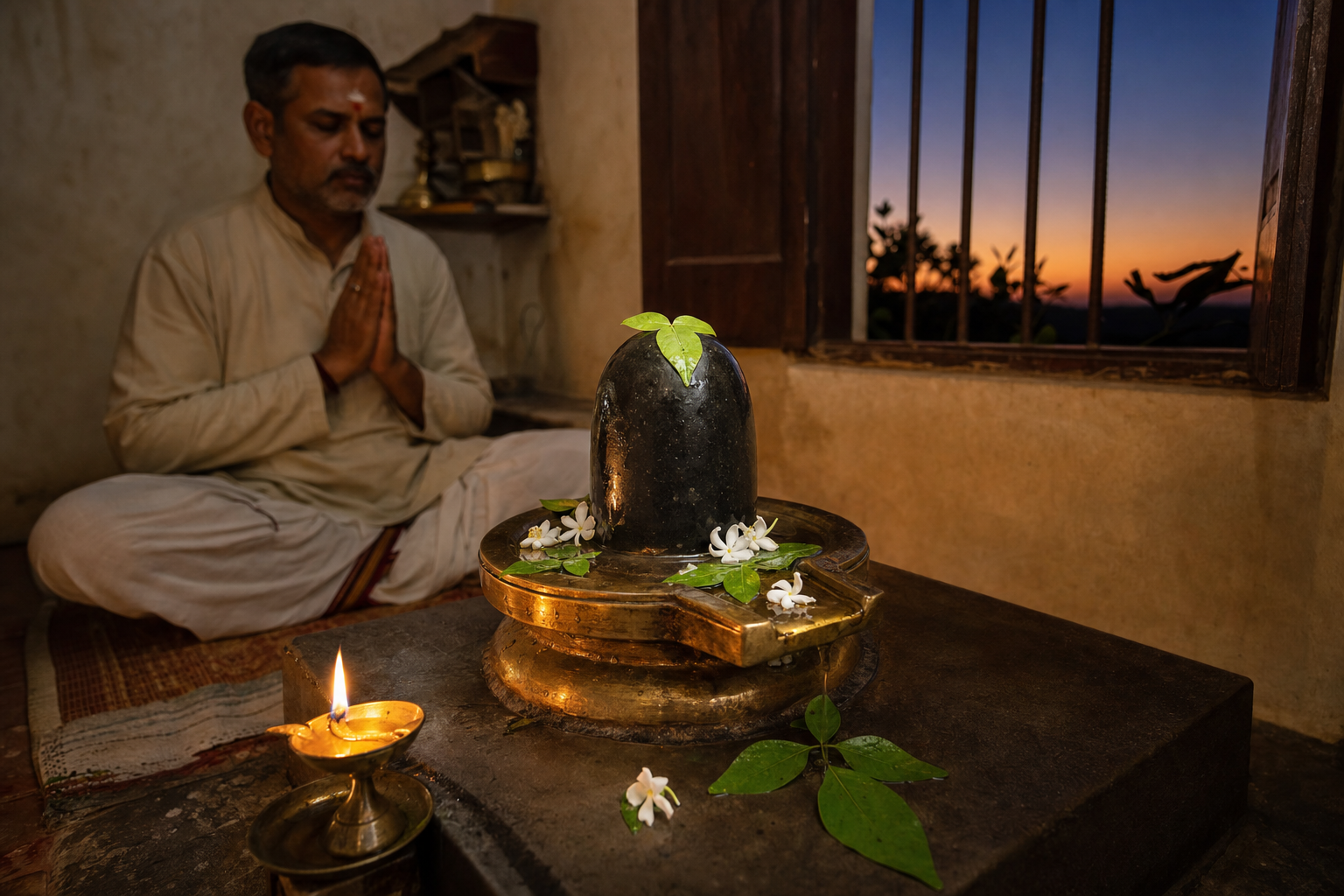
If your panchanga shows Trayodashi across two dates, you may wonder which evening actually belongs to Shiva Pradosha. Do not choose by the civil date alone. The correct observance is generally the local evening when Trayodashi tithi prevails during Pradosha-kala, the sacred twilight after sunset.
You do not need a temple-scale ceremony to keep that evening meaningfully. You need the right local time, a clear sankalpa, a form of fasting or restraint suited to your health, and worship that changes how you handle anger, fear, and resentment after the lamps are extinguished.
Start with the evening, not the civil date
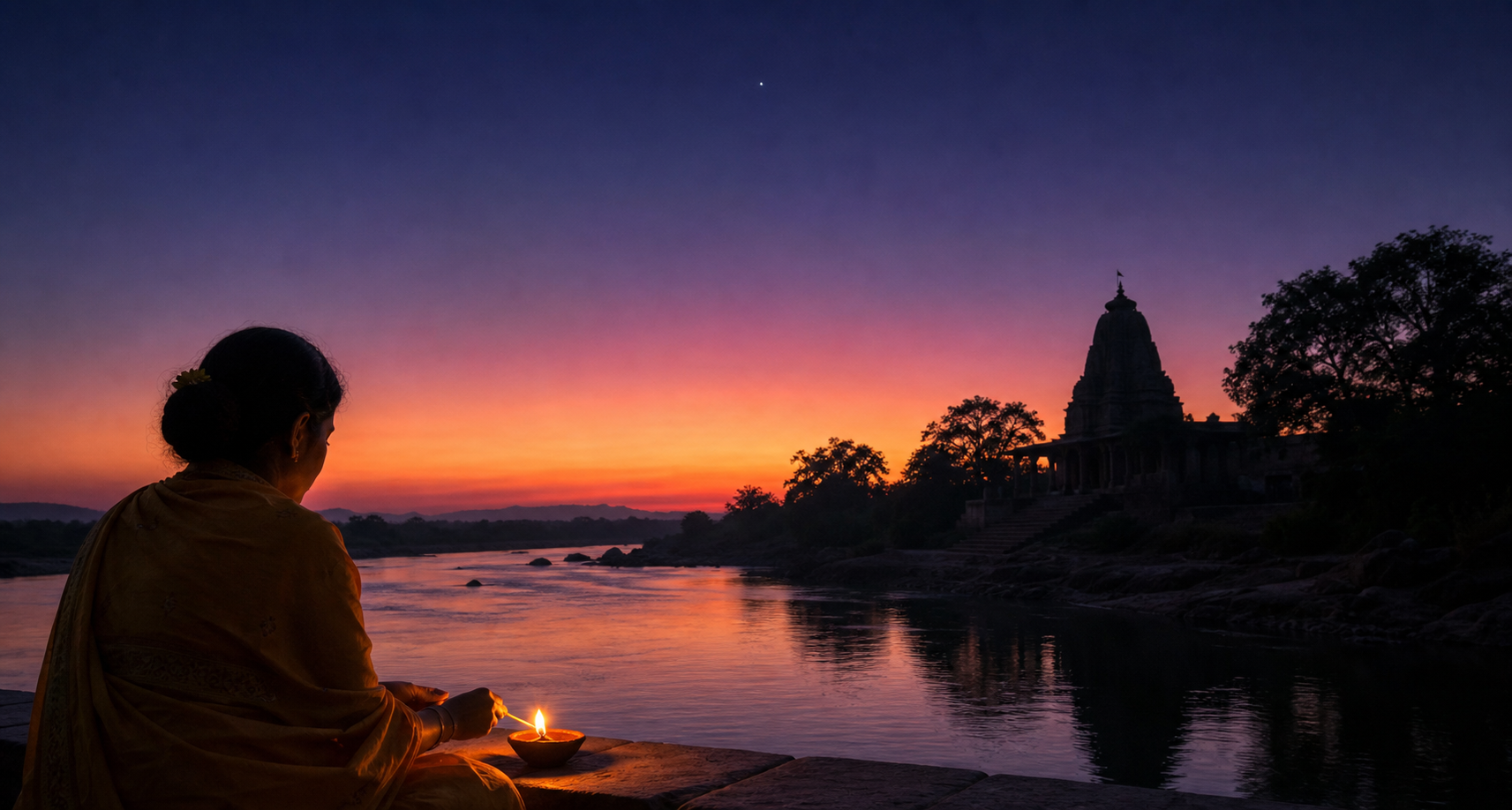
A tithi is not a fixed weekday or a midnight-to-midnight date. It is determined by the changing angular separation between the Sun and Moon. Each tithi covers another 12 degrees of separation, making Trayodashi the thirteenth step: 156 degrees in Shukla Paksha and 204 degrees in Krishna Paksha. Because that movement does not conform to civil dates, a tithi can begin or end at almost any clock time.
Pradosha-kala is the early-evening sandhya following sunset. It is commonly treated as a window of roughly 1.5 to 2 hours, but its local calculation varies with season and latitude. The essential condition is the conjunction of Trayodashi tithi and the local twilight window. That is why a calendar calculated for another city can give you the wrong observance date even when the date printed on it looks authoritative.
Use this decision process:
- Open a reliable panchanga configured for the city where you will worship, not merely for your country or time zone.
- Note the local sunset and the Pradosha-kala stated for that location.
- Check whether Trayodashi is active during that window. If it is, that evening is the normal day of observance.
- If Trayodashi touches the evening on two civil dates, read the panchanga’s observance note or follow the decision used by your local temple. Regional achara can determine the choice in such edge cases.
Both Shukla Paksha and Krishna Paksha Trayodashi can carry Pradosha worship. Do not confuse Krishna Paksha Trayodashi with Masik Shivaratri, which falls on Krishna Paksha Chaturdashi, the fourteenth tithi. In some homes the two observances form a continuous devotional arc from Trayodashi twilight into Chaturdashi night, but they remain distinct calendar moments.
Kartika Krishna Trayodashi also carries the identity of Dhantrayodashi or Dhanteras, associated with Dhanvantari and Yam Deep Daan. That observance does not erase the Shaiva significance of Trayodashi-Pradosha. It shows how one lunar date can carry related vows of protection, healing, and care for life.
What the memory of Halahala asks you to change
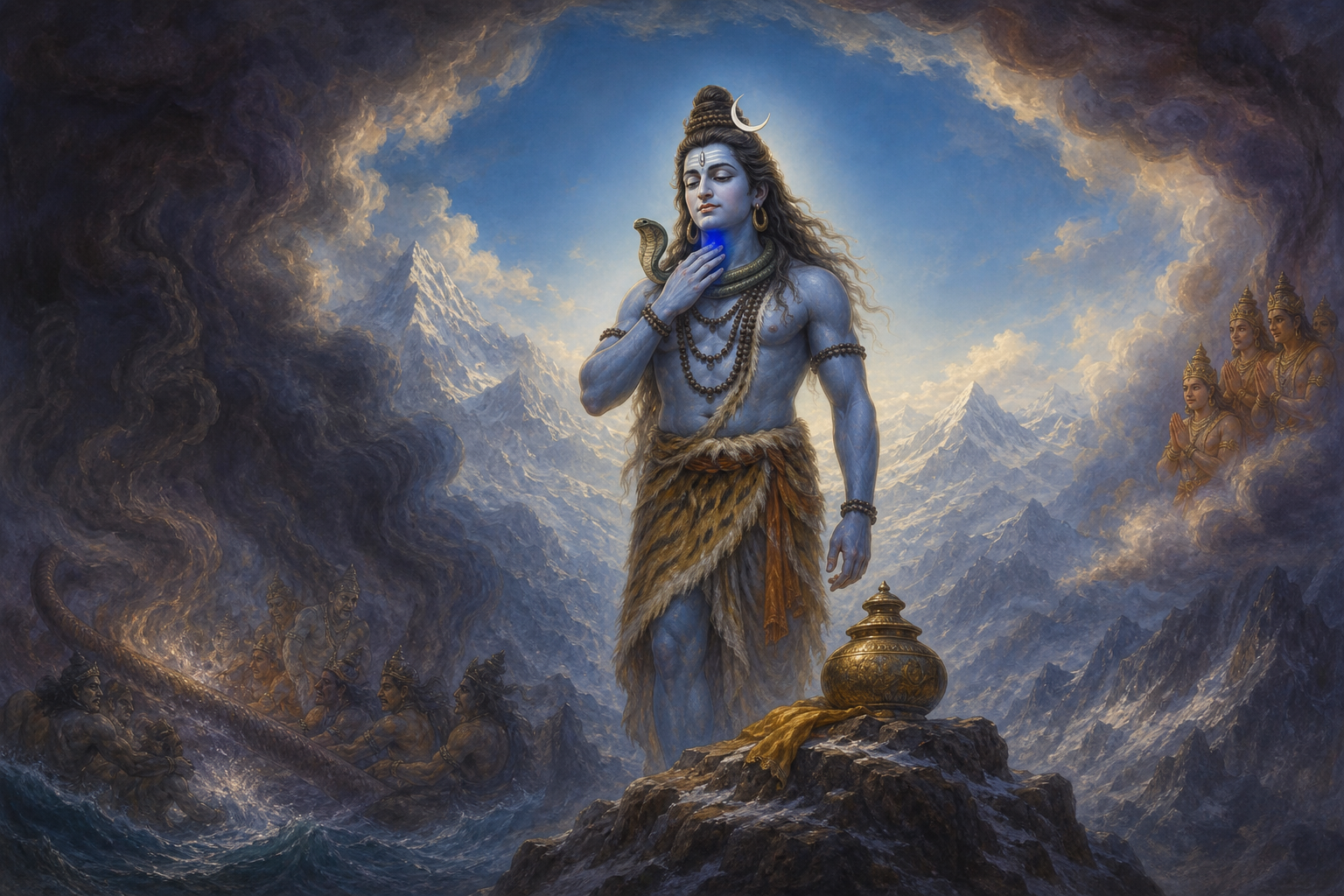
During Samudra Manthan, the Devas and Asuras churned the ocean in search of amrita. Before the nectar appeared, Halahala arose and placed the whole world in danger. Shiva received the poison and held it in his throat, becoming Nilakantha, the blue-throated Lord. The Devas then sought him and worshipped at twilight. The Skanda Purana and Shiva Purana preserve this connection between Shiva’s protection, Trayodashi, and Pradosha worship.
The lesson is more demanding than asking Shiva to remove difficulties. Shiva does not throw the poison back into creation. He contains it so that life can continue. Your vrata should therefore identify one form of Halahala that you have been passing to someone else: an angry response, a recurring grievance, fearful speech, or resentment carried into the household.
Before making your sankalpa, write down three things:
- The poison: Name the anger, fear, or resentment plainly, without disguising it as somebody else’s defect.
- The usual transmission: Notice what you do with it – send the harsh message, repeat the accusation, withdraw into hostility, or make another person carry your agitation.
- The dharmic response: Choose one action for the next fortnight, such as pausing before speech, offering a necessary apology, setting a calm boundary, or replacing complaint with responsible work.
Containment does not mean denying pain, tolerating abuse, or remaining in danger. Nilakantha is an image of refusing to spread poison, not an instruction to accept preventable harm. If a situation is unsafe, seek safety and appropriate help. Your spiritual discipline can govern your own response without excusing another person’s adharma.
A simple home Pradosha puja you can sustain
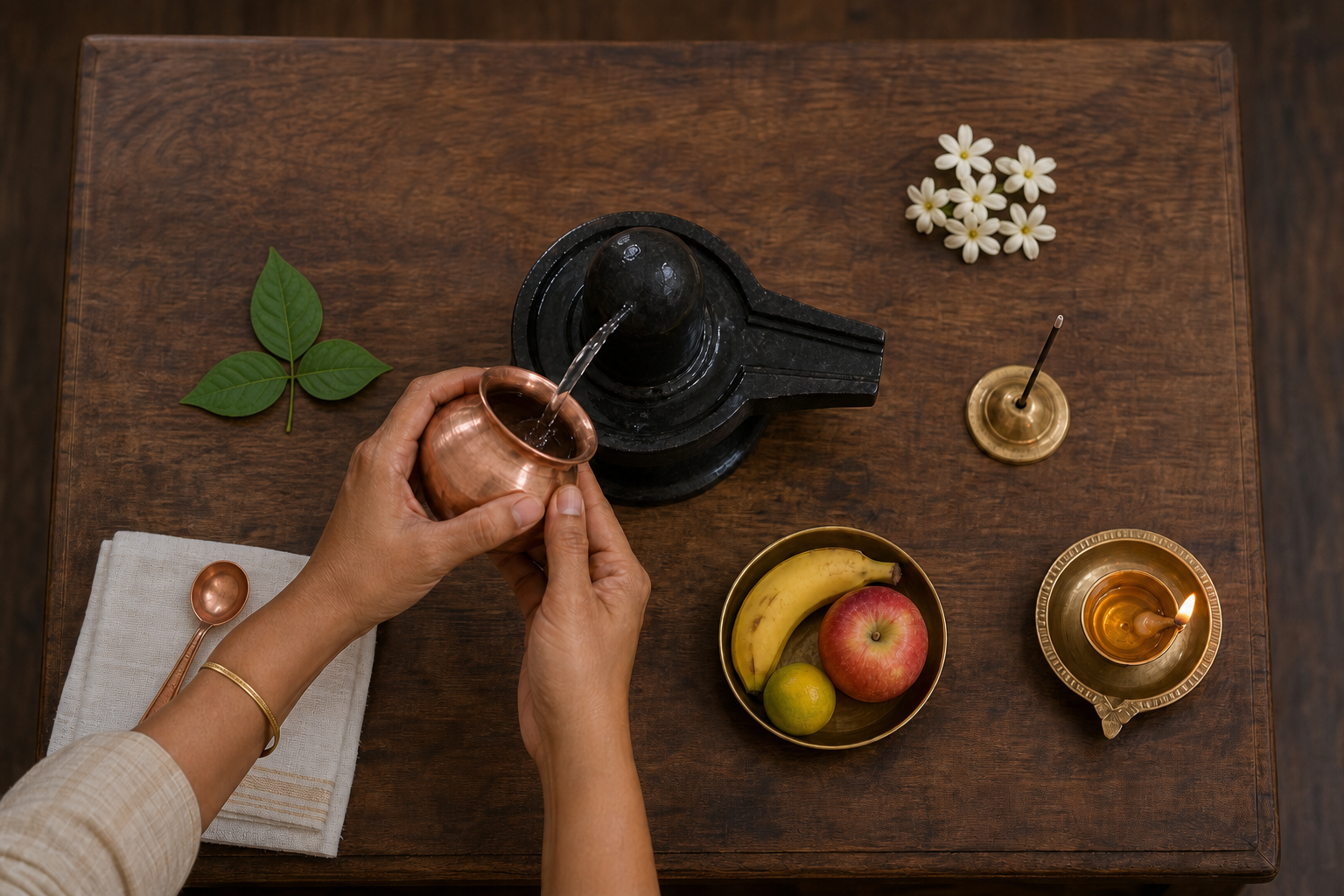
The most useful home observance is one you can repeat every fortnight without turning devotion into display. An elaborate collection of materials is secondary to timing, cleanliness, attention, and sankalpa. If your household tradition includes worship of a Shiva linga, you can perform abhisheka at home. If it does not, keep the practice simple with a lamp, prayer, mantra, and meditation, or attend a temple abhisheka.
Prepare before sunset
- Confirm the window: Record the local start and end of Pradosha-kala before the day becomes busy.
- Choose the vrata: Observe upavasa if that is already appropriate for you, or take simple sattvik food. Keep adequately hydrated and do not disregard health needs, medication instructions, or professional medical advice in order to complete a fast.
- Gather only what you will use: Pure water, a lamp, incense, fruit, vibhuti, and bilva leaves are sufficient for a focused observance. Panchamrita may be prepared from milk, curd, ghee, honey, and sugar when abhisheka is part of your practice.
- Set one sankalpa: Include the well-being of family, community, and the wider world, then name the personal habit you intend to restrain or transform.
Fasting is a support for attention, not a competition in endurance. If a complete fast would make you unwell or interfere with necessary treatment, choose sattvik food and place the discipline elsewhere: in speech, consumption, anger, or unnecessary distraction. A vrata loses its point when physical strain makes worship careless or causes harm.
Worship during Pradosha-kala
- Make the transition deliberate. Bathe in the evening, wear clean clothes, silence avoidable notifications, and enter the worship space without carrying ordinary conversation into it.
- State your sankalpa. Say whom the worship is for and what conduct you are offering to Shiva. Keep it specific enough to remember tomorrow.
- Light the lamp and incense. Sit for a few breaths before beginning. Pradosha is a threshold between the outward movement of day and the inward quiet of night; allow your attention to cross that threshold too.
- Perform abhisheka if it belongs to your home practice. Offer Panchamrita in modest quantities, followed by pure water. The final water bathing leaves the linga clean and completes the sequence.
- Offer vibhuti and bilva. Bilva leaves are preferably offered in trifoliate clusters. Their three leaflets are traditionally contemplated as the three gunas or as creation, preservation, and dissolution held in Shiva’s unity.
- Choose a recitation you can perform attentively. The Mahamrityunjaya mantra and Shiva Mahimna Stotra are widely used. Those trained in the relevant liturgy may recite Rudra Namakam and Chamakam.
- Offer fruit as naivedya. Let the offering remain simple. The value of the rite does not rise with the cost or number of items placed before the linga.
- End in silence. Sit with the image of Nilakantha and recall the action attached to your sankalpa. Carry that decision out of the worship space.
Some communities pair 108 bilva offerings with 108 Mahamrityunjaya recitations. This can be a powerful integrated practice when you have the time and steadiness to complete it. It is not a reason to rush through words, lose the twilight window, or conclude that a shorter sincere observance is worthless. Begin with the form you can maintain; deepen it through consistency.
At the temple, let Nandi teach you how to pray
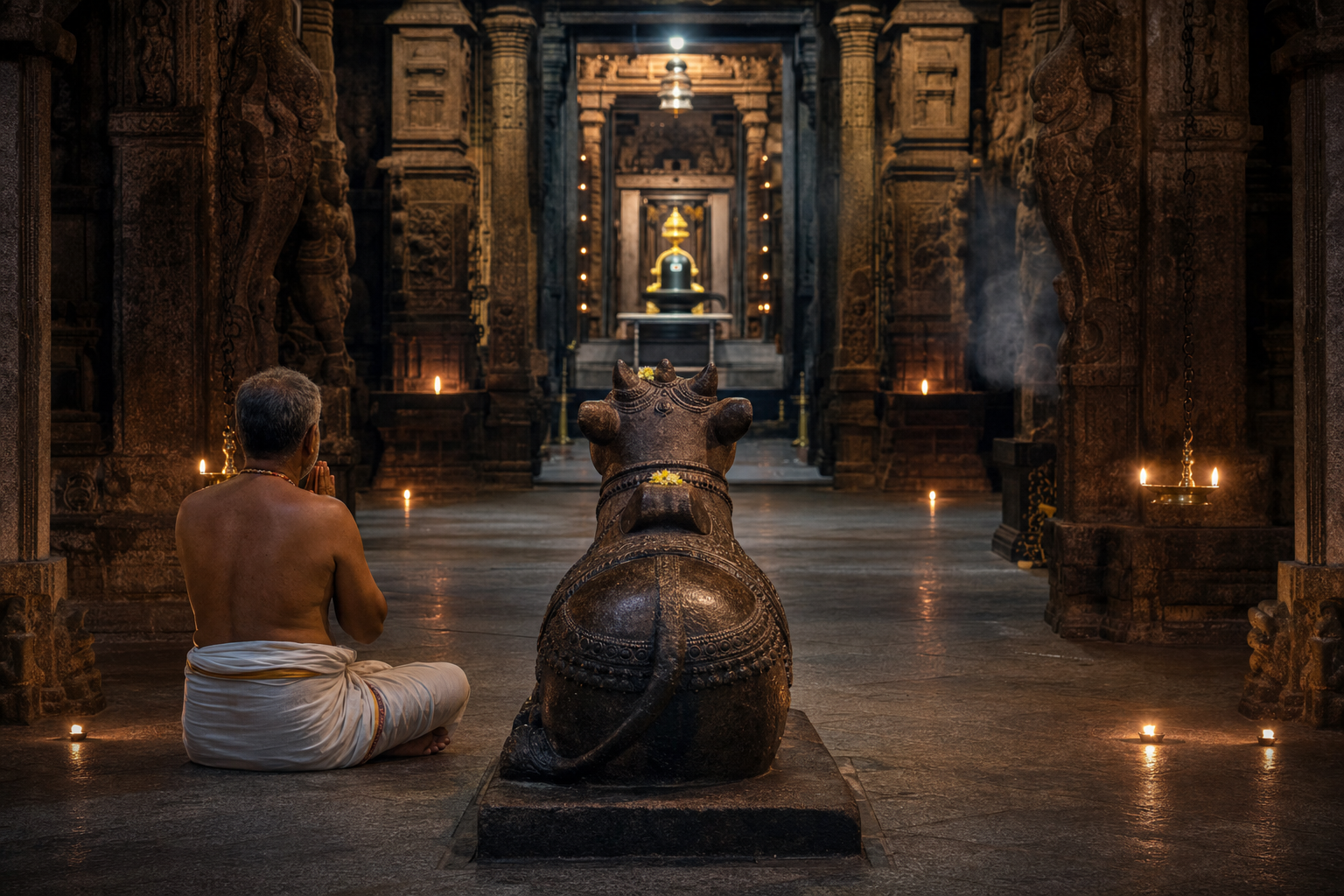
Temples often mark Pradosha with a special Shiva abhisheka, worship around Nandi, and darshana connected with Shiva as Nataraja. Devotional memory sees this as the hour of Shiva’s sacred dance, with Nandi attentive and the Devas gathered around. Arrive before the announced beginning if you want to witness the full sequence; the local temple’s schedule may also resolve any calendar ambiguity for that community.
A distinctive custom is to whisper a prayer into Nandi’s ear before taking darshana of the Shiva linga. Nandi represents unwavering devotion and an attentive mind. The gesture is most useful when it disciplines your intention: formulate one honest prayer, offer it humbly, and then stop rehearsing it anxiously. Follow the custom of the particular temple, especially where queues, circumambulation routes, or access to Nandi are regulated differently.
Do not treat Nandi as a shortcut around Shiva or the whisper as a mechanical guarantee. The movement from Nandi to the linga teaches a sequence: become still, direct the mind, entrust the prayer, and receive darshana without bargaining. What you do after leaving the temple remains part of that prayer.
Pradosha falling on Monday is commonly called Som Pradosh, while a Saturday occurrence is called Shani Pradosh. Regional practice may give these days additional emphasis, but the foundation does not change. Trayodashi twilight remains a time for remembering Shiva’s guardianship, purifying intention, and renewing dharmic conduct.
Key takeaways for your next Pradosha
- Use a panchanga calculated for your location and choose the evening when Trayodashi prevails during Pradosha-kala.
- Remember that both Shukla and Krishna Trayodashi can be Pradosha; Krishna Chaturdashi is the distinct observance of Masik Shivaratri.
- Keep the home rite workable: sankalpa, lamp, abhisheka where appropriate, vibhuti, bilva, mantra, naivedya, and silence.
- Choose upavasa or sattvik food according to your capacity, maintain hydration, and never use vrata to override genuine health needs.
- Treat 108 offerings or recitations as an optional discipline, not as the minimum price of Shiva’s grace.
- Complete the worship with one visible act of transformation: restrain harmful speech, make amends, set a dharmic boundary, or accept a responsibility you have been avoiding.
For the next Pradosha, set a reminder before sunset and write your sankalpa in one sentence. When anger or fear next rises, return to that sentence before you act. The true test of the evening is not how much you poured over the linga, but whether less poison passes through you into the world.
References
