

If you are trying to decide whether Narendra Modi’s decade truly transformed Bharat, or merely changed its political language, do not begin with a catalogue of schemes and speeches. Ask which old constraints stopped governing daily life, which reforms became too useful or too embedded to reverse, and which achievements still depend on one leader’s attention.
Our judgment is that the transformation is real, but uneven. Modi changed the expected speed, scale and civilizational direction of the Indian state. The decisive achievement was not any single policy. It was the creation of a new baseline: citizens now expect visible execution, strategic resolve and an Indian vocabulary of public duty. The unfinished work is to make that baseline institutional enough to survive bureaucratic resistance, political fragmentation and eventual changes of leadership.
Transformation begins when the exceptional becomes ordinary
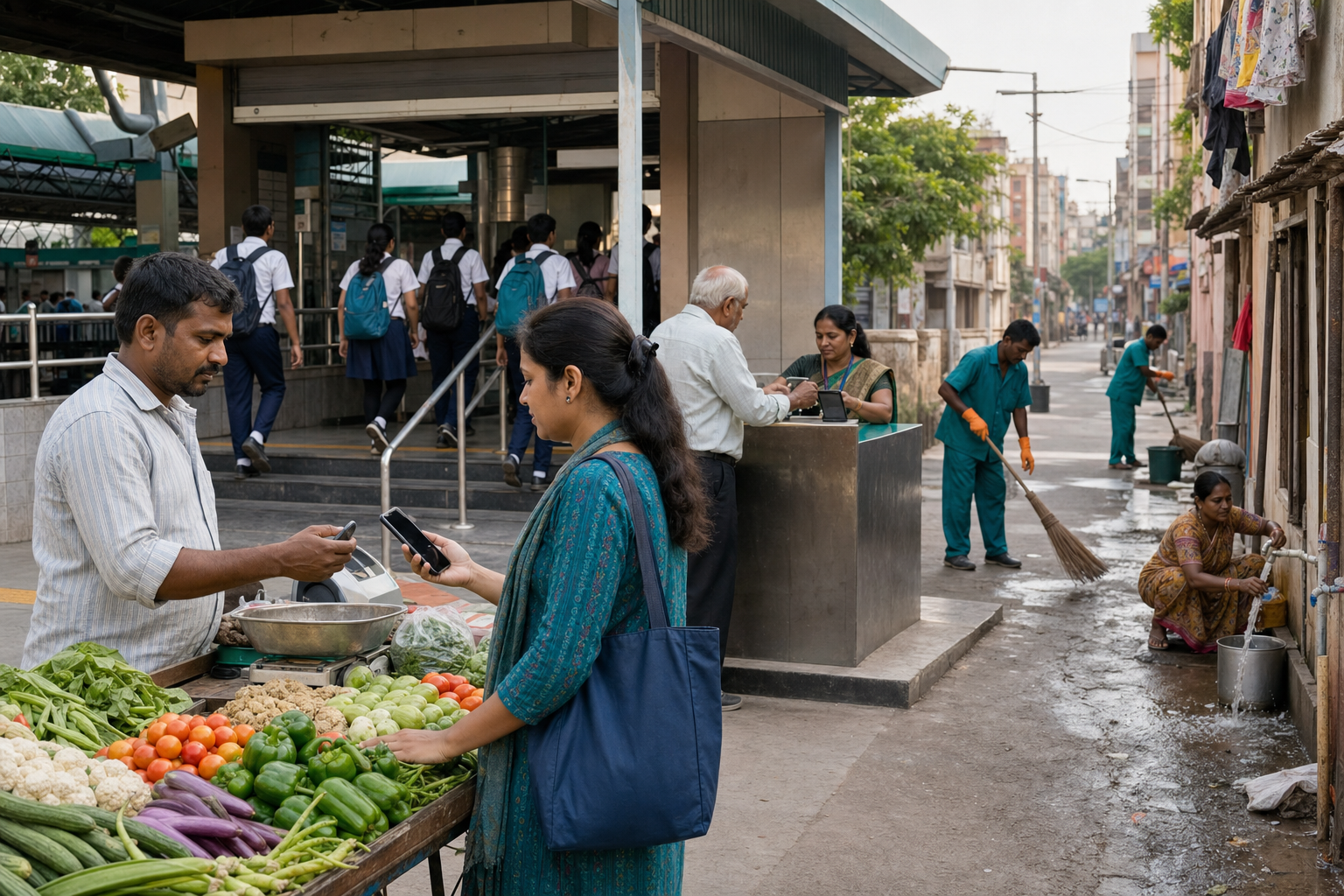
A government announcement tells you what its leaders want noticed. A new social baseline tells you what actually changed. The difference matters because the most consequential reforms often disappear into habit. Once a service becomes routine, people stop remembering the friction that preceded it.
UPI is the clearest example in this account of the Modi years. The striking point is not simply that a digital payment system was introduced. It is that the UPI revolution became ordinary before many Indians paused to interpret it as a political transformation. When a new public platform passes from novelty into expectation, future governments inherit it as part of the minimum standard of governance.
Mobility offers another way to notice the shift. A Chennai-to-Northeast journey once evoked the possibility of severe rail delays; the immediate availability of a Chennai-to-Dimapur flight search now represents a different horizon of practical choice. One example cannot establish the condition of every route or every traveller. It can, however, reveal how quickly an old limitation ceases to feel inevitable.
You can apply three tests to any claimed transformation. First, substitution: what slow, discretionary or broker-dependent practice no longer controls the task? Second, expectation: would citizens now regard the old standard as unacceptable? Third, reversibility: does the opposition seek to abolish the change, or merely alter its implementation? A reform that passes all three tests has changed the governing baseline rather than produced a temporary headline.
Digital delivery, fiscal reform and political spectacle are not the same achievement

Direct bank transfer, UPI, GST and demonetisation are frequently placed together as evidence of audacity and scale. They should not receive one combined score. They are different kinds of state action, with different mechanisms and different standards of success.
| Change | What kind of intervention it is | What you should examine |
|---|---|---|
| UPI | An everyday digital payment interface | Whether it became a dependable default rather than a novelty |
| Direct bank transfer | A delivery route between the state and an intended recipient | Whether it reduces avoidable intermediaries while providing correction when records are wrong |
| GST | A continuing fiscal and compliance architecture | Whether the system becomes stable, intelligible and governable over time |
| Demonetisation | A one-time monetary intervention | Whether its lasting results justify its disruption, assessed separately from later digital reforms |
This distinction prevents two common errors. Admirers sometimes transfer the evident everyday usefulness of UPI to every large decision made in the same period. Critics sometimes treat disagreement over one disruptive intervention as proof that the entire administrative transformation failed. Neither inference is sound.
Durability supplies a better measure. Direct transfer has become politically difficult to condemn, while arguments about GST concentrate on its details rather than a return to the previous order. That does not prove flawless implementation. It shows that the field of political argument has moved. Once competitors promise to improve an architecture instead of dismantling it, the architecture has acquired a life beyond its original sponsor.
When you judge this part of Modi’s record, therefore, ask a precise question: did the state merely announce a benefit, or did it alter the route by which the benefit, payment or obligation reaches the citizen? The second is harder, less theatrical and usually more durable.
Sovereignty must be scored on three separate ledgers
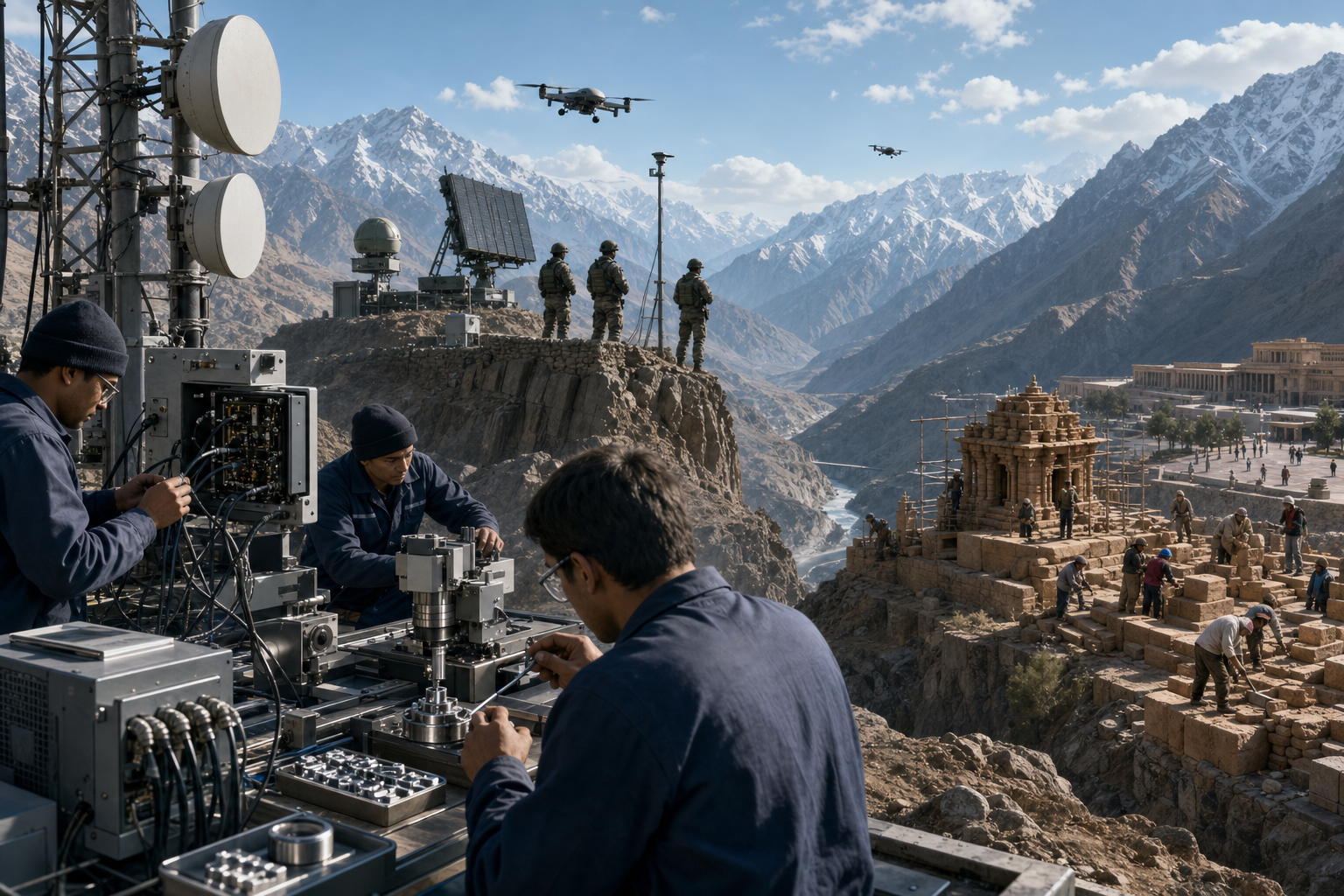
National security is where political loyalty most easily outruns careful judgment. Constitutional integration, internal security, border resolve and diplomatic influence all concern sovereignty, but progress in one does not automatically prove progress in the others. Score each ledger separately.
The first ledger is constitutional authority. The abolition of Article 370 was a structural act because it changed the legal relationship between Jammu and Kashmir and the Union. You may approve or oppose the decision, but it cannot be evaluated as though it were a temporary programme. The proper questions concern implementation, institutional integration and durability.
The second ledger is the state’s practical reach inside its own territory. Claims that Maoist terror was brought close to extinction require defined measures rather than celebratory adjectives. A more concrete sign is the return of functioning schools in Gadchiroli, once identified with Maoist control. Security has become meaningful when ordinary institutions can operate without armed groups deciding where the state may enter.
The same discipline should govern claims about terrorism. The contention that the former rhythm of jihadist attacks was broken after 2014 is important, but a broad claim about the end of a recurring six-week pattern needs clearly defined geography, attack type and time period. A serious pro-national assessment does not weaken the security case by demanding those definitions. It makes that case harder to dismiss.
The third ledger is external statecraft. The Modi era’s India-first posture is associated with efforts to reduce broker influence in defence, confront China at Galwan, narrow Pakistan’s diplomatic room and make the United States treat India as an autonomous power rather than a compliant partner. These are central elements of the transformation claimed for foreign and security policy, but they require different evidence. Military resolve is judged by preparedness and deterrence. Pakistan’s isolation must be checked country by country. Strategic autonomy is tested when a powerful partner applies pressure, not when interests happen to coincide.
Your security scorecard should therefore contain three columns: legal integration, restoration of ordinary civil administration, and freedom of external action. Do not allow a dramatic success in one column to conceal uncertainty in another.
From Vajpayee’s foundations to Modi’s politics of kartavya
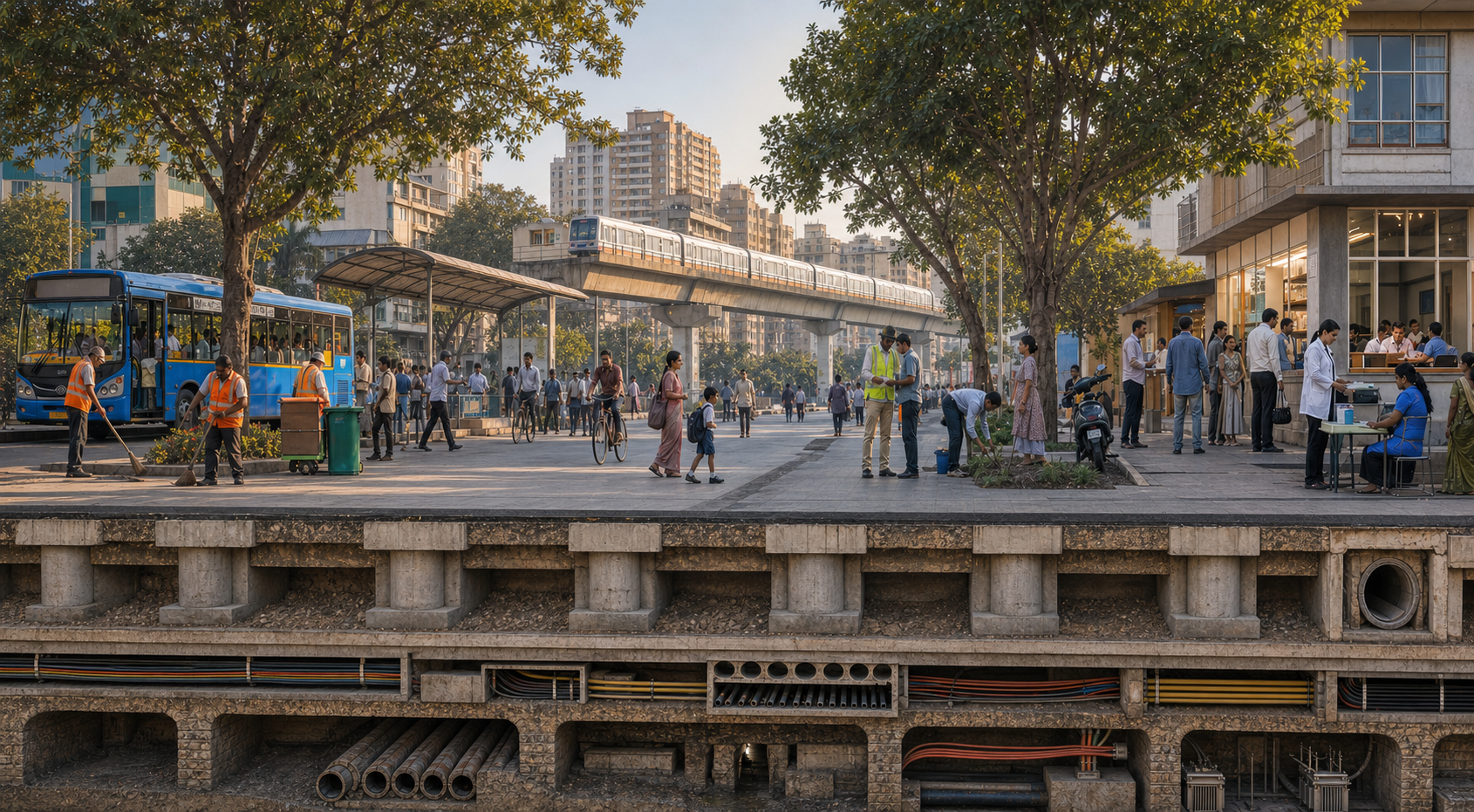
Modi did not begin on empty ground. Atal Bihari Vajpayee had already advanced the New Telecom Policy, the Golden Quadrilateral, banking and investment reforms, and a more imaginative foreign policy under difficult coalition conditions. Those initiatives prepared important foundations for the transformation that followed. Crediting that continuity does not diminish Modi. It helps identify what was inherited, what was accelerated and what was structurally recast.
One lesson drawn from the Vajpayee period was the importance of a parliamentary majority capable of sustaining a national programme. Modi used that political concentration to act with greater ambition and scale. The advantage is speed. The danger is that execution can become too closely identified with the authority of one person. The reduced Lok Sabha majority in the third term is therefore not merely a political inconvenience. It is a test of whether the new baseline has become institutional.
The language of kartavya expresses the civilizational dimension of this project. Rajpath became Kartavya Path, and the Central Secretariat’s new identity as Kartavya Bhavan was presented as a movement from the imperial vocabulary of rule toward the Dharmic vocabulary of duty. For a society whose civilizational grammar connects Dharma with obligation, the change carries meaning. It says that public office is not a private estate granted by the ruler; it is a burden accepted on behalf of the people.
But a Dharmic name is a promise, not proof. A dispute over open offices in Kartavya Bhavan makes the distinction visible. Officers defended private cabins in terms of confidentiality and critical thinking, while the reform challenged an older culture of personal administrative space. The conflict over the new office plan matters because it exposes the everyday privileges through which bureaucratic hierarchy reproduces itself.
You can test whether kartavya has moved beyond nomenclature by asking four practical questions. Does a citizen spend less time seeking routine approval? Is an official decision easier to trace to a responsible office? Has personal discretion narrowed where a clear rule would suffice? Can an ordinary person obtain correction without cultivating a patron? If the answer remains no, civilizational symbolism has run ahead of administrative Dharma.
This is also why corruption cannot be judged only by the scarcity of spectacular scandal headlines. The deeper objective is to remove the discretionary junctions at which access, contracts, information or public benefits can be privately traded. A quieter news cycle may indicate improvement, but only durable procedures can turn that improvement into a new state culture.
Key takeaways: a five-question scorecard for the next phase
- What became ordinary? Look for services and capabilities that citizens now treat as a minimum expectation, with UPI as the clearest example in this record.
- What became politically irreversible? A reform is durable when opponents debate its design instead of promising to abolish it.
- What restored state reach? Count functioning schools, reliable administration and enforceable law, not only security declarations.
- What converted symbolism into duty? Judge Kartavya by reduced privilege, clearer responsibility and easier citizen access, not by renaming alone.
- What can survive weaker political control? The third term’s reduced majority will show whether transformation belongs to institutions or remains dependent on Modi’s personal command.
To make your own assessment, create five rows on a page: daily public services, digital and fiscal architecture, internal security, constitutional sovereignty, and civilizational statecraft. For each row, record one verifiable before-and-after change, one unresolved cost or weakness, and one sign that the change can outlast its founding leader. Leave the score open wherever you cannot fill all three columns.
The fairest conclusion is neither that Bharat was remade completely nor that the decade amounted to branding. Modi altered the operating assumptions of the Indian state: execution should occur at national scale, sovereignty should not be apologetic, and public authority should speak the language of duty rather than inherited imperial prestige. Your task now is to demand that these assumptions become routine institutions. Support what has raised the national baseline, insist on evidence where claims are absolute, and refuse to treat the dysfunctions of the older order as normal.
References
