
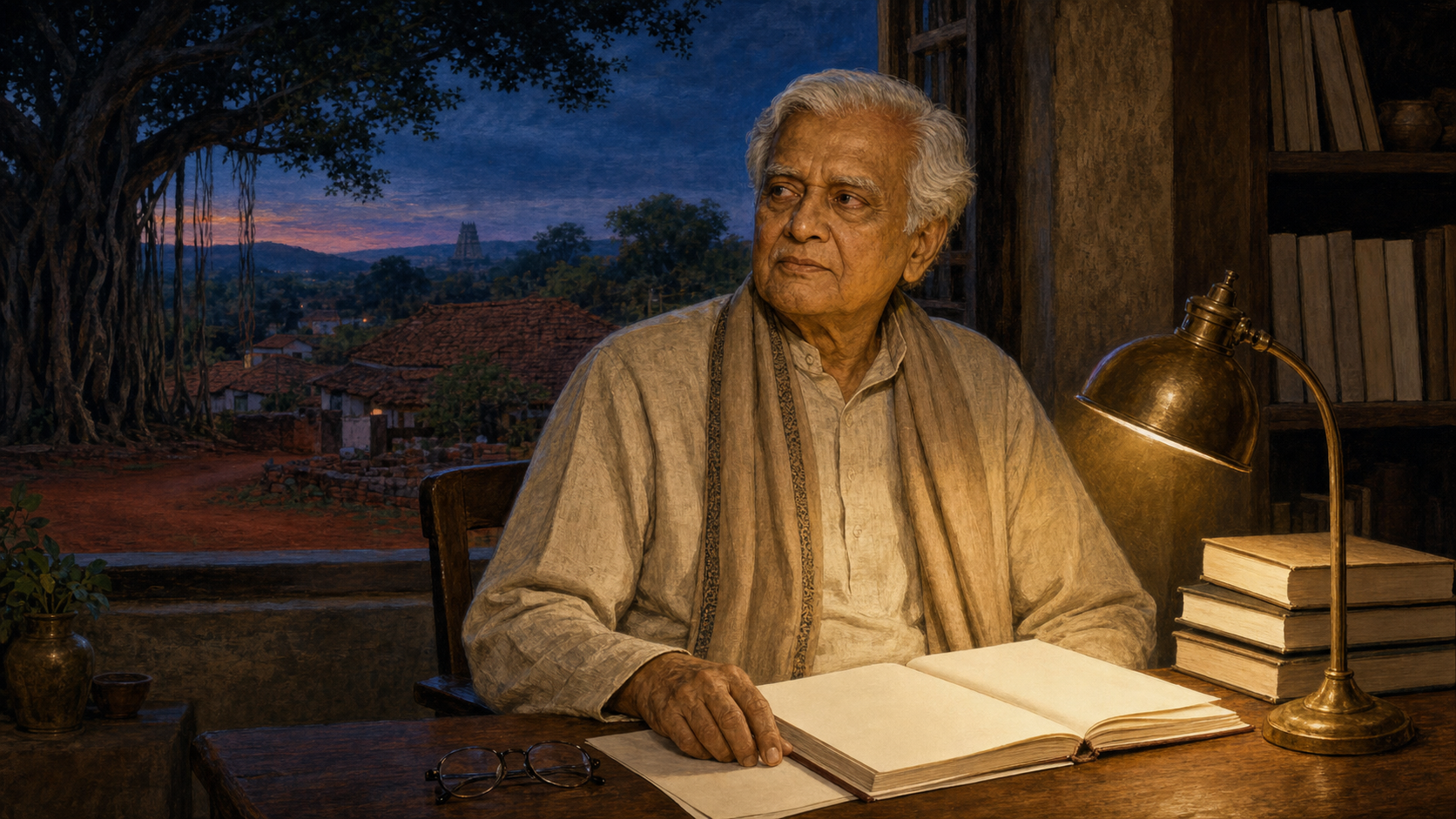
If you have just encountered S.L. Bhyrappa and want to know where to begin, a list of famous titles won’t help much. His life, his literary method and his civilizational imagination belong together. Read them in that order and the novels become far more legible.
Santeshivara Lingannaiah Bhyrappa lived from 20 August 1931 to 24 September 2025. He wrote in Kannada, but the scale of his concerns was Bharatiya: family, conscience, desire, social rupture, inherited memory, artistic discipline and the difficult work of recognising dharma in ordinary life. This is a guide to what made him important, what to notice in his fiction and which books to read first.
Key takeaways
- Bhyrappa’s language was Kannada, but his literary field extended across Bharat’s philosophical, social and civilizational life.
- His difficult early experiences entered his fiction as transformed material, not as an excuse for autobiographical self-display.
- His novels feel epic because inherited stories and symbols become active forces within modern moral decisions.
- A strong first reading sequence is Bhitti, Gruhabhanga, Tantu and Mandra.
The life that supplied the material, but not the verdict
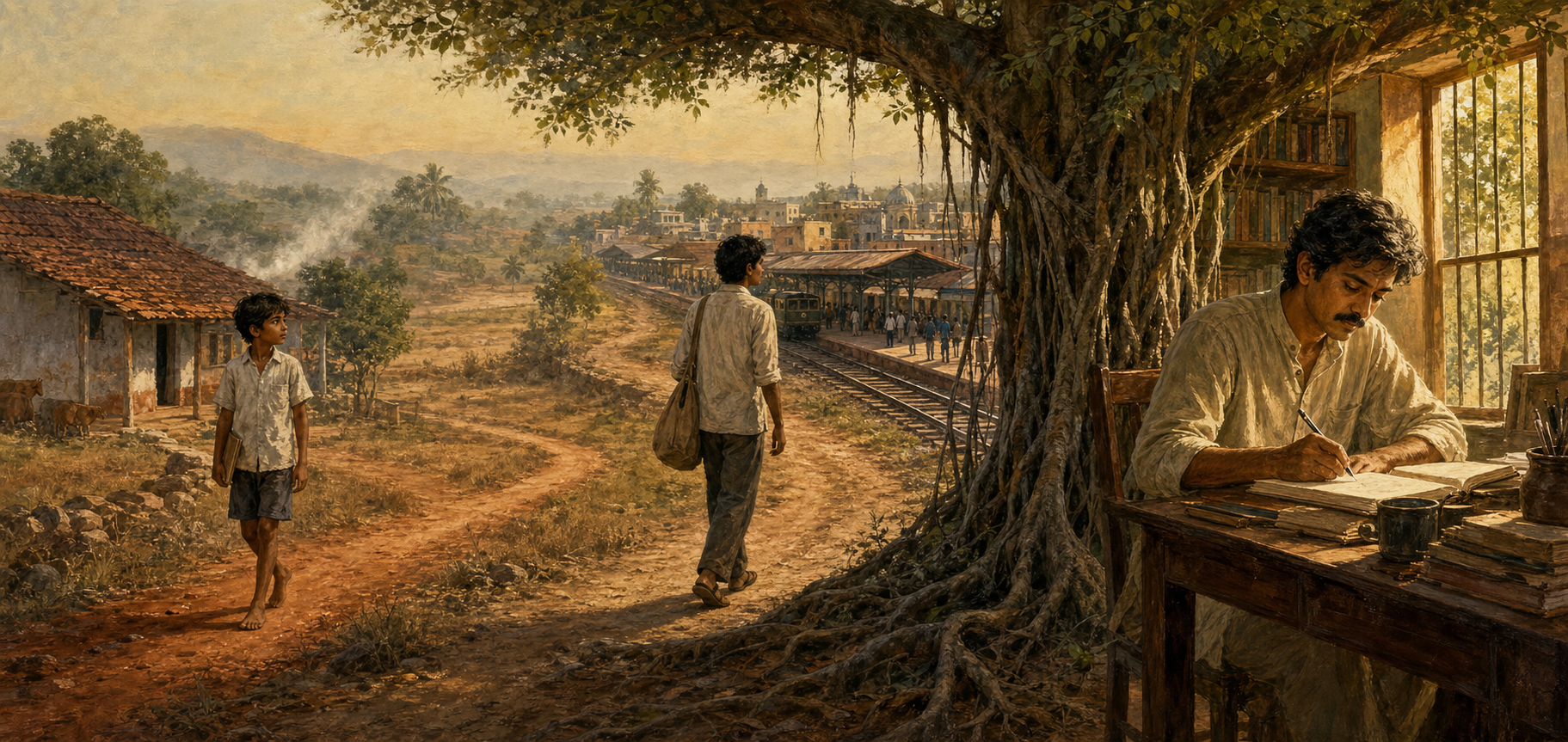
Bhyrappa came from Santeshivara, a village near Hassan. His childhood and adolescence were marked by severe hardship, later described in his autobiography Bhitti, meaning Foundation. His early novel Gruhabhanga, or Broken Home, gave fictional form to experiences from those formative years. The village remained part of his moral geography: he established a public library there and later helped rejuvenate its lake.
That sequence matters. Bhyrappa did not merely escape a painful beginning and then leave it behind. He returned to experience through memory, fiction and service to place. Yet you should resist using hardship as a master key that supposedly explains every later book. Biography tells you what formed the writer; it does not settle what the fiction means.
Read Bhitti and Gruhabhanga beside one another, but do not confuse them. An autobiography asks what happened and how a person remembers it. A novel asks what experience becomes after it has been redistributed among characters, conflicts, settings and consequences. The distinction protects the characters from being reduced to coded versions of real people.
Bhyrappa continued gathering experience after becoming an established novelist. Much of his travel was purposeful: he sought the feel of a location, its rhythms, its time and its local atmosphere. That knowledge entered works including Gruhabhanga, Matadaana, Daatu, Jalapaata, Tabbaliyu Neenaade Magane and Saakshi. Just as important, he used observed experience without continually stepping in to announce a verdict.
You can turn that method into a reading practice. When a physical detail catches your attention – a place, gesture, household object or social custom – ask what it makes possible in the scene. Does it expose a character, constrain a decision or intensify a relationship? Then ask whether the narration is judging the person or allowing actions to produce their own judgment. This keeps you close to Bhyrappa’s craft instead of treating the novel as a container of opinions.
Why his modern novels possess an epic quality
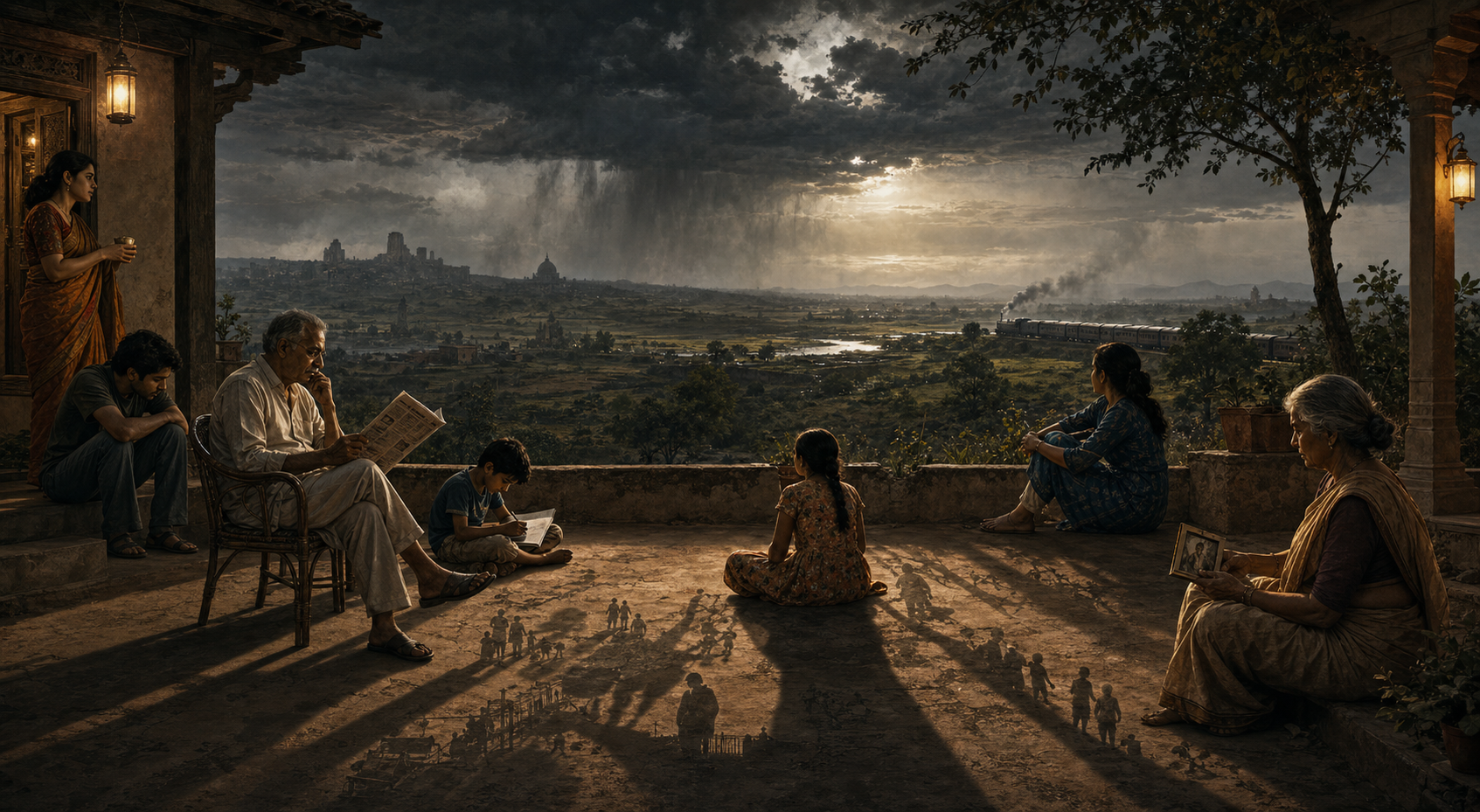
Calling Bhyrappa an epic novelist does not merely mean that his books are large, serious or populated by many characters. Epic quality appears when a character becomes more than an isolated psychological case. The person also becomes an idiom through which a civilization recognises loyalty, betrayal, desire, sacrifice, vanity, truth or disorder.
This is how Rama, Sita, Lakshmana, Vali, Ravana, Krishna, Duryodhana and Shakuni continue to function within Bharatiya memory. They are not sealed inside old narratives. Their names carry patterns of conduct and relationship into new situations. Bhyrappa could activate that civilizational memory because his imagination was grounded in the Ramayana, Mahabharata, Puranas and Vedanta, while his study of philosophy and aesthetics and his love of Hindustani music broadened his artistic equipment.
This grounding does not make the novels sermons. Dharma becomes dramatically convincing only when it has to pass through appetite, self-deception, family obligation, social pressure and irreversible choice. While reading, test a major decision with three questions:
- Which immediate impulse is moving the character?
- Which inherited story, symbol or moral pattern changes how the character sees that impulse?
- Which relationship or duty becomes impossible to ignore after that recognition?
Tantu: inherited memory becomes conscience
Scene note: this discussion reveals a decisive moment from Tantu.
In the 1993 novel, Hemant Honnatti sits on the steps of Harishchandra Ghat in Kashi, watches funeral pyres and reflects on his affair with the wife of a close friend. The climax of the Satya Harishchandra story enters his mind. Chandramati has arrived with the body of her son and cannot pay for the cremation. Harishchandra, who does not initially recognise his long-separated wife, sees the mangalsutra that only her husband should be able to see. Recognition breaks through duty, suffering and apparent estrangement. Hemant then makes an irrevocable decision to end the affair.
The older story is not decorative background. It becomes the instrument by which a modern man sees his own conduct. No divine command drops into the scene, and no abstract lecture is required. A living cultural memory rearranges perception; once Hemant sees differently, he can no longer pretend that his conduct is morally neutral.
When you read this episode, do not stop at whether you approve of the final decision. Ask exactly why the memory of Harishchandra succeeds where private rationalisation had failed. That question takes you to the centre of Bhyrappa’s epic method: the inherited narrative survives because it can still disclose the moral structure of a present relationship.
Mandra: mastery reaches fulfilment in surrender
Mandra, published in 2002, demonstrates another side of Bhyrappa’s imagination. In a meditation on an accomplished Hindustani musician’s alaap, artistic excellence is described as something more than personal display:
“The Raag has chosen his throat to reveal itself in its purest element.”
S.L. Bhyrappa, Mandra, in a loose English translation
The singer’s command across the octaves has not disappeared; surrender is possible because discipline has made the voice capable of carrying the raga. Mastery and self-effacement are therefore not opposites. Technique is brought to such maturity that the artist no longer seems to obstruct the form being revealed.
This gives you another way to recognise the epic in Bhyrappa. It does not always arrive as an explicit recollection of an ancient story. It can appear as a Bharatiya understanding of art, discipline and the human being as a vehicle for something greater than ego. While reading Mandra, track three distinct things: technical accomplishment, the artist’s self-image and those moments when the art seems to exceed its performer. The distance between those three is where much of the novel’s philosophical force becomes visible.
A four-book route into Bhyrappa’s world
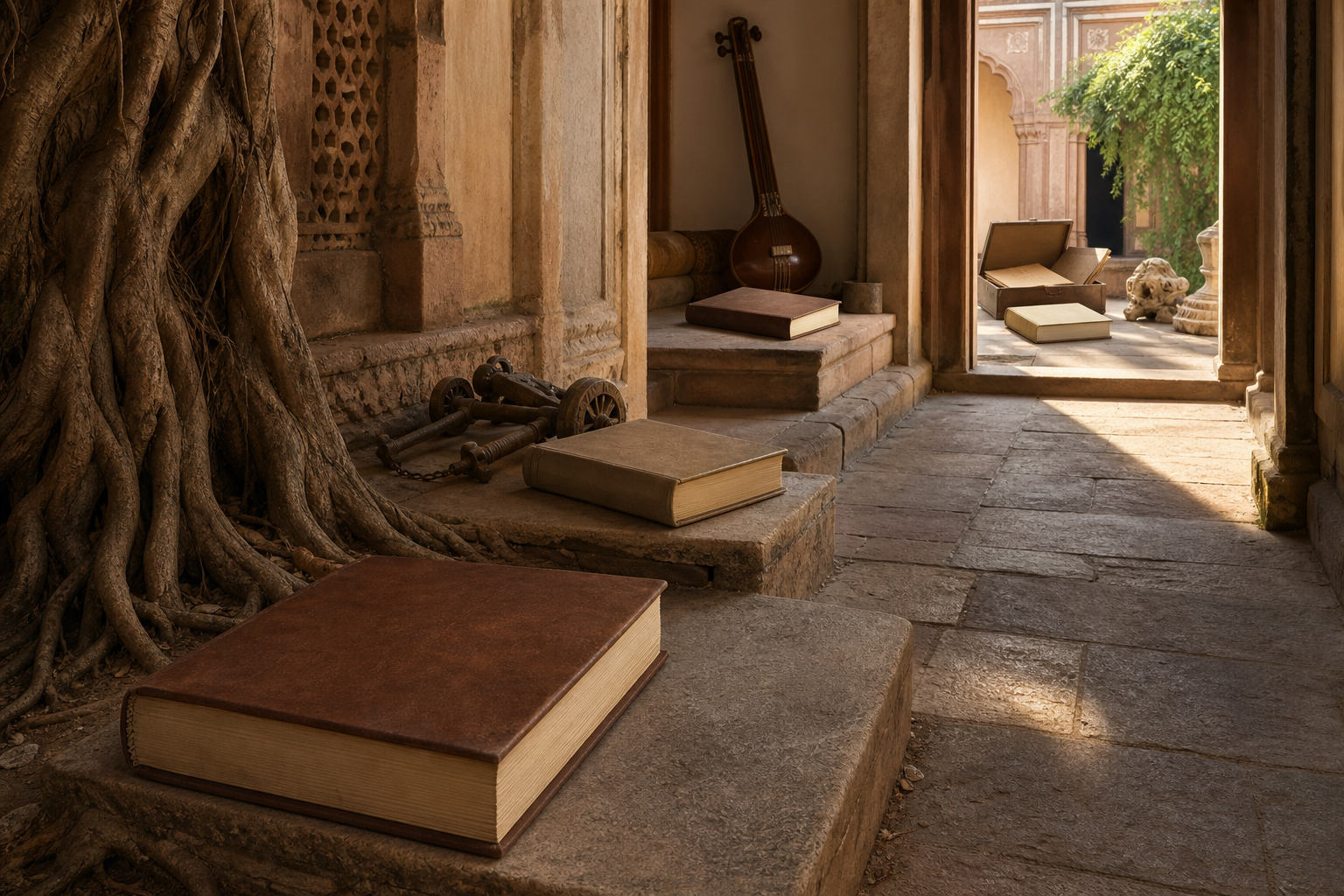
You do not need to approach Bhyrappa through an exhaustive bibliography. Use a sequence that teaches you how to read him:
- Begin with Bhitti for the human foundation. Read it to understand the severity of his formative experiences, the will required to outgrow them and the difference between remembering a life and turning it into literature.
- Move to Gruhabhanga for transformation through fiction. Notice what the novel can do that autobiography cannot: distribute experience across a household, give competing impulses their own force and allow consequence to emerge without constant authorial intervention.
- Read Tantu for the epic mechanism. Watch for moments when a civilizational story becomes active inside a contemporary choice. Do not treat references to inherited narratives as ornaments; ask what they enable a character to recognise.
- Read Mandra for aesthetics and disciplined inwardness. Slow down when the prose turns to music. Plot alone will not show you how Bhyrappa understands mastery, surrender and the danger of ego within artistic life.
Keep a small reading record after each substantial section. Write down one relationship under strain, one choice that cannot be reversed and one inherited image or value that changes the meaning of the choice. This is more useful than collecting quotations because it reveals the architecture joining character, culture and consequence.
If you already know Bhyrappa’s life, begin with Gruhabhanga. If music is your main doorway, you can begin with Mandra, but circle back to Bhitti before deciding what kind of writer he was. Once you recognise his method, continue with Matadaana, Daatu, Jalapaata, Tabbaliyu Neenaade Magane and Saakshi, paying particular attention to how local atmosphere acquires moral weight.
A legacy to be read, not reduced to a slogan
Bhyrappa’s independence is central to his legacy. He followed convictions he had tested through experience, philosophy and sustained artistic labour. That makes it tempting for admirers to turn him into a convenient emblem. Doing so would shrink the very achievement they want to honour.
A pro-Dharma reading should be demanding enough to preserve the novels’ freedom. Sanatana civilization supplied Bhyrappa with living forms of recognition, but a living tradition is not a bundle of approved conclusions. It asks whether inherited truth can survive contact with desire, weakness, social change and self-deception. The characters matter because those pressures are allowed to become real.
That helps explain why four generations of Kannada readers could recognise his characters as if they were relatives, acquaintances or colleagues. Some characters inspired intense dislike as well. Both reactions show that Bhyrappa created people who entered the reader’s moral vocabulary rather than remaining remote literary constructions.
His bond with Santeshivara offers the practical counterpart to that literary achievement. The public library and rejuvenated lake made cultural debt concrete. A writer can return memory to a place as books, institutions and renewed commons. Readers can continue that movement on a smaller scale: place one Bhyrappa title in a local reading circle, discuss one decisive scene without reducing it to a political label and help a younger reader see how an inherited story can illuminate a present choice.
If you want to meet Bhyrappa rather than merely possess an opinion about him, choose your doorway now. Begin with Bhitti if you need the life behind the work, or Gruhabhanga if you want the fiction to speak first. Read slowly enough for experience, dharma and consequence to remain connected.
References
