
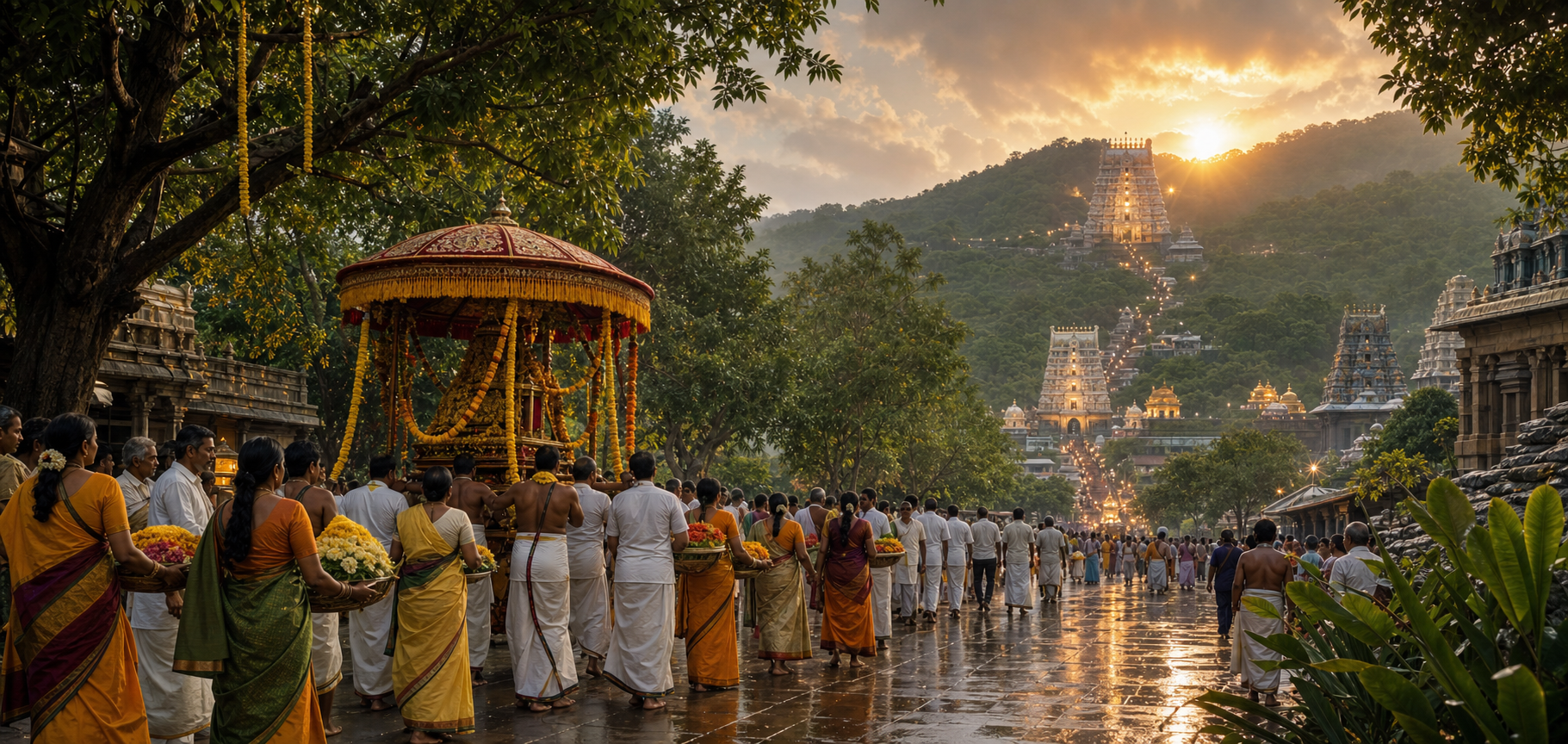
If June 2026 is your opportunity for Sri Venkateswara darshan, your first decision is not simply which temple to visit. Two distinct observances fall almost back to back: a six-day Brahmotsavam in central Hyderabad and a three-morning abhisheka festival at Tirumala. The right choice depends on whether you want public processions and community worship, a concentrated Tirumala ritual, or a carefully paced journey that includes both.
The calendar makes a two-temple pilgrimage possible without overlapping the principal dates. Himayat Nagar concludes on 24 June, 25 June can remain a transfer and rest day, and Tirumala begins on 26 June. The date ranges are firm enough for initial planning, but detailed timings, admission arrangements, and the placement of individual sevas should be confirmed through TTD communications closer to the festivals.
The June calendar at a glance
The month’s two Venkateswara festivals serve different devotional purposes. The Himayat Nagar Brahmotsavam runs from 19 to 24 June 2026, while Tirumala Jyeshtabhishekam runs from 26 to 28 June 2026. Use the following outline to reserve days without assuming that an unconfirmed seva will occur at a particular hour.
| Date | Place | Principal observance | Planning consequence |
|---|---|---|---|
| 19 June | Sri Venkateswara Swamy Temple, Himayat Nagar, Hyderabad | Ankurarpanam begins the 20th annual Brahmotsavam. | Attend if you want to witness the quiet ritual preparation that precedes the public celebrations. |
| 19-24 June | Himayat Nagar | The festival arc includes Dhwajarohanam, Vahana Sevas, Sri Vari Shanti Kalyanam, Rathotsavam and Snapana Tirumanjanam. | Do not assign these rites to specific days until the temple issues its detailed programme. |
| 24 June | Himayat Nagar | Chakrasnanam, Pushpayagam and Dhwajavarohanam bring the Brahmotsavam to its ritual close. | Protect the final day in your itinerary if completion of the full festival arc matters to you. |
| 25 June | Between the two destinations | Transfer and buffer day for pilgrims attending both festivals. | Leave it uncommitted rather than attaching a tight sightseeing plan or a fragile connection to it. |
| 26-28 June | Tirumala | Jyeshtabhishekam, or Srivari Abhideyaka Abhishekam, is performed across three mornings. | Arrange travel and accommodation around morning access, not merely around the calendar date. |
The distinction between a confirmed festival range and a final operating schedule matters. Garuda Seva, for example, is a beloved feature typically associated with TTD-led Brahmotsavams, but its precise placement at Himayat Nagar must still be checked. Likewise, being in Tirumala on a Jyeshtabhishekam date does not by itself establish where you will stand, how long you will wait, or which view of the ceremony your access permits.
Three questions that settle which festival to attend
Which festival suits a family seeking an accessible community celebration?
Choose Himayat Nagar if your priority is a public, varied and intergenerational festival in Hyderabad. Vahana processions, alankara, collective chanting and Rathotsavam give children and first-time visitors several visible ways to understand how temple worship extends beyond the sanctum. The central-city location also makes a shorter visit more practical for families who cannot undertake a Tirumala pilgrimage.
Which festival suits someone drawn specifically to abhisheka and Agamic ritual?
Choose Tirumala if your central interest is the ceremonial care of Malayappa Swamy, Sridevi and Bhudevi. Jyeshtabhishekam is focused rather than processional: the Utsava Murthis undergo Snapana Tirumanjanam, their protective golden armour is purified and ritually renewed, and the deities are re-adorned. It is especially meaningful if you want to observe how mantra, sacred substances, kavacha and alankara function together in the Vaikhanasa tradition.
Can you attend both without turning the pilgrimage into a rush?
Yes, provided you treat 25 June as a real buffer. The Himayat Nagar conclusion on 24 June and the Tirumala opening on 26 June leave one intervening day. That is enough to separate the two festival blocks on paper, but it should not be treated as permission to build an inflexible chain of transport, sightseeing and check-in commitments. If morning access at Tirumala is important, complete your transfer and settle your accommodation before that morning begins.
How to attend the Himayat Nagar Brahmotsavam well
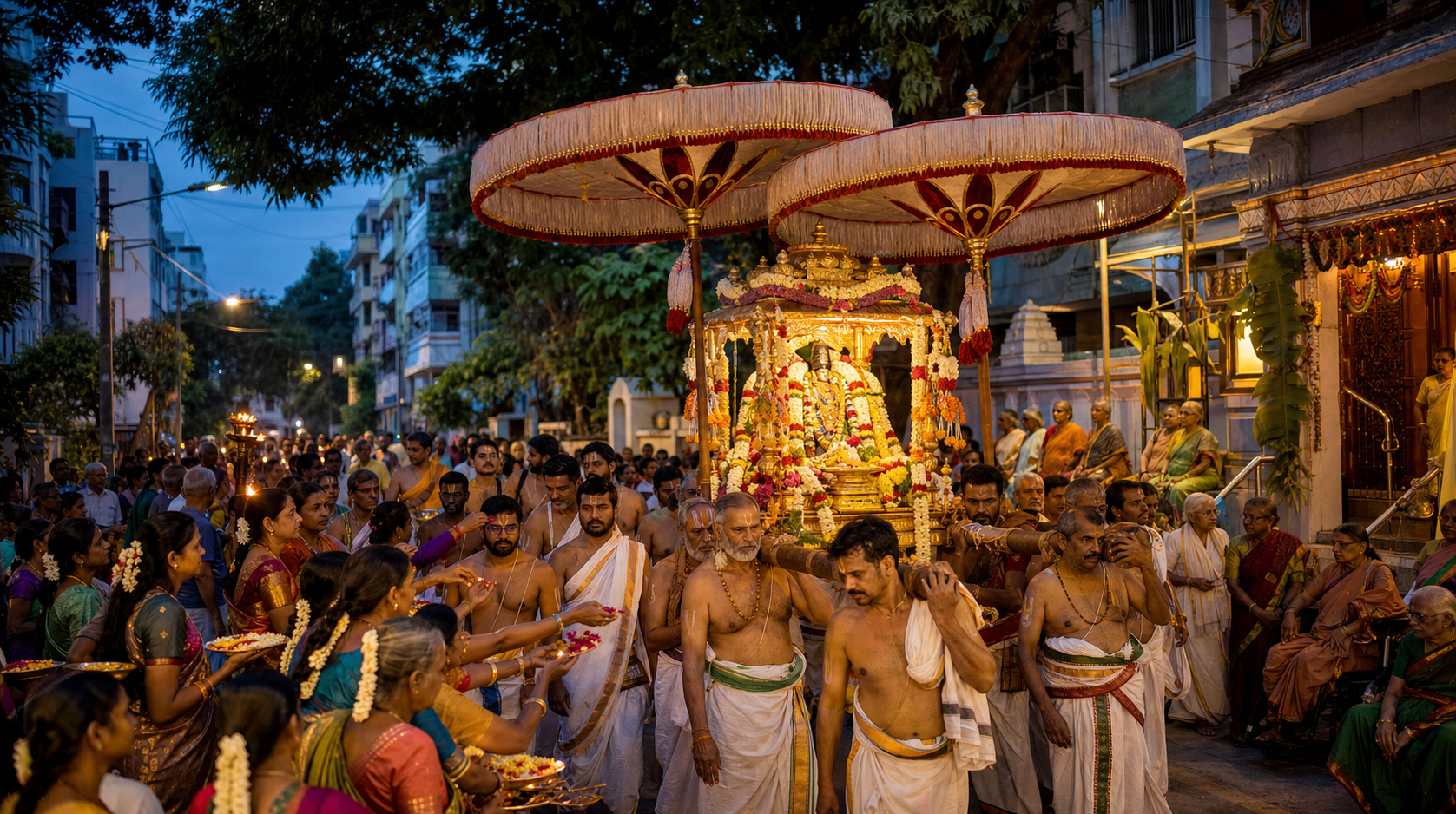
A Brahmotsavam has a deliberate arc. Ankurarpanam begins by sowing sacred seeds after sankalpa, making growth and auspiciousness part of the festival’s ritual foundation. Dhwajarohanam then formally proclaims the celebration through the raising of the sacred flag, traditionally marked with Garuda. Notice the progression: preparation comes before proclamation, and invocation comes before the Lord’s public movement.
The middle of the festival brings the Utsava Murti into a more visibly communal relationship with devotees. Each vahana gives philosophical form to a quality such as compassion, courage, wisdom or majesty. Rathotsavam makes the same principle physical: the chariot moves because worshippers participate in a shared undertaking. If you attend only for spectacle, you will see decoration and motion. If you watch the symbols, you will see a lesson about how divine grace moves from the sanctum into civic life.
Sri Vari Shanti Kalyanam directs prayer toward peace and balance through mantra and homa. Snapana Tirumanjanam renders sacred care through panchamrita and aromatic substances. These observances are quieter than a major procession, but they often make the festival’s inner logic easier to grasp: celebration is sustained by disciplined service, not display alone.
The final day deserves special attention. Chakrasnanam ceremonially immerses the Sudarshana Chakra in sanctified water and marks purification at the end of the utsava cycle. Pushpayagam offers an abundance of flowers, turning colour, fragrance and touch into worship. Dhwajavarohanam lowers the festival flag and closes the period formally. If you want to experience Brahmotsavam as a complete ritual movement rather than a collection of attractive events, 24 June is not an optional afterthought.
- Choose your priority before arriving. Decide whether you most want an opening rite, a Vahana Seva, Rathotsavam or the concluding observances. That decision will be more useful than attempting to remain near the temple for every possible event.
- Arrive early for a procession. Proximity becomes harder once crowds gather, and an early arrival gives your group time to understand entry and viewing arrangements without pushing through other devotees.
- Reduce dependence on a private vehicle near the temple. Public transport or a ride-share drop-off followed by a short walk can reduce congestion around this central Hyderabad location.
- Plan around the least mobile person in your group. Elders and young children may be better served by mid-morning or late-evening visits than by prolonged exposure to June’s midday heat.
- Carry only what temple security permits. Hydration and sun protection matter, but check rules before bringing a reusable bottle, offerings, a camera or other items into the temple zone.
- Keep phones unobtrusive and follow photography instructions. Queue discipline, attention to volunteers and space for archakas to perform their duties are forms of seva, not merely crowd-management rules.
- Use designated systems for annadanam, flowers and waste. Do not leave plastic or improvised offerings near the temple simply because the area is crowded.
Families can make the visit more meaningful by giving children one symbol to follow rather than explaining everything at once. Ask them to notice Garuda on the flag, identify the vahana, or observe how the mood changes between procession and abhisheka. A single concrete observation is more likely to become remembered tradition than a stream of hurried explanations.
What to notice during Jyeshtabhishekam at Tirumala
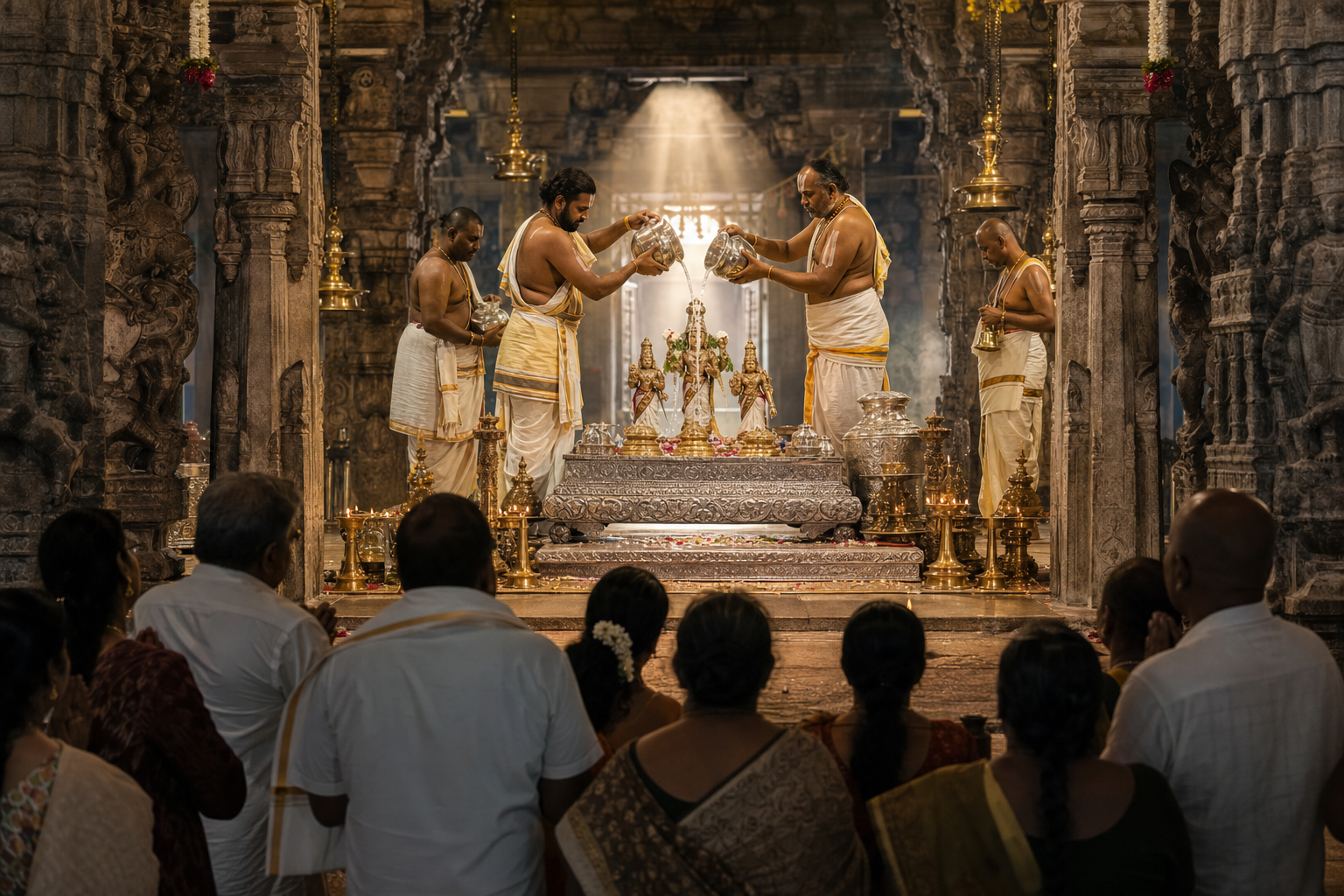
Jyeshtabhishekam is aligned with Jyeshta Nakshatra in the lunar month of Jyeshta and is also known as Srivari Abhideyaka Abhishekam. Its centre is the Abhideyaka Kavacham, the protective golden armour associated with Malayappa Swamy, Sridevi and Bhudevi. The armour is removed and purified during the rites, ritually strengthened, and placed upon the deities again after the sacred bathing and re-adornment.
This is why the festival should not be understood as decorative bathing. Within the Vaikhanasa Agama framework, abhisheka joins purification, invocation and renewal. The vigraha, kavacha and ornaments are treated as outward vehicles of an abiding divine presence, while mantra, mudra and prescribed offerings maintain the ritual relationship between that presence, the temple and the community.
Across the three mornings, Snapana Tirumanjanam uses panchamrita composed of milk, curd, ghee, honey and sugar, along with kalasa tirtha, sandalwood-infused water, aromatic substances and tulasi. The liturgical soundscape may include Purusha Sukta, Sri Suktam, Bhu Suktam, Narayana Anuvakam and Vishnu Sahasranama. Knowing these names beforehand gives you something precise to listen for even when your visual glimpse of the Utsava Murthis is brief.
Sound, fragrance, texture and sight are not incidental embellishments here. They form a coordinated ritual environment. The conch, Vedic cadence, tulasi, sandalwood, flowing tirtha and renewed alankara draw the senses toward one act of attention. If a crowd or restricted sightline prevents you from seeing every pouring of a kalasa, listen to the recitation and follow the ritual transition instead of treating the moment as lost.
- Hold the full 26-28 June range if the festival itself is the purpose of your pilgrimage. A three-day observance should not be reduced to a promised glimpse on an unverified timetable.
- Complete essential travel before the morning you hope to attend. A date on a booking confirmation is not a substitute for being settled, rested and ready for regulated temple access.
- Prepare for variable late-June weather. Monsoon conditions may affect travel, queues and walking, so use permitted rain protection and protect essential documents and medicines from moisture.
- Wear conservative temple-appropriate clothing and carry as little as practical. Standard Tirumala security, conduct and queue procedures continue to apply during the festival.
- Do not assume that general darshan and close access to the abhisheka are the same arrangement. TTD governs movement and viewing within the temple, and the applicable instructions should shape your expectations before you travel.
- If travel is not possible, confirm the SVBC telecast schedule closer to the dates. Broadcast darshan can still support a disciplined observance at home, especially when paired with attentive listening or recitation of Vishnu Sahasranama.
Consecrated anointment also belongs to a wider Indic vocabulary of sanctity. Jaina jal-abhisheka, the Snana Yatra at Puri and the sanctifying use of amrit in Sikh practice express related concerns with purification and blessing. The rites are not interchangeable, and their distinct theologies should not be blurred. Their resonance nevertheless helps you notice how water, disciplined preparation and sacred care carry meaning across Dharmic traditions.
Build a two-festival pilgrimage without losing the worship
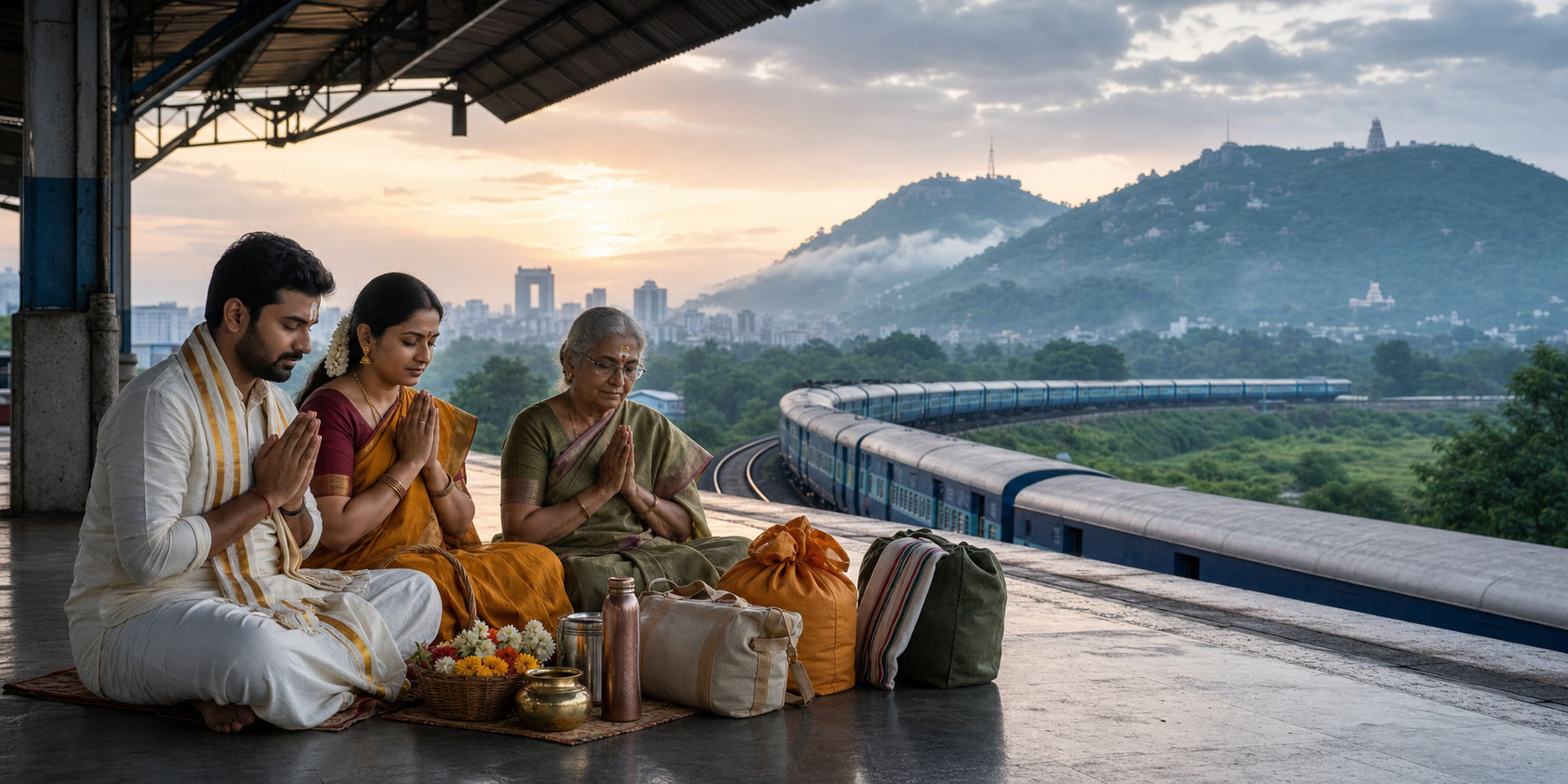
Attending both festivals can reveal two complementary dimensions of Sri Venkateswara worship. Himayat Nagar shows grace moving publicly through flag, vahana, chariot, flowers and community participation. Tirumala concentrates attention on the ritual care of the Utsava Murthis and their kavacha. Neither is a lesser substitute for the other; they ask different things of the devotee.
- If you want the complete Hyderabad arc, protect both 19 June and 24 June. The first establishes the festival’s auspicious beginning; the second completes it through Chakrasnanam, Pushpayagam and Dhwajavarohanam.
- Keep 25 June free for transfer, meals, rest and contingencies. Do not make the buffer carry a second itinerary.
- If you intend to attend a Tirumala morning observance, aim to have your accommodation and immediate logistics settled before that morning. Do not depend on a same-morning arrival.
- Treat Hyderabad and Tirumala as separate access plans. Confirm transport, lodging and temple instructions for each rather than assuming one reservation or TTD-related arrangement covers the other.
- Leave the hour-by-hour festival fields blank in your calendar until the relevant temple programme is issued. Record the confirmed date blocks now and add seva timings only after verification.
Decide first whether your devotional priority is the full Brahmotsavam arc, the three mornings of Jyeshtabhishekam, or one carefully selected experience at each. Reserve the corresponding dates, leave 25 June uncommitted if you are travelling between the cities, and set a reminder to verify TTD timings and access arrangements closer to June. A pilgrimage becomes steadier when the calendar serves the worship rather than crowding it.
References
- DharmaRenaissance Blog — Jyeshtabhishekam 2026 at Tirumala: Dates, Sacred Rituals, and Insights on Srivari Abhideyaka
- DharmaRenaissance Blog — Himayatnagar Venkateswara Brahmotsavams 2026: Dates, Rituals, and a Devotee’s Essential Guide
