
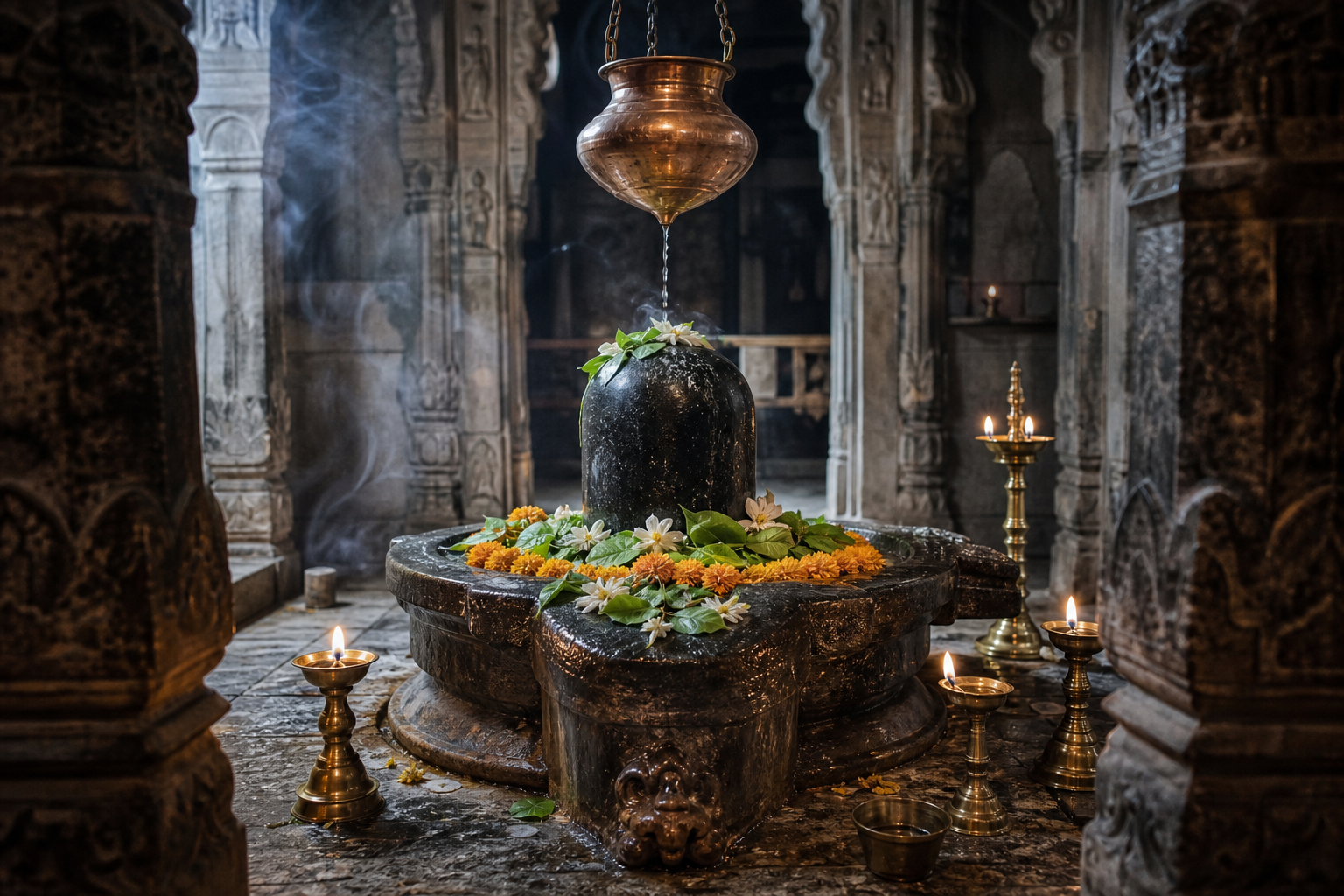
You may reach Tilbhandeshwar Mahadev with one direct question: does the Shivalinga really grow? The honest answer matters because you shouldn’t have to choose between uncritical certainty and a dismissive shrug when you enter a sacred place.
The temple preserves a strong devotional tradition, not a publicly verified measurement record. Once you understand that distinction, you can receive the linga as a living presence of Mahadev, assess the physical claim carefully, and make your darshan more than a search for an unusual sight.
Key takeaways
- Tilbhandeshwar’s Shivalinga is traditionally said to increase in size each year by one til, the measure of a sesame seed.
- No publicly reported, instrumented metrological examination has established an exact annual rate of physical growth at this shrine.
- Mineral accretion, deposits from ritual substances, and changes around the pedestal or sanctum could alter the linga’s visible profile over long periods.
- If you want an unhurried darshan, consider dawn or a quieter interval between the principal aarti periods rather than the busiest festival hours.
- The tradition’s most practical teaching is that small, repeated acts of sadhana become consequential through continuity.
What one til of growth does and does not claim
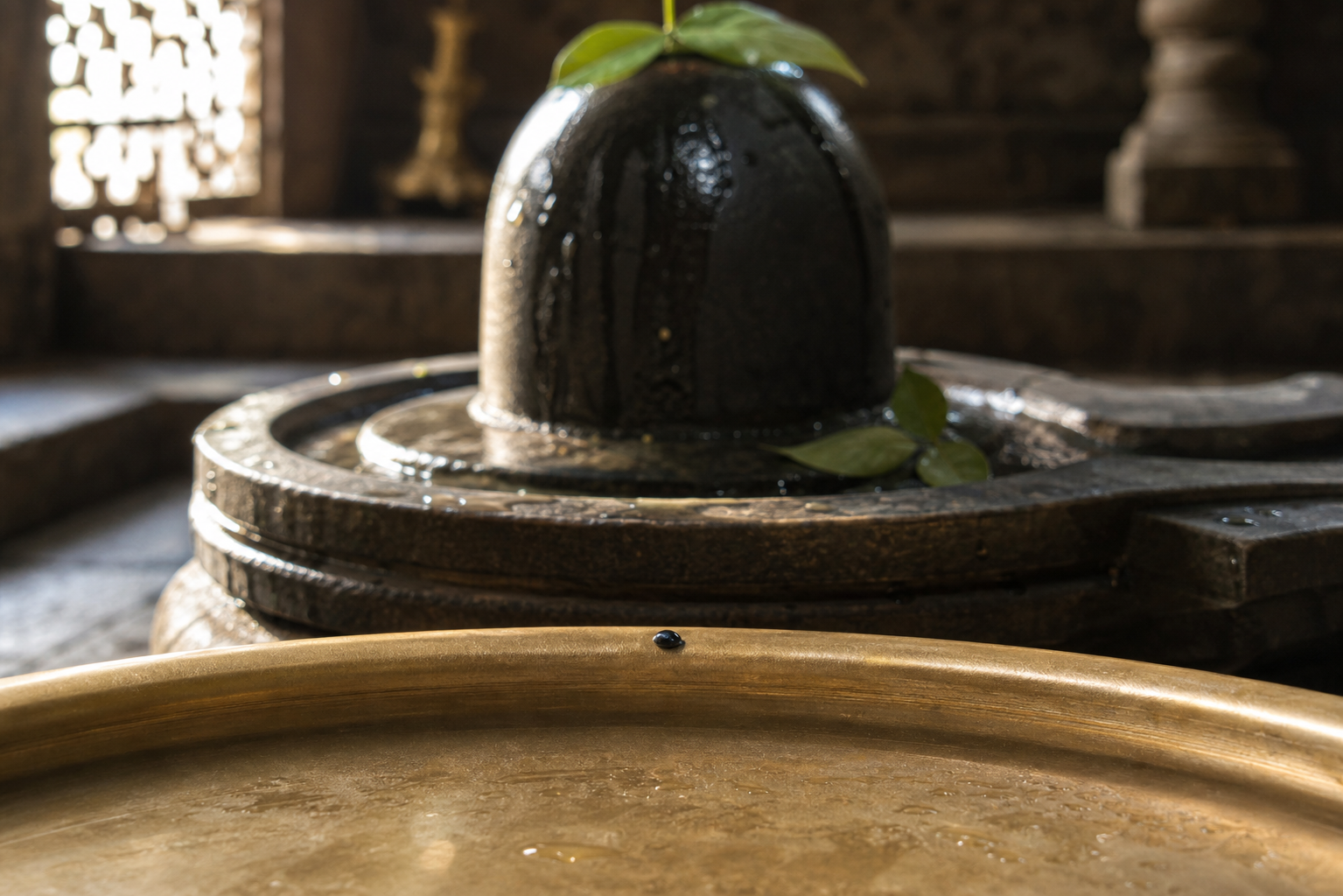
The local tradition holds that the Shivalinga grows every year by the measure of a til. A sesame seed is only a few millimetres long, so the claimed increment is not a dramatic annual change that an occasional visitor could reliably identify by sight.
That scale is important. If you visit in one year and return the next, memory, viewing angle, lighting, offerings, and the visible level of the pedestal could all affect your impression. The tradition therefore lives mainly through cumulative community memory. Priests and long-standing devotees recall contours, rings, and comparative marks across much longer stretches of time. Such testimony explains how the belief is transmitted, but it is not the same thing as a controlled series of measurements.
Even the word size needs care. A technical claim would have to specify whether it means height, maximum diameter, circumference, exposed volume, or some combination of these. It would also need a fixed baseline. The familiar wording does not supply those specifications, so it should not be converted casually into a precise scientific claim.
The name Tilbhandeshwar is locally associated with til and the linga’s remembered increase. That association is central to the temple’s identity, although the name does not have a single, uncontested philological explanation. It is better to say that local usage ties the name to sesame than to present one modern breakdown of the word as settled etymology.
This leaves room for a clear devotional statement: the growing linga expresses Mahadev’s dynamic presence in Kashi. It does not require you to pretend that a repeatable annual measurement has already been published. If you describe the shrine to someone else, use the accurate formulation: the Shivalinga is said or is traditionally believed to grow by one til each year.
Belief and physical explanation answer different questions
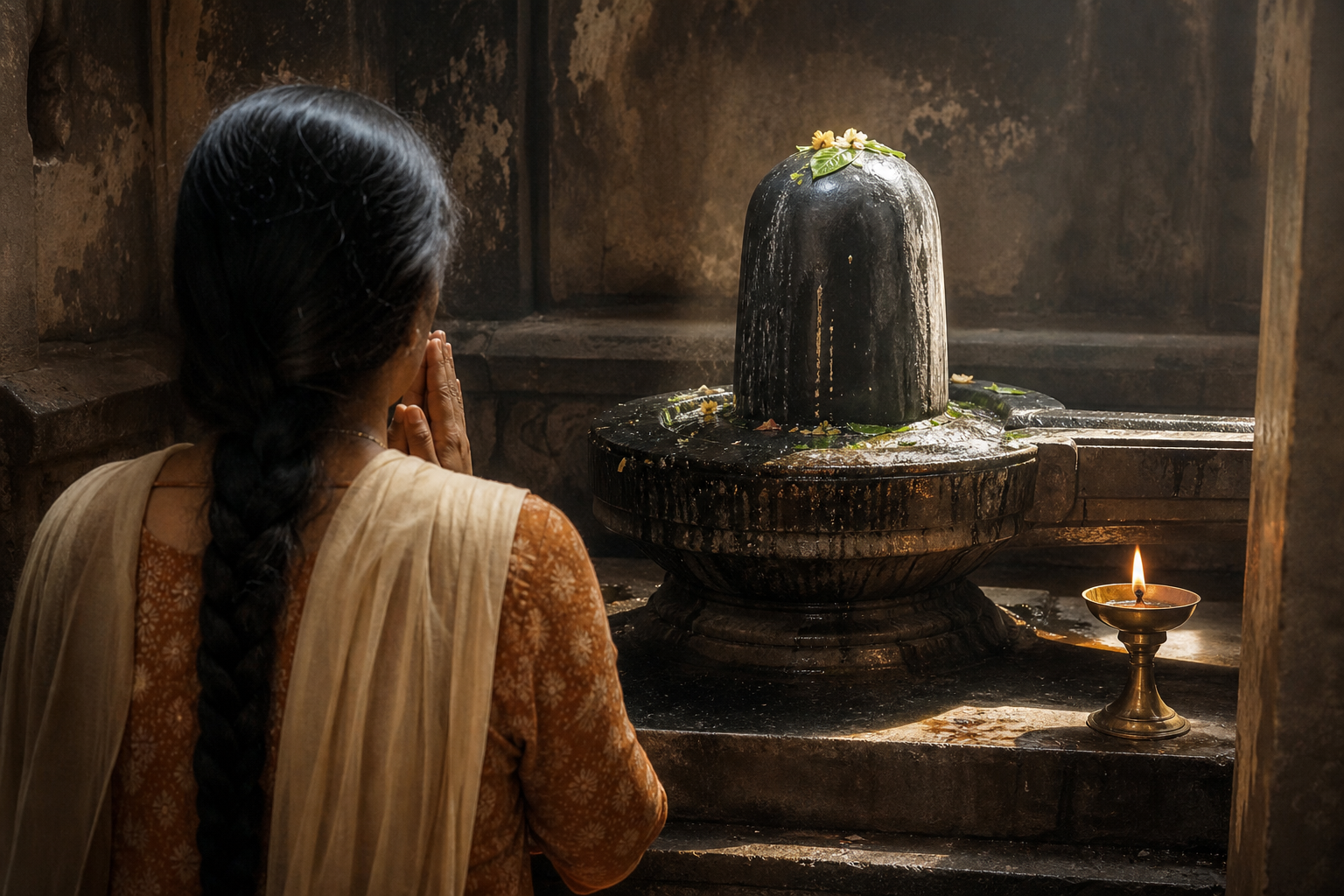
There are three useful ways to approach Tilbhandeshwar’s growth tradition. The devotional reading asks what the linga reveals about Shiva’s presence. The cultural reading asks how Kashi preserves sacred memory across generations. The material reading asks whether water, offerings, stone, and changes to the surrounding structure could alter what worshippers see. These readings can coexist because they are not trying to answer precisely the same question.
The material possibilities are straightforward enough to identify. Water used in repeated abhishekam can carry dissolved minerals, including calcium carbonate, which may accumulate on a surface. Minute residues from other ritual substances can also build up over decades. Meanwhile, floor settling, changes to a plinth, or the re-rendering of sanctum walls can alter how much of the linga is exposed and how large it appears relative to its surroundings. More than one of these processes may operate together.
None of those possibilities proves an exact one-til annual increase. Accretion could enlarge the visible profile without showing that the underlying stone itself expands at a constant rate. A change in the floor or pedestal could produce a relative difference without changing the linga at all. A plausible mechanism is a reason to investigate carefully, not a substitute for evidence.
A convincing metrological assessment would need fixed reference points, clearly defined dimensions, repeated readings made with a consistent method, and records of any work on the floor, pedestal, drainage, or walls. It would also need to distinguish temporary ritual coatings from persistent change. At present, no peer-reviewed, instrumented measurement study specific to Tilbhandeshwar has been publicly reported.
That absence should discipline both believer and sceptic. It means the exact physical rate is unverified; it does not demonstrate that no long-term change has occurred. Metrology can tell us whether dimensions are changing and by how much. It cannot exhaust the theological meaning that worshippers receive from Mahadev’s form.
You can therefore preserve two truths without confusion: the one-til tradition belongs authentically to the shrine’s living devotional memory, and its literal annual rate has not been established through public scientific measurement. Saying both is not a compromise. It is simply the most accurate account available.
How to make your darshan attentive rather than investigative
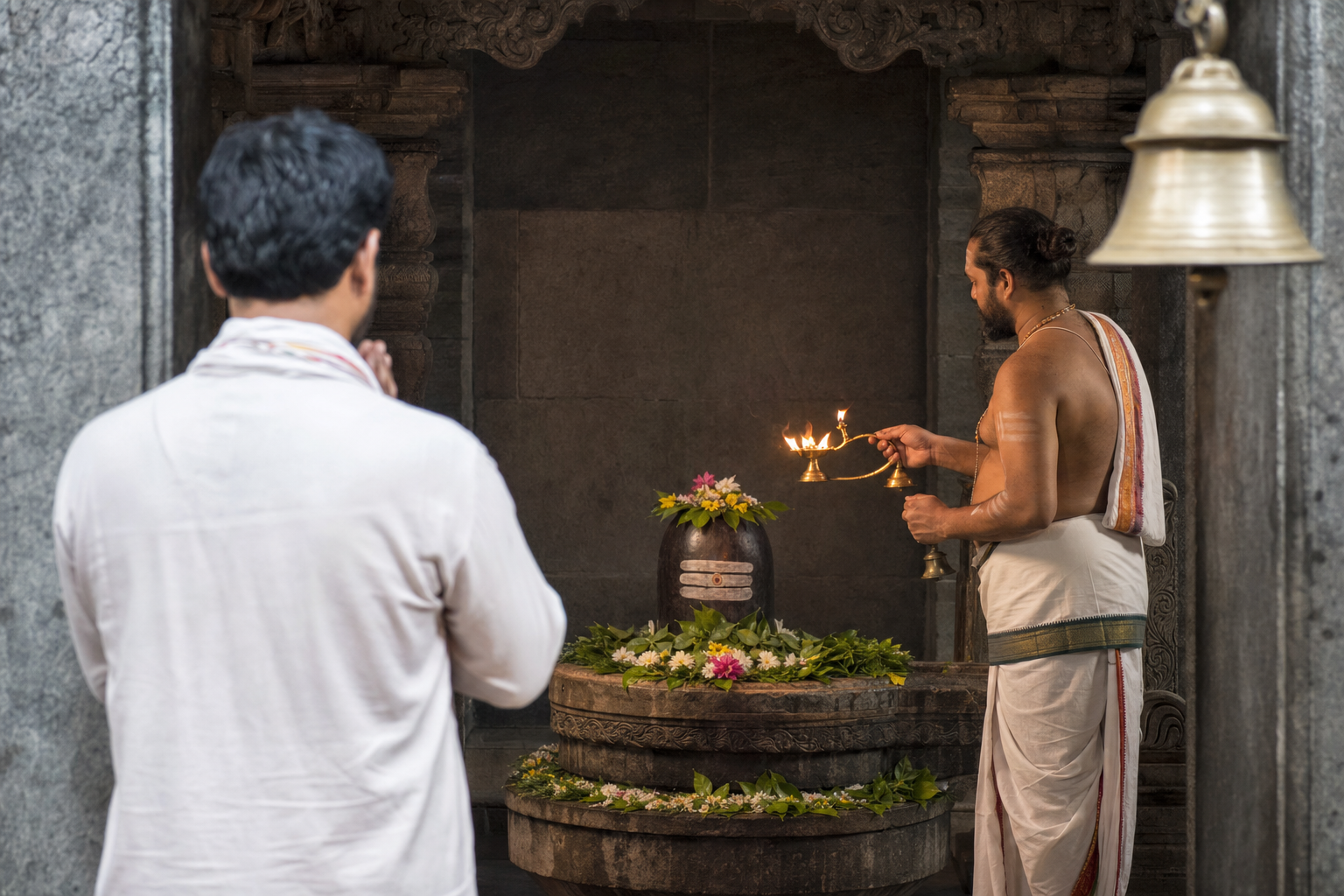
Tilbhandeshwar is not a museum exhibit arranged around a curiosity. It is an active Shaiva temple with a compact garbhagriha, a modest mandapa, Nandi facing the sanctum, and a jaladhara carrying the water of abhishekam away from the linga. Bells, mantra, sandal, dhoop, bilva leaves, and the movement of devotees are part of the encounter. If you focus only on finding visible growth, you will miss the ritual setting that gives the tradition its meaning.
- Choose the kind of visit you actually want. Dawn and quieter intervals between the principal aarti periods are generally better for contemplation. Mondays, Pradosh, and Shravan draw stronger attendance, while Maha Shivaratri brings the greatest concentration of devotional activity. Choose a busy observance for collective fervour and a quieter period for patient attention.
- Enter as a worshipper, not an examiner. Remove your footwear, keep the queue moving without haste, and make room for elders. Minimise photography in or around the sanctum and follow the instructions given there.
- Notice the shrine’s devotional alignment. Begin with Nandi’s gaze toward Shiva. Observe the linga, its base, and the jaladhara as parts of one ritual arrangement. Watch how water and offerings move rather than searching immediately for a supposed measurement mark.
- Receive oral memory honestly. If a priest points to a contour or mineral ring, understand it as part of the community’s intergenerational account. Listen respectfully, but do not relabel memory as a laboratory reading.
- Keep your offering proportionate. Water, bilva patra, and a restrained Rudrabhishek accord with the temple’s broader pattern of worship. Follow local direction rather than improvising substances, quantities, or actions at the linga.
If a conversation opens naturally, a good question is not, “Can you prove that it grows?” Ask how the growth has been remembered, what earlier devotees noticed, and whether the visible surroundings have changed. Those questions allow tradition and material history to be described in their proper forms. They also avoid turning the priest into a performer who must satisfy a visitor’s demand for spectacle.
Within a wider Kashi pilgrimage, Tilbhandeshwar complements the better-known sacred centres of Vishwanath, Annapurna, and Kaal Bhairav. Its gift is intimacy and scale. Do not squeeze it into an itinerary as a quick novelty stop. Leave enough time to stand quietly, observe one full cycle of offerings if circumstances allow, and carry the central image of gradual growth into the rest of your yatra.
Your offering becomes part of the temple’s material life
Continuous abhishekam does more than express bhakti. Water and ritual substances interact physically with the linga, its base, the drainage channel, and the masonry around them. Mineral crusts may develop, while poorly managed moisture can enter adjacent material. At the opposite extreme, aggressive cleaning can remove historical patina and the subtle surface features through which devotees remember change.
For a visitor, the rule is simple: do not scrape, mark, clean, or add an unapproved substance in an attempt to reveal or assist the linga’s growth. The temple’s custodians have to balance ritual continuity with gentle cleaning, sound drainage, and periodic structural care. Your role is to make an offering within the established practice and leave the sacred fabric undisturbed.
The growth tradition gives you a usable model for sadhana
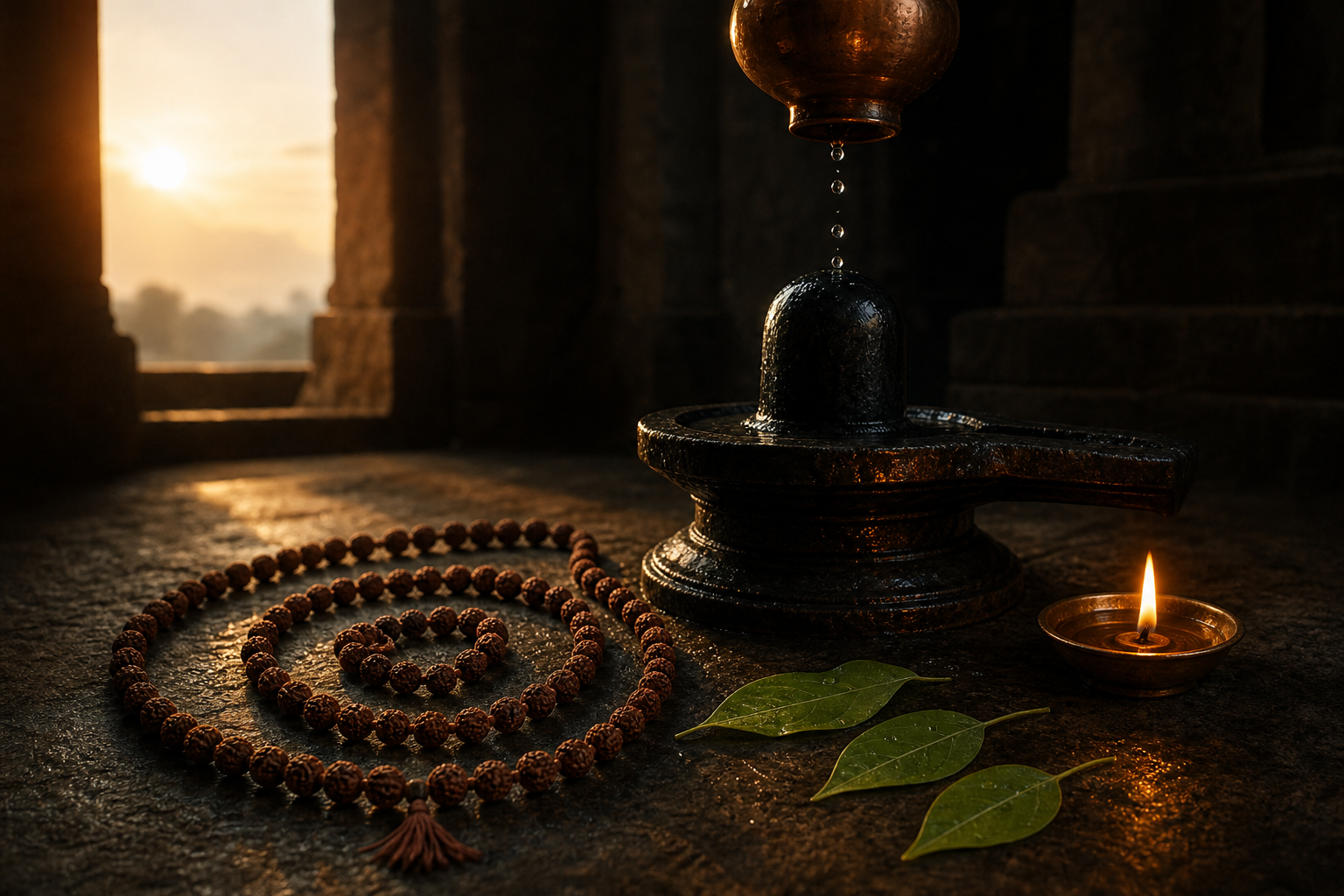
A sesame seed is an unusually apt measure for spiritual change. Til already belongs to Hindu ritual life through shraddha, tarpana, homa, and other offerings associated with purity, nourishment, and continuity. At Tilbhandeshwar, this ordinary seed becomes a unit of sacred time: the increment is almost negligible in isolation, yet meaningful when continuity is preserved.
This is where the tradition can change what you do after darshan. Most people judge sadhana too quickly. A single round of nama japa may not alter your temperament in a way you can see that evening. One act of restraint may not resolve an old conflict. One act of seva may look small beside the need around you. The Tilbhandeshwar image asks a different question: what form will these acts create if they continue?
- Choose one til-sized discipline. It might be a modest daily period of Shiva nama japa, a brief practice of dhyana, one deliberate act of ahimsa in speech, or a small recurring act of seva. Select something you can maintain without display.
- Attach it to an existing point in your day. Place the practice after waking, before the evening meal, or beside another stable daily observance. A reliable cue matters more than an ambitious intention with no place in your routine.
- Record continuity, not spiritual drama. Make a simple mark when the practice is completed. Do not demand a special feeling as proof that it worked. The first thing you are building is steadiness.
- Review at a milestone chosen in advance. When your vrata or chosen period ends, look for changes in conduct: less reactive speech, greater attention, more dependable service, or greater regularity in worship. Do not move the standard every day according to your mood.
- Continue, reduce, or deepen deliberately. If the practice held, preserve it or add only a small next step. If it repeatedly failed, make it smaller and more definite instead of abandoning discipline altogether.
Dhyana, tapas, ahimsa, and seva also resonate across the Dharmic traditions, even though Hindu, Buddhist, Jain, and Sikh paths remain distinct in doctrine and practice. The shared lesson is not that all traditions are interchangeable. It is that inner formation depends on repeated attention, ethical restraint, and service more than on occasional intensity.
When you next stand before Tilbhandeshwar Mahadev, you do not need to settle every material question in order to receive that teaching. Make one modest sankalpa before you leave. Keep it quietly. Let your own conduct, measured over time rather than by a moment’s emotion, show you what a til of daily growth can become.
References
