
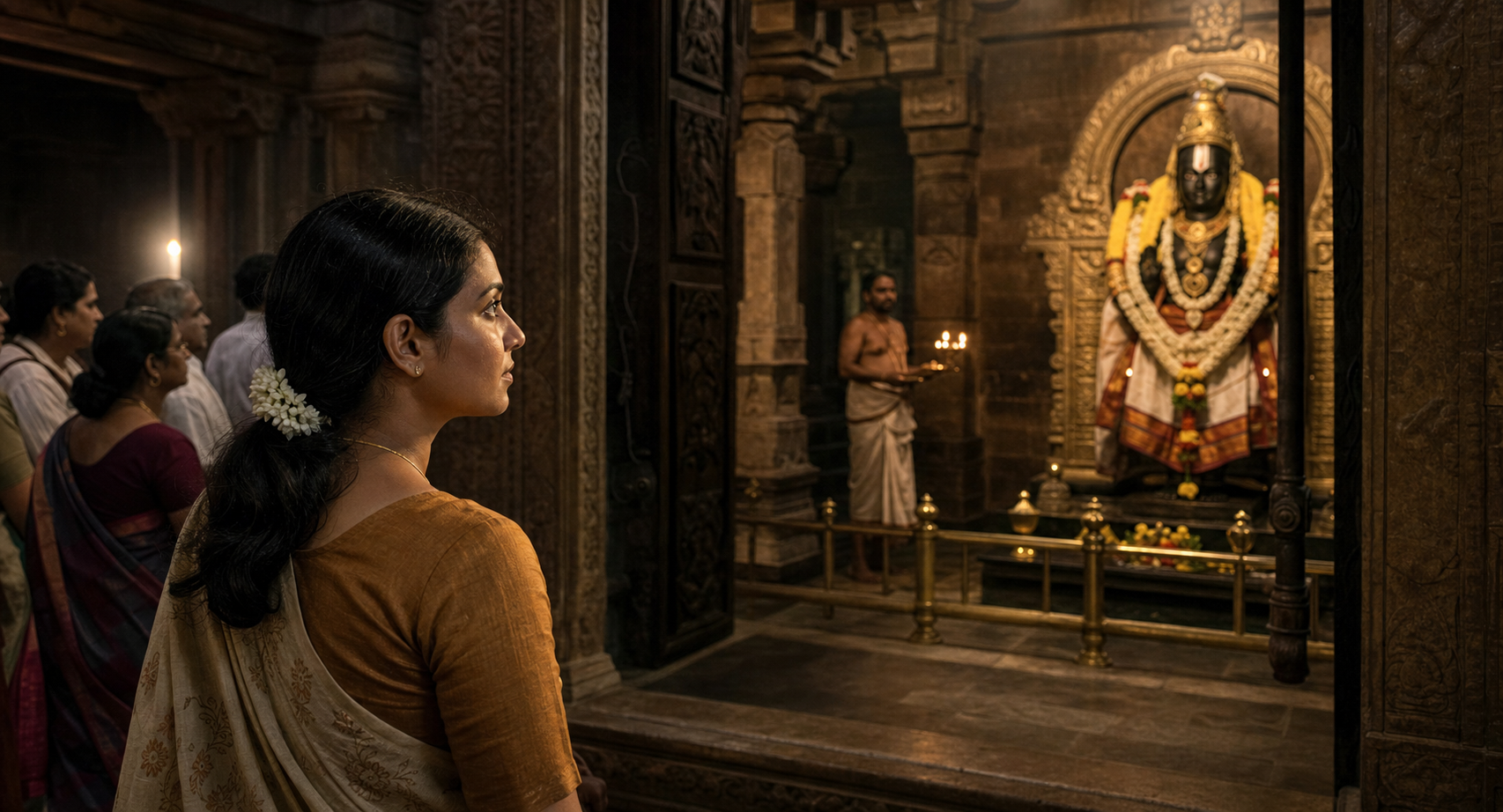
If the sanctum doors opened for only a few seconds, the queue kept moving, and you left wondering whether you had really received darshan, begin with this: the quality of the encounter is not measured by how long you looked or how intensely you felt.
Your task is not to inspect every feature of the murti. It is to become present before the deity, offer undivided attention, and allow for the more demanding possibility that you are also being seen. That shift turns temple attendance from sacred sightseeing into worship.
Darshan is not simply a better look at the murti
Darshan comes from the Sanskrit root drish, meaning to see or behold, but its ritual meaning reaches beyond visual contact. In Hindu worship, the devotee beholds the divine and is beheld in return. Seeing becomes an exchange of attention rather than a one-way act performed by an observer.
This also explains why darshana can mean a philosophical vision. The classical darshanas are not merely collections of opinions; each provides a disciplined way of seeing reality. Ritual darshan applies the same principle to worship. The decisive question is not only, “What did my eyes register?” but also, “What kind of vision am I learning?”
Reciprocity makes sense because a consecrated murti is not treated as an empty representation. In temple traditions that perform them, rites such as prana-pratishtha, nyasa, and netronmilanam, the ceremonial opening of the eyes, establish the image as a locus of divine presence. Abhishekam and alankara are therefore not maintenance and decoration applied to an art object. They belong to an ongoing relationship with a deity made accessible through form.
The vocabulary differs among sampradayas. Vaishnava traditions may speak of the arca-avatara, the deity graciously available in a form that devotees can approach. Shaiva and Shakta traditions express presence through their own iconic and non-iconic forms. A Shiva linga, saligrama, or yantra does not need human-shaped eyes to participate in darshan. The return gaze signifies divine awareness, not merely the direction in which a painted face appears to look.
Key takeaways
- Darshan is mutual acknowledgement, not visual inspection.
- You do not need to manufacture an emotional climax. Steady attention is enough to begin.
- The encounter depends on sacred presence, not on whether the form is human-shaped, abstract, large, or visually elaborate.
- Abhaya and varada mudras make the return movement visible: the deity addresses the devotee with fearlessness and generosity.
- Prasad and seva complete the exchange by turning received grace into shareable conduct.
Let the temple retrain your ordinary way of looking
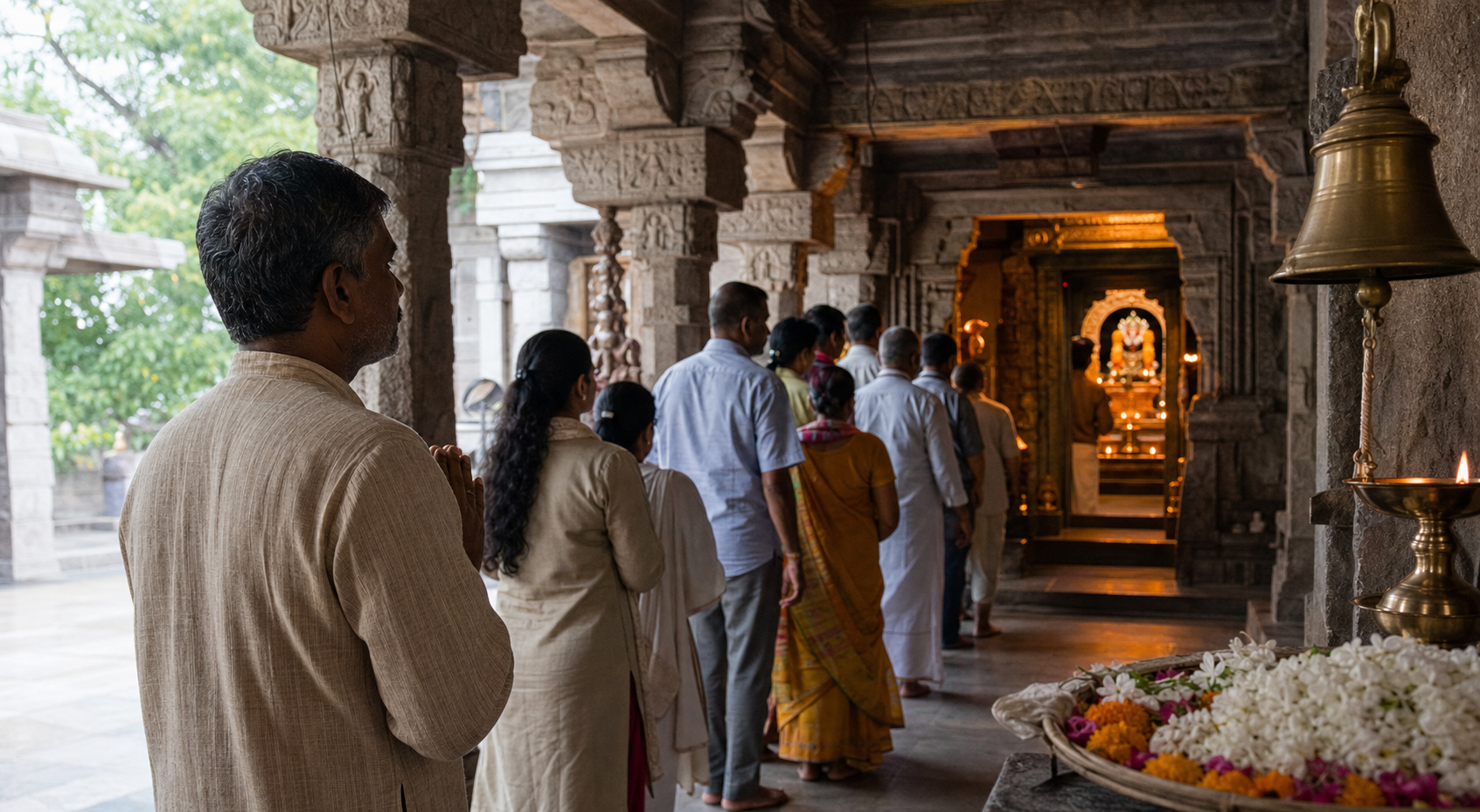
A temple does not place the sanctum beside the entrance like an exhibit in a gallery. Its thresholds, mandapas, sound, fragrance, light, and movement prepare a change in attention. Passing beneath the gopuram and moving toward the garbha-griha can take you from the scattered vision of the street to the concentrated vision of worship.
Notice how the senses converge. The bell interrupts mental chatter. Incense marks a different atmosphere. Mantra gives the mind one current to follow. The comparative darkness of the sanctum reduces visual distraction, while the deepa or arati flame discloses the murti for concentrated beholding. These are not unrelated ceremonial effects. Temple space and ritual choreograph the movement toward reciprocal vision.
Use that sequence instead of resisting it. You do not have to begin your inward preparation only when you reach the front of the queue. Let each threshold remove one layer of distraction. Put away the phone before the murti becomes visible. If photography is permitted, do not let composing an image replace the encounter itself. A photograph records what stood before you; darshan concerns the relationship in which you stood.
At the sanctum, the flare of arati may reveal the deity’s eyes, ornaments, weapons, flowers, and mudras only briefly. Do not chase every detail. Receive the whole form first. Then allow your gaze to settle naturally where the tradition and murti invite it, often upon the eyes, face, heart, linga, or central point of a yantra.
The movements after darshan matter as well. Tirtha, prasad, and the warmth or light of arati carry the encounter into the body. Receive them according to the temple’s custom and the priest’s direction. They are not souvenirs added after the important moment; they extend blessing beyond the line of sight.
How to receive the return gaze without forcing an experience
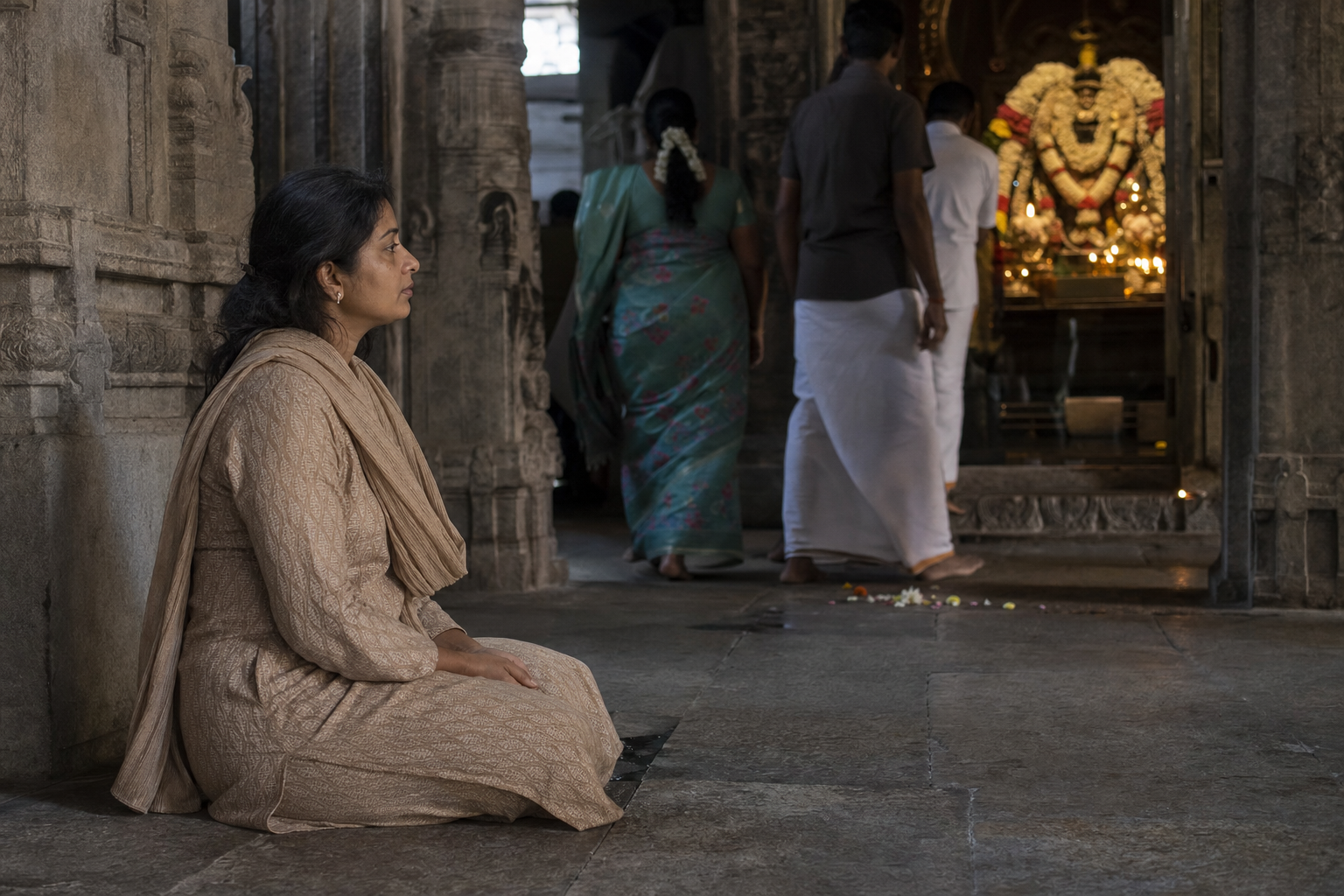
You can prepare for darshan without turning it into a performance. The following sequence is simple enough for a crowded temple and substantial enough for regular sadhana.
- Gather your attention before the final approach. Take one unforced breath and notice why you have come. You may bring gratitude, a petition, repentance, confusion, or no clear request at all. The essential preparation is honesty, not a perfected mood.
- Give the mind one devotional anchor. Use a mantra already received in your practice. If you do not have one, quietly repeat the deity’s name. This keeps the mind from turning the queue, the crowd, or the ornamentation into a stream of commentary.
- Offer your gaze rather than grabbing an image. When the murti becomes visible, let your eyes rest without staring or straining. Begin with the whole form, then settle on the eyes, heart, or central sacred form as appropriate. If the darshan lasts only a moment, do not mentally demand a longer one.
- Acknowledge that you are being seen. Let the deity’s presence meet the part of you that usually remains hidden behind social roles and rehearsed prayers. You need not narrate your entire life. Simply stop managing how you appear for the duration of the encounter.
- Read the form as an address to you. An abhaya mudra invites fearlessness; a varada mudra signifies giving and blessing. Weapons, flowers, posture, light, and adornment can also disclose divine qualities. Ask which quality you are being called to receive and embody, rather than treating the iconography as information to catalogue.
- Leave with one concrete obligation. When you receive prasad or tirtha, connect it to one action: speak truthfully in a difficult exchange, refrain from a needless injury, give something useful, or undertake a specific act of seva. This prevents the encounter from ending at the shrine door.
The Bhagavad Gita 6.13-15 links meditation with a stable posture and disciplined gaze. The practical lesson for darshan is modest but important: the body can help attention become steady. Stand or sit as the setting allows, soften unnecessary tension, and avoid looking around for confirmation that other people are having a more powerful experience.
Tears, stillness, joy, discomfort, or an absence of strong feeling may accompany worship, but none is a reliable score. Bhava deepens through relationship and practice; it cannot be demanded on schedule. If you judge every visit by emotional intensity, you will begin watching yourself instead of attending to the deity.
When the murti is distant, preserve the relationship
Physical presence before a consecrated murti remains the classical temple ideal, yet distance, illness, mobility, work, or geography may prevent a visit. Hindu practice already has a language for inward worship. Manasa-puja allows the devotee to offer worship mentally, while remembrance and mantra maintain a devotional relationship outside the temple.
Live-streamed arati or digital darshan can support that rhythm. Use the screen as a window for attention, not as background content. Close unrelated tabs, silence other media, sit with a stable posture, and remain through the ritual rather than collecting a quick screenshot. Digital darshan can sustain memory, devotion, and continuity between temple visits, although it does not reproduce the full spatial, sensory, and communal encounter of the shrine.
A simple home practice can retain the reciprocal structure:
- Bring to mind the deity’s murti, name, mantra, or sacred form.
- Offer attention as deliberately as you would offer a flower.
- Recall that the divine presence is not exhausted by your mental image.
- Rest for a few quiet breaths in the awareness of being seen.
- Conclude with an act of care, dana, or seva that gives the remembrance an ethical body.
Inner darshan can go deeper still. Upanishadic contemplation asks you to recognize the drashta, the seer behind ordinary acts of seeing. Some contemplative interpretations describe atma-darshan as recognizing the innermost self as not separate from the divine ground; other Hindu schools articulate the relationship between self and divine differently. Do not flatten those differences into a slogan. The practical convergence is that outer worship can refine inner awareness, while inner awareness need not be used to dismiss the murti, temple, or devotional relationship.
Test the vision in the next person you meet
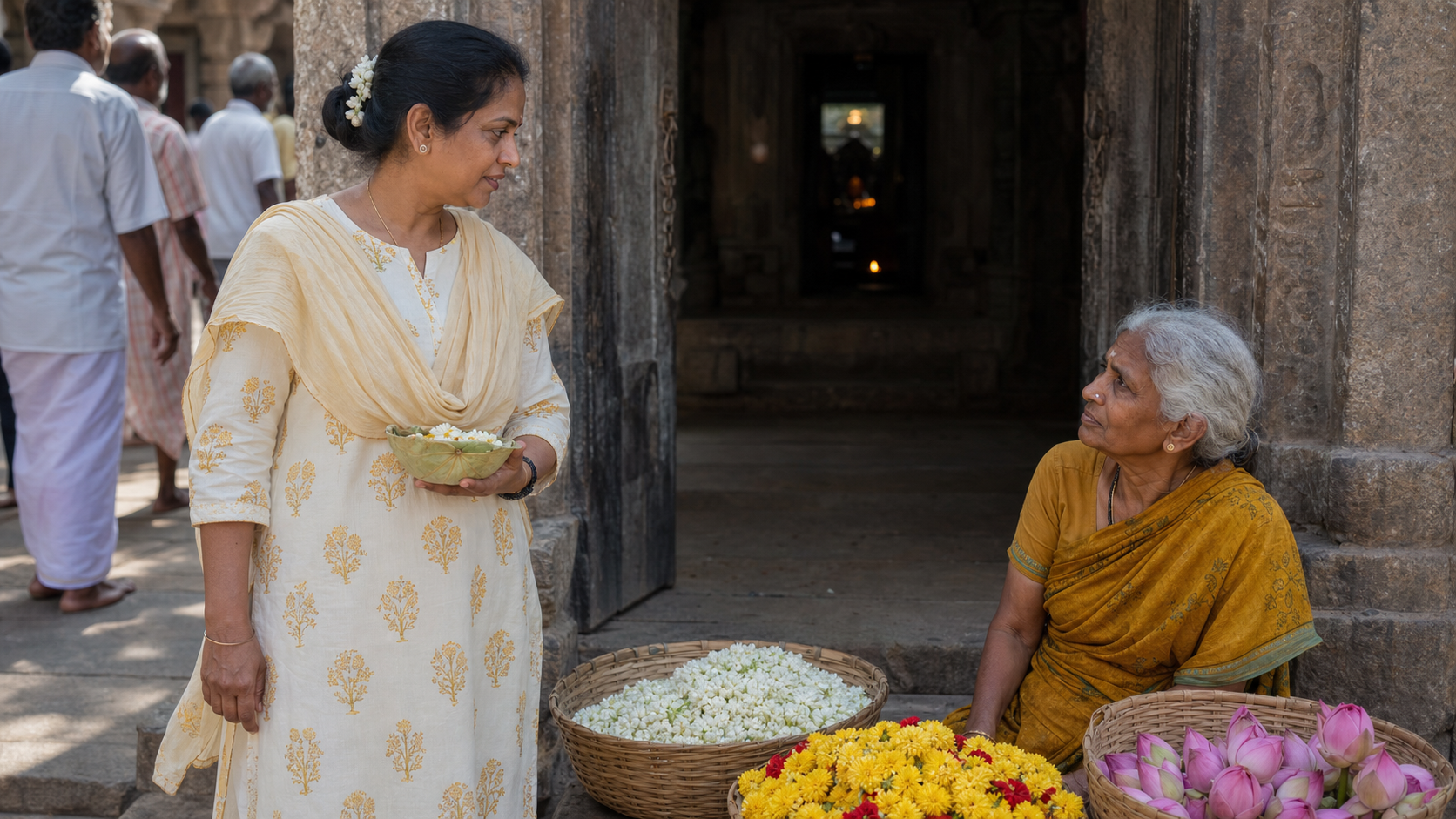
The clearest test of reciprocal darshan begins after you turn away from the sanctum. If you accept the deity’s gaze as compassionate, protective, and generous but return immediately to contemptuous speech or casual cruelty, you have received the ritual form without yet accepting its discipline.
Make the connection specific. If you received abhaya, avoid becoming a source of needless fear. If you received the generosity signified by varada, give time, food, attention, or material help where it is genuinely needed. If you worshipped a form associated with compassion, practise ahimsa when irritation makes harm feel easy. If prasad came to you as grace, share rather than hoard the good that is yours to distribute.
This is how attention becomes seva. The reciprocal gaze carries social consequences through ahimsa, dana, and service: learning to recognize sacred presence should make it harder to deny dignity to another being. Darshan does not require pretending that every action is good or every conflict unreal. It requires seeing the person before reducing that person to an obstacle, label, or enemy.
The wider Dharmic family preserves distinct but related disciplines of vision. Buddhism places samyag-drishti, right view, at the foundation of its path. Jainism joins samyag-darshan with right knowledge and right conduct. Sikh practice receives darshan of the Guru Granth Sahib within the sangat and answers it through seva and langar. These are not interchangeable doctrines or identical rituals. They do reveal a civilizational intuition worth noticing: how you see determines how you live.
At your next darshan, begin one breath earlier than usual. Offer a steady gaze, permit yourself to be seen without pretence, and leave with one divine quality translated into conduct. Then the meeting will continue wherever your next decision is made.
References
