
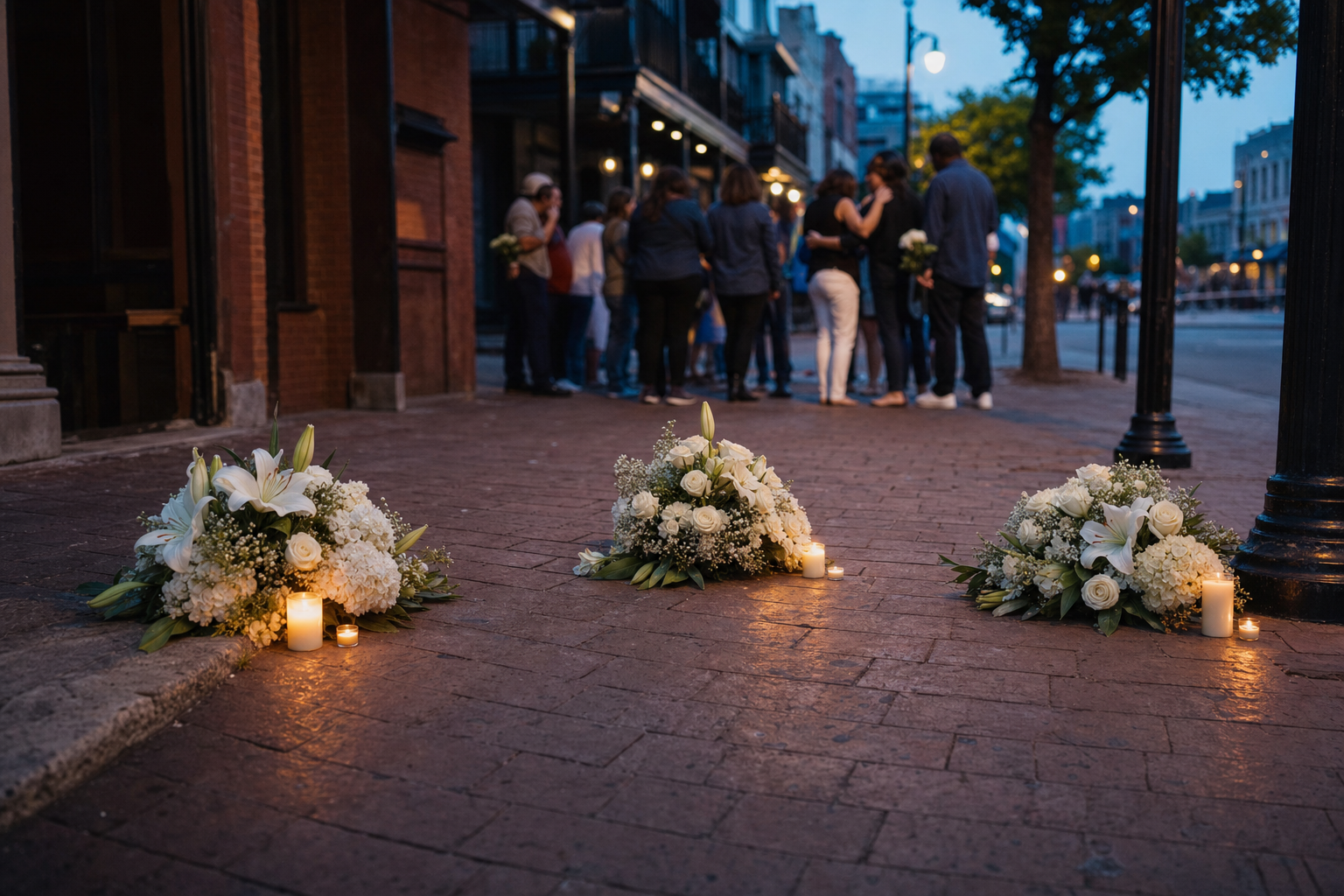
You may have arrived after seeing a headline, a photograph of the suspect’s clothing, or an argument about motive. Before you repeat any of it, separate three responsibilities: remember the people who were killed, distinguish evidence from inference, and decide what you can do that will make your community safer rather than angrier.
The soundest response is neither silence nor collective blame. You can confront violence, demand a complete investigation, protect Hindu and Indian-origin community members from dehumanization, and refuse to turn unproven claims into certainty. Those duties belong together.
Key takeaways
- Remember all three people who were killed: Savitha Shan, Ryder Harrington, and Jorge Pederson. Do not let speculation about the perpetrator erase them.
- Treat the reported religious and political items as potential evidence, not a completed explanation of motive.
- Keep criminal homicide, a hate crime, and terrorism analytically separate. Each designation requires evidence of a different kind.
- Reject two dehumanizing shortcuts at once: blaming an entire faith for one man’s acts and treating an Indian-origin victim as less American or less worthy of grief.
- Turn ahimsa, karuna, and seva into concrete conduct: share verified information, support those affected, report threats, and press institutions for behavior-based safety systems.
What is established, and what remains unproved

Three people were killed at a downtown Austin bar on 6th Street: 21-year-old University of Texas at Austin student Savitha Shan, 19-year-old Ryder Harrington, and 30-year-old Jorge Pederson. Authorities identified the suspect as 53-year-old Ndiaga Diagne. Responding officers shot him, and he died at the scene.
Investigators reported that Diagne wore a sweatshirt bearing the words Property of Allah over a shirt with a design resembling the Iranian flag. A Quran was recovered from his vehicle. A lawful search of his residence also reportedly found an Iranian flag and photographs of Iranian leaders.
Those details matter because investigators must examine every plausible line of inquiry. They do not interpret themselves. A religious text, slogan, flag, or photograph may contribute to an evidentiary pattern, but possession of religious or political material is lawful and cannot by itself prove why a violent act occurred.
The precise motive remains unestablished in the available record. The possible involvement of any accomplice also remains unknown. If ideology is suspected, the stronger indicators would include an explicit statement of intent, victim selection tied to a protected characteristic, a manifesto or pledge, communications showing planning, or evidence of material support. Investigators can test those possibilities through witness interviews, ballistics, toxicology, video correlation, and digital examination of devices, accounts, and communications.
This distinction matters when you encounter confident labels online. Criminal homicide identifies the unlawful killing. A hate-crime determination requires evidence that victims were selected because of an actual or perceived protected characteristic. A terrorism-related determination requires evidence that violence was intended to intimidate civilians or influence government policy. Public outrage cannot substitute for those elements, and an ideological-looking object cannot establish them on its own.
A responsible sentence therefore sounds like this: investigators found items that may be relevant to motive, while the motive itself remains under investigation. It is premature to say that the items prove terrorism, a hate crime, foreign direction, or the guilt of a wider religious community. It would be equally premature to declare the items irrelevant before investigators have examined the surrounding evidence.
Keep Savitha Shan, Ryder Harrington, and Jorge Pederson at the center
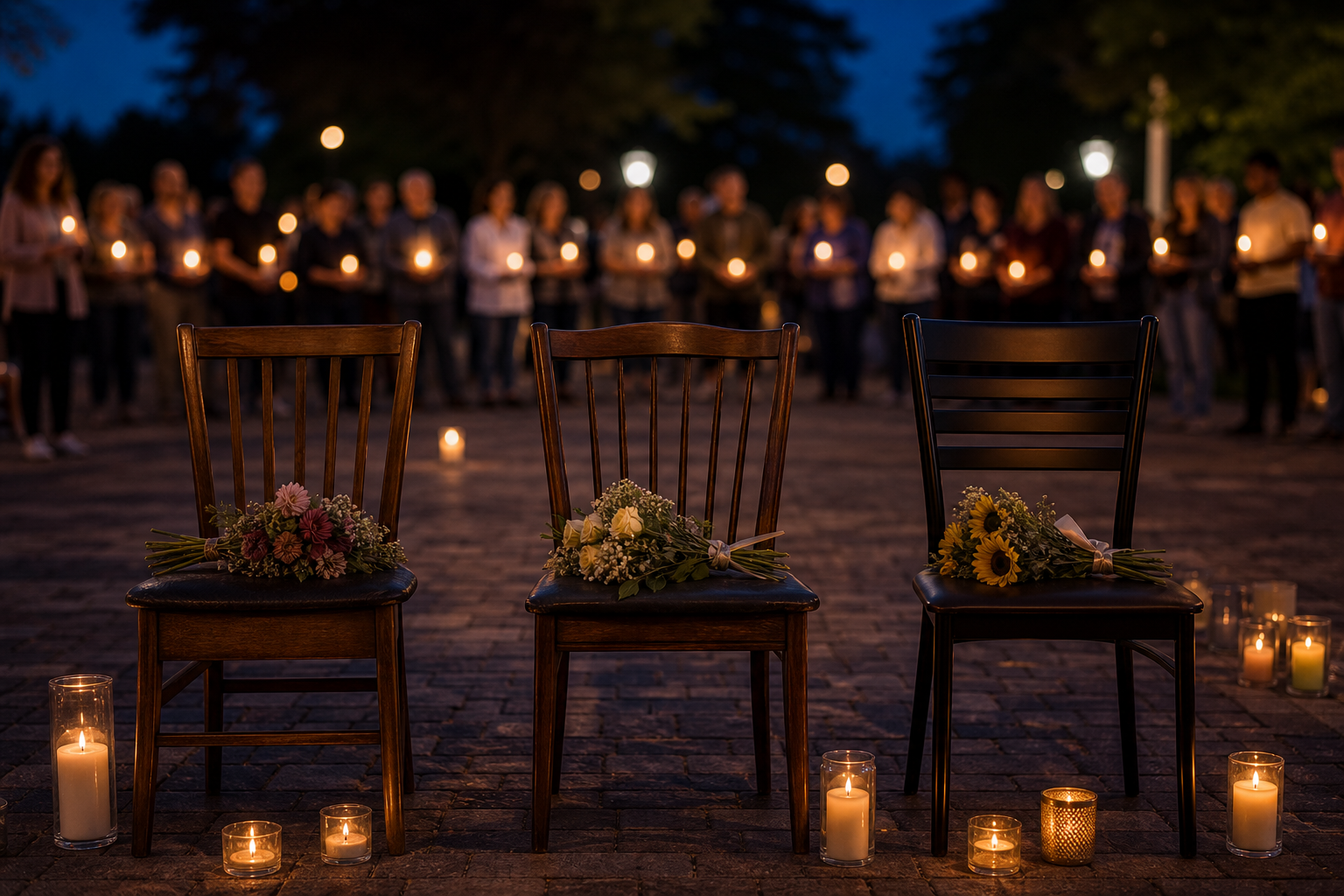
The perpetrator’s imagery is easy to circulate because it provokes an immediate reaction. The lives of the victims require more care. Savitha Shan was a UT Austin student whose death has deeply affected her campus community. Ryder Harrington and Jorge Pederson were also lives taken, not supporting characters in a debate about the suspect.
Students and residents gathered at a vigil to mourn the three victims. Public remarks from a victim’s parents emphasized remembrance and dignity. That response offers a useful standard: name the dead, make room for grief, and do not make bereaved families carry the burden of settling everyone else’s political argument.
A small number of online reactions instead used racially coded language to question whether someone who looked Indian was truly Texan. You should recognize that move for what it is. Indian appearance or ancestry does not make a victim’s death less American, less local, or less deserving of public compassion. People of Bharatiya origin do not need to pass an appearance test before their belonging is respected.
If you are sharing information or organizing a community response, use a few practical safeguards:
- Write the victims’ full names before discussing the suspect. This keeps the human loss visible.
- Use photographs, statements, and fundraising links only when they come through a verified family, university, or community channel. A tragedy creates openings for impersonation and exploitation.
- Do not contact grieving relatives to extract a reaction for social media. Their public silence does not create a right of access.
- When correcting a false claim, state the verified fact and link to it. Avoid reposting an entire inflammatory message when doing so would merely give it a larger audience.
- Document targeted harassment before reporting it to the platform or relevant institution. Preserve the account name, wording, and context without turning the abuse into entertainment.
Victim-centered language is not cosmetic. It changes what a community rewards. Repeating a killer’s symbols can make him the dominant figure in public memory. Repeating the names of those lost, supporting their communities, and refusing racial contempt directs attention toward the people whose lives actually deserve it.
Ahimsa requires restraint, not evasiveness
Dharmic ethics do not require you to look away from violence. Ahimsa asks you to avoid causing further harm through reckless speech as well as physical conduct. Karuna asks you to recognize suffering without first sorting victims into favored and disfavored identities. Seva turns that recognition into service.
Applied here, ahimsa means refusing the second injury that follows many public tragedies: racist contempt toward a victim, harassment of innocent members of a religious community, and unsupported allegations presented as fact. It does not mean suppressing relevant evidence. If corroborated evidence eventually establishes an ideological motive, naming that motive accurately is not bigotry. Declaring it proved before the necessary evidence exists is not courage.
Karuna also prevents selective mourning. Savitha Shan’s Indian identity may make her loss feel especially close to Hindu and Bharatiya families, students, and diaspora communities. That bond should widen compassion, not narrow it. Ryder Harrington and Jorge Pederson must remain within the same circle of concern. The worth of one victim does not diminish the worth of another.
Seva asks what your grief will produce. A vigil is one form of service because it gives mourners a shared place to stand. Accompanying a frightened student, helping someone navigate a reporting system, supporting a verified family appeal, translating a safety notice, or volunteering with a campus or interfaith network are other forms. The test is practical: does the act reduce isolation, improve safety, or meet a need identified by someone directly affected?
This Dharmic posture is demanding because it refuses two easy camps. You do not have to minimize potentially ideological evidence to prove that you oppose prejudice. You do not have to indict millions of unrelated people to prove that you take the evidence seriously. Accuracy lets you defend both public safety and pluralism without sacrificing either.
Turn mourning into a behavior-based safety response
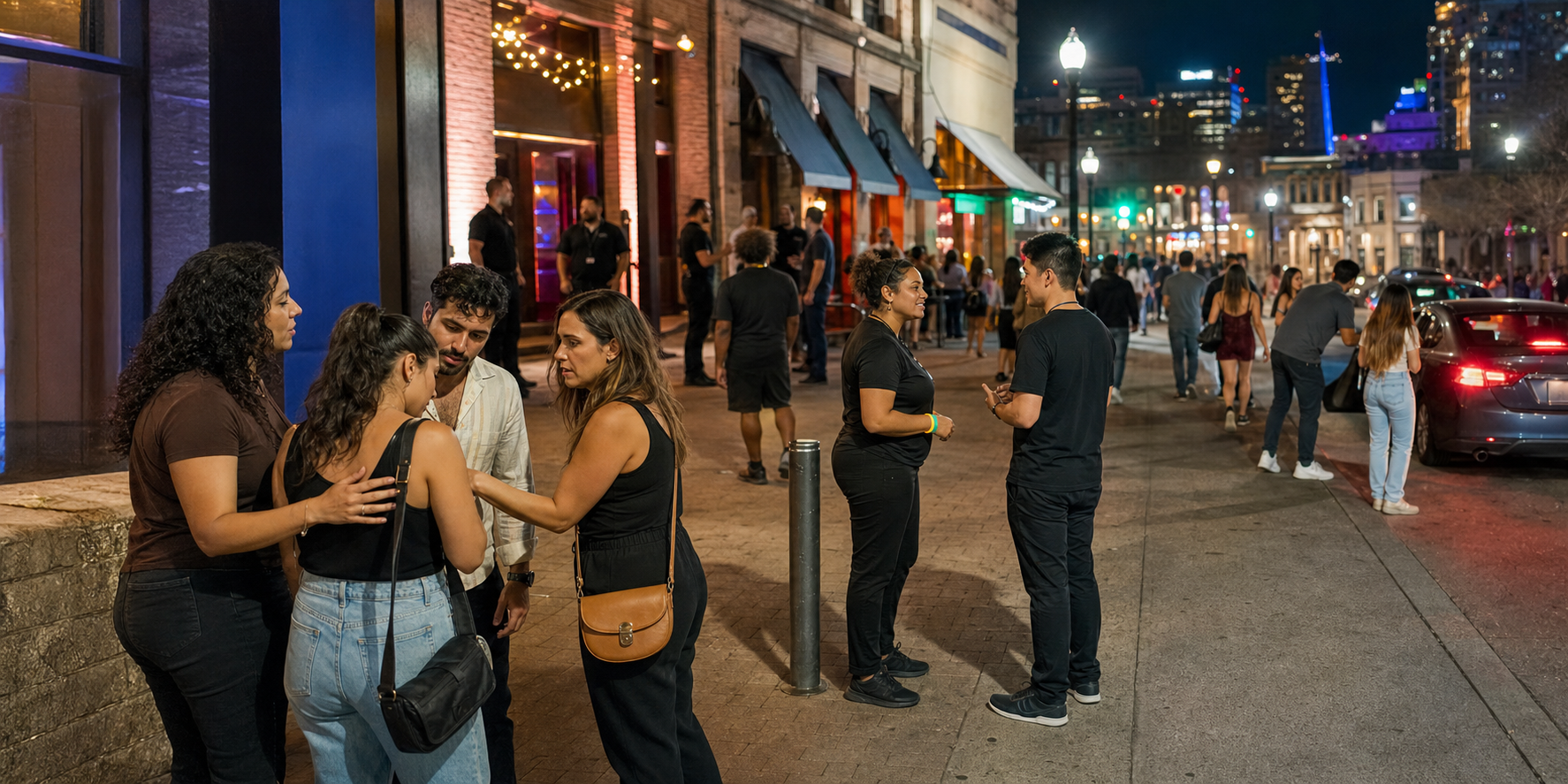
Campuses, nightlife districts, temples, gurdwaras, and community organizations need two tracks after an attack: care for people affected by the violence and prevention focused on observable risk. Mixing political or religious identity into the definition of suspicious behavior can produce false reports while diverting attention from conduct that actually signals danger.
- Make the reporting path obvious. Members should know where to report a direct threat, stalking, targeted harassment, weapons-related concern, or alarming change in behavior. The channel for an immediate danger should be clearly distinguished from the route for a non-emergency concern.
- Use a multidisciplinary threat-assessment process. Security personnel alone should not have to interpret every case. Mental-health expertise and relevant institutional staff can help distinguish a grievance, a welfare concern, and conduct suggesting preparation for violence. Assessment must focus on behavior and corroborated context, not lawful belief or identity.
- Train bystanders for realistic situations. Training should cover how to summon help, guide people away from danger, respond to harassment without escalating it, and pass useful observations to responders. Bystander intervention does not mean confronting someone who may be armed; withdrawal and immediate contact with emergency services are the safer course.
- Test alerts and protective instructions. People need to know which channel carries an emergency alert and what instructions such as evacuate, avoid the area, or shelter in place require them to do. A drill is useful only if participants understand the action, can receive the message, and know how to report a failure.
- Coordinate factual public updates. One clearly identified institutional channel can reduce the vacuum in which rumors grow. Updates should separate confirmed facts from open questions and direct affected people toward support and reporting options.
- Plan for harassment after the physical incident. Indian-origin students, Muslim students, and others perceived to belong to a group drawn into the online argument may face abuse unrelated to anything they have done. Institutions should provide a documented route for reporting targeted harassment and communicate that collective blame will not be tolerated.
If you belong to a campus or community organization, ask concrete questions at the next meeting: How do members receive emergency alerts? Where does a concerning-behavior report go? Who evaluates it? How are emergency and non-emergency reports separated? What support exists for someone targeted after an incident? A vague promise to remain vigilant is not a safety system; named channels and assigned responsibilities are.
Use this check before you post
- Is the claim verified, or am I repeating an inference as though it were a fact?
- Have I clearly labeled what investigators still do not know?
- Does the message remember the victims, or mainly circulate the perpetrator’s image and symbolism?
- Am I treating a lawful religious or political object as one piece of evidence, or as a verdict by itself?
- Would the same wording unfairly implicate people who share an ethnicity, nationality, or faith but have no connection to the crime?
- Does my call to action direct the reader toward a real step such as verified support, threat reporting, safety training, or an institutional question?
If a message fails one of those checks, revise it or wait. You lose little by withholding an unverified claim. You can do lasting damage by attaching certainty, collective blame, or racial contempt to grief.
Choose one constructive act now: share the three victims’ names with an accurate account of what is known, check your campus or community alert settings, support a verified channel serving those affected, or ask who owns your organization’s threat-reporting process. Let the response to Austin be measured by the dignity we protect and the safety capacity we build.
References
