
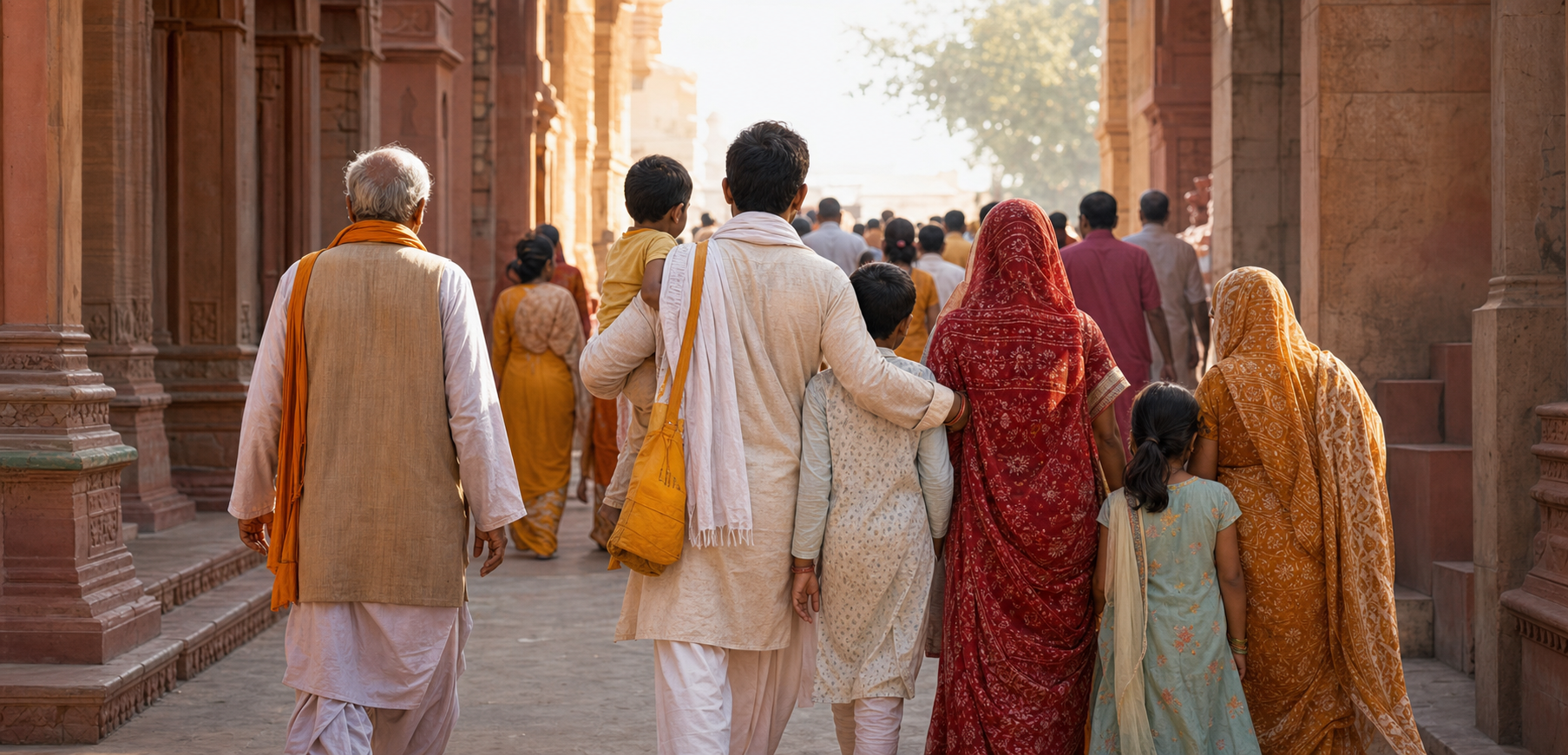
If you are preparing for your first visit to Mehandipur Balaji, the warning not to look back when someone calls can sound more frightening than helpful. The practical instruction is much simpler: after darshan, leave steadily with your group, keep your attention ahead, and do not turn toward unfamiliar voices or gestures while crossing out of the temple precincts.
This is not a theatrical extra added after worship. The exit is the final movement of the worship itself. Once you understand that, you can respect the custom without becoming anxious, careless about genuine danger, or preoccupied with what might be behind you.
The rule completes the rite; it is not a test of courage
Mehandipur Balaji in Rajasthan is a Hanuman shrine to which people come seeking spiritual protection and relief from troubles described in devotional language as bhoot-badha, negative influences, persistent fear, or deep inner disturbance. Its ritual world brings together Balaji, Pret Raj Sarkar, and Bhairav: Balaji as Sankatmochan, the remover of distress; Pret Raj Sarkar in a protective and judicial role; and Bhairav as a guardian presence.
Many devotees understand their visit through a petitionary movement sometimes described as Arji, Darkhast, and Isthihar. Popular terminology and order can vary, so you should not force every family’s practice into one rigid formula. The underlying movement is more important: state the trouble, place the appeal before sacred protection, and bring the matter to a disciplined close.
That final word – close – explains the instruction. A temple threshold is not merely an architectural line. It marks the passage from concentrated sacred action back into ordinary life. Turning around, answering a stray call, or starting another interaction can symbolically reopen what your sankalpa has just completed.
Not looking back therefore gives the body a role in sustaining the vow. Your feet continue in the chosen direction; your eyes refuse distraction; your mind does not renegotiate the petition moments after offering it. It is a small physical discipline carrying a much larger spiritual meaning: do not return immediately to the fear, doubt, or habit you came to place before Balaji.
Key takeaways
- Treat the exit as part of darshan, not as the moment when attention can collapse.
- Agree on an outside meeting point before entering, and tell your companions not to call one another except for a real need.
- After worship, walk forward calmly, remain quiet for a short distance, and ignore unfamiliar voices, gestures, food, and objects.
- Stay responsible for children, older relatives, and anyone who is distressed; ritual discipline never requires neglecting immediate safety.
- If you turn reflexively, do not treat the movement as proof that harm occurred. Regain composure, rejoin your group, and continue forward.
Prepare before entering, because the exit is not the time to negotiate
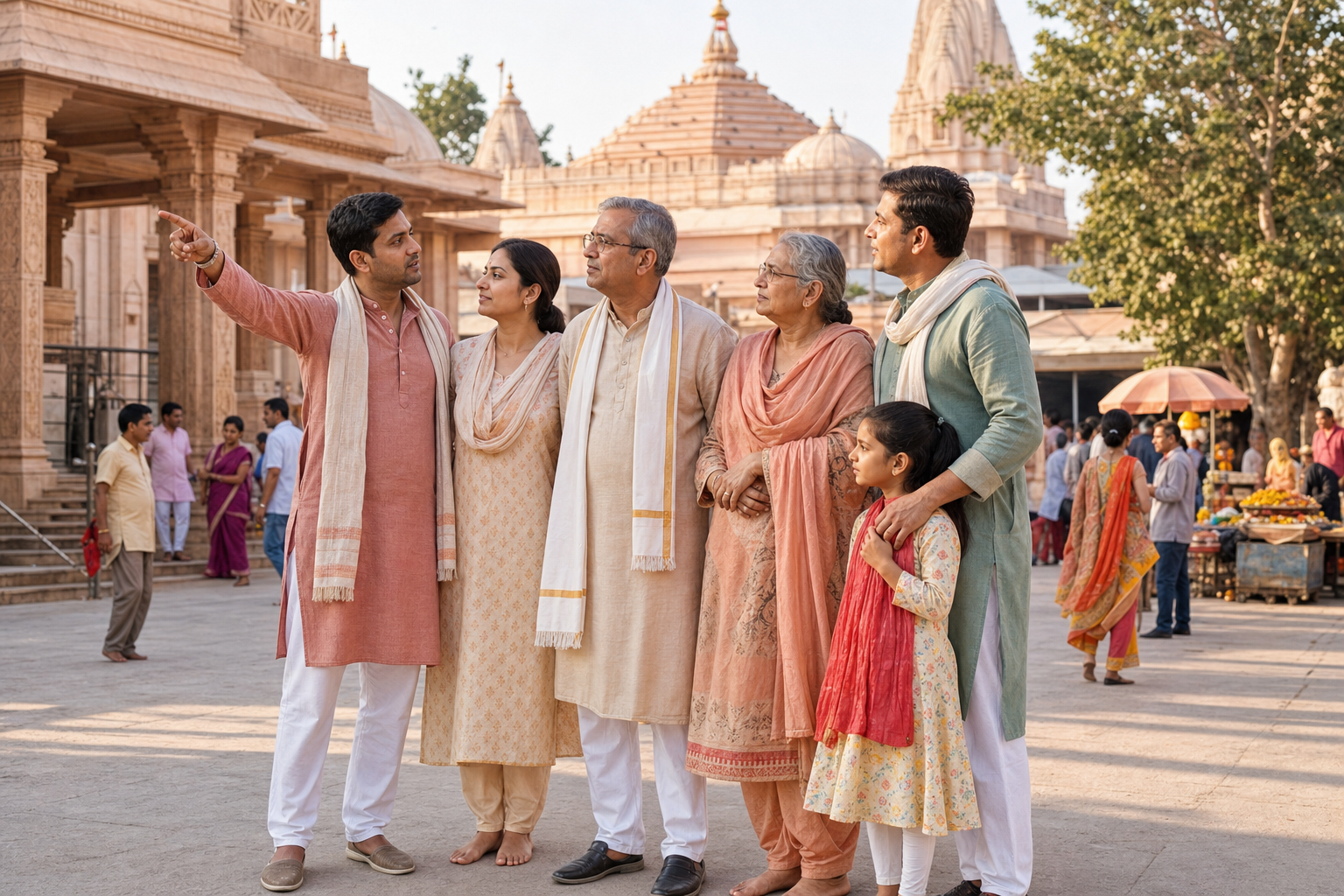
The custom works best as a decision made in advance. If you wait until a voice sounds personally directed at you, you will have to interpret it while moving through a crowded and emotionally intense setting. A simple group plan removes most of that uncertainty.
- Choose one meeting point outside the precincts. Every member of the group should be able to identify it without following someone else’s voice.
- Assign responsibility clearly. Decide who will remain beside each child, older person, or companion who may become overwhelmed. Do not assume that everyone is watching the same person.
- Agree on one sentence before joining the flow. Say: After darshan, we walk directly to our meeting point, and nobody calls another person unless there is an emergency.
- Follow the temple’s current house instructions. Practices and offerings differ among families. Ladoos for Balaji and oil or other customary items for Bhairav are associated with the shrine, but an online checklist should not override responsible guidance at the temple.
- Complete your petition without adding improvised acts. Once darshan and the family’s customary observances are finished, begin the exit rather than searching for one more sign, intermediary, or ritual.
- Walk; do not flee. Keep a steady pace, stay with your companions, look ahead, and preserve silence for the short transition out. Panic defeats the steadiness the discipline is meant to cultivate.
- Reassemble and count everyone. At the agreed point, confirm that the whole group is present before dispersing or resuming ordinary conversation.
Do not accept food, ritual objects, or unsolicited intervention from strangers during this transition. The same applies to invitations to stop and discuss what supposedly happened inside. Even a well-meaning exchange can redirect the attention of someone who is still emotionally unsettled. If you need clarification, seek a responsible temple sevak rather than whoever happens to approach you.
If the group becomes separated without an immediate safety threat, the meeting point should do the work. If a child or vulnerable person is genuinely missing, however, alert temple personnel at once. Do not let a misunderstood ritual rule delay a necessary search.
Why a voice behind you can feel personally directed
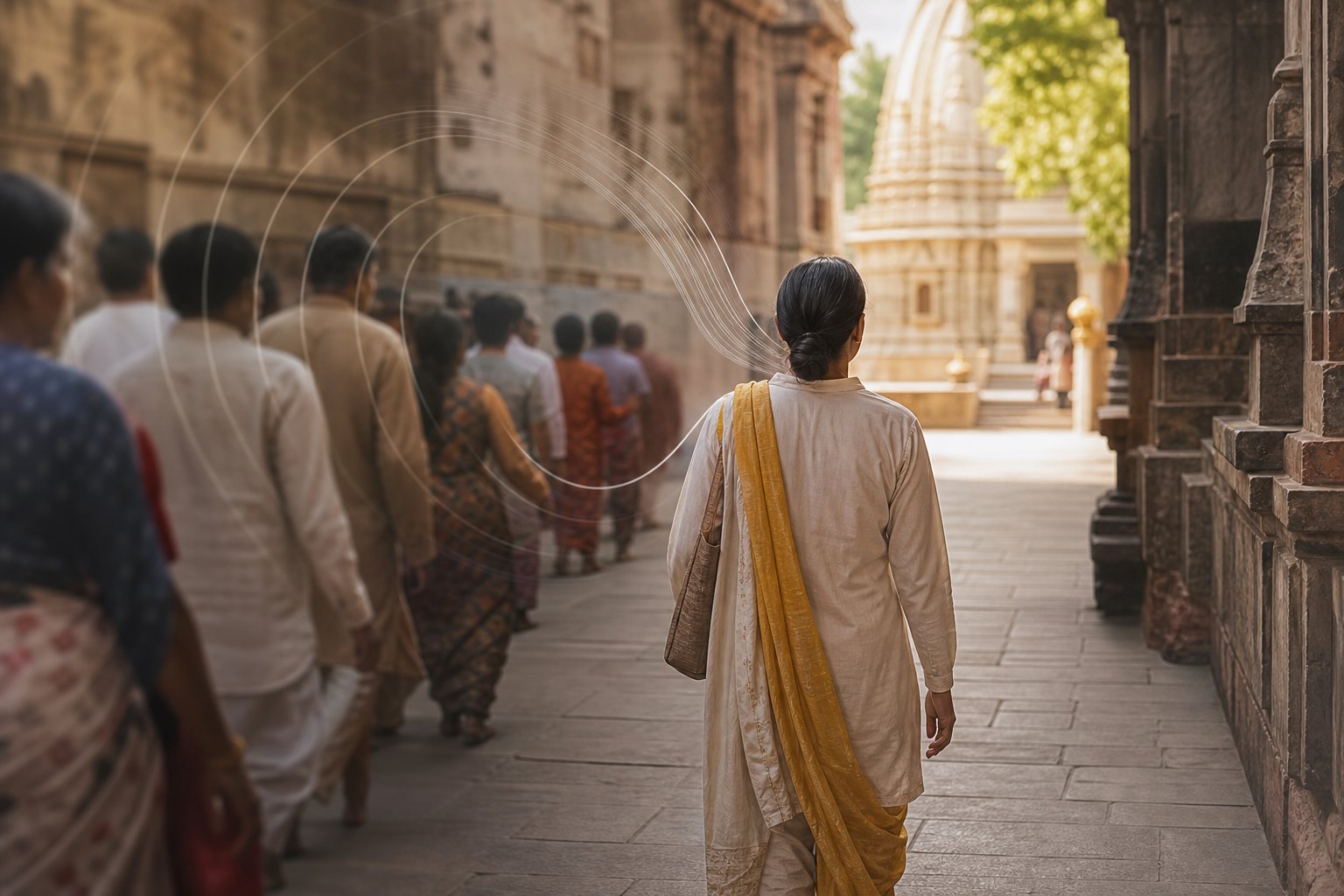
Human attention is unusually sensitive to personally meaningful sounds, especially one’s own name. In a crowded passage filled with overlapping speech, devotional recitation, movement, and strong emotion, a fragment of conversation can easily feel like a deliberate summons. This familiar feature of attention is often called the cocktail party effect.
The atmosphere at Mehandipur can make that effect more powerful. You may have just completed an intense petition. Other devotees may be praying loudly, crying out, or moving unpredictably. Your mind is already alert to signs connected with the concern that brought you there. An ambiguous voice can therefore acquire far more significance than the same sound would have in an ordinary street.
Pre-commitment is the practical answer. When you decide beforehand that you will not investigate unfamiliar calls during the exit, every sound no longer demands a fresh judgment. You preserve attention for the action already chosen: leave calmly and complete the crossing.
This psychological explanation does not require a devotee to abandon the shrine’s spiritual understanding. A living Dharmic discipline can operate on several levels at once. It can protect ritual integrity, train the mind against suggestion, reduce unnecessary contact in a dense crowd, and express trust in Balaji. You do not need to settle a metaphysical debate while standing at the threshold. You need to complete the practice with steadiness.
Do not confuse ritual discipline with neglect
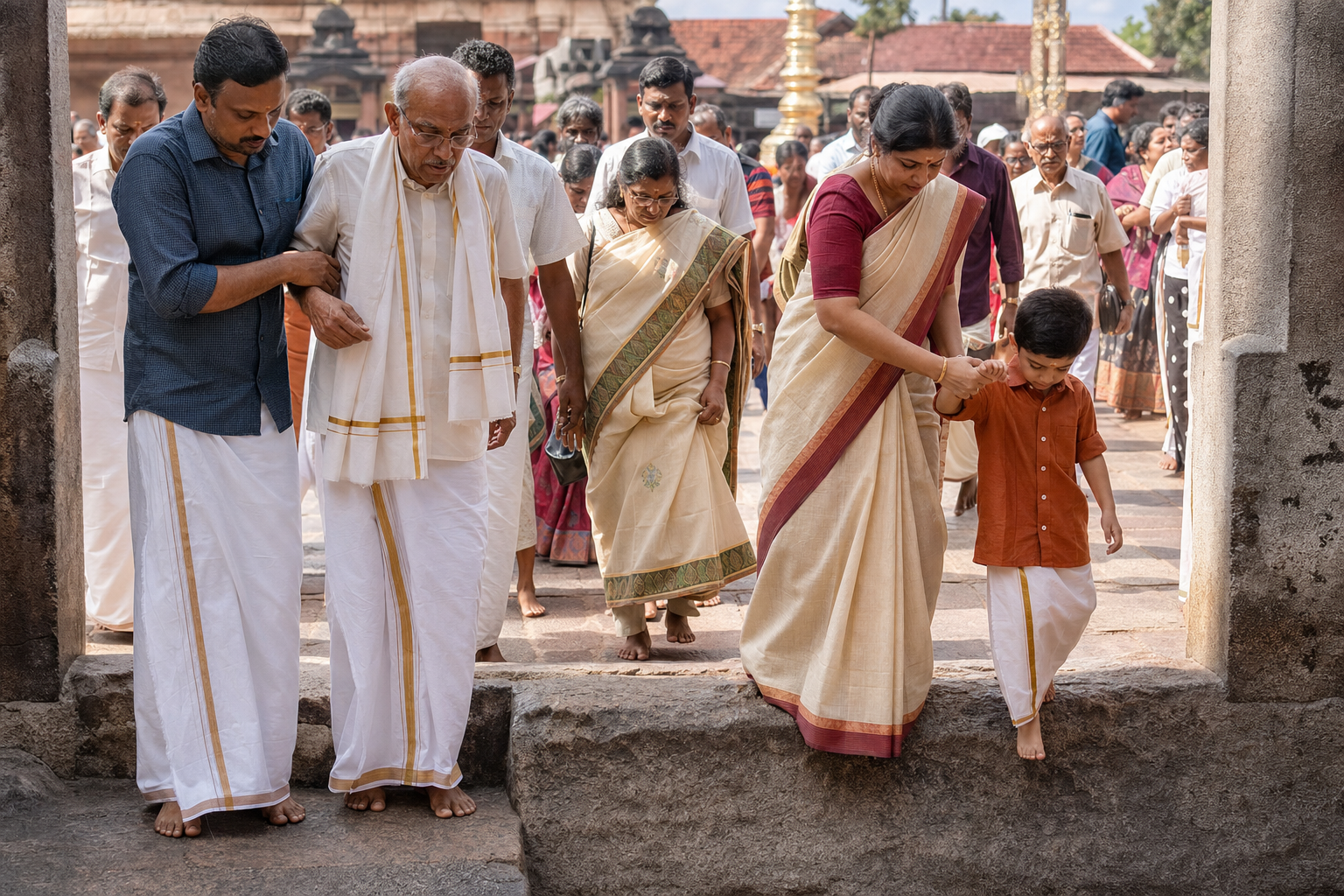
The no-looking-back custom concerns distraction and unnecessary re-engagement. It does not cancel your duty toward people in your care. If a known companion calls because someone has fallen, a child is missing, or an older person needs help, respond to the actual need. If temple personnel issue a safety direction or crowd conditions change, follow that direction. Dharma does not ask you to preserve the appearance of composure while ignoring immediate danger.
You may also see people undergoing visible distress. Do not stare, photograph, film, mock, touch, restrain, or attempt your own intervention. Give the person space, protect their privacy, and notify a responsible sevak or appropriate emergency personnel when help is needed. The intensity of another devotee’s suffering is not a spectacle and does not give an onlooker permission to cross personal boundaries.
Spiritual care and professional care do not have to compete. Collapse, physical injury, danger to oneself or others, severe continuing disorientation, or distress that prevents ordinary functioning warrants qualified medical or mental-health assistance. A temple visit may give a family devotion, community, hope, and resolve, but it should not be presented as a substitute for necessary clinical care.
If you accidentally glance back, do not convert a reflex into a diagnosis. A momentary movement does not establish that an affliction has attached itself to you, that something has followed you, or that the entire visit has failed. Do not enter a cycle of repeatedly returning, repeating offerings, or seeking escalating assurances from strangers. Steady your breathing, return your attention to your companions, and continue to the agreed meeting point. If fear remains intense or begins disrupting daily life, seek support from a trustworthy spiritual guide and an appropriate health professional.
What you carry home matters more than a dramatic exit
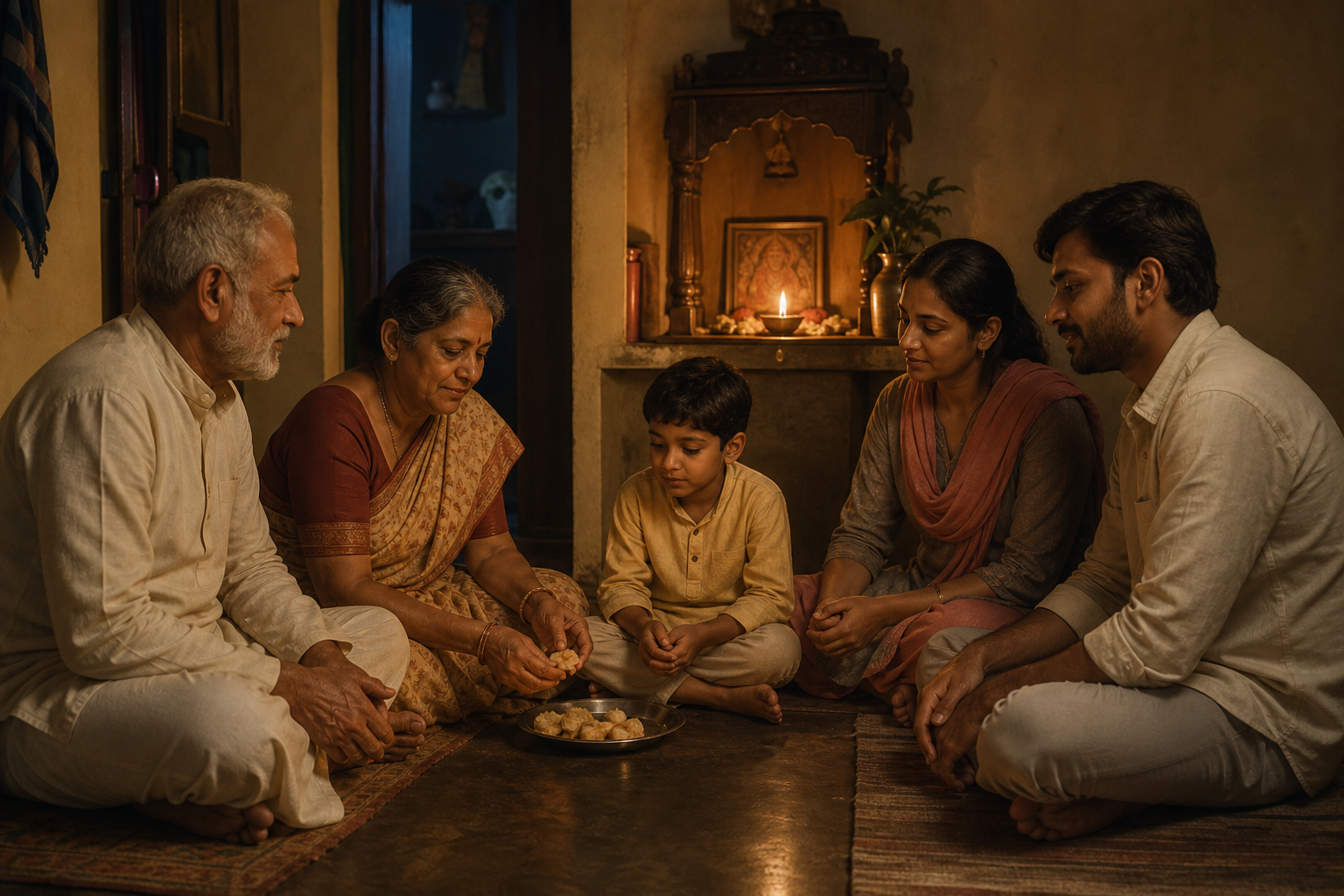
The shrine’s sacred-court imagery offers a useful way to understand the finality of the departure. A matter has been brought forward, heard, and placed under protection. The devotee then leaves with fortitude instead of repeatedly reopening the case through doubt. In that sense, not looking back is not mainly about the caller. It is about refusing to surrender your sankalpa to the next moment of uncertainty.
The discipline should continue in ordinary conduct. Ask yourself what you sought to leave behind, which truthful action supports that release, and what responsibility now belongs to you. Continue the prayer you committed to maintain. Keep the ethical promise connected with your petition. Address family, financial, emotional, or health problems through the appropriate worldly channels instead of expecting one ritual gesture to perform every kind of work.
The exact injunction belongs to Mehandipur Balaji’s local ethos and should not be projected onto every Hindu temple or every Dharmic path. Its governing principle is nevertheless familiar across Dharma traditions: preserve inward steadiness after concentrated practice. Stillness after recitation, restraint after a vow, reverence around scripture, and mindful conduct after worship all protect an intention from being scattered by immediate distraction. Buddhism’s paritta recitations, Jain renewal through the Navkar Mantra, and Sikh maryada around the Guru Granth Sahib are distinct practices, not interchangeable versions of one rite, but each gives disciplined attention a place in spiritual life.
When you reach the threshold at Mehandipur, do not scan the crowd for a mysterious test. Keep your group close, your attention forward, and your pace calm. Then let the promise embodied in those few steps shape the first truthful decision you make after returning home.
References
