
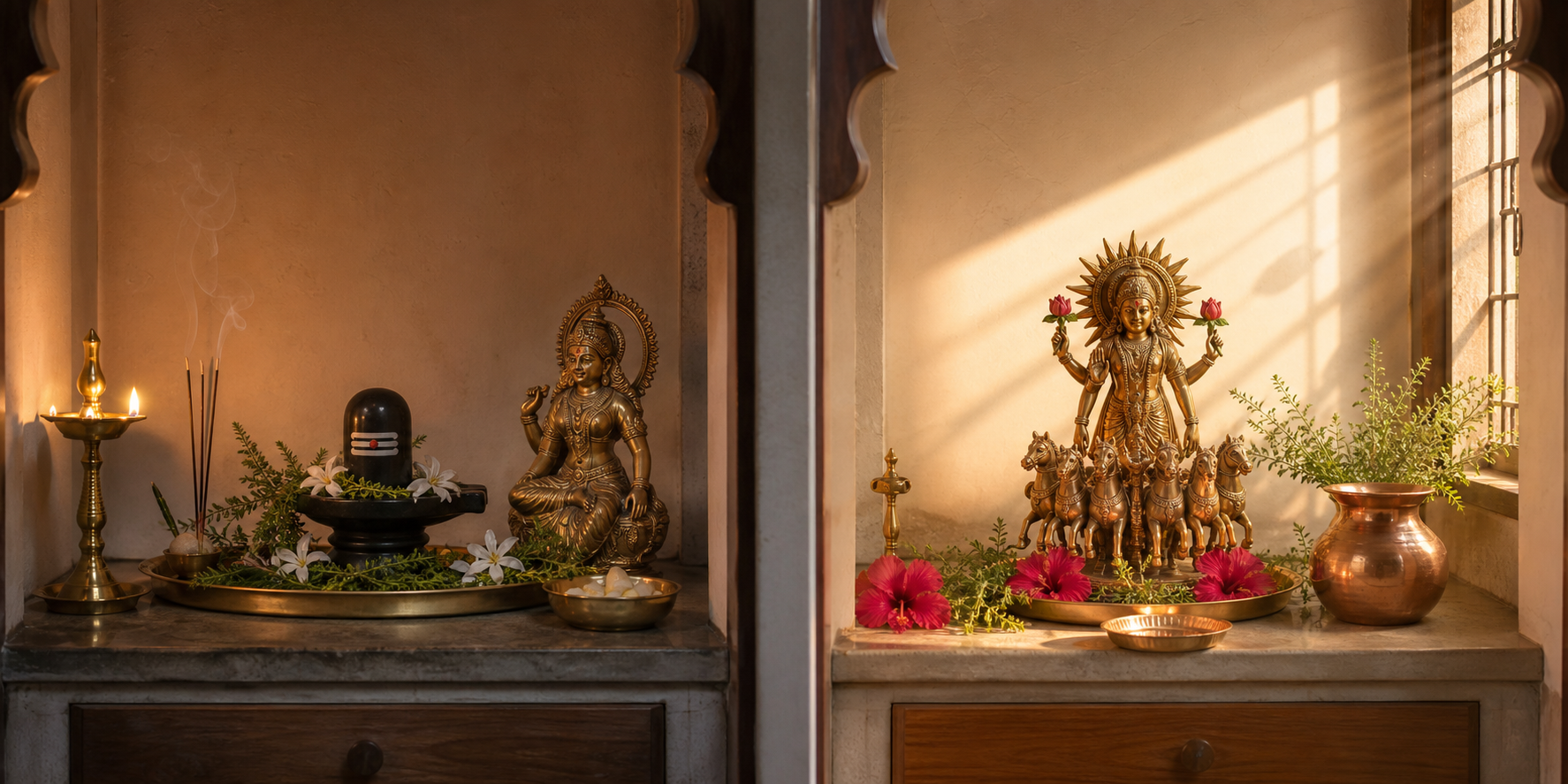
Your panchang may place Uma Shivagni Damana on Chaitra Shukla Tritiya and Surya Damanotsavam on Chaitra Shukla Saptami. Their similar names can make them look like two versions of one festival. They are distinct observances, and each has its own deity, ritual emphasis, and defining offering.
The cleanest home practice is to prepare the common materials once, keep the rite-specific offerings separate, and worship Shiva-Parvati and Surya on their respective tithis. You do not need an elaborate installation. You need the correct day, an honest sankalpa, a manageable sequence, and enough attention to understand what each act is training you to do.
First distinguish the two meanings of Damana
Damana carries two related but different ritual senses here. In Uma Shivagni Damana, it is traditionally understood as the pacification or disciplined channeling of Shiva’s intense, transformative fire through Uma’s compassionate shakti. Water abhisheka, sandalwood, bilva, flowers, mantra, and composed conduct express that cooling movement from raw intensity to auspicious household order.
In Surya Damanotsavam, the identifying element is Damanaka, commonly called Dhavanam. It is the aromatic plant Artemisia pallens, offered as leaves or a garland to Surya. Water offered at sunrise, followed by Damanaka worship, honours Surya as pratyaksha devata: the Divine encountered through the directly perceptible source of light, warmth, time, and life.
One rite therefore cools and reconciles; the other receives and directs radiance. Their shared lesson is not the suppression of sacred power. It is the placement of power under dharma. Shiva’s tapas becomes benevolent through Uma’s grace, while the energy received from Surya is turned toward clarity, steadiness, and loka-samgraha, the welfare of the larger world.
Keep that distinction visible on the altar. Bilva belongs to the Shiva offering, flowers honour Uma, and Dhavanam gives the Surya observance its particular identity. Do not treat those leaves as interchangeable merely because both rites occur during Chaitra.
Plan the two observances before arranging the altar
| Observance | 2026 civil date | Preferred time | Defining ritual emphasis |
|---|---|---|---|
| Uma Shivagni Damana | 21 March 2026 | Morning or forenoon when Tritiya governs the observance; evening Shiva-Una arati may be added | Cooling abhisheka and worship of Shiva with Uma |
| Surya Damanotsavam | 25 March 2026 | Sunrise arghya, especially when Saptami prevails at sunrise | Water offering followed by Damanaka or Dhavanam worship |
Use these dates as the 2026 reference, not as a permanent annual rule. A tithi is a lunar interval rather than a midnight-to-midnight civil date. Saptami, for example, is identified when the Moon’s elongation from the Sun lies between 72 and 84 degrees. Its beginning and end can therefore fall at different clock times in different places.
Check a panchang calculated for the place where you will worship. If an app set to another city disagrees with your local temple calendar, do not settle the question by choosing the more convenient date. Follow your family’s parampara or ask the priest whose calendrical method your community actually uses.
Prepare one common set and two separate sets
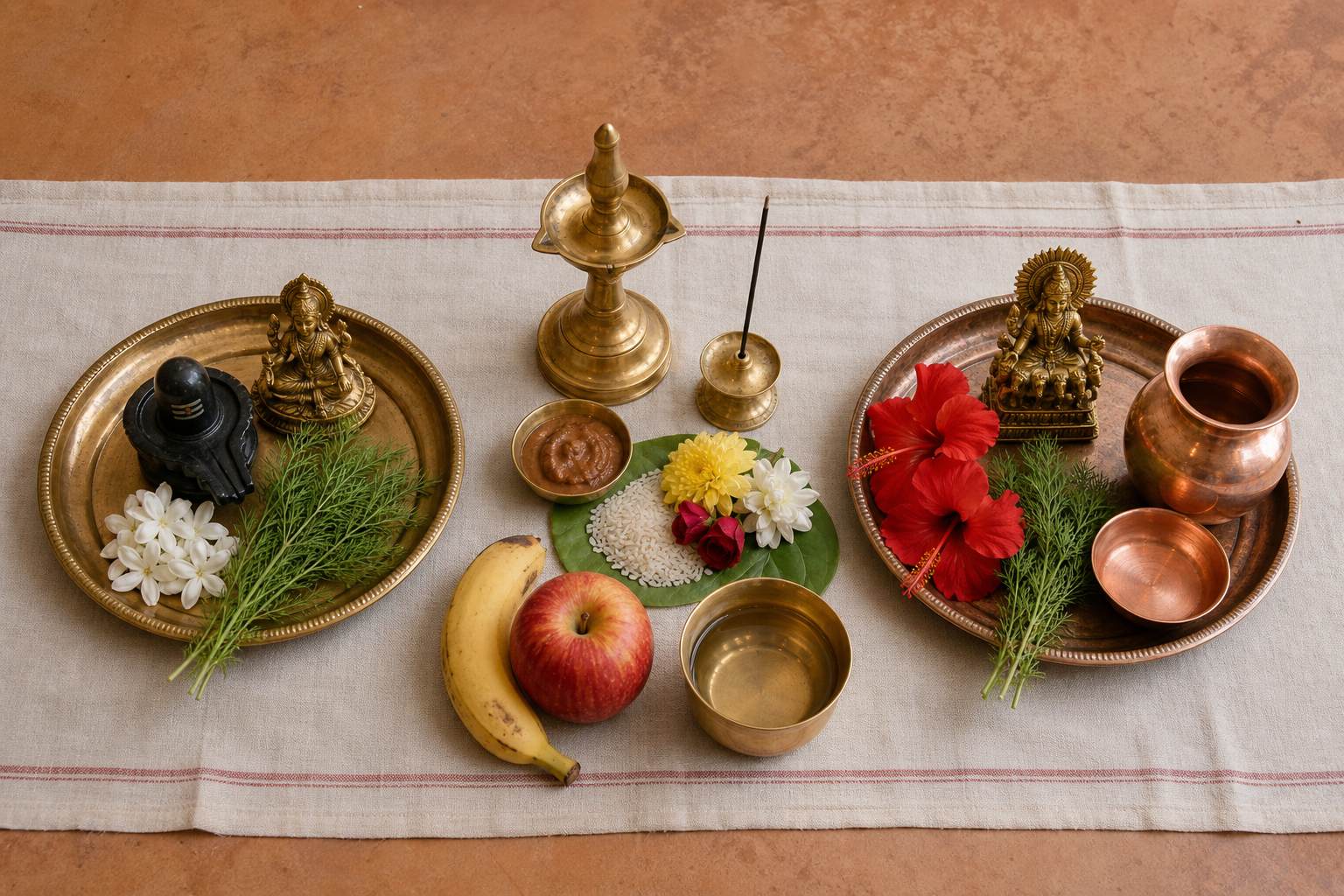
For both days, keep a clean cloth, lamp and wick, incense, clean water, akshata, flowers, fruit or another simple sattvic naivedya, and the vessels needed for worship. Reusable metal vessels and modest quantities reduce both distraction and waste.
- For Uma Shivagni Damana: a washable Shivalinga or Shiva image, an image or murti of Parvati, bilva leaves, sandalwood paste, turmeric, kumkum, and the ingredients for panchamrita if used in your custom. A turmeric-formed Gauri or a separate kalasha can represent Uma when no murti is available.
- For Surya Damanotsavam: a Surya image or yantra, a dedicated lota, preferably copper, red or saffron cloth, kumkum, red flowers, Dhavanam leaves or a garland, and fruit or jaggery-based naivedya.
- For an optional kalasha on Tritiya: a copper or silver vessel with clean water, mango leaves, a coconut, and red and white thread. The kalasha is helpful but should not become a reason to abandon a simple puja.
Ask for Dhavanam by both its common and botanical names if identification is uncertain. Do not assume that any fragrant herb is Damanaka. If the correct plant is unavailable, complete the other Surya upacharas honestly and seek a lineage-specific answer about substitution rather than silently relabelling another leaf.
Decide the practical limits in advance
- Choose whether liquids will be poured over a washable Shivalinga. If you have only a framed picture, make the liquid offerings symbolically into a separate clean vessel instead of damaging the image.
- Choose a fasting discipline separately for each date. A full fast, fruit-based observance, or simple sattvic meal may be used according to health, capacity, and custom. Waterless fasting is not a test of devotion; anyone for whom fasting conflicts with health needs should use a moderated form and follow appropriate medical guidance.
- Plan the disposal before beginning. Use small quantities, avoid plastic decorations, distribute edible prasada, and return biodegradable leaves and flowers to the soil or compost where local practice permits.
Perform Uma Shivagni Damana as a rite of relational restraint
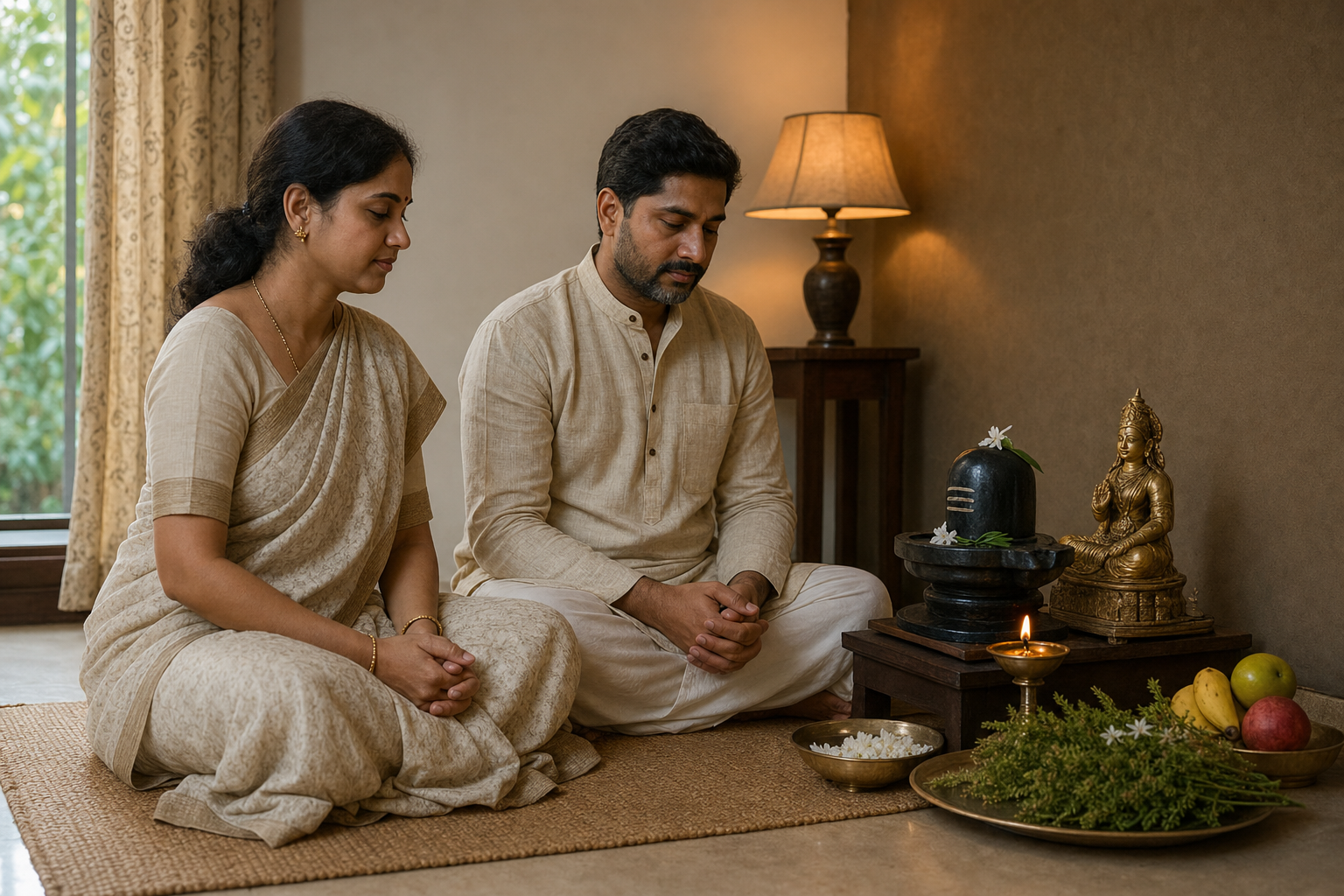
Chaitra Shukla Tritiya places the emphasis on Shiva and Uma together. Shiva is not approached only as the solitary ascetic, nor Uma only as a giver of domestic fortune. Their conjunction asks how tapas and tenderness, resolve and responsiveness, can inhabit the same household.
- Bathe, wear clean clothes, and prepare an east- or north-facing altar. Place the Shivalinga or Shiva image beside the representation of Uma.
- If using a kalasha, establish it before the principal worship. Fill it with clean water, arrange the mango leaves and coconut, and use red and white threads to recall the complementary presence of Shiva and shakti.
- Light the lamp and incense. Settle the breath, then offer a flower or sweet to Ganesha with Om Gam Ganapataye Namah.
- State the vow without turning it into a catalogue of demands. The concise traditional form is Chaitra shukla tritiyayam Uma-Shivagni-damana-vratam karishye. You may add a prayer for shanti, family welfare, emotional balance, or responsible household life.
- Invoke Shiva and Uma. If Uma is represented by a turmeric Gauri or kalasha, address the invocation to that form with the same care you would give a murti.
- Perform the cooling abhisheka to the Shivalinga. Begin with water. If your custom includes panchamrita, use milk, yogurt, ghee, honey, and sugar, then finish with a thorough clean-water rinse. Apply sandalwood paste after the linga has been dried as appropriate.
- Offer bilva leaves to Shiva and fragrant flowers to Uma. Turmeric and kumkum may be offered to Gauri according to family custom.
- Chant Om Namah Shivaya 108 times, or recite the Shiva and Gauri prayers known in your household. If you have a lineage-specific Uma-Maheshvara stotra or vrata-katha, this is the natural place for it.
- Offer fruit, kheer, a milk-based sweet, or another sattvic naivedya. Perform arati, bow to both deities, and distribute prasada. An evening lamp and brief joint prayer may complete the day’s observance.
The rite becomes practical when your sankalpa includes conduct that is under your control. Marital harmony is not a prayer that the other person will become easier to manage. Choose one discipline for yourself: pause before harsh speech, consult before a consequential use of shared resources, or refuse to use silence as punishment. If you are preparing for marriage, direct the same vow toward the patience, truthfulness, and responsibility you want to bring into a future household.
This is the human meaning of cooling Shivagni. Strong energy is not denied; it is prevented from scorching the relationship it was meant to protect. Water, sandalwood, mantra, and measured speech should all point in the same direction.
Perform Surya Damanotsavam from arghya to Damanaka offering
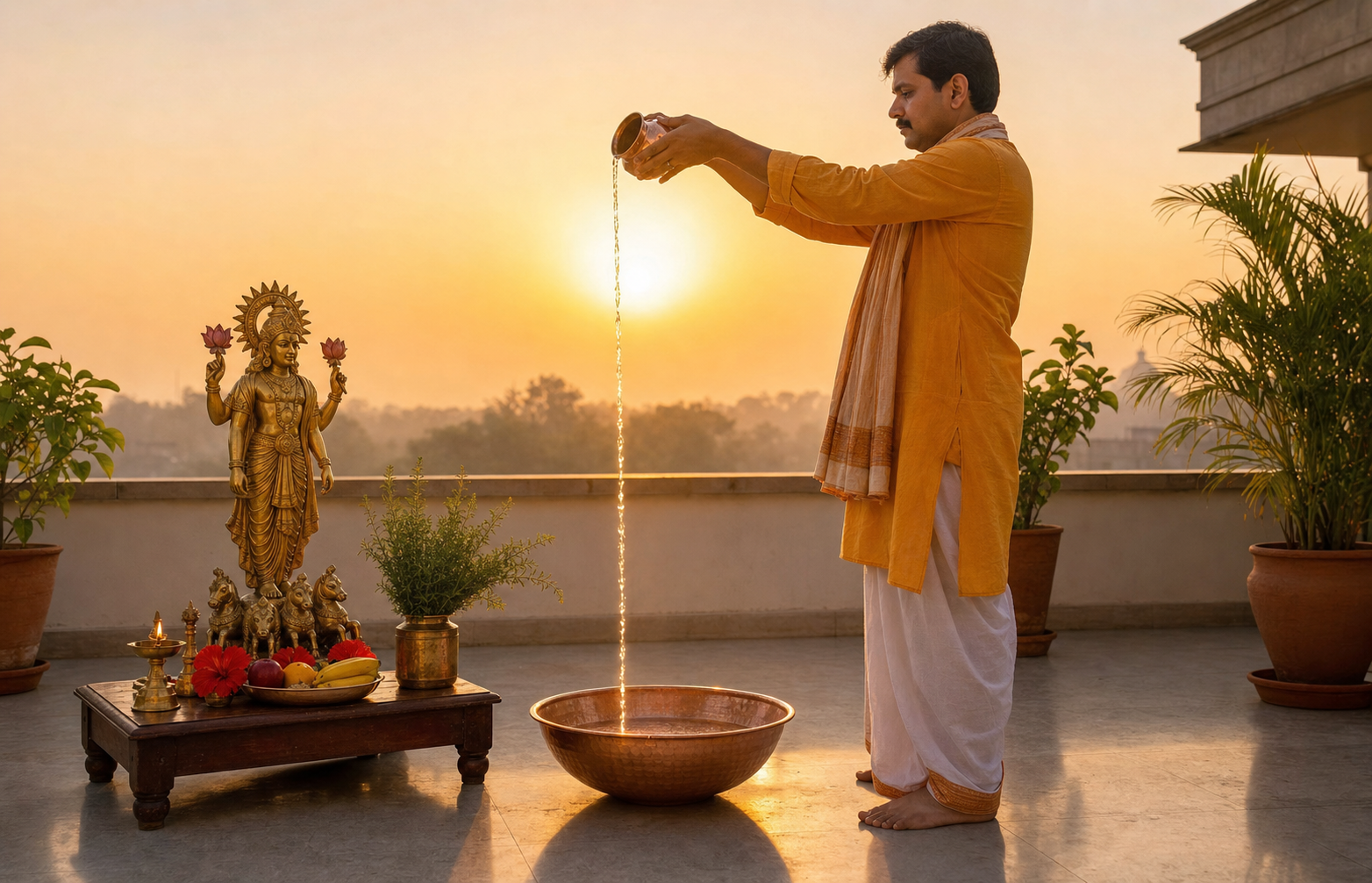
Surya worship begins with punctuality. Prepare the lota and altar before sunrise so that the central offering does not become hurried while you search for rice, leaves, or a safe place to pour the water.
- After bathing, arrange the Surya image or yantra on a red or saffron cloth. Set out the lamp, incense, red flowers, Dhavanam, and naivedya.
- Fill the lota with clean water. Add a small amount of akshata, a pinch of kumkum, and a few Dhavanam leaves according to the customary form of the observance.
- Make a simple sankalpa to observe Chaitra Shukla Saptami in honour of Surya, asking for clarity, steadiness, the well-being of your household, and the capacity to act according to dharma.
- At sunrise, stand facing east in a place where the water can be offered safely. Lift the lota to about shoulder level and let the stream descend in front of your feet without splashing the altar. Recite the Surya Gayatri or the Surya mantra taught in your tradition. Do not stare directly at the Sun.
- Return to the altar, light the lamp and incense if you have not already done so, and offer sandal or kumkum, red flowers, and the regular upacharas.
- Place fresh Dhavanam leaves or a garland near the Surya representation. Do this deliberately: Damanaka patra-puja is the feature that distinguishes this Chaitra Saptami observance.
- Recite the Aditya Hridayam, the Surya Gayatri, or a shorter Surya stotra that you can pronounce with attention. A shorter known prayer is preferable to a long recitation performed mechanically.
- Offer fruit, jaggery, or a simple sattvic preparation. Make the customary pradakshina, perform arati, and close with a prayer that the clarity and energy received will serve more than private ambition.
Surya Namaskar may complement the rite when it is already a suitable part of your physical practice. Keep it measured and attentive to the breath. The postures do not replace arghya or Damanaka worship, and physical strain is not evidence of a stronger vrata.
Carry one solar discipline into the rest of the day. Begin an overdue duty on time, bring clarity to a confused decision, or use part of your energy for family or community welfare. Surya is honoured inadequately if light is praised at dawn but avoidable obscurity, delay, or disorder is protected after breakfast.
Questions that prevent the most common mistakes
What should you do if two panchangs show different dates?
First confirm that both are set to your actual location and the same calendrical tradition. For these vratas, the tithi prevailing at local sunrise commonly guides the choice. If Tritiya or Saptami crosses sunrise differently in your region, follow your parampara or local temple rather than copying a muhurta from another city. The fixed civil dates above apply to the stated 2026 observances, not to every location and year without qualification.
Can you combine the Shiva-Parvati and Surya worship?
You can prepare shared materials together and carry one household sankalpa through the Chaitra period, but do not collapse the ritual actions into a single day. Tritiya centres on Uma and Shiva, cooling abhisheka, and relational concord. Saptami centres on sunrise arghya, Surya, and Dhavanam. Observing the distinction is part of observing the vrata.
What if Dhavanam is not available?
Do not guess at the plant or buy an unidentified substitute simply to complete a checklist. Offer arghya, lamp, flowers, naivedya, and prayer with sincerity, then ask your family priest or temple what your tradition accepts when Damanaka is unavailable. The absence of one material calls for honesty and guidance, not botanical improvisation.
Is Surya Damanotsavam another name for Ratha Saptami?
No. Both honour Surya on a Shukla Saptami, but they occur in different lunar months and preserve different ritual centres. Ratha Saptami falls in Magha and emphasizes Surya’s chariot and seasonal turn; the Chaitra observance is identified by its Damanaka offering. A family may observe either or both according to its inherited practice.
For your next Chaitra observance, place two entries in the household calendar: Tritiya for cooling intensity through responsible relationship, and Saptami for receiving light and putting it to dharmic use. Prepare the two trays before the first date. Then keep one concrete vow from each puja after the flowers have been cleared away.
References
- DharmaRenaissance Blog – Surya Damanotsavam 2026: Auspicious Sun-Worship on Chaitra Saptami – A Complete Guide
- DharmaRenaissance Blog – Uma Shivagni Damana Puja 2026: Unlock Auspicious Shiva-Parvati Grace on Chaitra Tritiya
