

If the Varanasi boat video has reached your phone, your immediate decision is not whether Ma Ganga deserves defence. She does. Your decision is whether you will defend her through truth and equal law, or help a compressed clip become fuel for rumour and communal hostility.
The responsible position is firm and uncomplicated: throwing food or packaging into the Ganga is unacceptable, whoever does it; an allegation still has to be proved; and no individual’s conduct licenses contempt toward an entire community. You can hold all three positions without weakening any of them.
Key takeaways
- The circulating account alleges that a small group broke the Iftar fast on a boat near Varanasi and discarded leftover chicken biryani into the river. Individuals were detained and an investigation was opened, but detention is not conviction.
- You do not have to prove a plan to insult Hindu beliefs before condemning waste disposal. Pollution is a concrete act with its own civic and environmental consequences.
- Cooked food is biodegradable, but that does not make a river an appropriate disposal system. Decomposition consumes oxygen, while nutrients, oil, bones and accompanying packaging create additional problems.
- A single dumping incident is not comparable in scale with untreated sewage, industrial effluent or routine littering. It can still violate a sacred place, model unacceptable conduct and damage trust.
- The strongest response protects Ma Ganga through verified evidence, proportionate enforcement, consistent rules and no collective blame.
Read the viral clip without surrendering your judgement
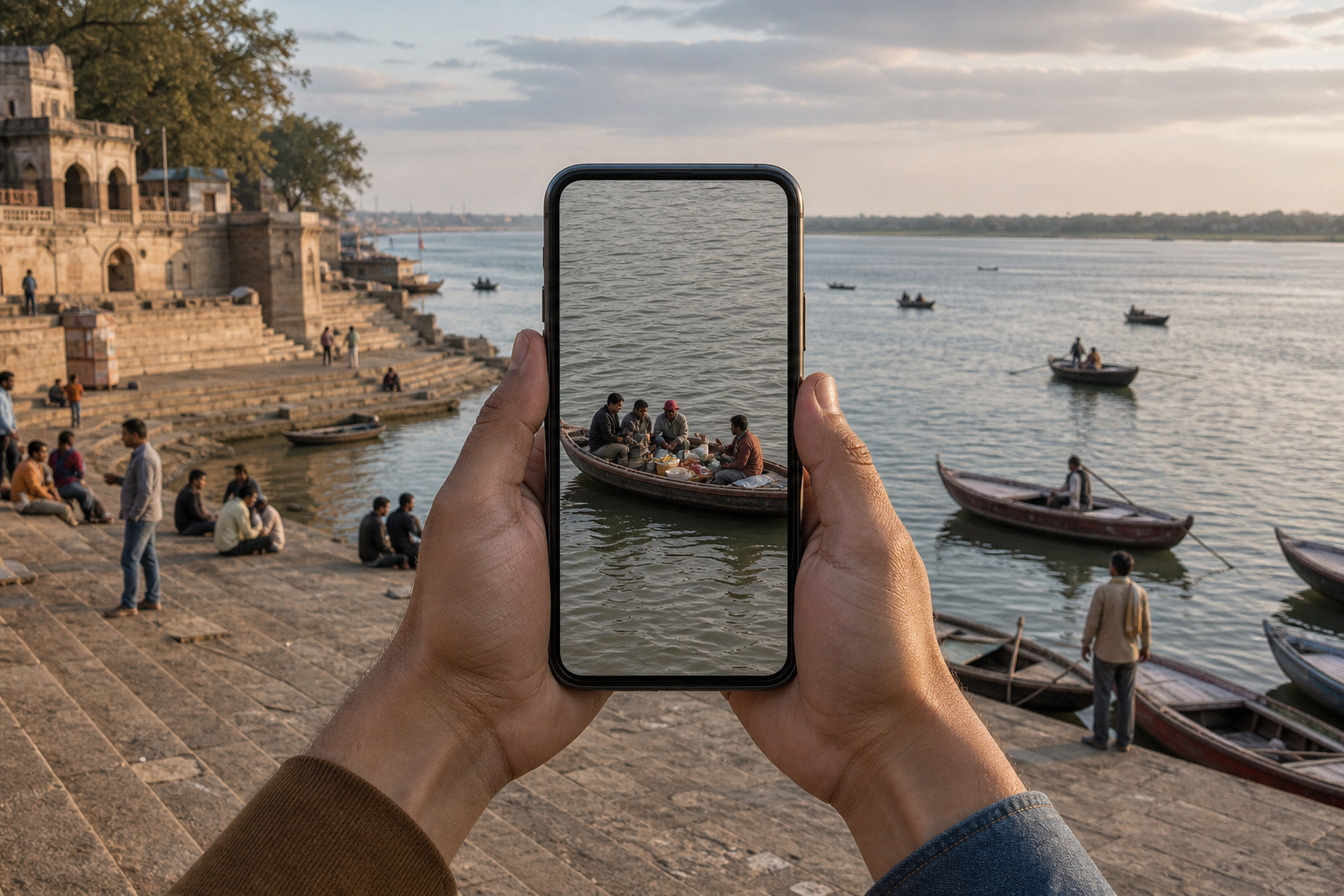
A viral caption often claims more than a video can establish. Images may show conduct, but they do not automatically establish the date, the complete sequence, every person’s identity, what happened outside the frame or the intention behind an act. A cropped clip can be sufficient reason to investigate without being sufficient reason to convict.
Sort what you encounter into three categories before you share it:
- Visible: What can actually be seen in continuous footage? Is an object shown entering the water? Can the material be identified, or is its identity supplied only by the caption? Are the boat, shoreline and location recognisable?
- Reported: What have police or district authorities confirmed? In this case, the limited public status described is that individuals were detained and an investigation was opened.
- Inferred: Was the act planned as a religious insult? Did every person present participate? Does the conduct represent a wider community? Those conclusions require evidence that mere presence in a clip cannot provide.
That distinction matters because the central allegation contains several separate claims: that the scene was near Varanasi, that the meal was an Iftar, that the food was chicken biryani, that leftovers entered the Ganga, and that identifiable people were responsible. Confirmation of one claim does not automatically confirm all the others.
If you are deciding whether to forward the clip, use a five-step check:
- Pause before reposting. Urgency created by a caption is not evidence.
- Look for the earliest available upload rather than relying on a cropped or subtitled copy.
- Compare the caption with the visible action. Write down what the footage establishes and what you are merely being asked to believe.
- Check official police or district communication and a reputable fact-checker for the location, date and investigative status.
- If you still share it, use narrow language: say that a video appears to show an alleged act under investigation. Do not convert an allegation into a verdict or an individual into a representative of millions.
If you possess useful information, preserve the original link, upload time and unedited file, then send them privately to investigators. Do not publish a person’s address, family details or unverified identity. Public exposure can endanger uninvolved people and contaminate a legitimate demand for accountability.
Sacred injury, environmental harm and the question of scale
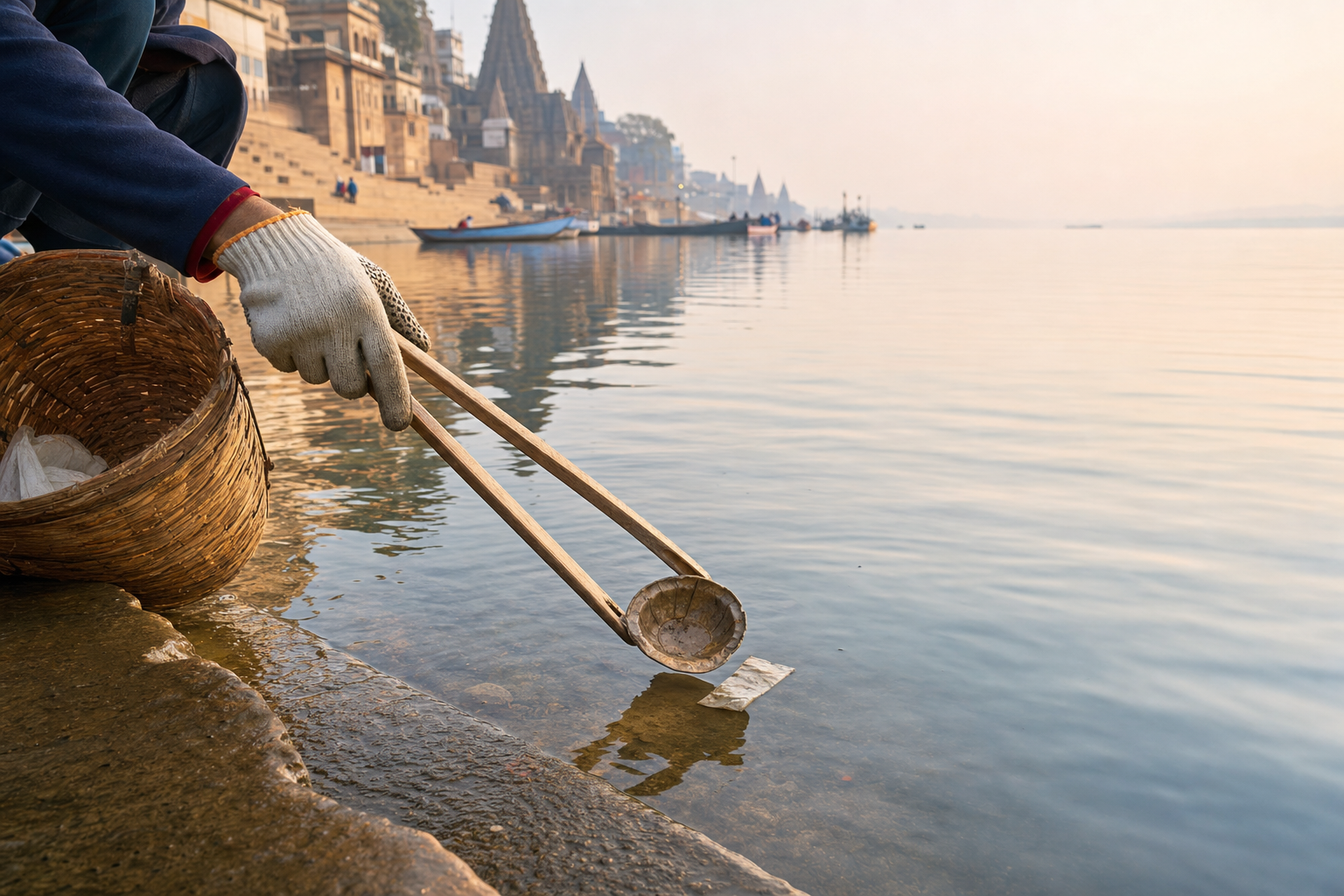
For Hindus, the objection cannot be reduced to a laboratory reading. Ma Ganga is a living sacred presence, and Kashi is not an interchangeable waterfront. Conduct at the ghats and on the river therefore carries religious meaning as well as civic consequences. Asking visitors to honour that sanctity is a reasonable public expectation.
The environmental objection is also real. When cooked rice, meat or other food decomposes in water, microorganisms consume oxygen. This raises biochemical oxygen demand and can reduce the dissolved oxygen needed by fish, invertebrates and a balanced aquatic ecosystem. Nitrogen and phosphorus from food residues can contribute to excessive nutrient loading and algal growth, especially where water moves more slowly.
Oil and greasy residues can form surface films. Spices, scraps and bones can attract scavenging animals around busy ghats and make sanitation harder. If a meal involves plastic cups, plates, bags or liners, the harm lasts much longer: larger items can entangle wildlife or be swallowed, while fragmentation adds to microplastic contamination. The useful rule is simple: biodegradable does not mean harmless when waste is placed directly into living water.
Scale must still be described honestly. One meal’s leftovers are a small ecological load compared with untreated sewage, industrial discharge and routine litter entering a major river. Exaggerating this incident into the principal cause of Ganga pollution would be false. Dismissing it as “only one plate” would also miss the point.
Small, visible acts shape public norms. If one boat treats the river as a bin without consequence, the next group receives permission by example. In a tirtha as prominent as Varanasi, the symbolic damage is greater because pilgrims, residents, boat workers and visitors depend on a shared understanding of appropriate conduct.
Consistency is essential. The same no-dumping standard should govern meal leftovers, tourist litter, commercial refuse and ritual material. Sewage and industrial effluent deserve enforcement proportionate to their much greater scale. Hindu reverence becomes more credible, not less, when we refuse to excuse pollution merely because the person responsible uses a religious, recreational or commercial label.
Let law address a proven act, not punish a community
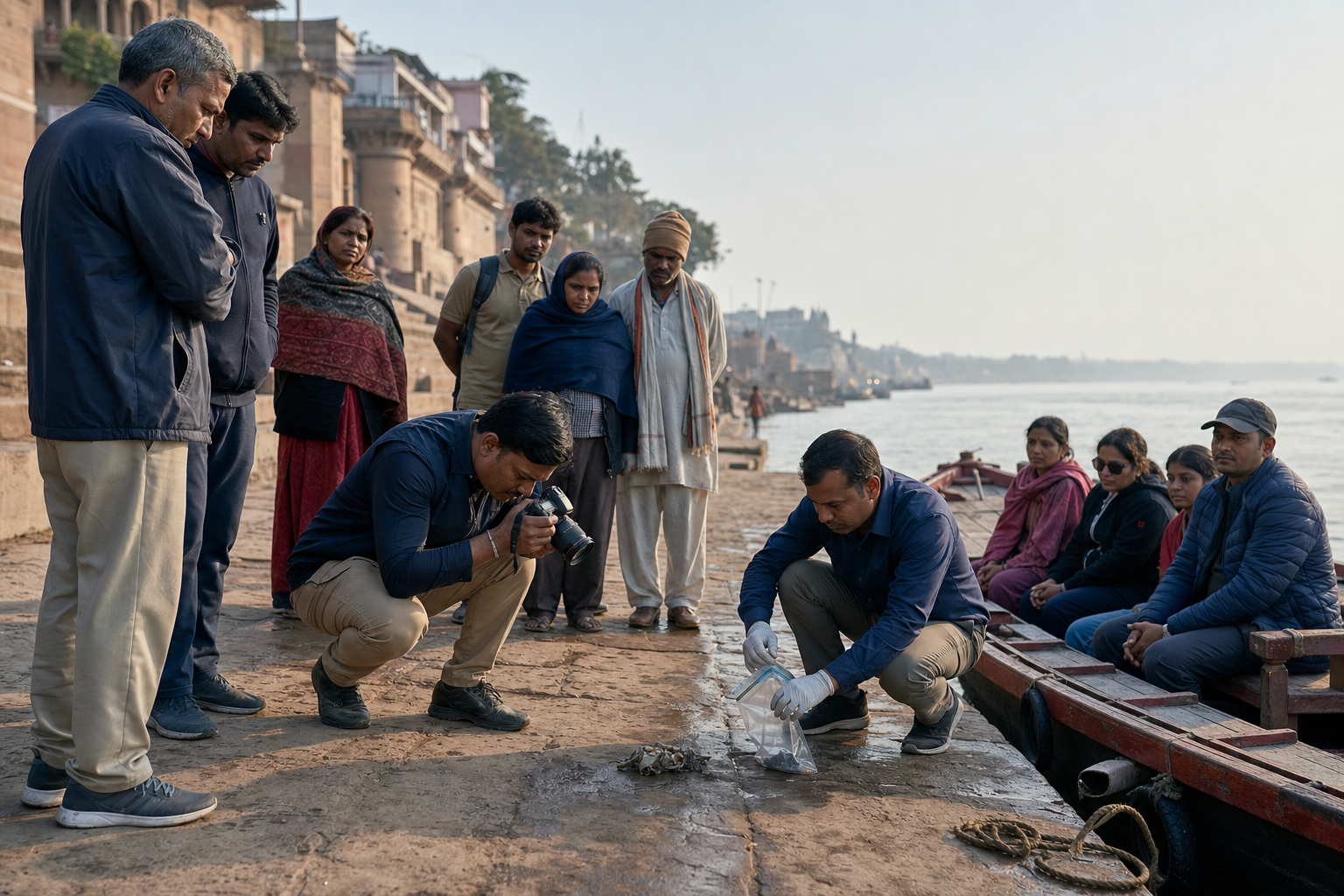
India has several legal routes for addressing the fouling of public water and improper waste disposal. The framework identified around the incident includes IPC Section 277 on fouling the water of a public spring or reservoir, IPC Sections 268 and 290 on public nuisance, the Water (Prevention and Control of Pollution) Act, 1974, the Environment (Protection) Act, 1986, the River Ganga (Rejuvenation, Protection and Management) Authorities Order, 2016, municipal by-laws and the Solid Waste Management Rules, 2016.
A list of provisions is not a finding of guilt. The applicable law and section numbers depend on the date of the alleged conduct, the official case record and the evidence investigators can authenticate. Relevant evidence may include forensic examination of the video, witness accounts, location verification and any recovered material. Police, prosecutors and courts must decide what can be proved against each person.
Keep four legal distinctions clear when discussing the controversy:
- Detention is not conviction. It means authorities have taken action during an investigation; it does not settle liability.
- Presence is not participation. A person appearing on a boat is not automatically responsible for another person’s disposal of waste.
- Suspicion is not proof of motive. A polluting act may be established without establishing a deliberate plan to insult a faith, and the two questions should not be conflated.
- Individual liability is not collective guilt. No legal principle permits blame to be transferred from an accused person to a religious community.
If you or someone close to you has been named in the matter, do not rely on viral summaries of criminal provisions. Preserve relevant material and consult a qualified local advocate who can inspect the actual case record. Public arguments cannot substitute for advice grounded in the facts and law applicable to that person.
Firm enforcement need not mean theatrical punishment. If an offence is proved and applicable law permits it, proportionate fines can be paired with supervised ghat clean-up or other restorative service. The point is to stop repetition, repair harm and establish a rule everyone can understand.
This is also where a Dharmic response must show confidence. Hindu dharma’s reverence for rivers, Sikh seva and sarbat da bhala, Jain ahimsa toward living beings including aquatic life, and Buddhist karuna all support stewardship rather than pollution. Iftar itself is associated with restraint, gratitude and cleanliness. A careless or wrongful act by participants does not define that observance or every Muslim.
Protecting Hindu sacred space does not require collective blame. It requires a clear norm, the courage to state it, and the discipline to apply it equally. A useful public statement is: “Throwing food or packaging into Ma Ganga is unacceptable. Authorities should verify the evidence and apply the law to those responsible. No community should be blamed collectively, and the same rule must govern every source of river pollution.”
Turn the controversy into a working standard for every ghat

If you witness dumping from a boat
- Do not start a confrontation on the water. A dispute in a moving or crowded boat can create an immediate safety risk.
- Ask the boat operator to stop the disposal and retain the waste on board.
- From a safe position, note the time, location, boat identifier and the specific action you observed. Record only what is necessary for a report.
- Send the material to the appropriate police or municipal channel. Keep your description factual and avoid religious generalisations.
- Do not enter the river to retrieve waste yourself. Let trained workers handle recovery where it is safe and practicable.
If you are organising a meal or gathering
Confirm local permissions before holding any organised activity on a boat or ghat. Then assign one named person to manage waste. Carry containers that can retain food residue without leaking, collect every cup and liner, and do an end-of-event check before the boat docks. Dispose of the material only at an authorised collection point. A “zero discharge to the river” instruction should be given before food is served, not after someone is seen throwing it away.
This standard should apply during festivals, Ramzan evenings, aarti time and ordinary tourist periods. Planning collection around predictable peaks is more effective than placing a few uncovered bins nearby and expecting voluntary compliance under crowd pressure.
What Varanasi authorities and community leaders can implement
- Publish a short multilingual river-etiquette code stating that food, ritual material and packaging must not be discarded into the Ganga.
- Place covered waste points where passengers board and disembark, and use mobile collection during high-footfall periods.
- Link boat licences and event permissions to a brief environmental orientation, a waste-retention requirement and recorded compliance checks.
- Require boat operators to point out the waste container and no-dumping rule before departure.
- Install signs with a QR reporting route at major ghats so a resident can submit the location, time and evidence without broadcasting accusations online.
- Publish the status of complaints and enforcement in a form the public can follow. Visible follow-through builds more trust than occasional high-profile action.
- Where legally appropriate, combine proportionate fines with supervised riverfront service so that accountability includes repair.
- Invite Hindu, Muslim, Sikh, Jain and Buddhist organisations to support one rule publicly: sacred and public waters are not waste channels.
The next time an incendiary clip appears, ask three questions before reacting: What is verified? What harm needs to stop? What response can be applied consistently? Then report evidence, demand equal enforcement and keep community identity separate from individual liability. That is a practical way to defend Ma Ganga without weakening dharma through rumour or injustice.