
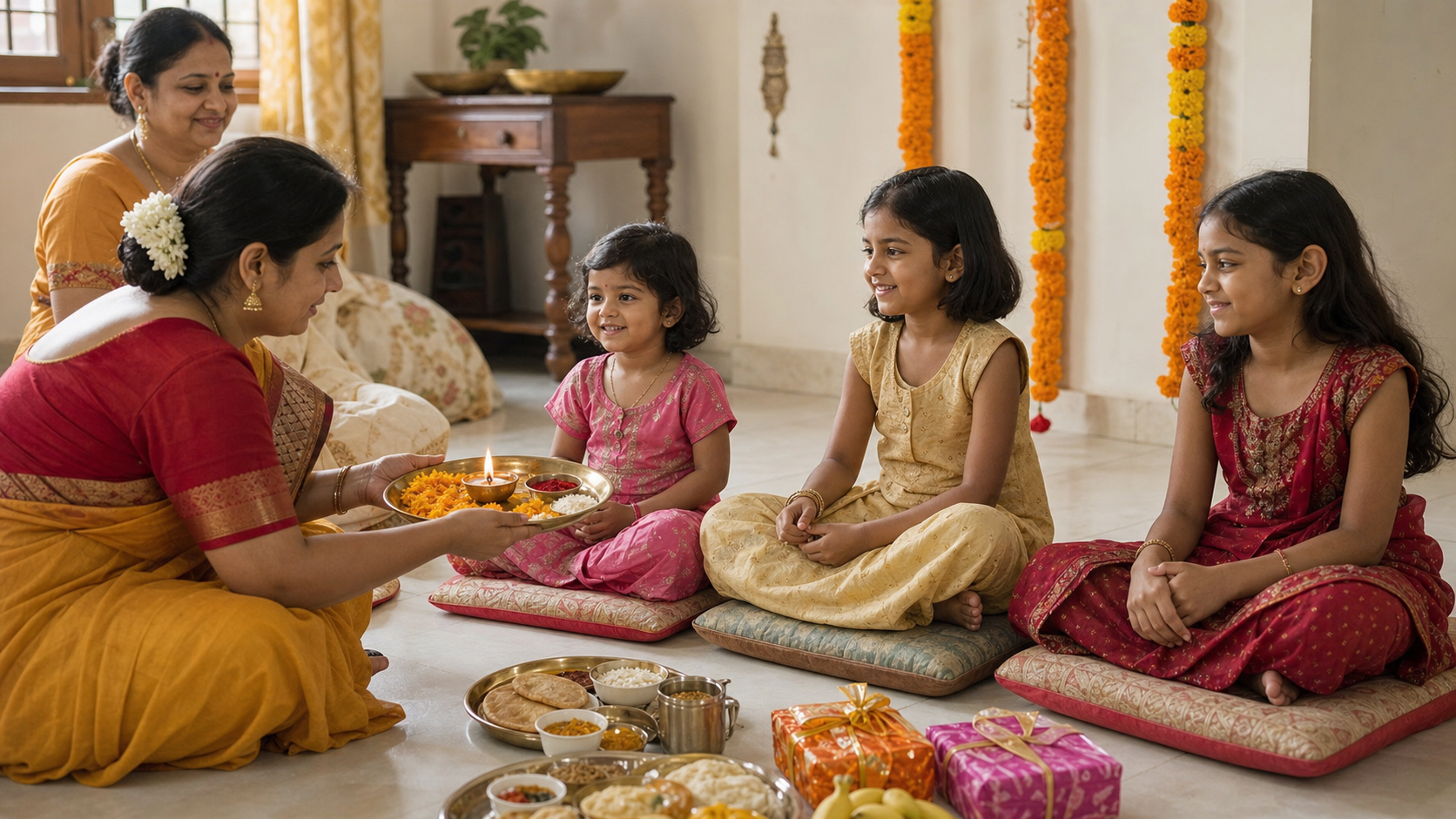
You are ready to invite children for Kanya Puja, but one decision can hold up the whole plan: should your family worship on Ashtami or Navami, and how much ceremony is actually necessary? For Shardiya Navratri 2026, keep October 18 in view for Ashtami and October 19 for Navami, then confirm the applicable tithi in a panchang calculated for your location.
The best puja is one the children experience as a genuine welcome, not an obligation. The essential vidhi is straightforward: make a sankalpa, receive the Kumaris respectfully, offer simple worship, serve a fresh sattvic meal, and give dakshina or a thoughtful gift. Ritual detail should deepen that hospitality, never overpower it.
Choose the date by tithi, not by a generic calendar
The principal Kanya Puja dates for 2026 are March 26 during Chaitra Navaratri and October 18 or 19 during Shardiya Navratri. The October choice depends on whether your family performs the rite on Durgashtami or Mahanavami.
| Navratri observance | 2026 civil date | How to use the date |
|---|---|---|
| Chaitra Navaratri Kanya Puja | March 26, Thursday | Confirm the local tithi if observing outside the calendar’s place of calculation. |
| Shardiya Durgashtami | October 18 | This is the widely followed Ashtami date for Kanya Puja in 2026. |
| Shardiya Mahanavami | October 19 | Use this date if your family, temple, or regional tradition performs Kanya Puja on Navami. |
These dates are guideposts, not universal clock times. Ashtami and Navami are lunar tithis rather than midnight-to-midnight dates. A tithi can cross two civil dates, and the observance assigned to it can differ with local sunrise and geography. This matters especially in diaspora communities: an Indian calendar image circulating through a family group may not give the correct local observance for Toronto, London, Singapore, or another city.
Use a clear order of precedence. Begin with your family parampara. If there is no settled family custom, follow the practice of the temple or community with which you will worship. Then verify the chosen day through a trusted regional panchang for your actual location. A household that observes on Ashtami is not made incorrect by a neighbour who observes on Navami; both practices are established.
Many homes conduct the children’s worship and meal between sunrise and noon. Some Shakta traditions give special importance to Sandhi Kaal, the junction of Ashtami and Navami, for arati or stotra recitation. If that interval falls at an inconvenient hour, adults can keep the associated prayer without requiring young guests to follow an uncomfortable schedule. The children’s safety, appetite, school commitments, and rest should guide the hospitality portion.
Build the puja around the children’s comfort
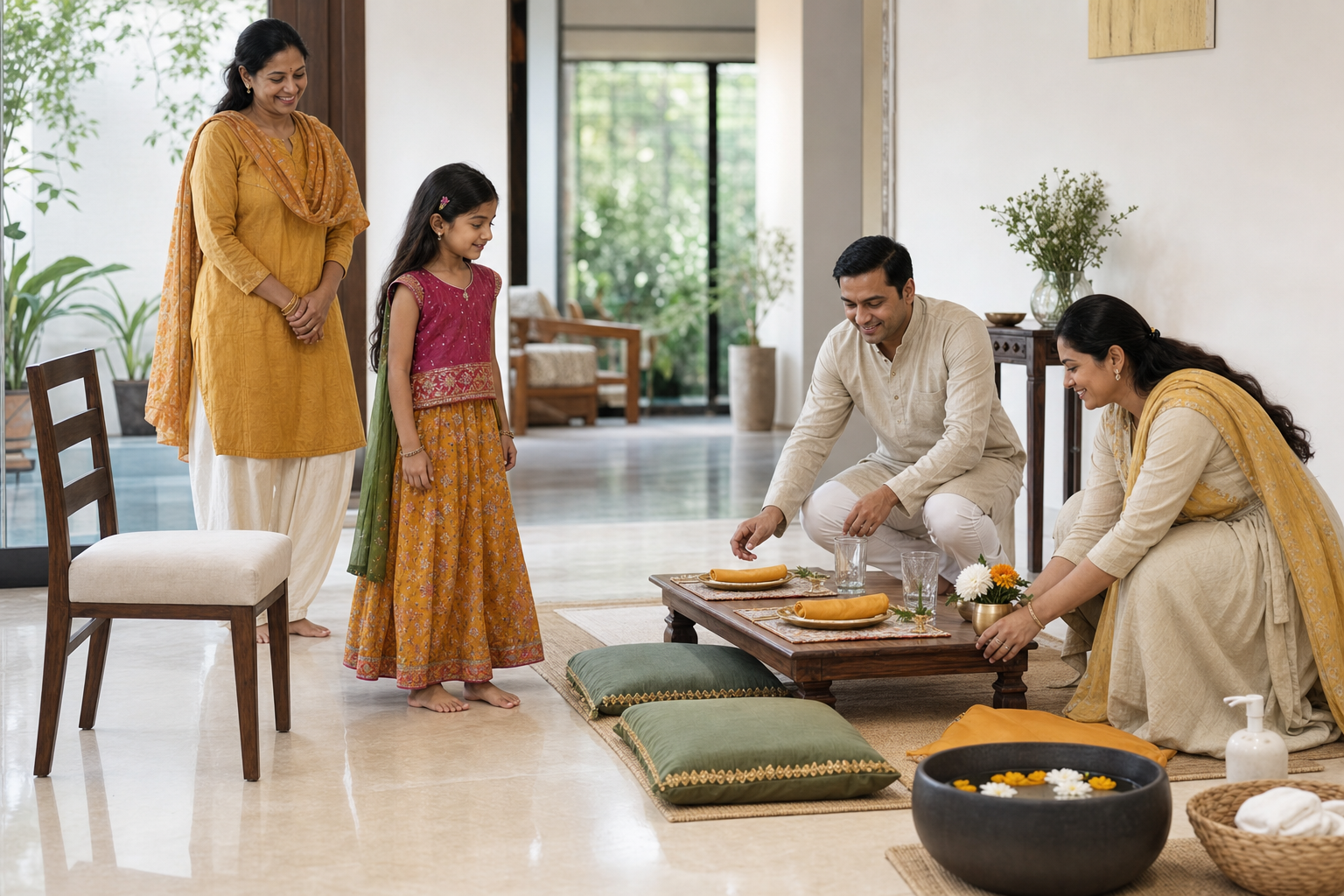
Traditionally, nine pre-pubescent girls are welcomed as embodiments of the Nava Durga. Some lineages also invite a boy in the form of Batuk or Bhairav. Nine is meaningful, but it is not a reason to cancel the worship, pressure families, or turn the invitation into a headcount exercise. If nine Kumaris are not available, you can reverently worship one or more.
Make the invitation clear enough that both guardian and child know what is being requested. Tell them the proposed arrival time, the food you plan to serve, the approximate sequence of the ceremony, and whether you ordinarily cleanse the feet, apply tilak, tie kalava, or place a chunri. Ask about dietary restrictions and allergies before buying ingredients. Consent from a parent does not erase the child’s own comfort; ask the child again before touching the feet, forehead, wrist, or hair.
- For the altar: a clean chowki or designated puja place, an image or yantra of Devi, a kalash if used in your tradition, flowers, akshata, incense, and a ghee lamp.
- For welcoming the Kumaris: clean water and a small vessel for padya, towels, haldi-kumkum or another customary tilak, kalava or mouli, and optional light chunris.
- For the meal: freshly prepared sattvic food, clean drinking water, suitable plates and cups, safe seating, and portions appropriate to the children’s ages.
- For the farewell: dakshina and modest, age-appropriate gifts such as fruit, notebooks, pencils, clothing, bangles, or another useful token.
You do not need every listed object to perform a sincere puja. Follow your paddhati where it specifies an item, but do not replace attention with shopping. A calm room, clean utensils, enough food, and respectful conduct matter more than an elaborate display.
Poori, suji halwa, and kala chana form the familiar Kanjak meal in many North Indian homes. Rice-based dishes and other regional preparations are equally at home in local traditions. Prepare food fresh, keep it sattvic according to your household practice, and serve small portions first so a young child is not confronted with a plate she cannot finish. Offer seconds freely. Keep lamps, incense, hot oil, and hot serving vessels beyond children’s reach.
Treat photographs as optional. Ask the guardian and the child rather than assuming that ritual participation includes permission to publish an image. A family may gladly attend the puja while preferring that the child’s face stay out of social media. Honour that boundary without making it awkward.
A simple, complete Kanya Puja vidhi for the home
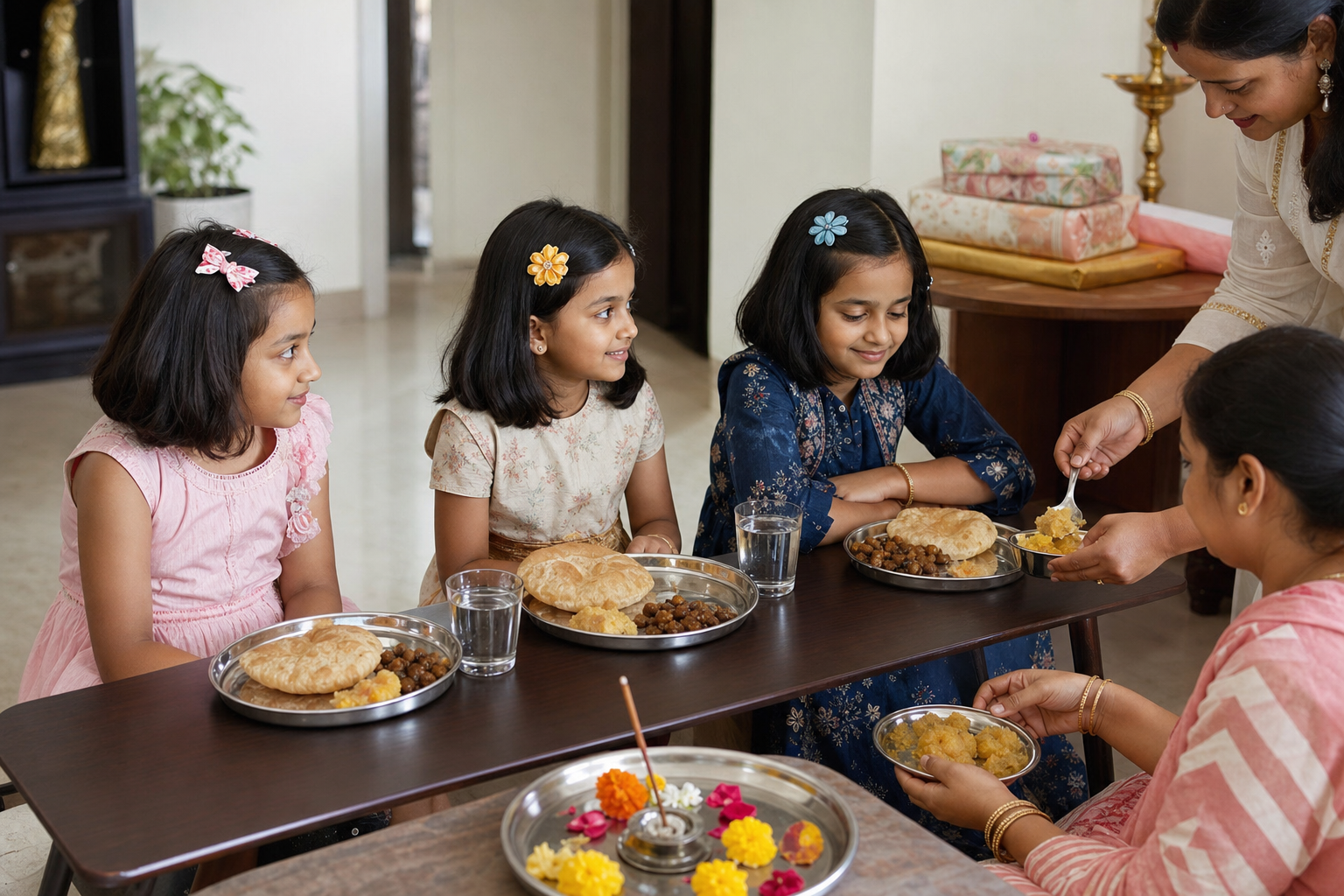
Your family priest or inherited paddhati should take precedence when it gives a specific sequence. If you do not have one, the following order preserves the core actions without making the ceremony needlessly difficult.
- Clean the worship area and arrange the chowki, Devi image or yantra, kalash, flowers, lamp, incense, tilak materials, kalava, meal, dakshina, and gifts before the guests arrive.
- Light the lamp and make a sankalpa. State simply that you are conducting Kanya Puja with devotion to Mahadevi and for the welfare of the family, the children, and all beings.
- Welcome every child by name. Offer a clean and comfortable seat, drinking water if wanted, and a brief explanation of what will happen. Do not begin touching or adorning a child without asking.
- Offer padya according to your custom. If the child and guardian consent, gently cleanse the feet with a small amount of clean water and dry them carefully. If the child is uncomfortable, adapt or omit the action without rebuke.
- Apply tilak and akshata, tie kalava, and offer a light chunri or token where customary. Keep each action gentle and optional. The purpose is honour, not compliance.
- Contemplate Devi as present in the Kumaris. Recite a short prayer, a familiar Devi stotra, selected verses from the Durga Saptashati, or the refrain beginning “Ya Devi Sarvabhuteshu.” A household that does not conduct extended recitation can keep a few attentive minutes of prayer or kirtan.
- Serve the sattvic meal while the children are comfortably seated. Attend to water, portions, and requests for more. Do not make hungry children wait through a long performance that could have been completed before their arrival.
- Perform arati at a safe distance. Bow or seek the Kumaris’ blessings in the manner of your tradition, without coaching a child to enact a reaction she does not understand.
- Offer dakshina and gifts respectfully to each child. Avoid conspicuous differences between gifts that could leave one guest feeling less valued than another.
- Conclude with gratitude. Thank the children and their guardians, ensure that each child leaves safely, and then distribute or receive the remaining prasad according to family practice.
If you know the Argala Stotram, Keelakam, or portions of the Devi Mahatmyam, they can enrich the worship. They are not a test the host must pass in front of the children. Choose a length that allows attention to remain steady and the meal to be served at a sensible time. A shorter worship carried out with awareness is better suited to a home gathering than an ambitious recital that makes everyone hurried or irritable.
Keep the theology larger than the ceremony
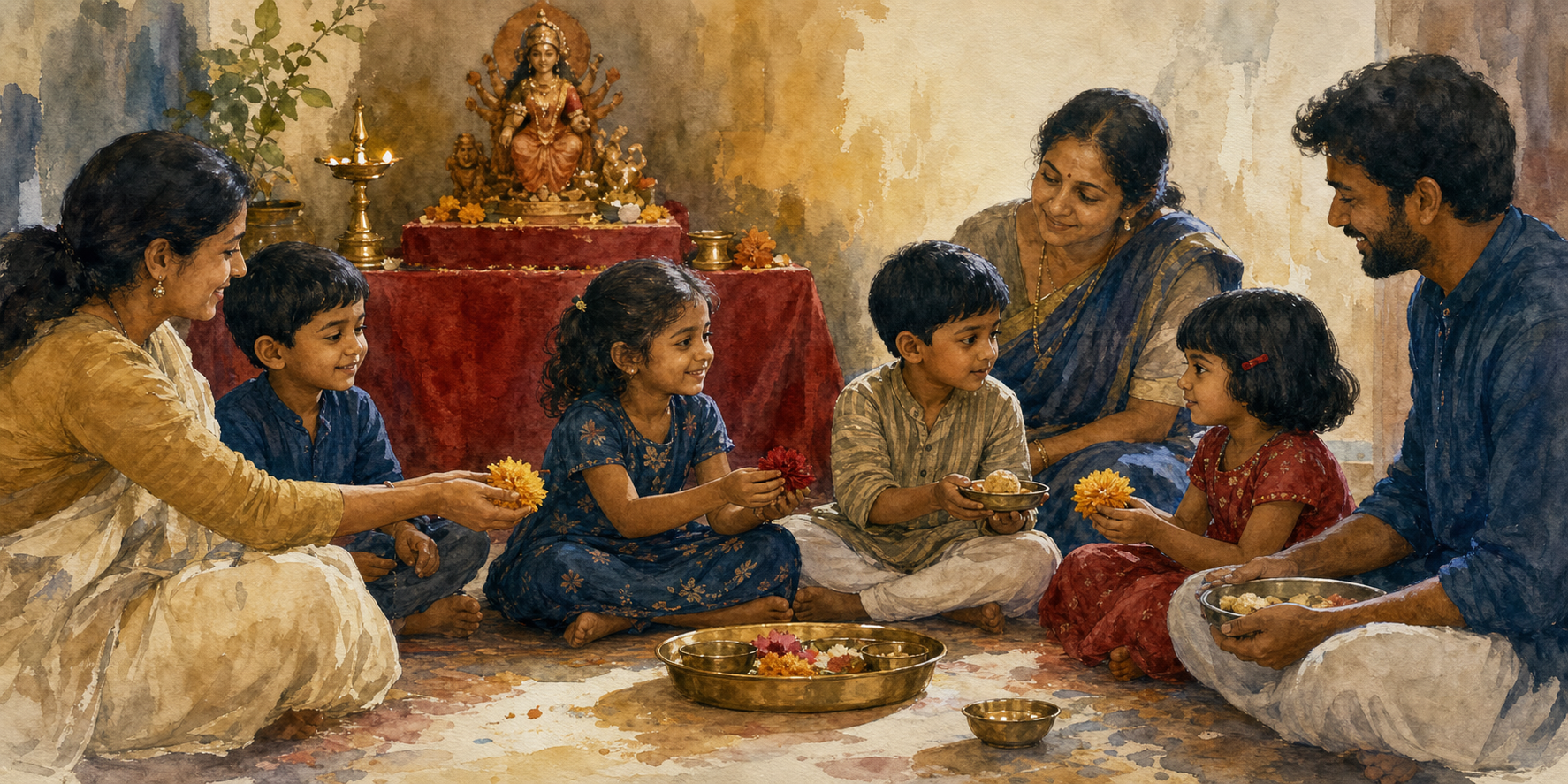
Kumari Puja rests on the Shakta recognition that the Divine Mother is present in all beings. The child is not being used as a decorative stand-in for Devi. The worshipper is being asked to refine his or her own sight: to approach living Shakti with humility, nourishment, and care.
The nine Kumaris are commonly associated with Shailaputri, Brahmacharini, Chandraghanta, Kushmanda, Skandamata, Katyayani, Kalaratri, Mahagauri, and Siddhidatri. Some paddhatis also map ages two through ten to names including Kumari, Trimurti, Kalyani, Rohini, Kali, Chandika, Shambhavi, Durga, and Subhadra. These age-name mappings vary by region and lineage. If your family has received a particular convention, follow it; if not, do not present one chart as a universal rule or rank one child above another.
The rite carries a demanding ethical implication. Reverence offered for one morning is hollow if girls are ignored, mocked, denied opportunity, or treated as burdens during the rest of the year. Annadanam means more than placing food before a symbolic guest. Seva continues through ordinary conduct: listening to children, supporting their learning, protecting their dignity, and taking their safety seriously.
Kanya Puja is a Hindu practice with an especially clear Shakta theological basis; it should not be described as though Hinduism, Buddhism, Jainism, and Sikhism share one common liturgy. The wider Dharmic kinship lies at the ethical level. Compassion, non-harm, service, and recognition of life’s inherent worth allow the observance to speak beyond one ritual form without erasing real differences among traditions.
If circumstances prevent you from hosting children, retain the connection between worship and service. You can support a trusted local effort concerned with girls’ nutrition, education, or health, or give useful school materials through a channel you can verify. This is not a performance of the household vidhi by proxy, but it preserves its moral direction: an offering to Devi should produce tangible care for living beings.
Kanya Puja 2026 FAQ
Is Kanya Puja on October 18 or October 19 in 2026?
October 18 is the 2026 Durgashtami date widely used for Kanya Puja, while October 19 is Mahanavami and is followed by families whose tradition assigns the rite to Navami. Use your parampara and a panchang calculated for your location to make the final choice.
Must you invite exactly nine girls?
No. Nine Kumaris carry the symbolism of Nava Durga, but one or more can be worshipped when nine are not available. Do not pressure children or guardians merely to complete a number.
What if a child does not want her feet washed?
Do not wash them. Explain the custom, ask permission, and accept the answer immediately. You can offer a verbal welcome or another non-contact gesture and continue the puja. Consent and dignity express the meaning of the worship more faithfully than forced ritual accuracy.
Can you observe Kanya Puja if you cannot host children?
You can pray to Devi at home and direct your seva toward a trustworthy girl-child nutrition, education, or health initiative. Be clear that charitable support is an ethical expression of the observance, not an identical replacement for every element of the traditional household vidhi.
Before sending invitations, settle four details: the locally applicable tithi, your family’s Ashtami or Navami custom, the number of willing guests, and their food or accessibility needs. Once those decisions are made, keep the ceremony clean, calm, and sincere. Let every child leave knowing that she was welcomed as a person, not used as a ritual object.