
You may find two names on the same Navratri calendar square: Brahmacharini Puja and Gauri Dwitiya, sometimes called Sindhara Dooj. That can make a simple question surprisingly difficult: which form of Devi should you worship, and which customs actually belong in your home?
You do not need to choose between them. Brahmacharini is the Navadurga focus of the second day, while Gauri-centered observances express regional and family traditions associated with the same Dwitiya tithi. Begin with Brahmacharini worship. Add Gauri or Sindhara customs where they are part of your parampara. This distinction gives you a complete observance without turning every regional practice into a universal requirement.
Confirm the Dwitiya date where you live
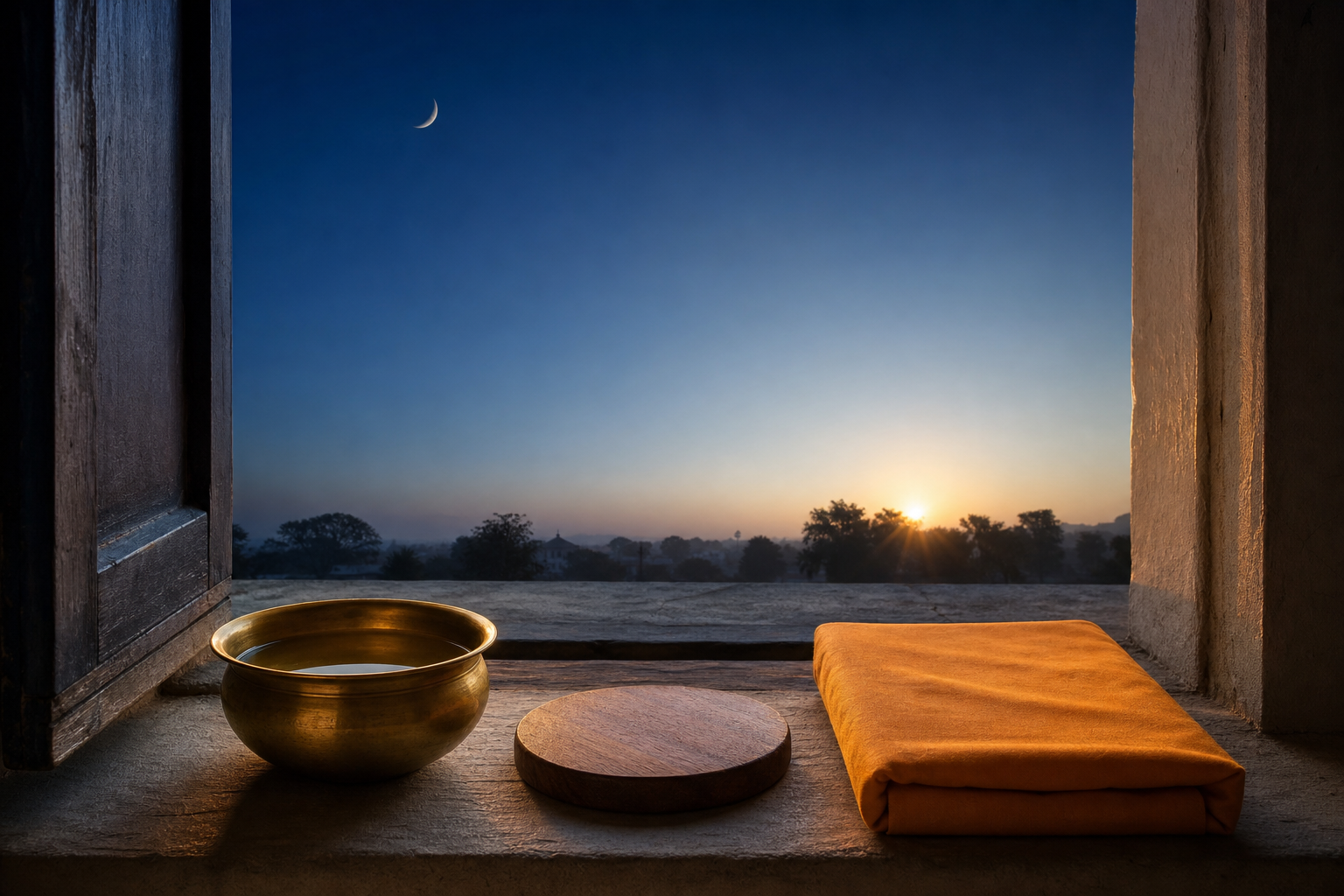
Navratri Day 2 is determined by Shukla Dwitiya, the second lunar day of the bright fortnight. It is not permanently attached to a Gregorian date. Because a tithi can begin or end at any clock time, the applicable civil date may depend on local sunrise and location.
| Navratri cycle | Lunar setting | Day 2 in 2026 for most Indian panchangs |
|---|---|---|
| Chaitra or Vasant Navratri | Chaitra Shukla Dwitiya | Friday, 20 March 2026 |
| Shardiya or Sharad Navratri | Ashwin Shukla Dwitiya | Monday, 12 October 2026 |
These two 2026 observances belong to separate seasonal Navratri cycles. If you keep both Chaitra and Shardiya Navratri, you may therefore perform Brahmacharini Puja twice in the year.
Before arranging a muhurta, check a panchang calculated for your own city. This is especially important outside Bharat, where a time-zone difference can move Dwitiya onto the previous or following civil date. Do not copy an India-based puja time into a calendar abroad without checking the underlying tithi.
When online calendars disagree, use the panchang followed by your temple, priest, or family tradition. Many communities prioritize the civil day on which Dwitiya prevails at sunrise, but the applicable festival rule and puja window should still come from your local parampara. The aim is to observe the living lunar tithi, not to force every household into one clock time.
Understand how Brahmacharini and Gauri fit together
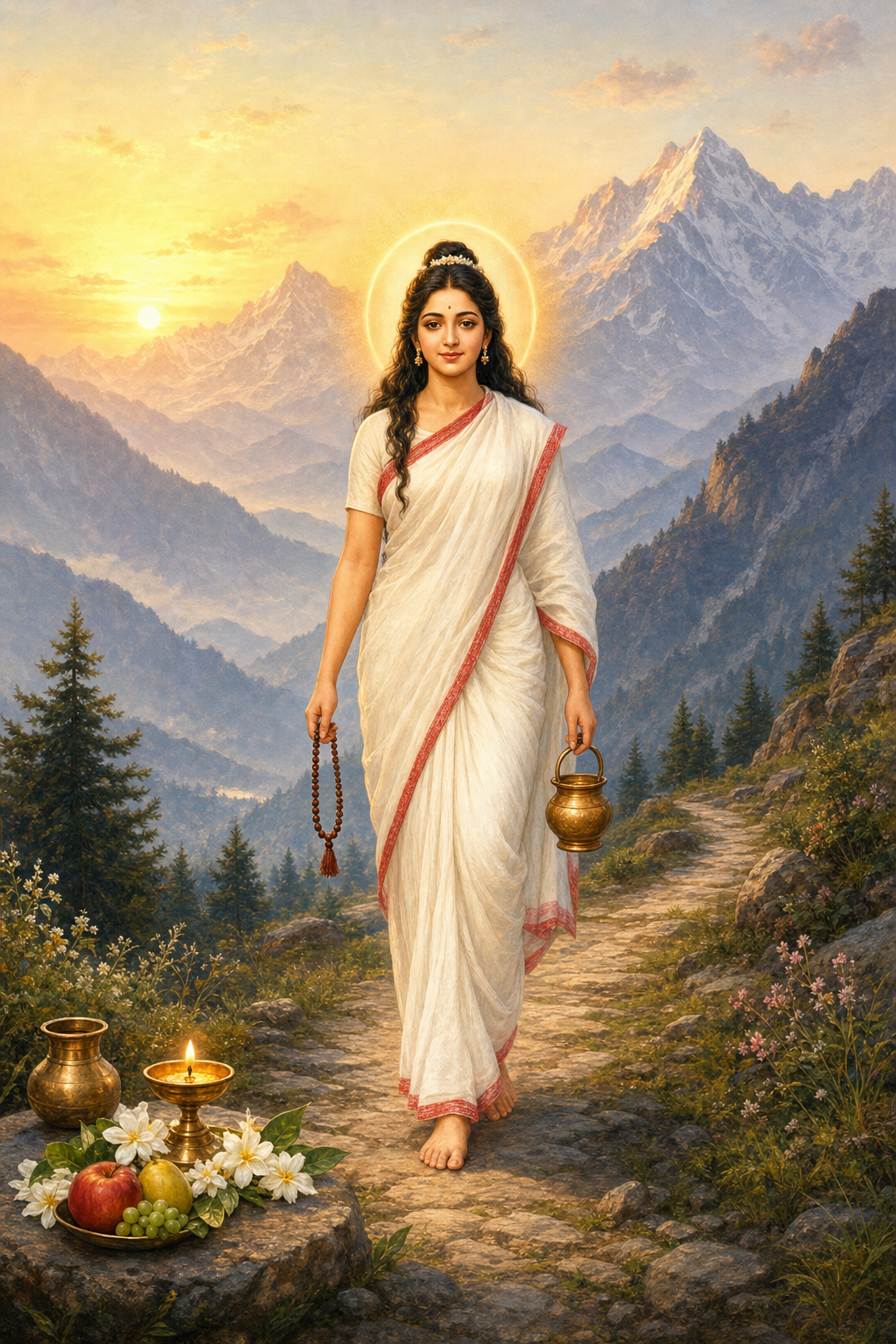
Brahmacharini is the ascetic form of Devi worshipped in the Navadurga sequence on Day 2. She is depicted in white, walking barefoot, with a japa mala in one hand and a kamandalu in the other. Her uncluttered form directs your attention toward tapas, perseverance, purity of intention, and the patient repetition that turns an aspiration into sadhana.
Day 1 often carries the energy of beginning: the altar is prepared, Ghatasthapana is completed, and a vrata is announced. Day 2 asks a harder question: can you continue once the freshness of beginning has passed? Brahmacharini represents that quiet continuity. Her tapas is not spiritual drama. It is the capacity to keep the mind, speech, and action aligned after enthusiasm settles.
Gauri Dwitiya brings a related but distinct emphasis. In North Indian observances called Sindhara Dooj, Sindoor Dooj, or Sowbhagya Dooj, Gauri or Parvati is honored through prayers for auspiciousness, mutual care, family well-being, and the flourishing of household responsibilities. The Gauri and Brahmacharini strands coexist because steadiness within and reliability toward others are complementary forms of dharma.
This does not make every Gauri custom mandatory for every devotee. Brahmacharini worship is the broadly recognized Navadurga observance. Sindhara exchanges and suhaag offerings belong to particular regional and familial settings. If your family has never observed them, you do not need to purchase a collection of ritual objects merely because a festival list mentions them. You can honor Gauri through a simple flower, kumkum offered to Devi, prayer for household harmony, and an act of care.
Key takeaways
- In 2026, Navratri Day 2 falls on 20 March during Chaitra Navratri and 12 October during Shardiya Navratri for most Indian panchangs.
- Use a local, sunrise-aware panchang rather than assuming that an Indian civil date or puja time applies everywhere.
- Worship Brahmacharini as the Navadurga form of Day 2; add Gauri or Sindhara rites when they belong to your region or family tradition.
- Tapas on this day should produce steadier attention, speech, and conduct, not a display of hardship.
- A concise Panchopachara Puja performed attentively is more meaningful than an elaborate rite performed in haste.
Perform a complete home puja without unnecessary complexity
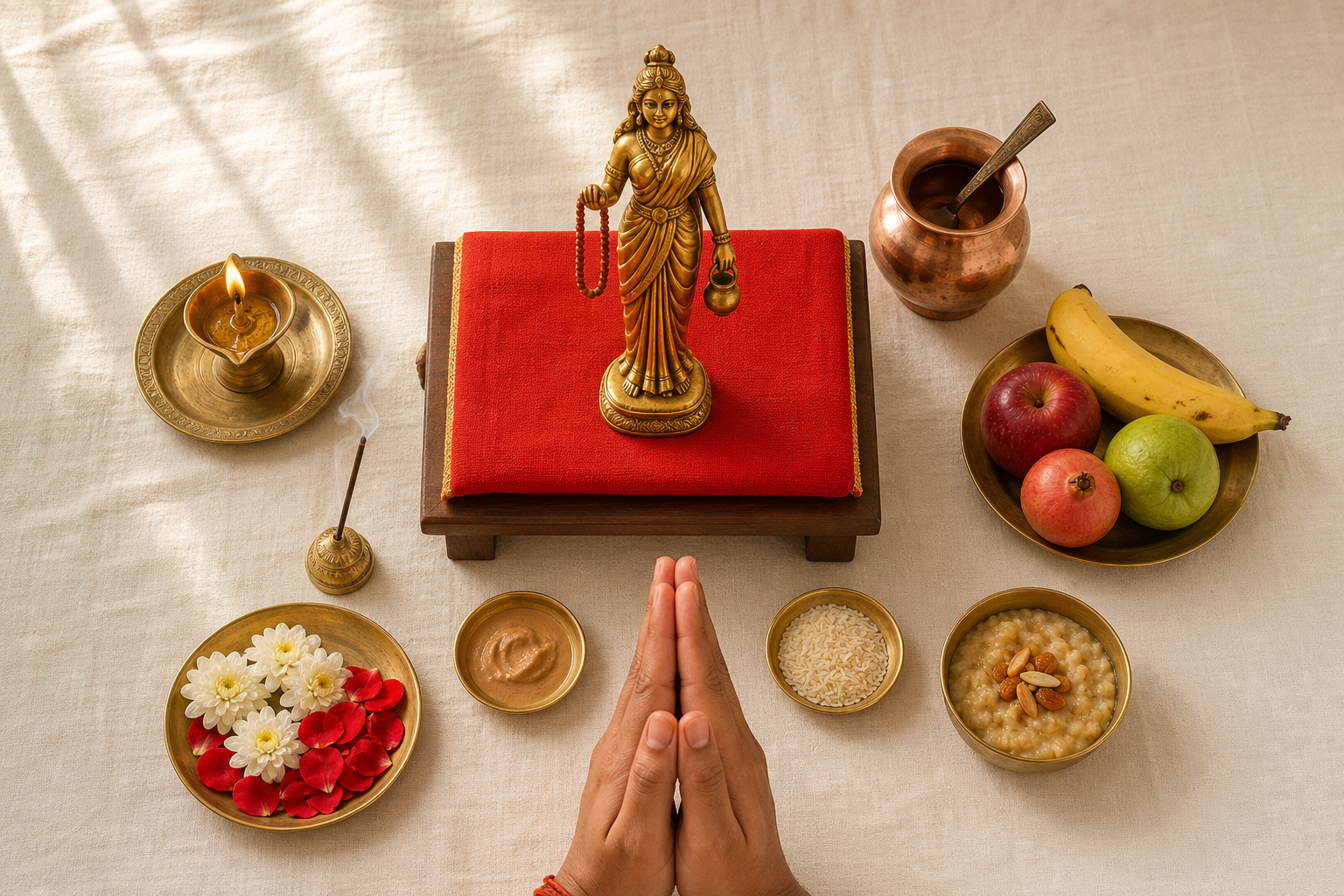
A useful Day 2 puja begins with continuity. If you established a kalasha on Day 1, keep it clean and respectfully maintained; Day 2 is not another Ghatasthapana. Arrange the shrine with an image or murti of Devi, a stable lamp, water, incense if suitable for your household, sandal paste, kumkum, akshata, flowers, fruit, and naivedya. White flowers and light-colored clothing are customary for Brahmacharini, but color is a devotional aid rather than a test of whether the worship counts.
A practical sequence for the morning puja
- Prepare yourself and the shrine. Bathe or wash, wear clean clothes, clear the altar, and sit for several calm breaths. Place everything within reach so that you do not repeatedly leave the puja.
- Take a clear sankalpa. Name the place, the Dwitiya observance, and one intention. In your own language, you can resolve to worship Devi Brahmacharini and cultivate steadiness, truthful speech, compassion, and disciplined action during the day.
- Light the lamp safely. Place it on a stable, nonflammable surface away from curtains, drafts, children, and pets. Maintain an akhand jyoti only if that is your custom and it can be supervised safely. An ordinary puja lamp remains meaningful.
- Invoke and contemplate Brahmacharini. Visualize Devi in her serene ascetic form, holding the mala and kamandalu. Let the image establish the quality of mind you are seeking before you begin making offerings.
- Offer the upacharas. Present water, sandal paste, akshata, white flowers, incense, lamp, and naivedya with attention. A family trained in Shodashopachara may perform the fuller sequence; others can follow the form taught in their home or temple.
- Perform mantra japa. Chant Om Devi Brahmacharinyai Namah. A traditional practice is 108 repetitions on a mala. If time or mobility makes that impractical, chant a shorter round slowly and without divided attention rather than racing through a count.
- Continue your chosen recitation. If your family follows a Durga Saptashati or Devi Mahatmya reading sequence across the nine nights, continue that sequence. Some lineages take portions of the Madhyama Charitra on Dwitiya, but this should not displace the arrangement given by your own sampradaya.
- Offer naivedya and distribute prasada. Mishri, seasonal fruit, a milk preparation, or a simple jaggery-based sweet can be offered according to family custom and dietary needs. Freshness and simplicity matter more than the number of dishes.
- Close the worship deliberately. Perform aarti, offer flowers or pushpanjali, and recite kshama-prarthana for mistakes. Sit quietly for a few minutes before returning to ordinary tasks. That pause helps the bhava of the puja accompany you beyond the shrine.
This sequence gathers the central elements of Brahmacharini worship, japa, meditation, study, and service without making access to a long inventory the measure of devotion.
The shorter Panchopachara form
If you have work, caregiving duties, limited mobility, or little space, use a focused Panchopachara form. Take the sankalpa, contemplate Devi, and offer gandha, pushpa, dhupa, dipa, and naivedya. Chant the Brahmacharini mantra attentively, perform aarti, and close with a prayer for forgiveness.
Do not measure sincerity by how crowded the tray appears. The question Day 2 places before you is whether attention remains steady. A smaller puja that protects that attention is aligned with the day’s teaching.
Make the vrat sustainable and give tapas a target
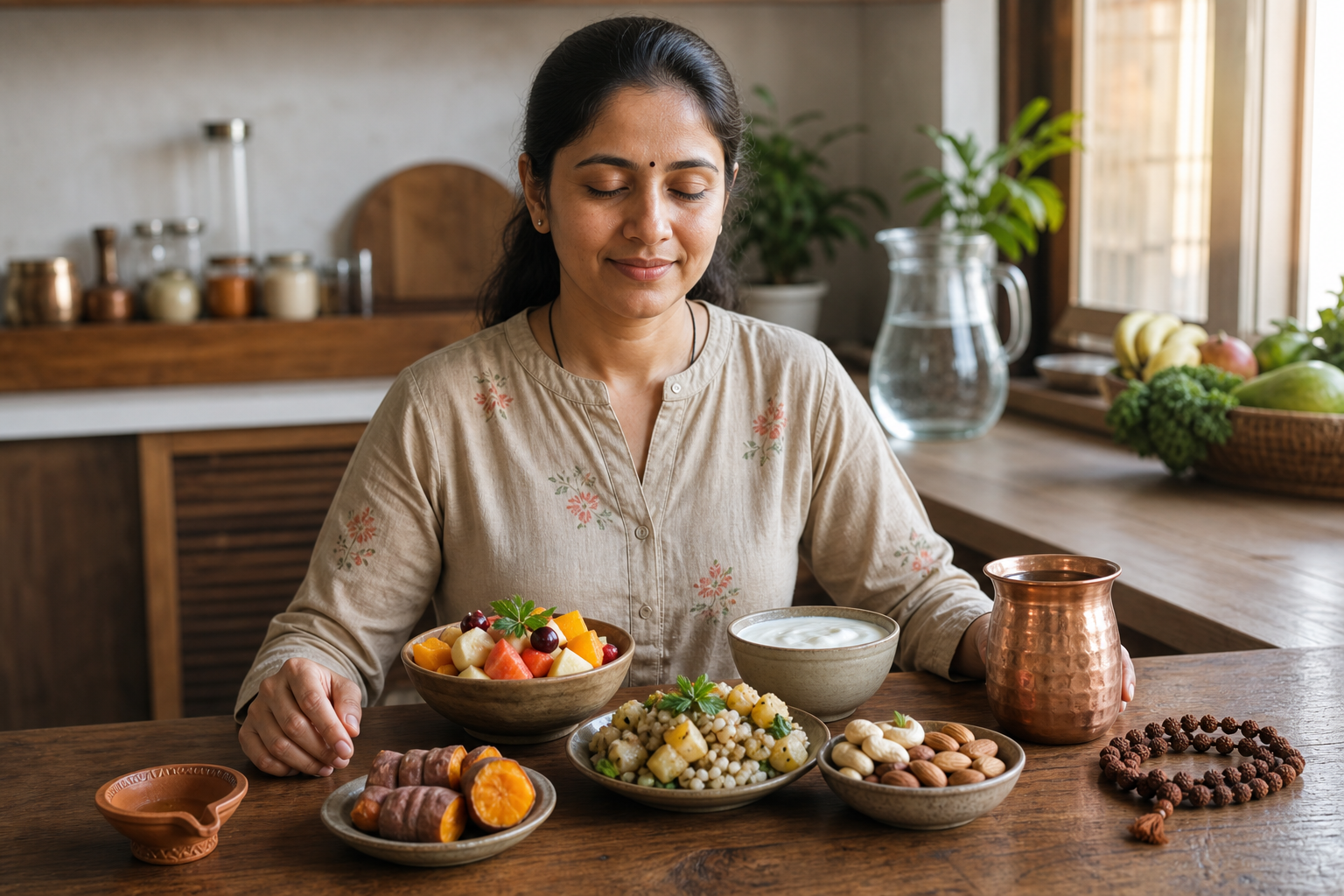
Families interpret Navratri fasting differently. Some observe upavasa as defined by their tradition. Others take phalahar with fruit, milk, nuts, or permitted light foods. Some keep a simple sattvic diet while avoiding onion, garlic, heavy grains, or particular spices. These are not interchangeable universal rules, so use the food discipline inherited in your home rather than assembling restrictions from unrelated regional lists.
The fast should support prayer and alertness. Keep hydration, rest, and your actual health needs in view. If a complete fast would be unsafe because of a medical condition, age-related vulnerability, or prescribed treatment, choose an adjusted or partial observance and do not override medical advice. Bhava is not strengthened by preventable harm.
Food restraint is only one form of tapas. Brahmacharini’s example becomes more useful when you give the day one measurable niyama. Choose a commitment narrow enough to keep from morning sankalpa through evening aarti:
- Pause before answering whenever speech is likely to become harsh or reactive.
- Keep the phone outside the shrine and away from meals, using the recovered attention for japa or family presence.
- Complete one mala of 108 mantra repetitions before opening entertainment or social media.
- Avoid wasteful purchasing for the day and redirect what you would have spent toward food, clothing, or educational supplies for someone in need.
- Read a small, chosen portion of the Bhagavad Gita 17.14-17 or the Devi Mahatmya, then write one sentence about how its teaching applies to your conduct.
Keep one vow well. A stack of severe rules often consumes attention in self-monitoring, while a precise niyama trains the faculty Brahmacharini represents: remaining faithful to a worthy intention.
If meditation is already part of your practice, add a calm seated period or gentle nadi-shodhana before japa. The traditional emphasis is steadiness, not intensity. Do not force breath retention or turn a devotional morning into an experiment with an unfamiliar advanced technique.
Keep regional customs distinct, then carry the vow outward
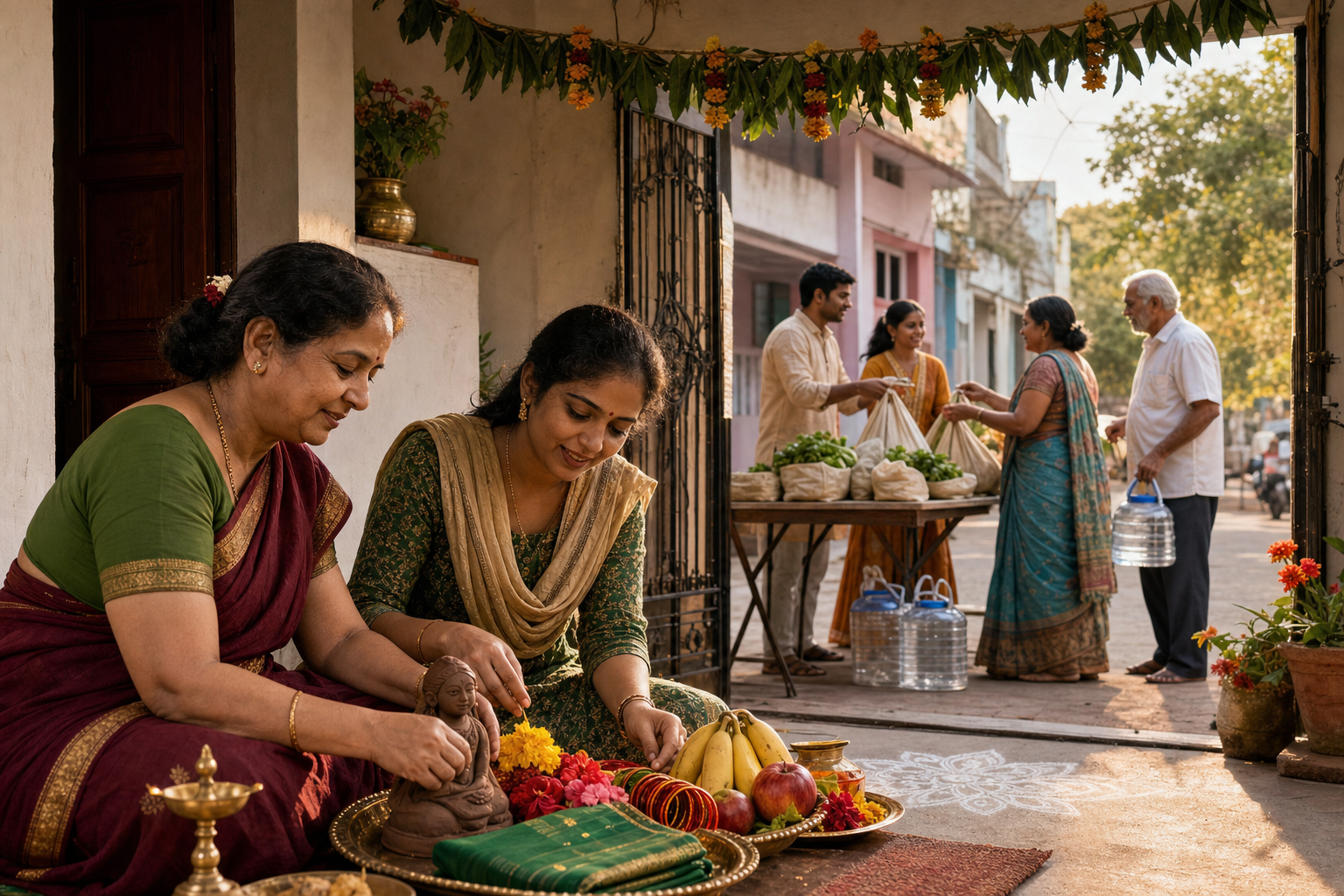
Gauri and Sindhara observances in North Indian homes
In parts of Rajasthan, Haryana, Punjab, Himachal Pradesh, Uttar Pradesh, and Delhi, Day 2 may include an offering of kumkum or sindoor to Gauri. Women in some families exchange sindoor, bangles, red or yellow cloth, sweets, or other suhaag items. Sindhara may also be sent to married daughters or shared among relatives. The gesture carries prayers for well-being, dignity, mutual respect, and continuity in family life.
Keep the exchange proportionate. A small packet of kumkum, homemade sweet, flower, or personal visit can preserve the meaning more faithfully than expensive gifting performed under social pressure. If a strained relationship needs repair, accompany the item with respectful contact. Household auspiciousness is not an object you can purchase; it is sustained through conduct.
Devotees who do not take part in a women-specific or marriage-specific rite can still join the common puja, japa, prasada distribution, bhajan, dana, and seva. Participation need not mean imitating a role that your family tradition assigns differently.
Other regional names do not imply one national ritual
Some communities recognize the day as Preethi Dwitiya, with an emphasis on affection and family harmony. Some women observe Sthana Vriddhi Gauri Vrata for maternal well-being and family prosperity. These names identify particular layers of observance; they should not be treated as proof that every Hindu household performs the same vrata.
In Nepal’s Dashain rhythm, Day 2 is marked mainly by continuing the Durga worship begun on Ghatasthapana. Families maintain the kalasha, carefully tend the growing jamara, pray, visit shrines where customary, and share prasada. If this is your inheritance, continuity is the observance. There is no need to graft Sindhara objects onto it merely because both fall on Navratri’s second lunar day.
Let evening conduct test the morning sankalpa
Before evening aarti, examine the specific vow you made. Did you restrain the reply that would have injured someone? Did your fast sharpen attention or leave you preoccupied with rules? Did worship produce greater patience with the people who share your home?
Then let the observance move outward. Share prasada, offer a simple meal, give useful supplies, visit or call an elder, or complete a neglected household responsibility without seeking recognition. Seva prevents tapas from collapsing into self-absorption, while Gauri’s household grace keeps spiritual discipline connected to relationship and duty.
Before your next Dwitiya begins, do three things: verify the local tithi, set aside the few puja items you will actually use, and write down one niyama you can keep. Once the lamp is lit, stop adding obligations. Worship Brahmacharini steadily, honor Gauri according to your parampara, and let the quality of your conduct complete the offering.
References
- Hindu Pad – 2nd Day of Navratri 2026 (Mar 20): Deep Brahmacharini Puja, Vrats, and Dashain Insights
- Hindu Pad – Sindhara Dooj 2026: Complete Guide to Gauri Dwitiya Rituals on Navratri Day 2 in North India
- Hindu Pad – Navratri Day 2 (20 March 2026): 10 Transformative Rituals to Honor Brahmacharini