
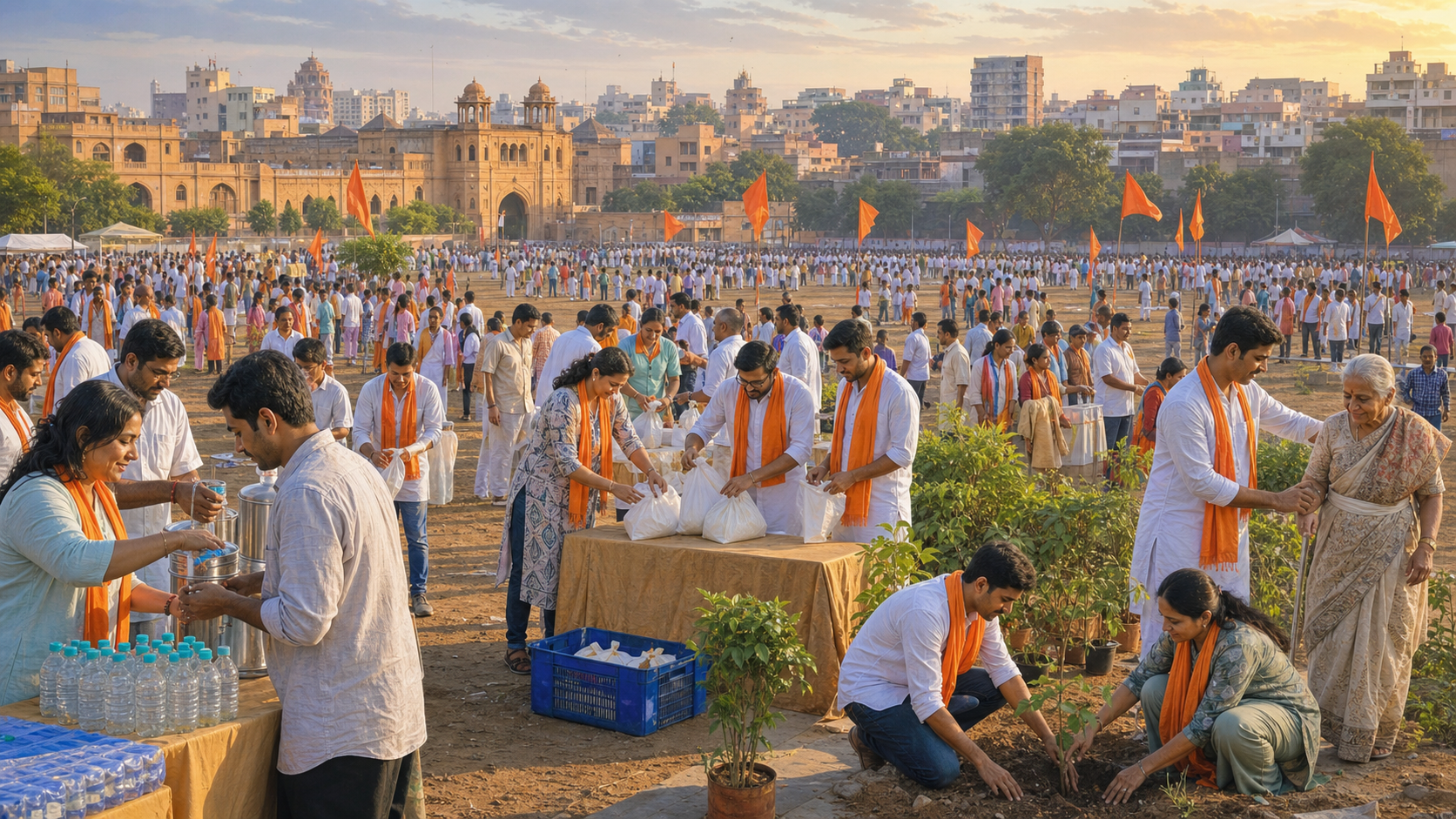
If you attended a large Hindu sabha in Chhatrapati Sambhajinagar, helped organize it, or simply watched it unfold, the useful question begins after the microphones go quiet: what can this gathering change in the life of the city?
A peaceful assembly of more than 4,000 Hindus demonstrates reach, discipline and a desire for cultural affirmation. It does not, by itself, demonstrate lasting civic strength. That depends on whether participants leave with a lawful local role, whether organizers can sustain their trust, and whether the energy becomes visible seva rather than another fleeting attendance figure.
Define what the mobilization is for
Hindu civic mobilization is not the same thing as electoral mobilization. A sabha may discuss public affairs, cultural rights and legal questions without becoming a campaign rally. Keeping that distinction clear protects the gathering from being reduced either to party politics or to emotional spectacle.
The same clarity is needed when organizers use the phrase Hindu Rashtra. A civilizational term cannot be left as an undefined slogan. It should be translated into conduct that a resident can observe: reverence for dharma, preservation of heritage, disciplined citizenship, service to people in need, respect for lawful institutions and refusal to direct hostility at another community. Otherwise, supporters and critics will fill the vacuum with incompatible meanings.
A brief public charter can prevent that ambiguity. It should say what the gathering supports, what kinds of conduct it rejects, how volunteers will serve the city, and how concerns can be raised. The language should be simple enough for a new volunteer to repeat accurately without improvisation.
Then give every participant a path from interest to responsibility:
- Choose a concrete local need before announcing the program. Temple maintenance, heritage documentation, neighborhood cleanliness, food distribution, youth mentorship, blood donation and disaster-relief preparedness are all clearer than a general promise to awaken society.
- Ask volunteers what they can actually contribute: time, language ability, professional knowledge, transport, physical work, teaching or coordination. A generic list of names reveals little about usable capacity.
- Obtain consent for follow-up and explain how contact details will be used. Civic trust is weakened when people provide information for one purpose and receive unrelated messages afterward.
- Let each person select a workstream before leaving. Interest becomes more durable when it is attached to a named task and a scheduled follow-up.
- Give responsibility gradually. A new volunteer can begin with a bounded assignment, learn the operating discipline, and take on coordination only after demonstrating reliability.
This is the practical difference between a crowd and a network. A crowd shares a place for an evening. A network knows who will do what when the evening is over.
Build dharmic unity around work people can share
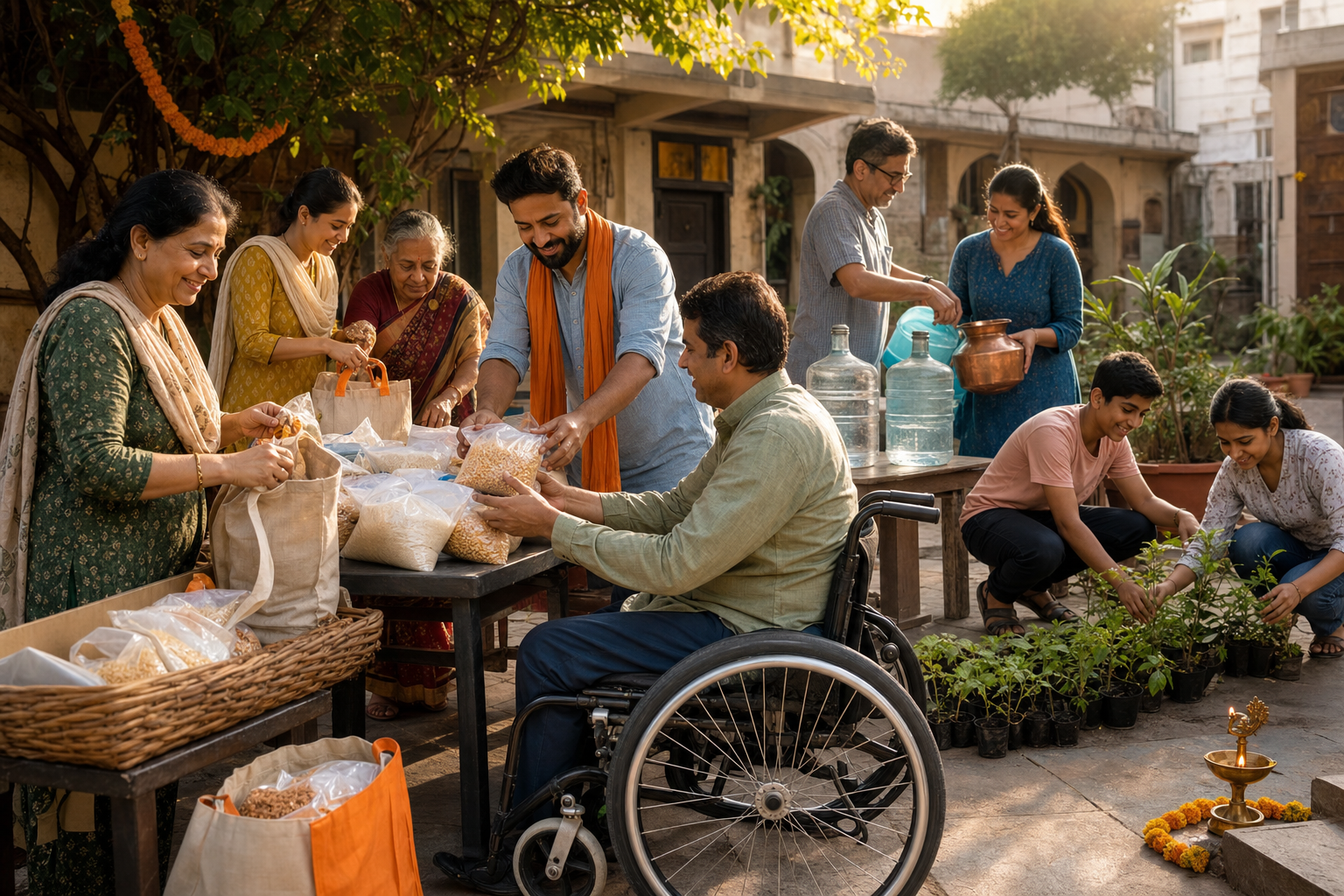
Chhatrapati Sambhajinagar is not a blank stage for identity politics. It is a historically layered city in which temples, dargahs, monasteries and gurudwaras coexist. Hindu public life in such a setting becomes more credible when cultural confidence is paired with civic restraint and neighborly responsibility.
Dharmic unity also needs precision. Hindu, Buddhist, Jain and Sikh traditions have distinct doctrines, institutions and histories. Cooperation should not depend on pretending that those differences do not exist. It can rest on shared ethical ground: compassion, self-discipline, service, stewardship and the dignity of sincere practice.
Think of the work in nested circles. Hindu cultural continuity can include temple care, study circles, preservation of local memory and instruction for young people. Cooperation across the dharmic family can include cleanliness drives, food distribution, blood donation, environmental work and disaster preparation. Neighborhood responsibility can make the benefits of appropriate service available without testing a beneficiary’s theology.
This does not require Hindus to dilute their identity. A temple-maintenance effort can be explicitly Hindu. A dharma discussion can state its convictions plainly. Respect means refusing dehumanization, intimidation and collective blame; it does not mean erasing philosophical disagreement.
Organizers should therefore examine every proposed activity with practical questions:
- Does the activity solve a recognizable local problem, or does it merely display the organization?
- Can women, young people, elders and people with disabilities participate meaningfully rather than symbolically?
- Are Buddhist, Jain or Sikh partners being invited to shape shared work, or only to appear beside an already finished plan?
- Would a neutral resident understand the public benefit without first accepting every ideological claim made on the stage?
- Can the work continue when cameras and prominent speakers are absent?
Seva should not be treated as a public-relations accessory to mobilization. It is one of the clearest tests of whether mobilization is dharmic. When service is regular, competent and transparent, cultural advocacy gains a social foundation that slogans cannot supply.
Treat legality, accessibility and crowd safety as dharma
Article 19(1)(b) of the Constitution of India protects peaceful assembly, subject to lawful restrictions connected with public order. That protection is important, but it does not remove an organizer’s responsibility to coordinate with municipal authorities and law enforcement or to comply with current venue, sound, timing and safety requirements. Requirements can depend on the venue and circumstances, so obtain current local guidance rather than assuming that arrangements used elsewhere will be accepted in Sambhajinagar.
Compliance is more than defensive paperwork. It teaches young volunteers that public assertion and civic discipline belong together. It also makes arbitrary rumor less effective because permissions, schedules and operating responsibilities can be explained clearly.
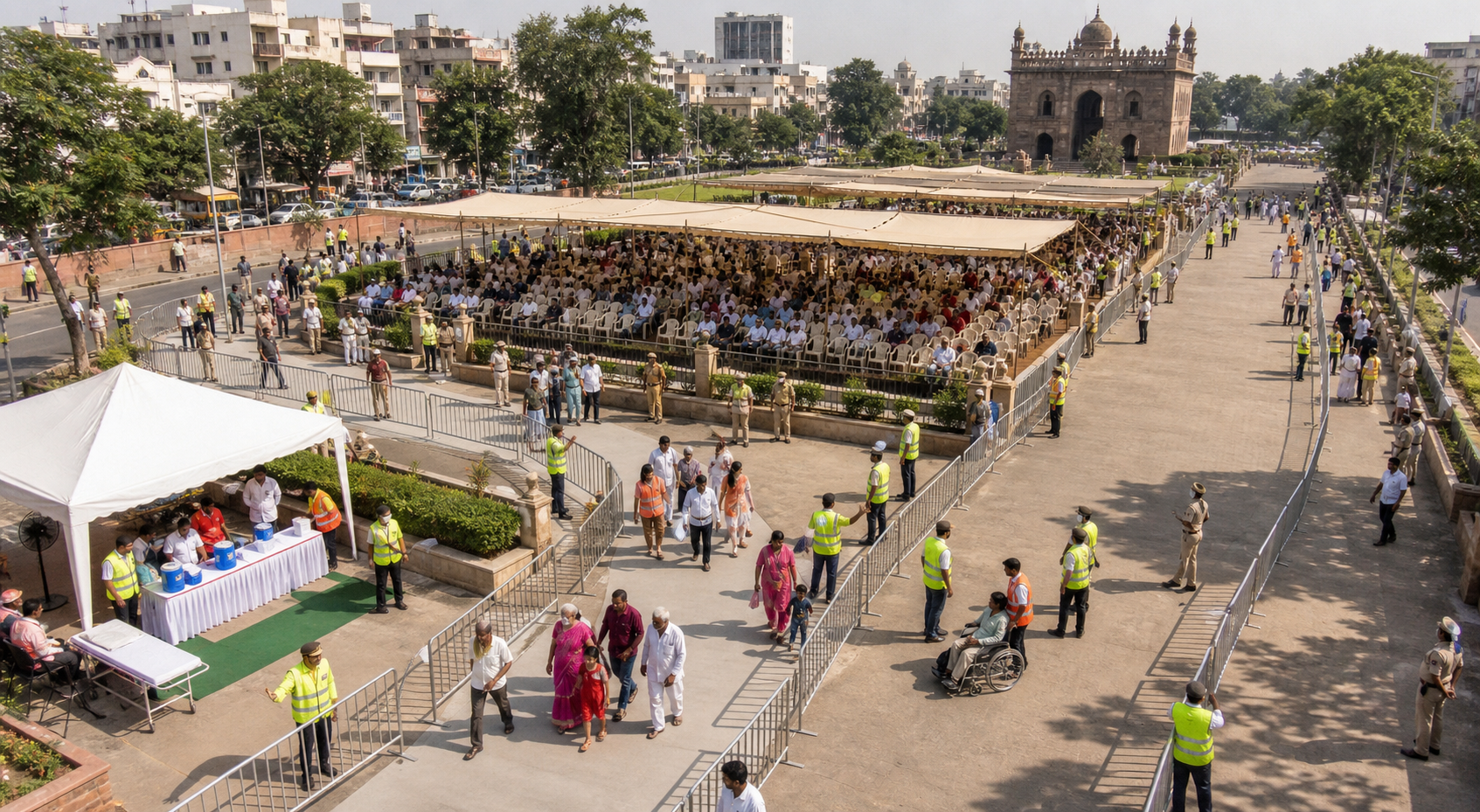
For a large congregation, the operating plan should cover the full movement of people, not just the stage program:
- Separate entry and exit flows where the site permits it, and prevent queues from blocking emergency movement.
- Place trained volunteers at turns, crossings, seating zones, water points and other places where people are likely to hesitate.
- Use clear public-address announcements for movement, lost persons, schedule changes and emergencies.
- Provide potable water, sanitation and visible first-aid points connected to local emergency services.
- Watch entrances, exits, narrow passages and the areas closest to the stage for developing bottlenecks.
- Stagger program movements when several groups would otherwise arrive, stand or depart at the same time.
- Reserve accessible seating and movement routes for elders, children and people with disabilities rather than asking them to negotiate the densest parts of the crowd.
- Provide multilingual wayfinding or announcements when the expected audience requires them.
- Plan shade, hydration and post-event cleanup as operating necessities, not optional hospitality.
- Reduce single-use plastic and assign responsibility for restoring the site after dispersal.
In key zones, a useful crowd-planning benchmark is to keep density near or below two people per square metre. This should not be mistaken for a universal statutory capacity or a substitute for venue-specific safety advice. Usable space, exit width, barriers, circulation routes and emergency access all affect safe capacity. If the expected crowd exceeds what the layout can handle, restrict entry or choose a more suitable site; do not solve the problem by compressing people more tightly.
The dharmic principles are visible in these details. Ahimsa means foreseeable risks are not ignored. Seva means water and first aid are easy to find. Self-discipline means volunteers follow the same rules they enforce. Respect means a person with limited mobility is not treated as an afterthought.
Protect legitimacy with verifiable communication and results
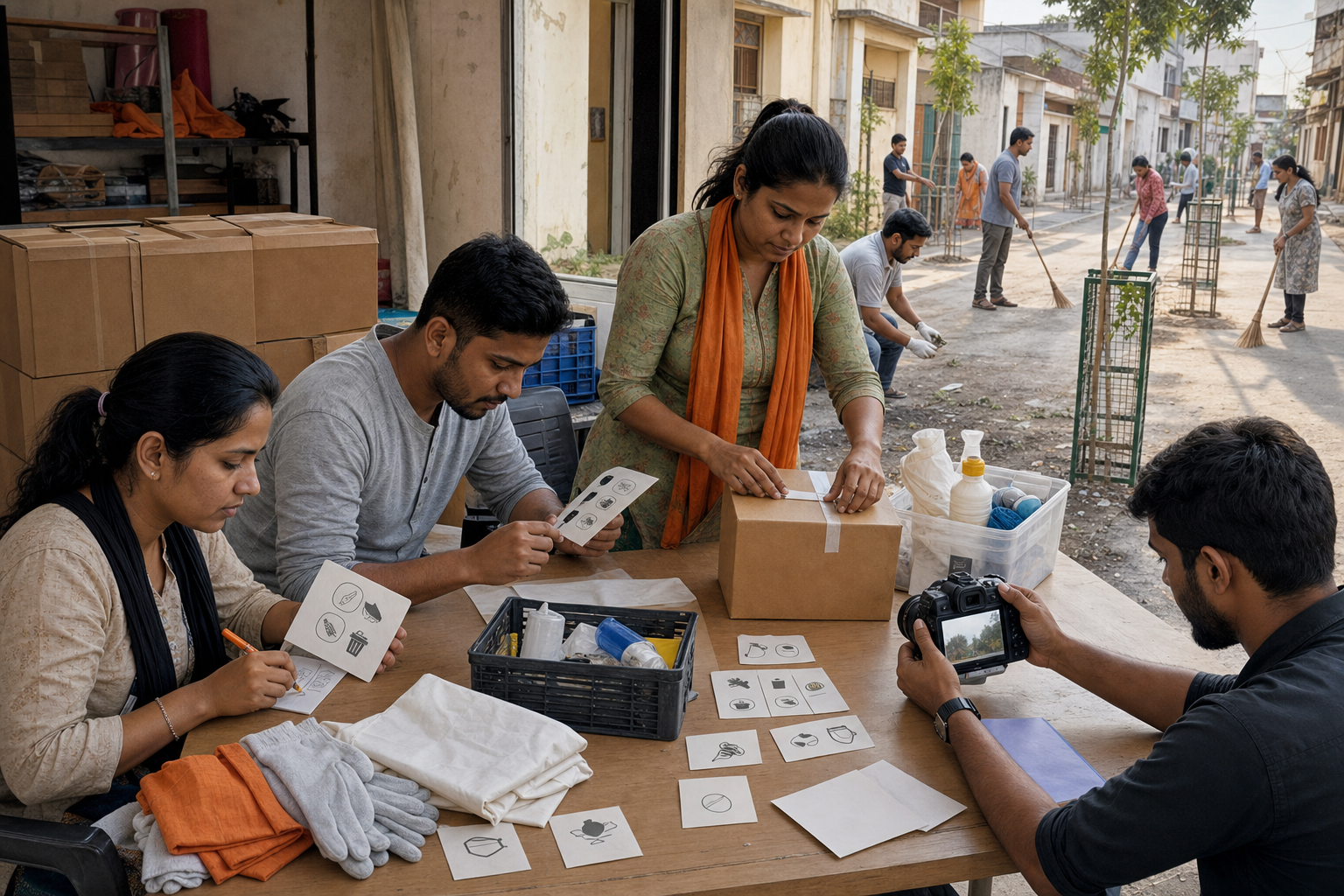
A large Hindu gathering will attract attention beyond the venue. Supporters may circulate celebratory claims, critics may interpret ambiguous images adversely, and unverified messages can outrun any later correction. Restraint is therefore a strategic strength.
Before the event, publish the confirmed schedule, venue instructions, access arrangements, expected conduct and official channel for updates. During it, use a designated communications function so volunteers do not issue contradictory explanations. If a claim cannot yet be verified, label it unverified and pause its circulation. Digital discipline is especially important when a clipped video or an isolated slogan could be mistaken for the position of the whole gathering.
Afterward, release verified images and a factual account of what occurred. If an attendance figure is publicized, explain how it was obtained rather than treating precision as a matter of prestige. Correct mistakes visibly. Content moderation should remove threats, dehumanizing language and knowingly false claims even when they come from enthusiastic supporters. A movement cannot ask outsiders to judge it fairly while tolerating recklessness in its own channels.
Communication must then give way to accountability. Attendance is an input, not the outcome. The more useful indicators are active volunteer sign-ups, functioning study circles, completed maintenance work, blood-donation participation, disaster-relief training, youth mentorship and neighborhood mediation. Pre-event and post-event surveys can also show whether people learned their rights and duties, understood the code of conduct and found a suitable way to contribute.
Measure retention honestly. A long registration list followed by little activity means the pathway from inspiration to service is broken. A smaller group that meets reliably, finishes projects and reports its work may represent greater civic capacity. Publish completed work as well as unfinished commitments; credibility grows when supporters can see both progress and limits.
The strongest feedback questions are behavioral rather than flattering. Ask whether participants know the next activity, whether they selected a role, whether the venue felt safe and accessible, whether instructions were understandable, and whether follow-up actually occurred. Use those answers to change the next program. Feedback collected only to produce praise is not accountability.
Key takeaways for organizers and participants
- A turnout above 4,000 demonstrates reach, but lasting civic strength must be judged by what volunteers do afterward.
- Define Hindu civilizational language through lawful duties, ethical conduct, heritage preservation and concrete seva.
- Cooperate with Buddhist, Jain and Sikh communities through shared work without pretending that their traditions are identical.
- Treat permissions, crowd flow, water, sanitation, first aid and accessibility as moral responsibilities as well as operational requirements.
- Use about two people per square metre or less as a planning benchmark in key zones, while still following venue-specific safety guidance.
- Counter misinformation with verified schedules, disciplined channels, transparent corrections and restrained language.
- Track active volunteers and completed projects rather than relying on applause, registrations or attendance alone.
If you are attending the next sabha, do not leave with only a photograph or a slogan. Choose a local task, confirm the follow-up and decide what you can reliably contribute. If you are organizing it, make that choice easy before the crowd disperses. Sambhajinagar does not need less Hindu confidence; it needs confidence disciplined into service that neighbors can recognize, institutions can trust and volunteers can sustain.