
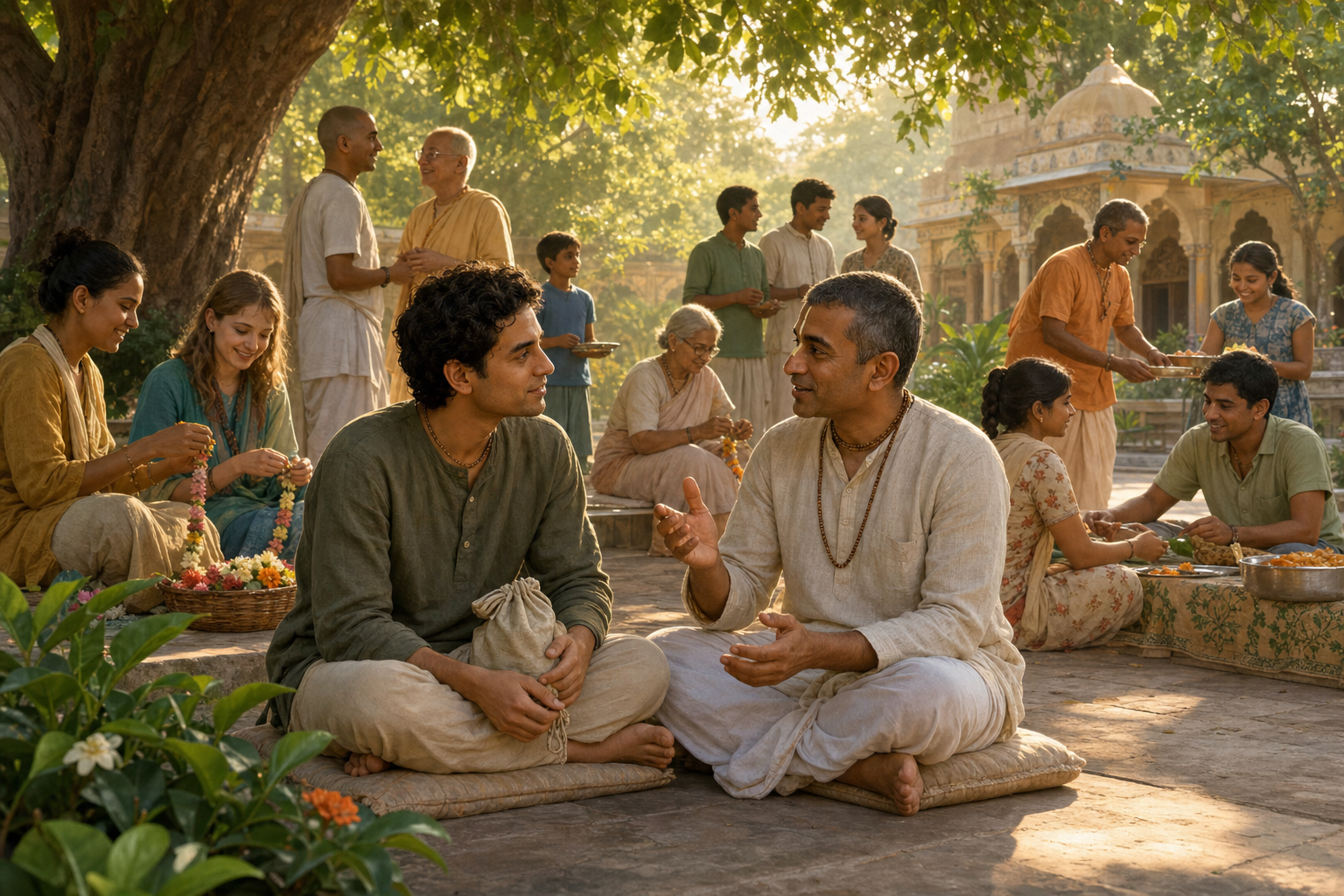
You may have found a temple, begun chanting, and met devotees whose steadiness you admire. The difficult question comes next: whom should you trust with your doubts, habits, service, and spiritual direction?
Choose too quickly and respect can slide into dependence. Remain entirely self-directed and early enthusiasm may never mature into steady practice. Healthy Vaishnava mentorship sits between those extremes: clear guidance, freely accepted correction, personal responsibility, and a community broad enough to keep the relationship grounded.
Ask for a function, not merely a spiritual title
Mentorship works best when both people know what the relationship is meant to accomplish. A mentor may help you establish a sustainable sadhana, understand siddhanta, improve your conduct in the community, choose appropriate seva, or work through a recurring obstacle. That does not automatically make the person the final authority over every part of your life.
Formal titles and responsibilities vary among sampradayas and institutions. A senior devotee offering valuable shiksha need not become your diksha-guru, exclusive counselor, or decision-maker. Do not let an undefined use of the word “mentor” blur commitments that ought to be discussed openly.
Before approaching someone, complete these sentences for yourself:
- The practice or difficulty for which I want help is…
- The effort I am honestly prepared to make is…
- The kind of feedback I can receive constructively is…
- The decisions for which I will remain personally responsible are…
- The result I hope to see in my devotional life is…
This turns a vague request such as “Please guide me” into something a responsible senior can accept, narrow, or decline. You might say, “My chanting becomes irregular when my schedule changes. Could you help me establish a realistic practice and ask me about it when we meet?” That request has a defined need, a visible action, and an appropriate form of accountability.
A mentoring relationship is serving you when your practice becomes steadier, your questions become more honest, your seva becomes more reliable, and your dealings with other devotees become more respectful. If your attachment to the mentor grows while those signs remain absent, the relationship needs examination rather than greater intensity.
Choose by observed conduct, not charisma or years alone
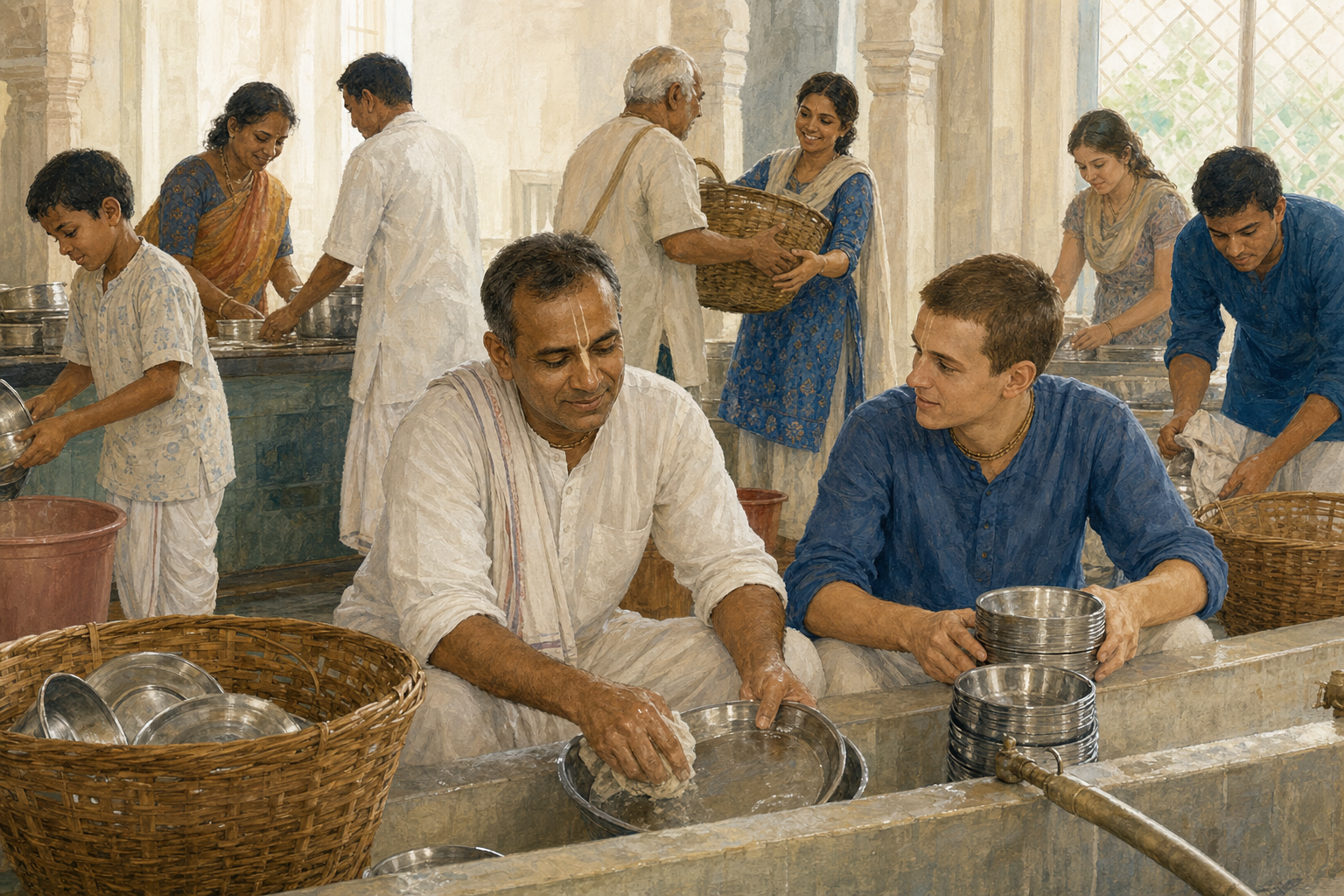
Long service deserves sincere regard, especially when a senior has carried sacrifices and responsibilities a newcomer cannot yet see. But age, eloquence, institutional position, or proximity to a revered acharya cannot substitute for character. In Vaishnava life, seniority is a responsibility to embody patience, steadiness, and service, not a claim to unquestioned control.
Do not choose solely from the lecture seat. Observe how the person behaves during ordinary service, inconvenience, disagreement, and interaction with devotees who can offer no status in return. Look for a consistent pattern:
- The person practices what they regularly ask others to practice.
- Questions are answered without treating honest uncertainty as rebellion.
- The mentor can say “I do not know” or direct you to someone better qualified.
- Advice returns your attention to Krishna, sadhana, shastra, seva, and responsible conduct rather than personal loyalty.
- Correction addresses a specific action instead of assigning a degrading identity or pretending to know every motive.
- The person remains accountable to peers, seniors, and the wider devotional community.
- Your spiritual dignity and agency remain intact even when you disagree or decline advice.
Pause before deepening the relationship if every question is interpreted as disloyalty, access depends on flattery, or one person expects to control decisions far outside the agreed spiritual purpose. Respect does not require blind imitation. You can offer precedence, listen carefully, speak gently, and acknowledge sacrifice while still declining guidance beyond someone’s knowledge or proper role.
This distinction protects both humility and discernment. Equality in spiritual dignity does not erase differences in experience. Differences in experience do not erase your duty to use conscience, siddhanta, and accountable association.
If you have spoken carelessly about a senior devotee, do not hide behind either pride or theatrical guilt. Gaudiya Vaishnavism treats sadhu-ninda, the denigration of devotees, as a serious impediment to attentive chanting. Repair begins concretely: identify what you did without excuses, apologize where appropriate, make practical amends, reform the pattern of speech, and seek accountability that prevents repetition. Remorse becomes spiritually useful when it changes conduct.
Build a relationship in which correction can help

Correction is not automatically compassionate because a senior delivers it. Its value depends on adhikara: your readiness, commitment, and capacity to act. Strong words given without trust may produce shame, withdrawal, or resentment. Gentle encouragement without clarity may leave a serious habit untouched. Good mentorship learns which response the present situation requires.
Srila Prabhupada’s calibrated approach to encouragement and correction offers a demanding but humane standard. Warmth was not laxity, and firmness was not license to humiliate. The purpose was to preserve hope while moving a willing student toward deeper devotion.
At the beginning of the relationship, discuss correction directly. Tell the mentor whether you want candid feedback, what causes you to become defensive, and whether you need time before responding. The mentor should be able to explain how concerns will be raised. Consent to correction does not mean consenting to ridicule, public exposure, motive-reading, or control over unrelated choices.
A useful correction normally follows a clear sequence:
- Name the observable action rather than attacking the person’s identity.
- Explain the devotional principle or responsibility affected by that action.
- Ask what circumstances, misunderstandings, or limitations contributed to it.
- Agree on a practical next step the student can actually perform.
- Return to the matter later so that correction becomes training rather than a moment of emotional discharge.
For example, “You are lazy and insincere” offers no workable path. “You accepted this seva and did not tell the team when you could no longer complete it; please contact them before the next service period and agree on a smaller responsibility” identifies conduct, consequence, and repair.
As the student, resist the urge to defend yourself before you understand the concern. Repeat the instruction in your own words. Ask for a concrete example if the criticism is vague. State genuine constraints without turning them into excuses. Then either accept the next step or explain respectfully why you cannot. Honest limitation is more useful than a grand promise followed by silence.
You are also allowed to test advice. Ask how it relates to siddhanta, your existing commitments, and the welfare of others affected by the decision. Where the matter exceeds the mentor’s role, consult an appropriate family member, institutional authority, or qualified professional. A spiritual mentor helps form judgment; a mentor should not replace it.
The Vaishnava ideal expressed through humility, patience, and giving respect disciplines both sides of the conversation. It asks the student to remain teachable and the senior to speak without domination. Humility is not muteness, and authority is not ownership.
Let sadhu-sanga support and test the relationship
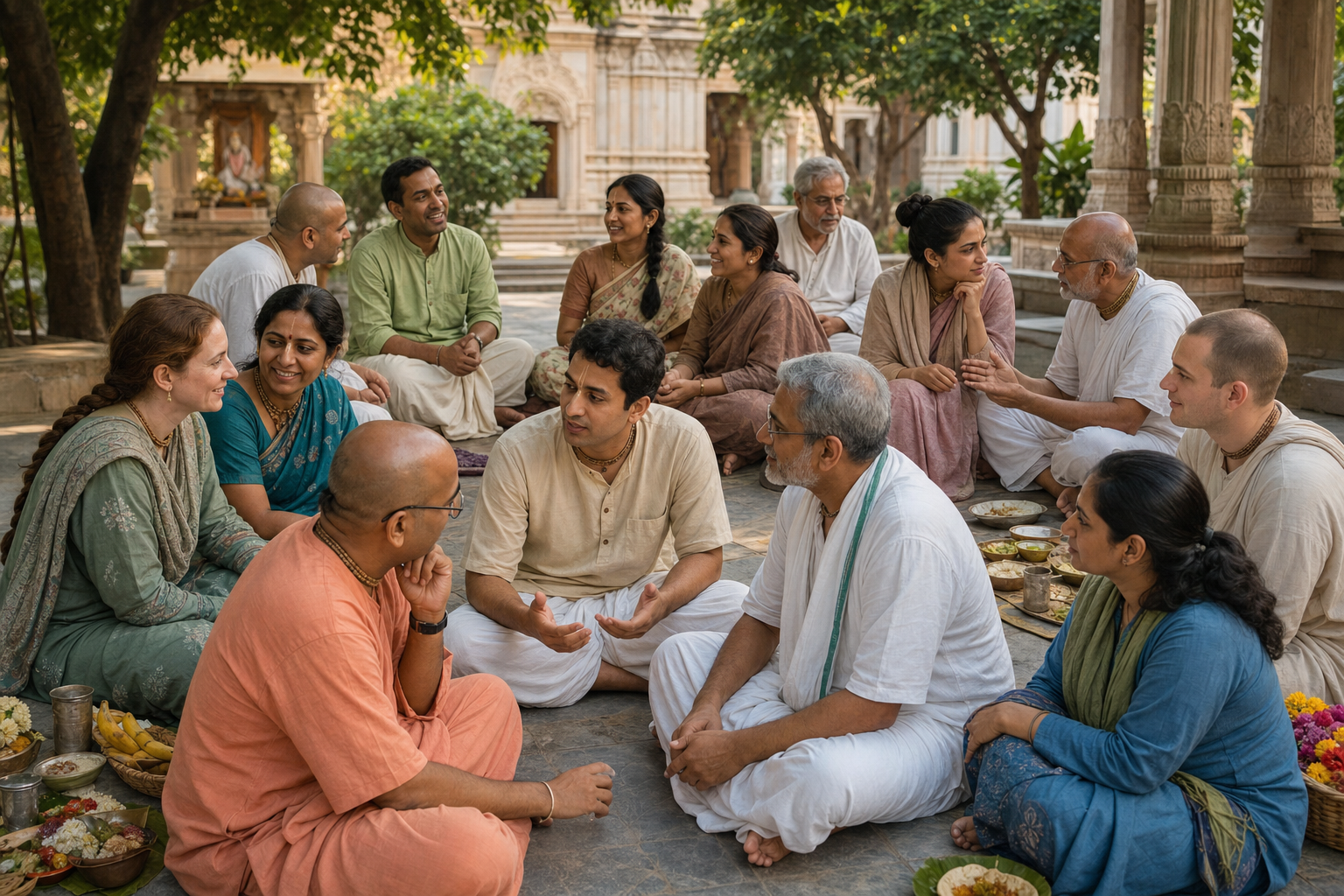
Mentorship becomes distorted when it is isolated from shared devotional life. A private relationship can magnify one person’s preferences until they begin to look like universal siddhanta. Sadhu-sanga provides a wider field of practice, example, friendship, and accountability.
Kirtan, prasadam, study, and seva are not decorative activities surrounding the “real” work of private instruction. They are where instruction becomes visible. Kirtan directs attention toward the holy name. Prasadam turns hospitality into a daily devotional act. Study gives language and philosophical structure to experience. Seva reveals reliability, humility, cooperation, and the ability to remain steady when recognition is absent.
Observe a prospective mentor across these settings. Notice whether the person makes room for other qualified voices, credits the efforts of others, serves when the task is ordinary, and remains respectful during disagreement. A polished discourse may display knowledge; repeated conduct shows what that knowledge has formed.
Keep more than one healthy devotional relationship. Learn from a mentor, serve beside peers, hear from several seasoned devotees, and maintain friendships with people who can speak honestly to you. This is not disloyalty. It prevents one relationship from carrying expectations that properly belong to an entire community.
If you organize mentorship in a temple or sangha
Do not assume that sincere people will naturally find suitable guidance. Informal communities often leave newcomers choosing by visibility, charisma, or convenience. A simple structure can preserve warmth while reducing confusion:
- Begin with accessible kirtan, prasadam, and study rather than demanding an immediate personal commitment.
- Give newcomers a clear orientation to Vaishnava etiquette, local responsibilities, and the different roles carried by teachers, mentors, service leaders, and institutional authorities.
- Ask both mentor and student about availability, expectations, communication style, and the area in which help is actually needed.
- Provide contact with multiple senior devotees so that mentorship does not become a personality cult.
- Check whether the relationship is producing steadier practice and healthier participation, not merely greater dependence.
- Allow either person to narrow or end the arrangement respectfully when the fit is poor.
- Invite elders to recount the history, sacrifices, failures, and lessons behind community standards so that respect rests on understanding rather than mythology.
Senior devotees carry the greater responsibility in this design. Their authority grows when they remain teachable, correct without humiliation, acknowledge the community’s contribution, and make it easier for younger practitioners to serve Krishna rather than the senior’s image.
This balance also supports friendship across the Dharmic family. Buddhist sangha discipline, Jain reverence for acharyas, and Sikh devotion to Guru, sadh sangat, and seva each preserve distinctive teachings while joining respect to responsibility. In an inter-Dharmic gathering, honor those differences rather than flattening them, and build cooperation around disciplined conduct, compassion, selfless service, and the formation of character.
Key takeaways
- Define the help you need before asking someone to become your mentor.
- Honor seniority, but entrust yourself according to observed character, competence, and accountability.
- Keep formal spiritual roles clear; shiksha from a senior does not automatically create exclusive authority over your life.
- Agree on how correction will be given and received before a difficult issue arises.
- Expect feedback to identify conduct, explain the devotional principle, and lead to a practical next step.
- Measure the relationship by steadier sadhana, cleaner seva, greater honesty, and better dealings with devotees.
- Root mentorship in kirtan, prasadam, study, seva, and relationships with the wider sadhu-sanga.
At your next gathering, do not ask the most impressive person to direct your whole life. Ask one steady devotee for help with one clearly named part of your practice. Agree on how you will act and report back, then let shared service reveal whether trust deserves to deepen.
References
- Dandavats – Srila Prabhupada’s Compassionate Diplomacy: Inclusive Lessons for Spreading Love of Krsna
- Dandavats – Honoring Senior Devotees: Cultivating Humility, Strength, and Unity in Dharmic Life