If you are arranging a Tirumala pilgrimage around Vasanthotsavam, choosing the date is only the first decision. You also need to separate the festival calendar from your darshan booking and from any restricted access to the special seva. Treating all three as one arrangement is the easiest way to build an itinerary around an entry you do not actually have.
For 2026, Tirumala Vasanthotsavam falls on March 30, March 31, and April 1. The three days correspond to Chaitra Shukla Trayodasi, Chaturdasi, and Pournami. Here is how to choose your day, understand the rituals, and plan without assuming that the festival schedule automatically grants access to every ceremony.
The three festival dates are firm; the detailed programme still matters
| Date | Day | Chaitra tithi | What it means for your plan |
|---|---|---|---|
| March 30, 2026 | Monday | Shukla Trayodasi | The opening day of the three-day observance |
| March 31, 2026 | Tuesday | Shukla Chaturdasi | The middle day of the festival sequence |
| April 1, 2026 | Wednesday | Pournami | The lunar culmination and the day for which heavier devotional footfall should be expected |
The name Salakatla Vasanthotsavam identifies the annual observance; it is not the name of a general admission ticket. The festival is woven into Tirumala’s regular liturgical day, which continues through Suprabhatam, Thomala Seva, Koluvu, Archana, and the prevailing darshan arrangements. TTD must therefore coordinate the special rites with the movement of the much larger darshan queue.
This distinction matters if one particular ritual or Utsava Murti is the reason for your journey. Sri Malayappa Swamy with Sridevi and Bhudevi occupies the central place in the Vasanthotsavam ceremonies. Sri Rama and Sri Krishna with Their consorts may also receive festival worship on different days under the established practice. The exact day-wise order should come from TTD’s official programme. Do not lock a ritual-specific itinerary merely from the three overall festival dates.
What happens during Snapana Tirumanjanam
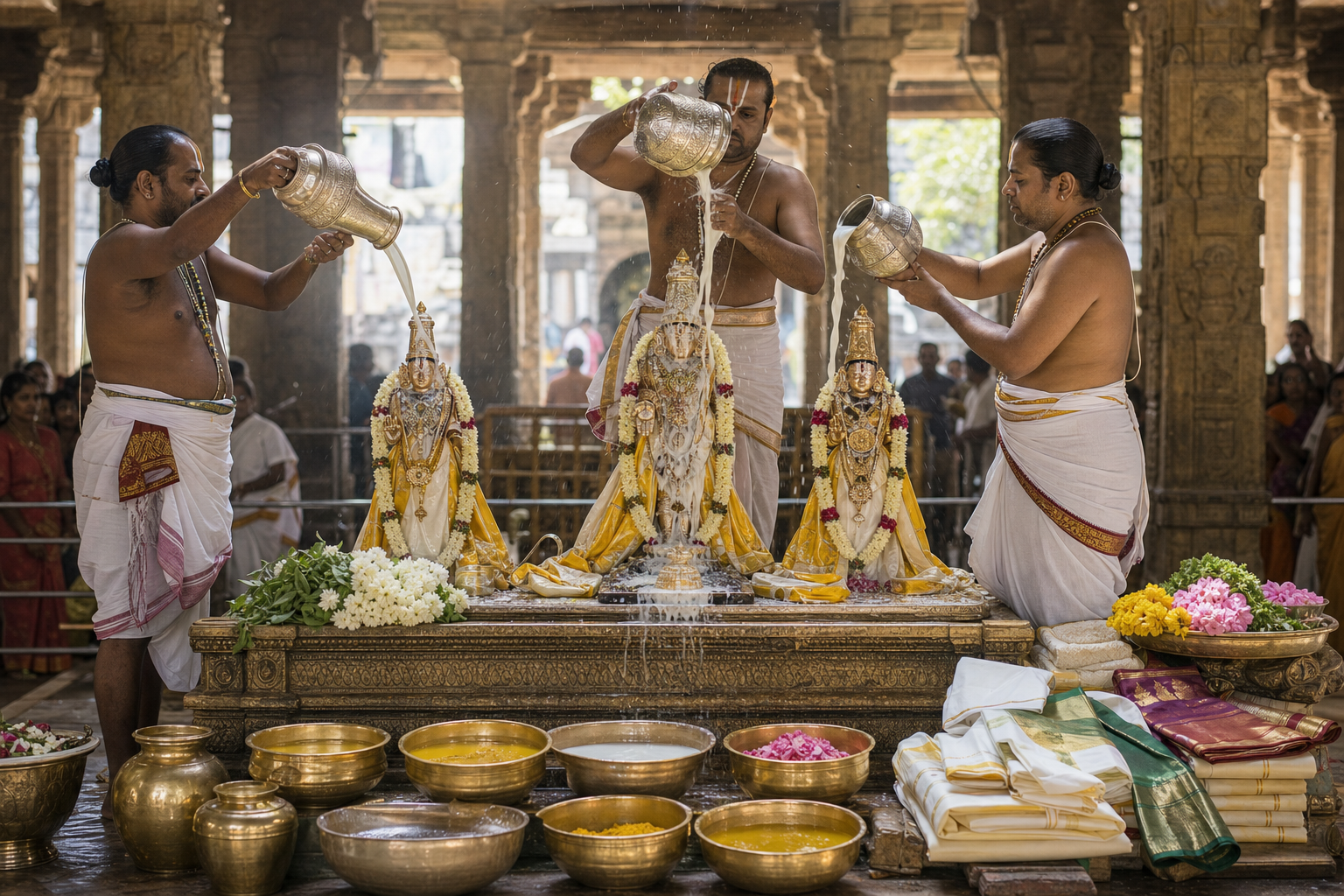
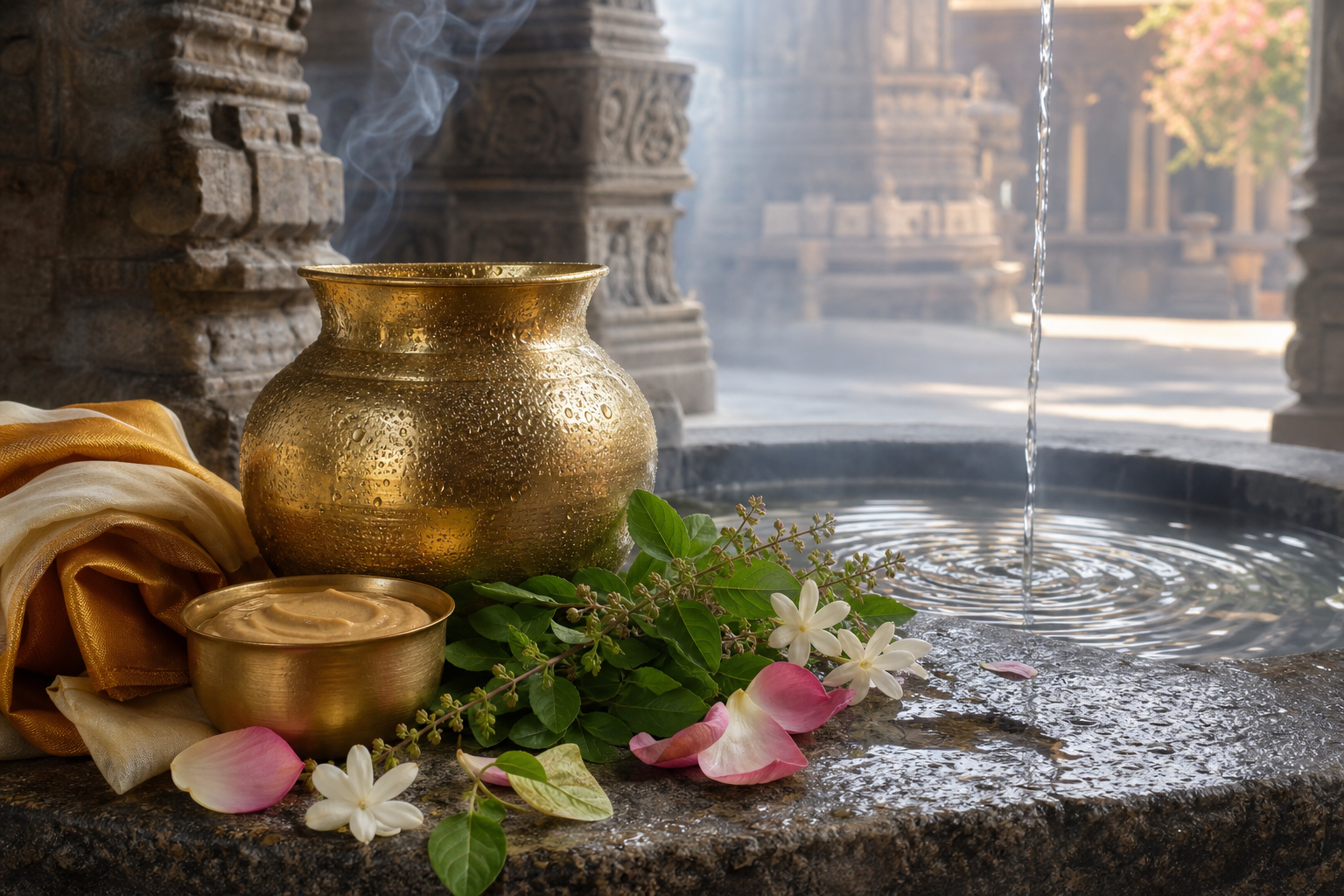
The heart of Vasanthotsavam is Snapana Tirumanjanam, an elaborate abhishekam of the Utsava Murtis. Consecrated water and panchamrita substances such as milk, curd, ghee, honey, and sugar are used, followed by fragrant and cooling applications that include turmeric, saffron, and chandanam. Priests recite mantras that include portions of the Purusha Suktam, Sri Suktam, and Bhu Suktam.
These materials are not decorative extras. Spring has begun to bring greater warmth, and the ritual language is one of cooling, cleansing, fragrance, care, and renewed abundance. The deity is served with the attentiveness due to a living sacred presence. That is why the festival can be understood as ritu-samskara: the transition of the season is received and sanctified rather than allowed to pass as a merely climatic change.
The emphasis on cooling also gives you a direct spiritual discipline. Chandanam cools the form; restraint should cool the mind. Fragrant flowers beautify worship; truthful and considerate conduct should beautify the pilgrim’s behaviour. If the symbolism remains only something you photograph or admire, you have witnessed the surface of the utsavam but missed its demand on the devotee.
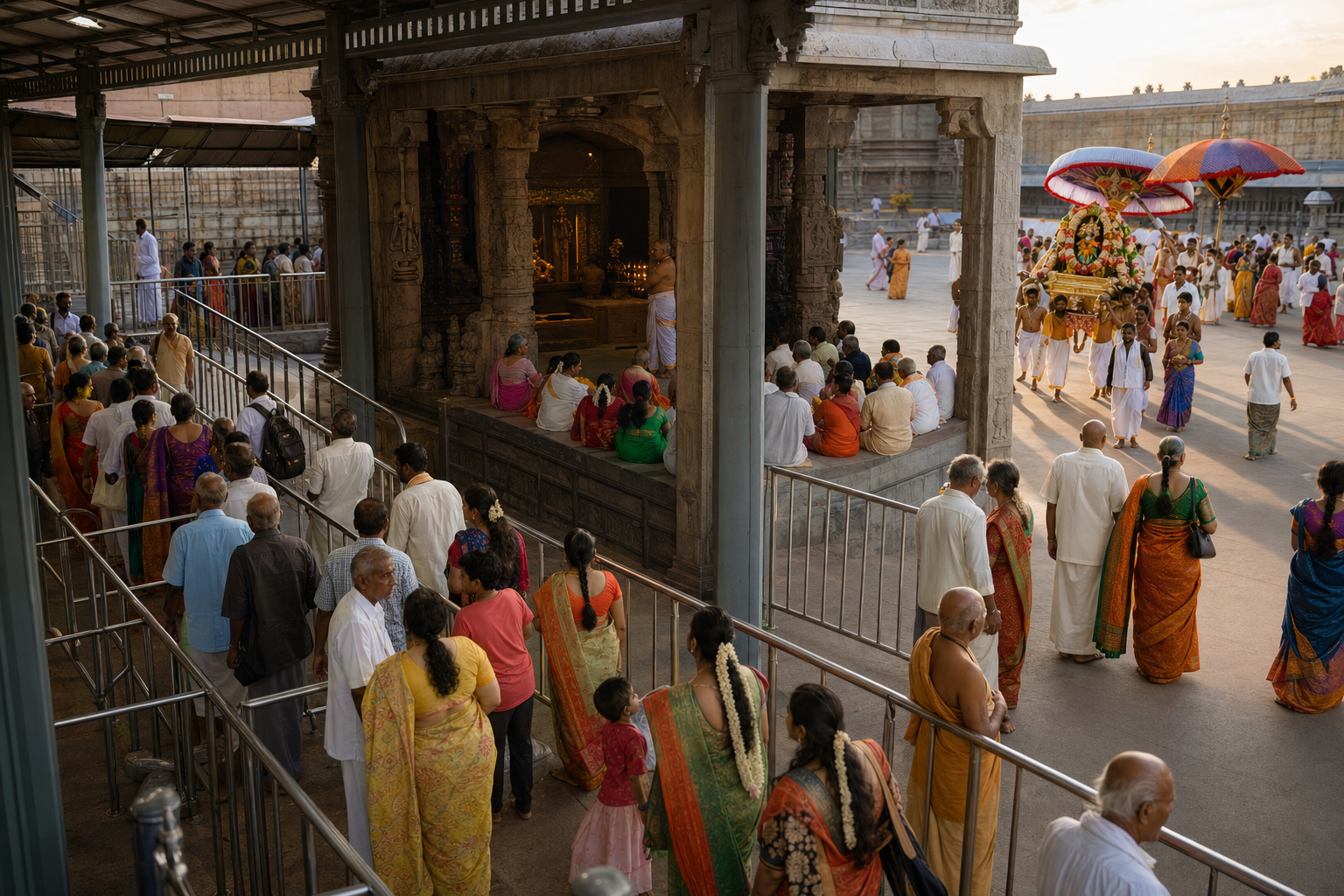
Evening processions around the four mada streets are customary, with the Utsava Murtis presented in seasonal alankarams. These streets are part of the sacred design of the festival: the Lord moves beyond the inner ritual space and becomes accessible to the assembled community. Procession details remain subject to the official programme and operational conditions, so regard a customary pattern as an expectation, not as a guaranteed time slot.
Choose your day by devotional purpose, not by guesswork
There is no single best day for every pilgrim. Decide first what you most want from the visit, and then choose the date that serves that purpose.
- If Pournami is central to your sankalpa: choose Wednesday, April 1. It completes the Trayodasi-to-Pournami sequence, but you should allow for the greater devotional interest associated with Chaitra Pournami.
- If you want to attend during the festival without requiring its final tithi: March 30 or March 31 keeps you within Vasanthotsavam. Do not promise yourself a shorter queue merely because these are weekdays; actual crowd management remains with TTD.
- If a particular Utsava Murti or ceremony is your priority: wait for the official day-wise programme before making that detail the anchor of your journey.
- If your main purpose is darshan of Sri Venkateswara: secure or identify your darshan route first. Treat access to a limited-seating festival ritual as a separate matter requiring its own official authorization.
- If the mada-street procession is your priority: preserve flexibility in the evening. Do not make a tightly timed departure depend on a customary procession schedule that has not been officially confirmed.
The important correction is simple: presence on Tirumala during the festival, entry into a darshan queue, and admission to a particular seva are three different things. You may have one without having the others. Confirm each part separately.
A practical plan for darshan and festival day
Key takeaways
- Festival dates: March 30 to April 1, 2026.
- Tithis: Chaitra Shukla Trayodasi, Chaturdasi, and Pournami.
- Main rite: Snapana Tirumanjanam for the Utsava Murtis.
- Darshan access and admission to a special seva are not interchangeable.
- Check TTD’s final notifications for ritual timings, seating rules, dress expectations, and procession details.
- Allow extra margin for warmth, security checks, queue movement, and Pournami footfall.
Once you know which day serves your purpose, build the visit in this order:
- Confirm the current TTD programme. Recheck close to the festival window. The calendar dates establish when Vasanthotsavam occurs, but TTD notifications govern the detailed sequence, participation procedure, and operational arrangements.
- Identify your darshan category. Sarva Darshan and Special Entry Darshan may operate alongside the festival according to TTD’s crowd-management plan. A place in either route should not be read as a seat at Snapana Tirumanjanam.
- Keep any special-seva proof separate and accessible. If TTD issues limited participation or seating for a ritual, follow the conditions attached to that authorization rather than relying on a general understanding of the festival.
- Wear traditional, temple-appropriate clothing. Check the latest dress instructions for any restricted seva. Choose clothing that remains comfortable during queues and moderate-to-warm daytime conditions on the hill.
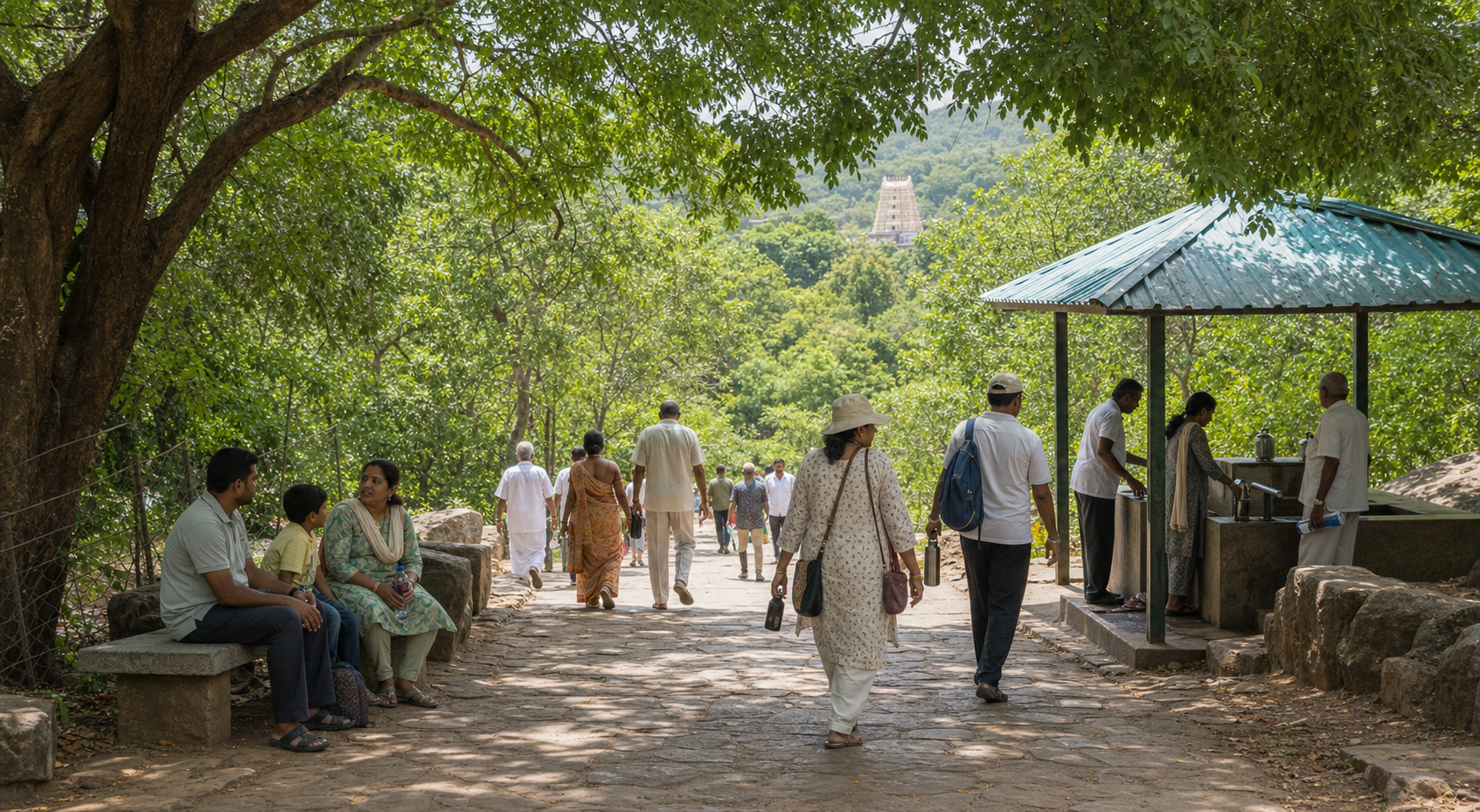
- Carry water within the prevailing rules. A refillable bottle is practical if permitted under current security instructions. Use the available drinking-water, prasadam, and anna-dana facilities rather than allowing heat or a long queue to turn the pilgrimage into an endurance contest.
- Build in time for screening and movement. Do not calculate arrival from the ritual time alone. Security checks, queue routing, and crowd controls occur before you reach the relevant sacred space.
- Keep the procession plan flexible. The four mada streets are processional corridors, not simply shortcuts around the temple. Follow barricades and volunteer instructions, and avoid obstructing the movement of other devotees while waiting for darshan.
TTD’s facilities near the Vaikuntam Queue Complexes support the large pilgrim flow, but facilities do not remove the need for a time buffer. This is especially important on April 1. If you are travelling with someone who needs accessible amenities or a slower pace, locate the relevant facilities before entering the main flow rather than trying to solve the problem after the queue has advanced.
Why this spring festival belongs to a living Dharmic calendar
Vasanthotsavam is not a recently devised seasonal presentation. Its historical continuity reaches into the Vijayanagara-era temple tradition, while its present form remains governed by Tirumala’s Agamic ritual order. Astronomical time, tithi, mantra, fragrance, water, flowers, alankaram, and public procession are brought into one coherent act of worship. The calendar does not merely tell the community what day it is; it tells the community how to inhabit that moment dharmically.
The movement from Trayodasi through Chaturdasi to Pournami gives the three days a natural progression toward fullness. A pilgrim can mirror that progression without inventing a private ritual: arrive with a clear sankalpa, attend darshan with patience, recite a familiar stotra, accept prasadam with gratitude, and carry one concrete discipline home. It may be greater restraint in speech, steadier seva, or a deliberate effort to cool anger before it becomes harm.
The season also brings other Dharmic communities toward observances of renewal, including Chaitra Navratri, Mahavir Jayanti, and Vaisakhi around this part of the year. These traditions should not be collapsed into one theology. Their distinctive teachings and forms matter. Yet their seasonal emphasis can still help us notice a shared civilizational vocabulary: ethical restraint, gratitude, compassion, service, reverence for life, and the renewal of community.
Mark March 30 to April 1, decide whether your priority is a tithi, a specific ritual, the procession, or general darshan, and wait for TTD’s day-wise notice before making an unconfirmed ceremony the fixed point of your itinerary. Then go with enough margin to remain patient. At Vasanthotsavam, composure is not merely convenient crowd etiquette; it is part of what the cooling rite asks you to practise.