
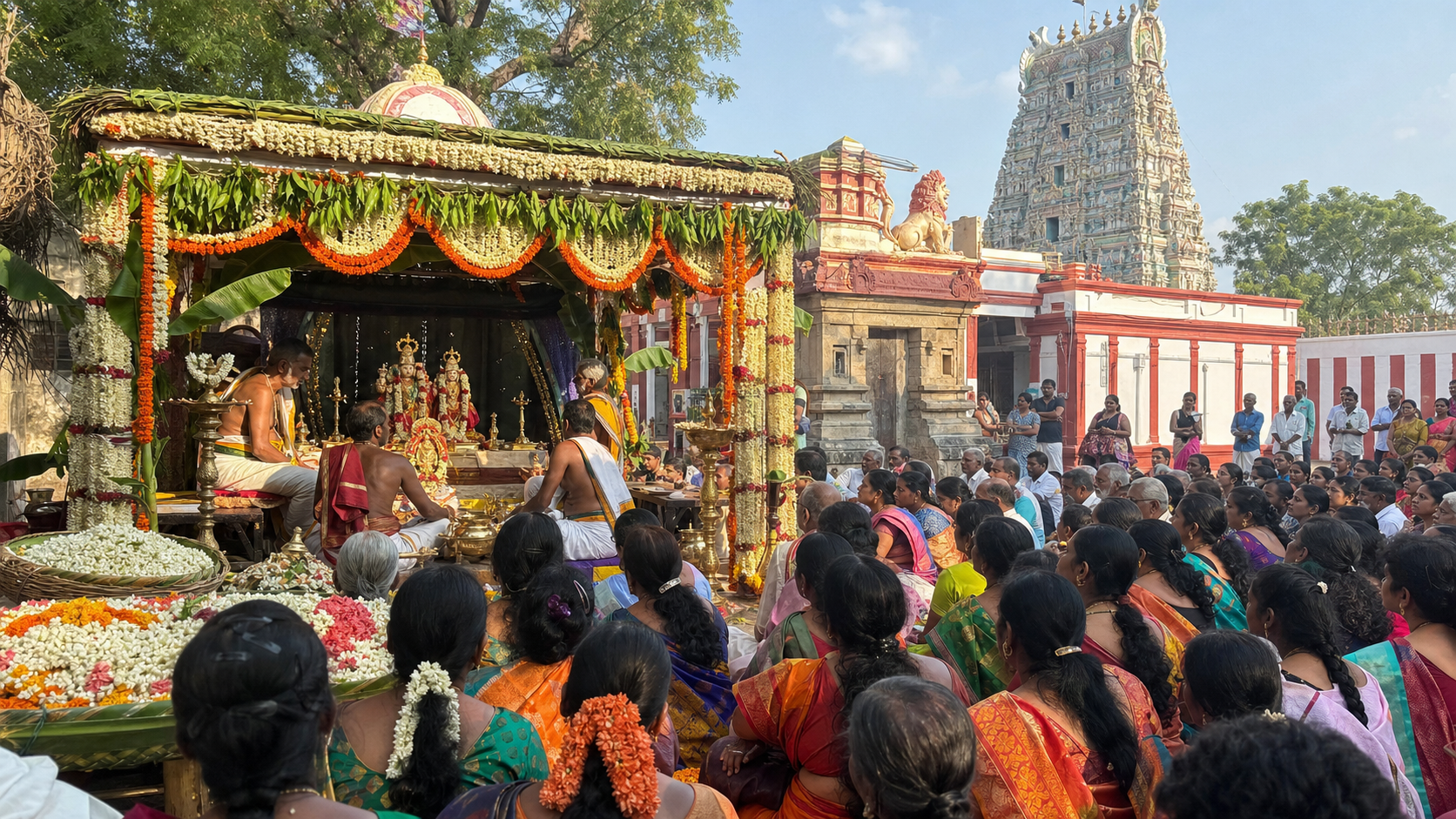
If you want to spend Sri Rama Navami in Andhra Pradesh in 2026, your real choice is not simply Tirupati or Vontimitta. It is whether you want to witness the festival being prepared, join the concentrated worship of Navami morning, or enter the larger public celebration of Sita-Rama Kalyanam.
That distinction should determine your dates, transport and expectations. Build your trip around one confirmed ritual, then treat processions and additional sevas as welcome additions once the final temple programme is published.
The 2026 calendar: what is fixed and what still needs confirmation
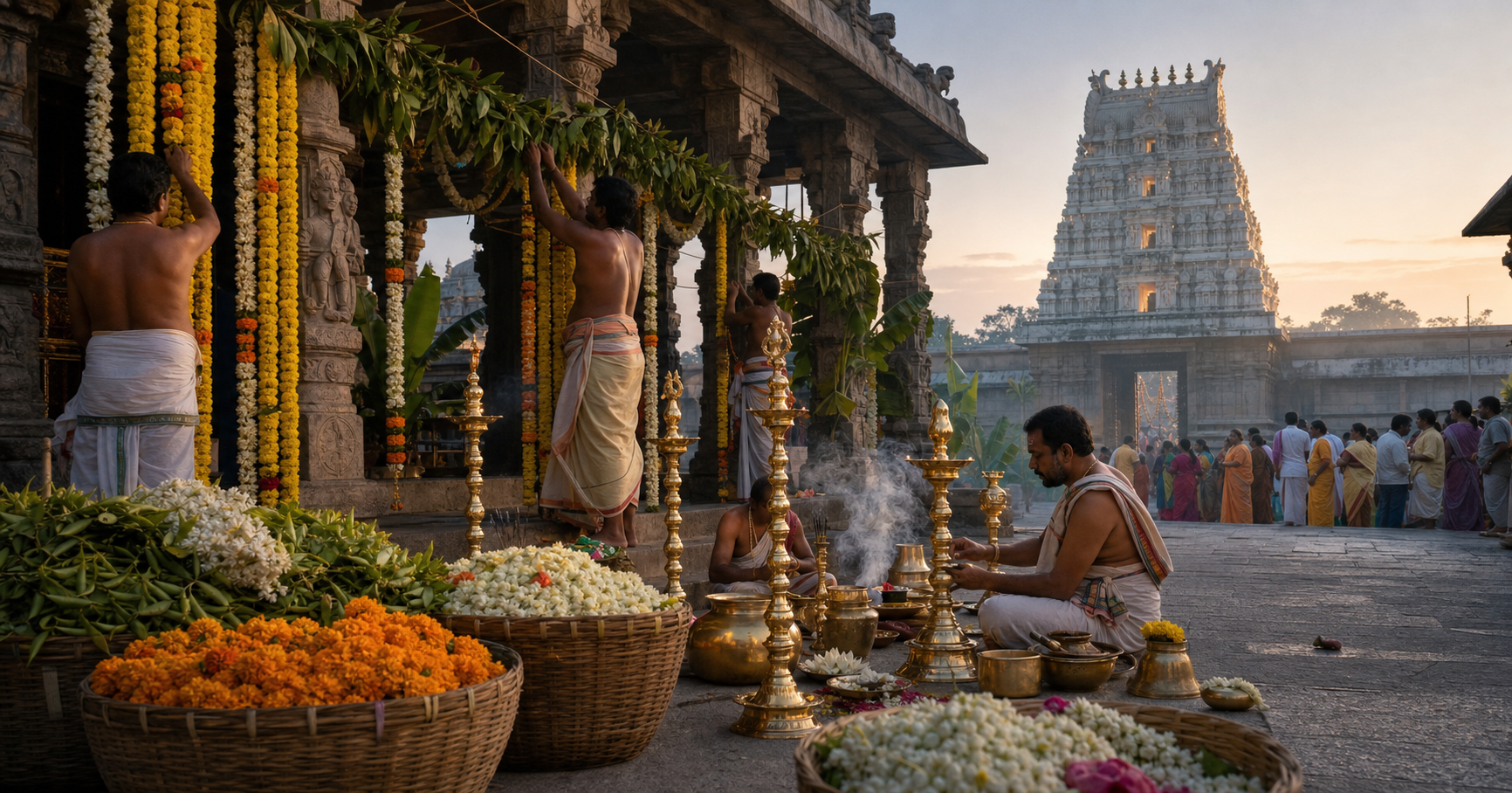
The two temples follow related but separate programmes. Vontimitta begins with preparatory rites before Sri Rama Navami, while Tirupati has a clearly defined three-day observance beginning on March 27. Do not merge them into one generic festival schedule.
| Date | Temple | What you can plan around | Best suited to |
|---|---|---|---|
| March 25, 2026 | Sri Kodanda Rama Swamy Temple, Vontimitta | Haridra Ghatanam within the garbha-griha, beginning the preparation of auspicious turmeric for the Kalyana observances | Devotees drawn to intimate preparatory ritual and the sacred work behind a major festival |
| March 26, 2026 | Sri Kodandarama Swamy Temple, Vontimitta | Ankurarpana, the ceremonial sowing of sacred seeds, as the liturgical prelude to the Brahmotsavams | Families and pilgrims who want to encounter the festival as a sequence rather than attend only its largest event |
| March 27, 2026 | Sri Kodandarama Swamy Temple, Tirupati | Morning Abhishekam and Snapana Tirumanjanam from 8 AM to 9 AM | Pilgrims who want a confirmed Navami-morning ritual with a specific published time |
| March 27, 2026, expected | Sri Kodandarama Swamy Temple, Vontimitta | Sri Sita Rama Kalyanam is expected in alignment with Chaitra Shukla Navami, but its final date, time and entry arrangements remain subject to TTD’s Panchang and notified programme | Devotees whose main purpose is the celestial wedding and who can keep their plans flexible |
| March 28-29, 2026 | Sri Kodandarama Swamy Temple, Tirupati | The three-day Sri Ramanavami Utsavams continue through March 29; specific later sevas and timings should be confirmed locally | Pilgrims able to stay beyond Navami morning and adapt to the announced schedule |
The word “opening” can cause confusion at Vontimitta. Haridra Ghatanam opens the Kalyana preparations on March 25. Ankurarpana plants the ritual seed of the Brahmotsavams on March 26. Dwajarohanam traditionally marks the festival’s formal commencement. These are complementary stages, not competing dates for the same event.
The safest booking rule is simple: treat a published date and a published time as your anchor. Treat customary vahana sevas, Rathotsavam, Chakrasnanam and other expected observances as provisional until they appear in TTD’s final programme or on the temple noticeboard.
What kind of darshan each ritual offers
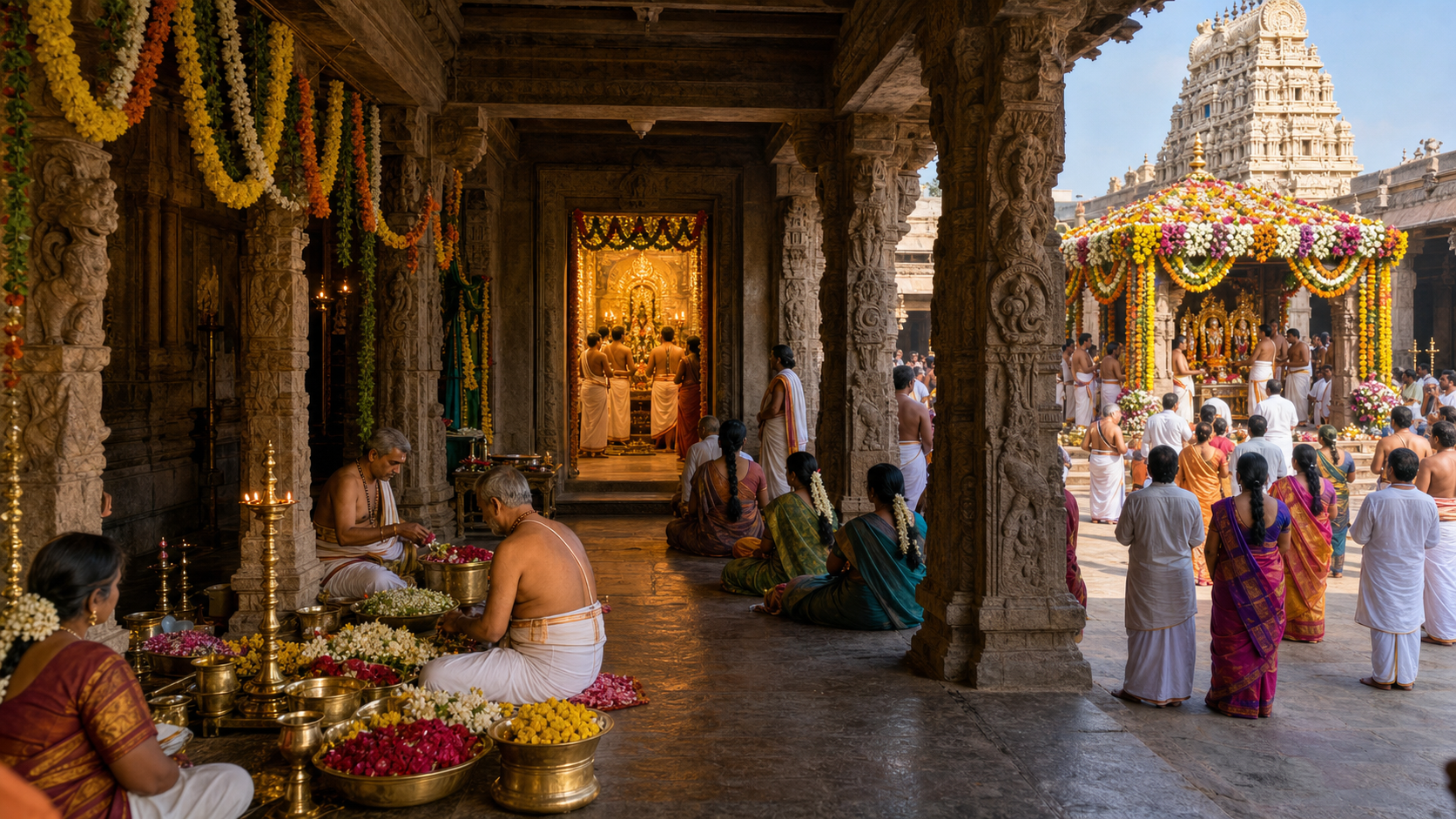
Haridra Ghatanam: sacred preparation before public celebration
On March 25 at Vontimitta, turmeric rhizomes and the traditional rolu and rokali are consecrated before the turmeric is ground. The paste is then reserved for auspicious uses connected with the Kalyanam, including ceremonial bathing and the preparation of akshata.
This rite makes an important Dharmic point visible: worship does not begin when the crowd arrives or the procession starts. It begins with the mindful preparation of substances, tools and intention. Turmeric, grinding stones and human effort are brought into the field of puja through sankalpa, mantra and disciplined service.
Choose March 25 if that inner process is what you want to witness. Because the ceremony is conducted within the sanctum, do not expect the visibility of a street procession. Arrive early, ask temple volunteers where devotees may stand, and assume that photography will be restricted near the garbha-griha unless staff explicitly indicate otherwise.
Ankurarpana: the festival understood as living growth
Ankurarpana on March 26 uses consecrated earth, vessels and selected grains, or navadhanyam. The seeds are sown with prayers for auspicious growth, collective welfare and the successful completion of the Brahmotsavams.
The action is quieter than a chariot festival, but its symbolism is unusually direct. A festival must be cultivated like a seedling: prepared carefully, protected from disorder and sustained by attention. If you are bringing younger family members, explain this before entering. They will have a concrete image through which to understand why the temple performs preparatory rites instead of moving immediately to the grandest celebration.
Vontimitta’s setting adds another layer. Sri Rama, Sita and Lakshmana are represented there as an ekashila triad carved from a single stone. The unified image and the sowing of many seeds offer two complementary ways of seeing community: many lives can grow without losing their orientation toward one sacred order.
Abhishekam and Snapana Tirumanjanam: the clearest timed observance
For a pilgrim who needs the strongest combination of a confirmed date and a stated time, Tirupati on March 27 is the clearest choice. Abhishekam is scheduled in the morning, followed by Snapana Tirumanjanam from 8 AM to 9 AM.
Abhishekam ritually bathes the deities with sanctified water and traditional offerings such as panchamrita, accompanied by archana and recitation. Snapana Tirumanjanam emphasizes a cooling ablution using perfumed water and substances such as turmeric, sandal and aromatic ingredients. Its theological movement is from heat and agitation toward grace, clarity and composure.
The announced hour is the ritual time, not a promise that a late-arriving devotee will enter immediately. Reach the temple well before the morning programme, allowing for security checks and queues. If this is your non-negotiable darshan, stay close enough that local traffic cannot turn a carefully planned journey into an arrival after 8 AM.
Sita-Rama Kalyanam: plan for public devotion, but wait for the final notice
The divine wedding is the luminous public center of the Vontimitta celebrations. Its ritual language joins Sri Rama’s dharma with Sita’s auspicious presence and presents household life as a field of fidelity, responsibility and service.
March 27 is the expected 2026 date because the Kalyanam is aligned with Chaitra Shukla Navami. That expectation is not yet the same thing as a final admission time, procession route or seva arrangement. If the Kalyanam is the reason for your journey, keep March 27 available but avoid building a tightly timed same-day transfer around an unconfirmed programme. Confirm the event through TTD and the Vontimitta temple’s on-site notices.
These observances may express virtues shared across the wider Dharmic family, including restraint, compassion, service and communal welfare, but their liturgical form remains distinctly Vaishnava. A respectful visitor does not need to flatten that distinction. Notice both the shared ethical ground and the particular Agamic discipline through which this temple gives it form.
A pilgrimage plan that can survive schedule changes
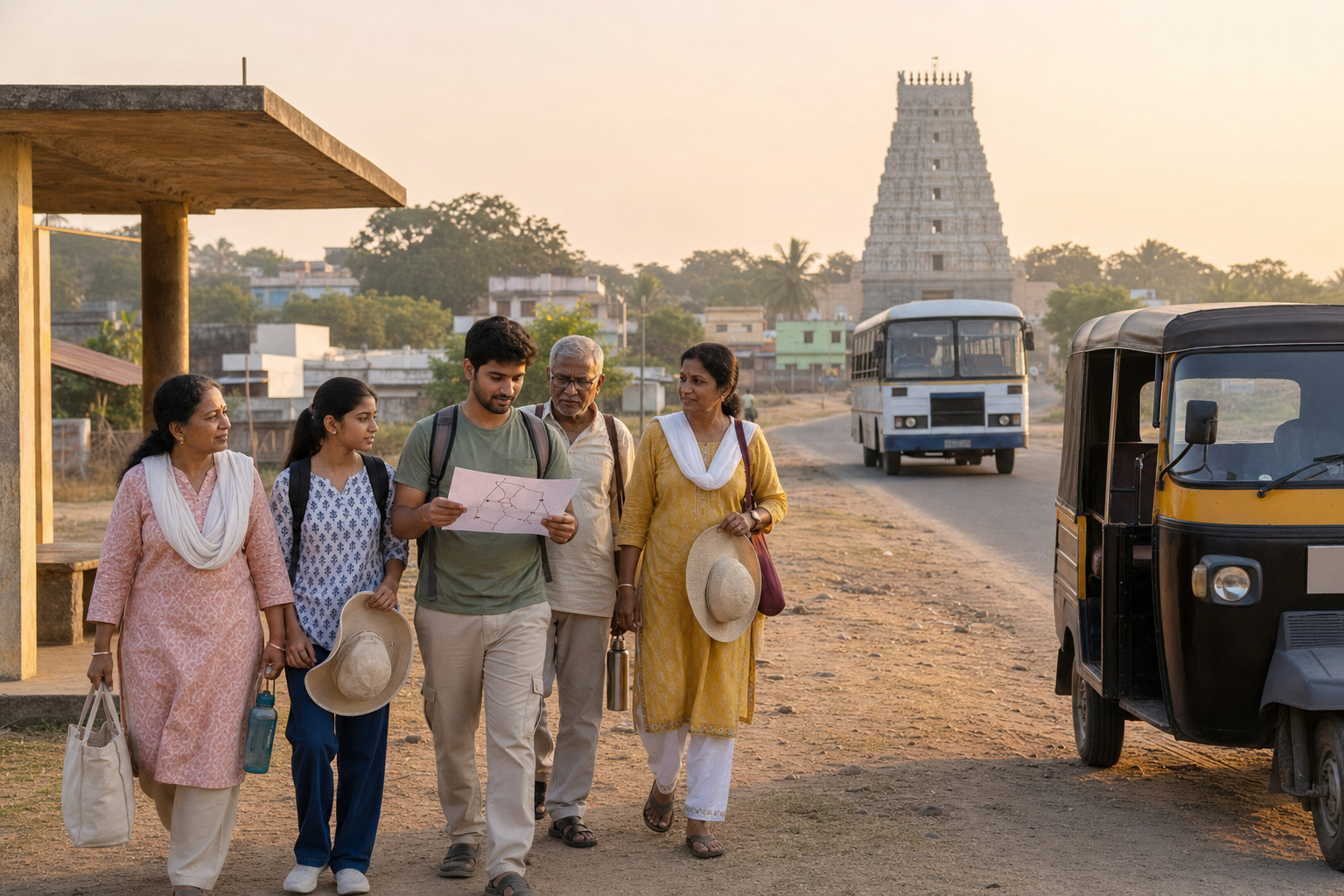
- Choose one non-negotiable ritual. Select Tirupati on March 27 if a published morning time matters most. Select Vontimitta on March 25 or 26 if you want the preparatory arc. If you want the Kalyanam, wait for the definitive TTD announcement before locking in a narrow itinerary.
- Separate the anchor from the optional programme. Write one event at the top of your plan as fixed. Put processions, special sevas and a second temple beneath it as additions. This prevents a change to an evening event from disrupting your entire pilgrimage.
- Stay near the temple attached to your anchor. Early arrival is especially important for Haridra Ghatanam inside Vontimitta’s inner precincts and for Tirupati’s 8 AM Snapana Tirumanjanam. Advance accommodation is prudent because festival footfall increases around the principal dates.
- Confirm the last leg, not only the long journey. Vontimitta has a railway station on the Kadapa-Tirupati route and road access along NH-716; Tirupati and Kadapa provide the principal airport connections mentioned for the pilgrimage. None of those connections guarantees an easy approach during festival traffic. Check road diversions, drop-off points and queue gates before setting out.
- Verify three different things. Ask for the exact ritual time, the entry arrangement and the current security or traffic advisory. A confirmed tithi does not answer all three. TTD communications and the temple noticeboard should govern your final decision.
- Carry only what supports the visit. Wear modest traditional clothing, minimize bags, follow queue instructions and avoid single-use plastics. At Vontimitta, treat the stone architecture and sanctum restrictions as part of the pilgrimage discipline rather than as obstacles to photography.
Do not assume that Tirupati and Vontimitta can be combined comfortably on the same day merely because both belong to the wider Andhra festival season. Confirm current travel time and local controls first. If seeing both temples matters, a plan spread across March 25-27 is more resilient than one dependent on a rapid Navami-day transfer.
You can also prepare for the journey spiritually. Rama-nama japa, Sundara Kanda parayana and a deliberate act of seva give the pilgrimage an inner structure before you reach the queue. If a schedule changes, those practices keep the day centered on Sri Rama rather than on frustration over a missed programme.
The March 27 correspondence with Sri Rama Navami applies to Tirupati’s local Panchang determination. If you will also observe from another region or time zone, consult your local Panchang rather than copying Andhra’s civil date without checking the local tithi boundary.
Key takeaways for 2026 pilgrims
- March 25 at Vontimitta is for Haridra Ghatanam, the sanctified preparation of turmeric for the Kalyana rites.
- March 26 at Vontimitta is for Ankurarpana, when sacred seeds are sown as the ritual beginning of the Brahmotsavams.
- March 27 at Tirupati offers the most specific confirmed timing: morning Abhishekam and Snapana Tirumanjanam from 8 AM to 9 AM.
- Vontimitta’s Sita-Rama Kalyanam is expected around March 27, but its final timing and arrangements must be verified through TTD.
- Tirupati’s Utsavams continue through March 29, although the later programme should be confirmed locally.
- Choose one ritual as your anchor, stay near that temple, and add other sevas only after the final schedule is available.
Make that anchor decision now: preparation at Vontimitta, timed Navami worship at Tirupati, or the Kalyanam once its programme is confirmed. Then leave enough space around it for the festival to be an act of attention rather than a race between venues.
References
- DharmaRenaissance Blog – Sri Ramanavami Utsavams 2026 at Tirupati Kodandarama Temple: Sacred Rituals and Visitor Guide
- DharmaRenaissance Blog – Ankurarpana at Vontimitta (26 March 2026): Sacred Prelude to Sri Rama Brahmotsavams
- DharmaRenaissance Blog – Vontimitta Haridra Ghatanam: Turmeric Rite Opens Sita Rama Kalyana Brahmotsavams, Mar 25, 2026