
You may be trying to decide how much hope to take from the news about HH Mukunda Goswami, and what a devotee can actually do from a distance. The sound response is neither alarm nor premature celebration. It is disciplined hope: receive the encouraging signs, respect how early the recovery remains, and make your concern useful.
HH Mukunda Goswami was stable and recovering after brain surgery at the point covered by the available information. Early clinical indicators were encouraging, while monitoring and supportive care continued. That distinction should shape every prayer, message, and update you share.
What stable and recovering actually tells you
Stable is meaningful, but it is not a prediction of the final outcome. In an early postoperative setting, it generally means the immediate clinical picture is being maintained without the word itself telling you how quickly speech, movement, swallowing, alertness, or cognition will improve. Recovering describes a process, not a completed event.
After neurosurgery, the care team watches trends rather than relying on one encouraging moment. Neurological assessments may include orientation, language, limb strength, responsiveness to instructions, and swallowing. Clinicians also manage pain, circulation, infection risk, and the prevention of blood clots. Clearer responses, longer periods of wakefulness, steadier vital signs, or improved ability to follow a command can all be encouraging, but their significance belongs to the treating team.
This gives you a simple rule for reading public updates: preserve their exact level of certainty. Do not turn encouraging into recovered, stable into out of danger, or beginning rehabilitation into a promise of rapid independence. If you pass on an update, keep its date and wording attached so that an older report does not circulate as a new development.
If you are physically present under the hospital’s rules and notice a change, tell the bedside staff immediately. Do not ask a group chat to interpret it, and do not substitute advice from well-wishers for an assessment by the clinical team.
Read recovery as a trend, not a daily verdict

Neurosurgical recovery rarely moves in a smooth line. The pace depends on the underlying condition, the procedure, age, baseline health, and clinical readiness for rehabilitation. A broad pattern can include days to weeks of stabilization followed by progressively demanding rehabilitation over weeks to months. Individual experience may be shorter, longer, or more complicated.
Plateaus do not automatically mean that recovery has stopped. Improvement can appear in steps as repeated, task-specific practice helps the nervous system consolidate functional pathways. A more focused gaze, a responsive hand squeeze, or an initial attempt at speech may be deeply meaningful without being enough, by itself, to establish a prognosis.
Rehabilitation also involves more than regaining strength. Physiotherapy can support safe movement and mobility. Occupational therapy works toward useful daily activity. Speech-language therapy may address communication and swallowing. Neuropsychology can help assess and exercise cognitive functions. The intensity of each intervention must be matched to alertness, stamina, and medical readiness; more effort is not automatically better when the brain and body need carefully dosed work.
When you receive a small milestone, hold it in the right way. Be grateful for what happened, but do not attach a timetable to it. When no public news arrives, do not fill the silence with a theory. No update may simply mean that the family and care team are occupied with care, rest, assessment, and privacy.
A practical ladder of community support
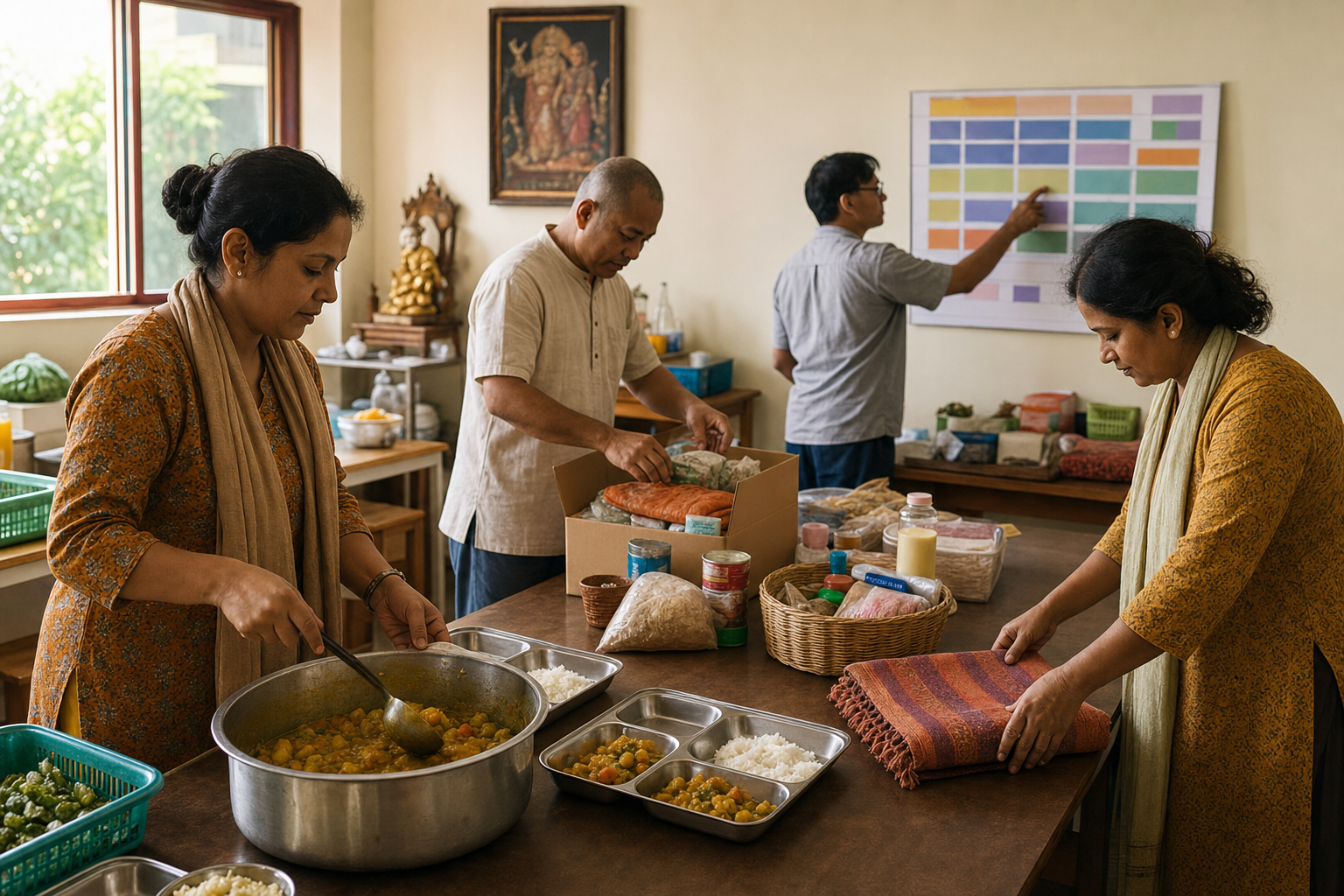
A large spiritual community can become a source of strength, but it can also create an accidental burden. Hundreds of sincere requests for details, visits, calls, recordings, and personal responses still have to be managed by someone. Good seva removes work from the people closest to the patient.
- Verify before forwarding. Use an authorized update or a trusted community channel. Do not circulate screenshots without context, anonymous messages, second-hand medical claims, or predictions presented as inside knowledge.
- Protect privacy as part of care. Do not publish clinical details, photographs, audio, contact information, or location information unless the appropriate representative has clearly authorized it. Concern does not create a right to access.
- Respect the clinical environment. Do not assume that a visit, call, video message, or continuous chanting near the patient is helpful. Rest, infection control, treatment schedules, and stimulation limits may govern what is appropriate. Follow the care team’s boundaries.
- Offer bounded seva. Ask a designated liaison, if there is one, which specific task would remove work from caregivers. A useful offer names what you can do, when you can do it, and any limit: arranging meals that meet stated requirements, helping with approved transport, handling an administrative task, or supporting an authorized communication channel.
- Use accountable channels. If material assistance is requested, confirm that the request is authorized before sending funds or collecting on someone else’s behalf. Good intention does not replace consent, accuracy, or responsible handling.
- Allow quiet to remain quiet. Do not demand a reply, acknowledgment, blessing, photograph, or personal message. A gift of support stops being a gift when it creates another obligation.
One precise offer is usually more useful than a general promise to help. Instead of asking caregivers to invent a task for you, state the task you can own and let them accept or decline it without explanation. If no assistance is requested, accept that boundary and continue your spiritual support privately.
Keep prayer and rehabilitation in their proper lanes
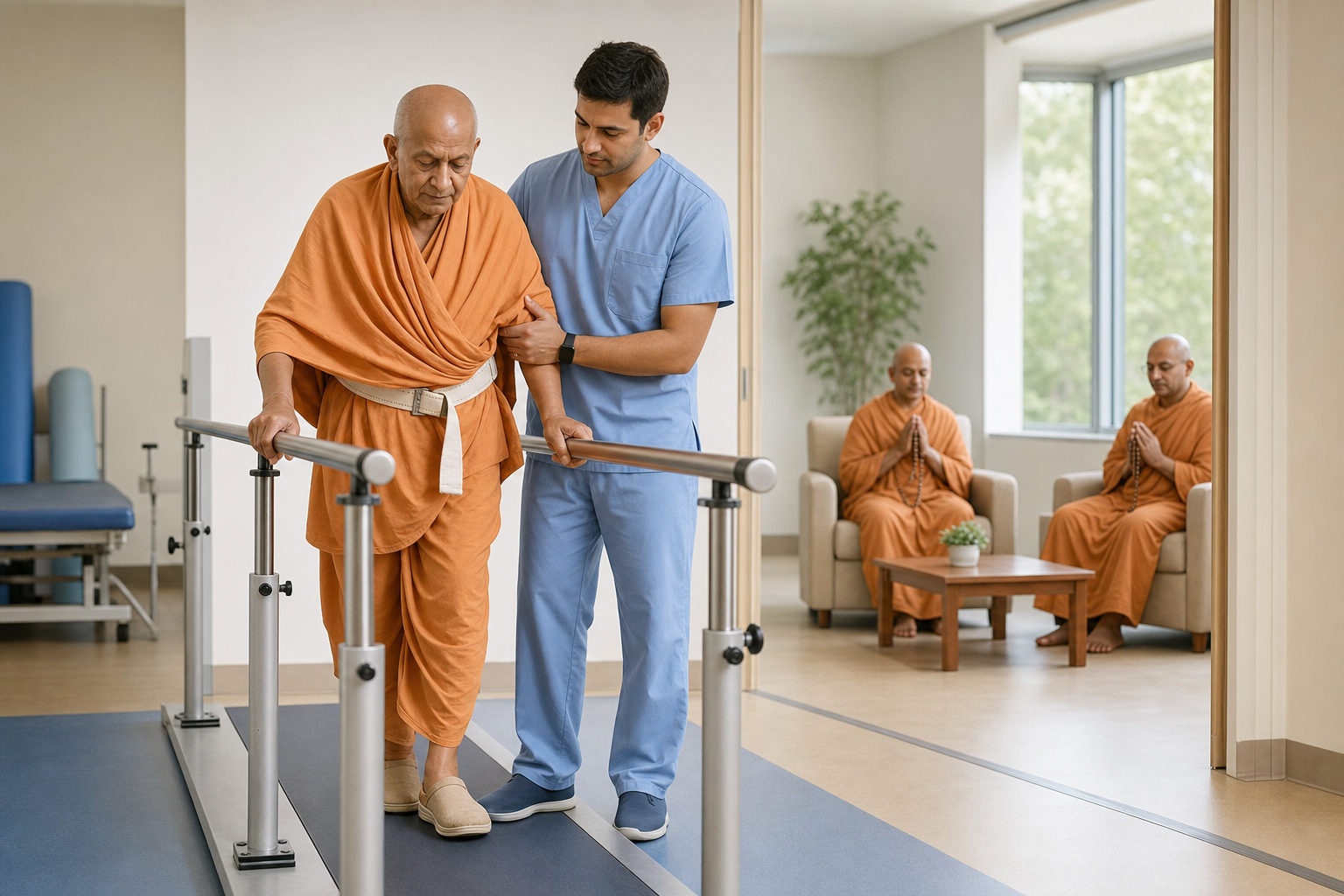
Spiritual practice can steady devotees, sustain caregivers, and express loving concern. It must not be presented as a replacement for surgery, monitoring, medication, rehabilitation, or professional clinical judgment. Medical care and spiritual care can complement one another precisely because they do different work.
Within the wider Dharmic family, communities may turn to kirtan and japa, Sikh simran, Buddhist metta bhavana and paritta recitation, or Jain pratikraman. These are distinct disciplines rooted in distinct traditions; they need not be collapsed into one generic ritual. Their shared contribution here is an ethic of karuna, ahimsa, remembrance, and disciplined presence.
Choose a practice you can sustain without making a claim about what it will medically produce. Set a regular time, dedicate the practice sincerely, and avoid treating a strong feeling, dream, or coincidence as privileged clinical information. Prayer should reduce agitation and deepen service, not generate a new rumor.
This is especially fitting in light of Mukunda Goswami’s long service through pioneering kirtan outreach, thoughtful communication, and guidance in the Bhakti tradition. The most faithful response to that legacy is not louder speculation. It is careful speech, compassionate action, and steadiness over the full course of recovery.
Key takeaways: the next right actions
- Treat stable and recovering as encouraging but limited clinical descriptions, not guarantees.
- Look for trends over time; do not convert one milestone or one quiet day into a prognosis.
- Forward only authorized, dated information and preserve its original level of certainty.
- Keep visits, calls, remedies, and medical opinions within boundaries set by the care team and authorized representatives.
- Offer one concrete, manageable act of seva that removes work from caregivers.
- Continue prayer without claiming that spiritual practice determines a medical outcome.
Before you forward the next message, pause and verify it. Then choose one practice you can maintain and one practical offer you can make without creating another demand. That combination of truthfulness, patience, prayer, and useful seva is the community support this moment calls for.