
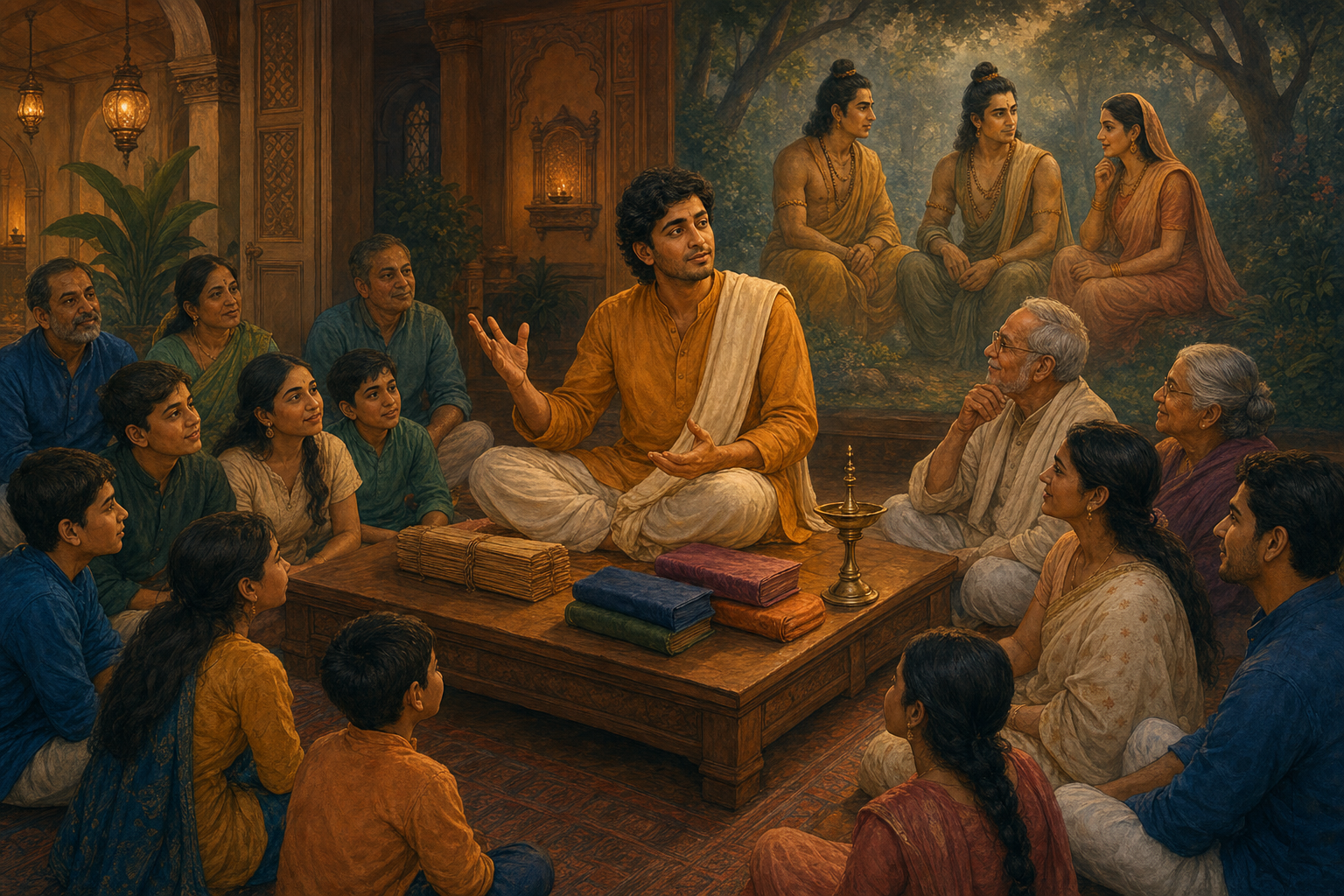
You have been asked to tell a Ramayana story at home, in a class, during a satsang, or on a public stage. Then someone asks the difficult question: “Is this episode actually in the Ramayana?” You do not have to choose between devotional warmth and textual honesty.
A responsible telling can preserve bhakti, acknowledge different traditions, and still give your audience a clear ethical lesson. The method is simple: locate the story, name the interpretive lens, trace conduct to consequence, and leave the listener with a decision that applies beyond the performance.
Locate the episode before you interpret its meaning
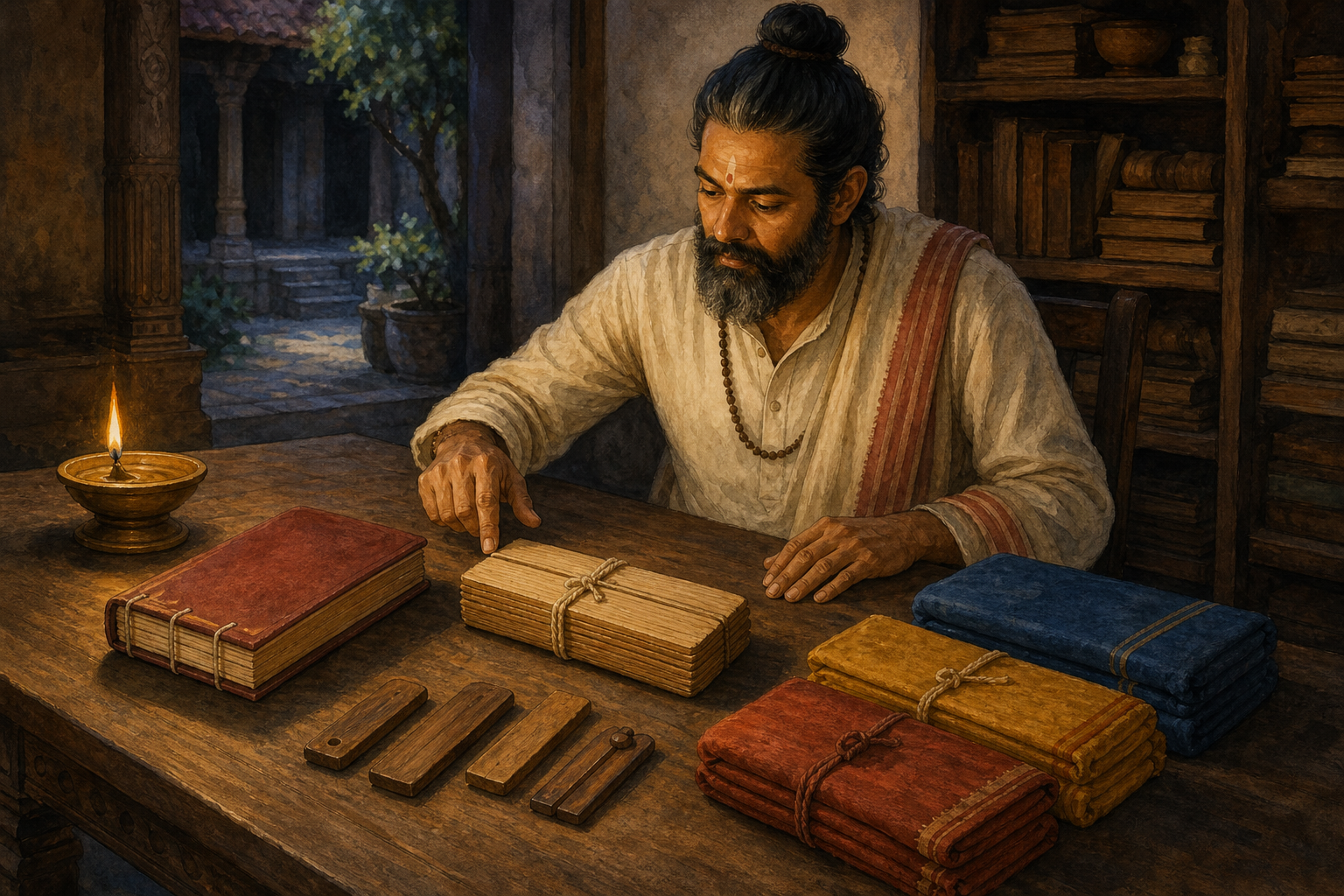
Before asking what an episode teaches, ask where it belongs. “The Ramayana” can mean the Valmiki Ramayana, a regional or vernacular retelling, a devotional adaptation, a Jain Ramayana, a dramatic performance, or a later oral kathā. These forms participate in a vast Ramayana tradition, but they do not make identical textual claims.
The alleged encounter between Ashtavakra and Ravana shows why this distinction matters. The widely used critical edition of the Valmiki Ramayana does not contain a debate or curse involving these two figures. The episode is also absent from major classical retellings such as Kamban’s Ramavataram and Tulsidas’s Ramcharitmanas. Its appropriate home is later oral and regional kathā, where familiar figures are brought together to illuminate an ethical truth.
That does not make the story worthless or fraudulent. It tells you what kind of authority to claim for it. A later parable may express the Ramayana’s moral logic without being a passage from Valmiki. Trouble begins only when a storyteller presents one category as another.
Use one of these three introductions
- For an episode in a named text: “In the Valmiki Ramayana…” or “In Tulsidas’s telling…”
- For a regional or devotional variant: “In this regional tradition…” or “In a later devotional retelling…”
- For an ethically useful legend with uncertain textual placement: “A later kathā tells of an encounter between…”
If a listener asks whether Ashtavakra cursed Ravana, give a direct answer: the familiar scene is not found in the Valmiki critical edition or the major retellings named above, but it survives as a later teaching story about ego. You can then interpret it confidently without manufacturing a citation.
This small act of labeling earns trust. It also teaches your audience that Sanatana Dharma is strong enough to preserve textual layers rather than hiding them. Śāstra, retelling, performance, and community memory can all carry meaning while remaining distinguishable.
Build the ethical lesson from choices, counsel, and consequences
An ethical Ramayana telling should show how adharma works. It should not reduce the plot to “a bad being received a curse” or “a good being won because he was stronger.” Those summaries identify sides but conceal the moral mechanism.
Ravana is especially easy to flatten. He possesses learning, political power, artistic accomplishment, devotion to Shiva, and the capacity for disciplined effort. Yet anger, pride, delusion, and disregard for ethical limits corrupt those capacities. His complexity is the point: knowledge and devotion do not excuse conduct, and talent cannot protect a person whose ego has disabled discernment.
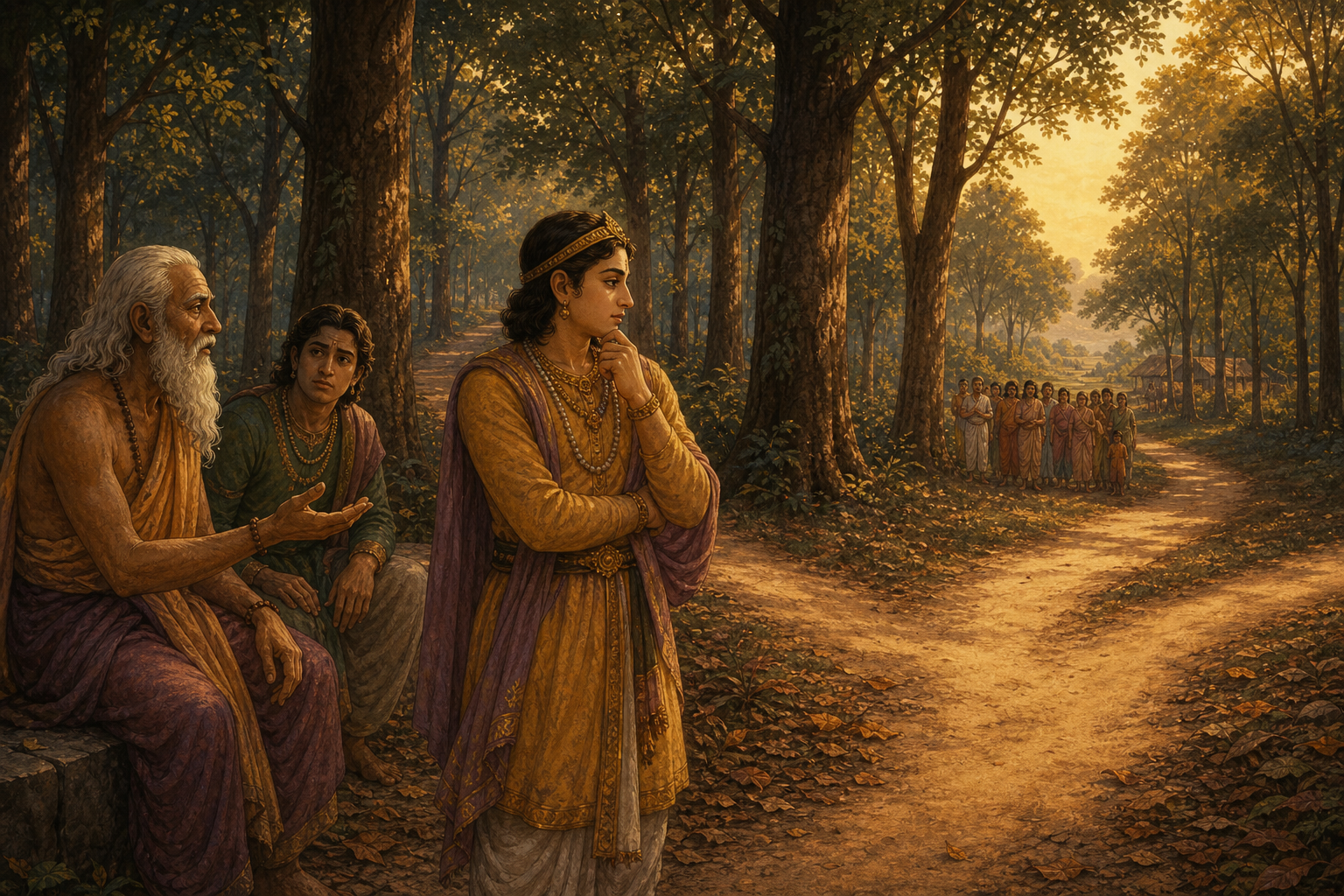
The decisive pattern is visible when Vibhishana urges Ravana to release Sita and return to Dharma. Ravana receives counsel before catastrophe. His fall therefore cannot be blamed on ignorance alone. He refuses correction because correction threatens the identity he has built around sovereignty, possession, and pride.
Apply a four-question ethical test
- What boundary of Dharma does the character cross?
- Who offers warning, restraint, or a path of return?
- What attachment prevents the character from accepting that counsel?
- Which consequence grows from the original choice?
Use those questions while preparing any scene. They turn an account of reward and punishment into an examination of moral agency. They also prevent you from blaming fate for an outcome that the narrative repeatedly connects to a character’s decisions.
The same discipline clarifies the language of a śāpa, or curse. In the Ashtavakra legend, the sage’s pronouncement need not be treated as an arbitrary magical attack. It can be explained as a judgment that names the phala already being produced by Ravana’s ahaṅkāra. His ego drives him to humiliate others, reject sound advice, and persist in wrongdoing; ruin is the ripening of that pattern.
This reading need not deny the sacred force attributed to a sage’s speech. It simply stops the curse from becoming a moral shortcut. Ashtavakra does not make an innocent Ravana wicked. He exposes the direction in which Ravana is already moving.
Be equally careful with the word asura. Ravana’s downfall should not be explained as the automatic result of belonging to a category of beings. Asuras in Indic narratives can possess learning, discipline, devotion, and distinction. The ethical charge rests on action. That keeps the story focused on Dharma and prevents identity from becoming a substitute for judgment.
Present variants as distinct lenses, not rival claimants

Different Ramayana traditions often emphasize different dimensions of the same encounter. Your job is not to force every version into a single composite scene. Choose a narrative spine, identify significant additions, and explain what the chosen version helps the audience notice.
The Kevat episode offers a useful model. In the Valmiki Ramayana’s Ayodhya Kāṇḍa, the river crossing involves the Niṣāda community. In the Ramcharitmanas, Kevat’s desire to wash Rama’s feet and his preference for sevā over material reward receive a fuller devotional treatment. A performance may draw on the latter because it makes humility, service, and bhakti dramatically visible. It should simply say which telling it is following.
- Choose the text or tradition that will supply the main sequence of events.
- Mark a meaningful addition with a brief phrase such as “In Tulsidas’s telling…”
- Explain the ethical work performed by that addition: humility, sevā, dignity of labor, friendship, restraint, or devotion.
- Avoid declaring that the added scene is the only authentic form of the story.
This approach lets a child, newcomer, or diaspora listener follow the story without being buried under textual history. It also gives a more experienced listener enough information to locate the interpretation. One sentence of attribution is often sufficient.
The same care is necessary when speaking across Dharmic traditions. Buddhist warnings about māna, Sikh teachings on haumai, and Jain depictions of a culturally accomplished yet ethically compromised Ravana can illuminate a shared concern with ego. They should be presented as resonances, not as proof that Hindu, Buddhist, Jain, and Sikh doctrines are interchangeable. Ethical kinship becomes more credible when doctrinal distinctions are allowed to remain.
When two versions differ, resist turning the discussion into a contest over which community “owns” Rama. Ask instead what each version foregrounds, what it leaves implicit, and how that choice serves its theological and literary purpose. Variation is then something your audience can examine rather than a problem you must conceal.
Make Dharma visible through voice, gesture, and silence
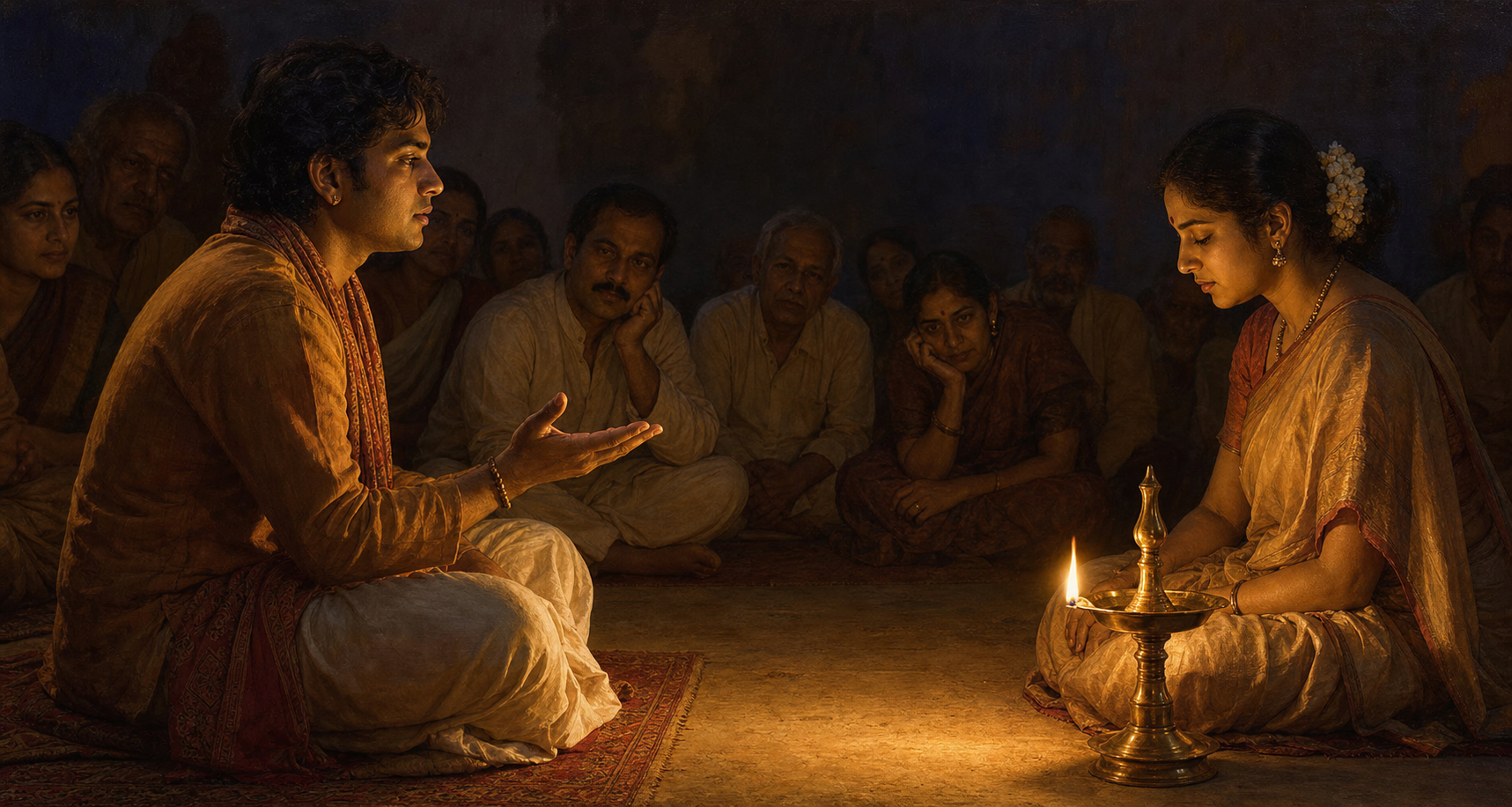
A storyteller’s ethical responsibility does not end with accurate wording. Tone, pacing, gesture, costume, and framing tell the audience whom to respect and what to condemn. A careful script can still teach the wrong lesson if the performance turns humiliation into comedy or force into unquestioned glory.
The Ashtavakra legend requires particular sensitivity. Ravana mocks the sage’s bent body, but the reversal exposes Ravana’s distorted perception. Do not make Ashtavakra’s body the visual joke. Do not use physical difference as shorthand for moral corruption. Let the sage remain composed, and place the dramatic weight on the king who cannot recognize wisdom because he is fixated on appearance.
Traditional performance vocabulary gives you a practical framework. Angika, vācika, āhārya, and sāttvika abhinaya direct attention respectively to bodily expression, speech, visual presentation, and inward emotion. You do not need an elaborate stage to use them. You need each channel to support the same ethical beat.
- Use gesture to show whether counsel is welcomed, tolerated, or dismissed.
- Give the warning itself enough vocal clarity that the audience understands the available path back to Dharma.
- Pause after the warning. The character’s response, not merely the warning, is the hinge of the scene.
- Use costume and position to distinguish worldly rank from moral authority without implying that grandeur itself is evil.
- Let restrained expression carry grief, humility, or devotion when loud declaration would turn reflection into spectacle.
Rasa should also serve discernment. Karuṇā can help listeners feel the human cost of exile or wrongdoing. Vīra can reveal courage governed by duty. Śānta can give reconciliation, contemplation, or sevā room to settle. If every scene is performed at the pitch of triumph, the audience loses the quieter moral movements through which Dharma becomes intelligible.
Translate key Sanskrit terms when they first appear. “Maryādā” can be introduced as an ethical boundary or disciplined restraint; “sevā” as selfless service; “ahaṅkāra” as the ego that mistakes a role, possession, or status for the whole self. Keep the Sanskrit where it adds precision, but do not make fluency a condition of belonging.
For recorded or multilingual presentations, accurate subtitles and accessible language are part of ethical transmission. They allow younger viewers, diaspora families, and interfaith learners to follow not only the action but also the reasoning behind it. Accessibility is not an ornament added after the performance; it determines who is able to receive the teaching.
Key takeaways for responsible Ramayana storytelling
- Name the textual home of an episode before claiming authority for it.
- Introduce later kathā as later kathā, without dismissing its devotional or ethical value.
- Trace the sequence from boundary, to counsel, to refusal or correction, to consequence.
- Keep complex characters complex. Learning, devotion, power, or social status neither proves virtue nor cancels adharma.
- When traditions differ, explain what each version foregrounds instead of silently merging them.
- Use performance choices to protect dignity, clarify agency, and make the moment of moral decision visible.
- End with one question the listener can apply to conduct, leadership, family life, or community responsibility.
Before your next telling, write four notes at the top of the script: the named text or tradition, the variant being used, the central ethical question, and the decision you want the audience to examine. If you cannot identify the textual home, label the account modestly as a later kathā. If you cannot name the decision, the ending still needs work.
A strong close does not merely announce that Dharma defeated adharma. It asks where the listener stands before consequences become irreversible: Are you hearing wise counsel? Has status made correction feel insulting? Are you treating another person’s dignity as expendable? Give your audience that moment of recognition, then let them carry the story into their next choice.
References
- DharmaRenaissance Blog — Did Ashtavakra Curse Ravana? Evidence, Variants, and Dharma’s Powerful Warning on Ego
- Dandavats — SAB KE APNE RAM (SKAR) 4K: ISKCON Chowpatty’s Soul-Stirring Ramayana of Bhakti and Dharma