
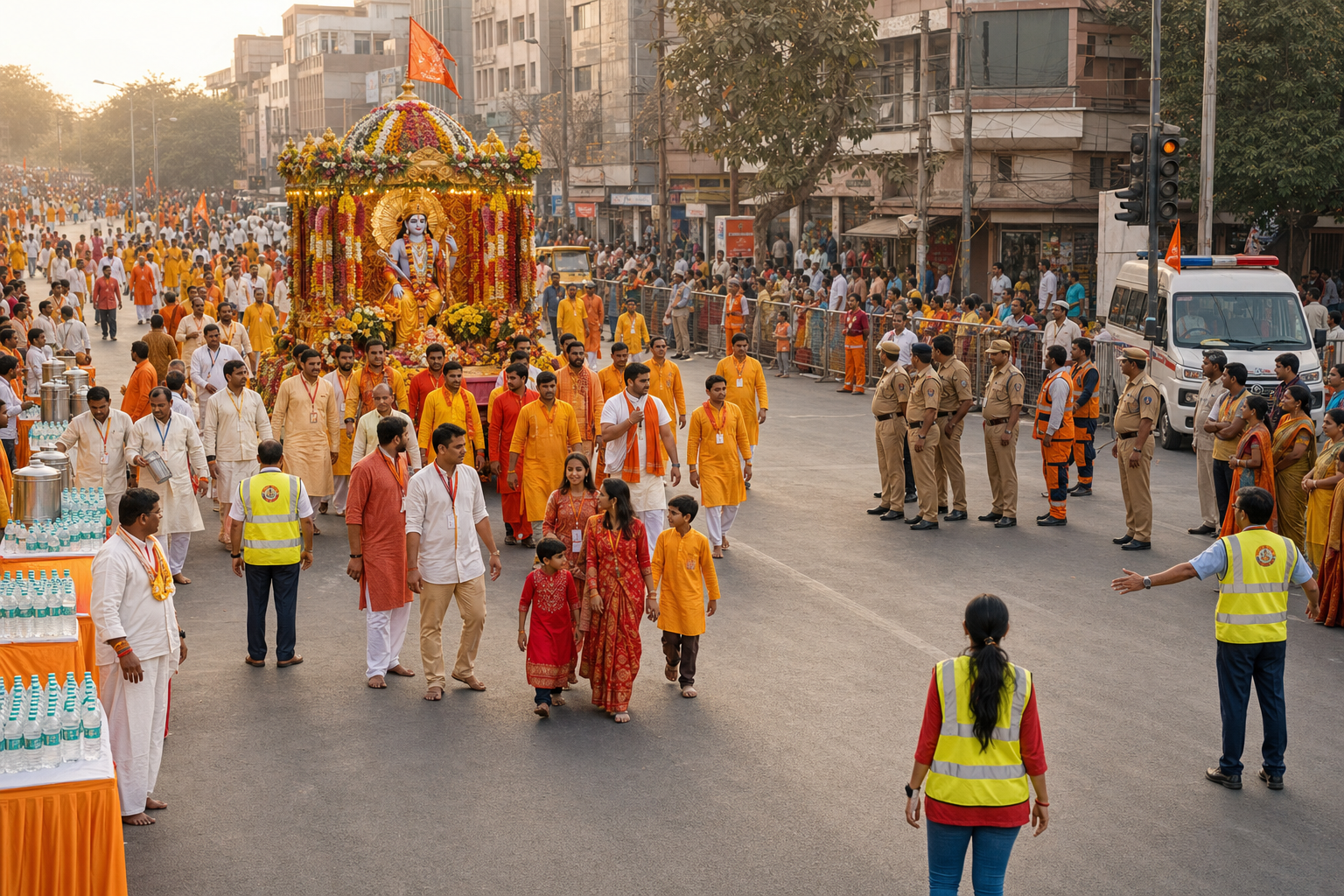
If you are helping organise a Ram Navami shobha yatra, the difficult question is not whether Hindu devotion belongs in public. It does. The question is how to exercise that freedom without allowing a narrow lane, a hostile rumour, a sound dispute, or a handful of violent actors to endanger devotees and turn the festival into a law-and-order crisis.
Treat the yatra as both an act of worship and a disciplined public-safety operation. That does not diminish its religious character. It protects the freedom to celebrate, keeps bystanders and police safe, and denies provocateurs the disorder they seek. Maryada must be visible not only in the image of Sri Rama carried in the procession, but also in the way the procession is planned and led.
Start 45 to 60 days early and design the route for safety
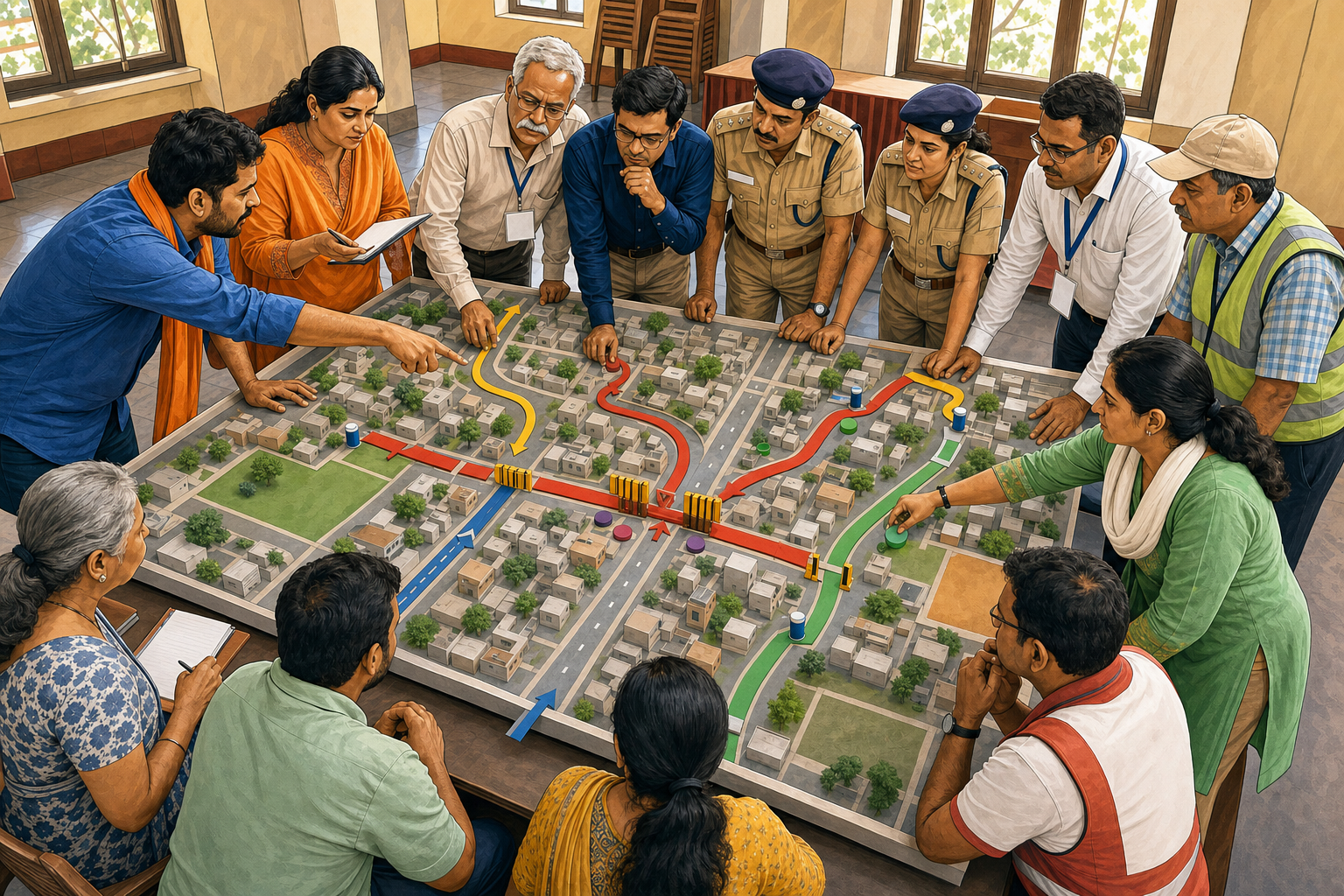
A route is not merely a line between a temple and a destination. It is a chain of physical and social conditions. The procession may be orderly along most of it and still become vulnerable at one blind turn, narrow lane, crowded market, religious interface, or blocked exit.
Begin route planning at least 45 to 60 days before Ram Navami. Walk the complete route with the organising committee, police representatives, municipal officials, local traders, and members of the standing peace committee. Include women, youth leaders, and people who actually know how the neighbourhood functions at the procession’s planned time. A map prepared from a desk will not show where vendors narrow the road, where a crowd loses mobile connectivity, or where barricades could accidentally remove the only escape path.
Mark the following conditions on one shared route map:
- Narrow stretches, blind turns, bottlenecks, and places where the front of the procession could stop while the rear continues to advance.
- Religious sites, markets, transport junctions, and other locations where sound, stopping, access, or timing may become contentious.
- Emergency exits, ambulance access, medical points, water stations, police posts, and safe dispersal areas.
- Lighting gaps, camera blind spots, and places where mobile CCTV or other lawful observation would improve accountability.
- Other prayer, fasting, commercial, or community activity occurring during the same time window.
- Locations where separate processions could meet, overlap, or compete for the same road space.
The recurring flashpoint pattern is practical rather than mysterious: selected choke points, objections involving music or decibel levels, route deviations, verbal confrontations, and fast-moving rumours can turn a small dispute into a crowd event. Your route audit should therefore produce decisions, not just observations. Assign a control measure to every marked risk: a timing adjustment, a no-stopping instruction, a marshal team, a police deployment, a sound transition, an open egress lane, or a camera position.
Route fidelity is itself a safety measure. An unplanned deviation can move the crowd beyond the approved police deployment and into a street that has not been cleared or assessed. Put the approved route in writing, publish it in the relevant local languages, and make it clear that no vehicle operator, local leader, or enthusiastic group may improvise a detour. If the route becomes unusable, only the designated procession leadership and competent authorities should activate an agreed alternative.
Consultation should identify practical frictions before the festival; it should not become a private veto over lawful Hindu worship. Where a route or timing remains disputed, place the issue before the administration early and obtain a written decision. Do not leave organisers and residents to renegotiate it in the middle of a moving crowd.
Convert permission conditions into a live command plan
Article 25 of the Constitution protects the freedom to profess, practise, and propagate religion, subject to public order, morality, and health. Those two parts belong together. A lawful procession should not be abandoned merely because someone threatens disorder, but organisers must comply with legitimate, viewpoint-neutral safety conditions.
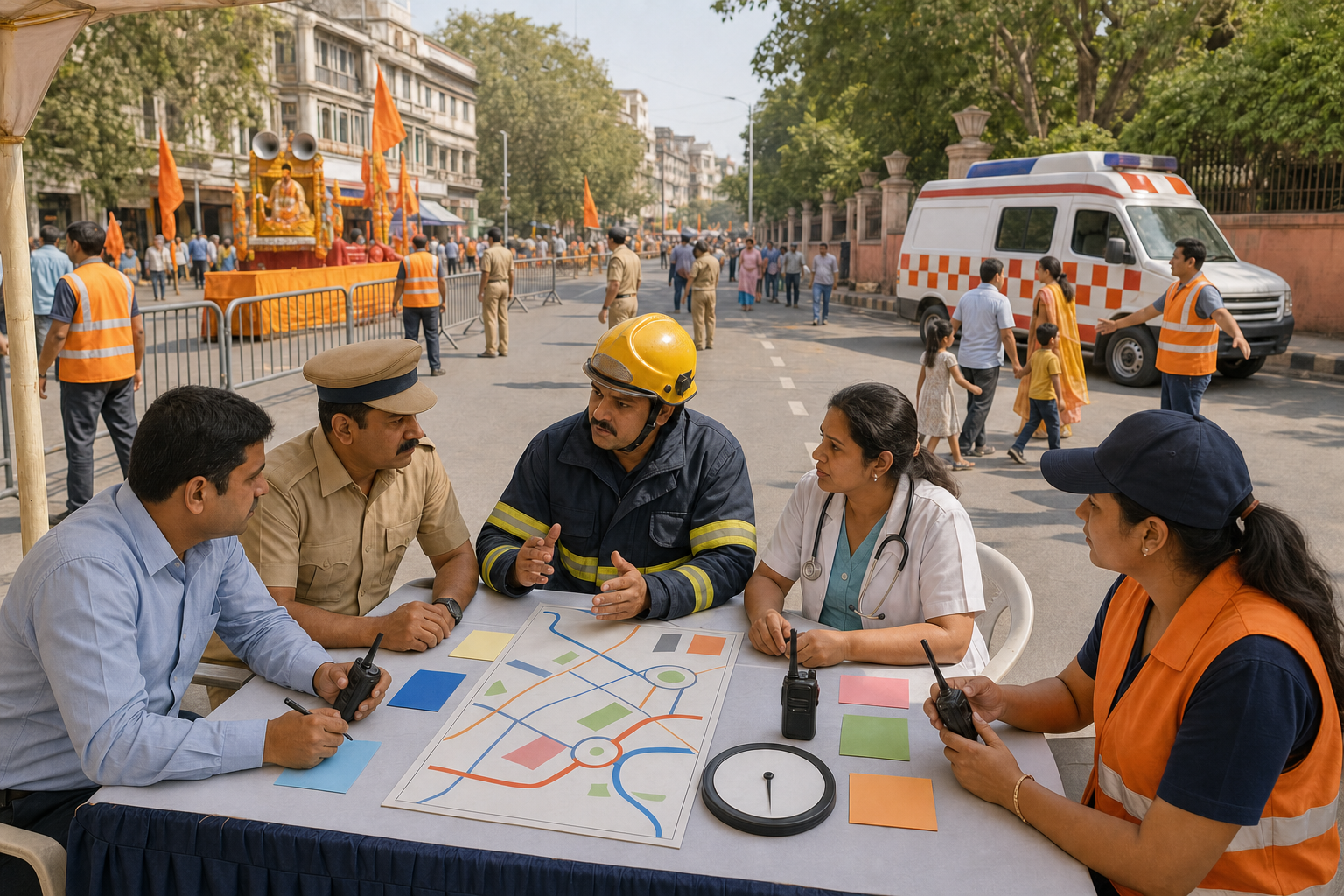
Permission paperwork is not an operating plan. Translate every route, time, sound, firecracker, and crowd condition into a responsibility that has a name beside it. Because operative rules vary across states and municipalities, obtain the applicable conditions in writing. If a requirement is ambiguous, seek clarification from the issuing authority or qualified local counsel before the procession rather than relying on a generic legal checklist.
Your command sheet should identify:
- A procession commander who can make operational decisions for the organising committee.
- A police liaison who remains connected to the district or local control room.
- A chief marshal and zone supervisors who know which part of the route they control.
- A medical lead with access to first-aid teams, ambulances, and predesignated triage locations.
- A communications lead authorised to issue verified public updates and rebut rumours.
- A documentation lead responsible for preserving official messages, incident times, authorised recordings, and reports from marshals.
- Named backups so that the plan does not fail when one person’s phone is unreachable.
Build a written run sheet around decisions that are likely to arise: a delayed start, a crowd compression point, a medical emergency, a disputed sound condition, an obstruction, a lost person, projectile throwing, or an instruction from police to pause or disperse. For each situation, specify who receives the first report, who has authority to decide, how marshals are notified, and what message goes to participants. The middle of a confrontation is the wrong time to discover that several people believe they are in charge.
The participant code of conduct should be equally clear. It should require adherence to the approved route and schedule, compliance with agreed sound and firecracker conditions, prohibition of alcohol, and zero tolerance for provocative slogans or attempts to bait residents. Distribute it to temple committees, vehicle operators, sound-system crews, akharas, youth groups, and other participating bodies before accepting them into the procession.
Enforcing discipline within your own ranks is not a concession to those who oppose the procession. It establishes the moral and evidentiary clarity needed for firm action against anyone who attacks it. When organisers visibly honour their commitments, an instigator has less room to disguise violence as a spontaneous dispute over conditions.
Key takeaways
- Complete the route, timing, and risk audit 45 to 60 days before Ram Navami.
- Publish the approved route and make deviations subject to a formal command decision.
- Give every safety function a named leader, a backup, and a direct communication channel.
- Train marshals to protect people, preserve exits, report accurately, and never retaliate.
- Use one verified information channel with time-stamped, location-specific updates.
- Demand precise action against instigators while rejecting collective blame.
Train marshals for the moment trouble begins
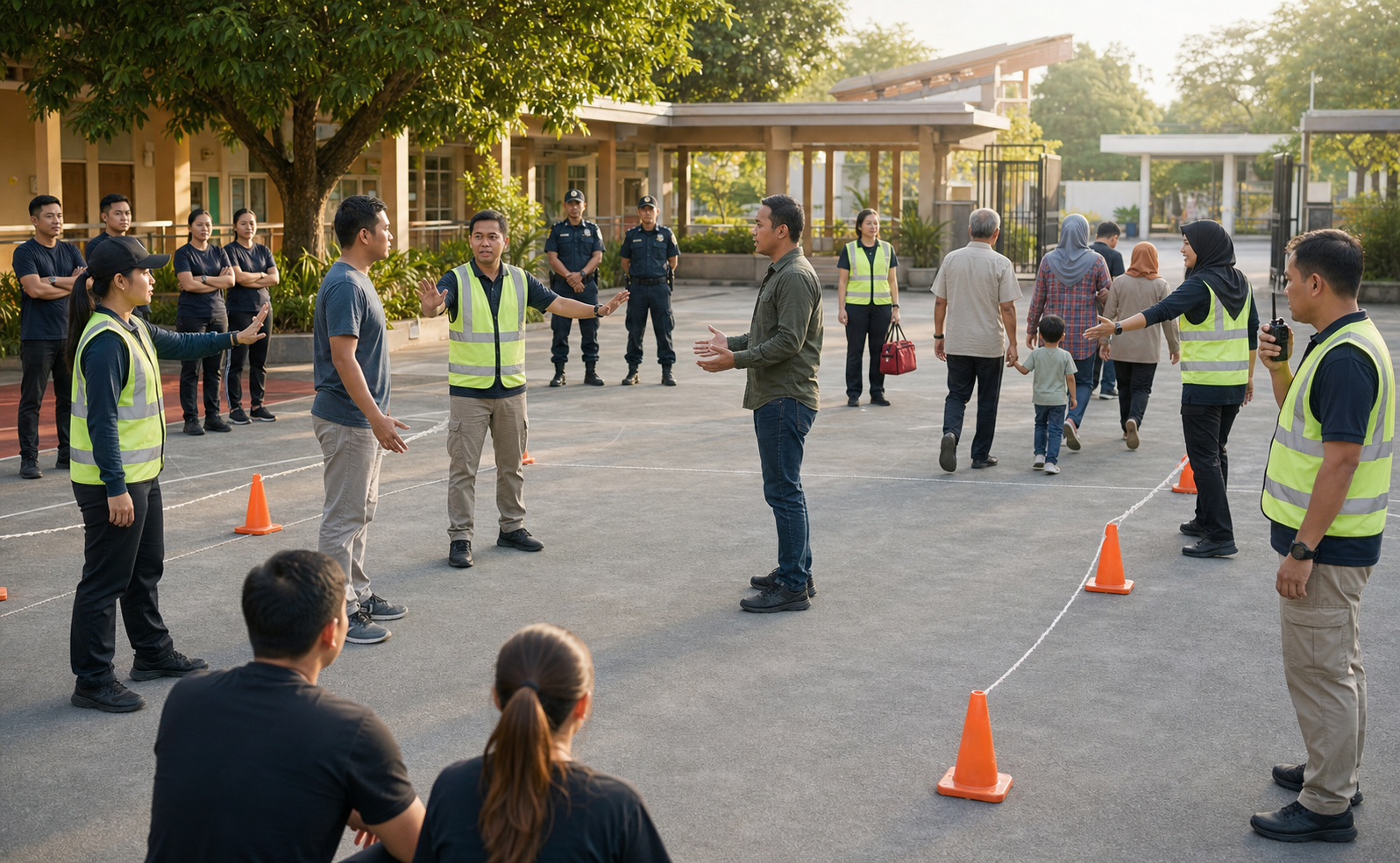
Volunteer marshals are the procession’s first layer of organisation, not a parallel police force. Their job is to notice danger early, keep participants from feeding it, protect access and egress, and pass accurate information to the authorised command structure.
Choose marshals for composure and reliability, not physical aggression. Train them in crowd behaviour, basic first aid, conflict de-escalation, and the exact route plan. Mixed-gender and multilingual teams are especially useful where families participate and several local languages are spoken. Give every marshal a clearly visible vest, armband, or credential so that devotees and police can recognise legitimate instructions.
Training should use route-specific scenarios. A lecture on maintaining peace will not tell a volunteer what to do when a sound vehicle stops beside a sensitive location or when a rumour passes backwards through the crowd. Walk marshals through the actual response:
<!– wp:list {