
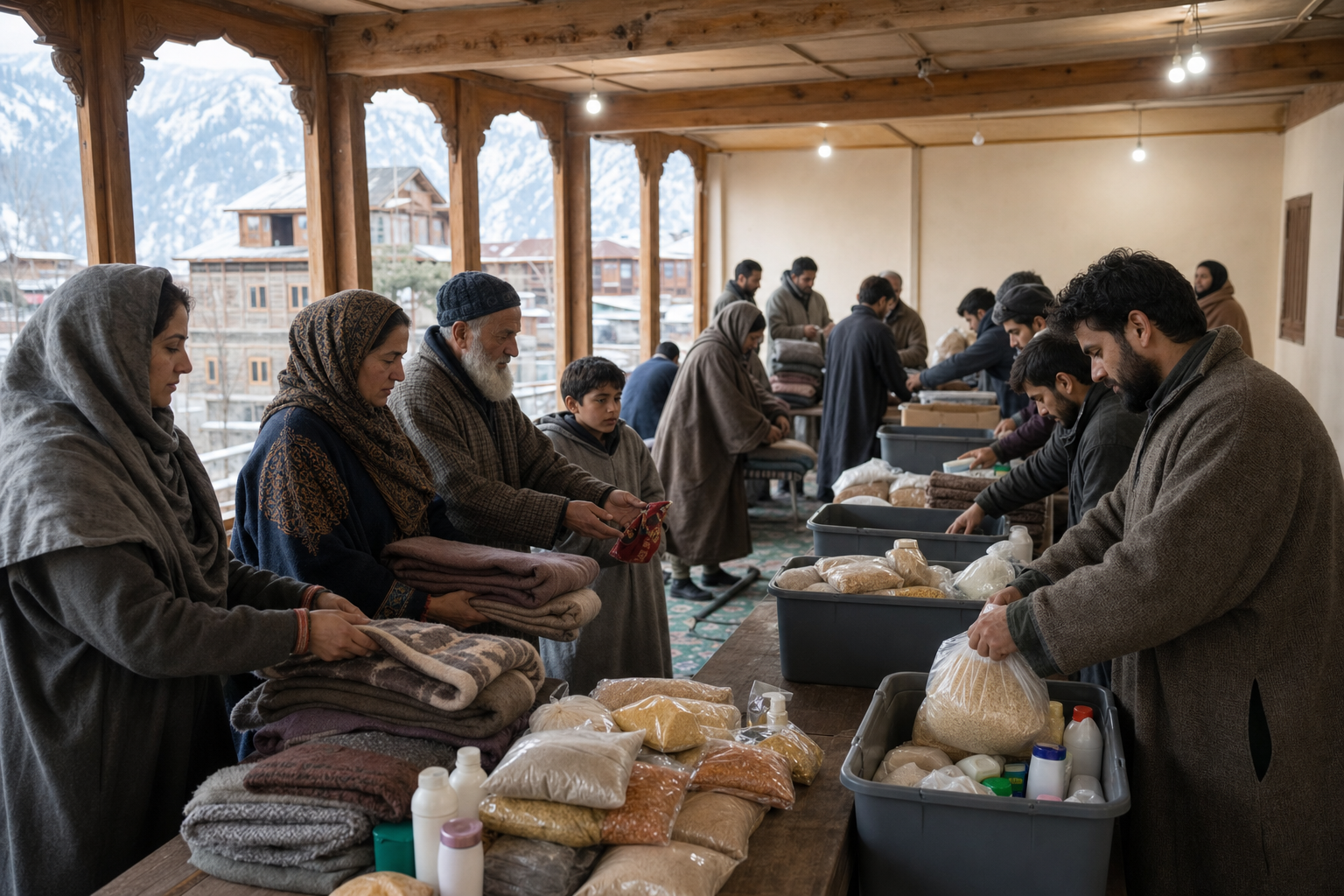
If you are deciding whether to support Kashmir’s humanitarian appeal for Iran, the size of the headline should not be your deciding factor. The useful question is simpler: can the organizer show how your contribution moves from a collection point in Kashmir to a verified humanitarian need in Iran?
The campaign has been credited with raising more than ₹500 crore through neighborhood collections, faith associations, trader networks, and civic groups. People reportedly contributed cash, household gold, and essential supplies. That breadth is a remarkable sign of community capacity. It also creates a demanding accounting and delivery problem. Before you donate, endorse the total, or forward an appeal, you should know what evidence to request.
What the ₹500 crore figure tells you—and what it cannot
₹500 crore is ₹5,000,000,000. Using the indicative exchange rate associated with the reported total, near ₹83 per US dollar, that is roughly $60 million. This is the financial territory of a mid-sized national NGO appeal, not an ordinary neighborhood collection. For an effort organized largely through local communities, the scale is unusual.
But a collection total is not an impact total. Cash deposited, jewelry handed over, goods promised, funds transferred, and aid delivered are different stages. Combining them under one number can produce an impressive figure that no auditor—and no donor—can properly interpret.
- Pledged: what people promised to contribute.
- Received: cash, gold, and goods physically or electronically accepted by the campaign.
- Realized: usable money after cheques clear and any gold intended for sale is valued and converted.
- Committed: money assigned to a named procurement order, agency, or programme.
- Disbursed: money that has actually left the campaign account through an authorized channel.
- Delivered: aid received by the destination partner or intended beneficiaries, with evidence of distribution.
A responsible public total should identify its stage and its reconciliation date. If an organizer says ₹500 crore was raised, ask how much was received as cash, how much represents gold at a stated valuation, how much is the declared value of physical goods, and how much has already been disbursed. Do not accept the same gold being counted once at collection value and again as sale proceeds.
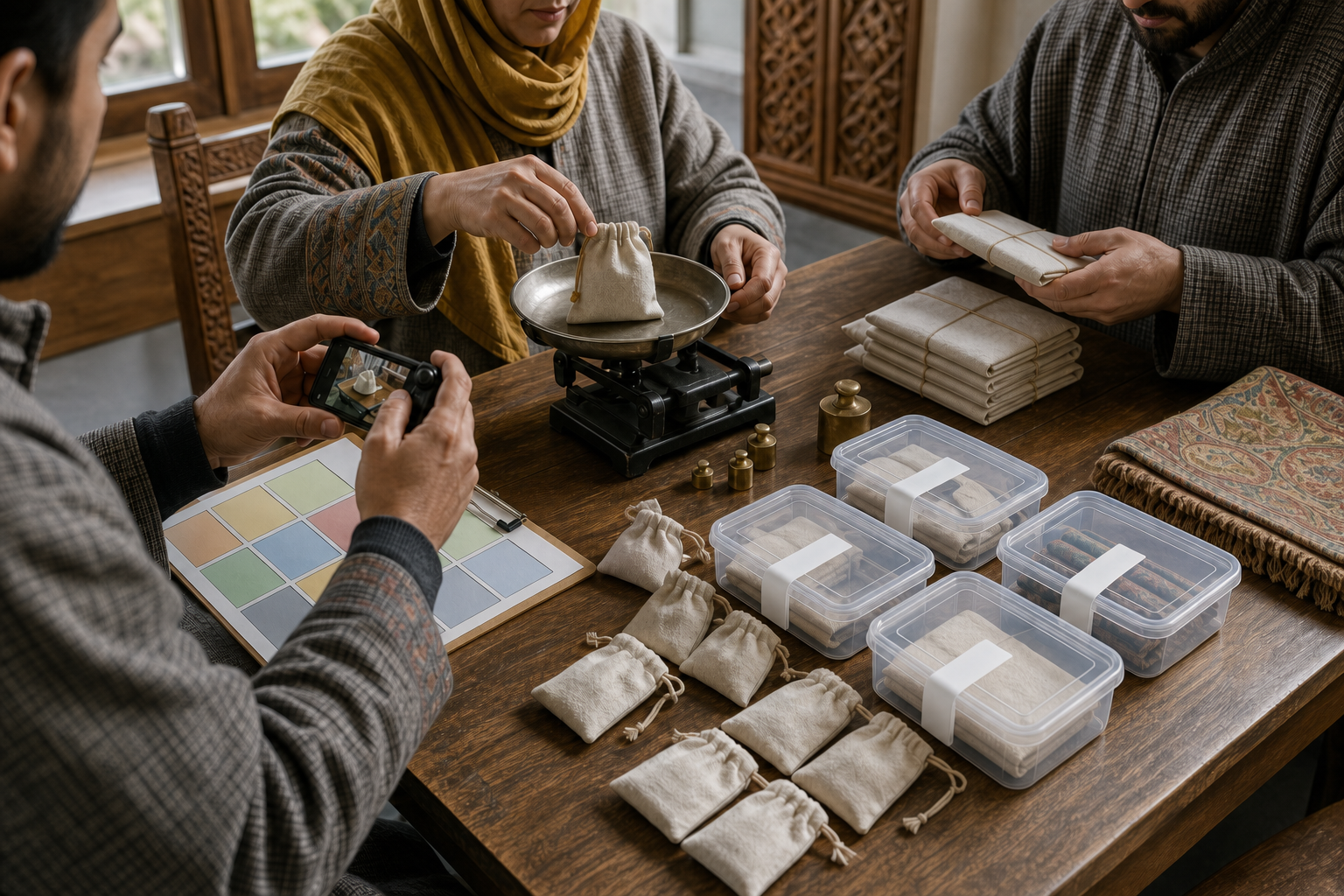
Gold requires especially careful handling. Each contribution should generate a receipt recording weight, purity where established, valuation method, and date. If it is sold, the campaign should preserve the sale record, charges, and net proceeds. If it is retained as a reserve, the dashboard should continue to classify it as an asset rather than cash available for immediate relief.
Verify the legal and delivery route before you contribute

Good intentions do not remove banking, export, or sanctions obligations. For a resident individual in India, a donation abroad can fall within the Foreign Exchange Management Act and the Reserve Bank of India’s Liberalised Remittance Scheme. A permissible donation still has to pass through an authorized dealer bank and its identity, beneficiary, purpose, and sanctions checks. Organizations face additional documentation and approval requirements for outward charitable transfers.
This distinction matters because collecting money domestically is not the same as being authorized to send it abroad. A digital payment receipt proves that your money reached the collector; it does not prove that the collector has a compliant route to Iran. Ask for the legal name of the remitting entity, the authorized banking channel, the named beneficiary, and the declared humanitarian purpose.
Physical consignments have their own path. Food, medicines, medical devices, blankets, and hygiene materials may qualify for humanitarian treatment under applicable sanctions frameworks, but a humanitarian purpose is not a blanket exemption for every product, bank, transporter, or consignee. Export documentation through the Directorate General of Foreign Trade and Customs may still be required. Medicines and medical devices also need precise specifications and destination acceptance.
Do not send an improvised parcel of medicines or food merely because a collection point will accept it. First confirm that a field partner has requested the item, that it can legally be exported, that its remaining shelf life and labeling are acceptable, and that storage and distribution are available after arrival. Unrequested goods can consume freight and warehouse capacity without answering the actual need.
A credible appeal should name its last-mile partner. Possible partners with established relief capacity include the Iranian Red Crescent Society, the International Federation of Red Cross and Red Crescent Societies, and UN agencies such as WFP, WHO, and UNICEF. A familiar name alone is not enough; the organizer should be able to show that the named organization has agreed to receive the particular transfer or consignment.
- Who is the legally identifiable collecting entity?
- Is your contribution entering a ring-fenced account used only for the Iran appeal?
- Which authorized bank and beneficiary will handle the outward transfer?
- Which organization in Iran will receive, store, and distribute the assistance?
- Has that organization confirmed the goods or funds it needs?
- When will the organizer publish reconciled receipts, transfers, and delivery evidence?
- Who will conduct the independent audit or spot checks?
- Where can donors or intended beneficiaries report a discrepancy?
If an Indian charitable entity offers a tax benefit, do not assume that an ordinary collection receipt qualifies. Section 80G treatment may apply only through an eligible entity and under the relevant conditions; separate rules govern the cross-border use of funds. Ask for the entity’s details and the correct tax receipt, and obtain professional advice if the deduction is financially significant to you.
Turn a large collection into measurable relief

The most trustworthy allocation begins with a needs assessment in Iran, not with whatever happens to be easiest to collect in Kashmir. Field agencies may identify priorities in shelter and winterization, essential medicines and primary healthcare, fortified food, or water, sanitation, and hygiene. Recognized humanitarian frameworks such as the Sphere standards can help organizers define kit contents, service levels, and minimum accountability practices.
Unit costs give donors a way to test a plan. At a purely notional ₹2,500 per kit, a ₹500 crore budget equals two million kit-equivalents before transport, storage, verification, staffing, or other programme costs. That calculation is not a promise that two million households will receive aid. It is a sanity check. If a plan projects a different quantity, the budget should identify what the remaining money pays for rather than hiding the difference inside a broad category such as administration or logistics.
The same discipline applies to medical support. A list containing ambulances, oxygen concentrators, mobile clinics, and drug stocks may sound substantial, but it is not yet a healthcare plan. The organizer should identify the requesting field partner, quantity, specification, procurement price, destination facility, maintenance responsibility, and intended use. Needs and operational capacity—not the symbolic appeal of an item—should determine the purchase.
| Ledger field | What a useful disclosure shows | What you can detect |
|---|---|---|
| Cash inflows | Amount received, date, channel, and reconciled account total | Whether pledges are being presented as available money |
| Gold contributions | Weight, valuation basis, conversion status, charges, and net proceeds | Double counting, unexplained valuation changes, or missing sale proceeds |
| In-kind goods | Quantity, specification, valuation method, storage location, and expiry information where relevant | Inflated values, unsuitable goods, and avoidable inventory |
| Procurement | Supplier, quantity, unit cost, payment status, and conflict-of-interest controls | Unexplained prices, duplication, or purchases from connected parties |
| Transfers and consignments | Authorized route, recipient, date, amount or batch number, and receipt | Whether aid has moved beyond the collection account |
| Distribution | Location, partner, beneficiary criteria, quantities delivered, and verification method | Whether spending became humanitarian assistance |
| Accountability | Audit findings, spot checks, corrections, and grievance outcomes | Whether errors and complaints are actually resolved |
A public dashboard does not need to expose donors’ personal information. It can publish aggregate inflows, itemized programme outflows, batch numbers, unit costs, and audit results while protecting names, bank details, and other sensitive data. India’s low-cost payment infrastructure and electronic identity checks can accelerate domestic collection, but speed should be paired with consent, data minimization, and controlled access to donor records.
Operational safeguards should include standardized receipts, dual approval for disbursements, batch-level identification for relief kits, independent spot checks, and a grievance channel accessible to affected people. These controls are not bureaucratic decoration. They prevent one volunteer, office, or local intermediary from controlling the entire chain.
Read the campaign through Dharma, not communal arithmetic
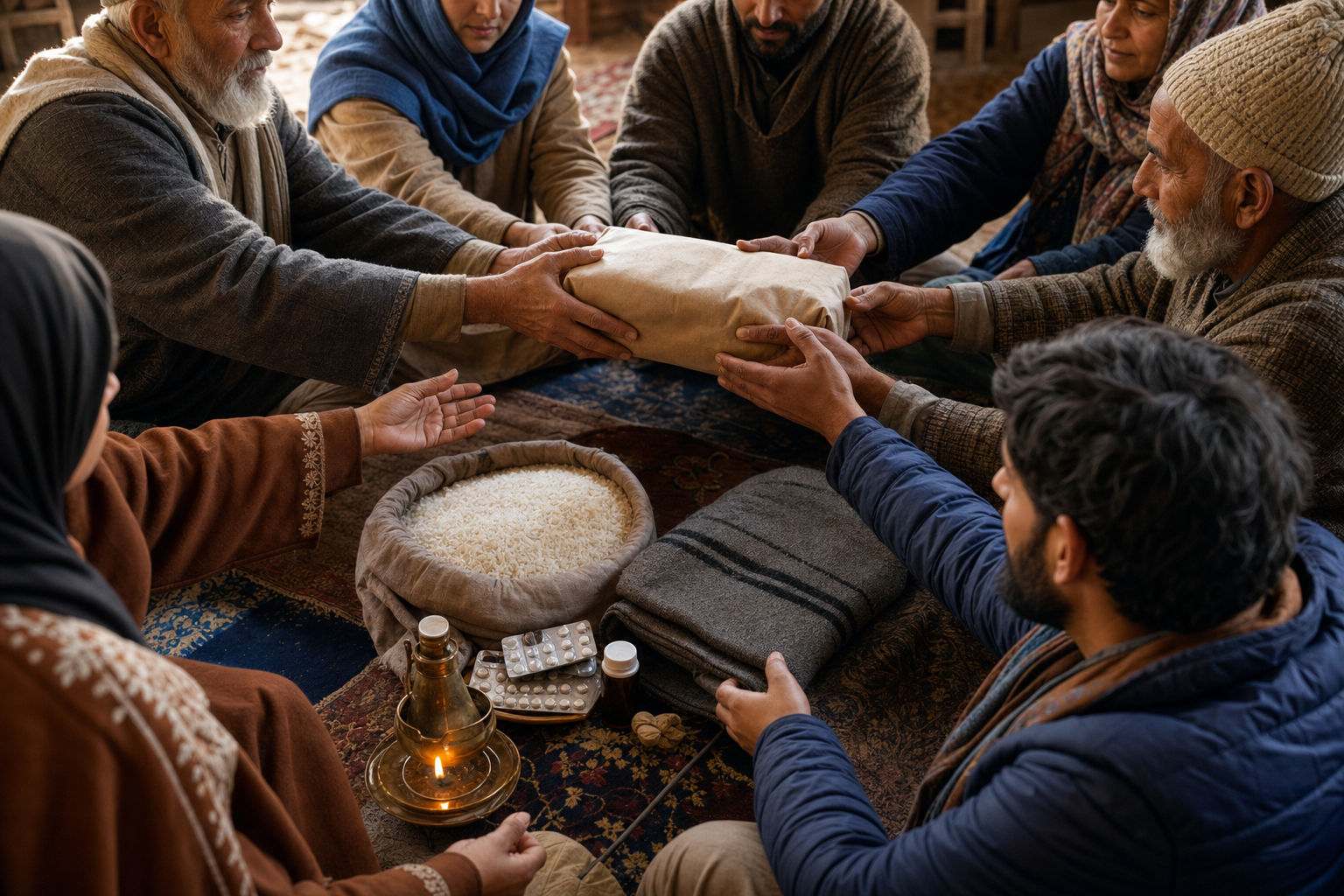
The mobilization is rooted in the Islamic duties and virtues expressed through zakat and sadaqah. A Dharmic reader can recognize the moral action without pretending that different traditions are identical. Seva names service without selfish claim; dāna places generosity within moral responsibility; karuṇā refuses indifference to suffering. The shared ground is practical: a hungry person needs food, a displaced household needs shelter, and a sick person needs competent care.
This is interfaith dialogue in its most credible form. It does not require a conference, a negotiated theological statement, or the dilution of anyone’s identity. It requires people to make compassion visible through disciplined service. For Hindus, Buddhists, Jains, and Sikhs, the right response is neither to appropriate a Muslim-led initiative nor to dismiss it because it emerged from another religious community. Notice the virtue, test the governance, and support the human good where the evidence warrants it.
Small repeated donations reportedly stood beside higher-value gifts of household jewelry, while youth groups, women’s associations, and traders helped collect, verify, procure, and package assistance. That distributed structure explains how a local campaign can grow quickly. It also shows why common receipts, valuation rules, and reporting formats must be established before dozens of collection nodes produce incompatible records.
Dharma does not ask us to choose between compassion and truthfulness. An inflated total, an unclear beneficiary, or an undocumented consignment weakens the moral act even when every original donor meant well. Insisting on an audit is not hostility to charity. It is protection for donors, volunteers, intended recipients, and the reputation of the community itself.
The wider diplomatic value should also be kept in proportion. India and Iran have histories of trade, cultural exchange, and continuing strategic interest. Voluntary relief can create people-to-people goodwill and serve as a form of humanitarian Track II engagement. It cannot replace state policy, banking compliance, or formal diplomacy. Nor should suffering be converted into a contest over which community deserves political credit.
When you discuss the campaign publicly, attach the stage to the number: collected, realized, transferred, or delivered. Credit the volunteers and field partners who did the work. Share verified outcomes rather than communal boasts. That language preserves both the dignity of recipients and the credibility of Kashmir’s generosity.
Key takeaways
- Treat more than ₹500 crore as a reported collection figure until cash, gold, and in-kind contributions are independently reconciled.
- Do not confuse money pledged or received in Kashmir with assistance delivered in Iran.
- Before donating, identify the collecting entity, ring-fenced account, authorized outward channel, beneficiary, and last-mile partner.
- For gold, demand records of weight, valuation, conversion, charges, and net proceeds.
- For goods, wait for a field request and confirm export, sanctions, storage, specification, and distribution requirements.
- Judge impact through unit costs, procurement records, batch-level delivery evidence, audits, and grievance outcomes.
- Recognize zakat, sadaqah, seva, dāna, and karuṇā as distinct moral vocabularies capable of meeting in honest service.
If you are ready to contribute, ask the organizer for a one-page chain of custody: who receives your donation, where it is held, how it legally leaves India, who accepts it in Iran, what need it funds, and when delivery will be reported. If those answers are unavailable, wait or use a vetted humanitarian channel. If they are clear and documented, your support can strengthen both the relief effort and the culture of accountable service on which future campaigns will depend.