

You may have admired Dhurandhar: The Revenge and still wondered whether its politics were manipulating you. Or you may have disliked it and wondered whether calling it propaganda was replacing the harder work of proving what, exactly, the film had done wrong.
The useful question is not which camp feels morally safer. It is what the film asks you to believe, how it moves you toward that belief, what it leaves out, and whether it preserves your freedom to judge. That standard lets you defend a civilizational perspective without excusing careless storytelling, and criticize a film without treating its audience as morally suspect.
Key takeaways
- A strong political, patriotic, or civilizational viewpoint is not sufficient evidence of propaganda. The decisive issue is whether persuasion becomes systematic manipulation that closes off reasonable interpretation.
- Judge specific claims and sequences before judging the entire film. Name what a scene asserts, the evidence it presents, the context it omits, and the response it tries to produce.
- Commercial endurance demonstrates attention and audience attachment, not historical accuracy or moral correctness. Failure at the box office would not disprove a film’s thesis either.
- Two sincere viewers can read the same sequence differently because cultural memory, language, generation, and social context shape reception. Difference is not proof that one side is dishonest.
- Samvada does not require a weak compromise. It requires accurate description, serious scrutiny, restraint in speech, and a refusal to turn disagreement about art into contempt for whole communities.
The word propaganda needs evidence, not volume

Propaganda is not simply art with a position. Political cinema may advocate, accuse, commemorate, or provoke while still presenting recognizably human characters, allowing uncertainty, and leaving viewers room to resist its conclusion. Propaganda is better understood as systematic persuasion organized around a political objective, using selective facts and emotional pressure to narrow the range of conclusions an audience can reasonably reach.
The boundary is therefore not neutrality. No storyteller is neutral in the literal sense: choosing a protagonist, beginning at one event rather than another, and deciding what deserves music already shape attention. The better boundary is independent judgment. Does the film give you enough moral and narrative space to think, or does it repeatedly make alternatives invisible, ridiculous, or unthinkable?
Three shortcuts regularly derail this assessment. The first says that any unapologetic national or dharmic conviction is propaganda. That would reduce permissible Indian storytelling to viewpoints already accepted by cultural gatekeepers. The second says that artistic freedom places a popular film beyond criticism. Freedom protects the right to create; it does not guarantee immunity from questions. The third treats factual error as automatic proof of propaganda. An error may arise from compression, poor research, or artistic license. To establish propaganda, you must show how selection or distortion repeatedly serves a controlling objective.
Before using the label, complete this sentence: This sequence asks me to believe X about Y, chiefly by showing A and withholding or minimizing B. If you cannot identify X, Y, A, and B, you have a reaction but not yet an argument.
- Identify the claim. Is the sequence asserting something about a historical event, a political idea, a religious community, an institution, or one fictional character? Do not enlarge a narrow claim merely because the scene is emotionally intense.
- Classify its status. Is the claim presented as documented history, plausible reconstruction, symbolism, or invention? Artistic license is legitimate, but viewers should not be pushed to receive invention as settled fact.
- Inspect the selection. Ask which relevant facts, motives, or consequences are included. Then ask what has been omitted. Selection becomes suspect when the same omissions recur and consistently protect only one conclusion.
- Look for human interiority. A villain may remain a villain, but does the film portray individuals as agents with motives and choices, or use them as interchangeable symbols for an entire community? Condemning conduct is different from denying personhood.
- Notice aesthetic pressure. Music, montage, color, editing, and heroic framing are normal cinematic tools. The question is whether they deepen understanding or substitute emotional certainty for evidence.
- Test the real-world transfer. Does the sequence distinguish a culpable person, organization, or ideology from a population? A story becomes ethically more dangerous when condemnation can be transferred casually from actors to neighbors who merely share an identity.
- Check for contestability. Could a careful viewer disagree without being portrayed as corrupt, cowardly, or disloyal? A work may advocate strongly and still respect the audience’s capacity to reason.
Your conclusion can be graded rather than binary. You might find political storytelling with a clear thesis, partisan storytelling that persistently favors one side, a propagandistic technique in a particular sequence, or a work so systematically closed that the stronger label is justified. Do not condemn an entire film when your evidence supports only the third of those findings. Do not soften the fourth when a repeated pattern genuinely supports it.
Why the quarrel hardens into a cultural identity fight
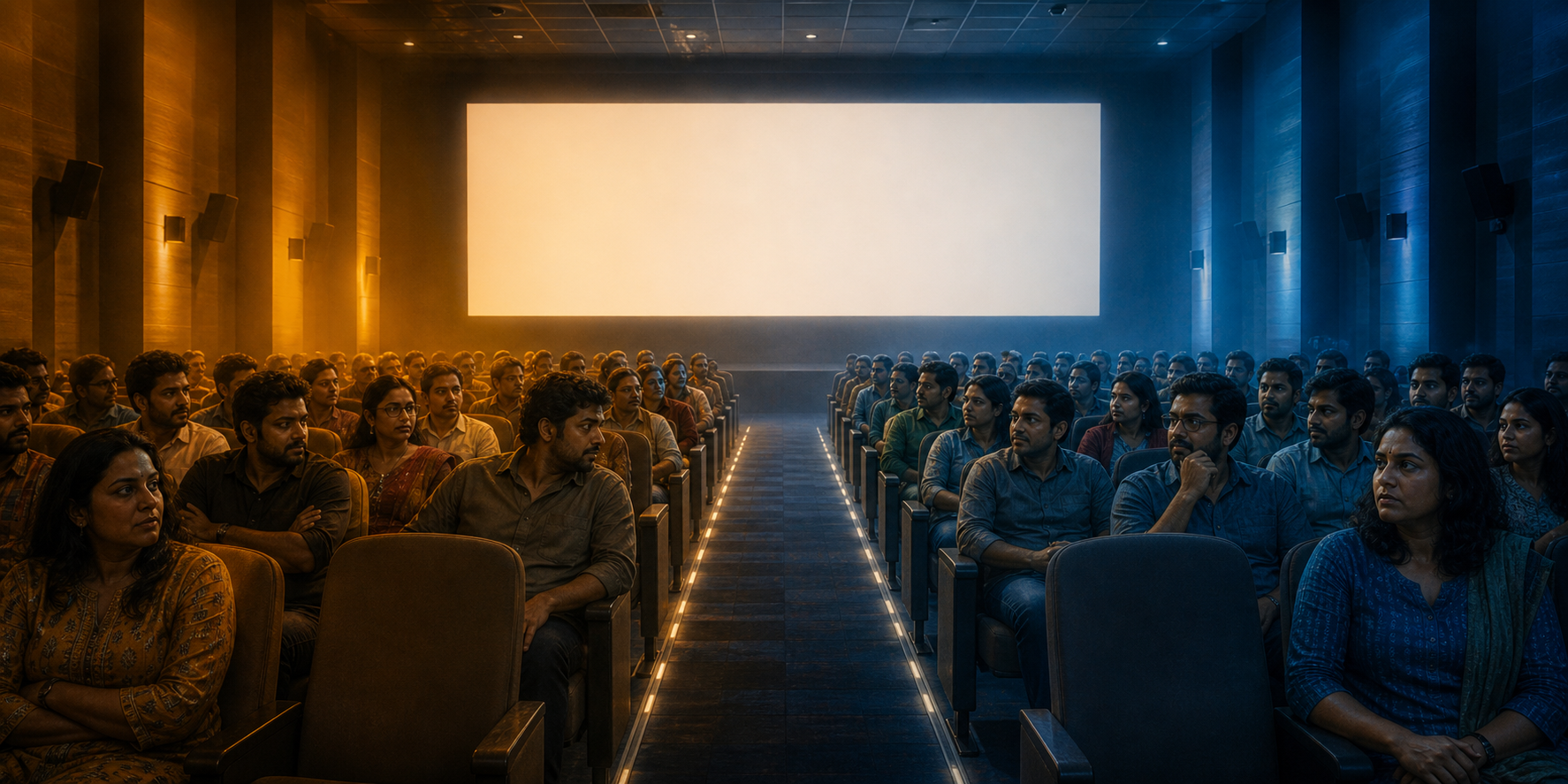
The intensity around Dhurandhar: The Revenge is not explained by content alone. Accusations of propaganda tend to become fiercest when cultural importance, a moralized narrative, and visible commercial success converge. The film is then no longer treated as one work among many. Admirers experience attacks on it as attacks on their history or dignity, while critics experience its popularity as an expansion of ideas they distrust.
That creates an identity-defense loop. Criticism of the film is heard as contempt for everyone who valued it. Defense of the film is treated as agreement with every possible historical or political inference. Each camp then stops discussing scenes and starts diagnosing motives. Soon, the target is not a claim but an audience, an industry, a region, or a language community.
For a pro-Hindu viewer, suspicion of the propaganda label can be understandable. The word can function as a cultural veto when a formerly marginal or unwelcome civilizational perspective reaches a mass audience. But a history of selective gatekeeping does not make every favorable representation accurate, humane, or artistically successful. Cultural confidence should increase our willingness to test a film, not decrease it.
The reverse presumption is equally weak. Discomfort with the film does not by itself reveal hostility to Hindus, Bharat, or national self-respect. A critic may object to a factual assertion, a representation, an aesthetic choice, or a likely social effect. Ask which one. If the answer remains vague, the criticism needs work; if it becomes specific, engage the substance.
Audience differences also matter. Urban and small-town circuits, language communities, generations, and diaspora networks can attach different meanings to the same narrative. Reception theory describes preferred, negotiated, and oppositional readings: one viewer broadly accepts the intended meaning, another accepts part of it while resisting part, and a third rejects its governing frame. These positions can all be sincere.
When someone reaches a different conclusion, ask what background knowledge or cultural memory made a particular moment salient to that person. This question does not make all readings equally persuasive. It tells you where the actual disagreement lies. You may discover that you disagree about a historical premise rather than the film’s ethics, or about a representation rather than its political thesis.
Box-office language introduces another confusion. The film’s sustained second-week momentum and reported records across multiple territories indicate that it held attention. Strong retention commonly reflects word-of-mouth, showtime availability, narrative stickiness, and appeal across more than one audience segment. None of those measurements certifies a historical claim. Popularity deserves cultural analysis, but it is neither a fact-check nor a moral referendum.
Media framing then accelerates the split. A headline led by the word propaganda invites you to judge intention before you have examined plot or craft, while social feeds reward moral outrage more readily than careful distinctions. Before sharing a verdict, translate it into a proposition that another person could test. Replace ‘Only propagandists like this’ with ‘This sequence excludes a fact that would materially change its conclusion.’ Replace ‘Only anti-Hindus oppose this’ with ‘Which historical or ethical claim do you believe the sequence gets wrong?’
Apply the same discipline to industry labels. Bollywood versus the pejorative ‘Dravidawood,’ or North versus South, turns a network of artists, technicians, financiers, audiences, and cross-language collaborations into hostile tribes. Indian cinema has long carried social reform, freedom, nationhood, history, and public ethics into popular storytelling. Its cross-industry exchange is a production reality, not a sentimental afterthought. Criticize a decision, a work, or an institution at the scale your evidence permits.
A dharmic disagreement is rigorous before it is conciliatory

Samvada is sometimes mistaken for politeness without consequence. It is more demanding than that. A genuine dialogue requires you to hear accurately, answer what was actually said, and remain open to correction without surrendering your convictions. It seeks truth through encounter rather than victory through caricature.
This does not require flattening Hindu, Buddhist, Jain, and Sikh traditions into one doctrine. They remain distinct traditions with real internal diversity. Their presence within a broader dharmic cultural family nevertheless gives us resources for disciplined inquiry, concern for the consequences of speech, and respect for human dignity amid disagreement.
Begin with satya at the level of description. Name the scene, line, image, or historical assertion under dispute. Do not say the film ‘hates’ a community when the evidence shows a stereotype in one character; do not call criticism ‘anti-Hindu’ when the critic has identified a bounded factual concern. You may later establish a broader pattern, but you cannot assume it at the start.
Then apply ahimsa to the manner of disagreement. Ahimsa in speech does not mean withholding a hard judgment. It means refusing unnecessary degradation. Terms such as ‘dinosaurs’ for older figures and derisive labels for entire language industries may feel satisfying, but they make future correction harder. The insult becomes the subject, the evidence disappears, and everyone retreats toward allies.
A useful conversation can follow this order:
- State your own reading in one testable sentence. Avoid claims about what every admirer or critic secretly wants.
- Offer a fair purva paksha. Restate the strongest opposing case in terms its holder would recognize. Ask for correction before answering it.
- Separate four questions. Is the disagreement about historical accuracy, artistic craft, representation, or social consequence? Do not slide between them.
- Concede what survives scrutiny. If the film handles one issue well but another poorly, say both. If a critic identifies a real omission but overstates its meaning, accept the omission before challenging the conclusion.
- Name the missing evidence. Explain what would change your mind: fuller historical context, a repeated pattern across scenes, a creator’s clarification, or a more plausible reading of the sequence.
- End with a bounded judgment. Say exactly how far the evidence carries you. ‘This scene uses a propagandistic technique’ is often more defensible than ‘This film and everyone who likes it are propaganda.’
This discipline protects pluralism without turning pluralism into relativism. Some claims are false. Some representations are demeaning. Some accusations are opportunistic. A dharmic method does not declare a midpoint automatically true; it makes every side earn its conclusion while preserving the possibility that an opponent is corrigible rather than evil.
Turn the controversy into useful cultural work

A film with this much cultural reach can do more than produce rival hashtags. It can expose neglected memories, weak historical knowledge, habits of stereotyping, and genuine differences about the purpose of national cinema. You can turn that energy into a better discussion in your family, college group, community organization, or film club.
Start by choosing one disputed sequence rather than asking whether the entire film is good, evil, truthful, or dangerous. Have each participant record four things before discussion: the apparent claim, the cinematic technique, the relevant omission, and the likely audience effect. This prevents the loudest opening opinion from setting the terms for everyone else.
Keep historical verification separate from film interpretation. First ask whether a factual claim is supportable. Then ask how the film frames it. A historically defensible event can still be framed irresponsibly; an invented composite can still express a recognizable moral truth if the invention is not passed off as documentary proof. Mixing these questions produces arguments in which nobody knows what has actually been established.
If you organize a public screening or panel, do not invite only political surrogates. Filmmakers can explain craft but cannot settle history by intention. Historians can examine claims but do not alone determine audience effects. Sociologists can discuss reception, while ethicists can test representation and foreseeable harm. A cross-industry conversation is especially valuable because it interrupts the lazy assumption that one language cinema possesses virtue and another possesses vice.
Critics can make their work more useful by labeling the kind of objection being made. A review should tell you whether it is challenging evidence, dramatic construction, characterization, or possible social harm. Allegations about hidden conspiracies should not substitute for demonstrating a pattern on screen.
Defenders should demand the same precision while welcoming scrutiny proportional to the film’s reach. The strongest defense is not that many people bought tickets or felt pride. It is that a contested choice can survive accurate description, relevant counterevidence, and moral examination. If it cannot, revising your view is not a defeat for dharmic culture. It is evidence that open inquiry remains alive within it.
Creators, too, benefit from answering substantial criticism without treating every objection as censorship. They can clarify where history ends and invention begins, acknowledge a representational blind spot, or explain why a difficult aesthetic choice was necessary. Such engagement does not hand creative control to a hostile audience. It demonstrates confidence in the work’s capacity to face questions.
Before your next reply about Dhurandhar, replace one identity label with one testable sentence about a scene. If you cannot do that, hold the verdict. If you can, ask someone who disagrees to examine the same claim with the same standard. That small act will not erase the cultural divide, but it will stop you from feeding it and begin converting cinematic passion into civilizational maturity.