
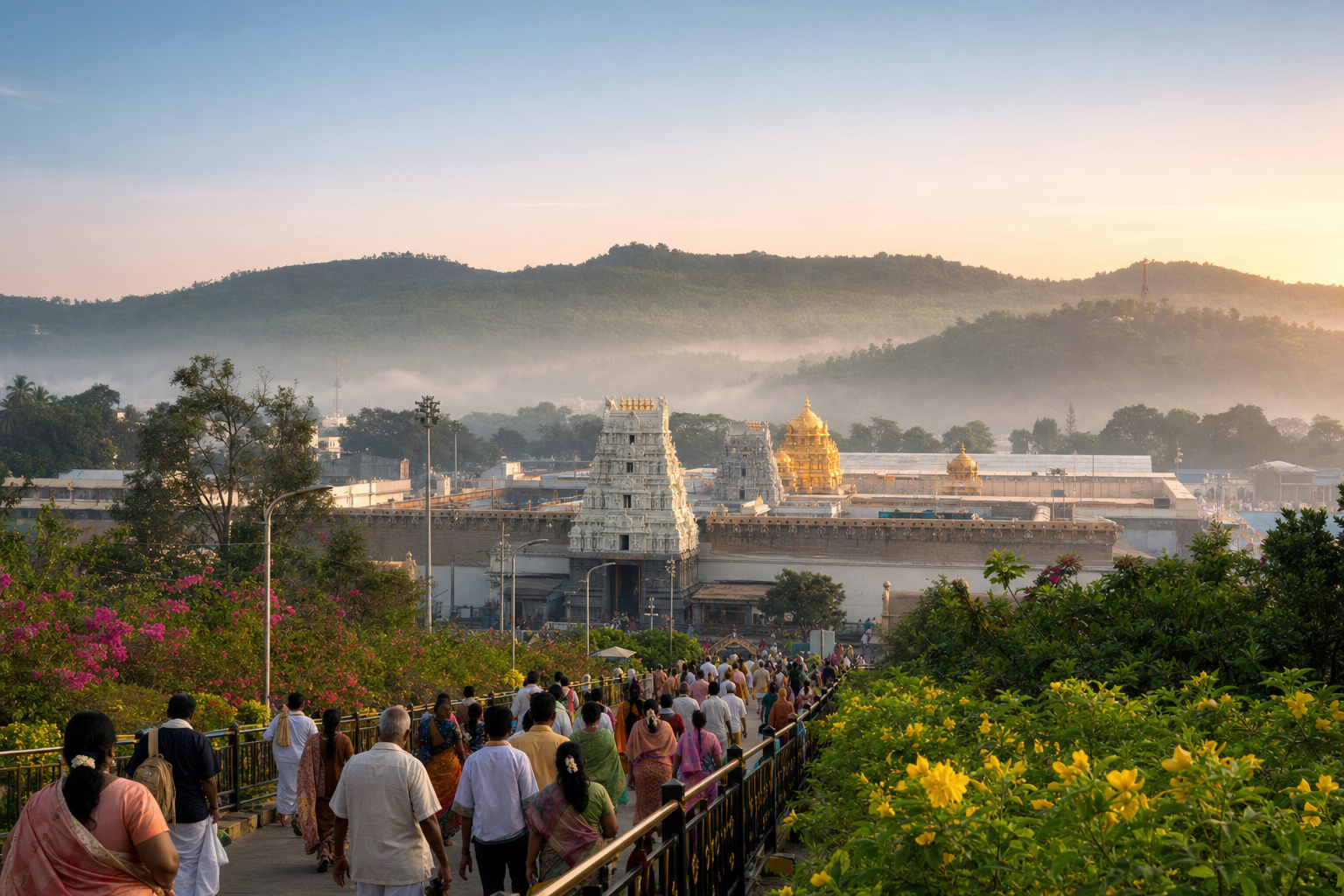
You may know that you want to visit Tirumala in April 2026 without yet knowing which festival belongs at the centre of your yatra. That distinction matters. April 1 combines a temple festival with a demanding forest pilgrimage, April 13 turns attention toward Sri Ramanujacharya and sacred learning, and April 20 brings several observances together around worship, discipline, study, and dana.
Choose the date by the practice you want to undertake, not by the number of events printed beside it. Once that decision is clear, you can reserve the appropriate darshan, allow for festival crowds, and build a pilgrimage that still works if timings or access arrangements change.
Choose your festival by its central practice
The three principal festival dates in April 2026 offer distinct forms of participation. The following comparison is the simplest way to decide where you belong.
| Date | Principal observances | Best suited to you if… | Main planning issue |
|---|---|---|---|
| April 1 | Conclusion of Srivari Vasanthotsavams and Tumburu Theertha Mukkoti | You want either ceremonial worship of Sri Malayappa Swamy or a physically demanding encounter with Tirumala’s sacred landscape | Choose a temple-focused or forest-focused day; do not assume that you can comfortably complete both |
| April 13 | Commencement of Sribhashyakara Utsavams | You are drawn to Sri Ramanujacharya, prabandha recitation, guru-bhakti, and the relationship between devotion and philosophical study | Check notices for recitation, procession, and seating times, then reach North Mada Street early |
| April 20 | Akshaya Tritiya, Parashurama Jayanti, Bhrigu Maharshi Varsha Thiru Nakshatram, and Srinivasa Dikshitulu Varsha Thiru Nakshatram | You want to begin a vrata, support annadanam, study, or connect darshan with a durable act of seva | Decide on your sankalpa before arrival so that the day does not become only a crowded temple visit |
These observances follow the lunar panchang rather than the civil calendar alone. A date can be settled while its operative muhurta, procession time, traffic arrangements, or access conditions remain subject to local calculations and later instructions. Treat April 1, 13, and 20 as planning anchors, but verify the final programme through official TTD notices before departure.
If you can spare the time, arrive before your chosen festival date and avoid scheduling an inflexible return immediately after it. That buffer is especially useful when a procession alters movement around the mada streets, a queue takes longer than expected, or forest access depends on a same-day direction.
On April 1, decide between the mandapam and the forest
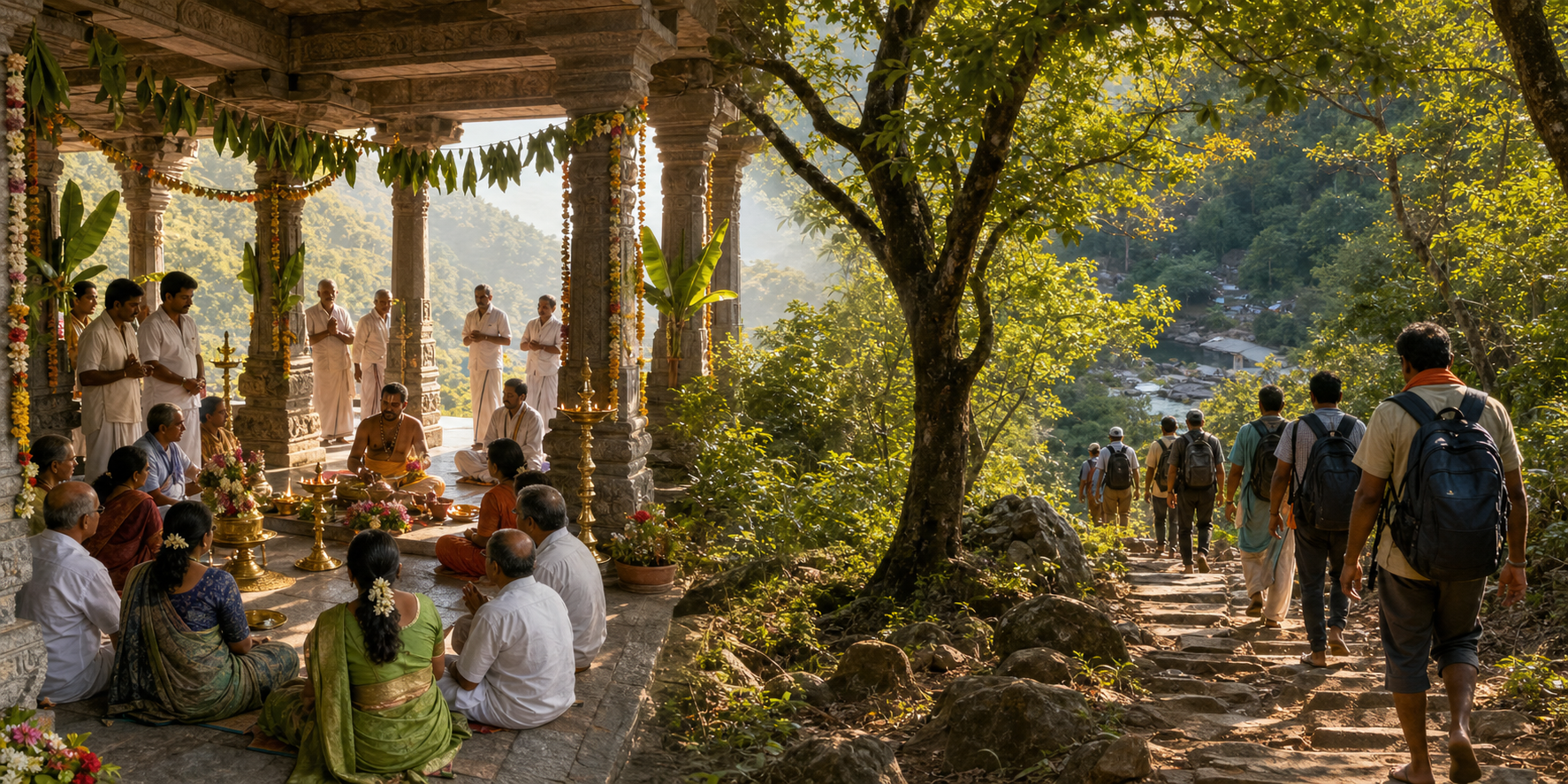
April 1 presents the hardest itinerary choice of the month. The concluding rites of Srivari Vasanthotsavams centre on Sri Malayappa Swamy with Sridevi and Bhudevi, while Tumburu Theertha Mukkoti draws pilgrims away from the hill township and into Tirumala’s forested sacred geography. Both are meaningful, but they ask very different things of your body and attention.
Choose Vasanthotsavams for ceremonial darshan
The Vasanthotsavams finale is built around renewal expressed through worship. At the Vasantha Mandapam, snapana tirumanjanam is performed for the utsava murtis with fragrant ritual substances, flowers, and Vedic recitation. The concluding programme may also include a procession on the mada streets, subject to the final TTD schedule.
This is the better choice if your primary intention is to behold Malayappa Swamy, participate through attentive silence, and let the seasonal beauty of the seva shape your prayer. It also gives a family a concrete way to introduce children to temple conduct: how to stand without obstructing a ritual path, how to listen during recitation, and why an utsava murti is brought into public ceremonial life.
- Arrive before the anticipated peak rather than aiming for the last possible entry window.
- Carry as little as possible. Extra belongings slow movement and become a burden in a dense queue.
- Follow the current TTD dress code, even if your ordinary travel clothing is more convenient.
- Keep to marked routes on the mada streets and never step into a procession path for a closer view.
- If someone in your group needs mobility support, locate the designated assistance point before the crowd builds.
- Do not promise children an exact view or procession time. Explain that darshan depends on the day’s temple arrangements.
Choose Tumburu Theertham only if the full route suits you
Tumburu Theertha Mukkoti is not a short extension to a normal temple day. The forest route is often approximated at 7 to 8 kilometres each way, over an undulating path whose access is regulated during the Mukkoti. The daylight window, April heat, and return distance should govern your decision.
The devotional language of Mukkoti evokes an immense gathering of sacred waters at the theertham. Traditional memory also connects the place with celestial music and penance. You honour that sanctity through restraint: walk quietly, carry out what you carry in, obey forest directions, and do not treat the route as an unrestricted recreational trail.
- Begin early enough to complete the authorised route within daylight instructions.
- Carry sufficient drinking water for the outward and return journey.
- Wear sturdy footwear suited to uneven ground rather than ceremonial footwear chosen only for appearance.
- Use a cap and sunscreen, pace yourself, and do not let group pressure turn heat or exhaustion into a spiritual test.
- Avoid plastic and leave no litter in the forest or near the water.
- Follow TTD and forest personnel immediately if access, bathing, movement, or return times are restricted.
Young children, elders, and anyone for whom heat, distance, or uneven terrain poses a serious difficulty need not attempt the entire route. A shorter participation near an authorised access point, or a temple-focused Vasanthotsavams plan, preserves the purpose of the pilgrimage without converting resolve into avoidable danger. If the full walk is beyond your capacity, turning back is prudence, not failure.
Most importantly, do not construct April 1 around the assumption that you will finish the forest journey and still secure every desired temple observance. Choose one non-negotiable practice. Let anything else remain a blessing rather than a logistical promise.
Use April 13 for study and April 20 for a sustained vow
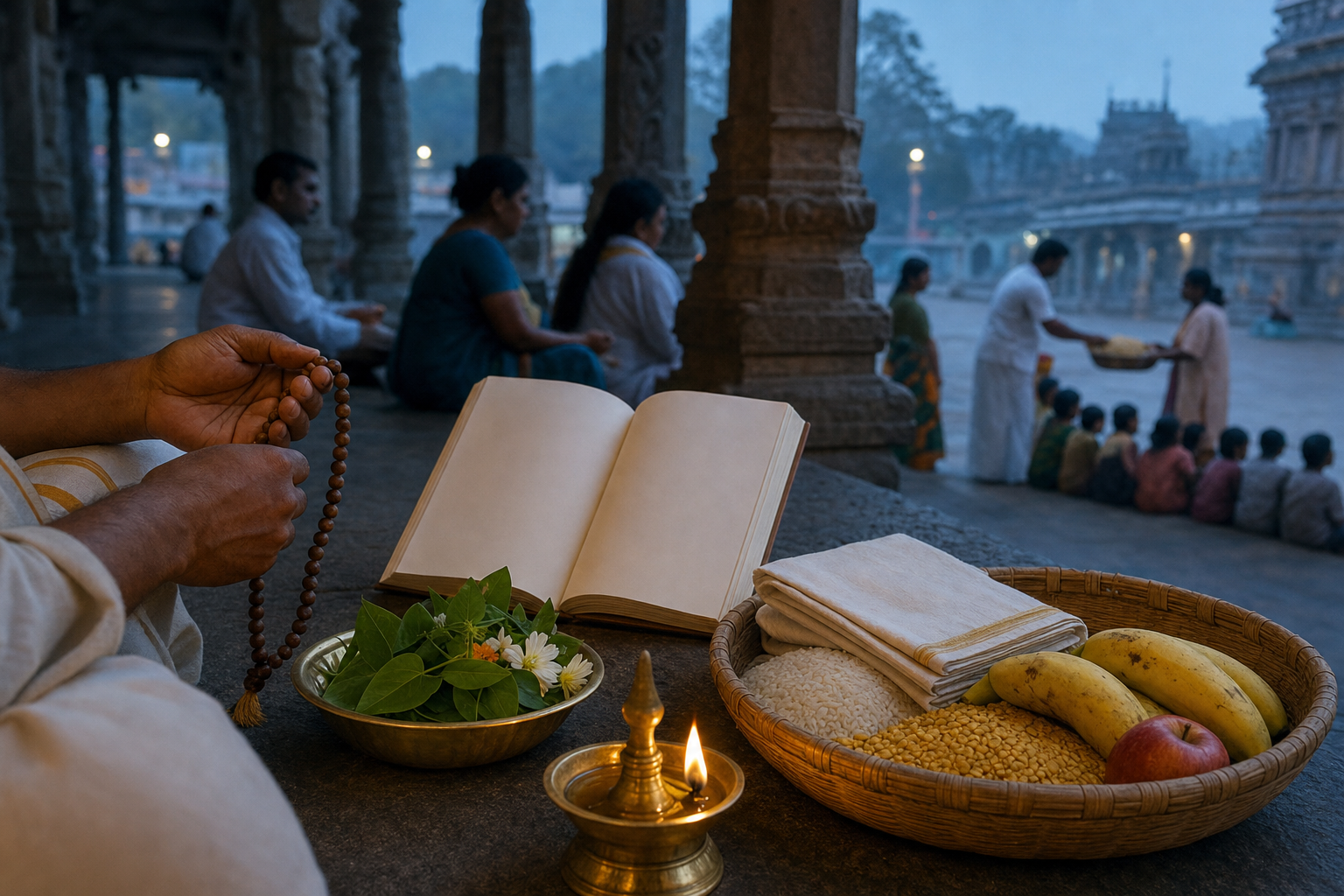
April 13: approach Sri Ramanujacharya as an acharya, not only a historical figure
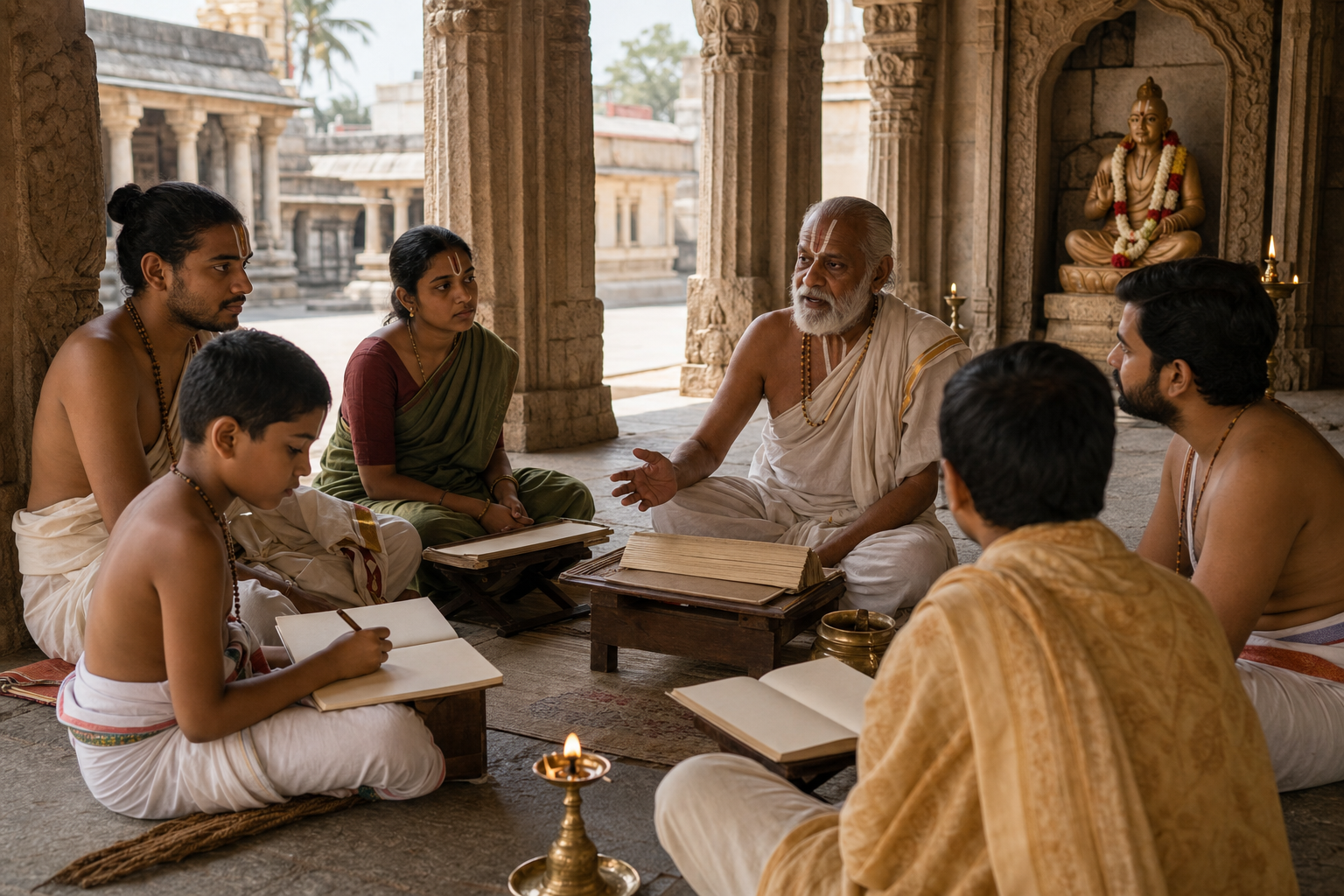
Sribhashyakara Utsavams honour Sri Ramanujacharya, revered at Tirumala as Sri Bhashyakarulu. His Sri Bhashya systematised Vishishtadvaita, while Tirumala remembers the broader union of philosophical clarity, temple discipline, compassionate access to worship, and instruction that made his legacy living rather than merely textual.
The observances centre on the Sri Bhashyakarula Sannidhi on North Mada Street. Aradhana, prabandha parayana, acharya-paduka veneration, nivedana, processions of the acharya’s utsava murti, and scholarly exposition may form part of the festival programme. Exact public timings and seating arrangements should be taken from current temple notices.
You will gain more from this festival if you arrive with one question rather than a camera-led checklist. It might be: How does disciplined reasoning strengthen bhakti? What does service to an acharya require after the ceremony ends? How should scriptural learning change the way you treat another devotee?
- Select a prabandha recitation, aradhana, or exposition as your principal observance.
- Reach the sannidhi or designated viewing area before the procession begins, then remain within the marked space.
- Listen for the structure of the worship even when you cannot follow every word. Notice the sequence of recitation, offering, reverence, and instruction.
- After the festival, choose a manageable course of svadhyaya. A repeated period of attentive study honours an acharya more honestly than collecting facts about him for one day.
For a family or group from different Dharmic lineages, this is also a useful occasion to discuss guru-bhakti without pretending that every sampradaya teaches the same doctrine. Shared respect for the teacher, compassion, generosity, and disciplined learning can create common ground while theological differences remain real.
April 20: give each observance a distinct place in your sankalpa
Four commemorations fall on April 20 in the Tirumala calendar. You do not need to compress them into one vague idea of auspiciousness. Each can illuminate a different part of the day.
- Akshaya Tritiya: begin something intended to endure through repetition, such as annadanam support, regular study, a vrata of restraint, or another constructive commitment directed toward the welfare of others.
- Parashurama Jayanti: reflect on tapas and on strength governed by dharma. Vishnu Sahasranama recitation is one fitting devotional practice connected with this observance.
- Bhrigu Maharshi Varsha Thiru Nakshatram: remember that temple life stands within a rishi-parampara. Let the commemoration produce humility toward inherited knowledge rather than a claim of personal spiritual status.
- Srinivasa Dikshitulu Varsha Thiru Nakshatram: recognise the archaka and teaching lineages through which ritual knowledge, disciplined service, and institutional memory are transmitted.
The word akshaya points toward what does not diminish. The practical question, therefore, is not merely what you can obtain on an auspicious date, but what dharmic action you are prepared to sustain after leaving Tirumala. A promise that ends with the journey has not yet become a vrata.
Write your sankalpa before you enter the darshan queue. Name the action, the regular occasion on which you will perform it, and the person or community it is meant to benefit. Keep it modest enough to continue. An enduring act of dana or study is closer to the day’s spiritual logic than an elaborate pledge abandoned once ordinary life resumes.
There are meaningful ethical parallels across the Dharmic family: Hindu dana and vrata, Buddhist dana and shila, Jain ahimsa and aparigraha, and Sikh seva and simran all resist a life organised solely around acquisition. These are not interchangeable doctrines. If your pilgrimage group includes several traditions, share an act of service while allowing each person to keep the sadhana proper to their own path.
Build the journey in the order that can survive change
Festival travel fails most often when transport is booked first and the central religious commitment is decided later. Reverse that order. The pilgrimage should still make sense if a procession time moves, a preferred quota is unavailable, or the forest route is restricted.
- Choose one non-negotiable observance. State whether your priority is Vasanthotsavams, Tumburu Theertham, Sribhashyakara worship, Akshaya Tritiya darshan, or a particular practice such as svadhyaya or annadanam.
- Check the darshan route before fixing the rest of the trip. Tirumala’s usual modes include Special Entry Darshan at Rs 300, free Sarva Darshan, Slotted Sarva Darshan, and Divya Darshan associated with completing the Alipiri or Srivari Mettu footpath. Quotas, release windows, identification requirements, and verification procedures can change, so current TTD instructions take priority over an old itinerary or forwarded message.
- Secure suitable accommodation. Festival dates place pressure on hill lodging. If TTD accommodation is unavailable, consider staying in Tirupati city and allow for the additional journey to the hills. Proximity is useful, but a confirmed room with realistic travel time is better than an uncertain last-minute plan.
- Add a buffer around the principal date. Arrival on the preceding day reduces the risk that transport delay will erase the observance you travelled for. Avoid an immediate, inflexible departure if your essential ritual or darshan may run late.
- Check official notices again shortly before travel. Look specifically for festival timings, mada-street movement, traffic changes, queue arrangements, trek access, and any special direction for theertham pilgrims.
- Prepare a dignified fallback. If your preferred procession cannot be viewed or the forest route is closed, retain a plan for darshan, recitation, annadanam, or quiet prayer. A changed programme need not become a wasted yatra.
For a normal temple day, carry only what current entry rules permit and what you can manage through a long queue. Keep booking confirmations and required identification accessible, follow the prescribed dress code, and agree on a meeting point before members of your party separate. Do not rely on a mobile signal or assume that every person will exit at the same moment.
For Tumburu Theertham, add the equipment demanded by the route: sufficient water, sturdy footwear, sun protection, and a plan appropriate to the slowest capable member of the group. The forest journey should not be attached casually to a packing list designed only for temple darshan.
The Tarigonda Vengamamba Annaprasadam Complex continues the practice of daily annadanam. Receiving prasadam with gratitude can be part of the pilgrimage; supporting annadanam or participating in an authorised allied seva can turn the visit outward toward community welfare. If you want to volunteer, use an official opportunity rather than improvising work in a controlled temple environment.
Key takeaways for an April 2026 Tirumala yatra
- Choose April 1 for either the Vasanthotsavams finale or Tumburu Theertha Mukkoti, and treat the full forest pilgrimage as a separate physical commitment.
- Choose April 13 if your central practice is guru-bhakti, prabandha listening, or study connected with Sri Ramanujacharya and Vishishtadvaita.
- Choose April 20 if you want Akshaya Tritiya darshan to begin a continuing vrata, act of dana, or course of svadhyaya.
- Verify TTD timings, darshan procedures, traffic arrangements, and forest access close to departure because lunar observance windows and operations are not captured by a civil date alone.
- Reserve darshan and lodging before constructing a tight transport schedule, and leave buffer time around your principal festival.
- Carry one commitment home. A pilgrimage becomes durable when its worship changes your ordinary pattern of study, restraint, generosity, or seva.
Before booking, finish this sentence in writing: The one thing I am going to Tirumala to do is _____. Let that answer determine your date, darshan route, physical preparation, and fallback plan.
Then choose one practice that will continue after you descend the hills. Tirumala’s spring festivals can fill a calendar, but their deeper use is to give your life a clearer rhythm of worship, learning, restraint, and service.