
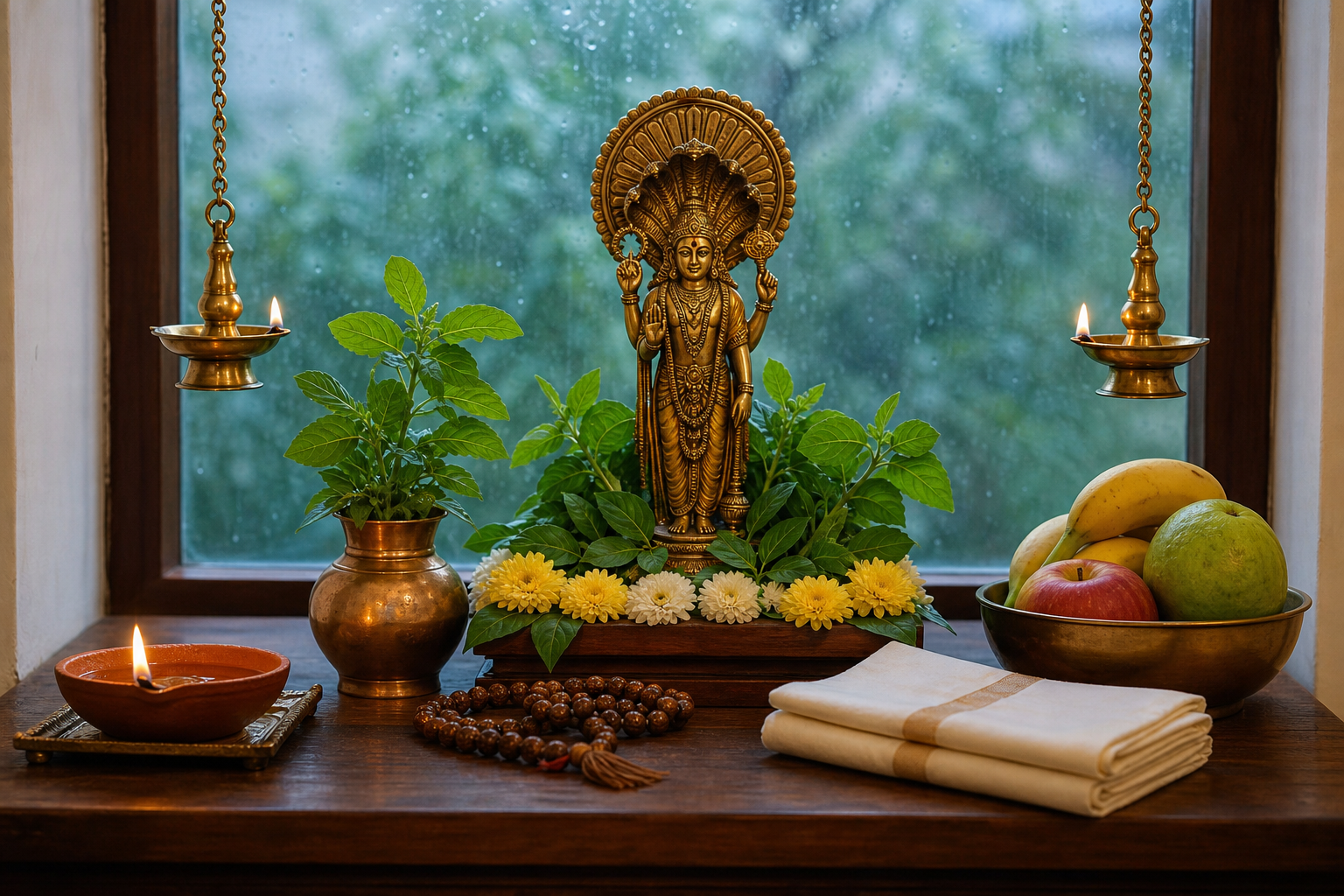
You have marked July 25 for Devshayani Ekadashi in 2026. The harder question is what to do with the day. Does the vrat require complete abstinence from food and water, or can you observe it meaningfully within the realities of health, work, caregiving, and family life?
A workable vrat has three parts: a clear sankalpa, worship expressed through both prayer and conduct, and a deliberate completion on Dwadashi. Decide those parts before the day arrives. You will then spend Ekadashi remembering Bhagavan rather than negotiating rules with yourself hour by hour.
Mark the date, but check the local tithi
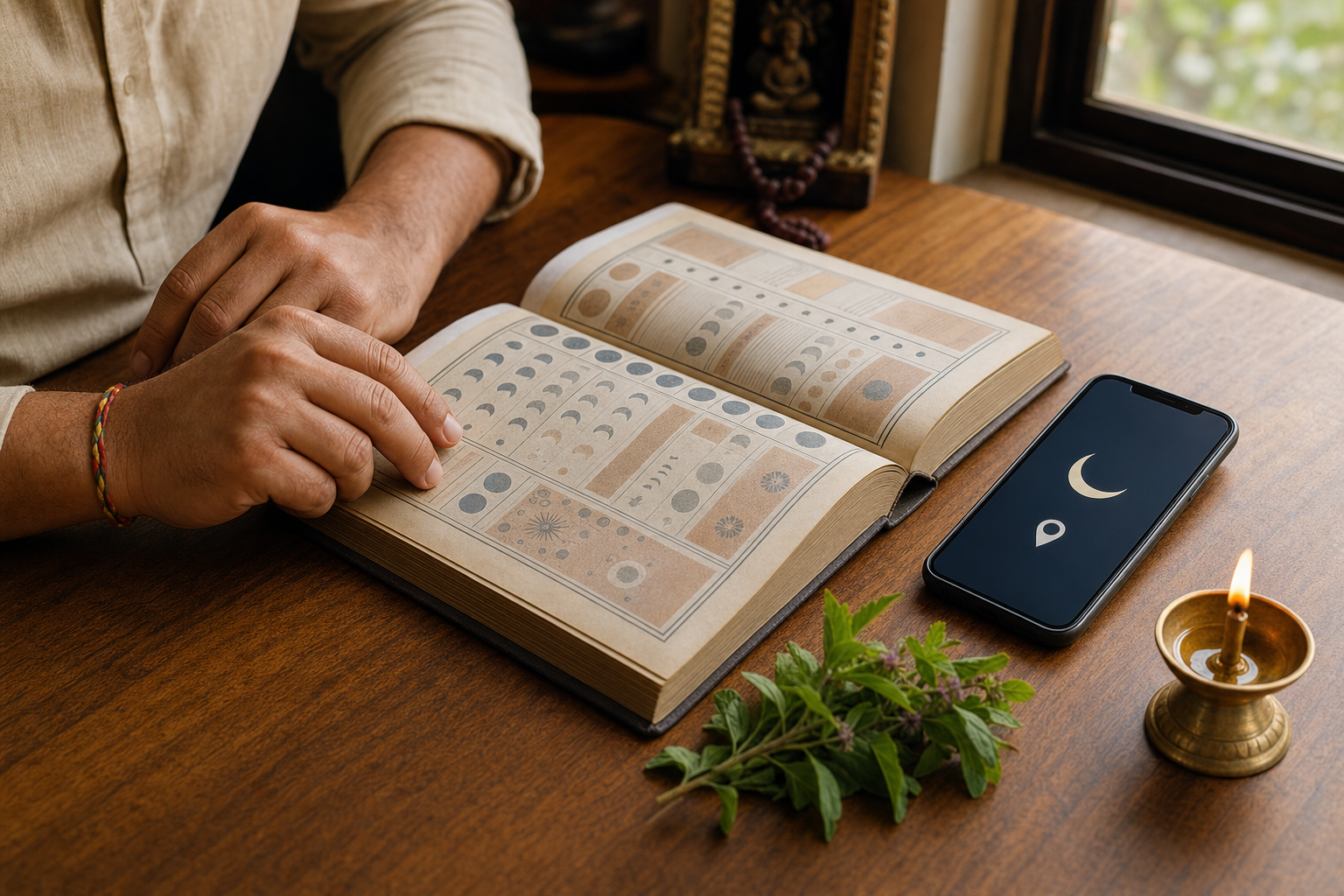
Devshayani Ekadashi falls on Shukla Paksha Ekadashi, the eleventh lunar day of the bright fortnight in Ashadha. Its 2026 observance date is Saturday, July 25.
The same observance is known as Shayana Ekadashi, Ashadhi Ekadashi, Maha Ekadashi, Tholi Ekadashi, or Pedda Ekadashi in different regions. The names Tholi Ekadashi and Pedda Ekadashi are especially associated with Andhra Pradesh, Telangana, and parts of Karnataka. Here, “Tholi,” or “first,” points to the beginning of the Chaturmas vrata cycle; it does not mean that no Ekadashi occurred earlier in the civil year.
In the devotional calendar, this is the day associated with Bhagavan Vishnu entering divine repose. It also opens Chaturmas, a season traditionally oriented toward steadier discipline, restraint, worship, and inward attention. That larger setting matters: Devshayani Ekadashi is not meant to be an isolated feat of deprivation that leaves no change in the days after it.
July 25 identifies the observance date, but it does not supply every local timing. Tithi boundaries and the proper Dwadashi parana window must be taken from a panchang calculated for your location. If you live outside Bharat, do not copy a fasting or parana time prepared for an Indian city. Use your local temple calendar, your family panchang, or the guidance of your sampradaya.
Choose the vrata before choosing the menu
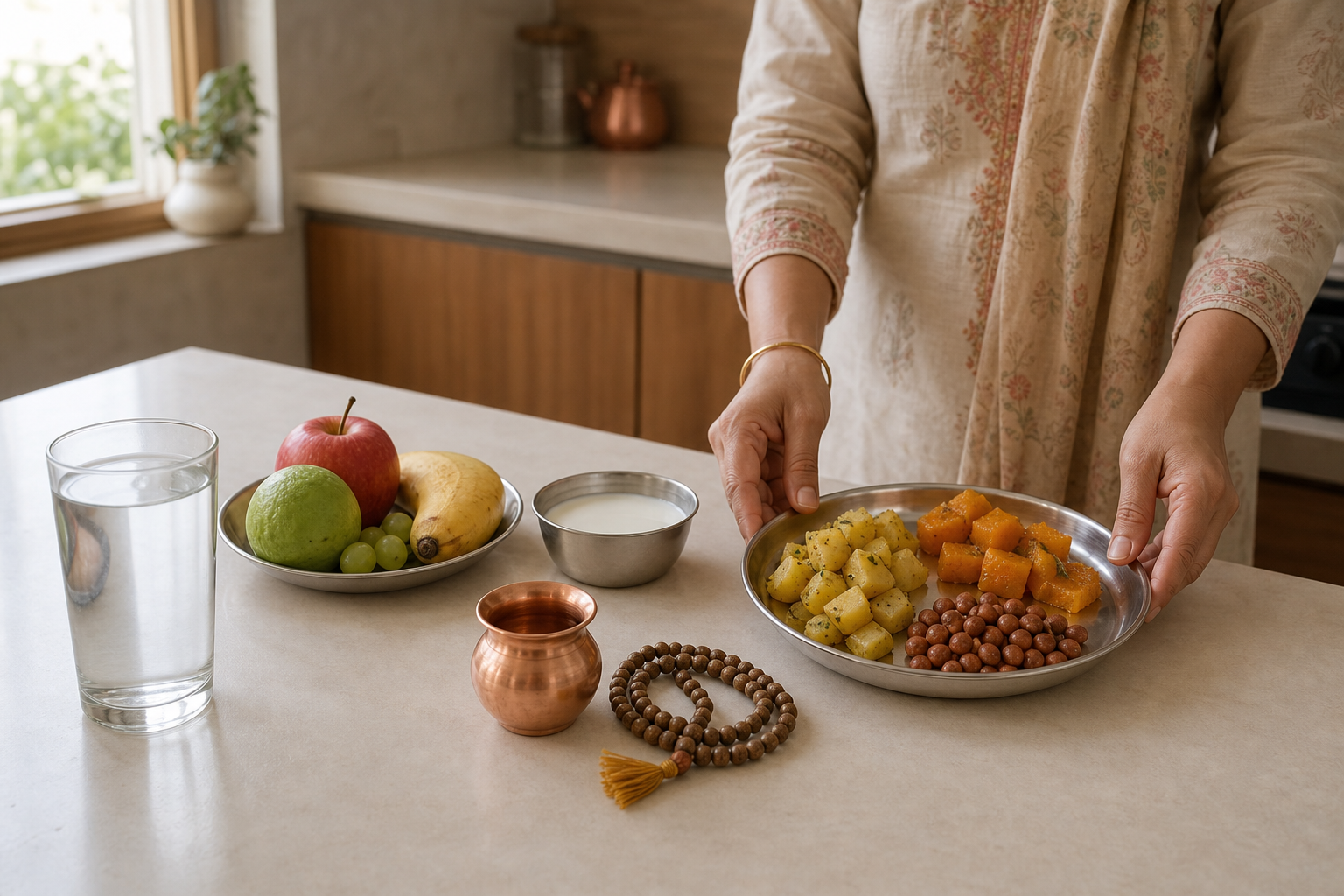
The central question is not, “How little can I consume?” It is, “What disciplined offering can I undertake honestly and safely?” Food restraint supports remembrance; it does not replace remembrance. A demanding fast accompanied by irritation, pride, or constant discussion about food has lost much of its purpose.
Household and sampradaya rules differ, so do not turn one family’s custom into a universal test of devotion. Common forms include:
- Nirjala upavasa: complete abstinence from food and water. This is the most physically demanding form and should not be attempted merely because it appears more impressive.
- Fasting with water: food is omitted while water is taken as needed.
- Phalahara or a limited fast: fruit or other foods permitted by one’s tradition are taken in a restrained manner.
- A simplified dietary vrata: a person who cannot fast fully takes a modest meal while following the food restrictions taught in the household or lineage.
Before Ekadashi, settle which form you will follow and what it excludes. If your family normally avoids particular ingredients, confirm the rule with the person who actually preserves that practice. Internet food lists often mix customs from different regions and lineages, creating unnecessary anxiety over a rule your tradition may not hold.
A severe fast is not appropriate for every body or circumstance. If you are pregnant or breastfeeding, recovering from illness, taking medicine that requires food, under medical care for a condition affected by fasting, or have a history of disordered eating, do not undertake a food-and-water fast without qualified medical advice. Children, frail older people, and anyone who becomes unwell should not be pressured to imitate a healthy adult’s vrata. A modified food discipline joined to puja, japa, seva, and restraint of speech remains a serious observance; it is not a spiritual failure.
A simple Devshayani Ekadashi schedule for the home
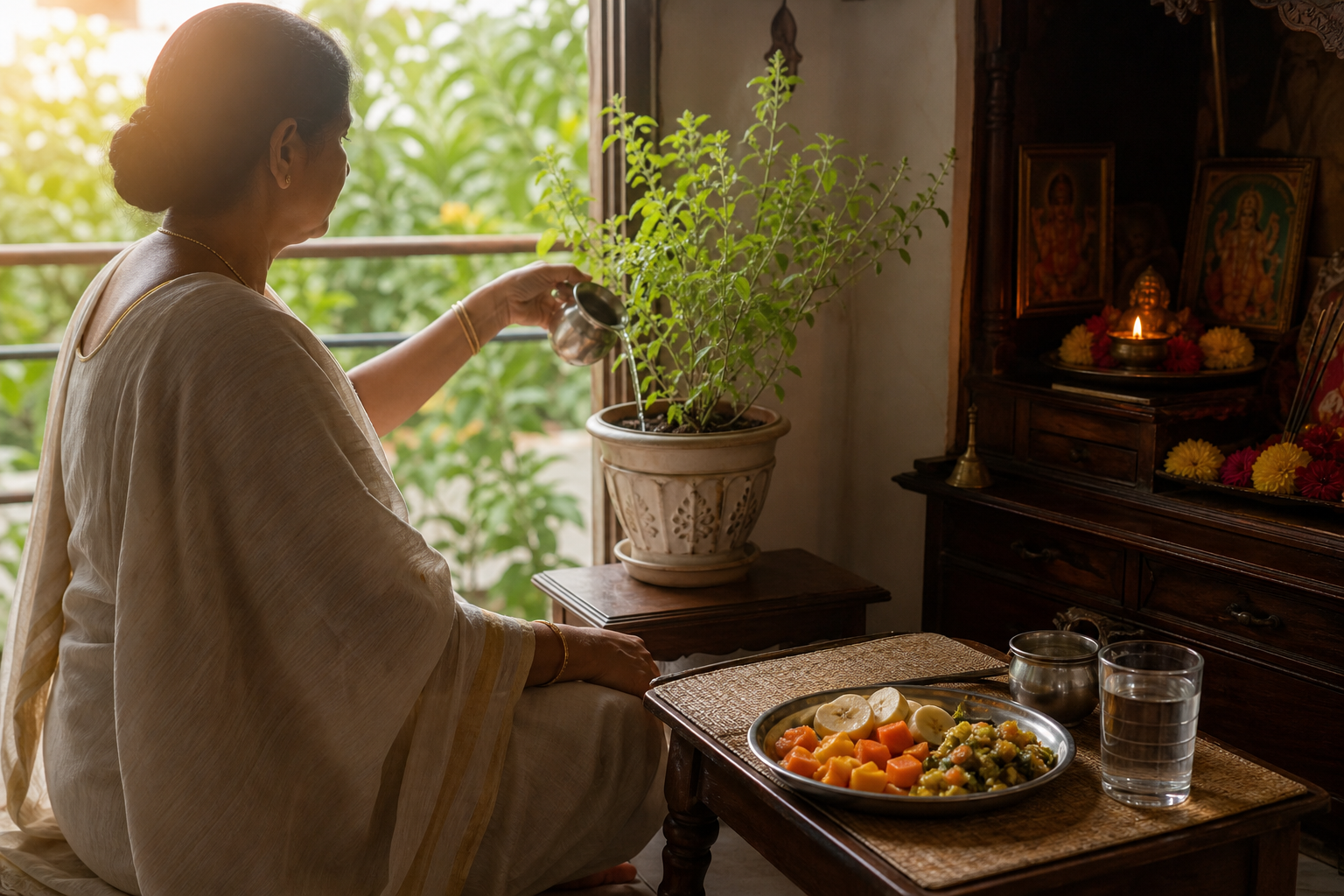
You do not need to reproduce a temple festival in your living room. A small observance performed attentively is better than an elaborate arrangement that becomes rushed or exhausting. Adapt the following sequence to the instructions of your family, guru, or temple.
- Prepare on the previous evening. Check the location-specific panchang, note the parana window, choose your level of fasting, and assemble what you already use for Vishnu puja. This may include a murti or image, a lamp, water, flowers, and a simple permitted offering.
- Begin the morning deliberately. Bathe as your circumstances allow, wear clean clothes, and clean the worship space. Put the phone aside before starting so that the first movement of the vrata is toward attention rather than distraction.
- Make a specific sankalpa. Plain language is sufficient if you do not know a prescribed Sanskrit form: “On Devshayani Ekadashi, I will observe this food discipline, worship Bhagavan Vishnu, guard my speech, and complete the vrata at the proper time.” Name the discipline clearly instead of leaving yourself to revise it whenever discomfort appears.
- Offer puja with what is available. Light the lamp safely, offer water, flowers, and permitted food, and recite a Vishnu prayer, nama, stotra, or mantra that belongs to your practice. If you have received mantra-diksha, follow the method and priorities given by your lineage rather than assembling a new ritual from unrelated traditions.
- Let the day’s conduct carry the worship. Set aside defined periods for japa, listening to or reading sacred teaching, quiet reflection, and seva. Reduce entertainment and needless scrolling. Watch anger, gossip, contempt, and harsh speech: a restricted plate with an unrestricted tongue is an incomplete vrata.
- Return to worship in the evening. Perform a brief arati or repeat your morning prayer, then notice where the day became difficult. A night vigil may belong to some traditions, but sleep deprivation should not be treated as compulsory when health, work, age, or caregiving makes it unsuitable.
- Complete the vrata through Dwadashi parana. Break the fast within the local window given by your panchang or temple, beginning gently with water and food appropriate to the fast you kept. Do not postpone parana casually, and do not borrow another city’s clock time.
If employment or caregiving prevents a long puja, protect two short periods: one at the beginning of the day for sankalpa and worship, and one in the evening for prayer and reflection. Keep a quiet form of nama-japa available during travel, household work, or breaks. The constraint should shape the observance, not erase it.
Let Devshayani Ekadashi begin a livable Chaturmas vow
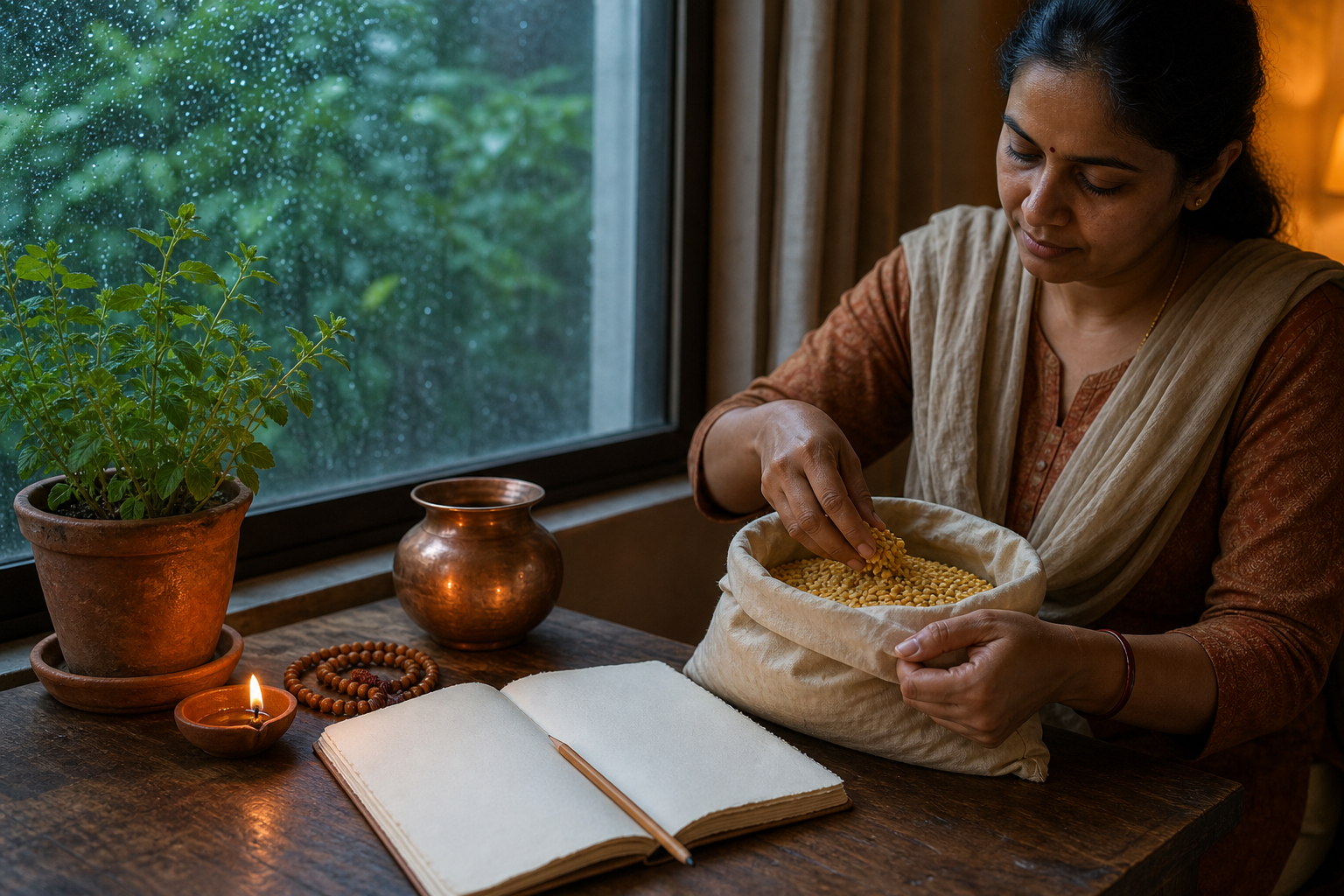
Devshayani Ekadashi marks the opening of Chaturmas vrata. Use that transition to choose one discipline you can sustain beyond a single sacred day. The best commitment is not the one that sounds most austere; it is the one precise enough to survive ordinary mornings, travel, tiredness, and competing duties.
You might establish a daily period of nama-japa, a regular rhythm of sacred reading, a weekly act of seva, restraint from a habit that scatters the mind, or more disciplined speech at home. Choose one principal vow rather than a long catalogue. Write down when and where you will perform it, what counts as completion, and how you will resume after an unavoidable interruption.
Do not imitate a monastic or inherited family discipline whose meaning and limits you do not understand. Chaturmas is a framework for constancy, not a competition in self-denial. If you already belong to a sampradaya, let its calendar and instruction govern the details. If you do not, begin with a modest practice centered on Vishnu-bhakti, ahimsa, truthfulness, self-restraint, and service.
Key takeaways
- Devshayani Ekadashi falls on Saturday, July 25, in 2026.
- Use a location-specific panchang for tithi details and the Dwadashi parana window.
- Choose the form of fasting before the observance and follow your household or sampradaya rules rather than a mixed online food list.
- Do not undertake a severe fast when health, medication, pregnancy, recovery, age, or an eating-disorder history makes it unsafe.
- Build the day around sankalpa, Vishnu puja, japa, disciplined conduct, and timely parana.
- Carry the observance forward through one clear, sustainable Chaturmas commitment.
Before July 25, make two decisions: which safe form of vrata you will keep, and which single discipline you will carry into Chaturmas. Record the local parana time beside them. That small preparation turns Devshayani Ekadashi from a date on the calendar into a practice you can actually complete.
References
- Hindu Pad — Devsayani Ekadashi 2026 | Devashayani Ekadashi | Shayana Ekadashi 2026
- Hindu Pad — Tholi Ekadashi | Pedda Ekadashi
- Hindu Pad — How to observe Shayana Ekadashi Vrat | Dev Sayani Ekadasi vrat Procedure