
If someone tells you that the Ramayana forbids a widow to remarry, ask three questions before accepting the claim: Which Ramayana tradition? Which passage? Is the passage narrating an event, praising an ideal, or laying down a rule?
The same test applies to the opposite claim that Lanka accepted widow remarriage while Ayodhya rejected it. Neither slogan survives careful reading. If you are trying to understand dharma rather than win an argument, you need to separate Valmiki’s narrative, later retellings, customary practice, and Dharmic jurisprudence.
First separate story, retelling, and legal rule
Several different questions are often compressed into the phrase widow remarriage in the Ramayana. Did a particular woman remarry? Did a community recognize such a union? Did a juristic tradition permit it under defined conditions? Did a storyteller use remarriage to resolve a problem of succession? These questions are related, but an answer to one does not settle the others.
Use three distinct layers whenever you evaluate a claim:
- The narrative layer: What actually happens in the Valmiki Ramayana or another identified telling?
- The interpretive layer: What moral, political, or devotional meaning does that telling give the event?
- The normative layer: What do Dharmashastra, customary law, and other institutions permit, discourage, or require?
A narrative can expose a moral problem without functioning as a statute. A later retelling can preserve a community’s ethical imagination without proving that the same episode appeared in the earliest recoverable version. A rule in one smriti can represent an influential position without becoming the only Dharmic position.
You should also distinguish bereavement from a compulsory social condition. Widowhood can mean the fact that a woman’s husband has died, a voluntarily chosen discipline after loss, a ritual identity assigned by a community, or an enforced ban on remarriage. Moving silently from the first meaning to the fourth is how a human loss gets turned into a supposed scriptural command.
When you encounter a confident claim, apply a simple audit. Ask for the recension or retelling, locate the passage, identify its genre, and check whether the conclusion extends beyond what the passage establishes. This method is especially important because asura and rakshasa are not interchangeable labels, and neither word automatically supplies a society’s marriage law.
What Valmiki’s Lanka and Ayodhya actually establish
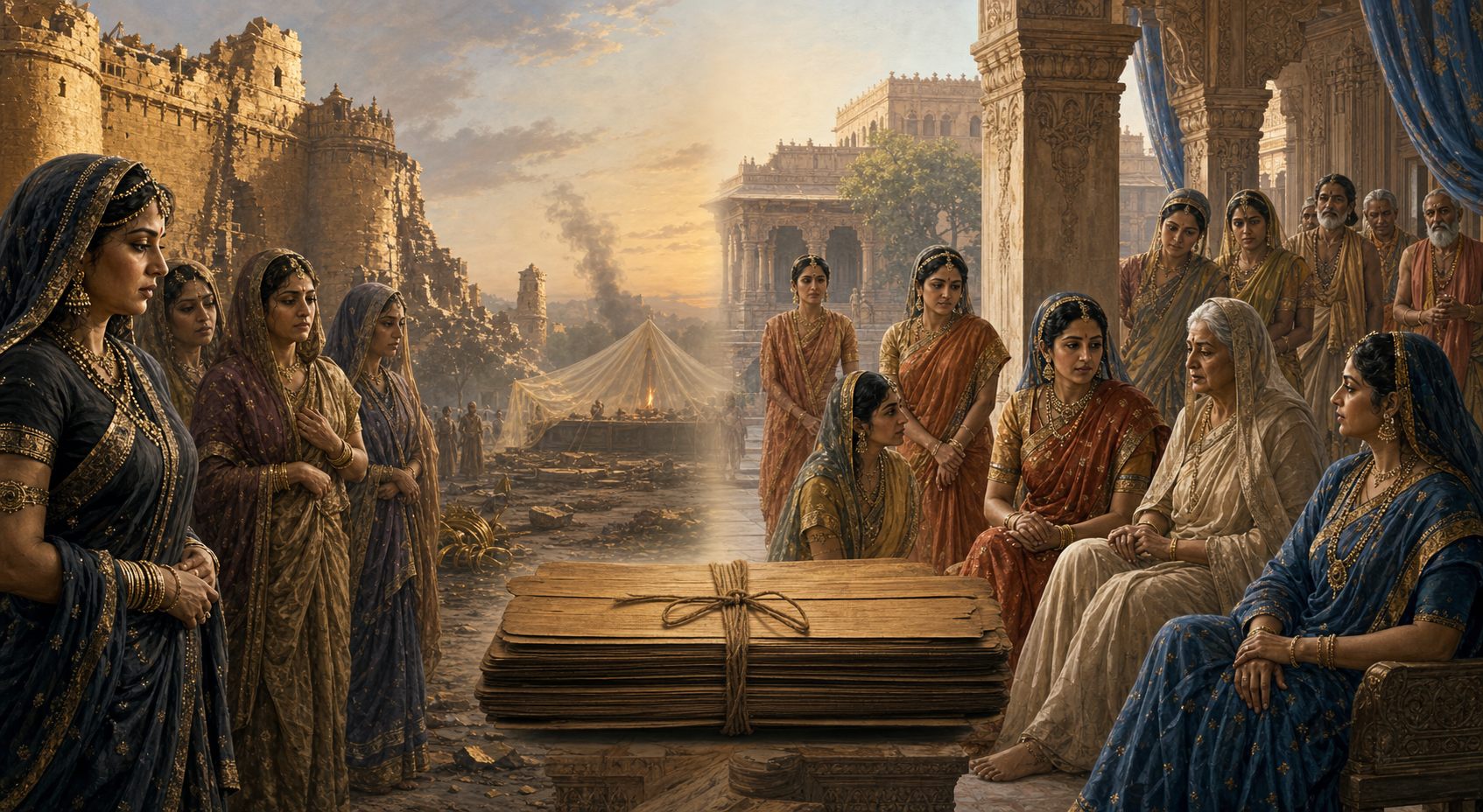
The contrast between a permissive Lanka and a prohibitive Ayodhya sounds neat because it places two kingdoms on opposite sides of a modern argument. The epic gives us no such neat division.
In the Sundara Kanda and Yuddha Kanda, Lanka is wealthy, fortified, urban, and politically organized. Its moral failure lies principally in Ravana’s conduct and the power that enables it, not in an assertion that every feature of Lankan society is depraved. Mandodari reasons ethically, warns Ravana, and speaks with the authority of a queen. Other women in Lanka also speak with force. These scenes prevent you from reducing the kingdom to a featureless demonic culture.
They do not, however, establish a Lankan code of widow remarriage. No explicit rule governing widowhood or remarriage appears in the critical edition’s account of Lanka. Mandodari’s courage proves that a woman could function as a serious moral voice within the narrative. It does not prove a universal marriage policy.
Ayodhya presents a different ethical setting. Rama’s actions are repeatedly tested against rajadharma, public trust, family duty, and personal sacrifice. Sita’s ordeal and her later separation under the pressure of public rumor remain among the epic’s most painful moral problems. But Sita is not a widow in either episode. Using her suffering as a rule for widows is therefore a category error before any theological disagreement even begins.
Those episodes may lead you to debate kingship, the limits of public opinion, the cost of royal duty, or the injustice borne by an innocent person. They do not provide a blanket ordinance requiring a bereaved woman to remain unmarried. Ayodhya’s association with dharma cannot be converted into a prohibition that the narrative never states.
This produces two firm conclusions. Lanka’s social complexity does not prove that its people recognized unrestricted widow remarriage. Ayodhya’s status as a model kingdom does not prove that it prohibited remarriage. In both cases, silence must remain silence.
How to read Mandodari’s later remarriage tradition
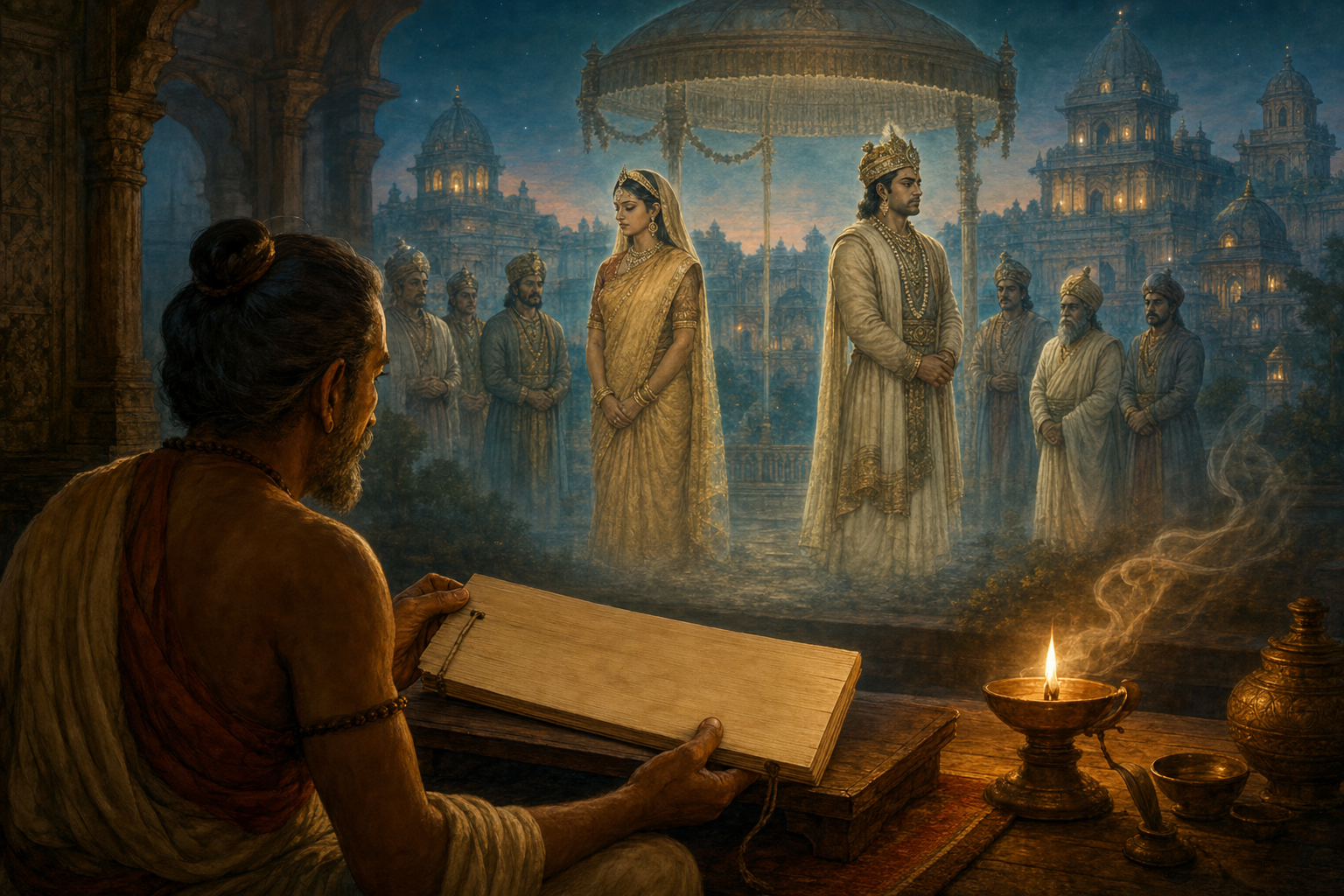
Mandodari is central to this debate because some later vernacular and regional traditions associate her with Vibhishana after Ravana’s death. The motif is sometimes understood as remarriage and sometimes more cautiously as recognition of her continuing royal status beside Lanka’s newly crowned king.
The critical distinction is textual location. The Valmiki Ramayana’s critical edition proceeds to Vibhishana’s coronation without stating that Mandodari married him. You should not insert the later episode into that edition and then cite Valmiki as its authority.
Yet omission from the critical edition does not make every later telling worthless or illegitimate. The Ramayana has lived through recitation, performance, translation, regional memory, temple culture, and literary recreation. A later addition can reveal what a community believed a satisfactory restoration of order should look like, even when it cannot establish what the earliest recoverable narrative contained.
In the Mandodari-Vibhishana motif, remarriage can perform several kinds of narrative work. It can preserve the queen’s dignity, connect the former and restored royal households, protect political continuity, and mark the movement from Ravana’s destructive rule to Vibhishana’s legitimate kingship. The union then functions as social repair rather than romantic reward.
That interpretation should still be expressed with discipline. The responsible formulation has three parts:
- Mandodari’s remarriage to Vibhishana is not stated in the Valmiki critical edition.
- The motif appears in some later Ramayana traditions and therefore belongs to the history of the epic’s reception.
- Its presence shows that premodern tellers could imagine remarriage as a legitimate response to dynastic and social rupture; it does not prove one uniform custom throughout ancient Lanka.
This formulation protects both sides of the tradition. It does not erase later tellings to defend a single textual canon, and it does not misattribute a later development to Valmiki. More importantly, it lets the motif raise its real ethical question: after violence destroys a household and a kingdom, must dharma preserve the ruin, or may it authorize a new arrangement that protects people and restores order?
Dharmic jurisprudence leaves room for more than one path
The Ramayana alone cannot carry the entire legal and ethical debate. Marriage, abandonment, inheritance, property, lineage, and remarriage also belong to the wider field of Dharmashastra, statecraft, and customary practice. That field contains argument and adaptation, not one unchanging rule extracted from one book.
The Narada Smriti and Parashara Smriti recognize conditional remedies when the substance of marriage has collapsed because a husband is missing, has abandoned his responsibilities, or is incapacitated. Those remedies include permission for remarriage in specified circumstances. The underlying concern is practical: a rule should not trap a woman indefinitely in a household relationship that no longer provides the duties, protection, and mutual purposes expected of marriage.
Parashara’s association with yuga-dharma makes the adaptive principle especially visible. Human capacity, social danger, and historical conditions matter when dharma is applied. This is not permission to call every preference dharma. It is recognition that a rule producing preventable injustice under changed conditions may require a different application.
The Arthashastra brings economic security into view. Its attention to marital breakdown, abandonment, relief, and stridhana warns you not to reduce widowhood to ritual status. A bereaved woman’s access to property, livelihood, housing, and household authority can determine whether an apparently pious rule protects her or exposes her to dependence and abuse.
Manusmriti’s ideal of lifelong chastity for a widow became highly influential, but it does not exhaust Dharmic jurisprudence. Quoting that ideal without acknowledging other smritis, regional custom, and practical legal traditions turns one position into an artificial monopoly. The existence of a revered ascetic path also does not prove that every widow must be forced onto it.
Earlier recourse to niyoga further complicates claims that bereavement always required permanent withdrawal from household continuity. Niyoga was not the same as remarriage: it involved procreation through a designated person when a husband was deceased or incapable. Its relevance lies elsewhere. It shows that lineage, dependents, property, and household survival could justify carefully regulated responses other than treating loss as the end of a woman’s social future.
Permission is not prescription
A conditional permission to remarry does not command every widow to do so. A widow may freely choose remarriage, independent household life, family life without remarriage, or a serious spiritual discipline. Conversely, praise for chastity or renunciation does not authorize relatives or community leaders to impose that path on someone who has not chosen it.
This distinction protects agency in both directions. Treating remarriage as mandatory can disregard grief, vocation, and personal conviction. Treating celibacy as mandatory can produce economic dependency, loneliness, and social exclusion. Dharma must attend to the person, the circumstances, and the consequences: desha, kala, and patra are not ornamental words when a life is being decided.
Bring the whole situation into the decision
If this question concerns a living person rather than a textual debate, begin with consent. Then examine financial security, stridhana and other property, responsibility for children or dependents, personal safety, family pressure, and the path the widow herself wants. A decision that ignores these facts may preserve the appearance of custom while violating its claimed purpose.
The wider Dharmic family reinforces the need to reduce avoidable harm. Buddhist and Jain ethics foreground karuna and ahimsa, while Sikh reform challenged customs that degraded women. These traditions do not supply one mechanical rule for every marriage. They do make it harder to defend coercion merely by calling it ancient.
If a present-day dispute involves the legal validity of marriage, inheritance, guardianship, or property, do not use an epic passage as a substitute for qualified legal advice in the relevant jurisdiction. A mistaken textual claim may be corrected in conversation; a lost limitation period, invalid transfer, or surrendered right may be much harder to repair.
Part of the modern confusion comes from colonial codification. Early Anglo-Hindu jurisprudence compressed diverse practices into a narrower canon and gave disproportionate weight to Manusmriti. Ishwar Chandra Vidyasagar’s campaign and the Hindu Widows’ Remarriage Act of 1856 did not create the Indian debate from nothing. They gave statutory recognition to a reform for which Indian texts, customs, and communities already supplied arguments and precedents.
Key takeaways for a responsible Dharmic reading
- The Valmiki Ramayana does not state a general law either permitting widow remarriage in Lanka or prohibiting it in Ayodhya.
- Sita’s ordeals concern marriage, kingship, public opinion, and rajadharma; they are not widowhood episodes.
- Mandodari’s association with Vibhishana belongs to some later traditions, not to the Valmiki critical edition.
- A later retelling can carry genuine Dharmic meaning without proving that its episode occurred in every recension or reflected a universal historical custom.
- Narada, Parashara, the Arthashastra, Manusmriti, niyoga traditions, and regional custom reveal a plural field of reasoning about broken households and women’s futures.
- Permission to remarry is not an obligation, while praise for voluntary chastity is not permission to coerce it.
- For a living person, consent, security, lawful rights, dependents, and freely chosen spiritual commitments matter more than winning a slogan-driven argument.
The next time someone invokes the Ramayana to close this question, ask for the precise text, the type of claim, and its proper scope. If an actual widow’s future is at stake, make room for her voice before debating what others think her dharma should be. A Dharmic response should help her carry grief without making grief her compulsory identity.