
If you are choosing a time for puja, travel, a transaction, or the formal beginning of a project on Saturday, May 2, 2026, do not copy a clock-time chart prepared for another city. The tithi supplies the day’s lunar context, but the main Saturday avoidance periods must be calculated from sunrise and sunset at your location.
The reliable method has two stages. First, place your activity on the correct side of the late-night Pratipada-Dwitiya transition. Then calculate the local daylight divisions, identify Abhijit near local solar midday, and use Nakshatra, Yoga, Karana, and the Moon’s Rashi to refine the result.
Read the 11:03 PM tithi change correctly
For most regions, May 2 begins under Krishna Paksha Pratipada. It remains Pratipada until 11:03 PM, when Krishna Paksha Dwitiya begins. The new tithi continues through the night and into the following civil day. Because a local calculation can shift the displayed time slightly, treat 11:03 PM as the general date anchor unless it has been verified for your city.
A tithi is not a sunrise-to-sunrise period or a fixed portion of the clock day. It is determined by the changing angular distance between the Moon and the Sun along the ecliptic. Each tithi covers 12 degrees of separation: Pratipada occupies the first 12-degree arc, and Dwitiya occupies the next. The tithi changes at the instant the Moon-Sun separation enters the next arc, whether that happens in the morning, afternoon, or late at night.
This distinction prevents a common planning error. An observance performed on the civil date of May 2 is not automatically performed in Pratipada. If its formal beginning falls after the local transition, its tithi is Dwitiya. If your chosen time is close to 11:03 PM, verify the transition in a Panchang configured for the event location rather than assuming that the general time is exact everywhere.
For spiritual planning, Pratipada in the waning fortnight suits a restrained sankalpa, the organization of a devotional routine, reflective study, and preliminary work. Dwitiya places more emphasis on continuity and steady progress. Saturday adds the qualities traditionally associated with Shaniwar: patience, duty, service, discipline, and the completion of neglected responsibilities.
Use that distinction to decide the character of the activity, not to declare every minute before or after the transition auspicious. A suitable tithi can still coincide with Rahu Kalam, Yamaganda, Gulika, or another contrary factor. Muhurat selection requires the layers to agree.
Calculate Saturday’s avoidance periods from local daylight
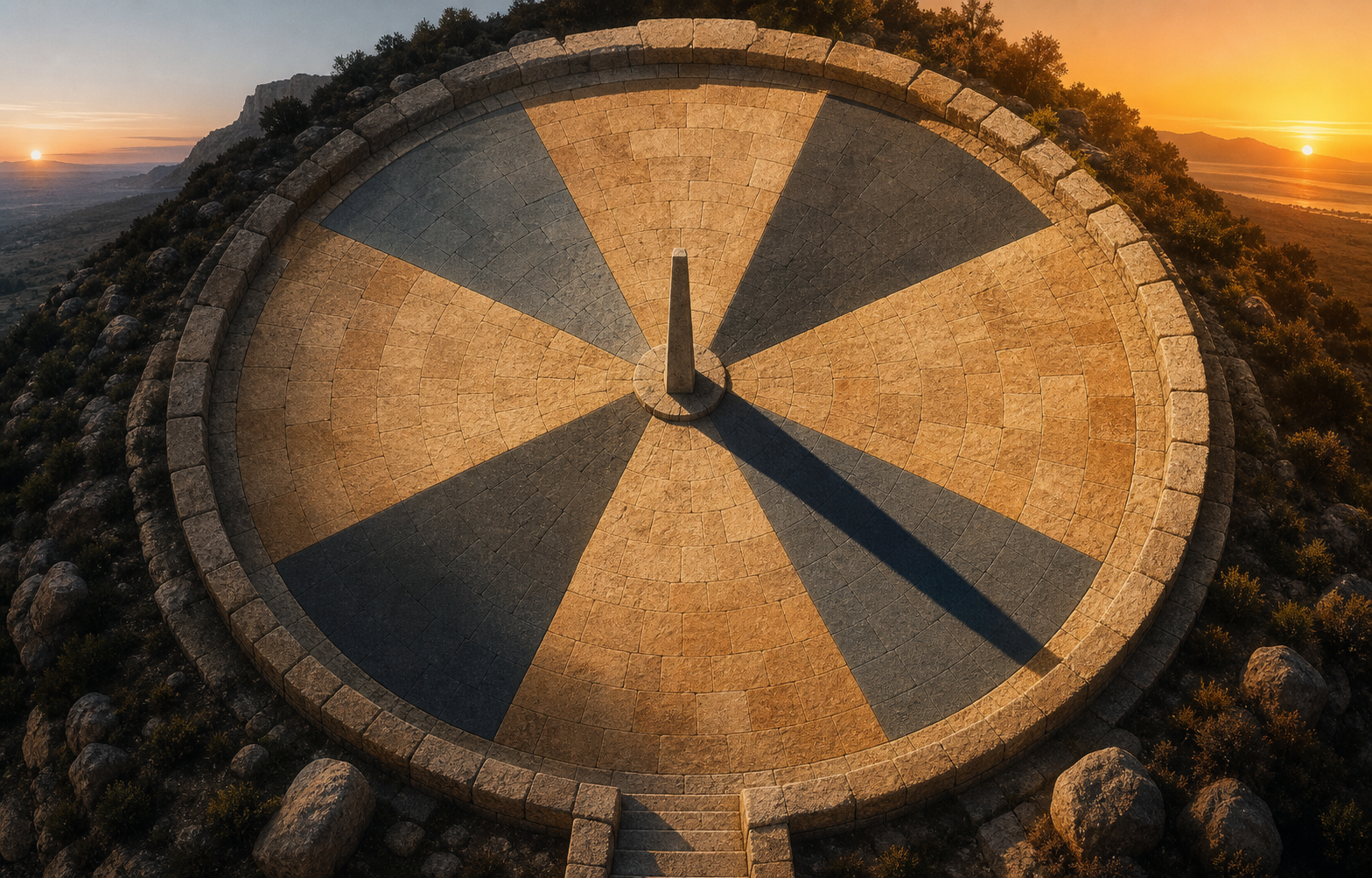
Rahu Kalam, Yamaganda, and Gulika are calculated from the daylight span, not from the full 24-hour civil day. Obtain local sunrise and sunset for May 2 from the same locally configured almanac. Let sunrise be R and sunset be S. The daylight duration is S minus R. Divide that duration by eight to obtain one segment, which we can call Q.
The boundaries of segment number N are R plus (N minus 1) times Q and R plus N times Q. Count the segments forward from sunrise. On Saturday, Gulika occupies the first segment, Rahu Kalam the third, and Yamaganda the sixth.
| Period | Saturday daylight segment | Calculated interval |
|---|---|---|
| Gulika | First | R to R + Q |
| Rahu Kalam | Third | R + 2Q to R + 3Q |
| Yamaganda | Sixth | R + 5Q to R + 6Q |
Do not begin the calculation from midnight, and do not assume equal clock times throughout the year. The eight parts remain equal to one another on that date, but their duration changes when the local daylight span changes. That is why a fixed Rahu Kalam timetable copied from another location cannot provide minute-level accuracy.
These periods are principally no-start windows. When possible, avoid using them for the formal launch of a venture, the initiation of a transaction, or the beginning of travel. Ordinary duties and work already in progress need not be abandoned merely because one of the intervals begins. If an activity extends across a boundary, distinguish its actual commencement from its continuation and place the commencement outside the avoidance period.
Keep the arithmetic with your planning notes: local sunrise, local sunset, daylight duration, one-eighth segment length, and the resulting three intervals. This makes the decision auditable and prevents a household from accidentally mixing the sunrise of one city with a timetable prepared for another.
Use Abhijit as a local midday candidate, not a fixed hour
Abhijit Muhurat is centered on local solar midday, when the Sun reaches its upper transit. That is not necessarily 12:00 PM on the civil clock. Its displayed span changes with location and season, so a generic noon timetable is not precise enough for an important undertaking.
The safest procedure is to use an astronomy-based local Panchang that explicitly lists Abhijit for May 2. Confirm that the almanac is set to the place where the action will occur, not the residence of a participant joining from elsewhere. Then compare the listed Abhijit interval with the Saturday avoidance periods you calculated.
- Confirm that Abhijit is listed for the date and locality.
- Check whether the proposed start overlaps Rahu Kalam, Yamaganda, or Gulika.
- Check the tithi at the actual start, especially late in the evening.
- Use Nakshatra, Yoga, Karana, and the Moon’s Rashi to decide whether the window suits the particular activity.
- Where a family or temple convention governs the observance, follow its accepted almanac consistently.
Abhijit is a broadly favorable candidate when it is present and not burdened by strong contrary factors. It is not a universal override that automatically cancels every conflict. If your local almanac shows a disagreement, choose a cleaner interval or consult the tradition responsible for the rite instead of combining whichever entries produce the preferred answer.
Refine the time with all five limbs of the Panchang
A Panchang describes the qualities operating at a given time; a muhurat is the act of selecting a suitable time for a particular purpose. That is why the tithi alone cannot settle the decision. The five limbs should be read together, with the Moon’s Rashi supplying an additional interpretive layer.
- Tithi: identifies the lunar-day phase. On May 2, the important decision point is the late change from Krishna Paksha Pratipada to Dwitiya.
- Vara: identifies the weekday. Saturday emphasizes restraint, structure, service, responsibility, and patient completion.
- Nakshatra: identifies the Moon’s lunar mansion and helps determine the emotional and procedural character of the proposed work.
- Yoga: is derived from the combined solar and lunar longitudes and indicates whether the overall combination is integrative or marked by friction.
- Karana: divides a tithi into half-tithi units and can refine the timing of individual steps within a larger undertaking.
The Moon’s Rashi is not one of the five limbs, but it helps describe instinctive responses and interpersonal sensitivities. It can matter when an undertaking depends heavily on cooperation, negotiation, or family participation.
Exact Nakshatra, Yoga, Karana, and Rashi entries for May 2 should not be copied without knowing the location and the ayanamsha used in the calculation. Lahiri and Raman are examples of ayanamsha systems that can produce differences at sensitive boundaries. A time near such a boundary deserves more scrutiny than a time comfortably inside one interval.
Calculation tradition matters as well. A drik Panchang uses observation-oriented astronomical algorithms and topocentric corrections. A traditional community almanac may apply inherited sunrise-based rules when assigning a vrata or festival to a civil date. These methods can answer different practical questions: one can help identify the astronomical state at an exact time, while the other can determine how an established community observes the day.
If a temple, sampradaya, or family vrata has an established rule, consistency is more useful than switching between systems to obtain a desired result. Use its recognized almanac for the observance. For a separate personal undertaking, use one reliable local Panchang from beginning to end and record its location and ayanamsha settings.
Key takeaways for May 2, 2026
- Use Krishna Paksha Pratipada until 11:03 PM and Dwitiya afterward as the general date anchor, but verify the transition locally if the event is near that boundary.
- Calculate Saturday’s avoidance periods from local sunrise to sunset divided into eight equal parts; do not divide the full civil day.
- On Saturday, Gulika is the first daylight segment, Rahu Kalam the third, and Yamaganda the sixth.
- Treat Abhijit as a locally calculated midday candidate, not as a fixed 12:00 PM appointment or an automatic override.
- Before confirming a muhurat, check all five Panchang limbs, the Moon’s Rashi, the calculation tradition, and any family or temple rule that governs the act.
Before you print an invitation, begin a journey, or announce a ceremonial start, write down the event location, local sunrise and sunset, the three Saturday avoidance intervals, the listed Abhijit window, and the tithi at the chosen minute. That short worksheet turns a general Panchang entry into a time you can use with clarity and consistency.