
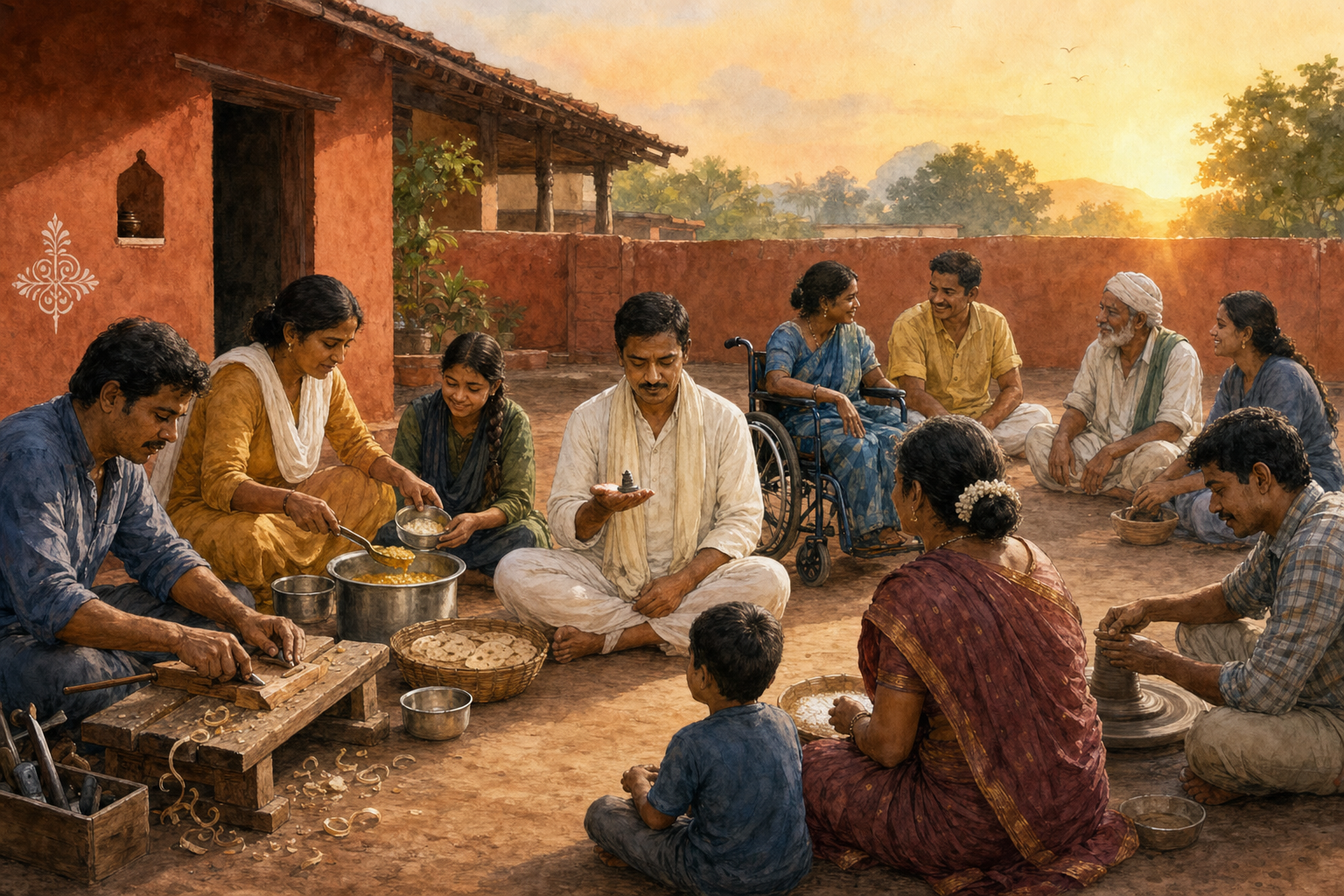
You may admire Basavanna’s stand for equality yet still wonder what Lingayat ethics asks you to do before the next prayer, paycheck, or community meeting. The answer is not a slogan. It is a discipline that joins livelihood, sharing, remembrance, and the refusal to grade human dignity by birth.
That unity is the key to reading Basava Purana well. Kayaka without dasoha can sanctify ambition. Dasoha without kayaka can become occasional charity. Personal devotion without equality can retreat into private piety. Hold the principles together, and they become a practical way to examine how you earn, possess, worship, and participate in a community.
Start with the three-part ethical circuit
Palkuriki Somanatha composed Basava Purana in Telugu during the thirteenth century, looking back to Basavanna’s life and reforming work at Kalyana in the twelfth century. Although its title uses the word “Purana,” it is a regional devotional biography rather than one of the classical eighteen Puranas. Its stories, miracles, conversations, and saintly examples teach through memorable lives instead of presenting ethics as a detached rulebook.
This matters when you read it. A court chronicle asks primarily what happened. A philosophical manual asks how an argument works. Devotional hagiography asks what a life looks like when divine commitment governs conduct. Historical questions remain legitimate, but the ethical force lies in noticing which actions reveal devotion and which actions expose its absence.
Three ideas organize that ethical vision. Kayaka dignifies honest and skillful work as worship. Dasoha directs the fruits of life toward service, hospitality, and sharing. Ishtalinga devotion keeps the relationship with Shiva personal, immediate, and inwardly present. They form a circuit: remembrance disciplines work, work creates something of value, sharing prevents value from hardening into self-importance, and equality tests whether devotion has actually changed the devotee.
Key takeaways
- Judge work by honesty, skill, and dignity, not merely by income or prestige.
- Decide how the fruits of work will serve others before generosity becomes an afterthought.
- Use personal devotion as a source of moral accountability, not as permission to ignore public conduct.
- Test spiritual claims by what happens to inherited rank, excluded voices, and disregarded labor.
If one part disappears, the circuit weakens. The most useful way to approach Lingayat ethics is therefore not to ask which principle you prefer. Ask where your own circuit breaks.
Kayaka makes the manner of working spiritually decisive

The familiar gloss “work is worship” can become dangerously vague. It can be used to praise relentless productivity, excuse an abusive workplace, or make success look like proof of virtue. Kayaka is more demanding. The work must carry honesty, competence, and moral seriousness. Calling a task sacred does not make deception, humiliation, or carelessness sacred.
Kayaka also challenges the habit of measuring human worth through occupational rank. When work is a field of devotion, useful labor cannot be dismissed simply because society has attached low status to the person performing it. Nor does prestigious work become spiritually superior merely because it commands wealth or recognition. Birth, title, and reputation lose their authority to determine who possesses dignity.
Use a kayaka audit when you face a professional decision:
- Honesty: Does the task require you to conceal a material truth, mislead another person, or claim work you did not perform?
- Skill: Are you giving the task the care it deserves, or using spiritual language to cover avoidable negligence?
- Dignity: Who performs the least celebrated labor, and do your words, pay, credit, and attention treat that person as fully worthy?
- Purpose: What genuine good does the completed work make possible, and who bears its hidden cost?
The questions apply beyond formal employment. Household care, cultivation, craft, administration, study, and community service all involve disciplined labor. If you manage people, kayaka should change how you distribute credit and listen to practical knowledge. If you work independently, it should govern what you promise and how candidly you disclose your limits. If you depend on domestic or manual labor, it should correct the tendency to praise work in theory while disregarding the worker in person.
Kayaka does not ask you to worship busyness. Refusing a dishonest assignment may honor work more than completing it efficiently. Improving a neglected skill may be more devotional than making a public display of religious identity. The question is not whether you are constantly occupied. It is whether the work passing through your hands can withstand ethical scrutiny.
Dasoha decides what the fruits of work are for

Kayaka can still end in self-congratulation if its fruits remain enclosed within the worker’s ego or household. Dasoha completes the discipline by turning resources toward nourishment, hospitality, service, and shared well-being. Earning and giving are not unrelated religious topics. They are consecutive stages of one moral action.
That makes dasoha more searching than spontaneous charity. Charity can wait for surplus, emotion, recognition, or a convenient occasion. A discipline of sharing asks you to make provision for others while deciding what your resources are for. The relevant resource may be money, but it may also be food, professional knowledge, access, time, space, or influence.
A workable practice has three movements:
- Identify what your work produces. Include income, knowledge, relationships, authority, and material goods rather than counting cash alone.
- Choose what will circulate. Set a stable rule appropriate to your means so that sharing does not depend entirely on mood or public recognition.
- Check the recipient’s dignity. Service that humiliates, controls, or displays another person’s need reproduces the hierarchy it appears to relieve.
At community level, dasoha exposes a common contradiction: abundant religious spending alongside indifference to the people who cook, clean, organize, teach, or arrive in need. A useful audit begins with ordinary questions. Who is welcomed to eat? Who has access to learning? Which worker remains unseen after the public ceremony ends? Who controls the shared resources, and whose needs shape their use?
This is not a rejection of beauty, celebration, or institutions. It is a test of their moral direction. A community shaped by dasoha does not merely accumulate resources in a sacred setting. It makes the setting a place from which care moves outward.
Ishtalinga devotion turns remembrance into accountability
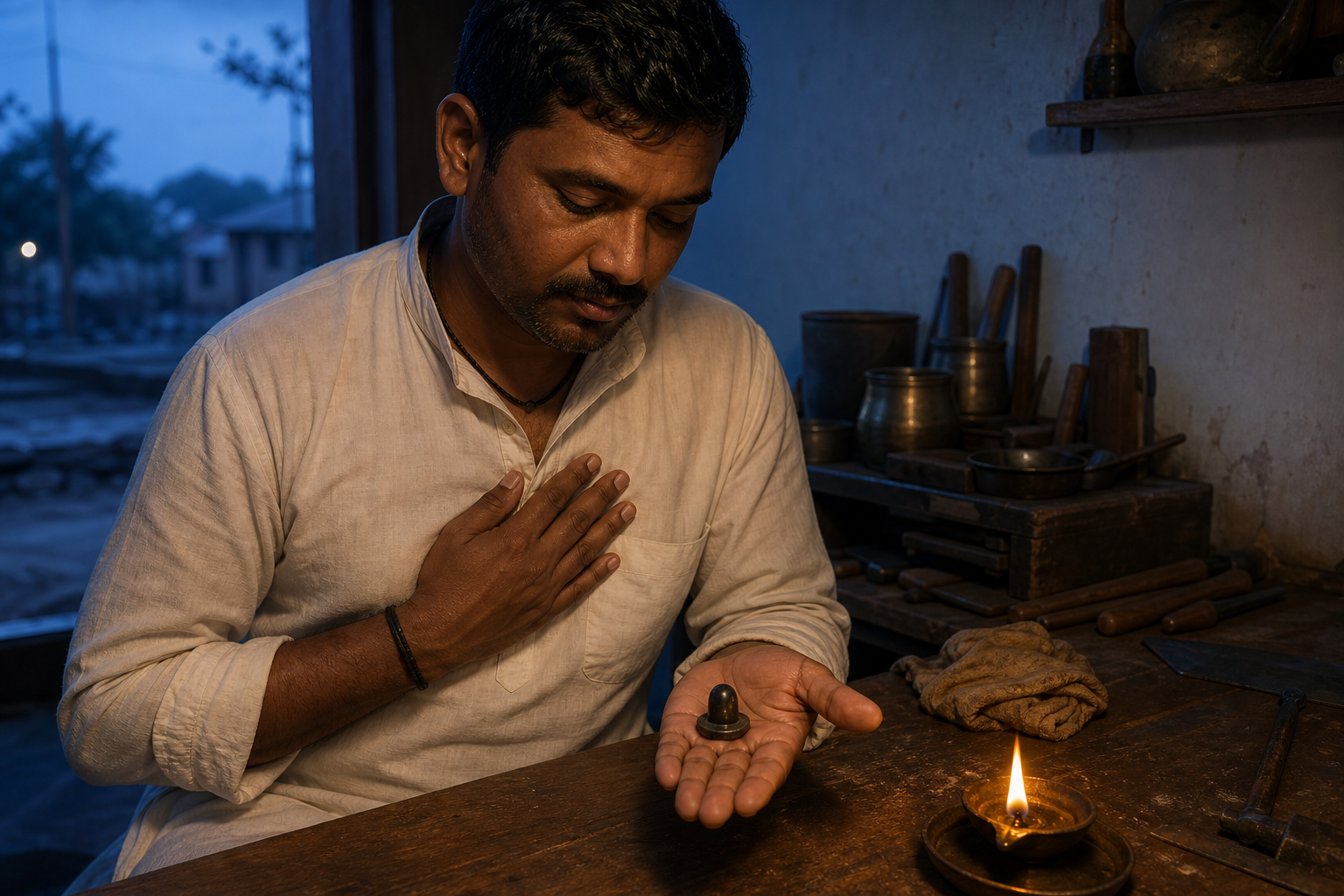
The ishtalinga is the personal emblem of Shiva borne on the body and realized inwardly. Its importance lies in direct and unmediated devotion: divine nearness is not reserved for a hereditary elite or confined to a distant sacred location. The devotee carries remembrance into the conditions of ordinary life.
Directness, however, must not be confused with self-authorization. A personal relationship with Shiva does not make every private impulse righteous. It removes excuses. If the emblem accompanies you, then the marketplace, workshop, kitchen, office, and assembly all fall within the field of spiritual accountability.
Before worship, bring one actual decision into remembrance rather than examining only your religious mood:
- Where did pride in status govern the way you spoke?
- Which part of your work would you prefer not to expose to moral examination?
- What did you receive that now calls for sharing?
- Whose dignity became inconvenient to your plans?
Then choose a correction that can enter conduct. Return credit. Repair careless work. Share a resource. Invite a disregarded person into the decision. Remembrance becomes ethically serious when it crosses the distance between recognition and repair.
Lingayat teaching also describes maturation through shatsthala, a six-stage movement toward aikya, or union. Its practical implication is that spiritual realization is not a decorative belief acquired all at once. Conduct, insight, intention, and steadiness must mature together. A powerful devotional experience cannot permanently substitute for the slower formation of character.
Distinguish living observance from hollow ritual
Basavanna’s ethical current is often reduced to opposition against ritual. That is too crude. Ishtalinga devotion is itself an embodied observance. The sharper distinction is between a practice that reforms the practitioner and a performance detached from compassion, courage, and integrity.
It is also worth keeping literary forms distinct. Somanatha’s Telugu narrative is not the same form as the concise Kannada vachanas associated with Basavanna and the other sharanas. Yet both currents converge in their suspicion of empty display and their demand that inward realization bear ethical fruit. When evaluating your own observance, therefore, do not ask only whether it is traditional or sincere. Ask what habit it is training.
Equality is the public test of Lingayat devotion
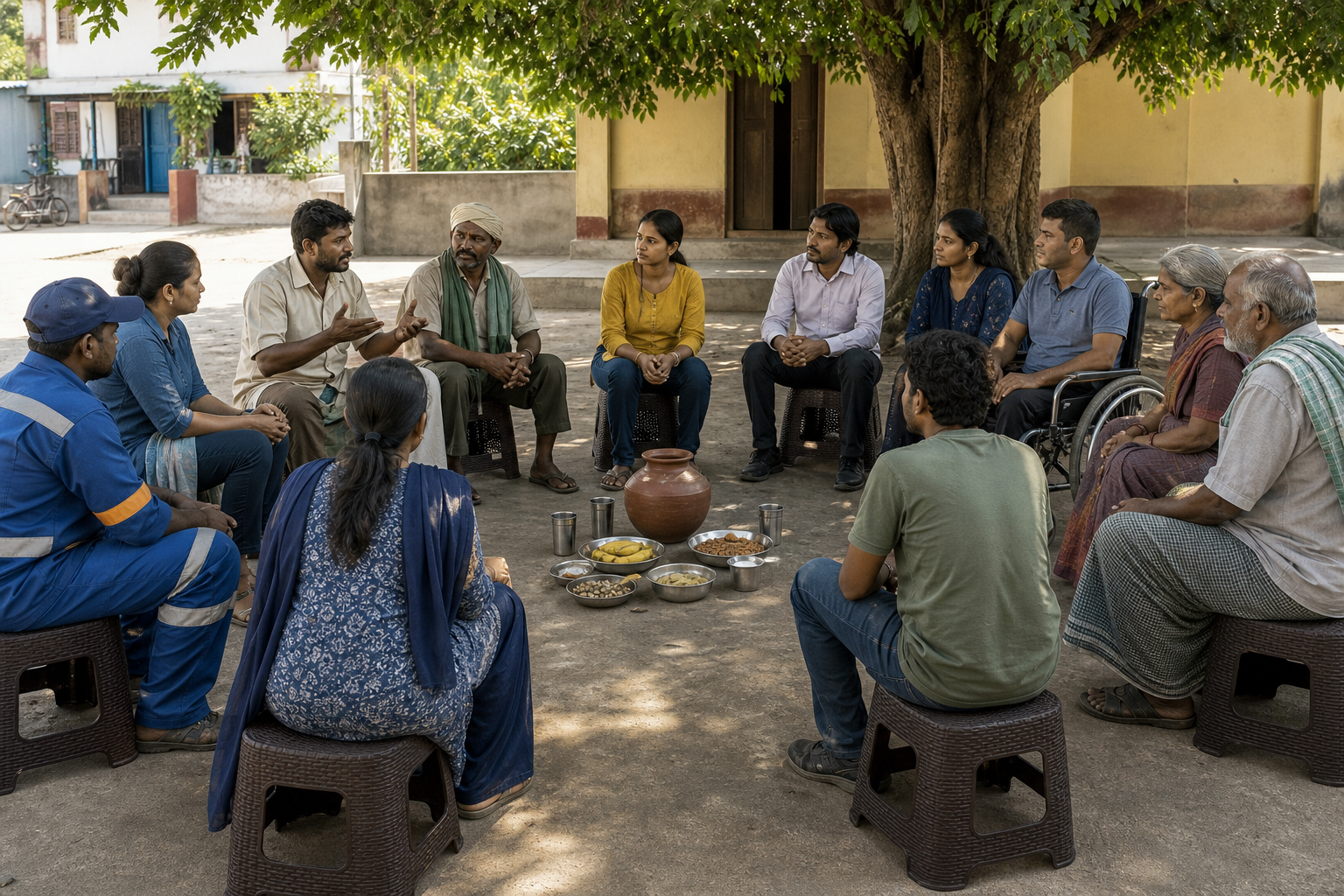
Equality is not an optional social appendix to this spirituality. Kayaka removes the religious basis for despising labor. Ishtalinga devotion opens direct access to Shiva. Dasoha prevents resources from becoming a fortress of rank. Each principle presses devotion toward a fellowship in which character and realization matter more than inherited station.
At Kalyana, the Anubhava Mantapa represents this public dimension as a forum for spiritual deliberation. The remembered fellowship includes figures such as Akka Mahadevi, Allama Prabhu, Channabasavanna, and Siddharama. Their presence matters because an ethical community needs more than a revered founder. It needs a space in which diverse realized voices can question, teach, and help shape collective judgment.
A modern institution can praise equality while leaving its actual hierarchy untouched. Look past the declared value and inspect the decision:
- Whose spiritual insight can change the group’s course, and whose contribution is merely applauded?
- Are women treated as authorities in their own right or only as supporting figures in a male story?
- Does occupational status determine who receives attention, honor, and proximity to leadership?
- Can a person question custom without being treated as disloyal merely for raising an ethical concern?
- Do those affected by a decision participate before it is settled, or hear about it afterward?
These questions keep equality from becoming sentimental. Inclusion is not complete when different people are permitted to enter the room. You must also notice who defines the subject, whose testimony counts, who controls resources, and whether inherited prestige silently decides the outcome.
Preserve theological distinctiveness while recognizing dharmic kinship
Within Lingayat theology, Basavanna is venerated as an incarnation of Lord Nandeeswara. That claim belongs to the tradition’s own devotional grammar and should be understood on those terms. A reader does not need to erase that distinctiveness in order to recognize the ethical invitation.
Dharmic traditions often meet through practical resonances without becoming interchangeable. Kayaka has an evident kinship with the Buddhist concern for right livelihood. The pairing of honest work and sharing recalls the Sikh disciplines of kirat karo and vand chhako. Dasoha’s resistance to possessiveness, together with moral discipline and compassion, can enter a fruitful conversation with Jain ethics.
Use these parallels to deepen understanding, not to claim that every tradition teaches the same doctrine. Shared ethical horizons make cooperation possible; real differences preserve the integrity of each path. That combination is especially valuable when a community must act with others without dissolving its own theological center.
Put the ethic into your next cycle of work
- Choose one recurring task and define what honest, skillful completion requires.
- Name the person whose labor or judgment is easiest for your setting to overlook, then change how that person is heard, credited, or supported.
- Decide in advance which fruit of your work will circulate through service or sharing.
- Bring one unresolved ethical decision into your practice of remembrance instead of leaving devotion at the level of feeling.
- Create a real forum for discussion, even if it begins with a small circle, and let those affected by the issue speak before prestige settles the answer.
Begin with the next task already in front of you. Do it without deception, let its benefit move beyond you, remember Shiva while deciding, and watch closely for the moment status tries to overrule dignity. That is where admiration for Basavanna starts becoming Lingayat ethical practice.
References
- HinduPad — Basava Purana Unveiled: Palkuriki Somanatha’s Epic of Basaveshwara, Devotion and Equality