
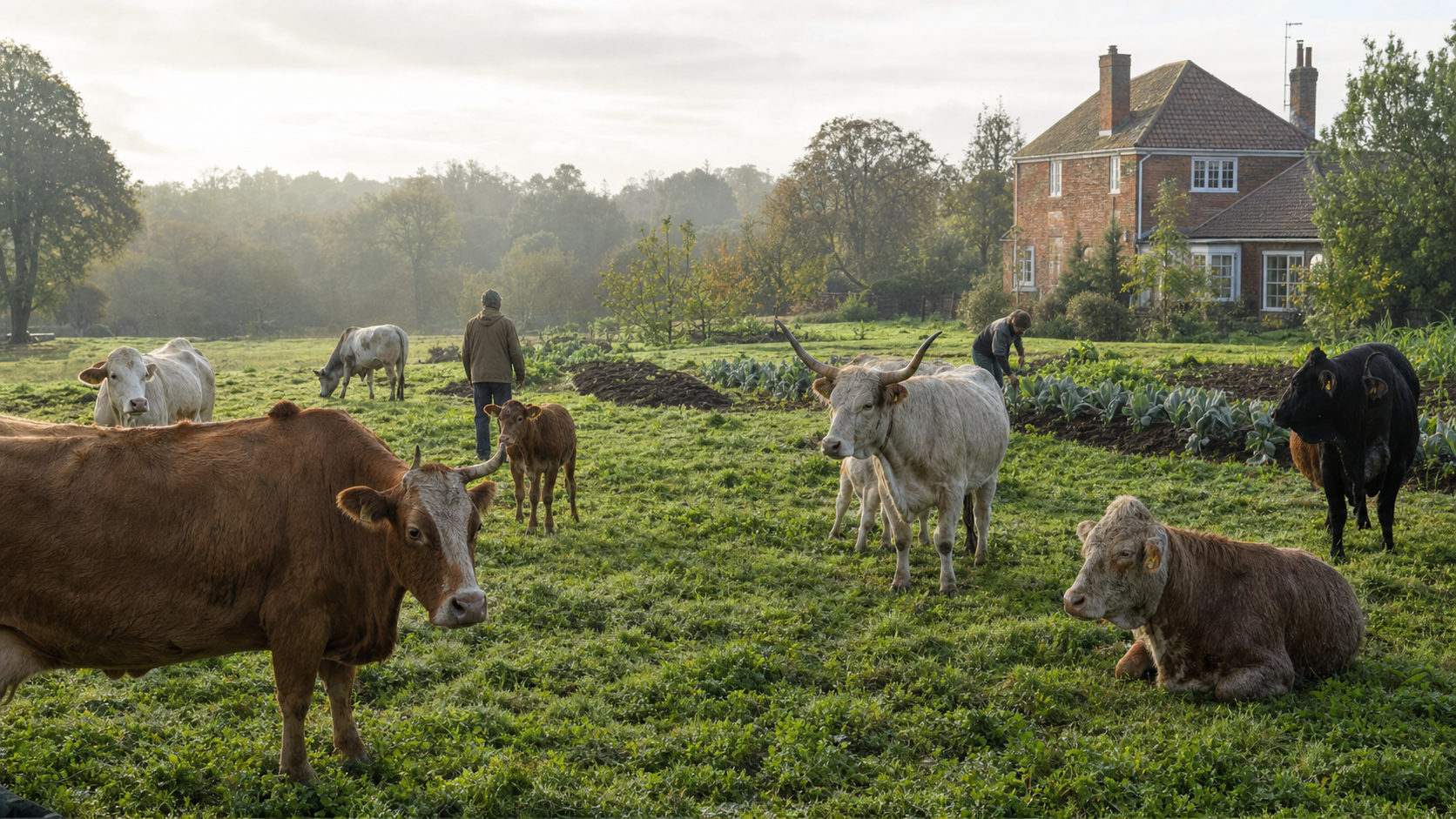
If you are trying to decide whether ahimsa dairy deserves your support, do not begin with the milk carton. Begin with the animal who produces no milk, the male calf who will never produce any, and the ox whose working years will eventually end. Their treatment tells you whether cow protection is a principle or a marketing claim.
New Gokul Farm, part of ISKCON’s Bhaktivedanta Manor near Watford in Hertfordshire, offers a practical answer. Its model joins lifetime protection, hand-milking, carefully managed oxen power and horticulture that returns animal manure to the soil. That combination matters because ahimsa farming is not one gentle-looking activity. It is a whole system of duties.
The decisive test comes after an animal stops being profitable
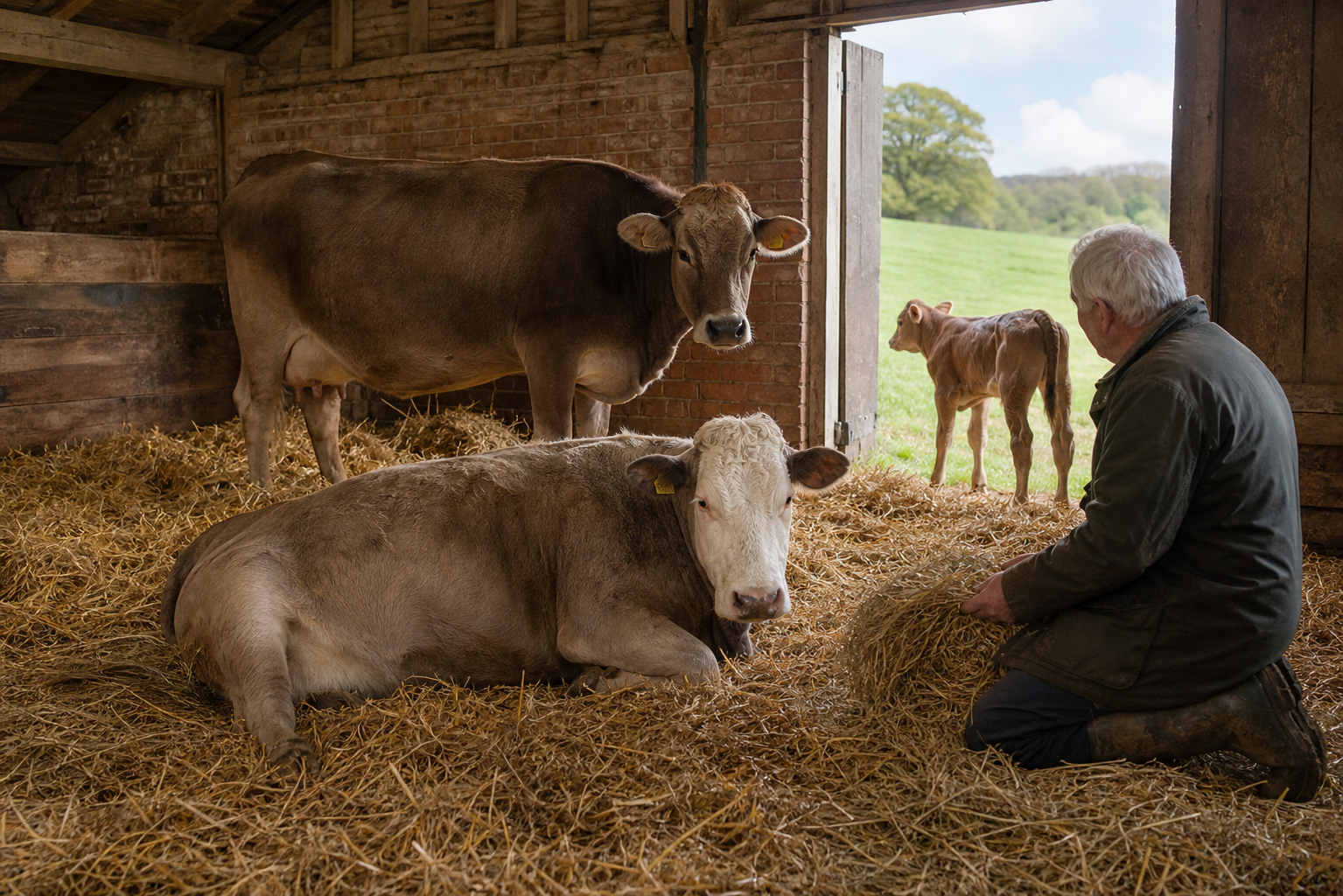
It is easy to call dairy compassionate while a cow is healthy and lactating. The difficult test begins when she needs long-term care without generating corresponding income. The same test applies to bulls, working oxen and animals with recurring health needs.
New Gokul’s model rests on a zero-slaughter commitment covering cows and oxen throughout their natural lives. This changes the economics of husbandry. Feed, shelter, bedding, hoof care, veterinary attention and human labour remain necessary after an animal’s commercially productive period has ended. Lifetime protection therefore has to be funded as an ordinary operating obligation, not treated as an occasional act of charity.
Ahimsa should not be misunderstood as a claim that agriculture causes no harm whatsoever. Cultivation disturbs soil, plants, insects and habitats. The practical discipline is to identify avoidable harm, refuse to make killing the solution to inconvenient animals, and accept responsibility for the lives brought into the farming system.
If you are evaluating an ahimsa dairy, ask questions that reach beyond the productive cow:
- Does the no-slaughter policy explicitly cover cows, bulls and oxen?
- What happens to male calves and animals that cannot work?
- How is retirement care financed when milk income falls?
- Are hoof care, mineral supplementation and veterinary oversight routine or merely reactive?
- Are body condition, gait and behavioural changes recorded over time?
- How are calves, mothers and social groups managed during changes in housing or routine?
These questions are more revealing than breed prestige or packaging. A2 beta-casein, for example, describes a milk-protein variant. It does not tell you whether a cow receives lifetime protection, whether an ox works under a suitable load, or whether an unwanted animal is kept safe. Milk characteristics and animal ethics are different questions.
Hand-milking matters when it becomes attentive care
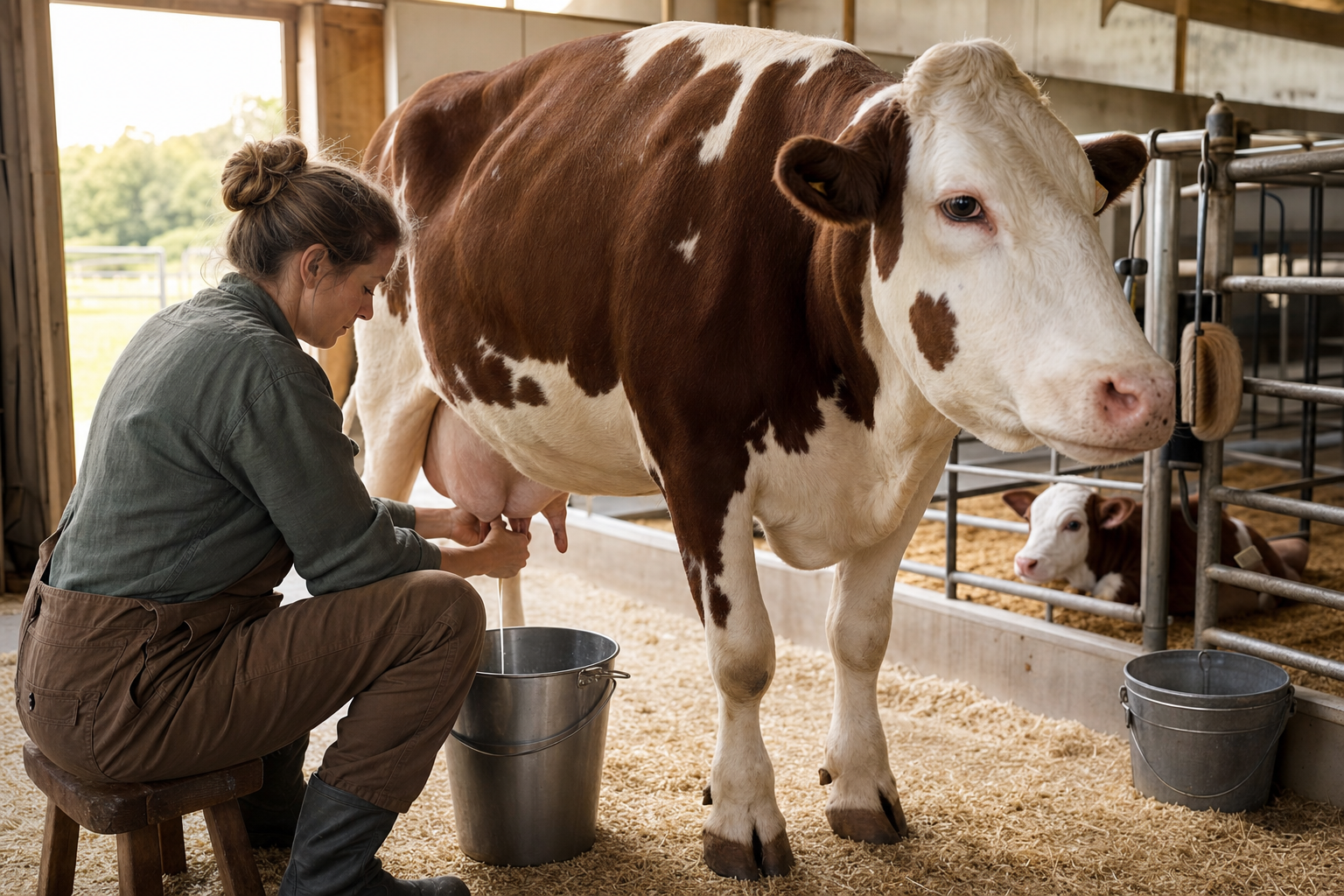
Hand-milking can look traditional without necessarily being humane. Its value depends on what the milker notices and how the cow experiences the routine. At New Gokul, the process is calm and predictable: the udder is cleaned, the first streams are checked for abnormalities, milking proceeds with a steady cadence, and the teats receive appropriate care afterwards.
That close contact creates a daily observation point. A carer can notice a change in udder texture, milk flow, posture or temperament before it becomes obvious at a distance. Early recognition can support a prompt response and may help reduce mastitis risk, but hand-milking is not a substitute for veterinary oversight. Its strength is attention, not nostalgia.
Mechanised milking can move more milk in less time. That does not automatically make it neglectful, just as hand-milking does not automatically make a farm compassionate. The meaningful comparison is whether either system preserves hygiene, detects abnormalities, avoids fear and pain, and gives carers enough time to respond to the individual animal.
When you visit or question a farm, look for an unhurried sequence rather than a staged photograph. Does the cow remain settled as the handler approaches? Is the udder cleaned before milking? Are the first streams inspected? Is post-milking teat care part of the normal routine? Does an abnormal result trigger a recorded response? A credible system can explain each step without retreating into vague claims about tradition.
The surrounding routine matters too. Pasture-based nutrition, appropriate mineral balances, structured rest, hoof care and regular health checks determine whether a calm milking session belongs to a genuinely welfare-centred day. You cannot judge husbandry from the milking stool alone.
Oxen power must protect the worker as well as the soil
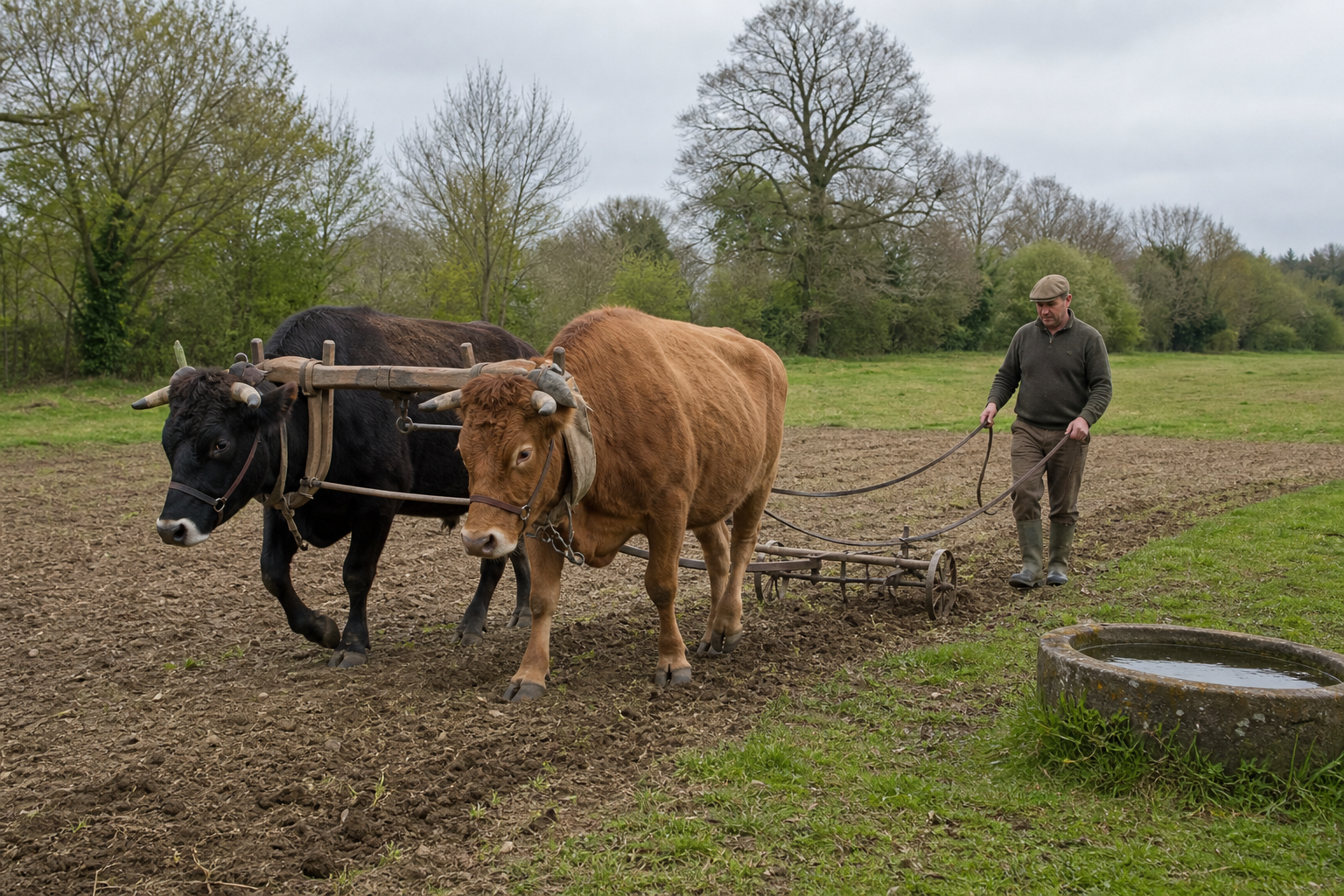
Using oxen in the fields gives male cattle a valued place within the farm, but usefulness is not the same as protection. Animal traction deserves the name go-seva only when the work is fitted to the animal rather than the animal being forced to fit the workload.
At New Gokul, training centres on correct yoke fit, clear voice cues and gradual increases in load. Those details protect musculoskeletal health and reduce confusion. They also give you a concrete way to assess a working team: watch the fit of the yoke, the evenness of the gait, the response to commands and the pace at which difficulty is increased. Tradition cannot excuse rubbing, lameness, fear or excessive loading.
There is an agronomic reason for the measured pace. Oxen can pull ploughs, ridgers and harrows at speeds suited to accurate bed formation, seed placement and inter-row cultivation. On suitable ground, animal traction can also reduce compaction compared with heavy machinery and help preserve soil structure. These are conditional benefits, not guarantees. Soil moisture, implement choice, load and the number of passes still matter.
The useful question is therefore not whether an ox is always better than a tractor. Ask whether the power source is appropriate to the field, crop and scale, and whether its full costs are being counted. A tractor consumes fuel and can compact wet ground. An ox needs skilled training, daily care, rest, food and protection in old age. Ahimsa farming accepts that final obligation rather than discarding the animal when another power source becomes cheaper.
This is reciprocity made visible. The animal contributes appropriate work to the farm; the community assumes responsibility for the animal’s complete life. Remove either half and the ethical relationship becomes extraction.
The Holland Farm project closes the fertility loop
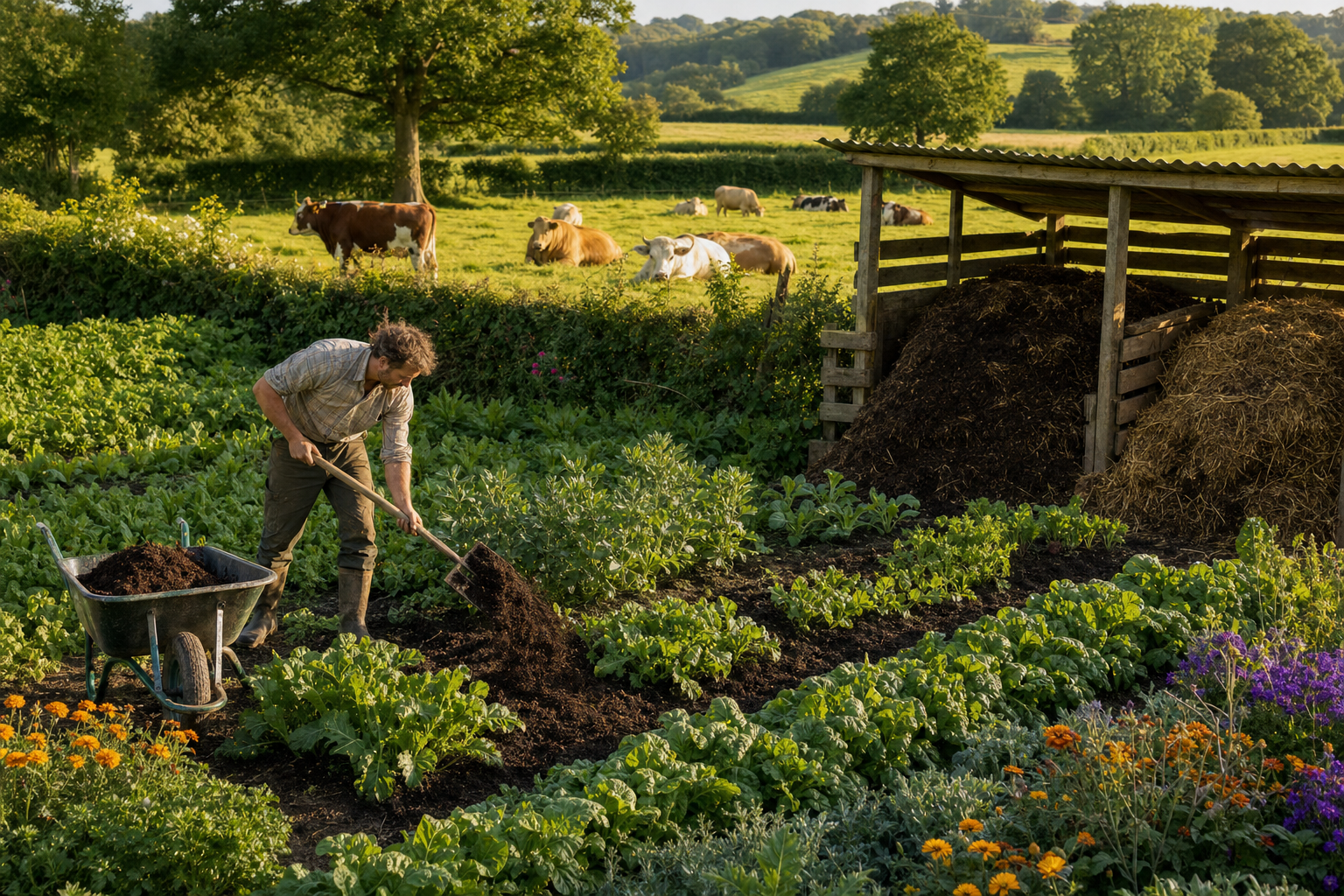
Cow protection becomes environmentally credible when the gaushala and the cultivated land function together. At New Gokul’s Holland Farm horticultural project, farmyard manure and composted bedding return fertility to vegetable and herb beds. Green manures add another source of soil renewal. What leaves the field as fodder can return, after animal care and composting, as organic matter and plant nutrients.
This loop does more than dispose of manure. It reduces dependence on fertility brought in from elsewhere and makes the number of animals answerable to the land’s capacity. A farm that keeps cattle but has no responsible destination for manure has not solved the ecological question; it has relocated it.
The horticultural side uses rotations across brassicas, legumes, roots and salads rather than repeatedly asking the same crop family to occupy the same ground. Integrated pest management puts monitoring, crop diversity and targeted intervention ahead of routine chemical dependence. Living mulches help retain moisture, while polytunnels extend the growing season.
Water management follows the same logic. Mulch slows moisture loss from exposed soil. Drip irrigation, where suitable, directs water near the crop instead of wetting an entire area indiscriminately. Building soil organic matter increases the ground’s ability to hold water during dry periods and can moderate runoff when spring rain is heavy.
You can test a farm’s claim to circularity with one question: where does fertility come from, and where does every substantial waste stream go? A serious answer should trace fodder, bedding, manure, compost, crop rotations and water through the system. If the answer begins and ends with buying external inputs and removing waste, the circle is largely rhetorical.
The dharmic standard is disciplined reciprocity
For Hindus, this model gives practical form to go-seva: reverence for Gau Mata expressed through feeding, cleaning, health care, suitable work and lifelong shelter. The emphasis on avoiding slaughter also speaks clearly to the Jain aspiration to minimise injury. Attentive husbandry can be understood through the Buddhist cultivation of karuna, while the dignity of agricultural labour and responsible food provision resonate with Sikh traditions of seva and equitable foodways.
These traditions should not be flattened into identical doctrines. Their philosophies, disciplines and accounts of human responsibility remain distinct. The useful common ground is narrower and stronger: living beings are not disposable inputs, work carries duties in both directions, and land should be inherited in a condition that permits future life.
Key takeaways
- Judge ahimsa dairy by the fate of unproductive and retired animals, not only by the treatment of a lactating cow.
- Treat a zero-slaughter commitment as a lifelong financial and operational duty covering cows, bulls and oxen.
- Value hand-milking for calm observation, hygiene and individual attention, not simply because it looks traditional.
- Assess oxen power through yoke fit, gradual training, gait, workload and lifetime care as well as its effect on the soil.
- Look for a visible fertility loop linking fodder, bedding, manure, compost and horticulture.
- Do not use A2 milk, breed identity or pastoral imagery as substitutes for evidence about animal welfare.
If you want to support cow protection, ask for concrete answers on lifetime care, daily welfare and land stewardship before you donate, buy or advocate. Where a farm provides an appropriate way to help, give weight to the least marketable obligations: care for retired animals, winter feed, bedding, hoof care and veterinary needs. Those costs are where a zero-slaughter promise becomes real.
New Gokul is most useful as a living standard, not a pastoral spectacle. Let its routines sharpen the questions you take to every gaushala or ahimsa dairy. Reverence begins in worship, but its agricultural proof is the patient care given when no sale, yield or camera is waiting.
References
- Dandavats — Channel 5 Captures Ahimsa Farming at New Gokul: Hand-Milking, Oxen Power, Spring Renewal