
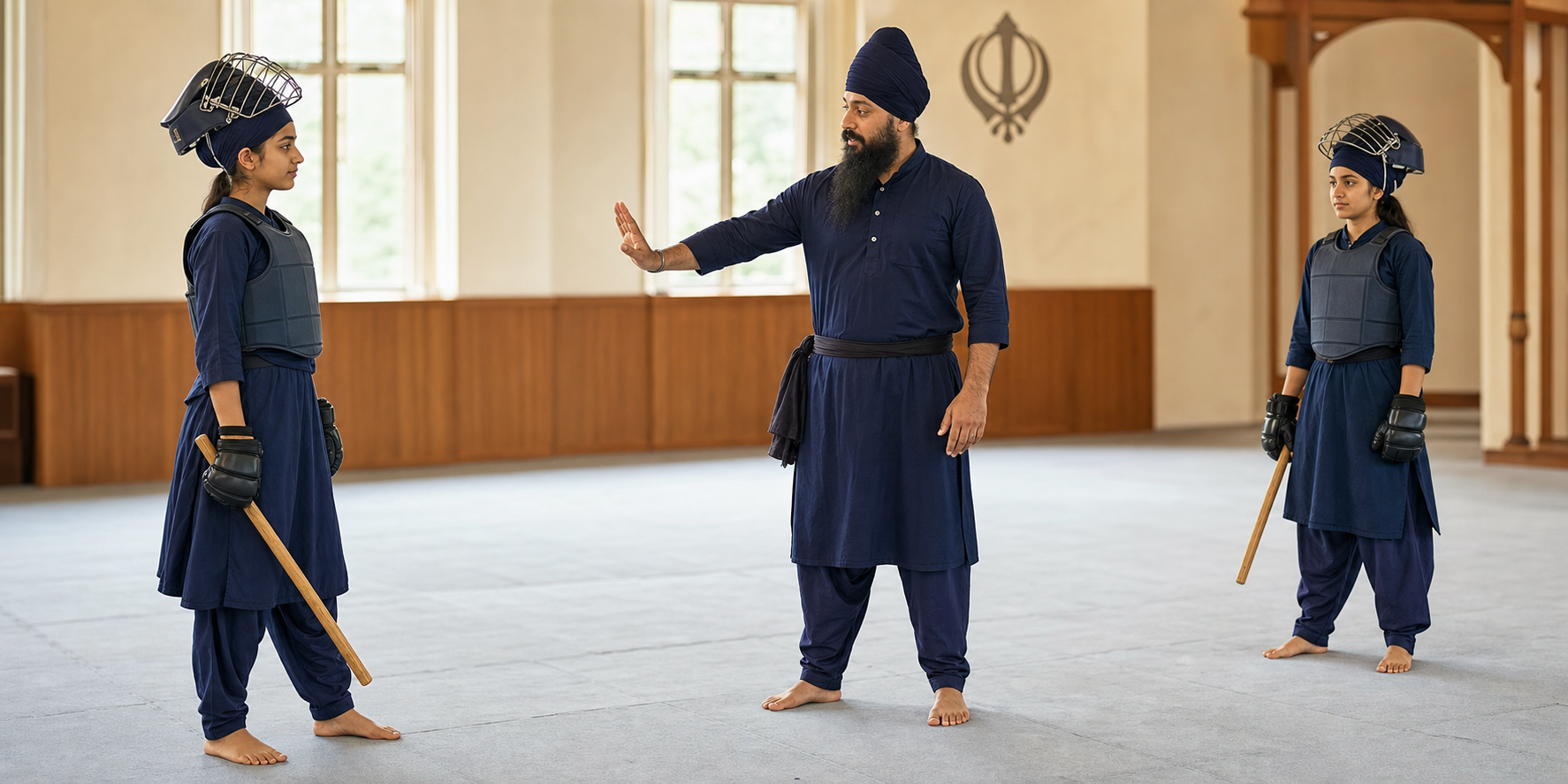
If your daughter has asked to learn Gatka, do not decide by how dramatic a demonstration looks. Decide by what the class teaches her to do when speed, contact, and nerves arrive together: keep her distance, protect herself, act decisively, and stop when the exchange is over.
That makes choosing a Gatka program both a cultural and a practical decision. You need to know what belongs to the Sikh martial tradition, what modern competition actually tests, and which safety standards should be visible before a girl enters her first bout. If you are the prospective athlete, you can use the same questions yourself.
The tradition joins courage to moral restraint
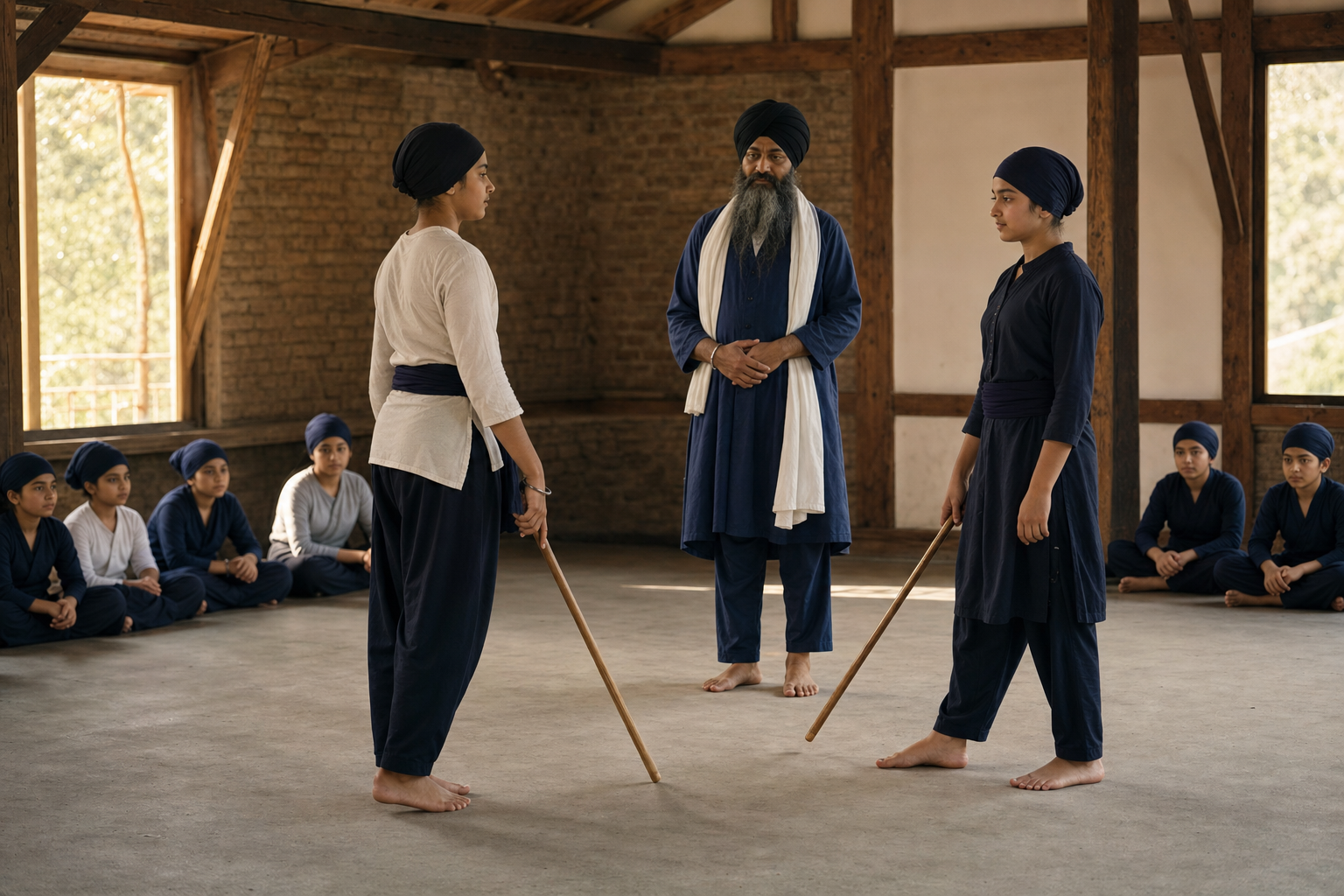
Gatka should not teach a girl that strength excuses aggression. Its roots in shastar-vidya place martial ability within a larger discipline of ethical strength, situational awareness, and coordination of mind, body, and breath. The skill matters because it can protect. Restraint matters because protection is not the same as domination.
This is where kshatra and ahimsa meet. Kshatra is the courage and capacity to confront danger; ahimsa supplies the ethical limit that keeps capacity from becoming cruelty. A serious instructor therefore teaches controlled action, responsibility toward training partners, and obedience to the halt command alongside strikes, parries, and footwork.
Mai Bhago gives Sikh girls a historical figure through whom valor and moral clarity can be understood together. Her significance is not that every girl must become a warrior in the same form. It is that girls do not have to stand outside the Sikh memory of courage. Martial discipline can belong to them without requiring them to imitate anger, abandon compassion, or treat physical power as character.
Ask a prospective instructor what martial strength is for. You are listening for an answer that connects skill with protection, composure, service, and responsibility. If the answer celebrates humiliation, uncontrolled force, or winning at any cost, the problem is not merely coaching style. It contradicts the ethical purpose that makes the training worth preserving.
Know which form of Gatka she is being taught
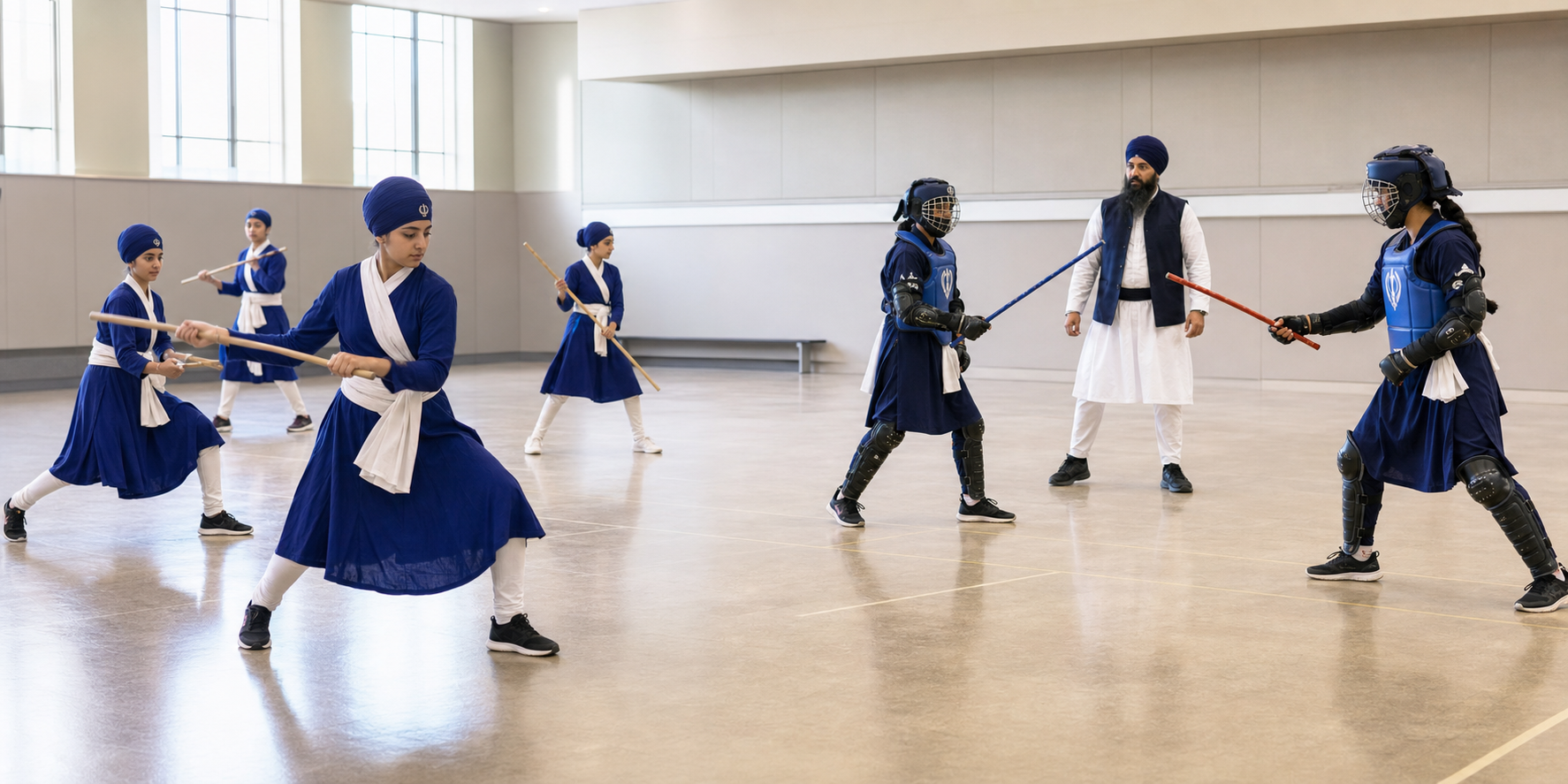
Contemporary sporting Gatka is a rules-bound expression of a wider martial inheritance. That distinction prevents two common mistakes: dismissing the sport because its equipment is adapted for safety, or assuming that a tournament medal proves mastery of the whole field of shastar-vidya.
- In Soti-Farri duels, an athlete uses a regulated cane stick and a small shield. She earns points through clean, controlled contact to approved target areas while preserving balance and correct distance.
- In technical demonstrations, athletes may perform forms, synchronized team drills, and controlled transitions using approved implements such as a blunt training Kirpan, Barcha, or Chakkar.
- Judges assessing demonstrations look beyond speed. Rhythm, posture, synchronization, difficulty, transition quality, execution, and awareness of nearby hazards all matter.
In a duel, watch the feet before watching the weapon. Skilled athletes manage the line into striking range, use the Farri at an angle to deflect rather than merely absorb, make a concise counterattack, and recover their guard before exiting. Matches can turn on the brief entry beat when an opponent crosses into striking distance. Long, uncontrolled exchanges may look energetic, but they usually expose weak distance judgment and slow guard recovery.
A beginner should therefore learn economy before spectacle. Look for light, responsive footwork; a stable guard; coordinated hip and shoulder rotation; controlled target selection; and an immediate return to a safe position after every action. Fast spinning movements mean little if she finishes off balance or cannot respond to a counter.
Ask the coach to explain which classes prepare students for duels, which teach demonstrations, and which preserve broader cultural knowledge. A clear answer lets your family choose deliberately. It also stops competitive success in one format from being mistaken for competence in every format.
Use a visible safety checklist before enrolling
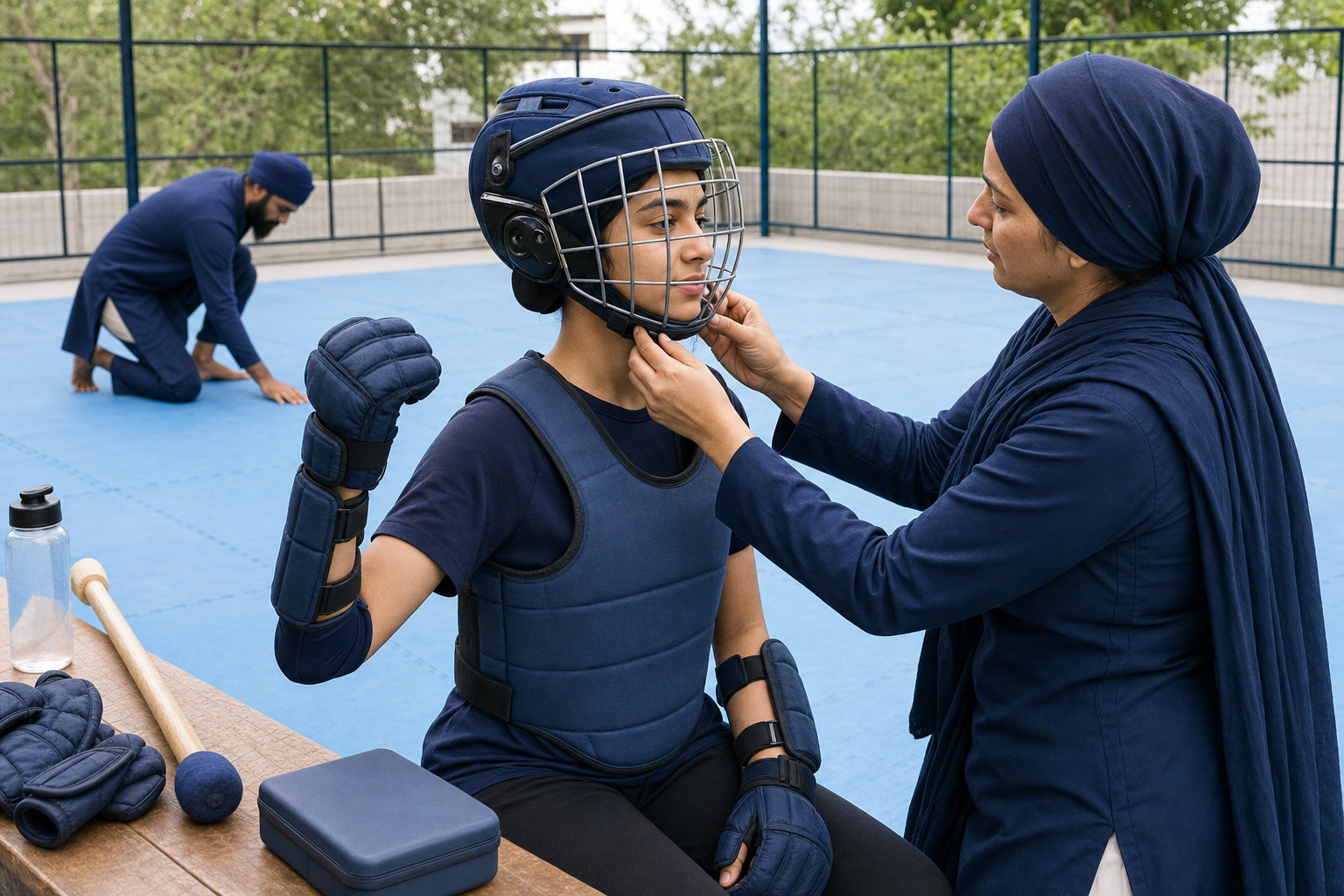
A verbal promise that training is safe is not enough. You should be able to see how the promise becomes equipment, grouping, supervision, and enforceable rules. Observe a full class or event before committing, then check the following points.
- Students are grouped by age and experience. Sub-junior, junior, and senior divisions, with a novice pool where available, help prevent a first-time athlete from being treated like an experienced competitor.
- Protective equipment matches the activity. Standard competition protection can include a padded headguard with face protection, chest and rib guards, forearm and shin protection, gloves, and an appropriate groin guard.
- The Soti is inspected before use. Its length, diameter, flexibility, surface, and general integrity should comply with the applicable rules; damaged tips and rough surfaces should not enter a bout.
- Illegal actions have immediate consequences. Thrusts toward the face or throat, excessive force, and continuous uncontrolled swings should draw warnings, point deductions, or disqualification rather than casual advice after the session.
- Competition roles are separated. A center referee, side judges, and a scoring table provide more accountability than one person simultaneously coaching, judging, and managing the bout. Procedures should also exist for equipment checks, time-outs, and injury assessment.
- Safeguarding extends beyond the mat. A responsible organization should have a code of conduct, appropriately verified coaching staff, an athlete feedback or complaint channel, medical support at events, and a clear response to harassment or unsportsmanlike behavior.
Also ask who can stop a drill. The right answer is not only the senior coach. Referees must halt unsafe exchanges, and an athlete must be able to report pain, equipment failure, intimidation, or inappropriate conduct without being punished for speaking. If a girl is injured, she needs an appropriate assessment and recovery decision, not pressure to prove courage by continuing.
Mixed ages are not automatically unsafe, and protective gear does not eliminate all risk. The decisive question is whether the coach adjusts contact, equipment, partners, and tactical demands to the athlete’s developmental stage. Be cautious if novices enter uncontrolled sparring before learning the guard, stop command, legal target areas, and safe entry and exit.
Build skill in phases instead of chasing early medals
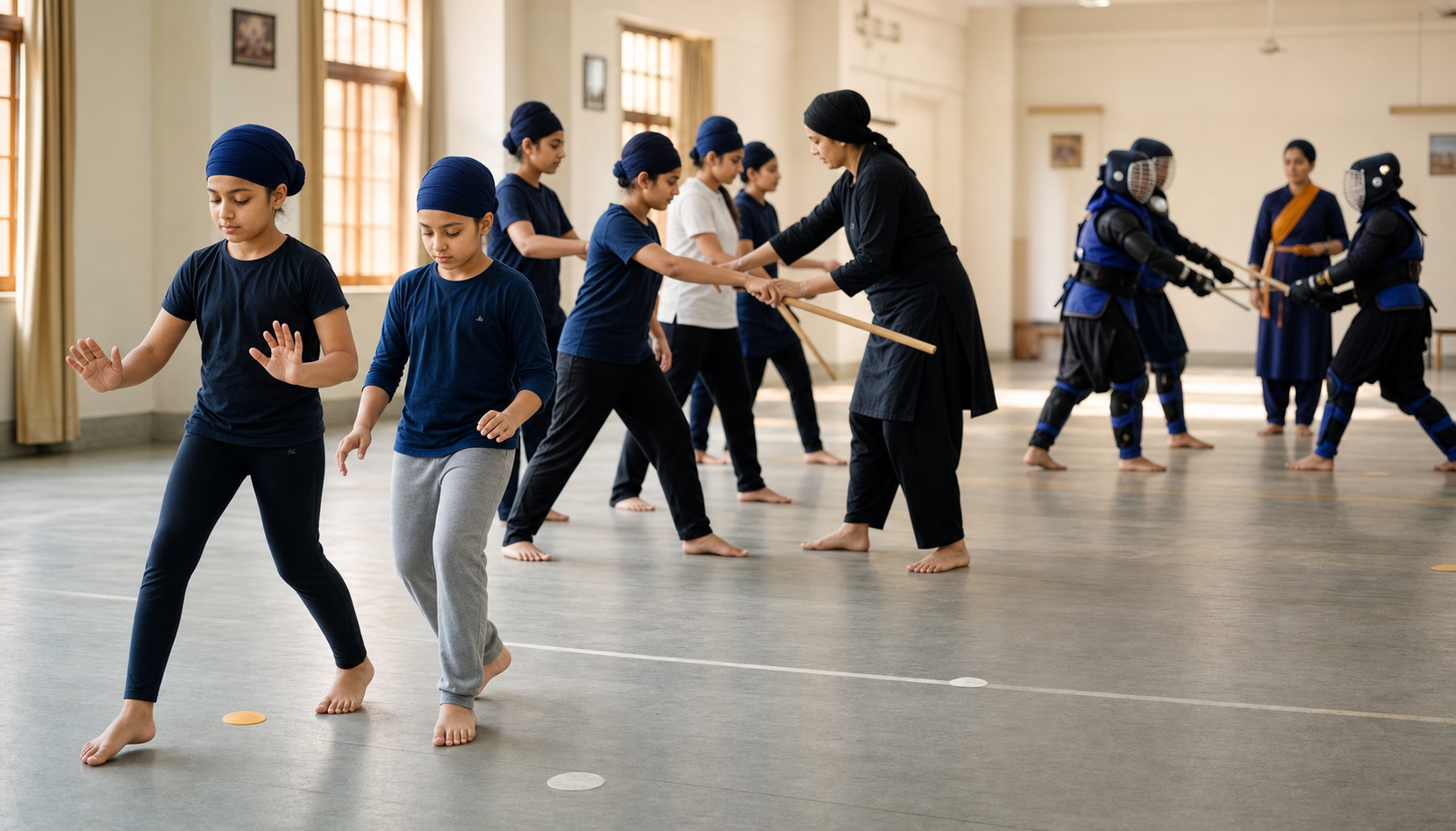
Foundation training
The early phase should establish joint mobility, base conditioning, balance, footwork, guard recovery, and clean technique under low fatigue. Stability work for the neck, shoulders, wrists, and ankles supports the areas repeatedly loaded by quick direction changes, shield use, gripping, and striking. The coach should be able to explain why each drill belongs at this stage.
You can measure foundation progress without waiting for a result sheet. Ask whether the girl can identify legal and illegal targets, enter and leave range without crossing her feet, recover her guard after a strike, angle the shield instead of bracing blindly, and stop immediately on command. Those abilities show that control is becoming repeatable.
Pre-competition training
As competition approaches, training can shift toward speed-skill integration, tactical scenarios, reaction work, and short, high-quality sparring rounds. One drill might focus on recognizing an opponent’s reach extension; another might require a clean counter followed by an immediate exit. The purpose is to make good decisions faster, not simply to accumulate more exhausting rounds.
Attentional control deserves deliberate practice. During an exchange, an athlete may narrow her focus toward the opponent’s shoulders, hips, and stick line, then widen it to check spacing and boundaries. A short breath-and-reset cue between exchanges can prevent one missed action from becoming a chain of rushed decisions.
Competition and recovery
During the competition phase, the emphasis should move toward recovery, reactive drills, and minimal unnecessary load between bouts. Last-minute fatigue does not compensate for missing fundamentals. Equipment also needs another inspection: wear on a stick tip or shield edge affects both safety and how the athlete grips, parries, and selects targets.
For adolescent athletes, sleep regularity, hydration, and adequate iron status influence reaction and decision quality. Persistent fatigue or concern about iron deficiency belongs with a qualified health professional; it is not a reason to begin supplements by guesswork. Menstrual-cycle-aware adjustments should remain individualized around the athlete’s comfort and appropriate medical advice, not imposed as a rigid calendar for every girl.
A useful warm-up combines dynamic mobility, light footwork patterns, and brief reaction drills that resemble Gatka’s stop-start demands. It should leave the athlete alert and ready, not tired before the first exchange.
If competition is one of her goals, ask the organization to describe the progression from novice events through age-banded state and national opportunities. Gatka’s appearance in the Khelo India Youth Games gives competitive athletes a more visible pathway, but a reputable coach should still place technical readiness and safety ahead of rushing a student into the next level.
Key takeaways for girls and their families
- A girl’s place in Sikh martial culture is not a decorative addition. Mai Bhago embodies a remembered connection between female courage, duty, and moral clarity.
- Sporting Gatka should develop timing, distance, defense, decision speed, and restraint. Noise, speed, and elaborate weapon movement do not by themselves demonstrate control.
- Choose a program whose safety system is visible: appropriate grouping, complete protective equipment, inspected training weapons, enforceable rules, accountable officials, medical procedures, and safeguarding channels.
- Judge early progress by repeatable habits before medals: balanced footwork, shield angles, legal target selection, guard recovery, breath control, and an immediate response to the halt command.
- Competition should be one stage in development, not the whole purpose. The deeper aim is a disciplined capacity to protect without cultivating aggression.
Your next step is simple: watch one complete class, including its warm-up, partner selection, contact drills, corrections, and cool-down. Ask the coach to show you the written rules and safeguarding process. If the same discipline appears in the quiet moments as in the public demonstrations, you have found a stronger place for a girl to begin.