

You may be preparing for Sabarimala and wondering which parts of the Ayyappa vratham are essential, which are symbolic, and how to fit the discipline into ordinary life. The visible rules are easy to list. The harder task is to keep them from becoming a costume worn for a pilgrimage.
The vratham works when every observance serves one purpose: bringing appetite, speech, attention, and conduct under dharma. If you understand that purpose, the mala, mantra, irumudi, forest path, and eighteen steps become parts of one coherent sadhana.
Key takeaways
- The traditional Ayyappa vratham is typically observed for 41 days, known as the mandala period.
- Vegetarian discipline, celibacy, freedom from intoxicants, simple dress, daily japa, truthfulness, and restraint of anger are methods of training, not separate badges of piety.
- Swamiye Saranam Ayyappa joins refuge to effort: surrender gives your discipline a direction, while daily conduct makes surrender credible.
- The irumudi separates offerings for the deity from the pilgrim’s provisions, teaching you to distinguish sacred duty from personal need.
- The eighteen steps have several respected interpretations. Their shared practical message is mastery of compulsion before approaching the sanctum.
Turn the 41-day vow into a daily rule
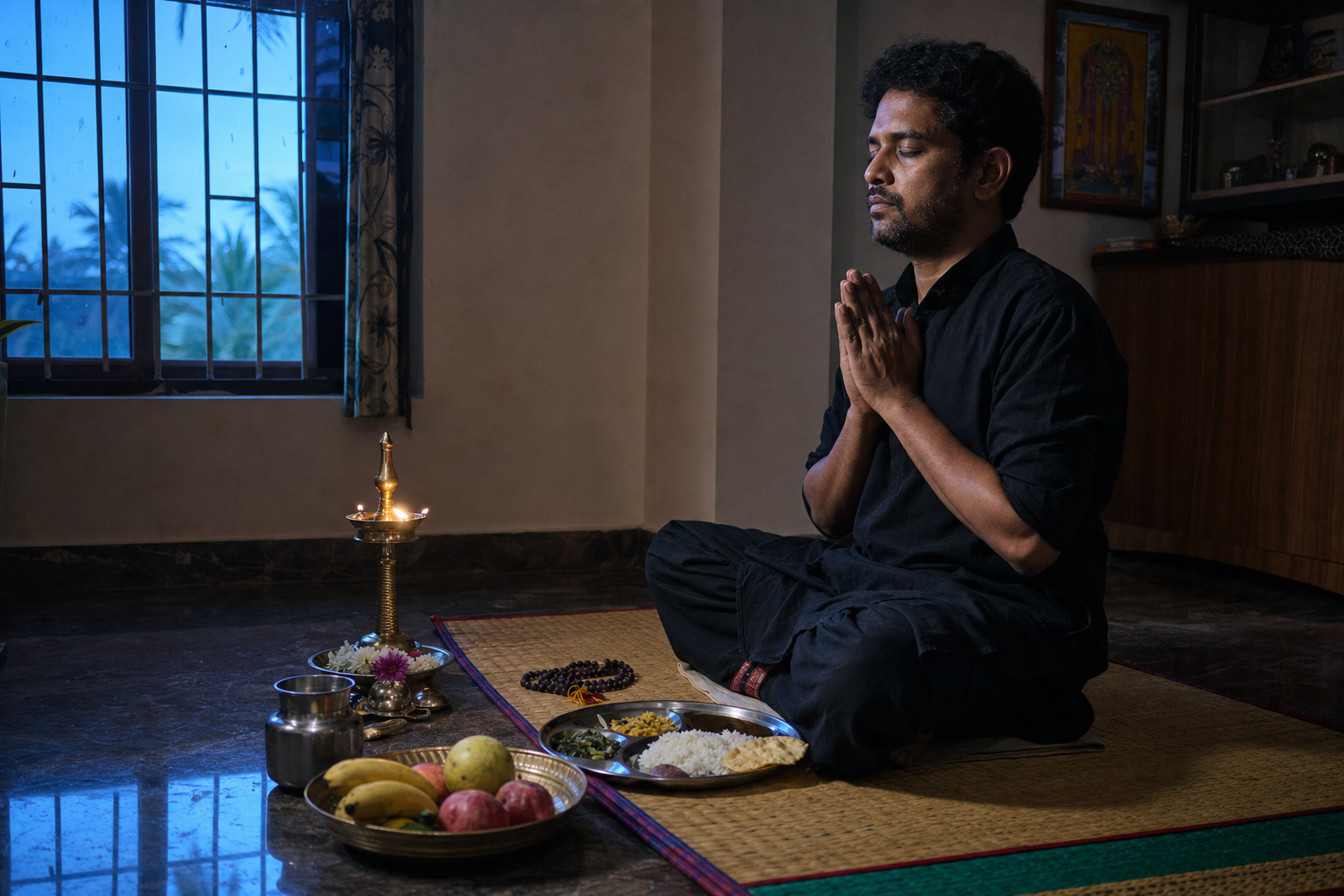
Swamiye Saranam Ayyappa expresses refuge in Lord Ayyappa, but saranam does not mean waiting passively for transformation. In this path, refuge steadies the intention and tapas gives that intention a daily form. You surrender the claim that every preference must be satisfied, then practise choosing dharma when preference resists.
The established discipline is typically maintained for 41 days. Before the first day, write down the practices you will keep. This removes daily negotiation. It also exposes any conflict with work, family duties, travel, or health early enough to seek appropriate guidance.
| Observance | Practical form | What it trains you to notice |
|---|---|---|
| Mala and dress | Wear a tulasi or rudraksha mala and simple dark clothing. | Whether identity is returning to the vow or seeking attention through appearance. |
| Food and intoxicants | Keep a vegetarian discipline and abstain from intoxicants. | Whether appetite has become an order or can be met with a deliberate choice. |
| Brahmacharya and simplicity | Observe celibacy and reduce avoidable indulgence. | Where attention and energy are being scattered for momentary satisfaction. |
| Speech and conduct | Practise truthfulness, non-harm, and restraint when anger arises. | Whether discipline survives disagreement, inconvenience, and wounded pride. |
| Morning practice | Rise early for ablutions, japa, and the devotional practice you have received. | Whether remembrance comes before distraction. |
| Barefoot practice | Many devotees go barefoot as an expression of humility and awareness. | How carefully you move through the physical world and how you respond to discomfort. |
| Mantra | Repeat Swamiye Saranam Ayyappa and use it when greeting fellow initiates. | How quickly attention can return from reaction to refuge. |
A workable daily rhythm does not need to be elaborate. It does need to be consistent:
- Begin the morning with ablutions and a fixed period of japa before messages, news, or entertainment take possession of your attention.
- Keep food simple and vegetarian. Decide meals in advance so that restraint does not depend on a fresh argument with yourself each time you are hungry.
- Carry the mantra into transitions: before eating, when beginning work, while walking, and especially when irritation starts to gather force.
- Watch speech throughout the day. Avoiding falsehood includes resisting exaggeration, malicious talk, and excuses designed to protect the ego.
- End the day with a brief examination: Where did impulse win? Did you cause harm that needs repair? What circumstance should you handle differently tomorrow?
- Include a recurring act of seva. The purpose of reduced consumption is not private spiritual pride; some of the time, attention, or resources released by restraint should benefit another person.
Do not confuse anger restraint with pretending that anger never appeared. The useful moment is the interval between feeling and action. Notice the heat, return to the mantra, and refuse the speech or behaviour that would deepen harm. If you do fail, make the repair promptly. Do not invent your own ruling about whether a lapse requires restarting the formal vow; ask an experienced spiritual guide within the tradition you are following.
Tapas is disciplined redirection, not a competition in suffering. If a medical condition makes a dietary change, barefoot walking, an altered sleep schedule, or breath practice unsafe, obtain guidance from a qualified clinician and an experienced spiritual guide. A preventable injury does not make a vow more sincere, and spiritual practice is not a substitute for medical care. If pranayama forms part of your routine, use a method you have already been taught rather than adding an intense technique merely because the vratham has begun.
Practise equality instead of performing austerity
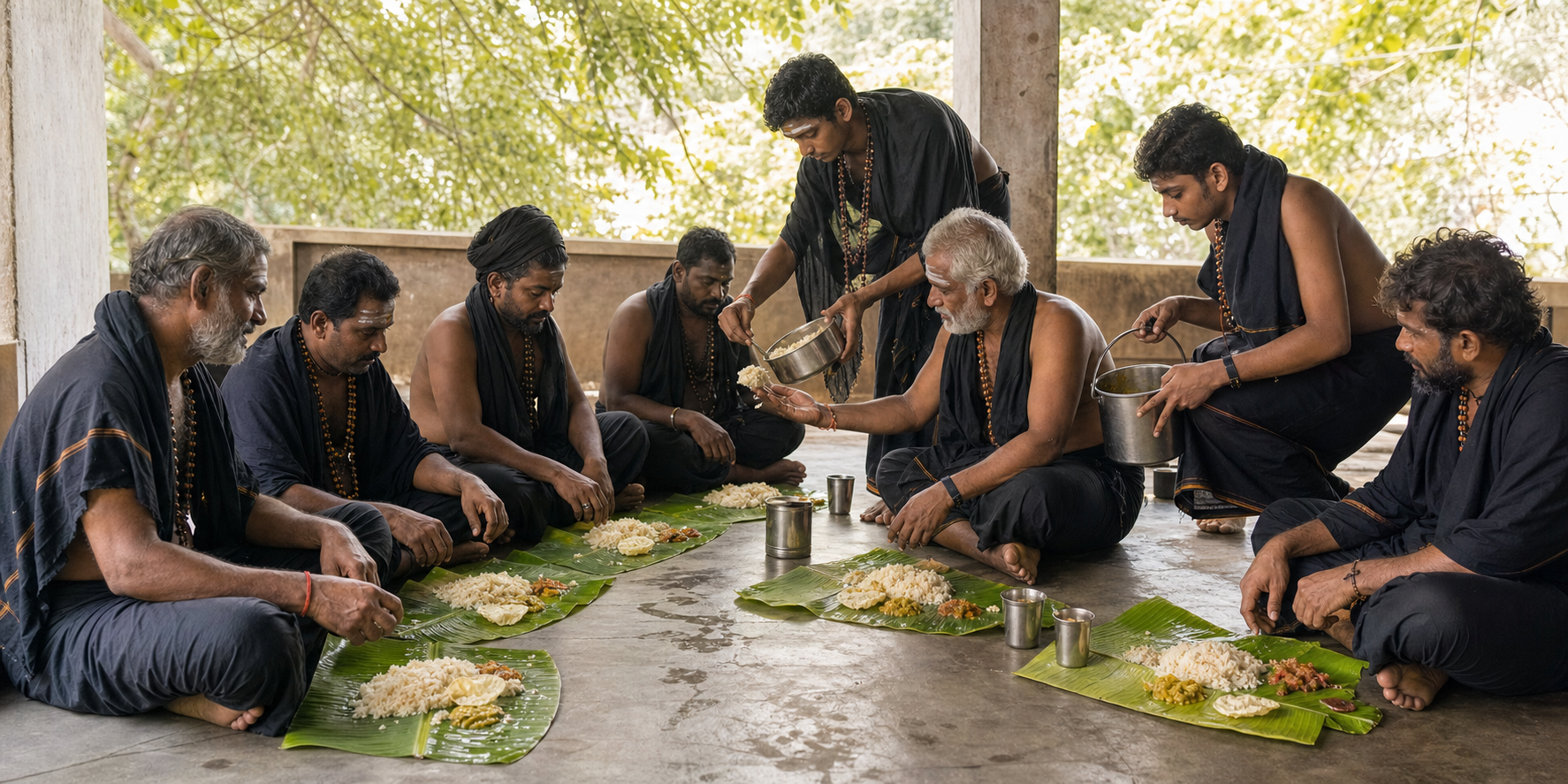
One of the most demanding Sabarimala disciplines is hidden in an ordinary form of address: initiates call one another Swami. The point is not to grant every pilgrim a title of superiority. It is to loosen the social identity built from occupation, wealth, caste, education, and influence. You are asked to recognise the sacred aspiration in another person before calculating worldly rank.
You can test whether that equality is real in mundane situations. Wait without using status to secure an advantage. Share space without demanding comforts unavailable to others. Receive assistance without entitlement. Offer help without first deciding whether its recipient is important. Join collective singing, shared lodging, mutual aid, and annadanam in a way that reduces another pilgrim’s burden rather than advertising your own sacrifice.
This levelling spirit fits Ayyappa’s identity as Dharma Sastha. Ayyappa is traditionally understood as the child of Shiva and Mohini, the avatar of Vishnu. The form therefore carries a powerful symbol of Saiva and Vaishnava unity. The devotee does not have to erase difference to transcend sectarian rivalry. Unity is shown through shared dharma and disciplined conduct.
The same discipline is legible across the wider Dharmic family without pretending that all traditions teach identical theology. The vratham’s vegetarian conduct and care in speech resonate with ahimsa; truthfulness with satya; celibacy with brahmacharya; reduced indulgence with aparigraha; and ablutions with sauca. Its movement from ethics to attention resembles the Buddhist sequence of sila, samadhi, and panna. Its restraints echo the Jain vows of ahimsa, satya, asteya, brahmacharya, and aparigraha. Its remembrance and service find a practical parallel in Sikh Simran and Seva.
These parallels are most useful as a diagnostic. Across the Dharmic traditions, spiritual claims are tested through conduct. If japa has increased while cruelty, vanity, or dishonesty remain untouched, the number of repetitions is not the central problem. Bring the mantra into the precise situation where your habits are strongest.
Carry the inner discipline all the way to Sabarimala

The irumudi kettu is not merely pilgrimage luggage. It is a twin-compartment bundle whose structure teaches discrimination. The front compartment, the munmudi, contains articles intended for the deity. The rear compartment, the pinmudi, holds the pilgrim’s provisions. Sacred obligation and personal need travel together, but they are not confused.
Among the contents is the coconut filled with ghee, commonly called the neithenga, which is carried for the nei abhishekam. Rice and other offerings also form part of the bundle. Prepare the irumudi under experienced guidance rather than treating a list of contents as sufficient instruction. The ritual acts, local discipline, and manner of packing belong to a living community of practice.
The ghee offering gives you a precise contemplation to carry from home. Ghee is clarified through heat, and the vratham asks for an analogous clarification through tapas. What is offered at the sanctum can represent the self no longer mixed indiscriminately with every appetite and reaction. This is a contemplative interpretation, not a reason to neglect the actual ritual requirements.
The journey from Pampa toward the Sannidhanam takes the practice out of the protected space of a home routine. Fatigue, crowds, shared facilities, changing terrain, and dependence on others reveal whether simplicity and patience have become stable. For those who walk barefoot, every step can become an exercise in awareness. Move with humility toward the land as well as the deity: do not leave waste, do not treat the forest as a disposable corridor, and do not let haste endanger yourself or another pilgrim.
The Pathinettam Padi, the famed eighteen steps, should not be reduced to a trivia question with one mandatory answer. Several traditional interpretations coexist:
- The five organs of knowledge, five organs of action, and eight passions that must be mastered.
- The eighteen Puranas.
- Cosmic interpretations involving the navagrahas and dikpalas.
You may receive one of these readings through your lineage or community. Hold it with seriousness without dismissing the others. Each turns ascent into more than physical movement: approaching the sanctum means rising beyond compulsive perception, action, and passion into clearer awareness.
The major season centres on Mandala Kalam and Makara Sankranti. It also helps to keep two closely associated terms distinct. Makaravilakku refers to a long-established temple ceremony, while Makarajyoti is observed by devotees as an auspicious point of light. Both may carry profound devotional meaning, but neither should displace the work of the preceding days. A dramatic culmination cannot perform the vratham on your behalf.
At the sanctum, the nei abhishekam completes the movement of the ghee carried from home into offering. Receiving prasada, including aravana payasam, begins another movement: what returns to you as blessing carries responsibility. The pilgrimage has not succeeded merely because you reached the destination. Its result becomes visible in how you re-enter family, work, and society.
Judge the vratham by what remains after the pilgrimage
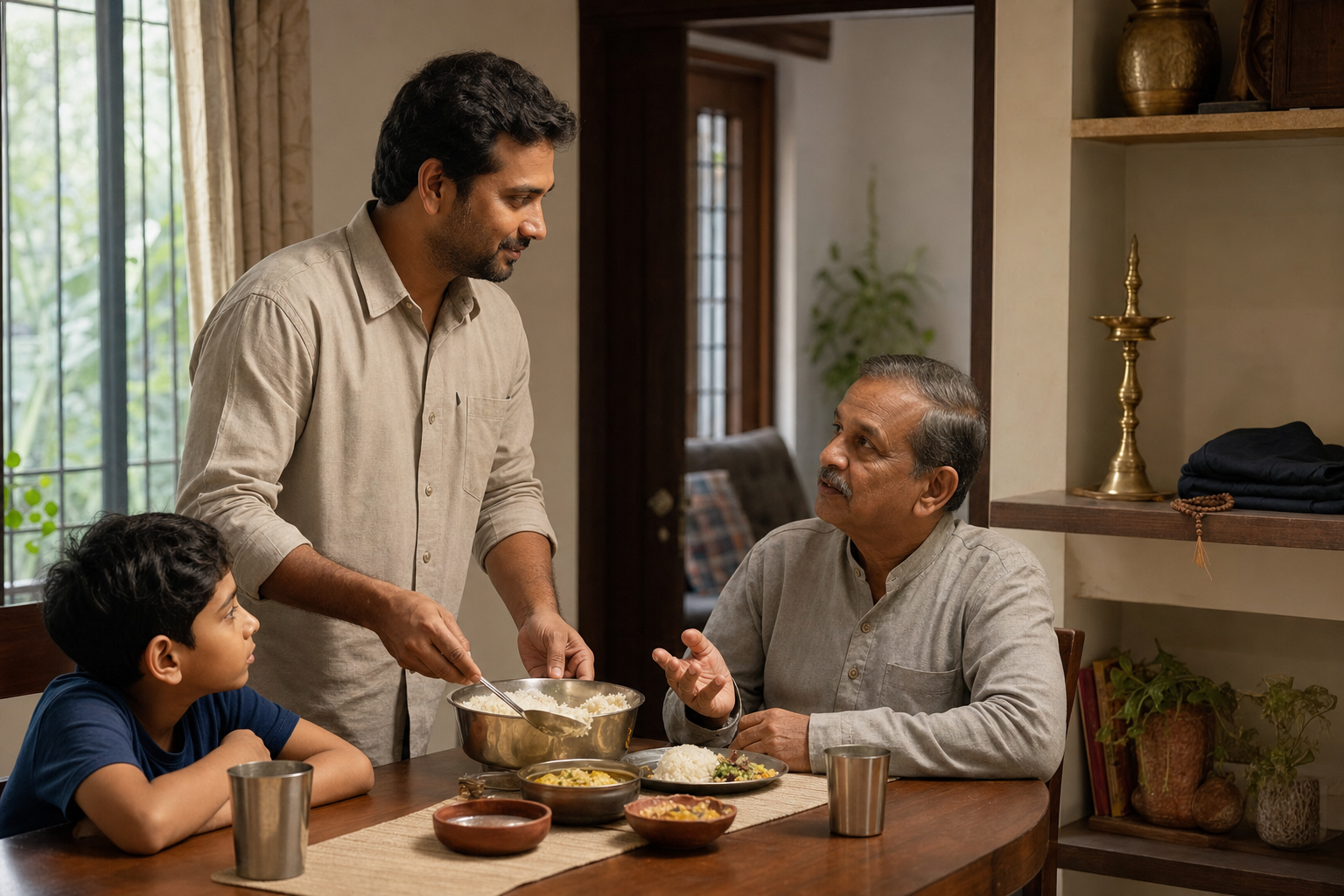
The cleanest way to evaluate the practice is to look for changes that cannot be displayed in a photograph. Ask yourself five questions during the mandala period and again after returning:
- Does the mantra now arise before an angry reaction, or only during formal worship?
- Have truthfulness and restraint survived inconvenience, criticism, and disagreement?
- Can you recognise desire without obeying it immediately?
- Has simpler living released anything tangible for seva or generosity?
- Do you treat fellow pilgrims as Swami while continuing to rank people by status everywhere else?
Plan for the period after the yatra before you leave. Keep at least one fixed daily practice rather than allowing the entire structure to disappear overnight. A consistent period of japa, a deliberately simpler pattern of consumption, or a recurring service commitment can preserve the direction of the vow. The point is not to remain permanently in pilgrimage conditions. It is to prevent insight from being absorbed unchanged into the habits you meant to examine.
If you cannot travel to Sabarimala, the discipline can still be adapted honestly. A seven-, fourteen-, or twenty-one-day home vrata can include vegetarian food, truthful speech, daily japa, simple dress, reduced screen exposure, a fixed sleep-and-waking rhythm, and a specific act of service. Do not present an adapted observance as identical to completing the traditional pilgrimage. Let it do the work available where you are: reducing distraction, training restraint, and deepening remembrance.
Before your first day, put five things on one page: the dates of your vow, your morning practice, your abstentions, your service commitment, and the experienced person from whom you will receive guidance for pilgrimage rites. Then begin when you are prepared to keep that rule quietly and sincerely. Swamiye Saranam Ayyappa becomes transformative when it is no longer only what you chant, but how you choose.