
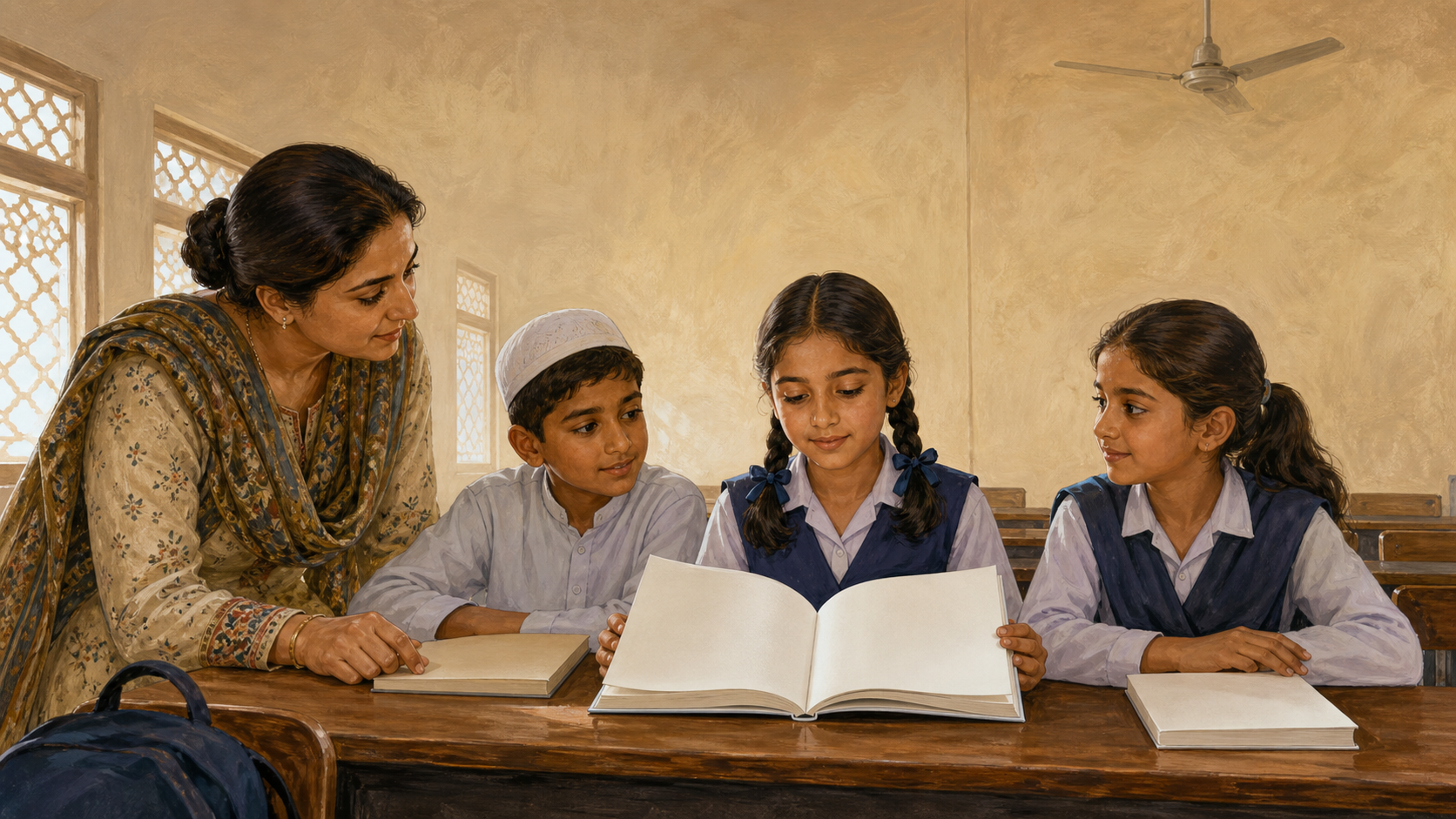
Your child’s right can disappear in the gap between a government announcement and a Monday morning timetable. If you are a Hindu parent, educator, or community organiser in Sindh, the important question is not simply whether the province prints a Hindu religion textbook. It is whether a child can choose the subject freely, receive the book on time, learn from a prepared teacher, and sit a fair examination without losing safety, marks, or belonging.
Sindh is reportedly preparing dedicated Hindu religious textbooks for Hindu students in public schools. That could correct a serious weakness in minority education. It could also become a ceremonial reform that changes the cover of a book while leaving the classroom untouched. You can tell the difference by testing the policy at every point where a right must become an ordinary school service.
A textbook is a way to deliver the right, not the right itself
Pakistan’s Constitution provides the starting point. Article 20 protects the freedom to profess, practise, and propagate religion and to manage religious institutions. Article 22(1) says that a person attending an educational institution cannot be required to receive religious instruction or participate in a religious ceremony belonging to a religion other than that person’s own.
For a Hindu student, the immediate constitutional minimum is freedom from compulsion. The school must not force the child into another religion’s instruction or ceremony. But the existence of that protection does not prove that a meaningful Hindu alternative will appear in the classroom. A right on paper still requires a curriculum, books, teachers, classroom time, and assessment.
That distinction matters because non-Muslim students have historically been offered Ethics as an alternative to Islamiat, yet shortages of suitable books and qualified teachers, inconsistent delivery, and unequal assessment have weakened the practical choice. Where one option is properly staffed and examined while the other exists only on an enrolment form, the formally free choice becomes constrained.
International standards point in the same direction. The International Covenant on Civil and Political Rights protects religious freedom and minority cultural rights. The UN Convention on the Rights of the Child connects education with respect for a child’s cultural identity, language, and values. These principles do not require a school to turn religious instruction into propaganda. They require the child’s identity to be treated with seriousness and dignity.
Key takeaways
- A Hindu textbook is meaningful only when participation is voluntary and Hindu students are not pressured into another religious subject.
- The complete service is a book, a trained teacher, protected timetable time, and an examination of equal academic standing.
- The curriculum must represent Hindu diversity instead of presenting one sect, region, or custom as the whole tradition.
- Assessment should measure understanding, ethical reasoning, and cultural literacy, not a student’s piety or family practice.
- Own-faith education should be paired with shared, non-confessional civics and ethics for every student.
Follow the delivery chain from the province to the classroom
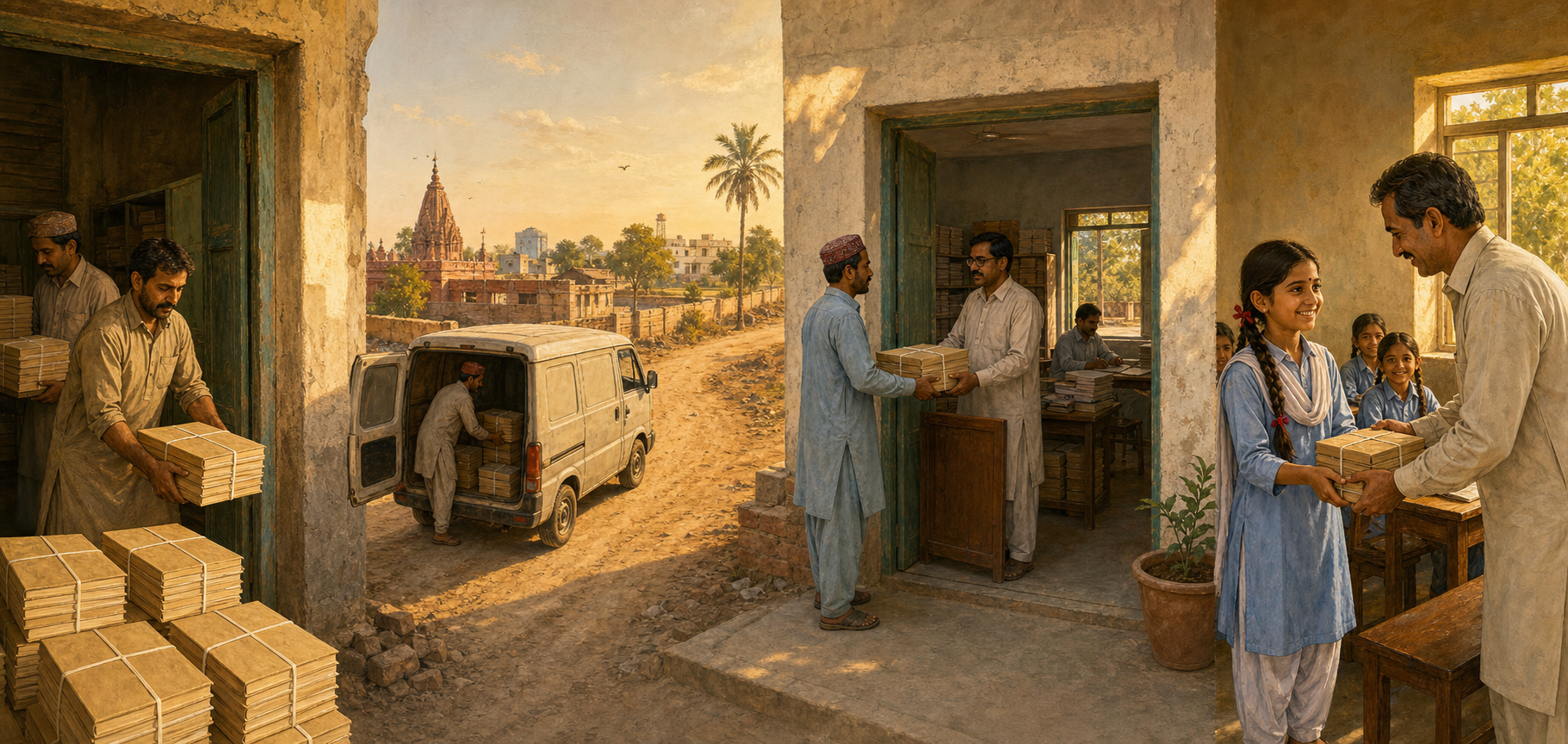
Sindh has an unusually important role because it contains Pakistan’s largest concentration of Hindu communities. The 2017 census recorded Hindus as the country’s second-largest religious minority, while Tharparkar, Umerkot, and Mirpurkhas are among the Sindh districts with significant Hindu populations. This is therefore not a marginal curriculum question. It concerns a substantial and historic part of Sindh’s own society.
School education has largely been a provincial responsibility since the 18th Constitutional Amendment. Within Sindh, responsibility is divided. The Directorate of Curriculum, Assessment and Research develops curriculum. The Sindh Textbook Board handles textbook development and production. The Sindh Teacher Education Development Authority sets standards for teacher education and professional development.
This division creates a predictable implementation risk: approval at one link can be mistaken for completion of the whole chain. A curriculum announcement does not mean that the book has been printed. A printed book does not mean that a teacher has been prepared. A trained teacher does not mean that the subject has received timetable space or examination parity.
Parents and community organisations should therefore look for four separate deliverables:
- An approved curriculum: It should identify the grades covered, learning outcomes, languages, assessment approach, and rules governing voluntary participation.
- Books in students’ hands: Production, procurement, and rural distribution should be completed before teaching is expected to begin. A downloadable file can bridge a temporary shortage, but it is not proof that children in low-connectivity schools have received usable materials.
- A prepared teacher: Schools need an identified educator who understands both the Hindu subject matter and age-appropriate teaching. Teacher guides and one-off orientation sessions cannot replace a credible preparation pathway.
- A protected place in school: The subject must appear on the timetable, carry recognised assessment, and lead into later grades without placing the student at an academic disadvantage.
Ask for evidence at the level where delivery happens. A school should be able to show its timetable, name the assigned teaching role, state how many books it has received, and explain how students will be assessed. The provincial bodies should be able to identify which part of that chain each one has completed. A broad promise is not an adequate answer to a specific missing link.
Teacher preparation deserves particular scrutiny. A durable system needs qualified educators from Hindu communities, pre-service and in-service modules, supervised practice, mentoring, and standards aligned with competency-based learning. The Provincial Institute of Teacher Education and partner universities can help build that pipeline. Without it, a newly printed book may be handed to an unprepared teacher or left unused.
Read the curriculum as a Hindu, not merely as a bureaucrat
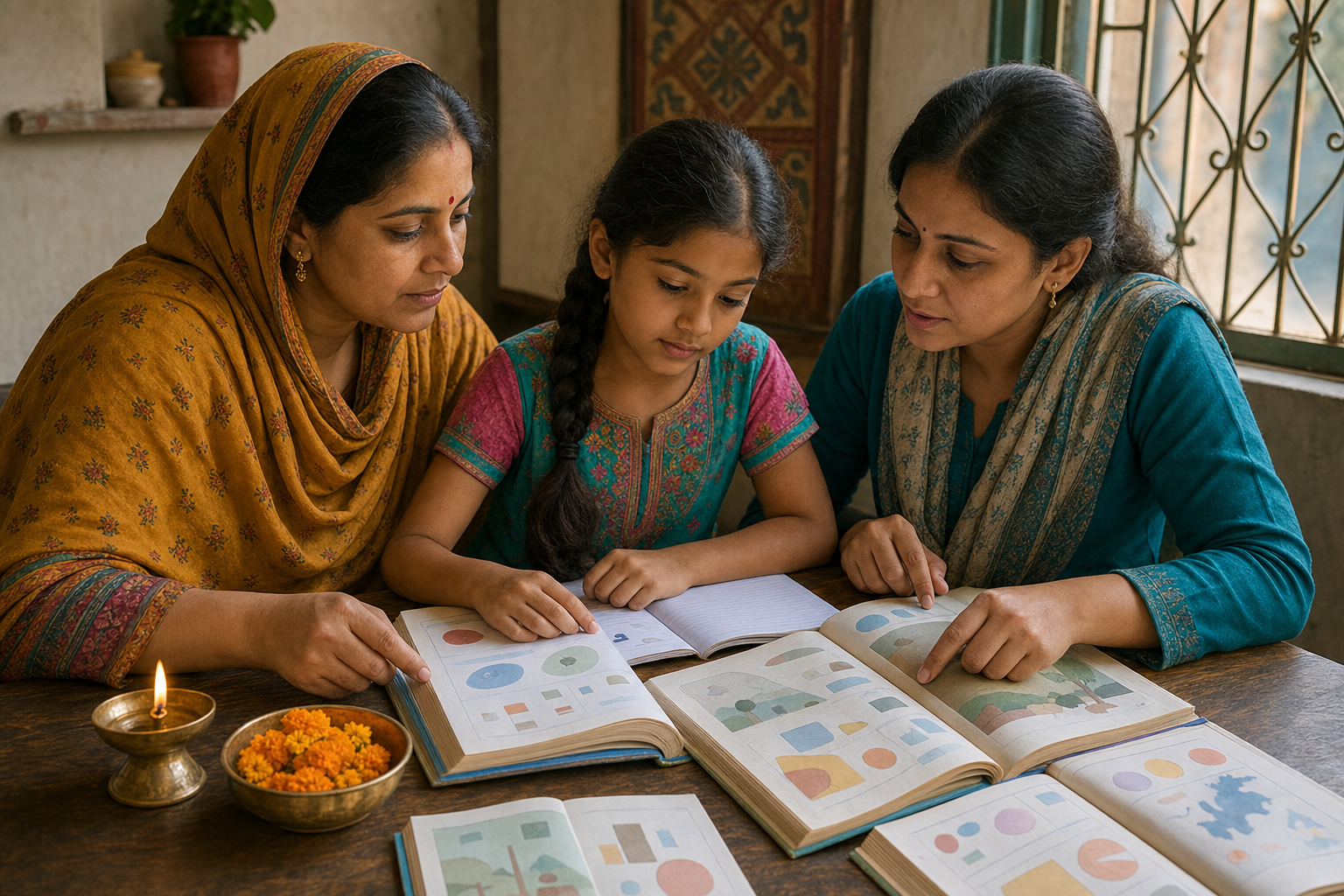
A Hindu label is not a guarantee of an accurate Hindu education. Hindu traditions in Sindh and across the wider Dharmic world include Vaishnava, Shaiva, Shakta, Smarta, and reform lineages, as well as local practices that do not fit neatly into a single administrative category. No school book can give every tradition equal space in every grade. It can, however, make plurality explicit and avoid declaring one community’s practice to be universal.
The most useful way to examine a proposed syllabus is grade by grade:
- Early grades: Look for accessible stories, values, symbols, festivals, and songs that help a child recognise the tradition without being buried under technical vocabulary.
- Middle grades: Expect clear introductions to dharma, ahimsa, satya, dana, and seva, together with carefully chosen excerpts and simple philosophical questions.
- Upper grades: Expect engagement with classical texts, schools of thought, ethics, aesthetics, and modern history. Sindhi Hindu heritage and its cross-cultural relationships should form part of the curriculum rather than appearing as a decorative sidebar.
This progression prevents two common distortions. The first is reducing Hindu education to festivals, costumes, and isolated moral tales. The second is pushing abstract theology onto young children before they possess the vocabulary needed to understand it. A well-sequenced syllabus moves from belonging and recognition toward concepts, texts, interpretation, and reasoned discussion.
Language can determine whether that sequence works. Much schooling in Sindh uses Sindhi in the Arabic script or Urdu, while some Hindu families maintain additional literacy in Devanagari or English. Bilingual glossaries, consistent transliteration, and offline-friendly digital supplements can help students move between home vocabulary, school language, and the original form of important terms. Transliteration should be reviewed as carefully as factual content; inconsistency turns core concepts into a spelling exercise and can obscure their meaning.
Reviewers should ask five content questions. Does the book distinguish a broad principle from a sect-specific practice? Does it identify regional variation without ranking communities? Are translations and transliterations checked by people who know the relevant languages? Does Sindhi Hindu life appear throughout the curriculum? Do activities invite comprehension and reflection rather than demanding conformity?
The drafting process matters as much as the final prose. A representative provincial advisory group should include Hindu scholars from different traditions, practising school educators, curriculum specialists, and civil-society observers. Open calls for contributors, independent peer review, a public list of reviewers, and a visible revision record would make it harder for a narrow faction or political office to capture the subject. Periodic revision is essential because the first edition will reveal problems that a drafting room cannot see.
Test academic parity and everyday dignity together
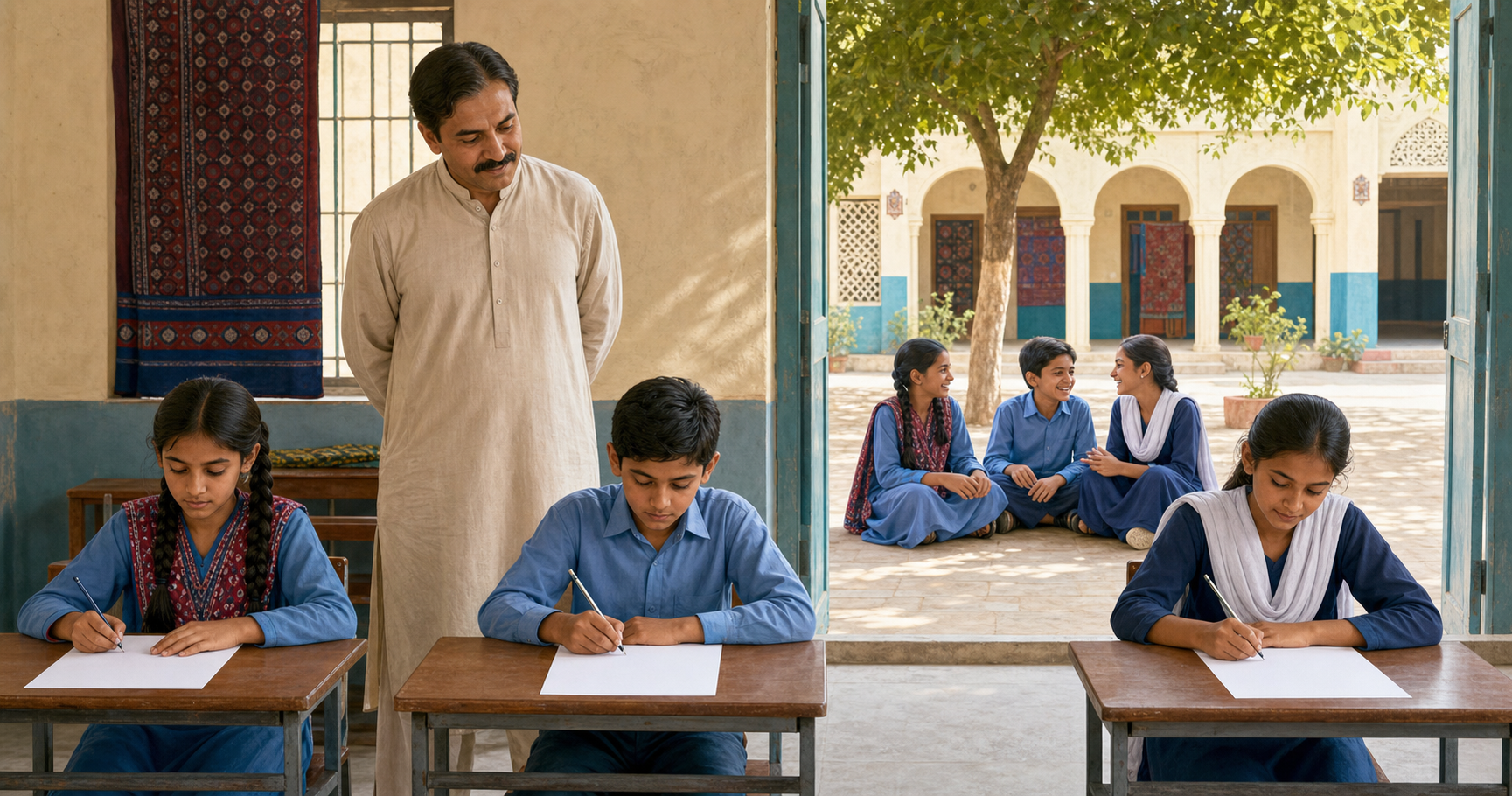
A curriculum can be accurate and still fail as a minority right. The decisive test comes when a student chooses the subject and discovers what that choice costs. If Hindu religious education carries less credit, lacks a recognised examination, interrupts progression into a later grade, or is routinely cancelled for lack of staff, families will be pushed toward the better-supported majority option.
Assessment should therefore have the same institutional standing as other recognised religious alternatives. It should measure comprehension, ethical reasoning, cultural literacy, and the ability to work thoughtfully with stories or concepts. Projects and formative tasks can test those abilities more effectively than lists of names and dates alone. Schools should never grade whether a child appears sufficiently devout, follows a particular sect, or practises a ritual at home. The classroom can assess learning; it cannot certify religious authenticity.
Academic parity also requires practical parity. Ask whether the subject receives regular classroom time, whether its marks appear normally in school records, whether examination materials arrive on schedule, and whether choosing it affects eligibility for later study. An apparently minor difference in any one of these areas can make the minority option unusable.
Dignity is equally concrete. A child who receives the correct textbook but faces ridicule, exclusion, or an ineffective complaints process has not received an adequate education. Schools need enforceable anti-bullying rules, a confidential route for reporting problems, a named person responsible for responding, and an escalation path when the first response fails.
Girls require attention to the conditions that often determine whether schooling remains possible at all. Inclusive sanitation, safe transport, and community-supported retention measures belong in the implementation plan. These are not additions to religious freedom; they determine which children can exercise it consistently.
If a child is compelled to attend another religion’s instruction, penalised for choosing the Hindu option, or exposed to retaliation, request the school’s explanation in writing and preserve timetables, forms, messages, and assessment records. If the family is considering a formal legal complaint, consult qualified Pakistani counsel or an appropriate rights organisation rather than relying on general commentary. The downside of an improvised complaint can be further exposure for the child, so privacy and informed local advice matter.
Own-faith instruction should also be paired with a shared, non-confessional civics and ethics curriculum for all students. Hindu children should be able to learn Hindu traditions on their own terms, while every student learns equal citizenship, rights, responsibilities, and respectful engagement across communities. That combination supports pluralism without asking minority children to surrender distinctiveness as the price of social cohesion.
Put seven questions in writing before judging the reform
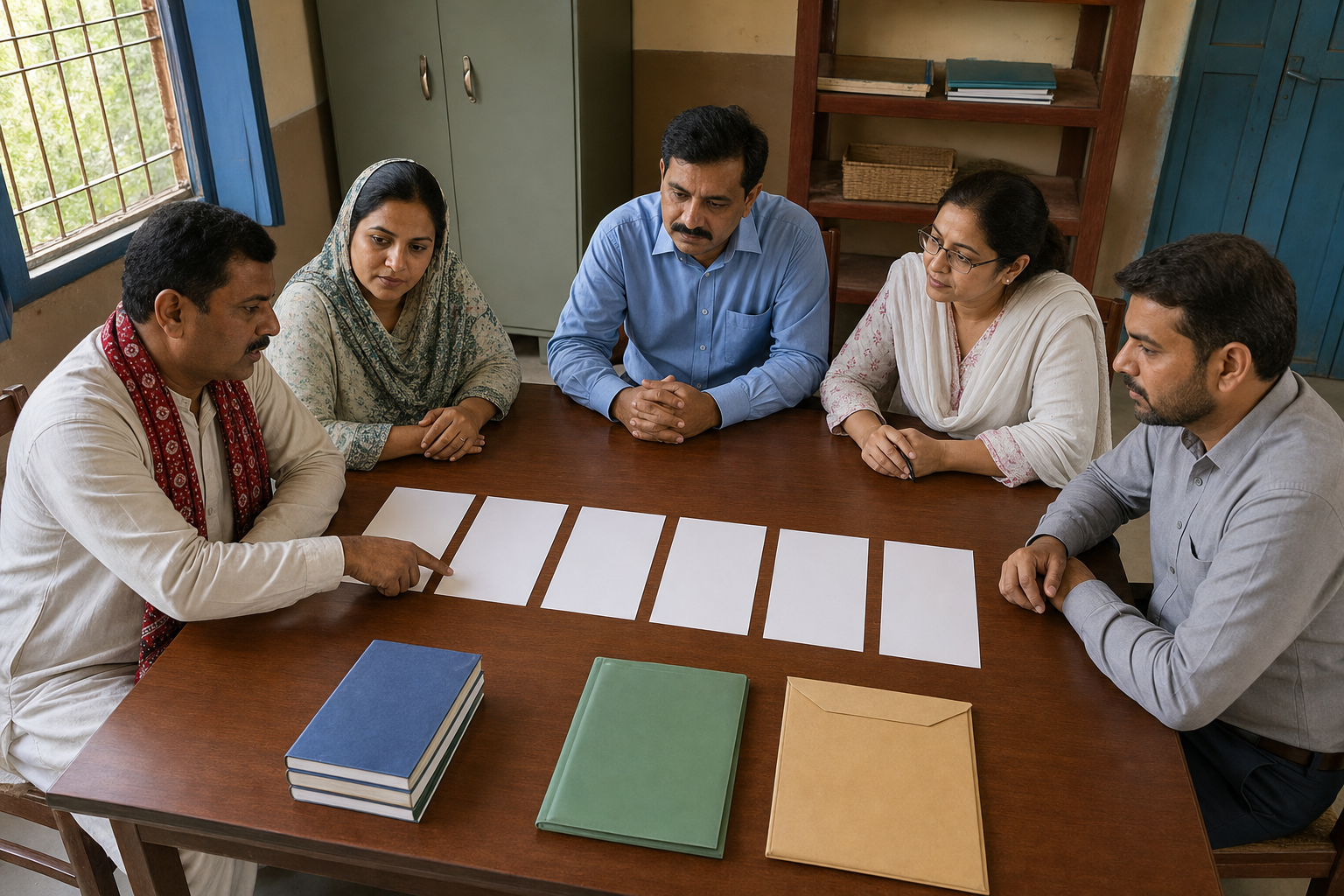
You do not need to wait for a province-wide evaluation to begin testing implementation. Send the following questions to the school and the relevant provincial offices. Ask for dated, written replies so that later changes can be compared with the original commitment.
- What exactly has been approved? Request the grades, languages, learning outcomes, subject status, and rules for opting in or declining participation.
- Who reviewed the content? Ask which Hindu traditions, Sindhi communities, languages, classroom educators, and curriculum specialists were represented.
- Which schools will deliver it? A provincial announcement should be translated into an identifiable school-level rollout, including rural and resource-constrained schools.
- When and how will every student receive the material? Ask about printed stock, replacement copies, accessible electronic editions, printable worksheets, and offline access during a supply interruption.
- Who will teach it? Request the staffing plan, required qualifications, training pathway, and the school’s procedure when the assigned teacher is absent or the post is vacant.
- How will academic parity be protected? Ask how marks, examinations, timetable allocation, and progression compare with other recognised religious subjects.
- How will failures be reported and corrected? Request the grievance route, response deadlines, anti-bullying procedure, safeguards for complainants, and the schedule for publishing implementation results.
Community organisations can turn the answers into a simple school-by-school tracker. Record institutional facts such as book delivery, teacher assignment, timetable status, and examination arrangements, but do not publish children’s names or identifying complaint details. Comparing the same questions across schools in Tharparkar, Umerkot, and Mirpurkhas would show whether a provincial promise is reaching the districts where it matters most.
Three checkpoints deserve particular attention: subject selection, the first distribution of books, and examination registration. Check the written promise at each stage. If the Hindu option remains voluntary, staffed, supplied, examinable, and safe through all three, the textbook is beginning to function as a right rather than a symbol.
Put these questions before your school before the next choice is locked in, then keep the replies. Sindh does not need a ceremonial concession to Hindu children. It needs a dependable educational path through which they can learn their own tradition accurately, think about it seriously, and stand in the shared classroom as equal citizens.